Sarah Abu Abdallah's Art of Reframing Everyday Saudi Life
Discover how Saudi artist Sarah Abu Abdallah uses video, painting, and installation to explore domestic life, digital culture, memory, and social change.

Discover how Saudi artist Sarah Abu Abdallah uses video, painting, and installation to explore domestic life, digital culture, memory, and social change.
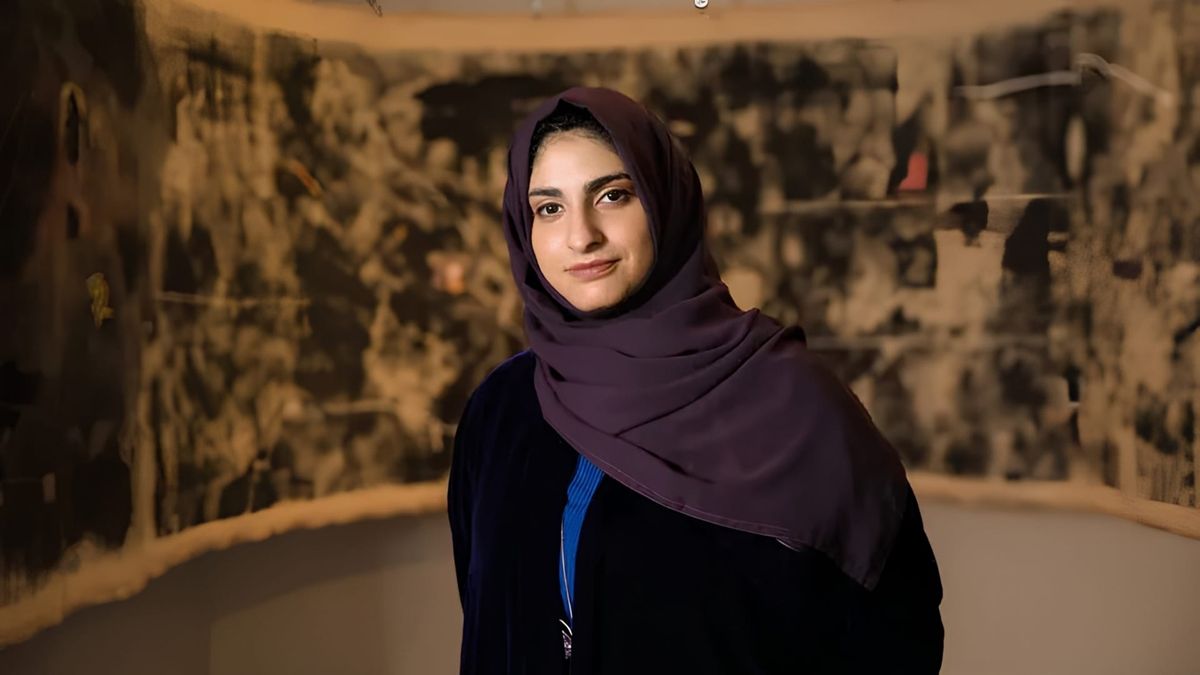
Sarah Abu Abdallah has spent more than a decade looking closely at the spaces, habits, images, and social structures that shape everyday life in Saudi Arabia. Born in Qatif in 1990 and now based in Riyadh, the multidisciplinary artist works across video, painting, installation, collage, and sculpture. Her practice is rooted in lived experience, but it is never straightforwardly documentary. Instead, she takes familiar material, from domestic interiors and family conversations to internet imagery and public spaces, and reassembles it into works that reveal the tensions beneath ordinary life.
Her career has developed across several distinct stages, from early video works about domesticity and restriction to large-scale mixed-media installations that explore memory, digital culture, and the instability of contemporary experience.
Sarah Abu Abdallah initially trained as a painter, completing a Bachelor of Fine Arts at the University of Sharjah in 2011. She later earned a Master of Fine Arts in Digital Media from the Rhode Island School of Design in 2015. That move from painting into digital media became important to the way her work developed. Video allowed her to work more directly with daily life. She could capture interiors, streets, family interactions, public spaces, and small gestures without turning them into conventional narratives.
Rather than telling complete stories, Sarah often works with fragments. A scene may appear briefly and disappear. An image may seem disconnected from the next one. A domestic moment may sit beside a surreal or humorous interruption. This structure reflects how memory and contemporary media are experienced. The viewer is not given a neat explanation. Instead, meaning is built gradually through accumulation.
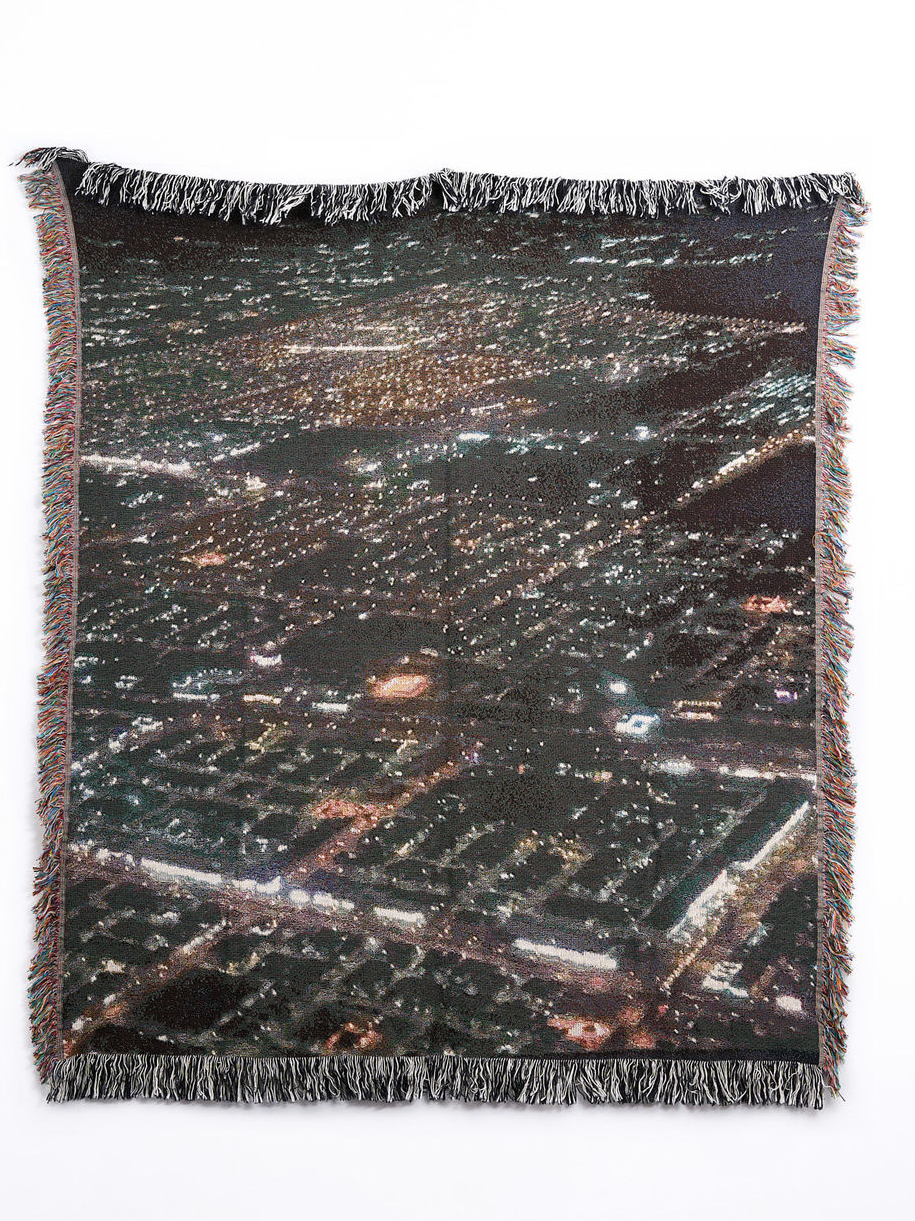
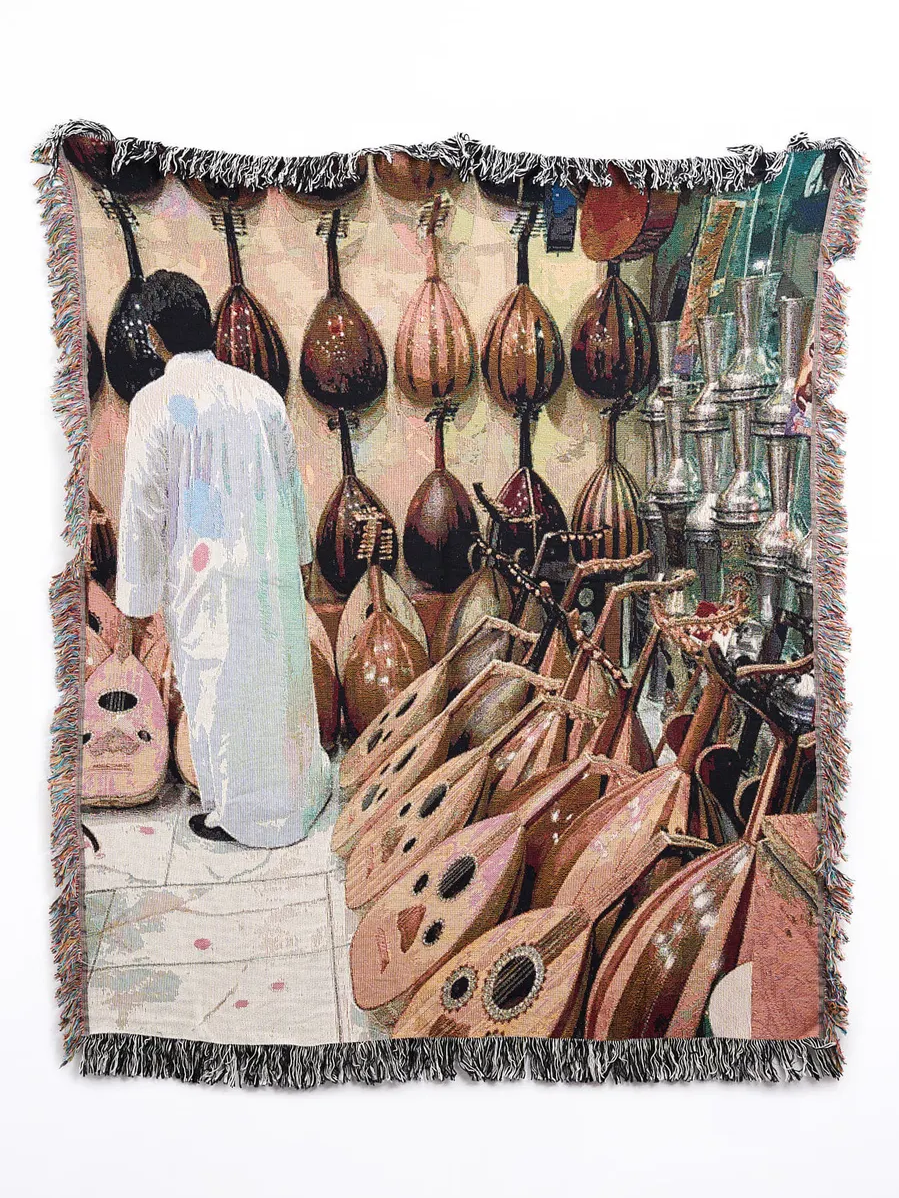
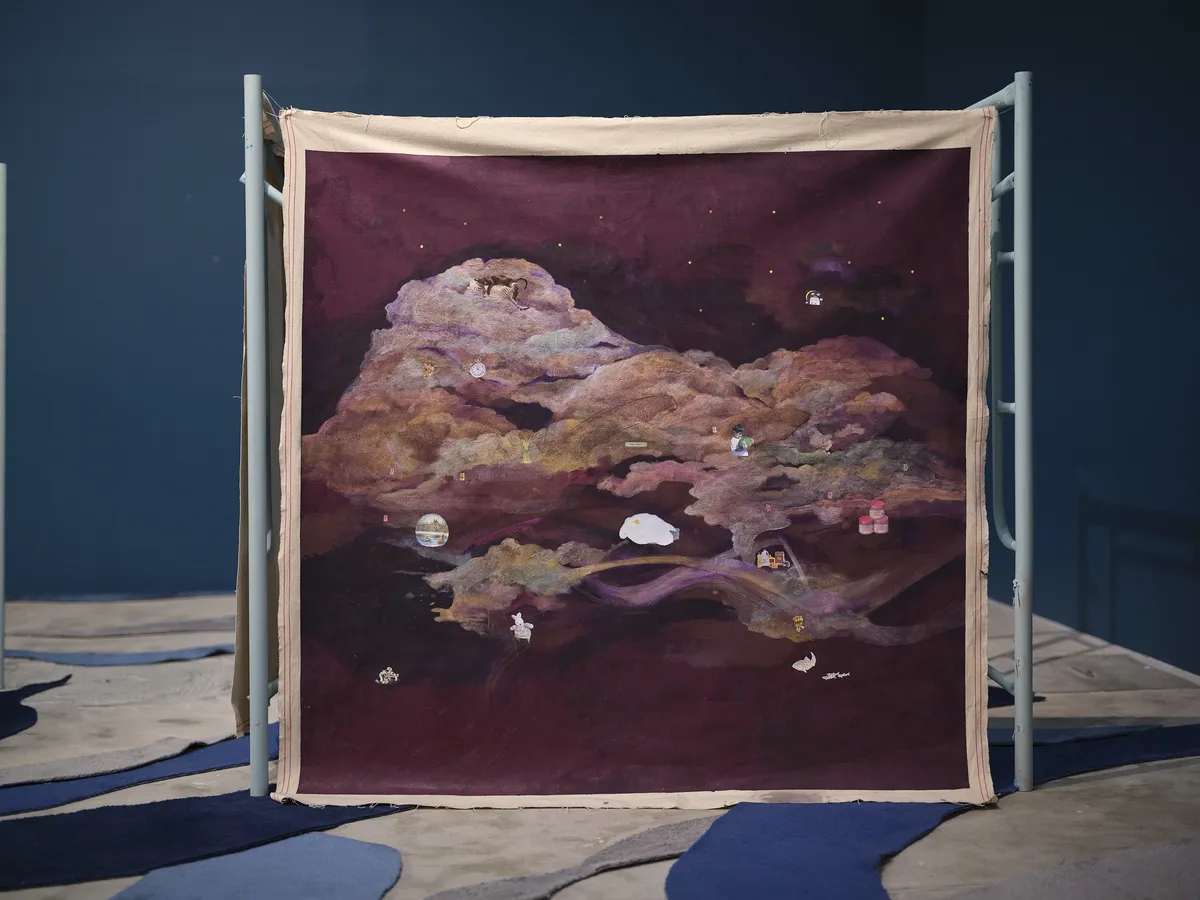
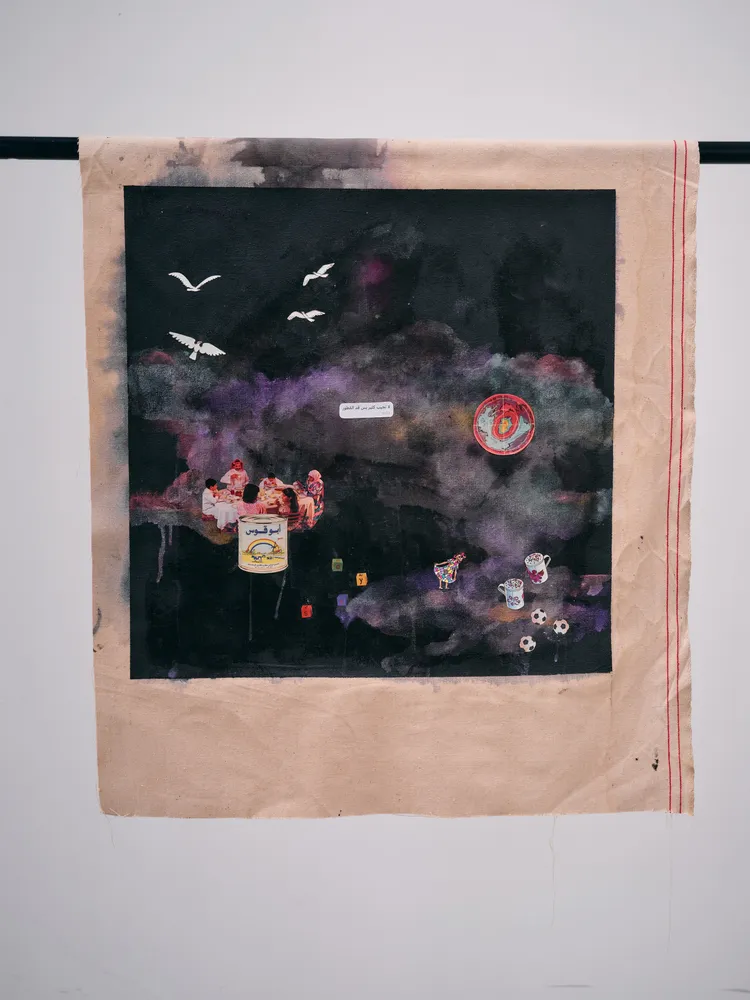
Blanket No. 13 and Blanket No. 30 from Sarah Abu Abdallah’s Blankets Series, 2023, digital images woven into cotton textile.
One of Sarah Abu Abdallah’s best-known early works is Saudi Automobile, a single-channel HD colour video that shows the artist painting a damaged car pink. The work shows the artist painting a damaged car pink. At first, the gesture appears playful. But its meaning is tied to the period in which it was made, when Saudi women were still prohibited from driving. Sarah described the act as similar to decorating a wrecked car with icing, as though beautifying the outside could compensate for the fact that the vehicle could not function.
“This wishful gesture was the only way I could get myself a car.”
The work is effective because it does not rely on direct political messaging. Instead, the damaged car becomes an object of frustration and desire. Painting it does not change its condition, but the act allows the artist to imagine a different relationship to it. The work captures a specific social reality while also revealing a broader theme that continues throughout Sarah Abu Abdallah’s practice: the gap between what exists and what is possible.
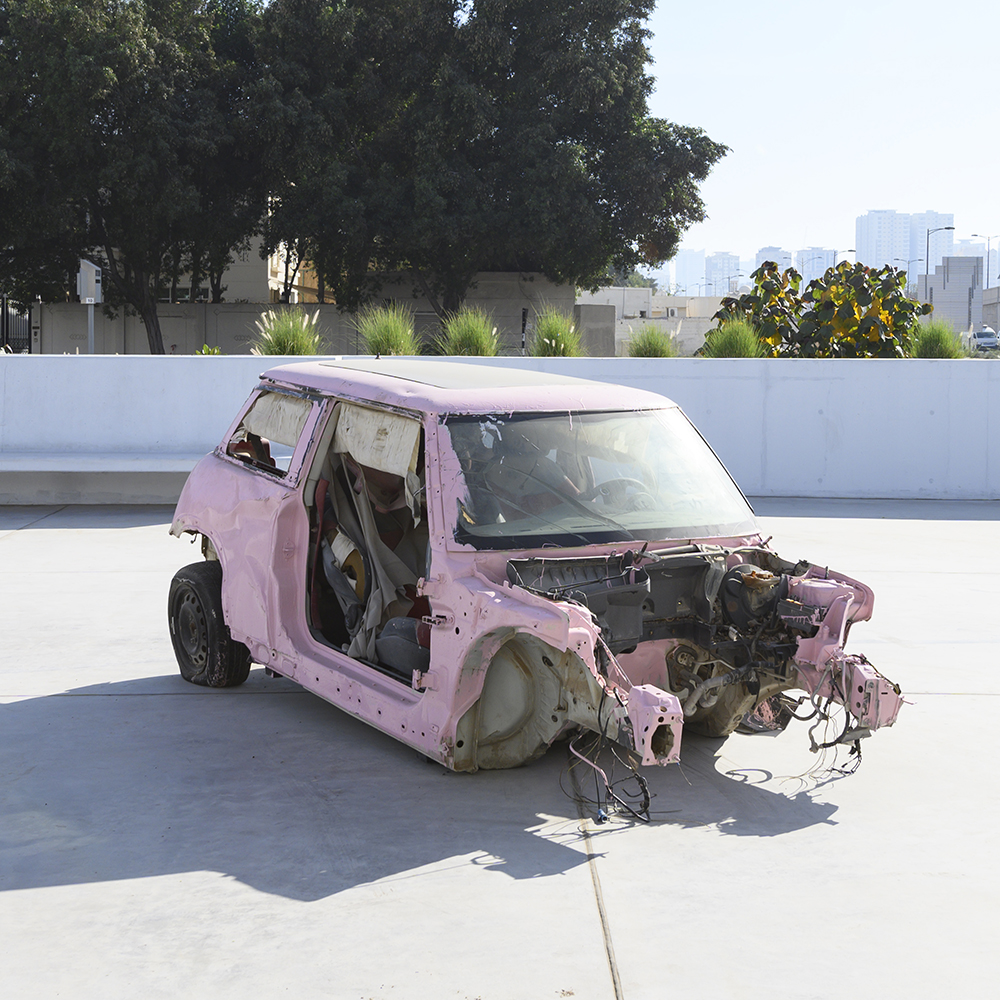
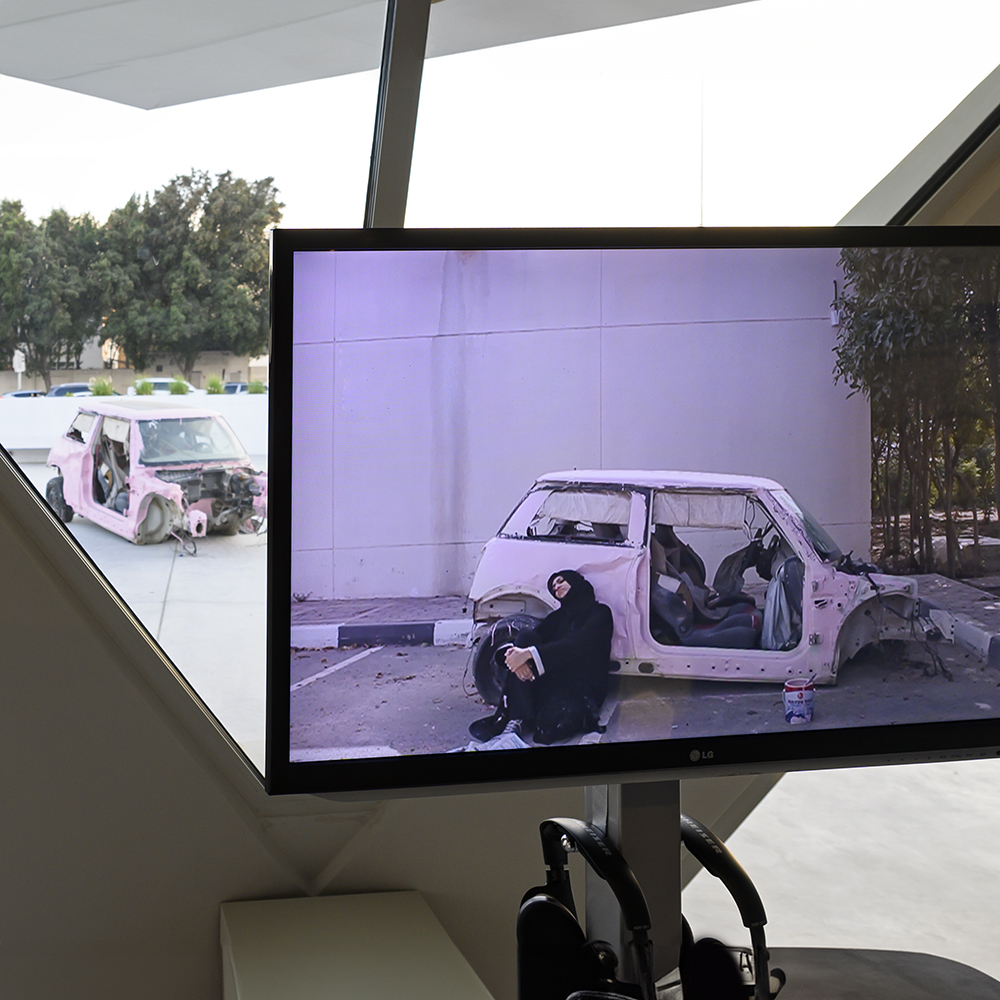
Stills from Sarah Abu Abdallah’s Saudi Automobile, 2014 video.
In The Salad Zone, Abu Abdallah moved further into fragmented storytelling. The video combines scenes and ideas drawn from her surroundings, including domestic tensions, a dream of travelling to Japan, someone smashing televisions in anger, eating fish, streets, and shopping malls. The material is deliberately disjointed. Sarah is not trying to offer a complete portrait of Saudi Arabia. Instead, she presents fragments of lived experience.
This approach is important because her work avoids the expectation that Saudi artists should explain their society to an international audience. She does not present culture as a fixed image. She presents it as something experienced privately, unevenly, and often contradictorily. The result is a form of storytelling that feels closer to memory than reportage.
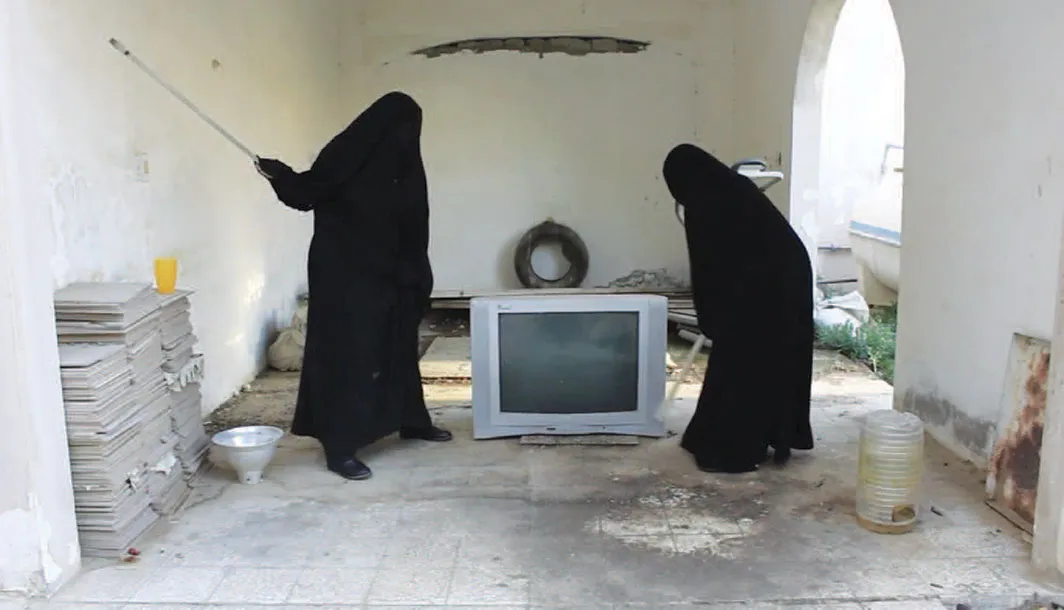
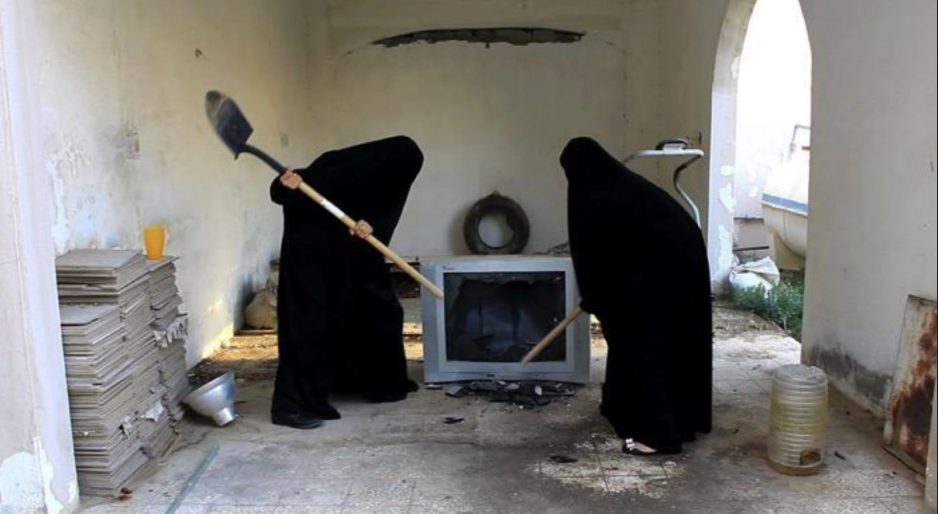
Stills from Sarah Abu Abdallah’s The Salad Zone, 2015 video installation.
The home is one of the most consistent subjects in Sarah Abu Abdallah’s work. In her practice, domestic space can represent familiarity and intimacy, but it can also become restrictive, strange, and unstable. Her 2017 work 18 Blankets explored the process of reconstructing daily life within the home. Created with the participation of family and friends, the work examined how domestic life is built through repeated habits, relationships, objects, and expectations. The home appears familiar, but Sarah makes that familiarity feel slightly unsettled.
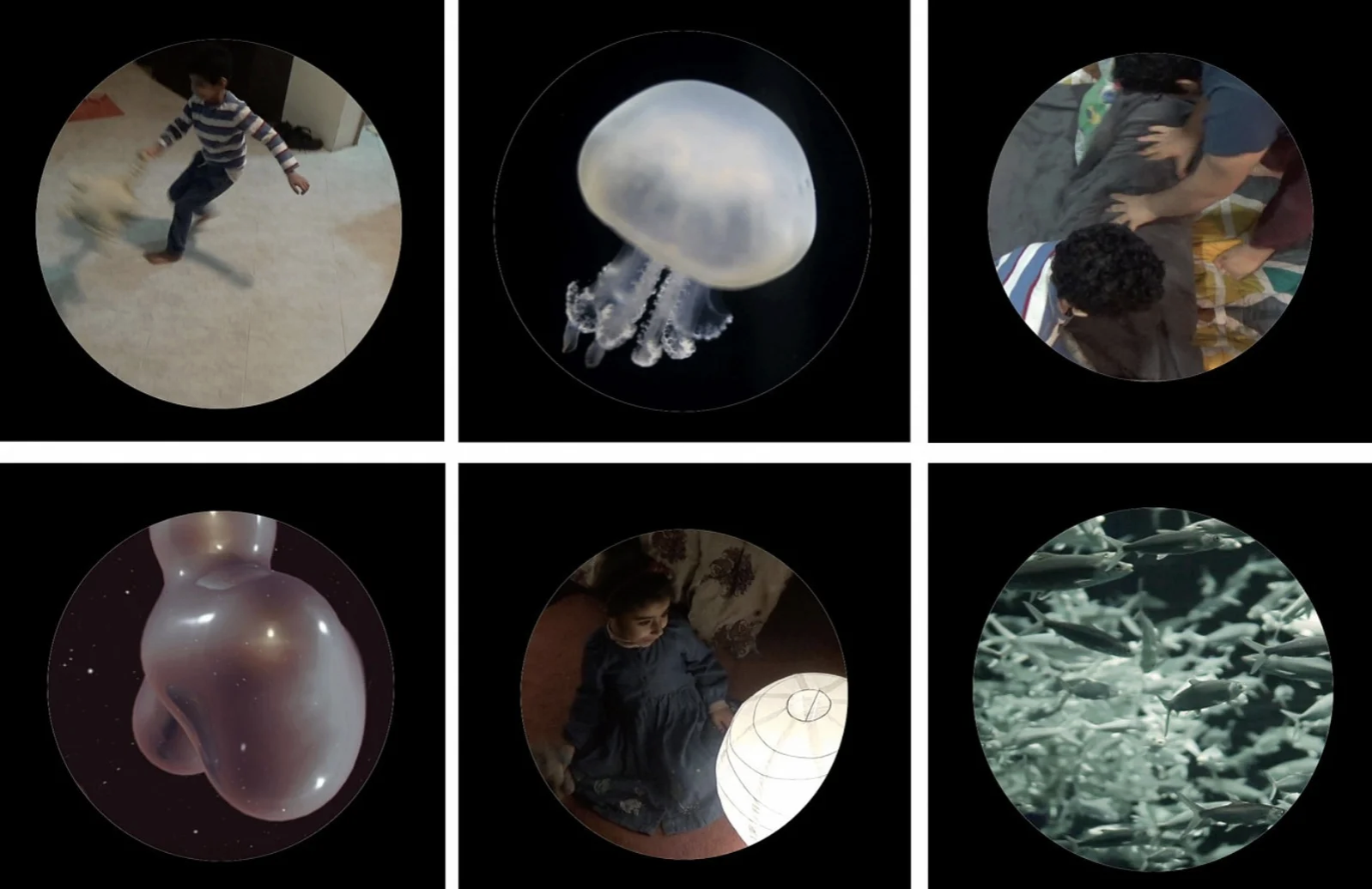
That tension became more explicit in The House That Ate Them Whole, commissioned for the 2018 Gwangju Biennale. The three-channel video installation imagines a house that gradually consumes its inhabitants. Domestic objects surround and absorb the people inside until the home itself becomes an aggressive presence. The work reverses the conventional idea of the house as a place of safety. Instead, architecture becomes a force that can shape, contain, and even overwhelm those who live within it. Through this fictional scenario, Sarah addresses questions around domestic structure, gender, social expectations, and the relationship between people and the spaces they inhabit.
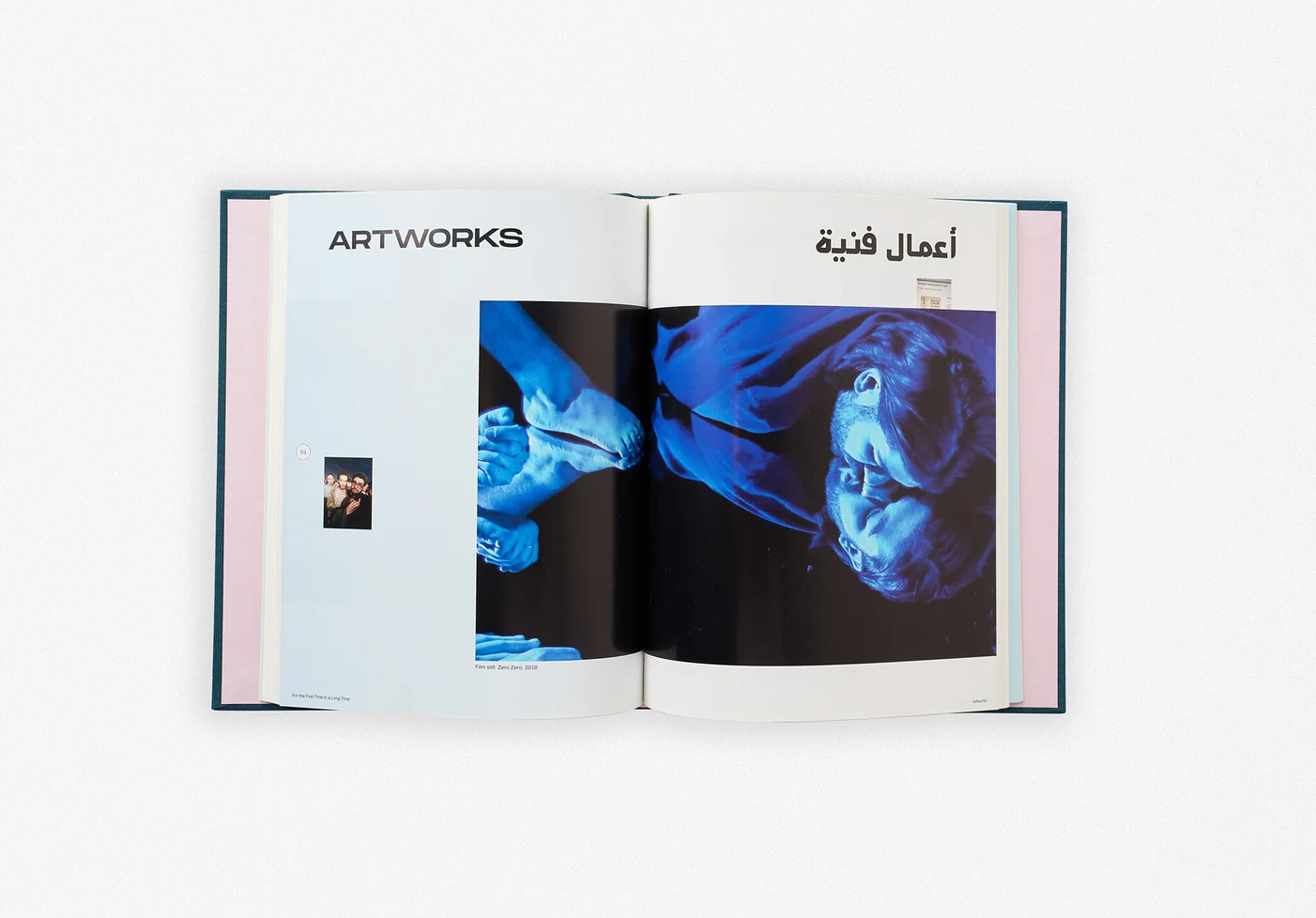
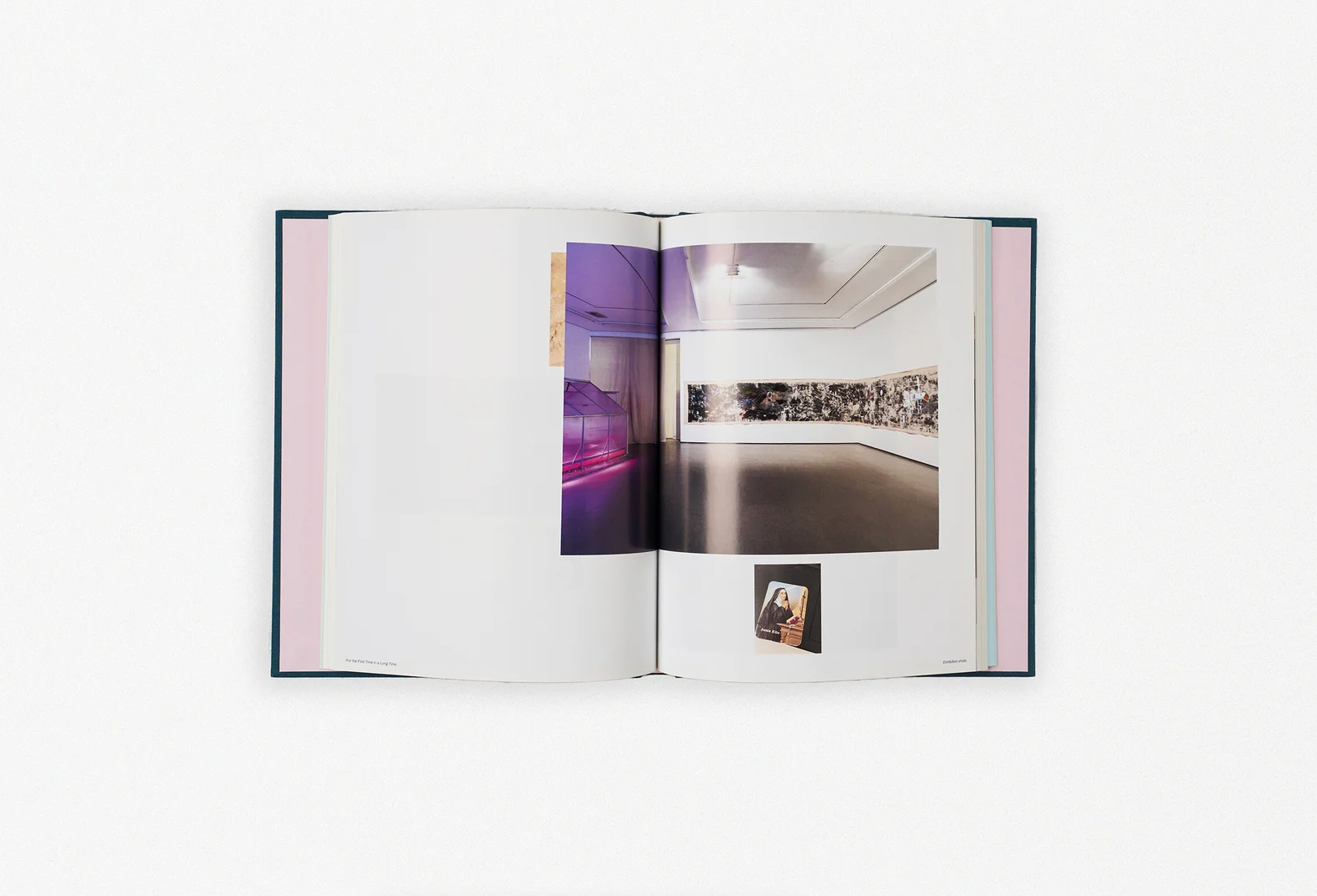
In 2019, Sarah Abu Abdallah presented For the First Time in a Long Time at Kunstverein Hamburg and Jameel Arts Centre in Dubai, bringing together key works across video, painting, text, and installation. The project was accompanied by her first monograph of the same name, published in 2020 and covering works made between 2012 and 2019.
Together, the exhibition and publication offer one of the clearest views of Sarah’s evolving practice. Structured like a visual diary, they trace her interest in media culture, personal memory, domestic life, and the tension between online identities and lived experience. Rather than separating the digital from the everyday, Sarah shows how closely the two have become intertwined.
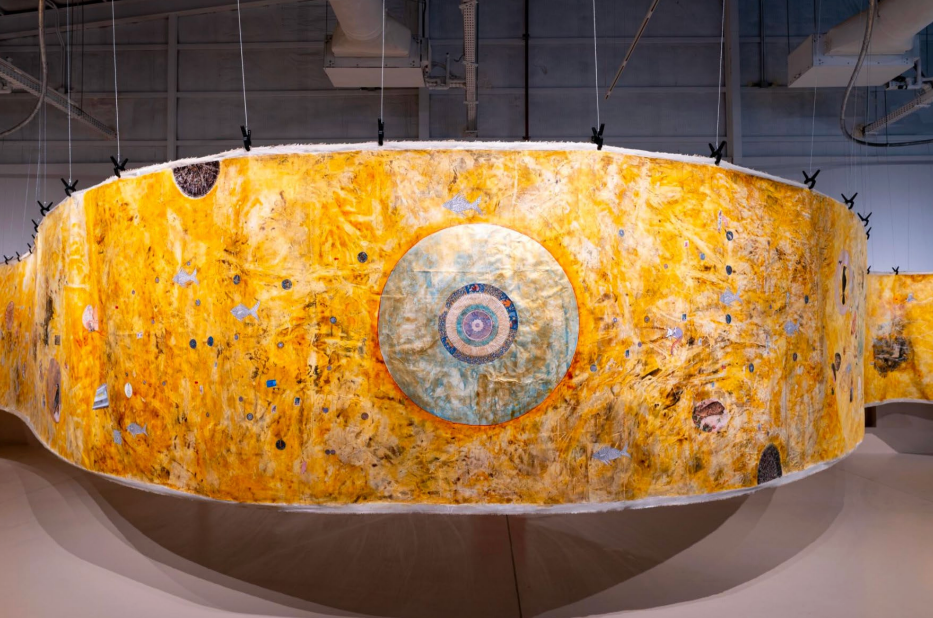
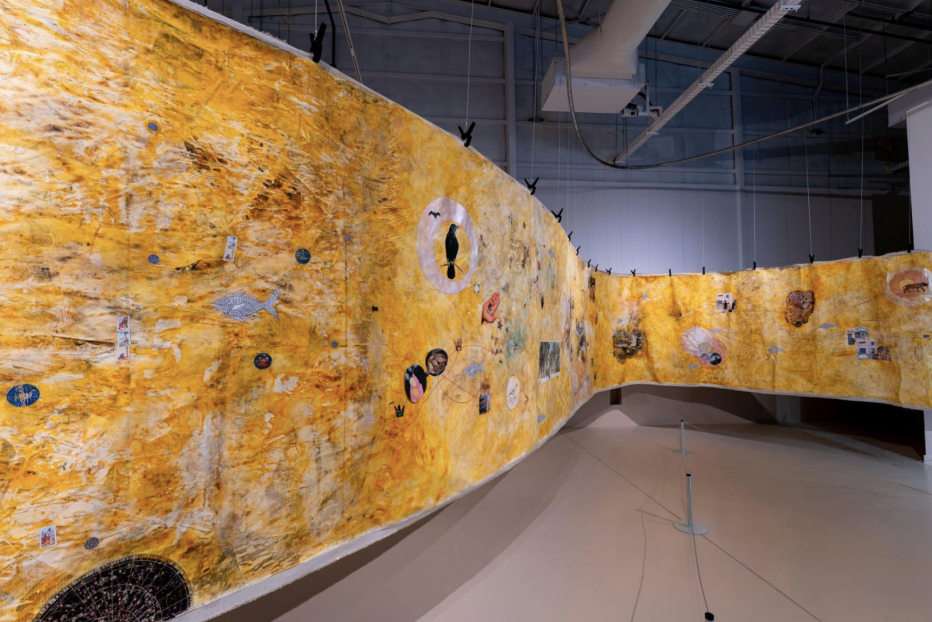
In 2021, Abu Abdallah created Horizontal Dimension with her mother, Ghada Al-Hassan, for the inaugural Diriyah Contemporary Art Biennale. The work marked a major change in scale. Stretching approximately 25 metres, the canvas combined painting, collage, photography, print, paper, ink, pencil, and papier-mâché. The work developed as a dialogue between mother and daughter. Its imagery draws on subjects including home, memory, dreams, cosmology, and astrology. Lines travel across the canvas, connecting images and visual fragments. The result resembles a network of memories or associations.
Unlike Sarah’s earlier video works, where fragments appear and disappear over time, Horizontal Dimension places those fragments together on one enormous physical surface. The work transforms private family material into a public installation while preserving the intimacy of its source. It also demonstrates how Sarah’s practice had moved beyond the screen without abandoning the associative structure that defined her earlier work.
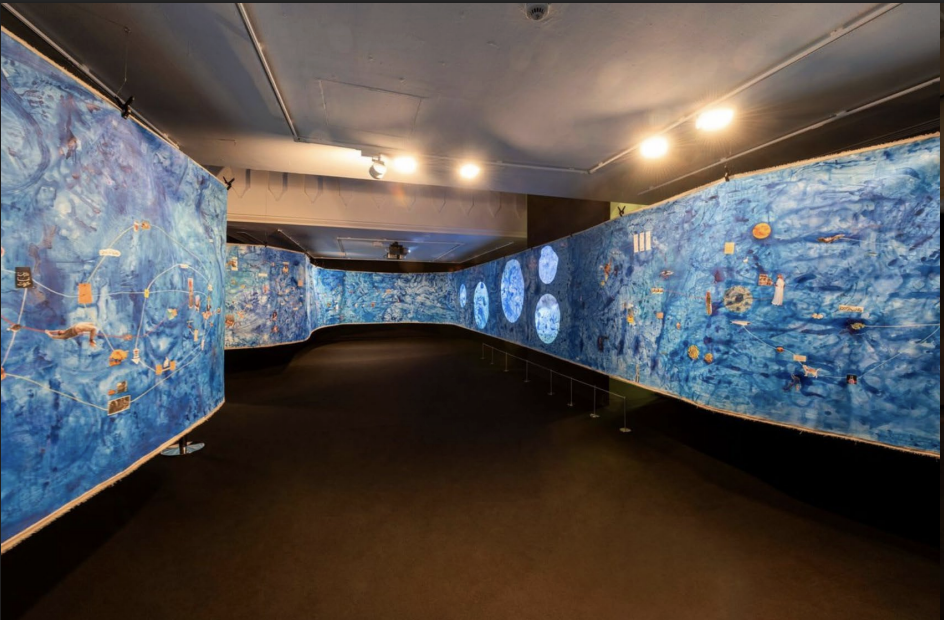
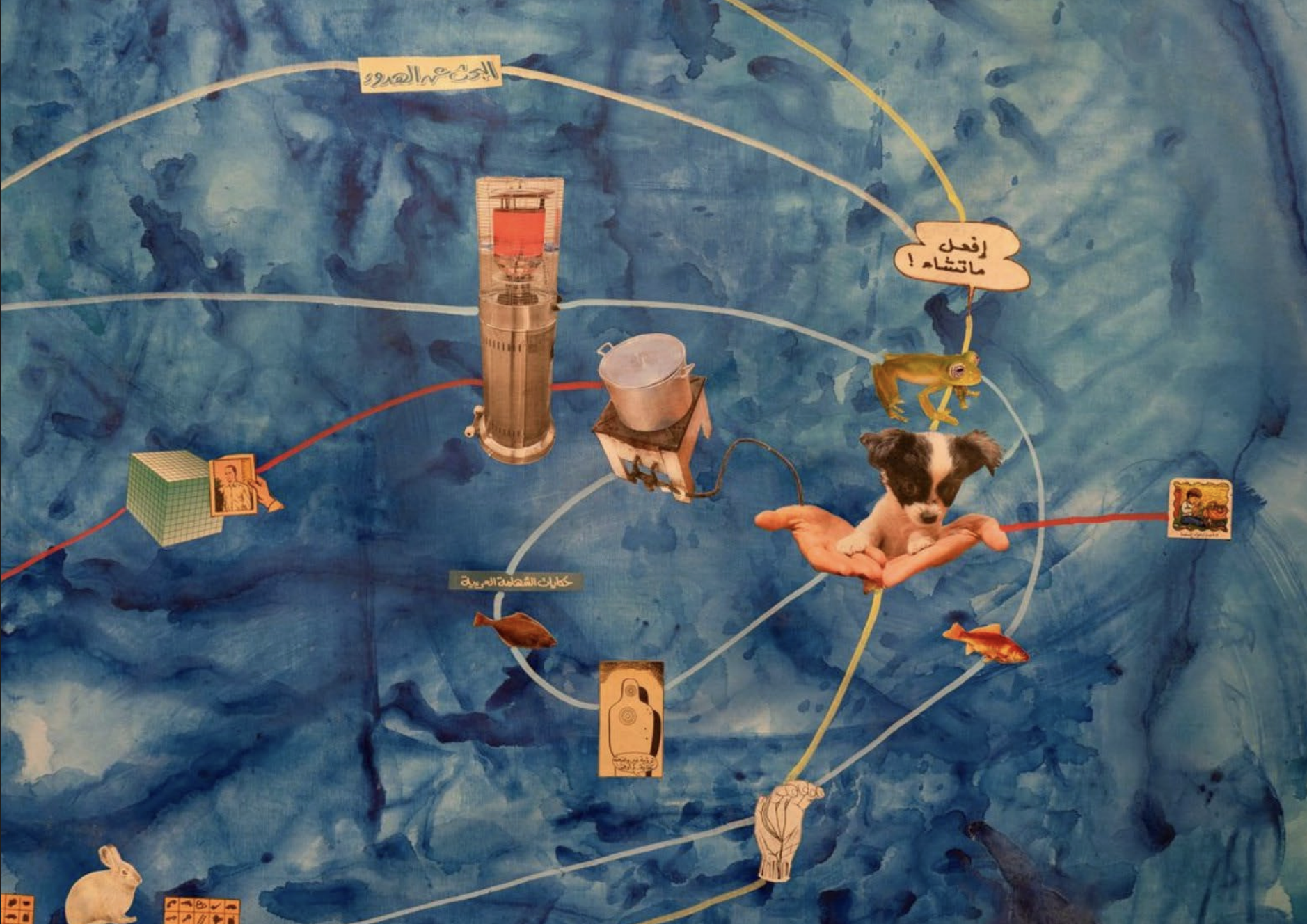
In 2025, Sarah Abu Abdallah was commissioned by Sharjah Art Foundation to create You Ask, We Answer for Sharjah Biennial 16. The work is one of the most ambitious projects of her career. Measuring around 50 metres in length, the mixed-media painting combines acrylic, ink, collage, stickers, and a five-minute animation. The large blue surface moves across multiple rooms. Its scale creates an immersive environment rather than a conventional painting viewed from a single position. The imagery combines everyday material with broader themes including fate, hope, longing, and uncertainty.
Once again, Sarah draws from the constant stream of images that characterizes contemporary life. Phone photographs, text, collage elements, vernacular graphics, and personal references are brought together within one composition. The work reflects the logic of a hyperconnected world in which private memories, online imagery, popular culture, and emotional experience constantly overlap. Its importance lies not only in its scale, but in how clearly it brings together the central concerns of Sarah’s practice.
Sarah Abu Abdallah’s recent practice shows a renewed interest in painting and physical objects. Her 2026 solo exhibition I Stay, In Pieces at ATHR Gallery in Riyadh included mixed-media paintings and small sculptural works. This marks another stage in her development. The camera and screen remain important to understanding her practice, but she is increasingly interested in texture, surface, scale, and physical presence. Works such as You Ask, We Answer demonstrate how her earlier interest in fragmented video editing can be translated into painting. Images no longer move across a screen. Instead, they accumulate across a canvas. The same logic remains, but the medium changes.
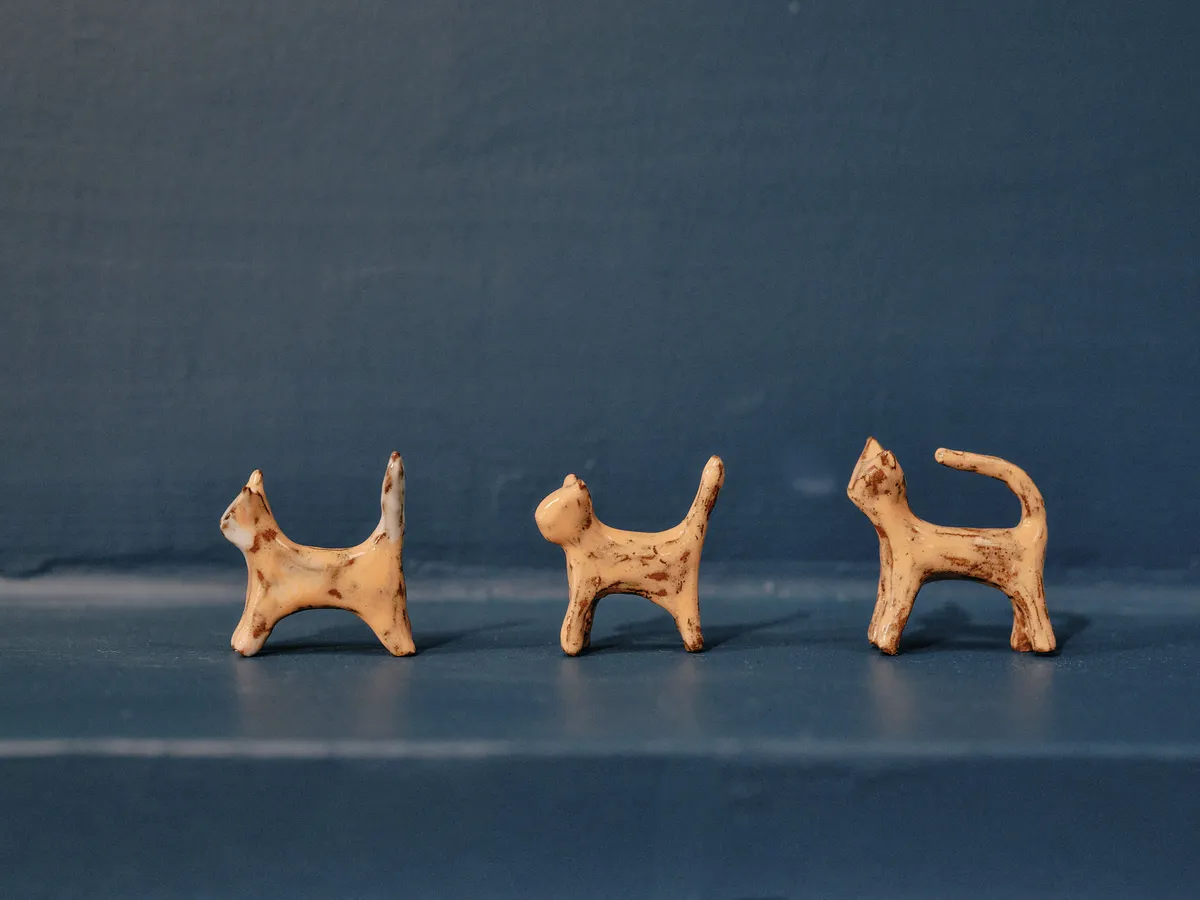
Her recent sculptures extend this shift further, introducing smaller and more intimate objects into a practice that has increasingly moved between monumental scale and personal detail.
Sarah Abu Abdallah’s work has been shown extensively in Saudi Arabia and internationally. Her exhibition history includes the Sharjah Biennial, Gwangju Biennale, Singapore Biennale, Diriyah Contemporary Art Biennale, Noor Riyadh, Whitechapel Gallery, Centre Pompidou, Musée d’Art Moderne de Paris, Jameel Arts Centre, Kunstverein Hamburg, and the Venice Biennale.
Her work is also held in collections including Guggenheim Abu Dhabi, Jameel Arts Centre, Greenbox Museum, and Sharjah Art Foundation. These exhibitions place her within a generation of Saudi artists whose work has developed alongside the Kingdom’s rapidly changing cultural landscape. Yet Sarah’s work rarely focuses on transformation as spectacle. She approaches change through individual experience. She looks at how social shifts enter homes, relationships, screens, habits, and memories.
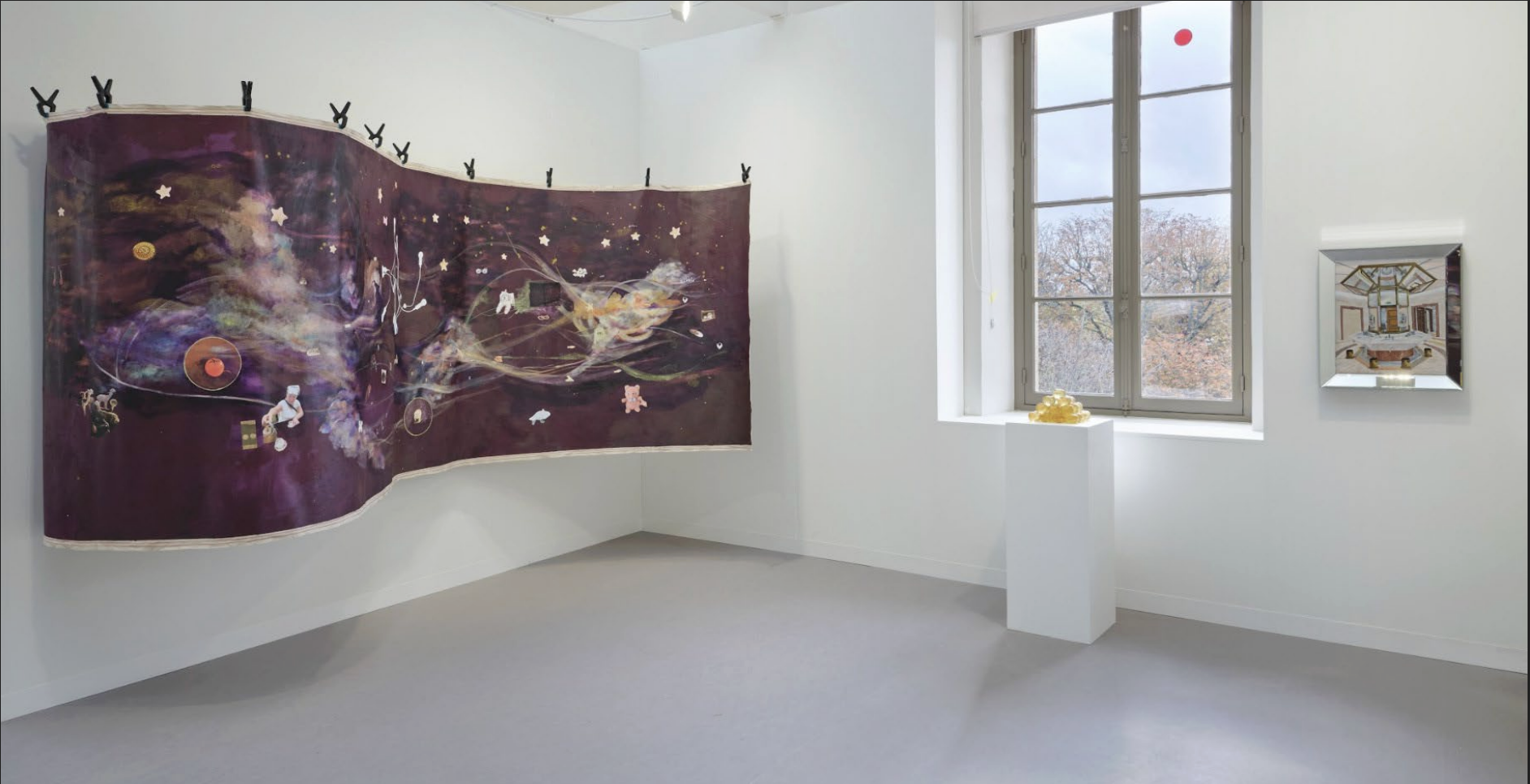
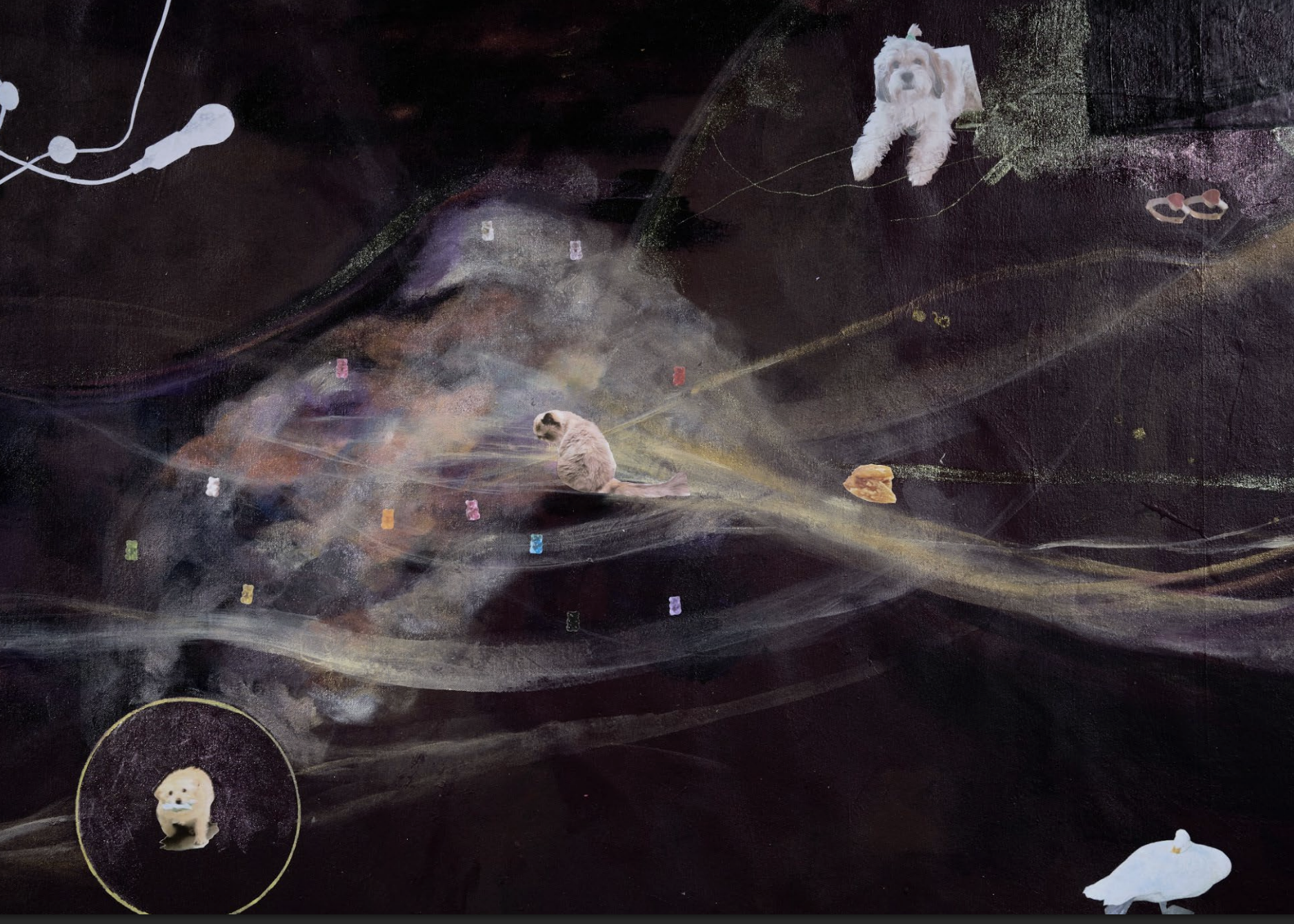
Sarah Abu Abdallah’s mixed-media work combining everyday imagery, memory, and digital culture, Art Basel Paris 2025.
Sarah Abu Abdallah’s strength lies in how she turns ordinary fragments into layered narratives. A car, a family conversation, a mall, a screen, or a domestic space can become part of a larger reflection on contemporary life.
Even as her practice has expanded from video into large-scale painting and installation, that approach has stayed consistent. She does not try to define Saudi life from the outside. She works from within it, showing its contradictions, pressures, and everyday complexity.
Discover more artist stories at KSAArt.