An Artist in Dialogue: Khawla AlGhofily
Meet Saudi visual artist Khawla AlGhofily and discover how murals, everyday life, and Saudi identity shape her evolving artistic practice.


Meet Saudi visual artist Khawla AlGhofily and discover how murals, everyday life, and Saudi identity shape her evolving artistic practice.
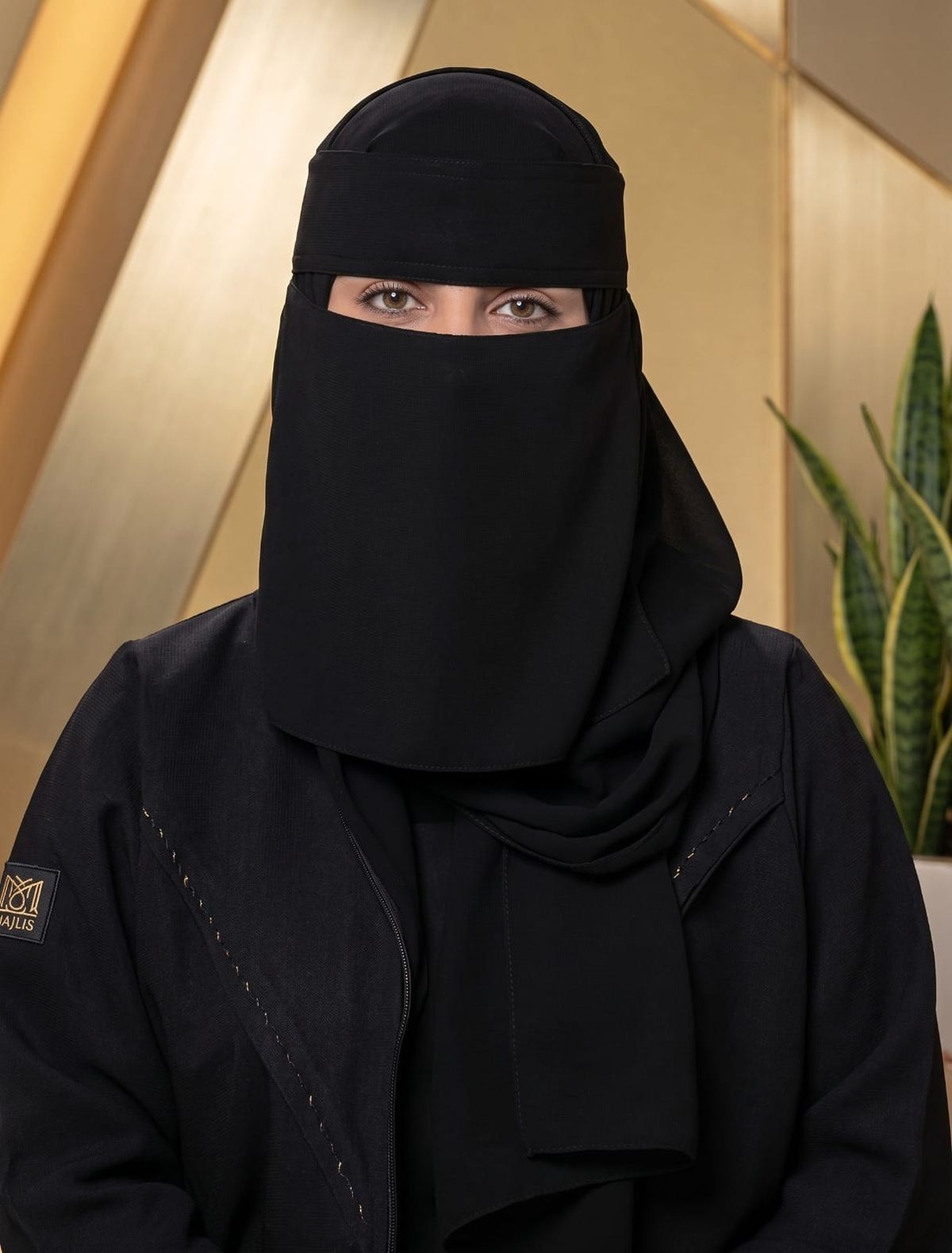
“I paint Saudi life because I am documenting my time. I want future generations to understand how we lived.”
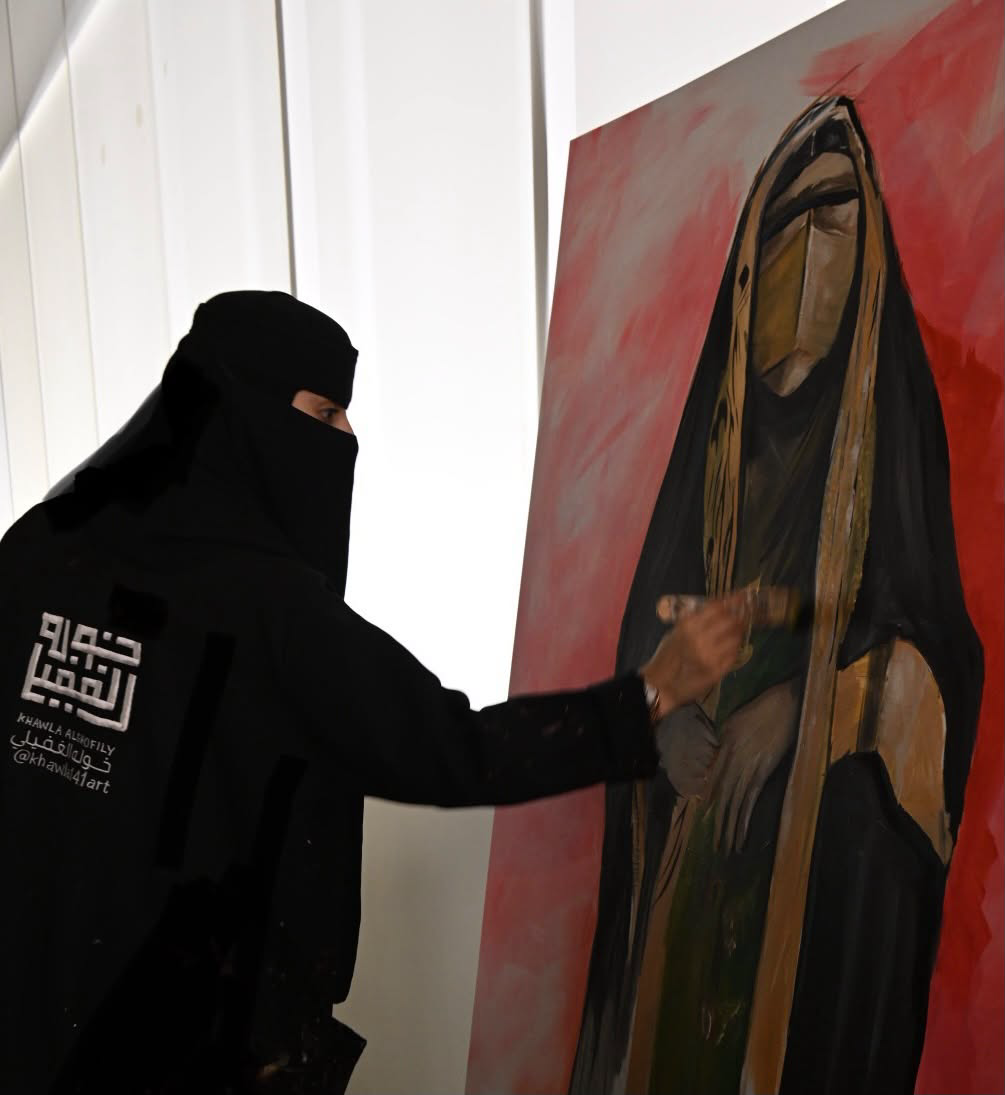
For Khawla AlGhofily, art has never belonged to a single surface or discipline. Her practice has moved through painting, pottery, glass, and other forms of experimentation, but in recent years, murals have become one of the spaces where her visual language feels most alive.
That language was not something she set out to manufacture. It emerged slowly, through years of drawing, observing, trying, and paying attention to what others began recognizing in her work. Today, Arabic and Islamic identity, everyday Saudi life, and the quiet details that catch her eye all move through a practice rooted as much in curiosity as in technique.
Q: How would you describe yourself as an artist?
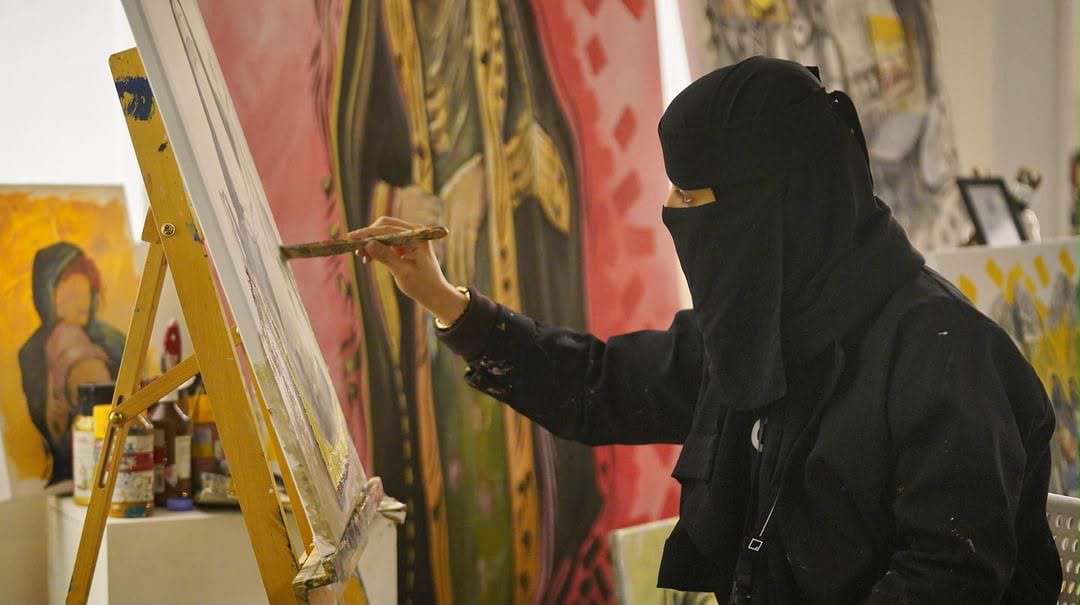
Khawla: I would describe myself first as someone who loves art in general. I have experimented with many different areas of art. There are some forms I went deeper into, and others I only passed through, like pottery and similar things. Every period, I find myself entering a different kind of art and going deeper into it. Most recently, I have been focusing on mural art, with a little bit of canvas painting as well.
Q: Can you take us back to the beginning of your artistic journey?
Khawla: My beginnings with art go back to childhood. From my school days, art class always renewed my energy. I would get very excited about it. At the time, I had not discovered that I was a painter or a visual artist. I just knew that I really enjoyed drawing, and I would look forward to that class. Thankfully, I was blessed with teachers who supported me, and I am still grateful to them for that.
They might ask us to draw something specific, geometric shapes, for example. But I would not see only a geometric shape. I would imagine those shapes in a certain place or becoming part of something else, and I would go deeper into the painting. One of my teachers noticed that there was something a little different in the way I approached it. She started taking me to participate in small school exhibitions and things like that. From there, I started becoming more invested.
Q: When did you begin thinking of yourself seriously as an artist?
Khawla: By middle school, people had started recognizing me as “Khawla the artist” or “Khawla the painter.” The name started to stick with me. So I thought, okay, I really want to understand art. What is art? How do I hold the brush? At that time, I had never seriously used a paintbrush before. That was when I began trying to learn more seriously.
I started connecting with artists online. Communication was very limited at that time, but I found artists from Egypt and elsewhere and communicated with them through forums and websites. Anything that made me curious about art or colors, I would immediately ask about it and then go try it myself. That was really the beginning for me through the internet.
Q: You began learning online at a very young age. How different was that experience from what young artists have access to today?
Khawla: I started around middle school. I was born in the 1990s, so the internet was very limited at that time. That is why I always tell the people I train now, “You are living with such a blessing”. Today we have YouTube, websites, and so many resources. They can help you so much. Sometimes you do not even need to enter a course or an art workshop because knowledge is available everywhere.
For Khawla, style did not arrive as a decision. It appeared gradually through repetition, instinct, and the recognition of others.
Q: How did you begin to recognize your own artistic style?
Khawla: Style is difficult, honestly. From the beginning of my artistic journey, I always wanted to reach the stage where people would know a painting was mine without reading my name. It was only in the last few years that I began to discover that. I used to ask artists all the time, “How do I reach my style? How do I find my style?”
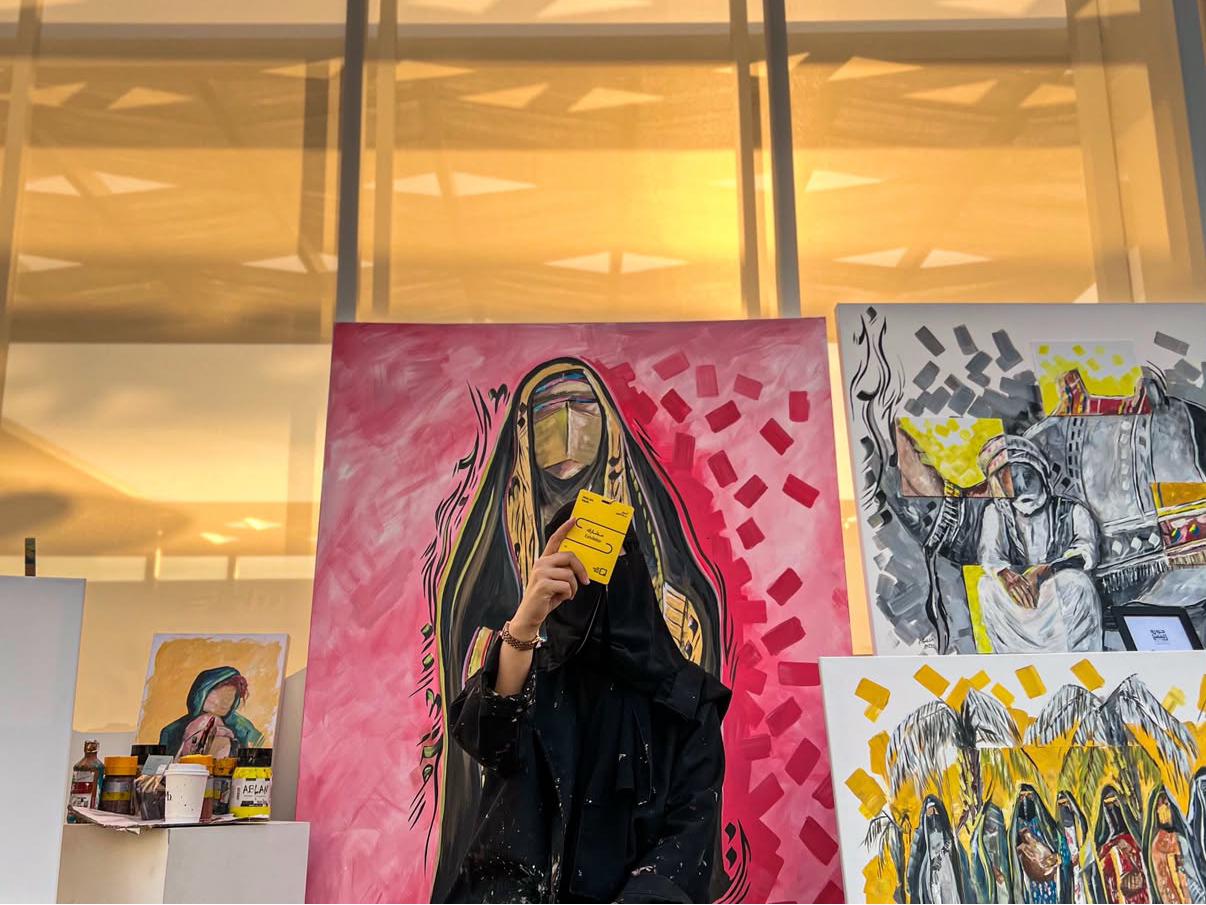
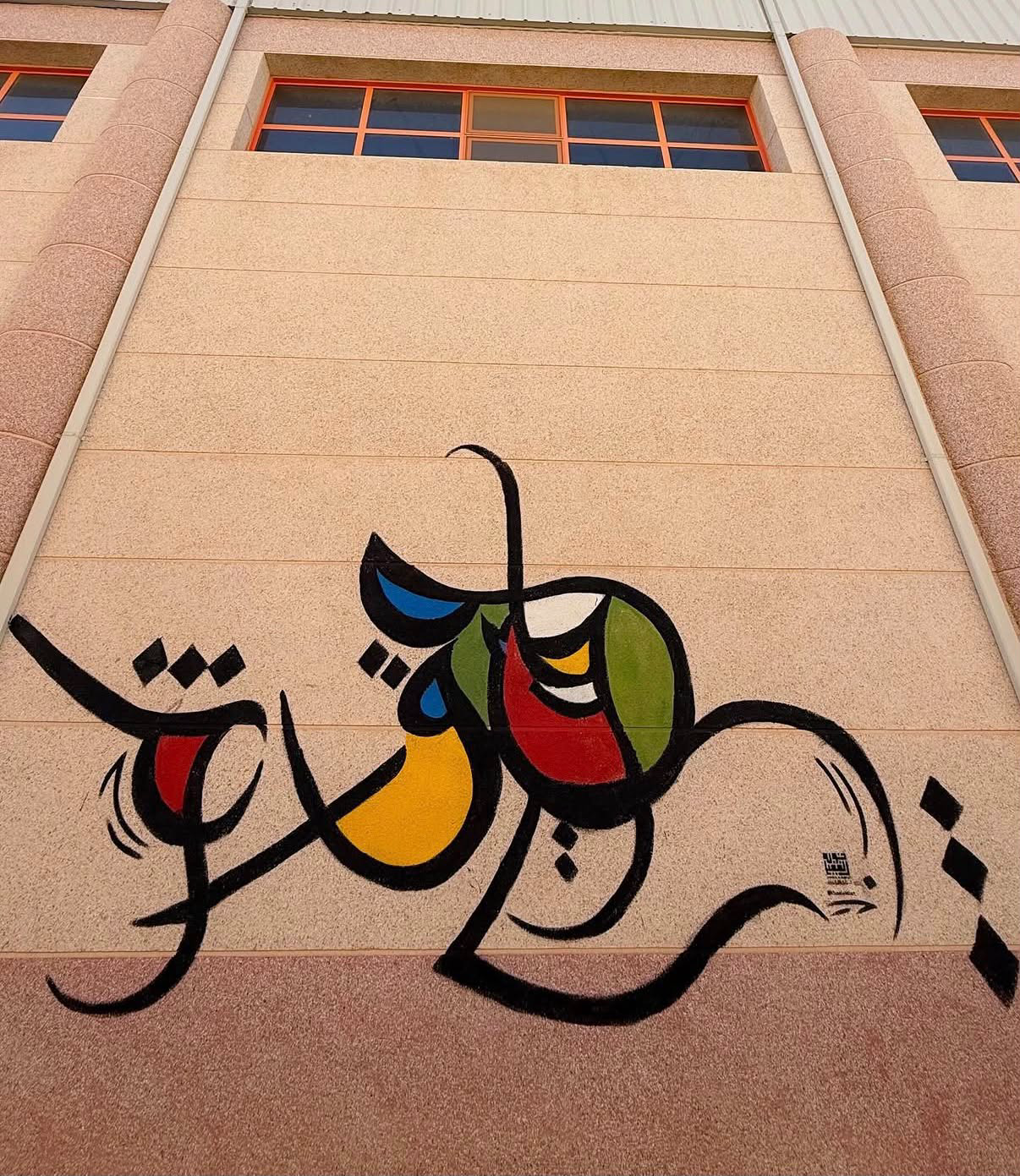
And I would always get the same answer: “Just draw. Keep drawing. Keep drawing until your style appears.” Eventually, that really happened. I discovered it through a mural. I painted it without overthinking, almost instinctively, and I realized that I really enjoyed bringing Arabic lines and lettering into the work.
Then people started telling me, “We know this is yours from this touch,” or from a certain movement, or from a color I use. The people around me helped me discover that this was my style. I was so immersed in painting that I had not noticed it myself. Later, I realized, “This is Khawla’s style.”
Q: What would you tell an artist who is still searching for a recognizable style?
Khawla: I always tell people who draw or search for their style the same answer I received before, because I discovered that it is true. Do not focus too much on, “When will I reach my style?” Just draw. People will eventually notice it, and then you will notice it yourself. As long as you love art, paint and enjoy it. The thing you are looking for will come. It takes time. The more you draw, the more you discover yourself.
Q: Do you think an artist’s style should stay consistent once they find it?
Khawla: I think it is normal for an artist’s style to change even after ten years. It can change gradually. If you go to solo exhibitions, you can often see the artist’s beginnings and then their later work. The style changes a little over the years. There might still be a recognizable technique or certain use of color, but it has to develop. It has to change so people do not become bored with the work, and so the artist does not remain fixed in one place.
Q: How has the way you paint changed over time?
Khawla: I used to paint very realistically, very, very realistically. But gradually my work became a little more abstract because I wanted to be a visual artist. For me, there is a difference between a painter and a visual artist. A painter might reproduce something as it is, but a visual artist takes something and abstracts it. They bring something else into it. The artist can control the colors, the style, and the message they want to communicate.
Q: What inspires you now?
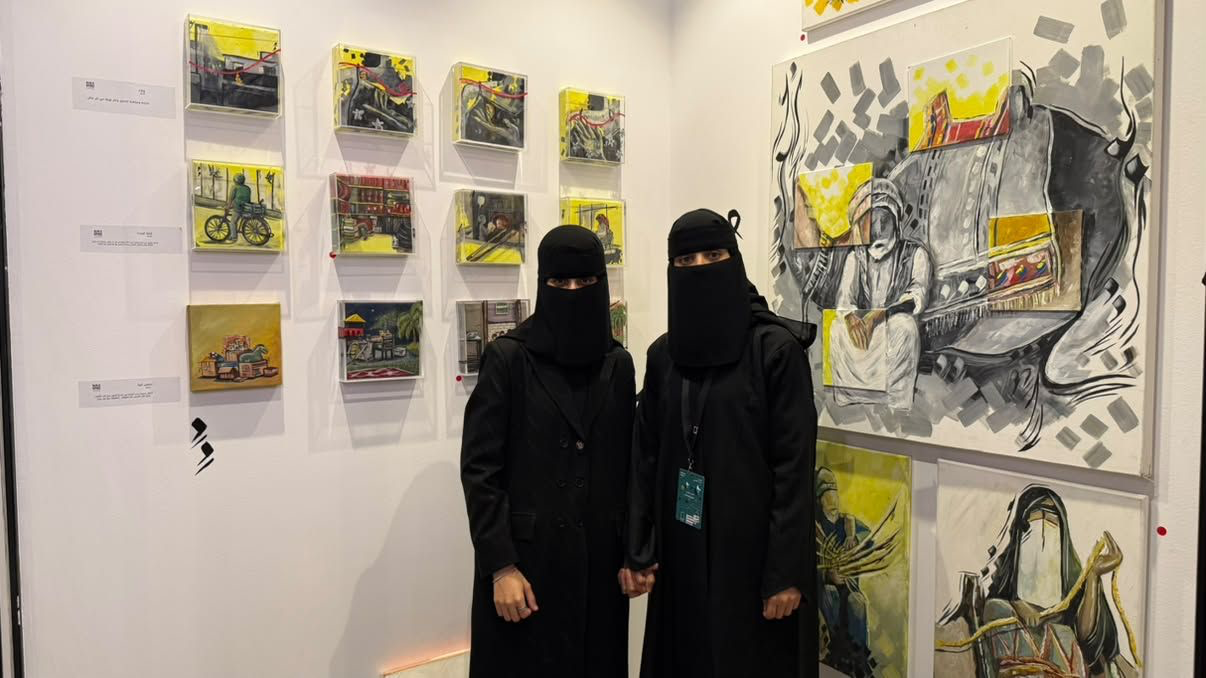
Khawla: Recently, I have started focusing on very simple things. Simplicity in general. Wherever I am and wherever I go, I tell myself, “Khawla, if something catches your attention or touches your spirit, take a photograph of it.” Then I go home, look at it, and try to bring that feeling into a painting so that the person looking at the work can receive that feeling too. It could be someone in the street, someone at work, a person completely absorbed in what they are doing, a tailor in the market, anything around me. I take a moment from it and paint it.
Q: When you photograph an everyday moment, how do you decide what becomes important in the final painting?
Khawla: I ask myself, why did you photograph this man? Or why did you photograph this child playing? What exactly caught your attention in the image? Was it the toy? Was it the way someone held the thread while sewing? I focus on that.
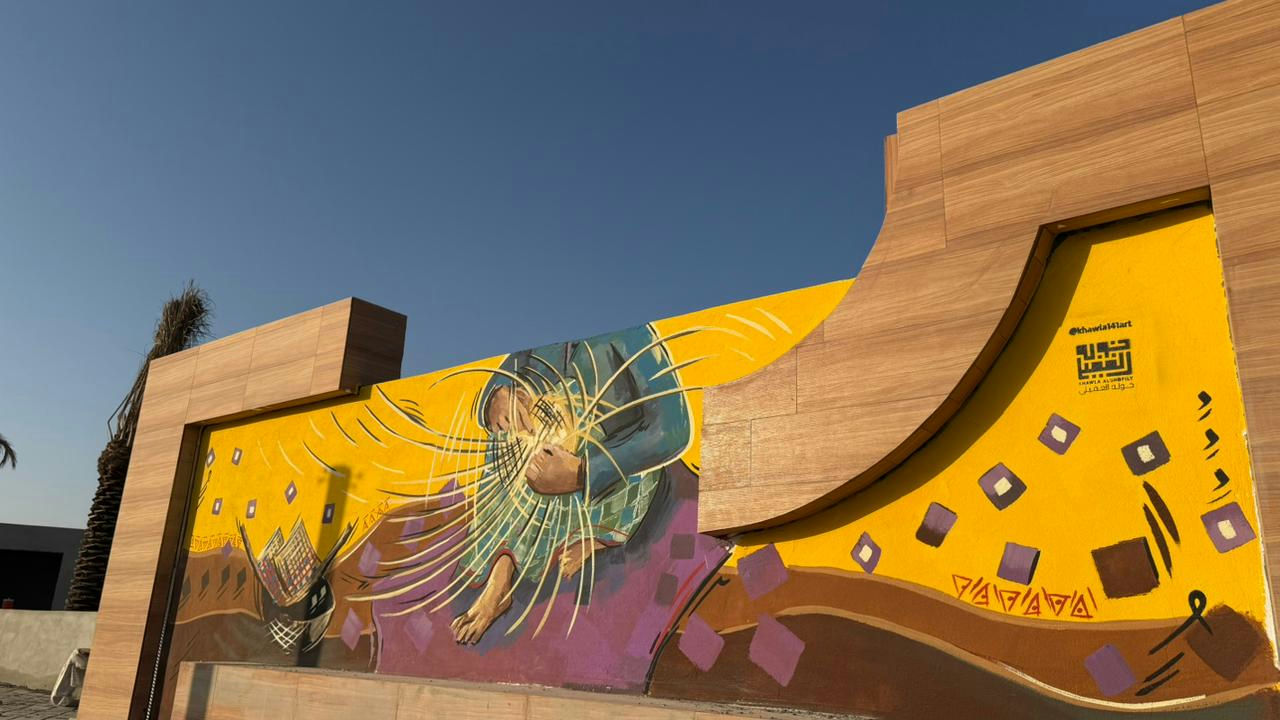
For example, if I paint an elderly woman sewing, I might focus very closely on the details of the hand and the thread. The things around her become more abstract and faded. My idea is that when someone looks at the painting, their eye immediately falls on the same thing my eye fell on. That is the idea.
Q: You have worked across different materials and surfaces. How does each one change the way you work?
Khawla: Everything I entered had its own materials and foundations. If someone hears “painter,” they might think it is just colors, a brush, and painting. But no. Painting murals is different from painting on canvas. Painting on pottery or glass is different again. Because I work with murals now, I discovered that not every brush works on every wall, and not every brush suits every type of surface. If a wall is rough, you need a rougher brush. If the wall is smooth, you need a softer brush.
If you are painting on a wall with a strong shine, the brush has to be very soft. Sometimes you need preparation before painting too. The more you enter a field of art, the more you discover how many details are inside it. And when you understand those details, you become better at it and the work becomes easier.
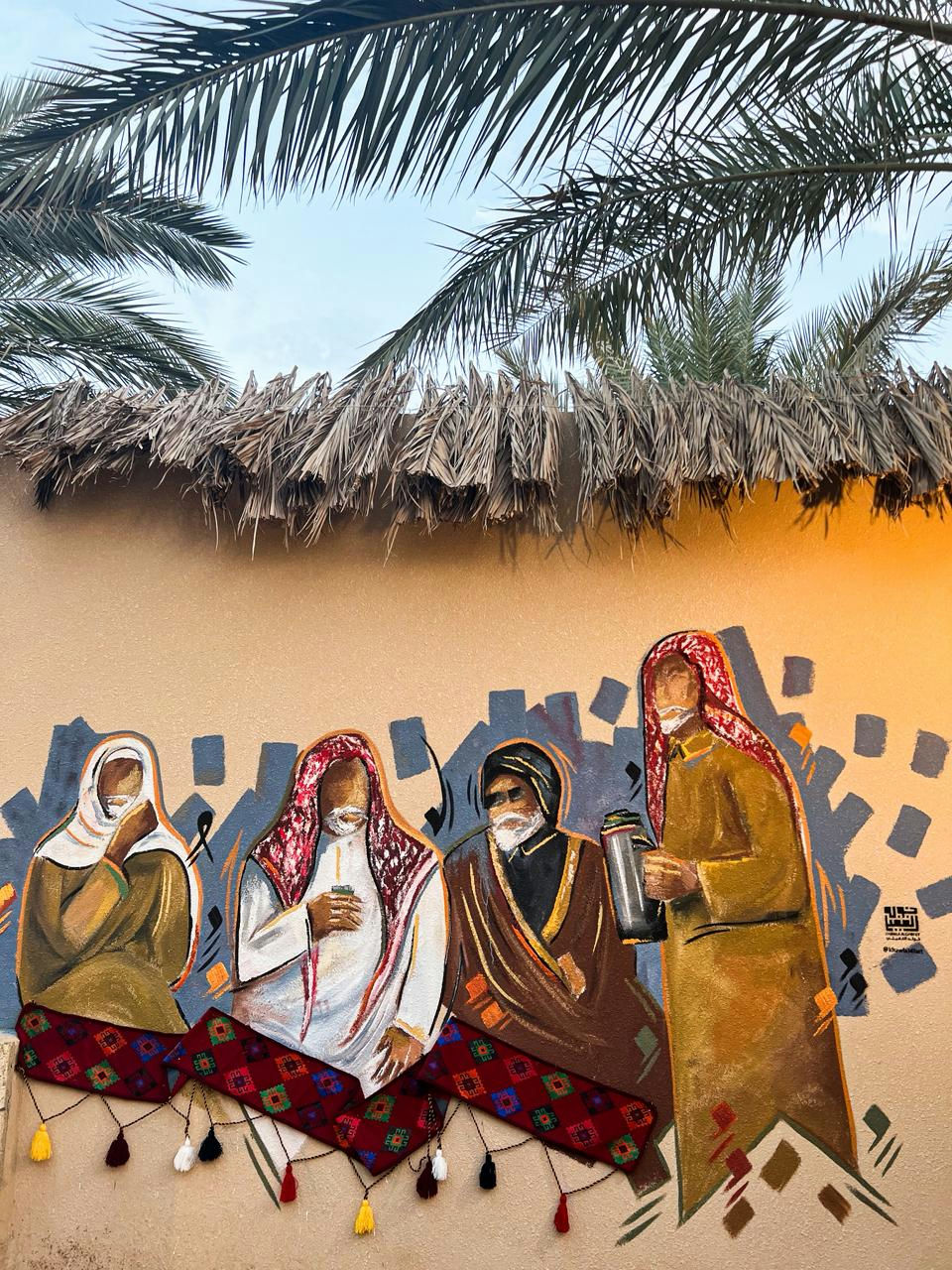
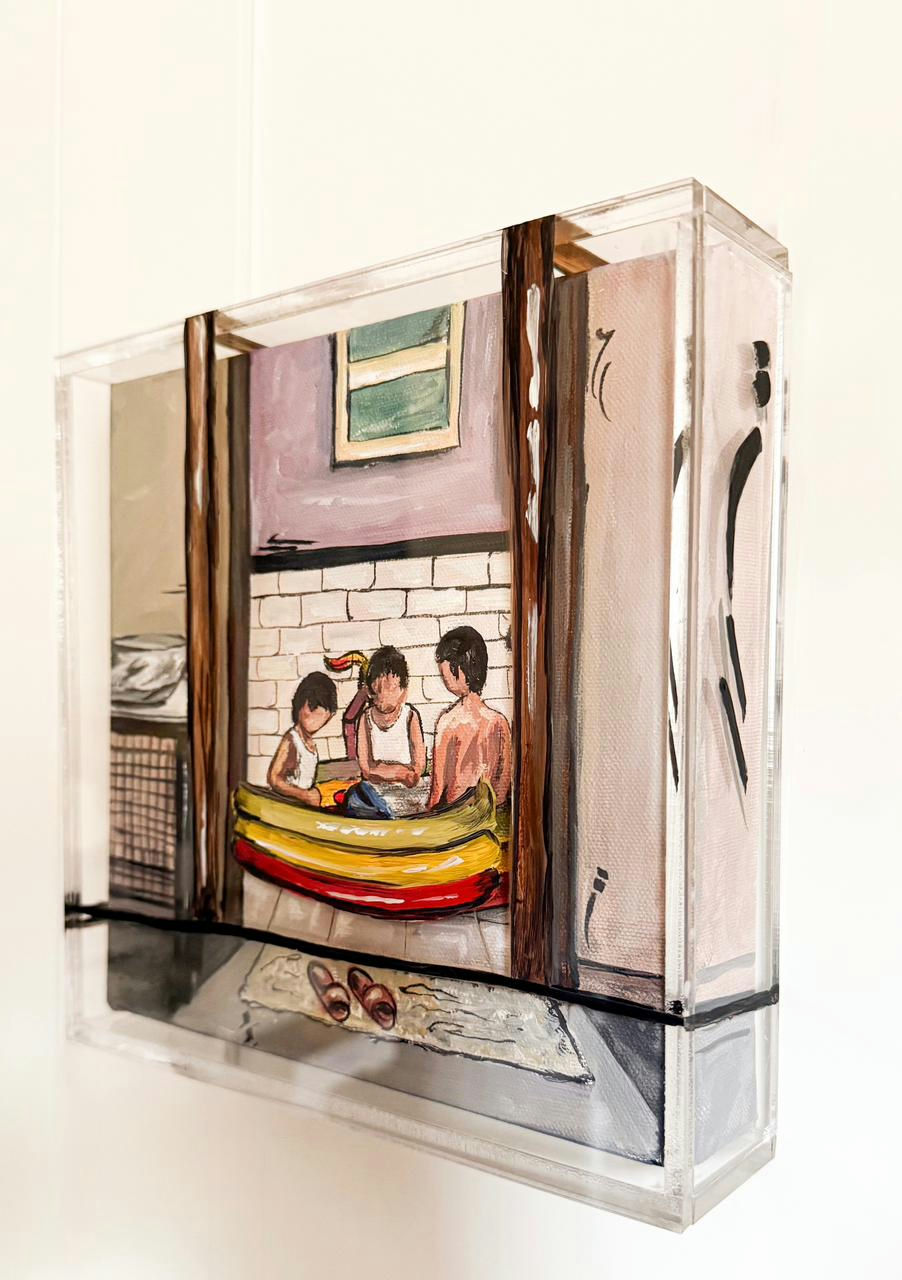
Mural painting has become one of the most demanding parts of Khawla AlGhofily’s practice, requiring physical endurance, speed, improvisation, and an understanding of surfaces that can only come through experience.
Q: What makes mural painting especially challenging?
Khawla: Murals are a very strong challenge. You need to have courage. You have to carry the colors up with you. You have to deal with going up and down, the sun, the heat, and many other things. You are also challenging yourself to finish within a certain amount of time because most murals have a time frame. They need to be finished quickly. It is not like a canvas where I can immerse myself in it and say, “Whenever I finish, I finish.” Usually, murals have a deadline.
Q: Have you ever had to invent your own tools while working on a mural?
Khawla: Yes. Sometimes I need a very long brush, so I have to bring a regular pole, attach the brush to it, and tape it together. Sometimes the mural itself might not be too high, but there are trees or something between you and the wall, so you have to paint with a very long brush. Where are you going to find something like that? You have to make it yourself so that it works for you.
Q: Does not having the perfect tool ever stop you from creating?
Khawla: I have one rule:
“An artist can create art even with a broken piece of charcoal.”
Do not let the tools stop you. You think about quality when you are creating a painting that someone is going to acquire from you. If they are paying for it, then of course you have to think about the quality, the materials, and the canvas. It should be something that lasts.
The same with murals. But the small tools that help you transfer color to the mural in a beautiful way, you can work with anything around you. It does not always have to be a paintbrush.
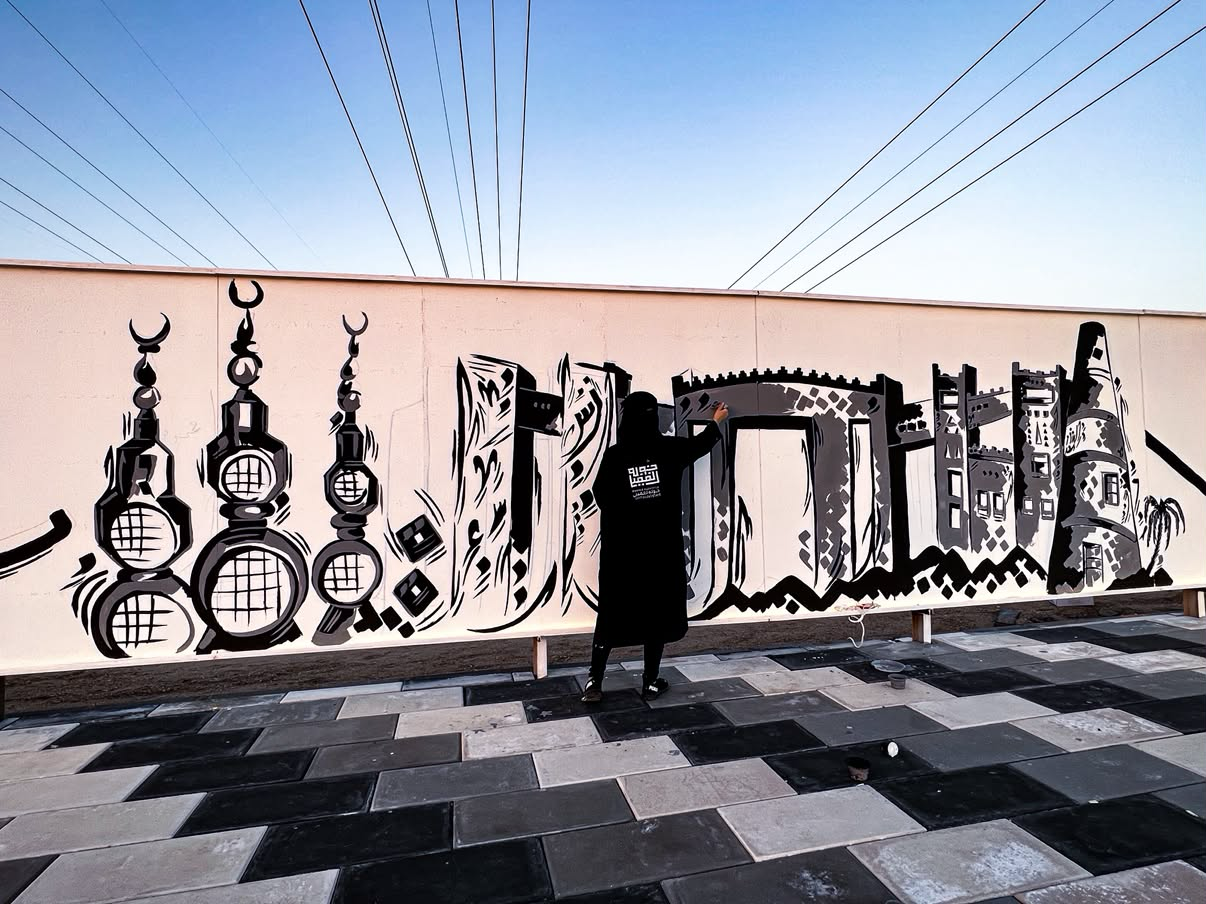
Khawla AlGhofily’s interest in Arab and Islamic identity is not limited to decorative motifs. For her, painting everyday Saudi life is a form of documentation, one that allows ordinary moments to become evidence of a particular time and place.
Q: Is there a theme that you find yourself returning to in your work?
Khawla: Right now, I like to bring Arab identity, or Islamic identity more generally, into my work as much as I can. Foreign artists used to paint their own surroundings and the life around them. So when people ask me, “Why do you paint Saudi life?” or “Why do you paint simple things?” I say, this is me documenting my time.
A generation will come after me and know where Khawla lived, who Khawla was, and how Khawla lived. They will know that I was an Arab Muslim visual artist living in Saudi Arabia and living Saudi life. I want the painting itself to speak.
Q: What do you hope people feel when they encounter your work?
Khawla: I like creating things that can offer some kind of benefit. For example, I once painted a street cleaner. Why did I paint that? Maybe when I exhibit it, it can inspire someone who is no longer noticing the blessings around them. Through one image, I try as much as I can to show the exhaustion and effort. The artist does not always need to speak. The painting should speak for them.
If someone comes into an exhibition looking for inspiration, or looking for something to help them move forward, whatever feeling they are carrying inside, maybe when they see the painting they become more aware of the blessings around them. They might leave the exhibition with energy, passion, love for what is around them, love for themselves, or love for their hobby or work. They could be a teacher or anything else. If they find inspiration in the painting, that means something.
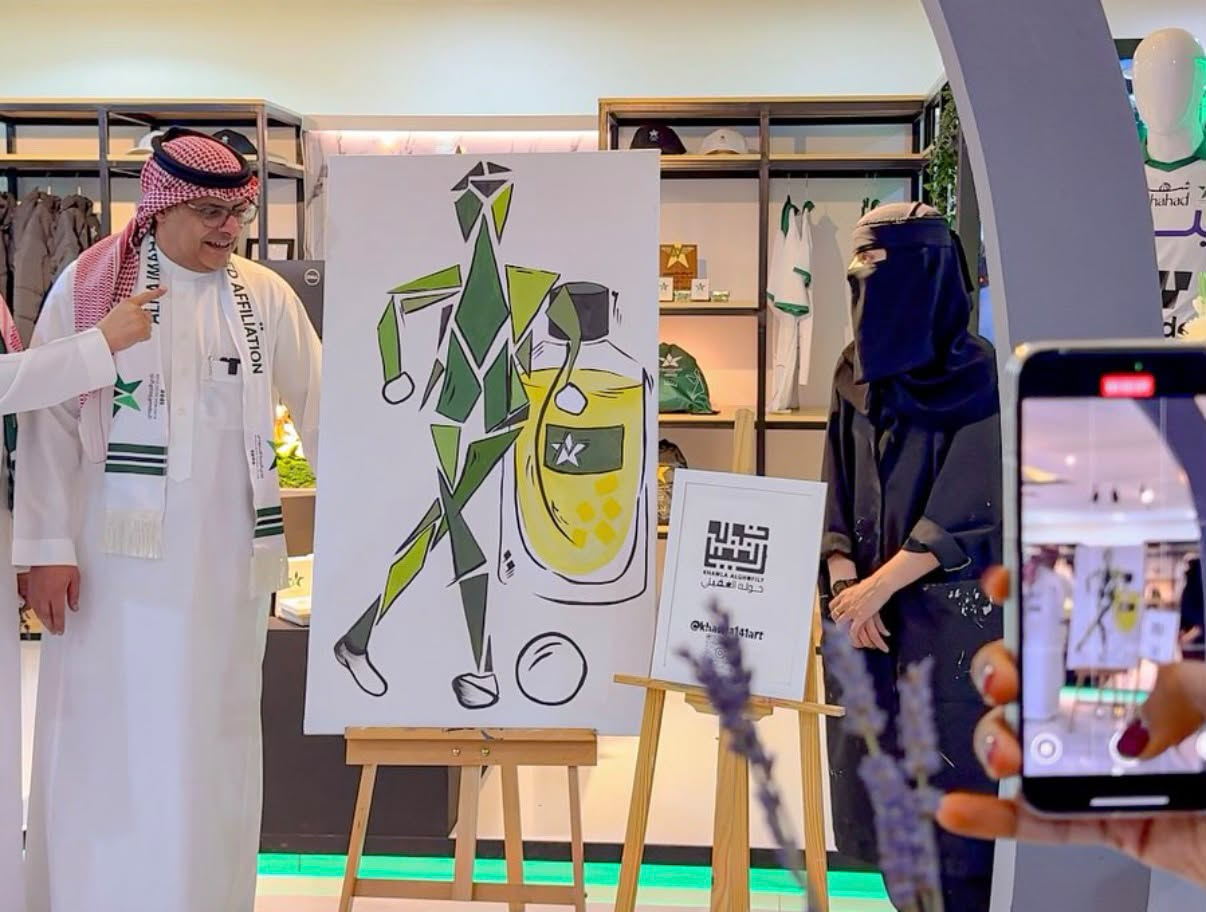
Q: Where have you had the opportunity to exhibit your work?
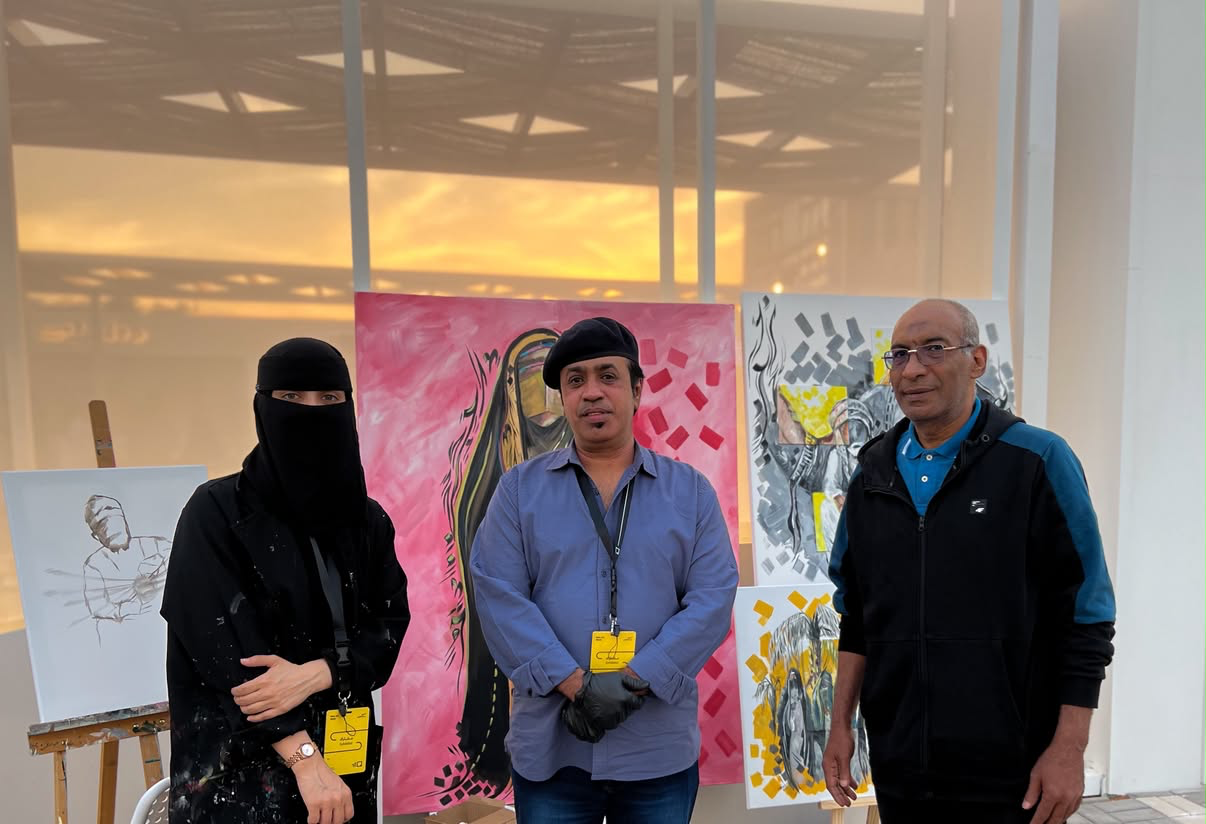
Khawla: I exhibited my work at Misk 2023 and again in 2025. Those experiences gave me the opportunity to show my work in a public setting and have people encounter it directly.
For me, exhibiting is also part of the artistic journey. You spend so much time with a work while creating it, but once it is displayed, it begins to have a different relationship with the audience.
Q: How would you like your artistic practice to develop in the future?
Khawla: I have many goals. At some point, an artist starts thinking beyond simply painting and exhibiting. Sometimes you also think about the financial side of your practice, and about giving and teaching. God has blessed you with this ability, and you learned and worked hard for it, so do not keep that knowledge to yourself. Give something back. I think a lot about developing my workshops and art courses and working more with trainees. I want to benefit them more. I do not want to stop at old information.
Q: What kind of artist and teacher do you want to become?
Khawla: I want the quality of my paintings to become higher. I want the materials and the work I create to reach a point where someone holds it and says, “Wow, you could not find this anywhere else.” I am drawn to artworks you see in museums, the ones that make you stop and say, “Wow.” The works where you can see that someone has worked on very small details.
That is what I want to continue learning. I want my own work to become more precise and higher in quality. And when I give people this knowledge, I want it to actually benefit them. I do not want to give them the same repeated information. I want to teach them from my own experiences.
There is a quiet consistency running through Khawla AlGhofily’s practice. Whether she is painting a hand holding a thread, adapting a brush for a wall she cannot quite reach, or documenting a figure from everyday Saudi life, she returns to the same instinct: notice what others might pass by.
Her work treats ordinary life as something worth preserving. Not because every moment needs to become monumental, but because the simplest details often say the most about how people lived, worked, and moved through a particular time. For Khawla, finding an artistic identity has meant learning to trust that process. Draw first. Look closely. Allow the style to emerge. And above all, enjoy making the work.
Stay close to Khawla AlGhofily’s evolving visual journey on her social platforms @khawla141art and tiktok.com/@khawla141art.
We’d love to hear from you! Reach out to share your own artistic journey.