Sarah Al Abdali: Mapping the Untold Stories and Shifting Landscapes of the Hijaz
Explore Sarah Al Abdali’s paintings, installations, exhibitions, and debut novel, all rooted in the memory and material culture of the Hijaz.

Explore Sarah Al Abdali’s paintings, installations, exhibitions, and debut novel, all rooted in the memory and material culture of the Hijaz.
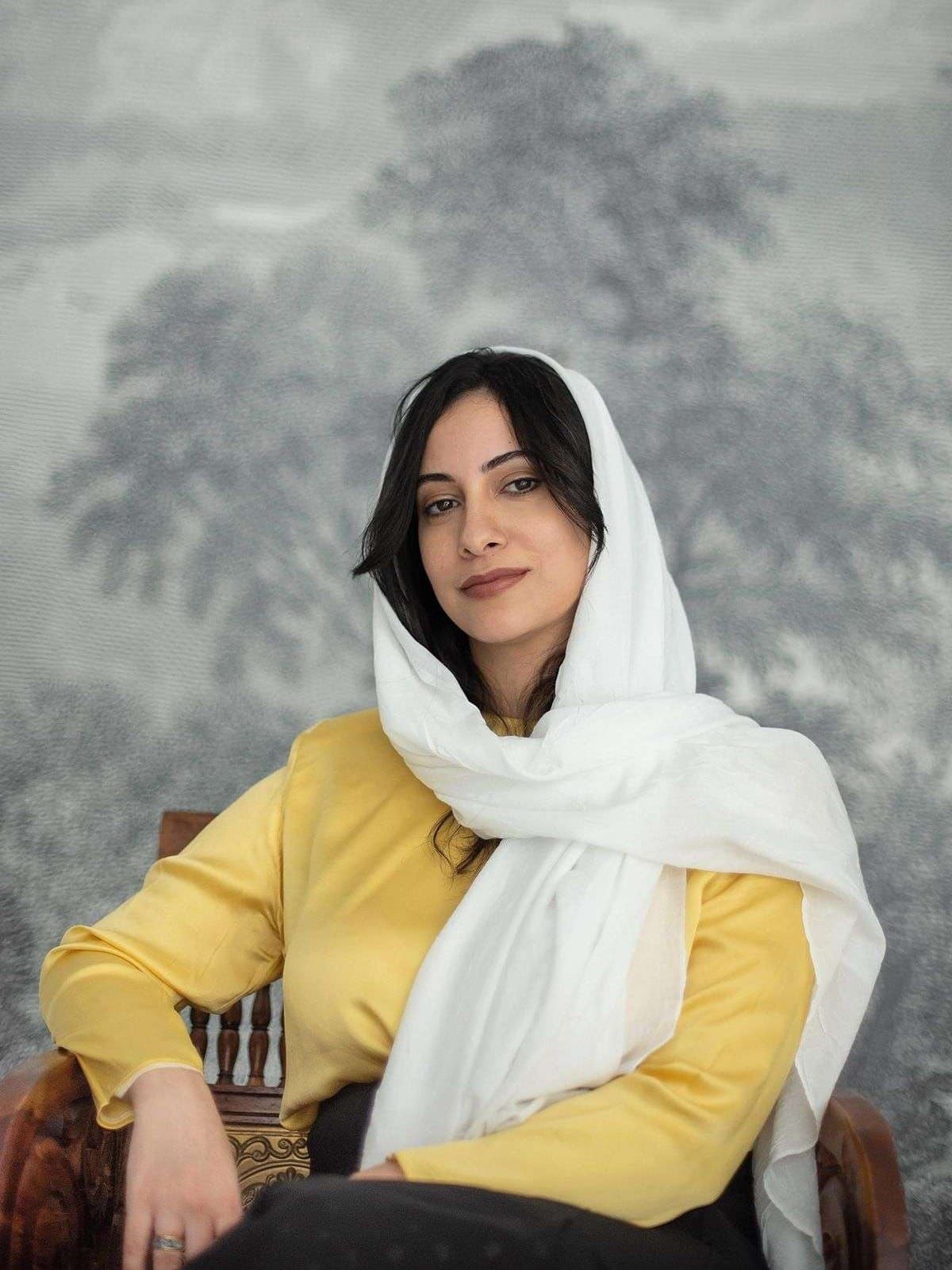
“Art defines what a society believes in.”
In Sarah Al Abdali’s work, the past is never silent. It survives in carved wood, fading architecture, cemetery inscriptions, domestic stories, women’s faces, and the intimate histories carried from one generation to another. Born in Jeddah in 1989, the Saudi artist, curator, researcher, and novelist has developed a practice shaped by Arab culture, Islamic philosophy, and the material heritage of the Hijaz. Often described as one of Saudi Arabia’s earliest street artists, she first gained recognition through Makkah Street Sign, a work that later entered the British Museum’s collection.
Moving between painting, ceramics, woodwork, sound, video, and literature, she returns repeatedly to what official narratives overlook: the lives behind buildings, the voices behind names, and the emotional worlds hidden inside history. For Sarah Al Abdali, preservation is not an exercise in nostalgia. It is a way of questioning what a society values, what it allows to disappear, and what an artist can bring back into view.
Sarah Al Abdali completed a master’s degree at The Prince’s School of Traditional Arts in 2014. Her studies brought her into close contact with techniques including ceramics, miniature painting, mosaics, plaster carving, illumination, and woodwork. That education became more than technical training. It gave her a vocabulary through which ornament, architecture, symbolism, and spiritual thought could enter contemporary art.
Gold, pigment, charcoal, ceramic tile, and carved surfaces become carriers of memory in her practice. They evoke the visual traditions of Islamic art while allowing Al Abdali to address questions of belonging, cultural erasure, displacement, and remembrance. Her relationship with craft also extends beyond the studio. She has worked as a consultant on traditional arts and crafts for organizations including the Saudi Commission for Tourism and Antiquities and Turquoise Mountain Trust, positioning her practice between artistic interpretation and cultural stewardship.
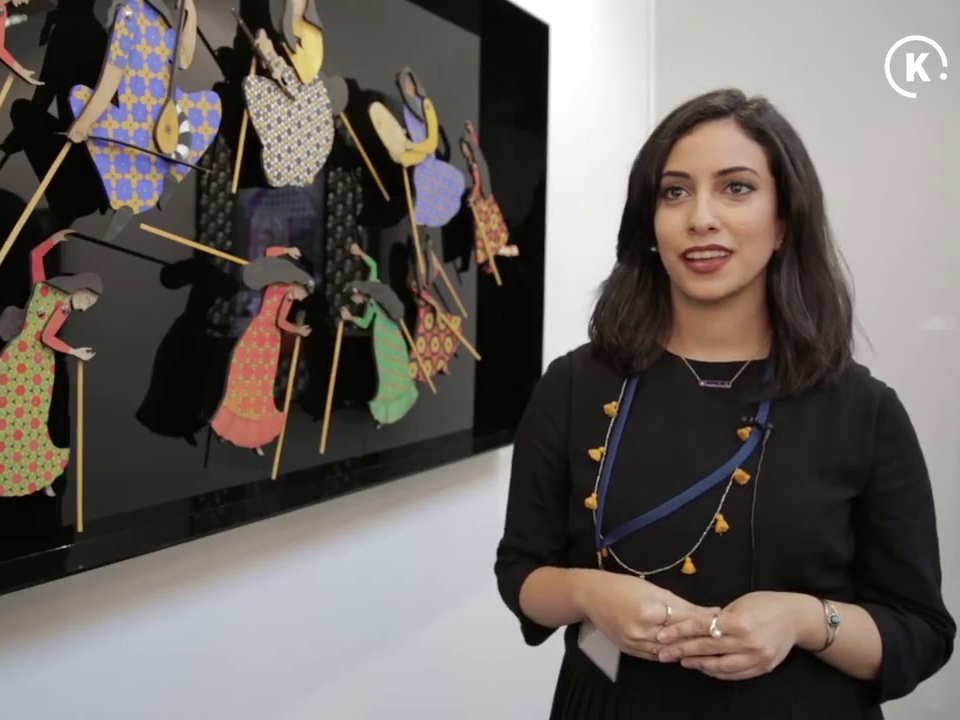
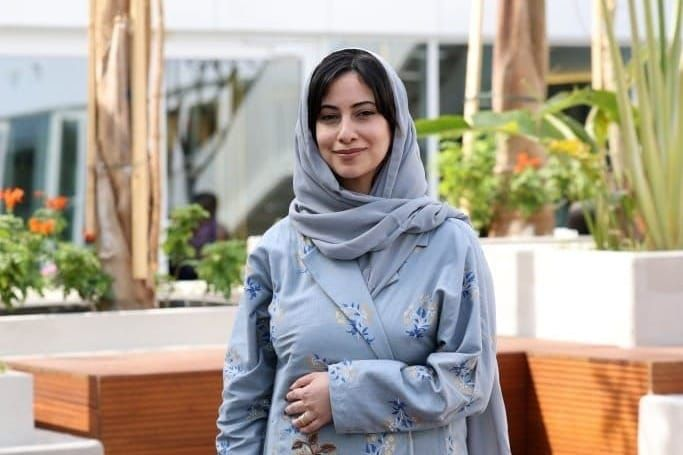
The Hijaz is central to Al Abdali’s imagination. Its sacred cities, mixed communities, domestic architecture, pilgrimage histories, and oral narratives provide both the subject and emotional structure of her work. She has spoken about growing up at a time when much of what she learned about her identity was available primarily through oral history. Witnessing changes to Makkah’s architectural and urban character strengthened her belief in the importance of preserving cultural heritage.
“My frustration and deep appreciation for this land inspired me to start a lifetime mission of documenting untold stories.”
This helps explain why buildings in her work rarely function as background. A façade can become a portrait. A window can suggest a private life. A demolished structure can hold the emotional weight of a lost relative. Al Abdali does not treat the Hijaz as a polished historical image. She approaches it as a living archive, full of contradictions. It is sacred and everyday, cosmopolitan and intimate, enduring and vulnerable to disappearance.
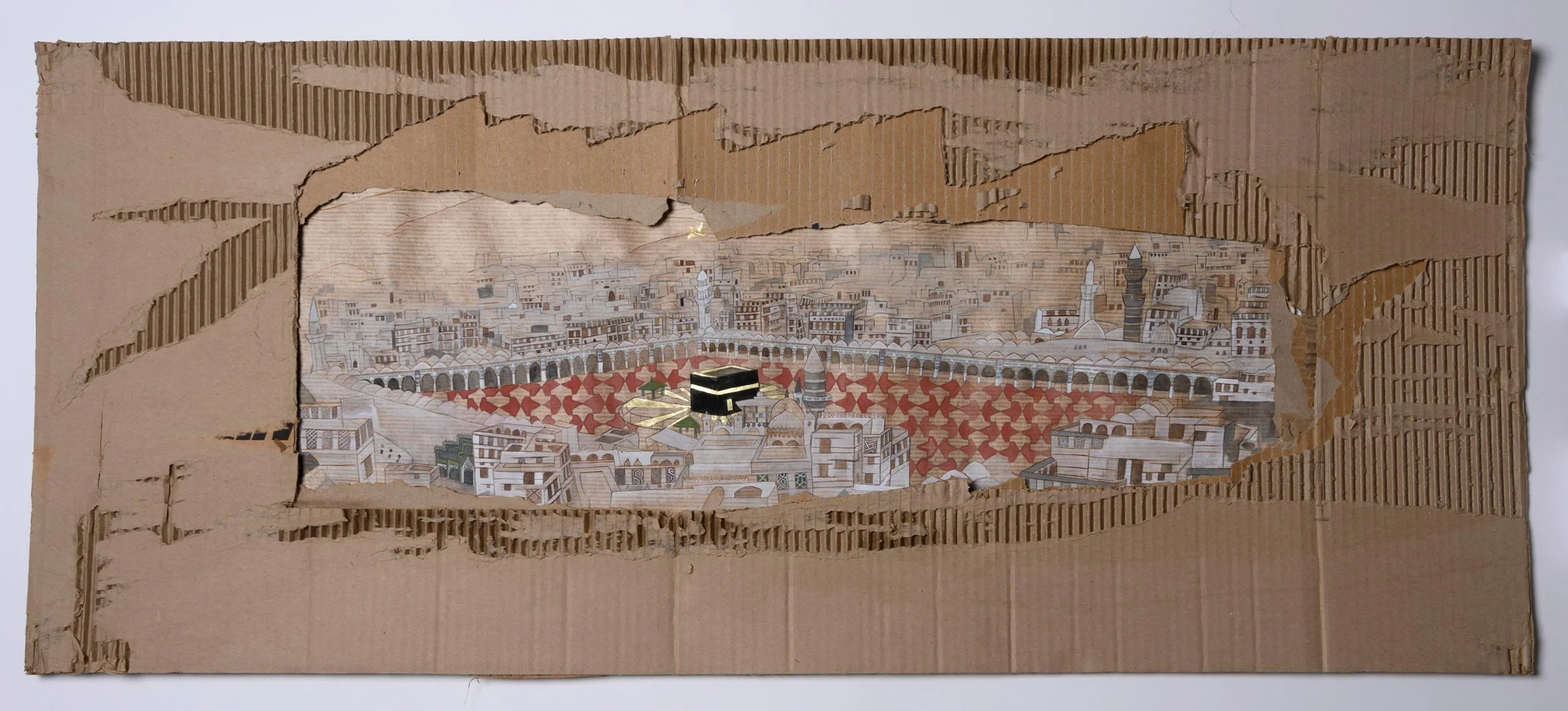
Al Abdali’s installations reveal the research-led dimension of her practice. Rather than illustrating history, she constructs encounters through which it can be heard, felt, and reimagined.
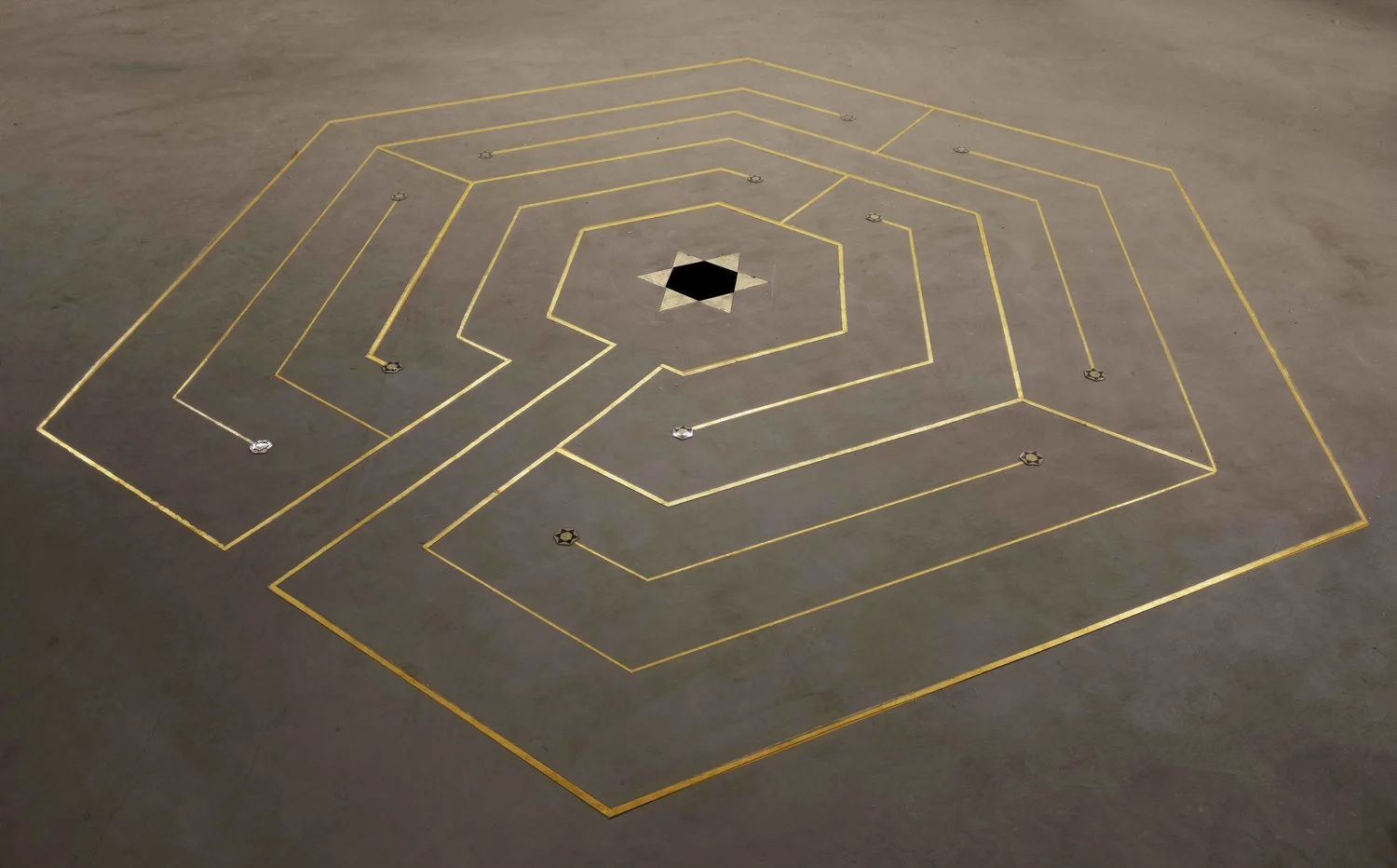
Created in 2017, Gilded Path combines metal leaf and wood on concrete. The work brings ornament into conversation with a material associated with modern urban construction. The contrast is quietly powerful. Metal leaf catches light, while concrete carries weight. Wood suggests craftsmanship and inherited knowledge. Together, they create a passage between beauty and hardness, tradition and development, permanence and loss.
The installation reflects a recurring tension in Al Abdali’s work: what happens when the refined visual languages of the past meet the imposing surfaces of the contemporary city?
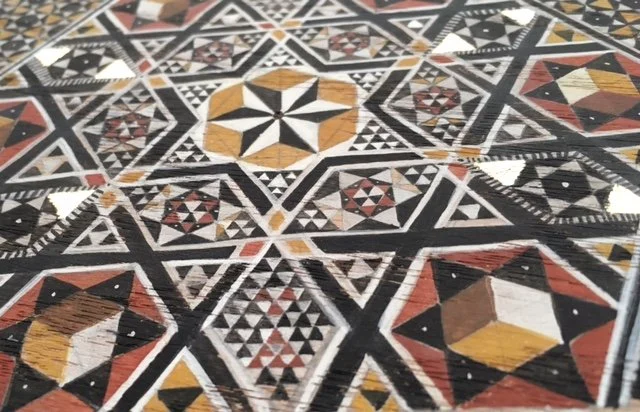
In After Hijrah, created in 2023, Sarah Al Abdali turned to the historic tombstones of Al Ma‘la cemetery in Makkah. For the sound installation, she researched the family trees of people commemorated by selected gravestones and developed layered sound narratives from their histories. As visitors listen, the stones cease to feel like anonymous archaeological objects. They become witnesses to individual lives and to the wider social and religious history of Makkah. The project also became personally significant when Al Abdali traced members of her own ancestry through the research.
Here, the archive becomes intimate. History is no longer something observed from a distance. It enters the artist’s own family line, transforming scholarship into an act of recognition.
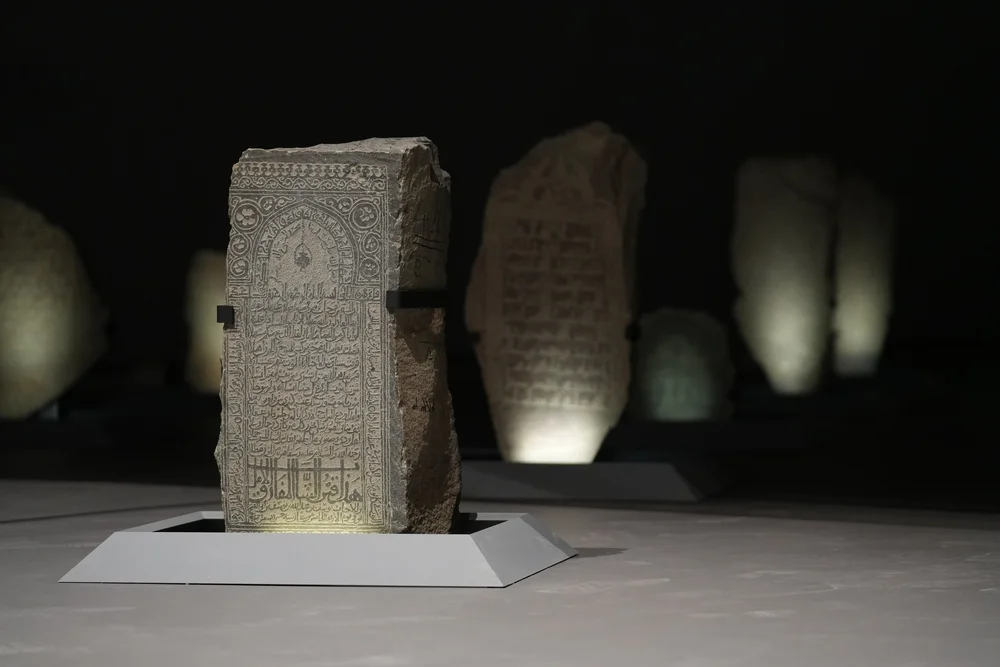
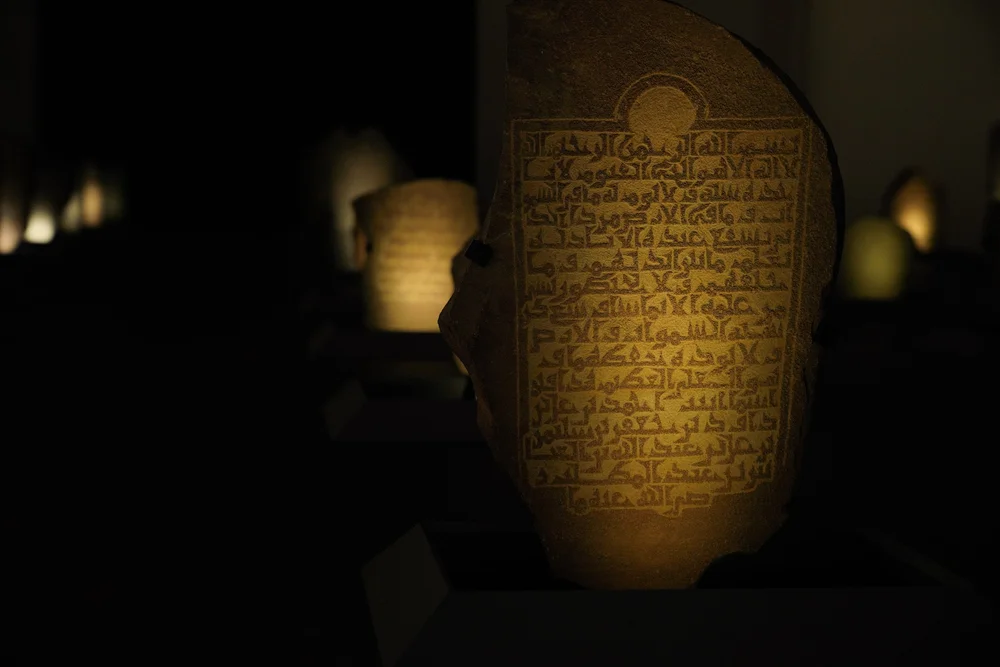
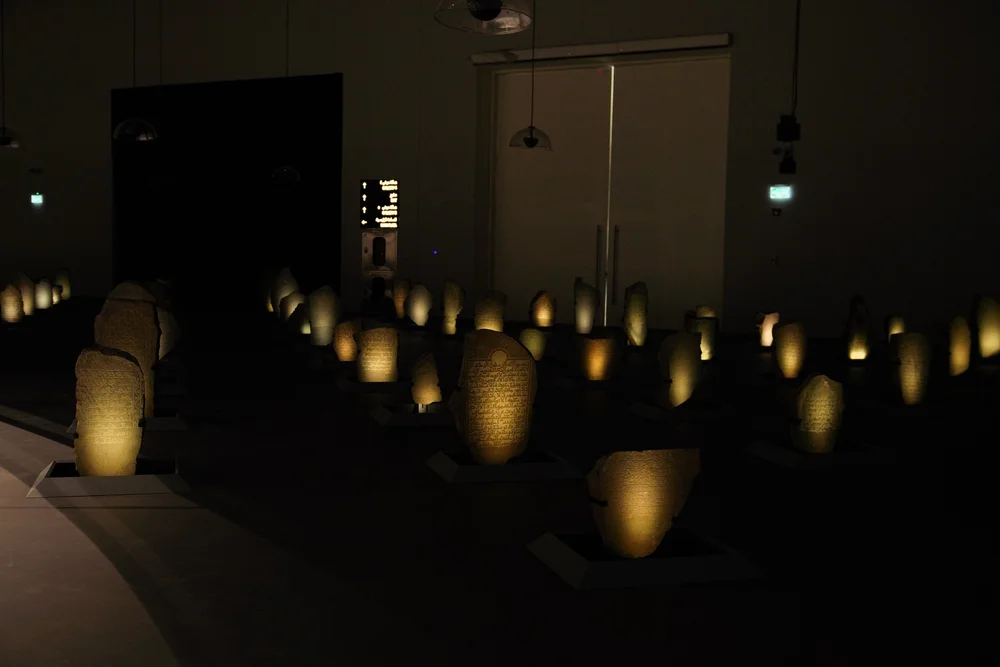
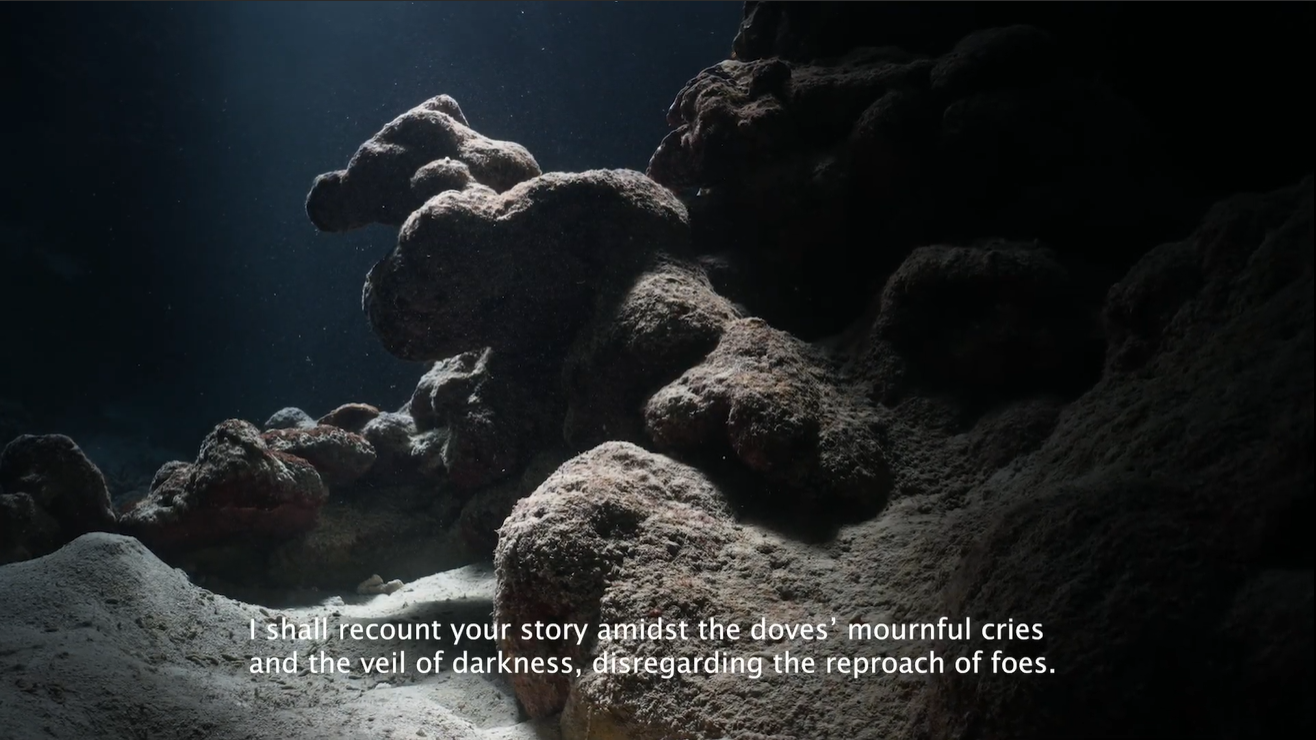
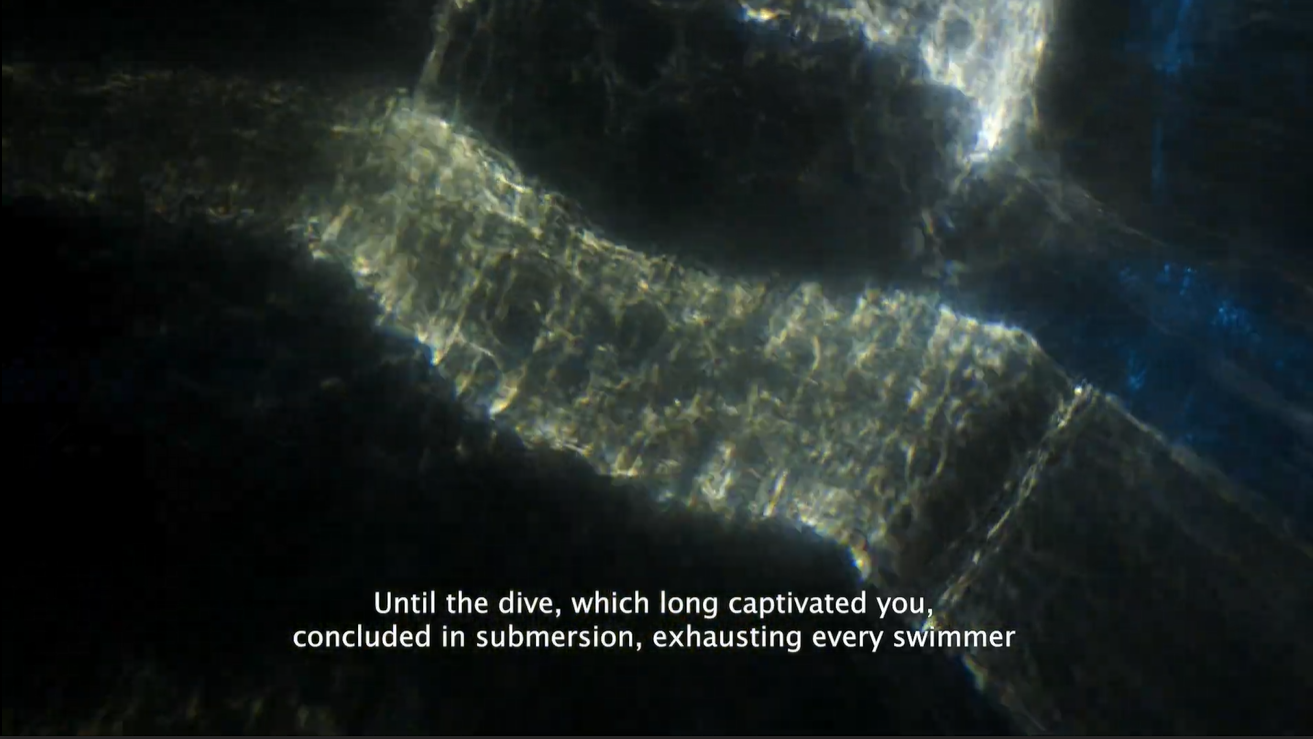
Also created in 2023, Water Poem is a video installation developed in collaboration with filmmaker Hamida Issa. The work journeys through the historical Hijaz between 500 and 800 AH, centering on a tombstone from Al Ma‘la cemetery and a poem mourning a cousin who drowned. Through visual poetry, it explores grief, longing, and memory in medieval Makkah. Water becomes more than the cause of loss. It becomes a metaphor for the movement of memory itself: difficult to contain, capable of carrying a voice across centuries, and always changing form.
Sarah Al Abdali’s paintings often feel suspended between miniature, portrait, architectural study, and personal archive. Traditional materials create visual richness, but beneath that beauty lies a sustained concern with vulnerability.
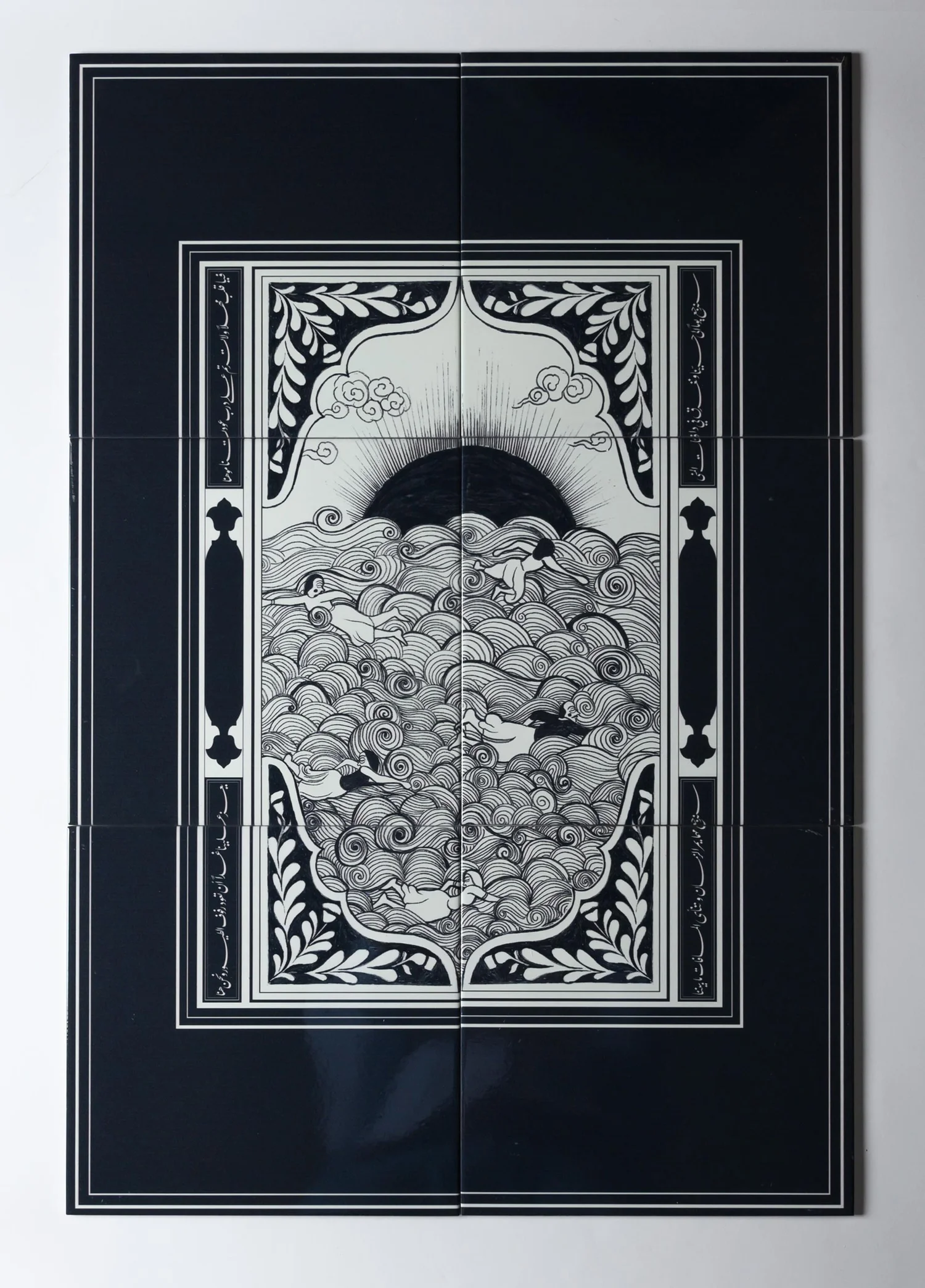
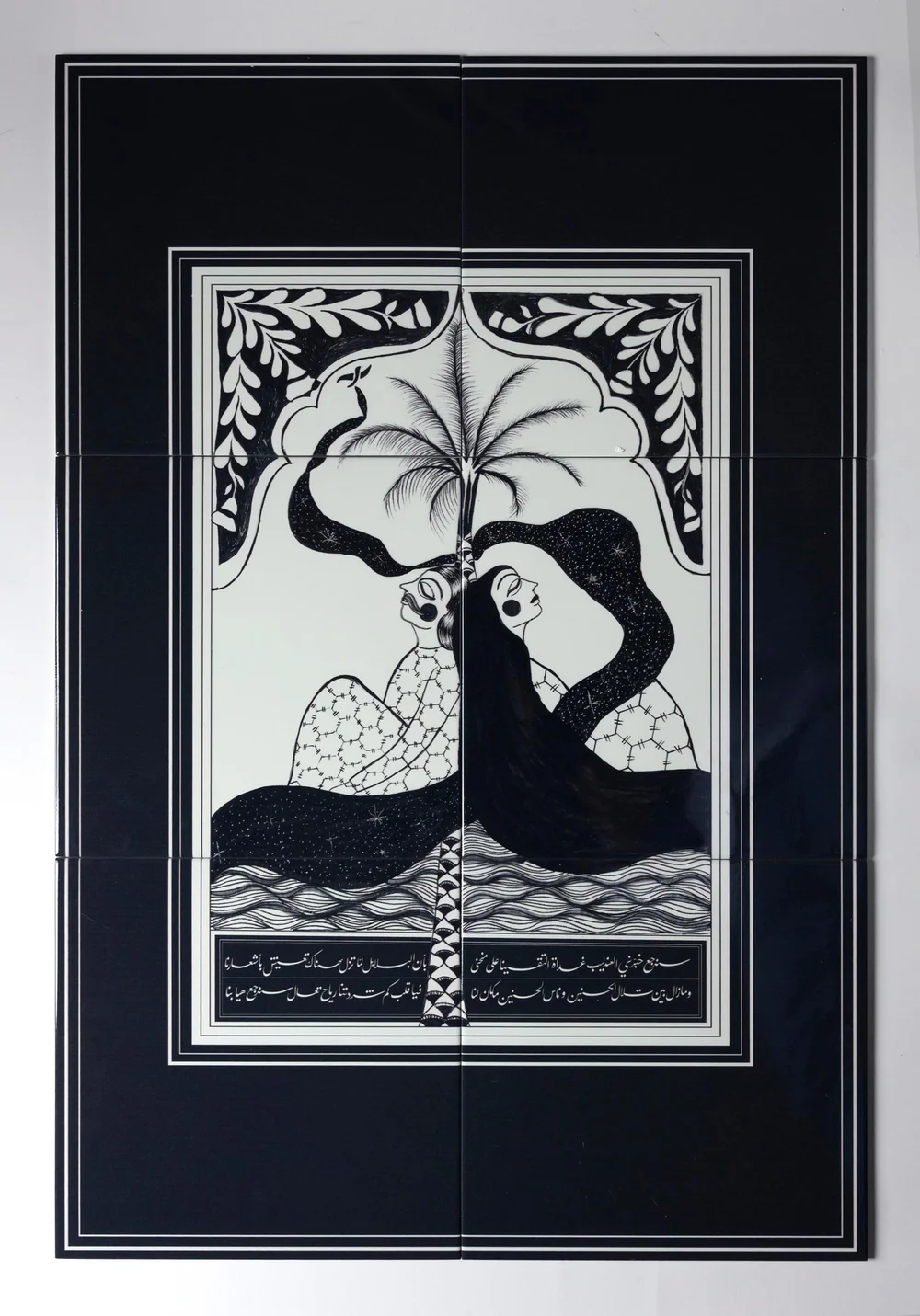
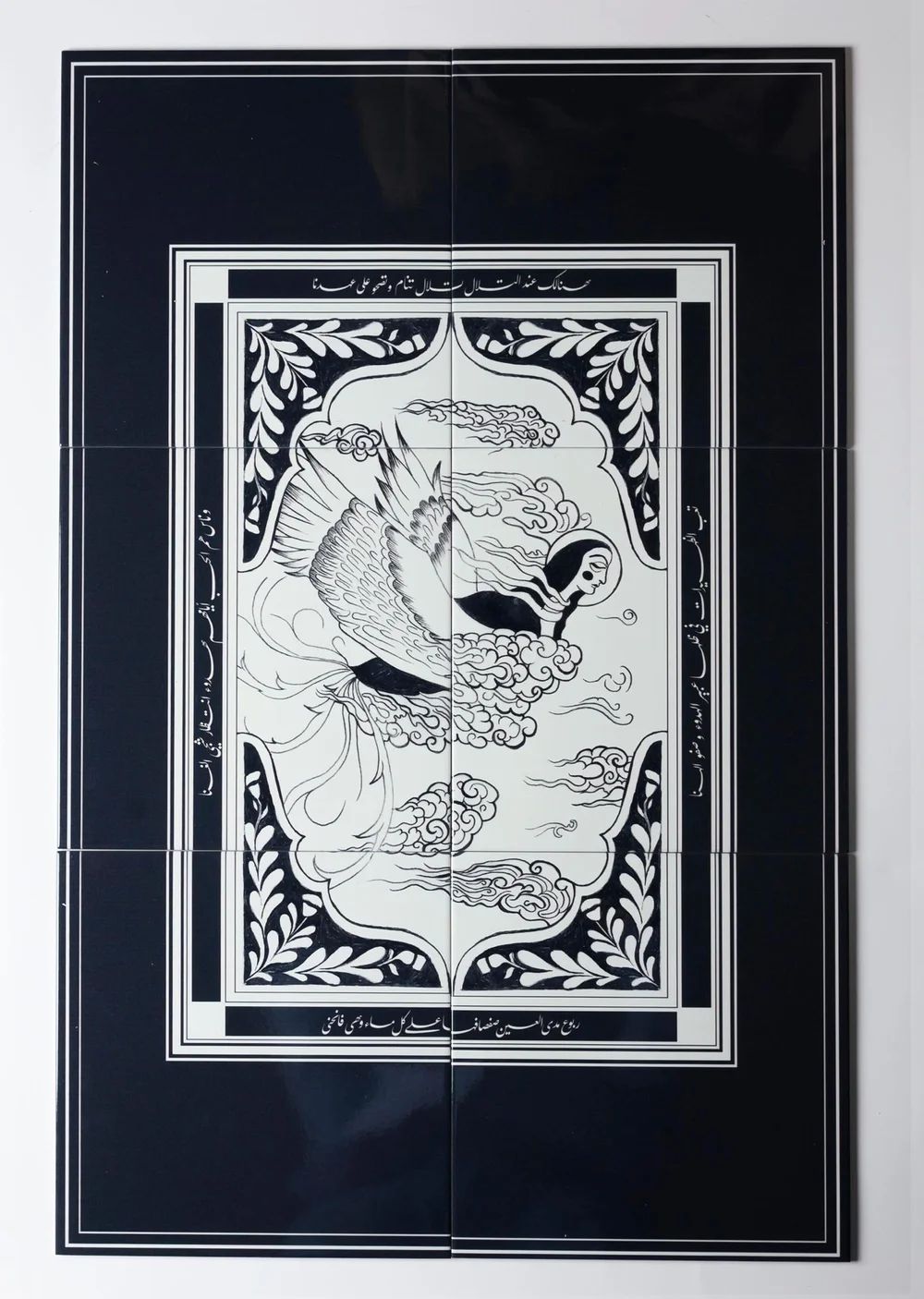
Created in 2018 from ceramic tiles, The Trilogy of Refuge measures 95 by 60 centimetres and unfolds across three black and white panels. Waves, birds, trees, and human figures appear within decorative borders inspired by Islamic manuscripts and architectural ornament.
The series was influenced by the tilework of Istanbul’s metro stations and first exhibited at Cumhuriyet Art Gallery. Its imagery and accompanying poetry frame refuge as more than physical shelter. It becomes a place preserved through longing, memory, and the hope of return.
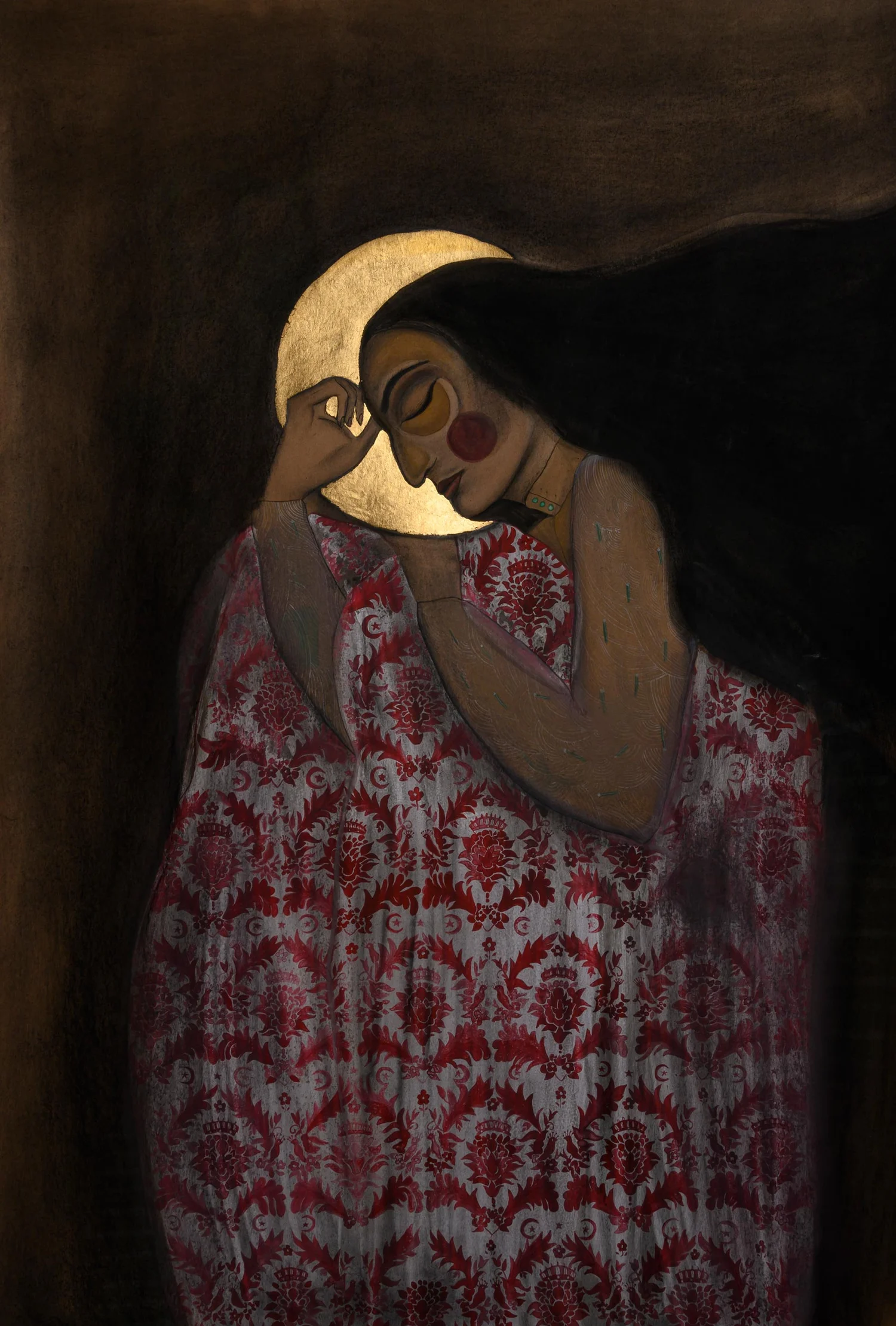
Created in 2019, Layla Falls Asleep combines gouache, charcoal, and gold on paper across a composition measuring 160 by 70 centimetres. A sleeping woman is wrapped in red patterned fabric, her face resting against a luminous gold crescent. The contrast between darkness, ornament, and stillness gives the work an intimate yet ceremonial quality. Sleep becomes a space of retreat, vulnerability, and inner refuge.
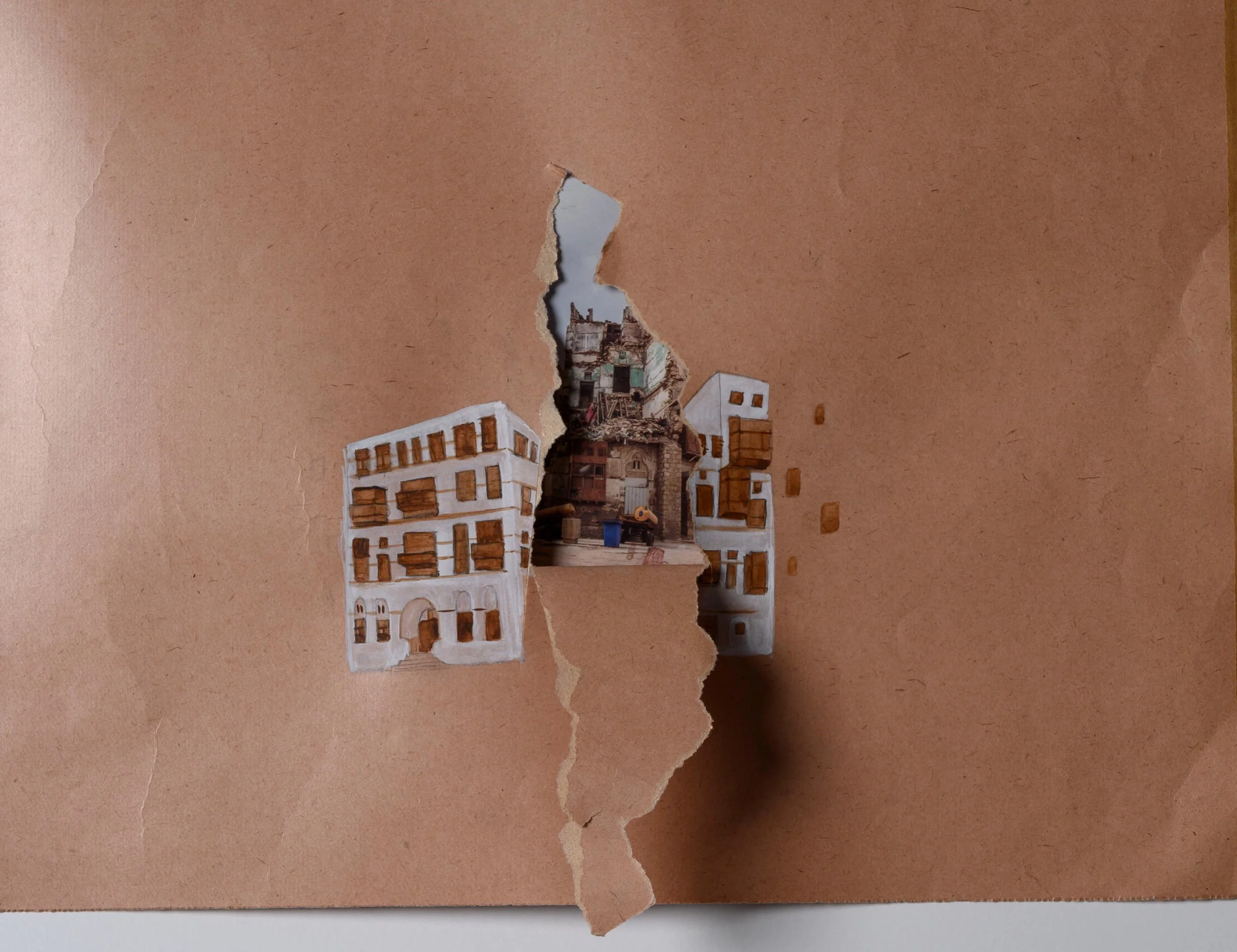
Created in 2018 with natural pigments and gouache on paper, Remains brings together torn paper, painted façades, and photographic fragments of damaged Hijazi buildings.
The work challenges simplified representations of heritage by focusing on architecture as evidence of lived history. Its fractured surface reflects the disappearance of places, while the surviving details suggest that memory can remain active even when the original structure is lost.
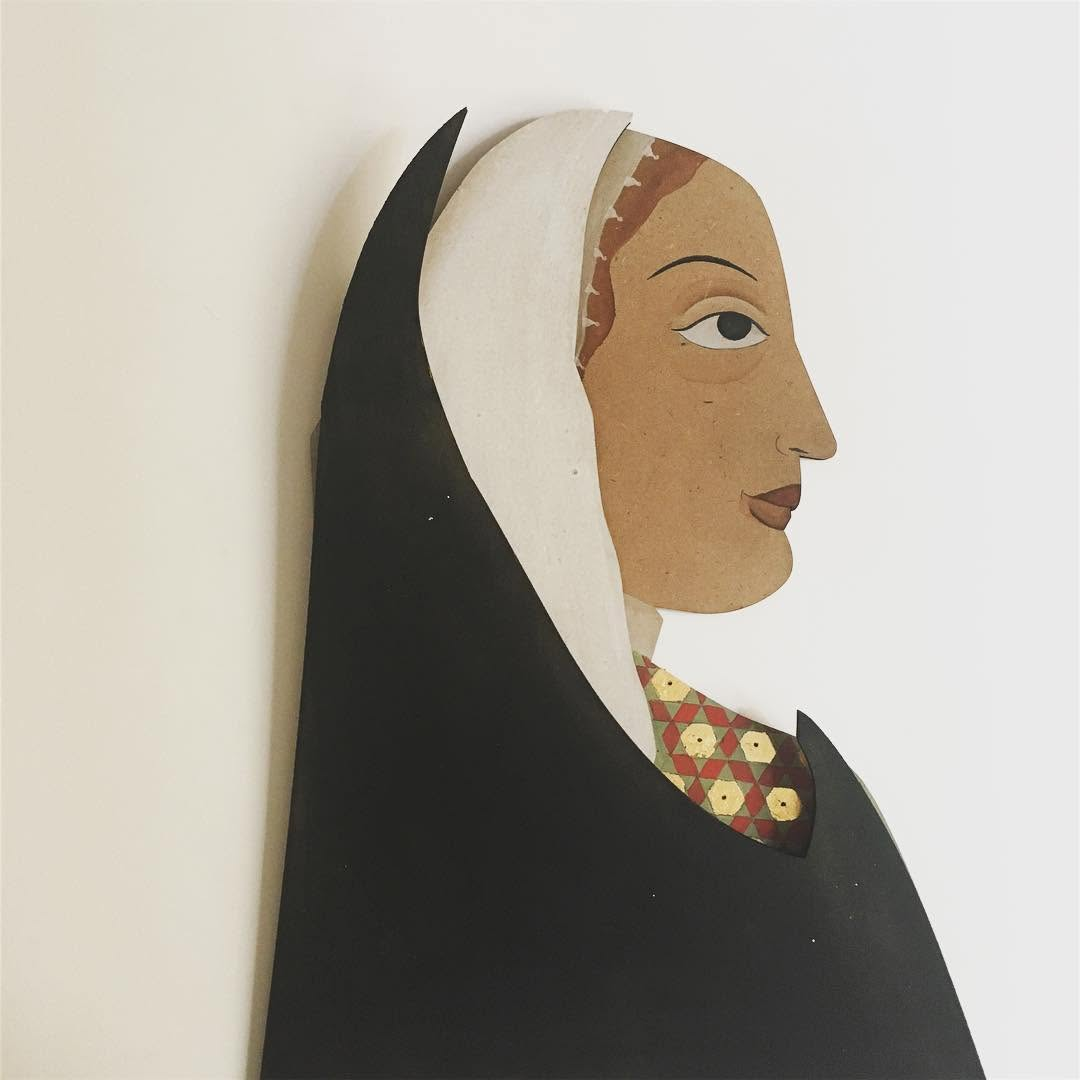
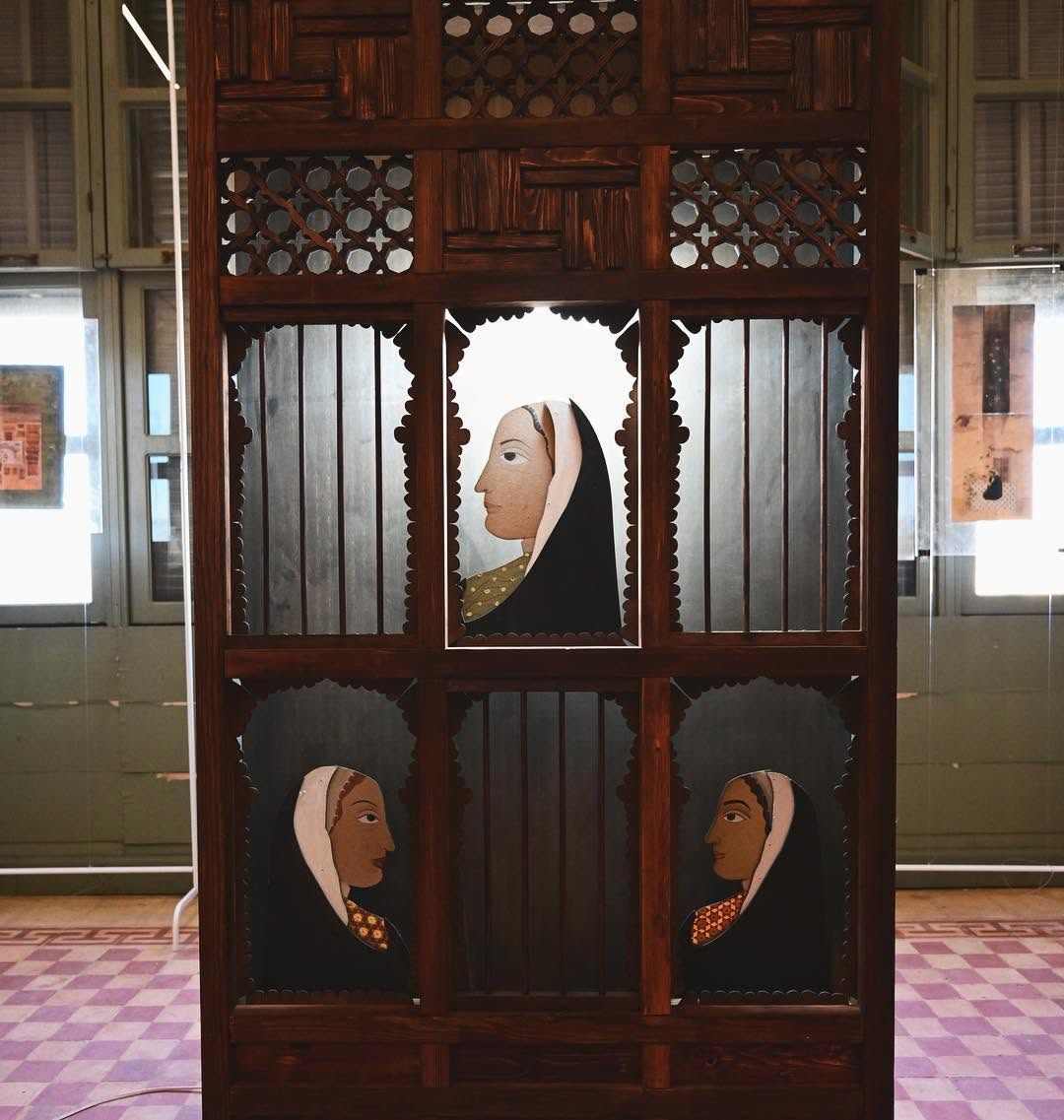
A 2019 work dedicated to Al Tabariyat honours women from a scholarly family in historic Makkah. Members of the family contributed to education, charitable trusts, water fountains, and religious scholarship. Among them was Quraysh Al Tabariya, a seventeenth century scholar known for teaching men and women and contributing to the study of hadith and Islamic law. Through this work, Al Abdali expands the meaning of Hijazi heritage beyond buildings and decorative traditions. She brings attention to the women who shaped Makkah’s intellectual, spiritual, and social life.
Sarah Al Abdali’s solo exhibitions reveal an artist interested in the symbolic life of plants, myths, architecture, and inherited narratives.
Sarah Al Abdali’s third solo exhibition, The Legends of Motherland, opened at Hafez Gallery’s Al Falah Schools space in Historic Jeddah in April 2026. The exhibition turns toward Jeddah’s layered past, exploring the shifting boundary between myth and history. Through painting and material research, Al Abdali gives form to overlooked women, fading spaces, and social structures that have often remained unnamed.
Rather than treating myth as a fixed story, the exhibition presents it as something living, reshaped through memory, place, and time. It also continues her wider inquiry into what a city inherits, what it loses, and what it chooses to carry forward.
“Jeddah proves to me, every time, how exceptional it is in embracing art and its people.”
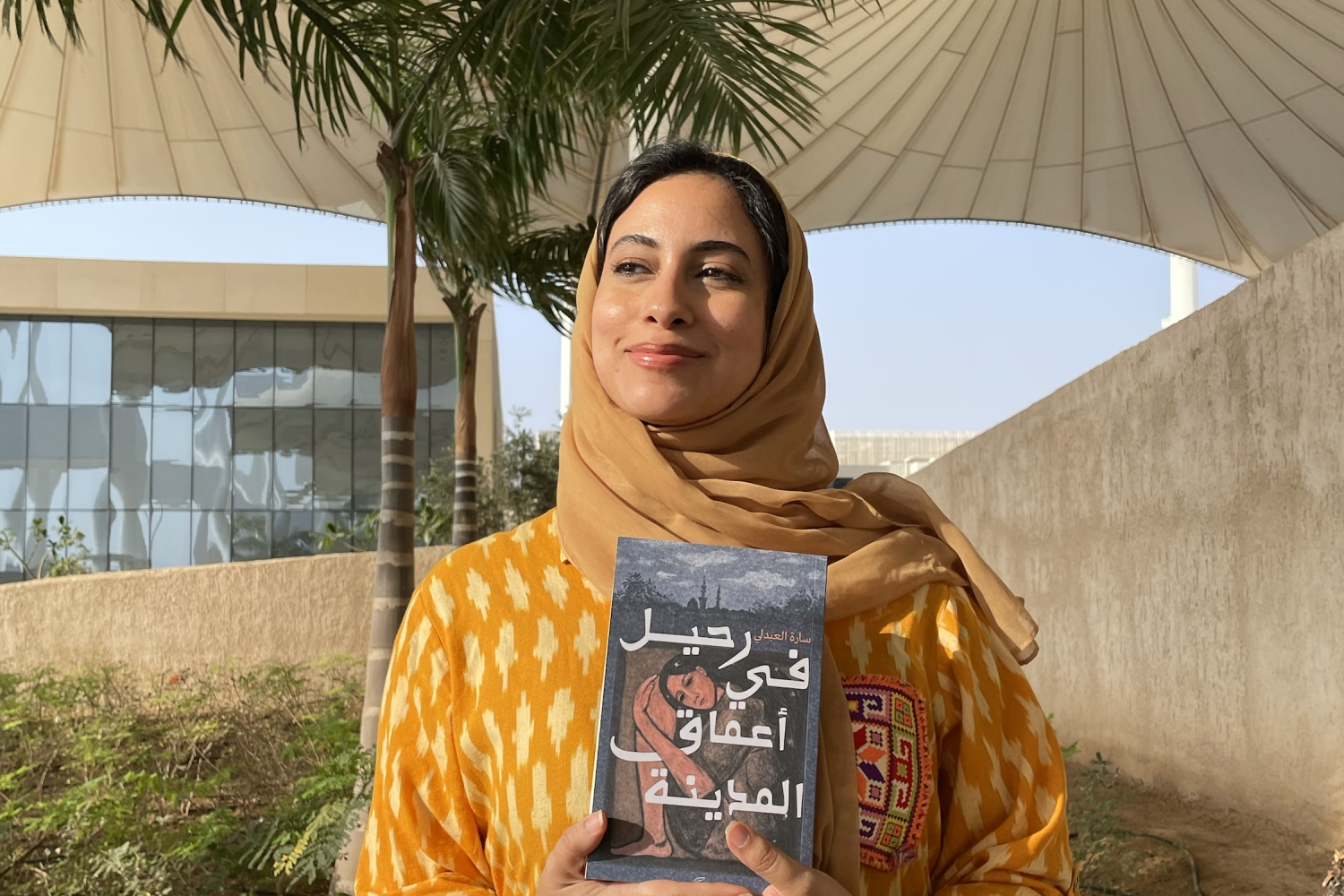
Sarah Al Abdali’s commitment to storytelling has now expanded into fiction. Her debut novel, Departure in the Depths of Madinah, follows the Abdul Jabbar family across several generations. Set against the layered history of Madinah, it explores lives shaped by war, tradition, family secrets, and a deep connection to the Prophet’s Mosque. The novel moves through homes and neighbourhoods, blending personal and collective memory to reveal the cultural fabric of the Hijaz. It was the subject of a public program presented by the Diriyah Biennale Foundation on May 16, 2025, where Al Abdali was also identified as an assistant curator for the 2025 Islamic Arts Biennale.
Her move into literature feels less like a departure than an expansion. The same concerns remain: hidden histories, domestic spaces, sacred geography, family memory, and the preservation of place. What once entered through pigment, ceramic, or sound now unfolds through character, dialogue, and narrative time.
Sarah Al Abdali looks beyond grand monuments to the quieter places where history survives: women’s stories, family names, damaged buildings, poems, and inherited crafts.
Working across painting, installation, research, curating, and fiction, she gives overlooked histories new form. Each medium becomes a way of keeping memory active rather than allowing it to disappear.
Discover more art stories reshaping Saudi culture at KSAArt.