Doa Bugis and Her Art of Illuminating Inner Worlds
Explore Doa Bugis’s miniature paintings, gilded works and poetic reflections on migration, healing and Islamic artistic heritage.


Explore Doa Bugis’s miniature paintings, gilded works and poetic reflections on migration, healing and Islamic artistic heritage.
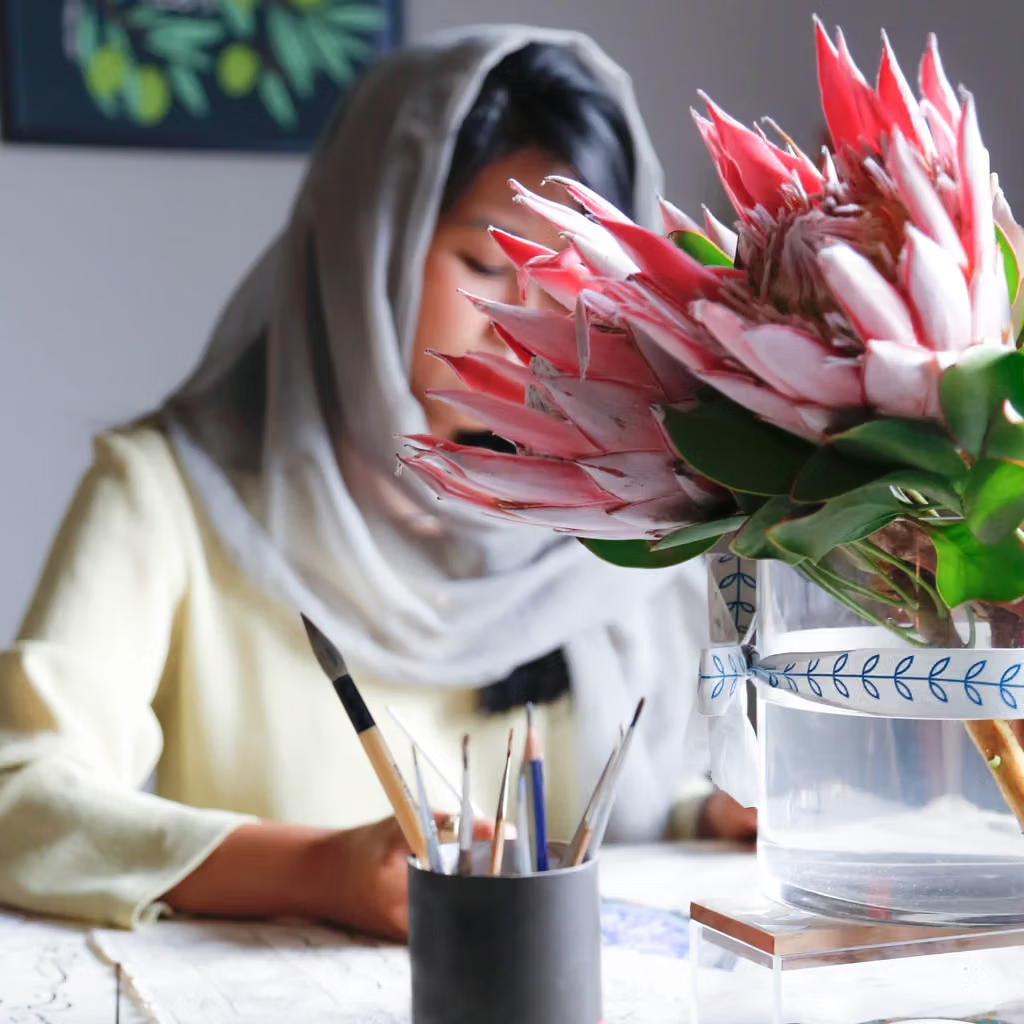
“Art for me is a healing method.”
Born in Makkah and based in Jeddah, Doa Bugis creates paintings that feel at once ancient and deeply present. Through miniature painting, Arabic lettering, handmade paper and luminous gold, the Saudi artist gives form to migration, grief, spiritual reflection and the quiet complexity of belonging.
Doa Bugis did not enter painting through a conventional fine-art path. She studied graphic design at Dar Alhekma University, developing an early sensitivity to typography, visual structure and the relationship between image and language. Before identifying fully as a painter, she worked as an independent designer with a focus on art direction and design anthropology. Her transition into painting began at the end of 2017, during a period of personal change. Art became an emotional outlet and a space in which difficult experiences could be examined without having to be explained immediately.
She considers 2018 her informal entrance into painting, but it was not until 2020 that she felt confident calling herself a painter. That gradual evolution is important to understanding her practice. Bugis does not present artistic identity as a fixed title. For her, it is something built through patience, research and repeated acts of making. Painting allows her to sit with emotions that may otherwise resist language. Grief, loss, healing and uncertainty are not treated as isolated subjects. They return across her work in changing forms, revealing an artist less interested in offering final answers than in recording the movement of an inner life.
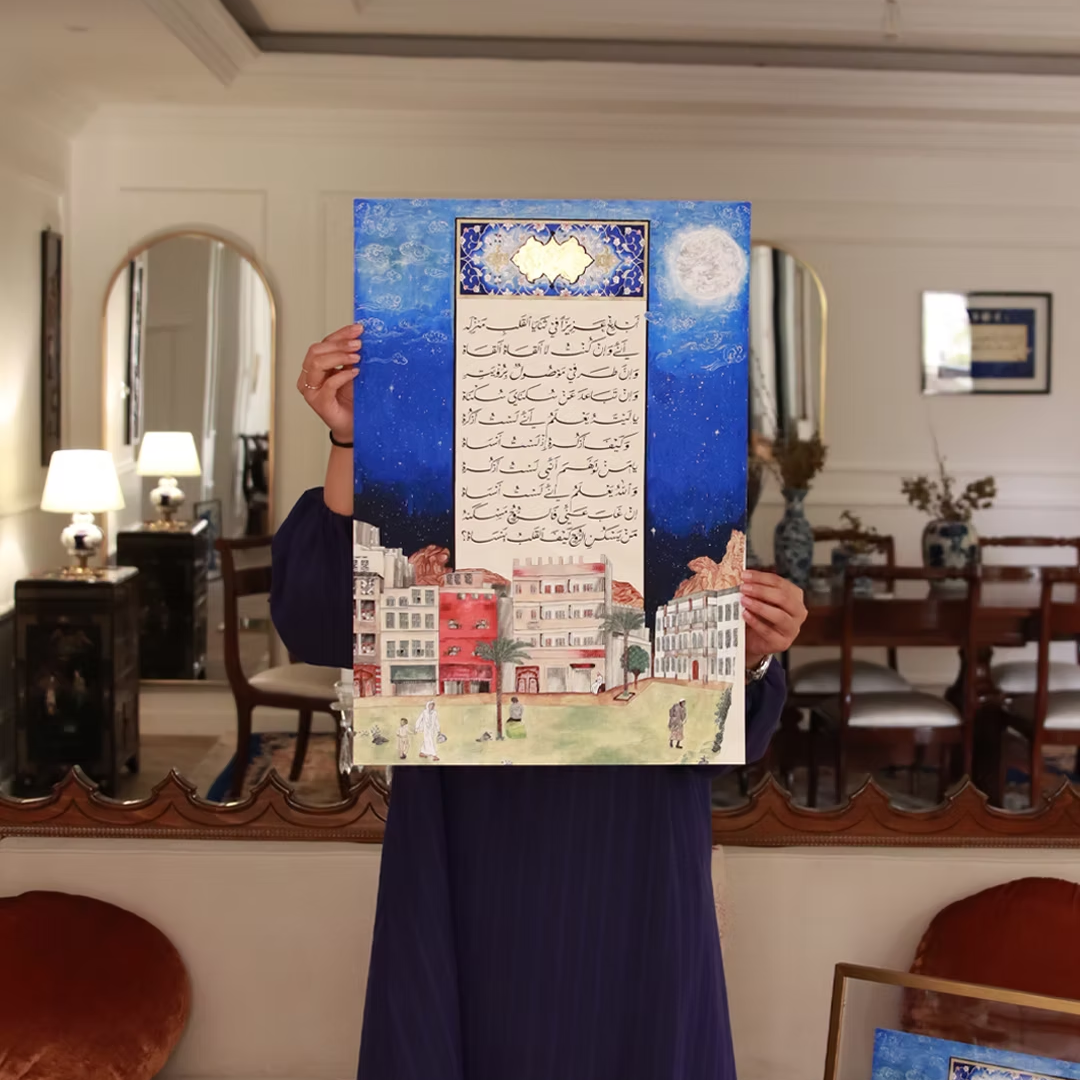
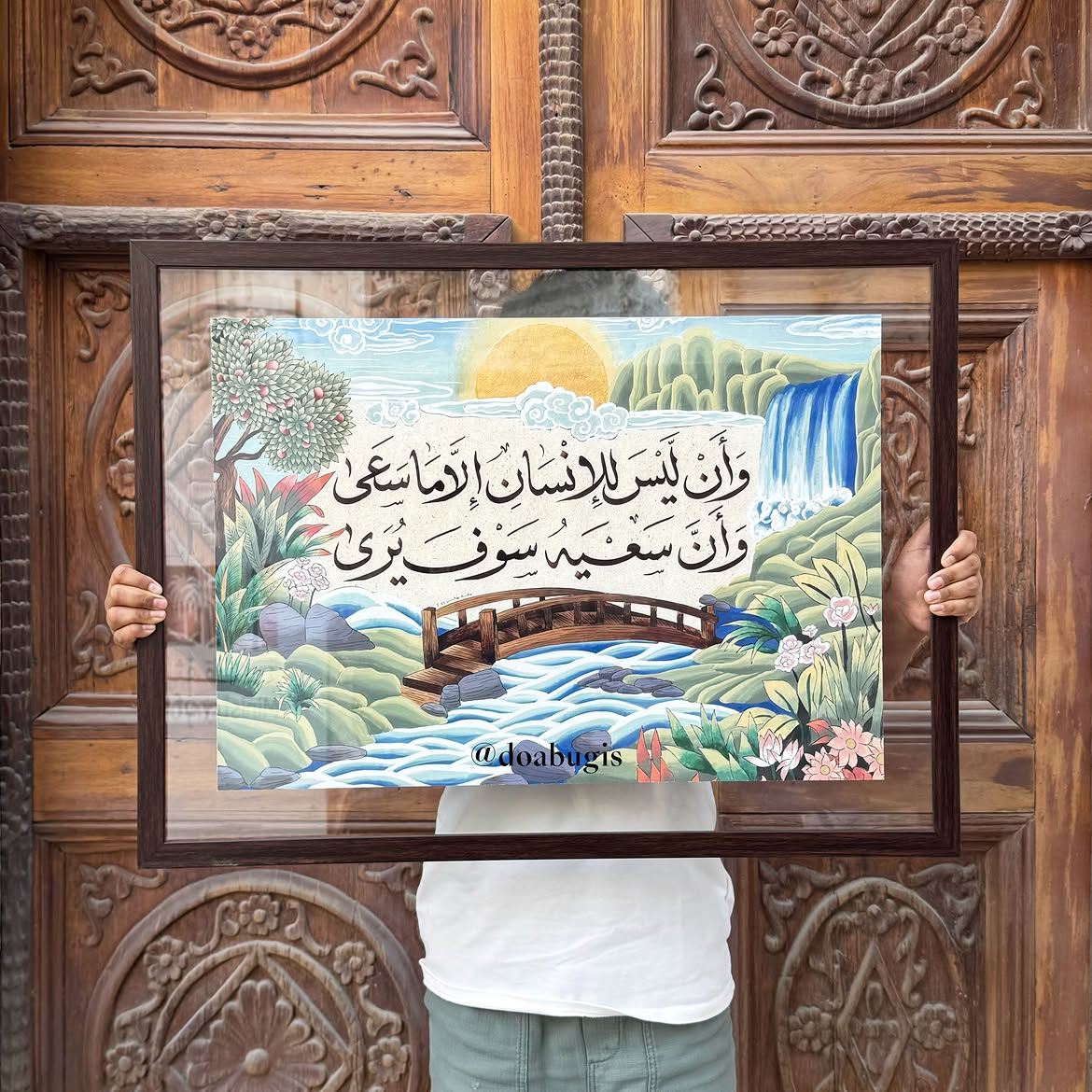
At the centre of Bugis’s practice is miniature painting, approached through meticulous hand-brushed detail and the storytelling traditions of Islamic art. Her training began when she approached Saudi artist Sara Alabdali to learn the foundations of Islamic illumination. She later studied with miniature-painting masters associated with the Mughal and Pahari schools of India and Pakistan. These traditions gave her a technical foundation, but Bugis has always been clear that her purpose is not historical imitation. She uses inherited methods to communicate experiences rooted in the present.
Her compositions often combine figures, birds, plants, architectural forms and Arabic text within richly layered scenes. Every detail appears considered, yet the paintings do not feel rigid. They carry movement through fabric, foliage, clouds and shifting fields of colour. Bugis is also influenced by artistic traditions beyond the classical Islamic manuscript. She has spoken about her interest in Chinese, Japanese and Southeast Asian painting, particularly the way visual ideas travelled across regions and developed distinct local identities. This broad Eastern perspective gives her work a sense of cultural movement. A miniature may recall a historic manuscript, yet its use of space, atmosphere and natural imagery can point toward several artistic geographies at once.
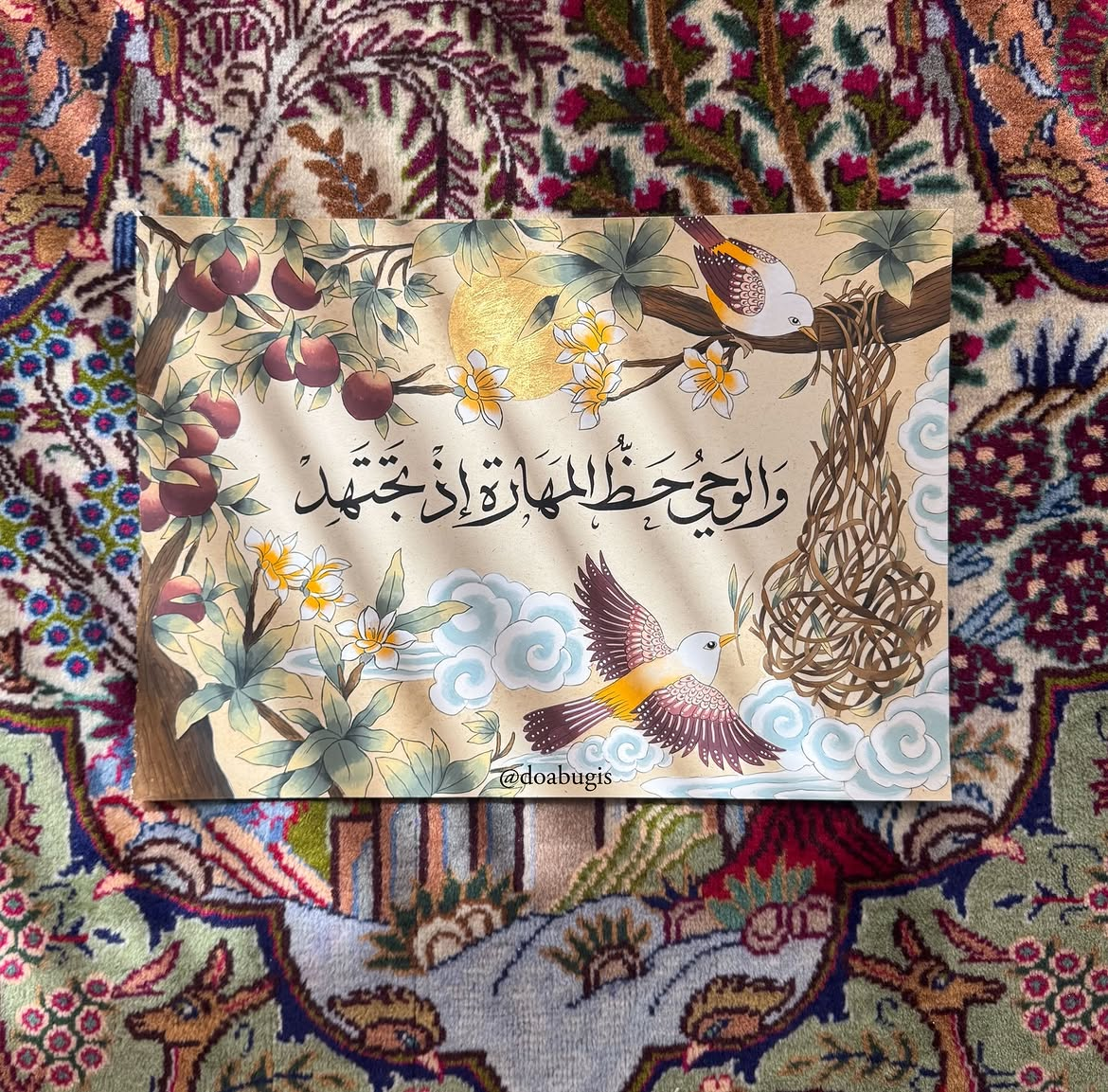
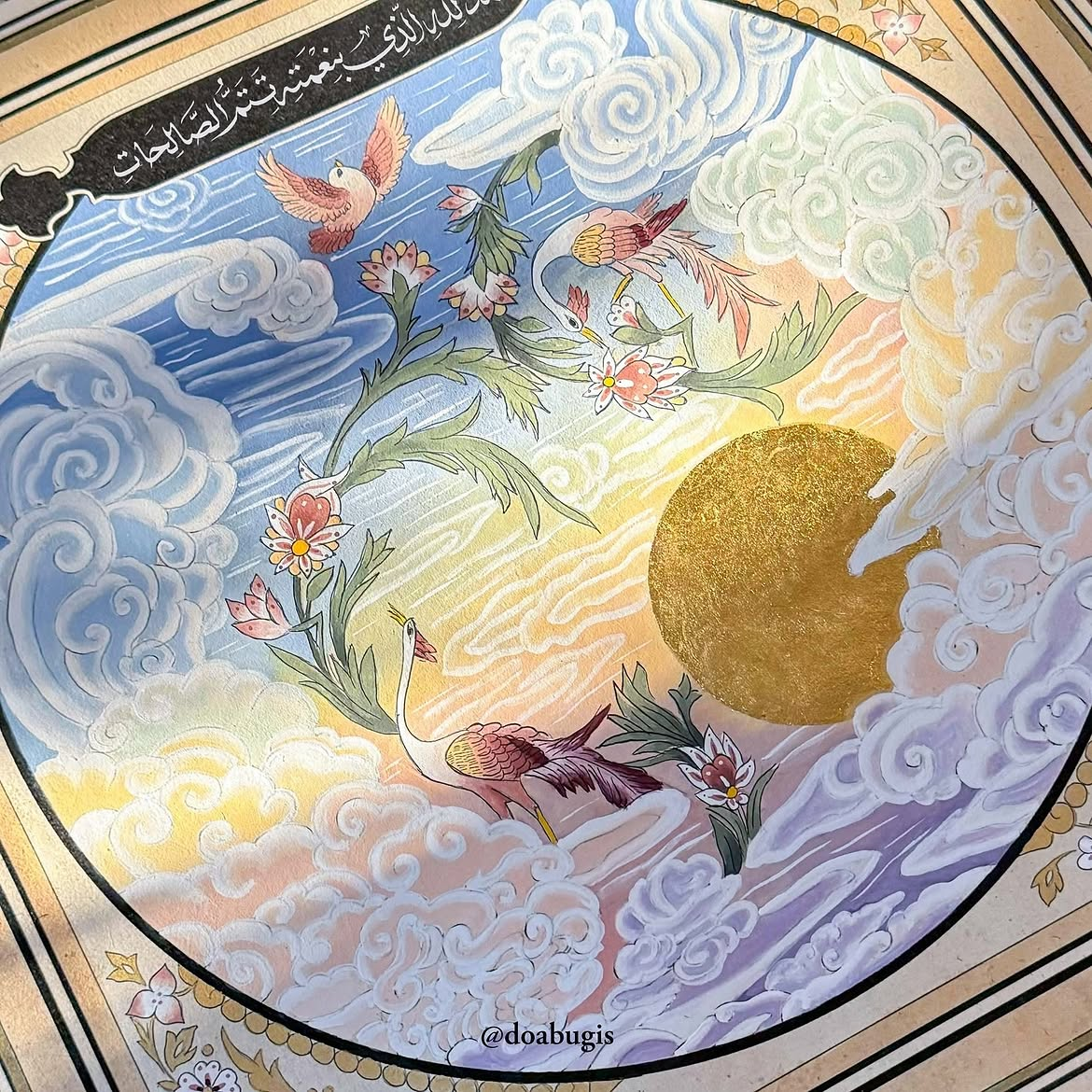
Gold is one of the most recognisable elements in Doa Bugis’s work. It is not simply an embellishment placed over a finished image. It behaves as an active material, responding to the viewer’s position and changing with the light. Several original paintings documented by Ithra use gouache on handmade sunhemp paper with 24-karat gold leaf and shell gold. These include Heart in Flux, Makkah 1970, Migrating Birds and Love Is Light. The materials connect her work to the discipline and intimacy of manuscript production, where the surface is constructed slowly and every element requires close attention.
Her gilded verse editions and manuscript-inspired panels extend this language into limited fine-art prints. Current works such as Ayat Al-Nur and Muwaddah wa Rahmah are produced on archival cotton paper and finished with 23-karat gold water, while selected editions also incorporate 23-karat gold leaf. The distinction between printed image and hand-applied gilding is significant. Each work retains an element of touch. Light settles differently across the gold, allowing sacred or poetic language to appear illuminated rather than merely reproduced.
When asked where she finds inspiration for her colour compositions, Bugis offered a single answer: the universe. That cosmic sensibility can be felt in her use of deep blue, glowing gold, softened pinks and atmospheric fields of colour. Her paintings often suggest worlds held between the earthly and the celestial. Mountains, clouds, birds and ornament become part of a larger emotional landscape. Spiritual reflection is present throughout the work, but rarely through spectacle. Bugis approaches it through stillness, repetition and material care. A gilded verse, a delicately rendered flower or a small figure positioned beneath a vast sky can create a moment of contemplation.
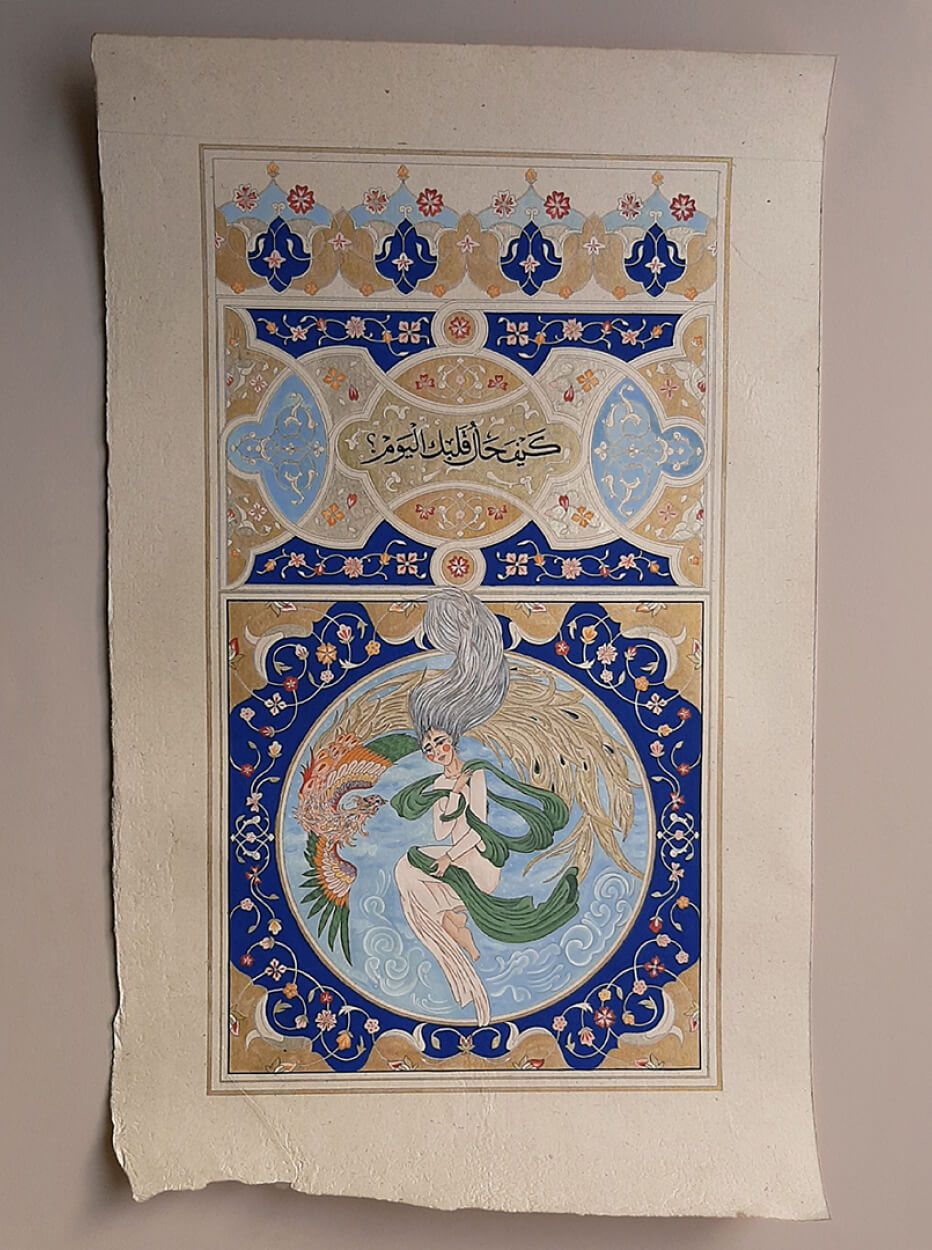
Language forms another layer of this universe. Bugis’s graphic-design background shaped her relationship with Arabic typography, while poetry and written research frequently guide her creative process. She may begin with books or a phrase connected to her emotional state, then move through writing, sketching and painting. The words are not added as captions. They become part of the architecture of the image.
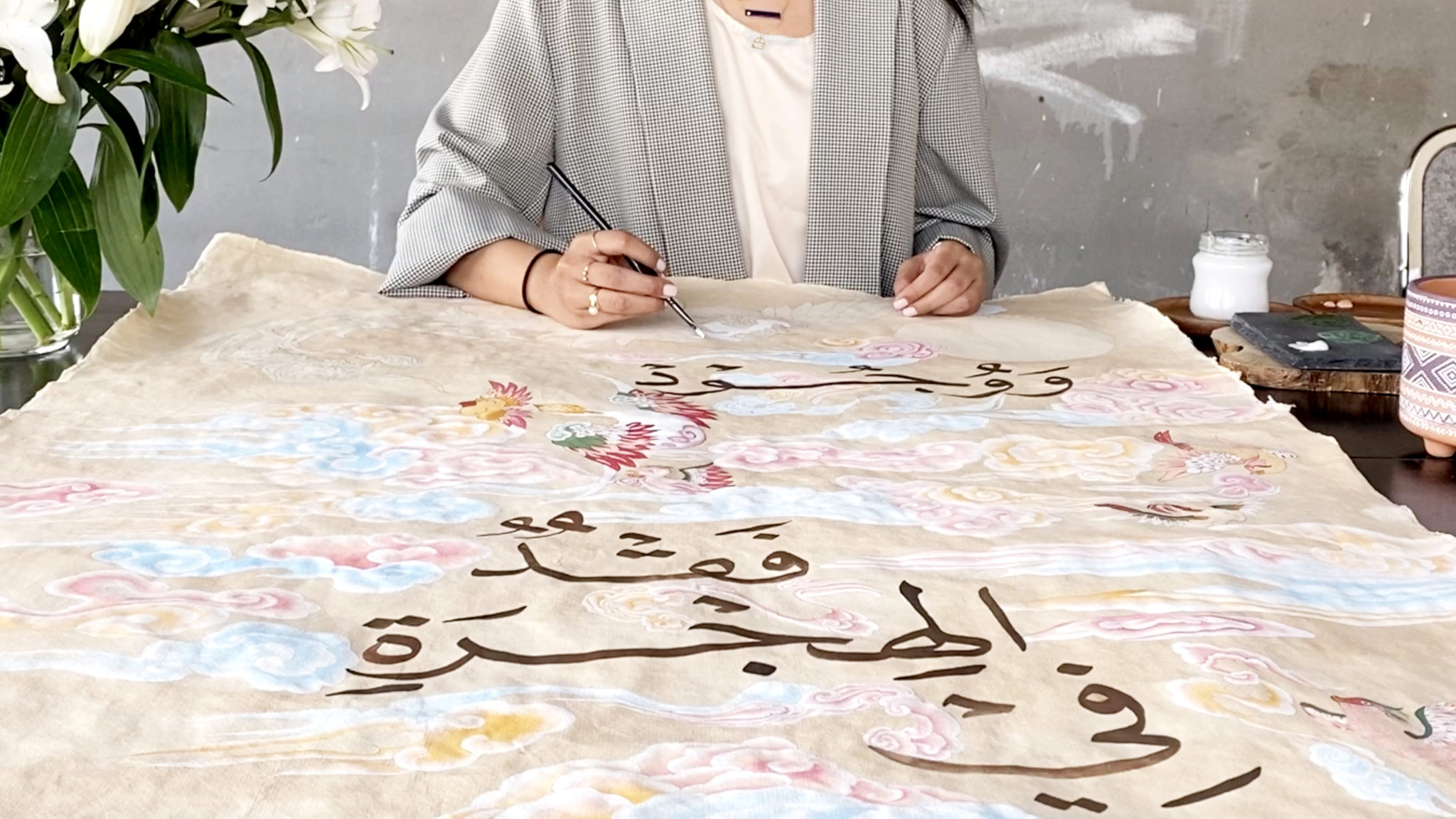
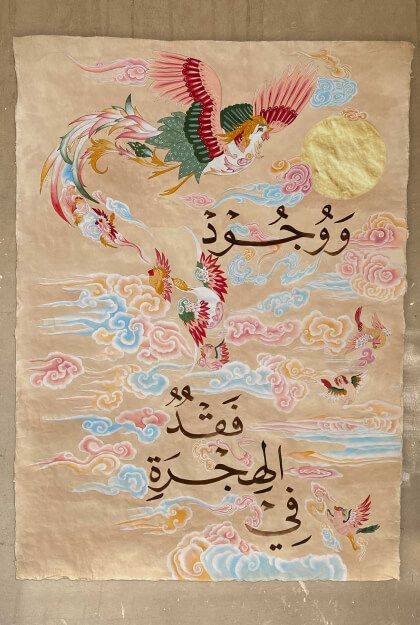
Few works express Doa Bugis’s artistic vision as completely as Migrating Birds. Completed in 2020, the large painting was created with gouache on handmade sunhemp paper, 24-karat gold leaf and shell gold. The project emerged from years of research into immigration and hybrid identity. Bugis collected oral histories, conducted interviews and studied the forces that cause people to leave one place for another. The final work presents hijra as both an external passage and an internal transformation.
Birds become carriers of memory, uncertainty and survival. Their movement suggests the physical act of crossing borders, but also the quieter emotional experience of becoming changed by departure. In Bugis’s hands, migration is not reduced to geography. It becomes a condition that reshapes language, family, identity and the meaning of home.
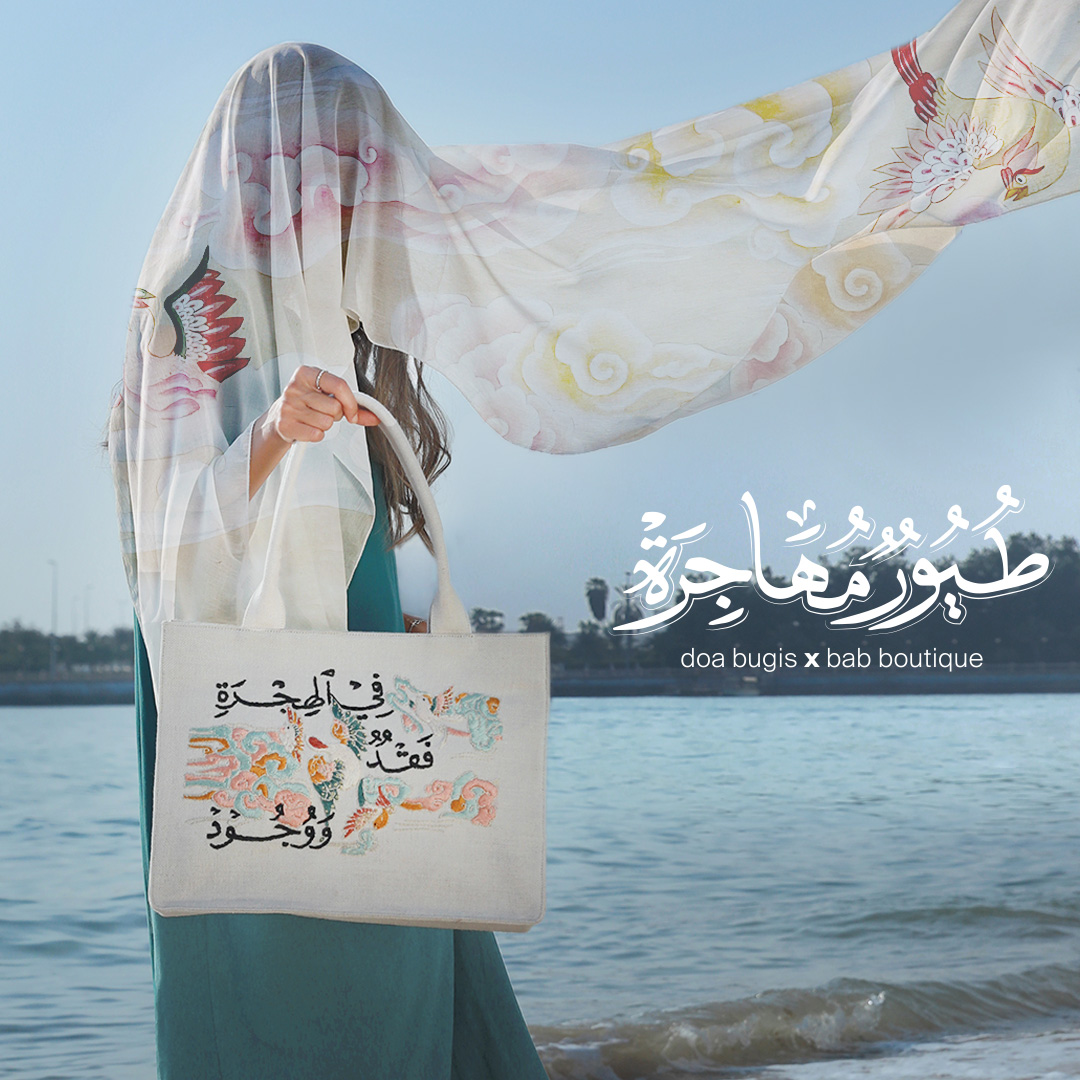
The work later expanded through a collaboration with Bab Boutique, a social enterprise supporting women from displaced and marginalised communities. Doa Bugis’s imagery was translated into embroidered bags made by Syrian refugees in Lebanon, allowing the narrative of migration to move from painted paper into textile and collective craftsmanship. This collaboration carried unusual emotional coherence. The people stitching the birds were not distant from the subject represented. Their own histories of displacement gave the project another layer of authorship, connecting Bugis’s research with lived experiences of movement, loss and resilience.
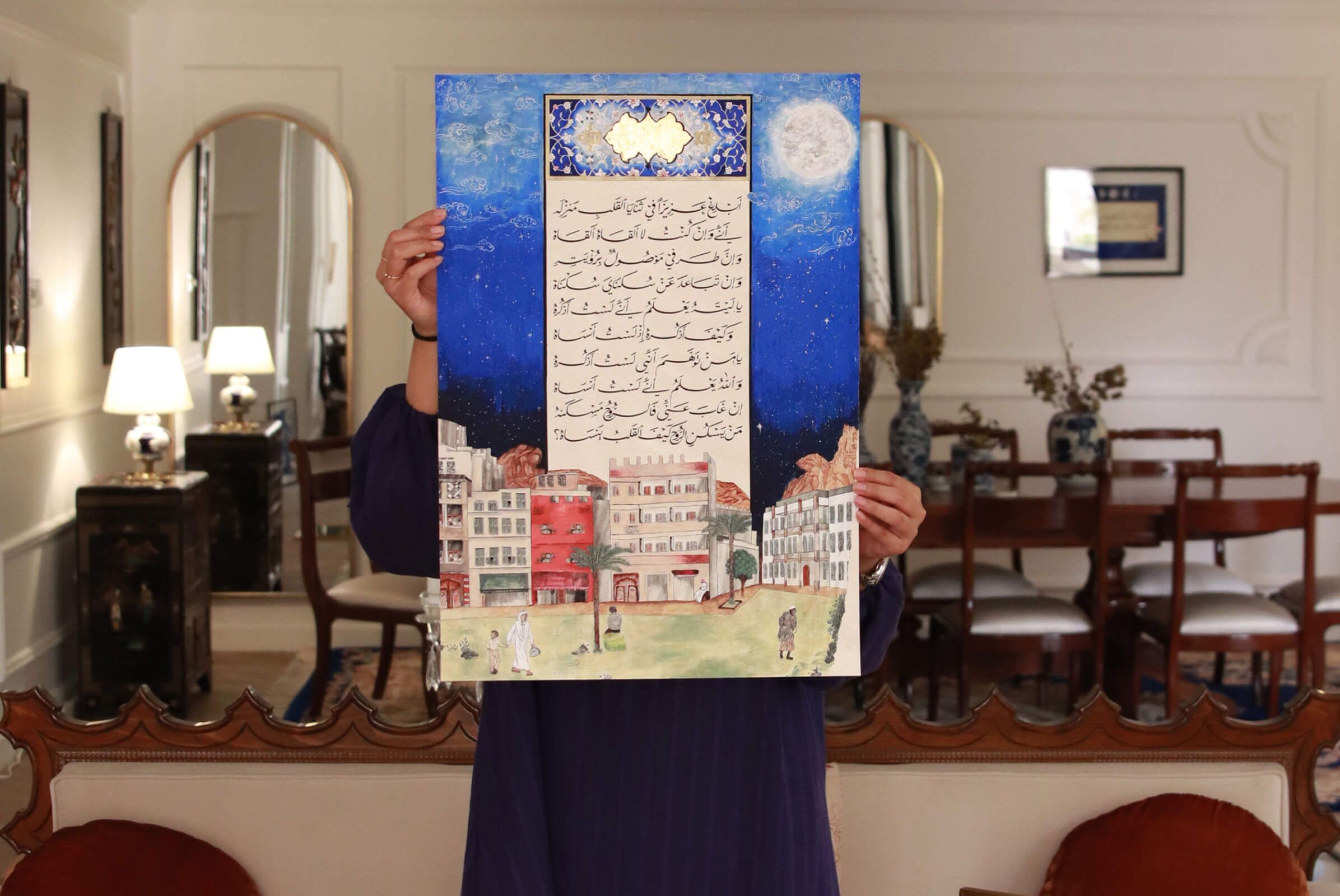
In 2019, Bugis collaborated with Sara Alabdali on The Home, the Tomb, a visual exploration of pilgrimage and celestial homecoming. The work considers the pilgrim’s journey as more than movement toward a sacred destination. It also evokes return, mortality and the soul’s longing for a home beyond the visible world. Through illuminated detail and manuscript-inspired imagery, the artists place individual devotion within a shared spiritual memory.
The Home, the Tomb was later presented in Scripts and Calligraphy: Paths to the Soul, a 2023 Saudi Ministry of Culture exhibition that brought together historical objects, calligraphers and contemporary artists exploring the spiritual dimensions of the written word. A review in Canvas described Bugis and Alabdali’s work as an illustration of the celestial homecoming of pilgrims. The collaboration also reflects the importance of artistic exchange in Bugis’s development. Alabdali was among the first artists to introduce her to Islamic illumination. Years later, their shared work demonstrated how mentorship can evolve into dialogue.
Doa Bugis’s background in visual communication enables her practice to move beyond the conventional art object. Her commissioned projects show how miniature painting, typography and cultural memory can enter fashion, packaging and public-facing design.
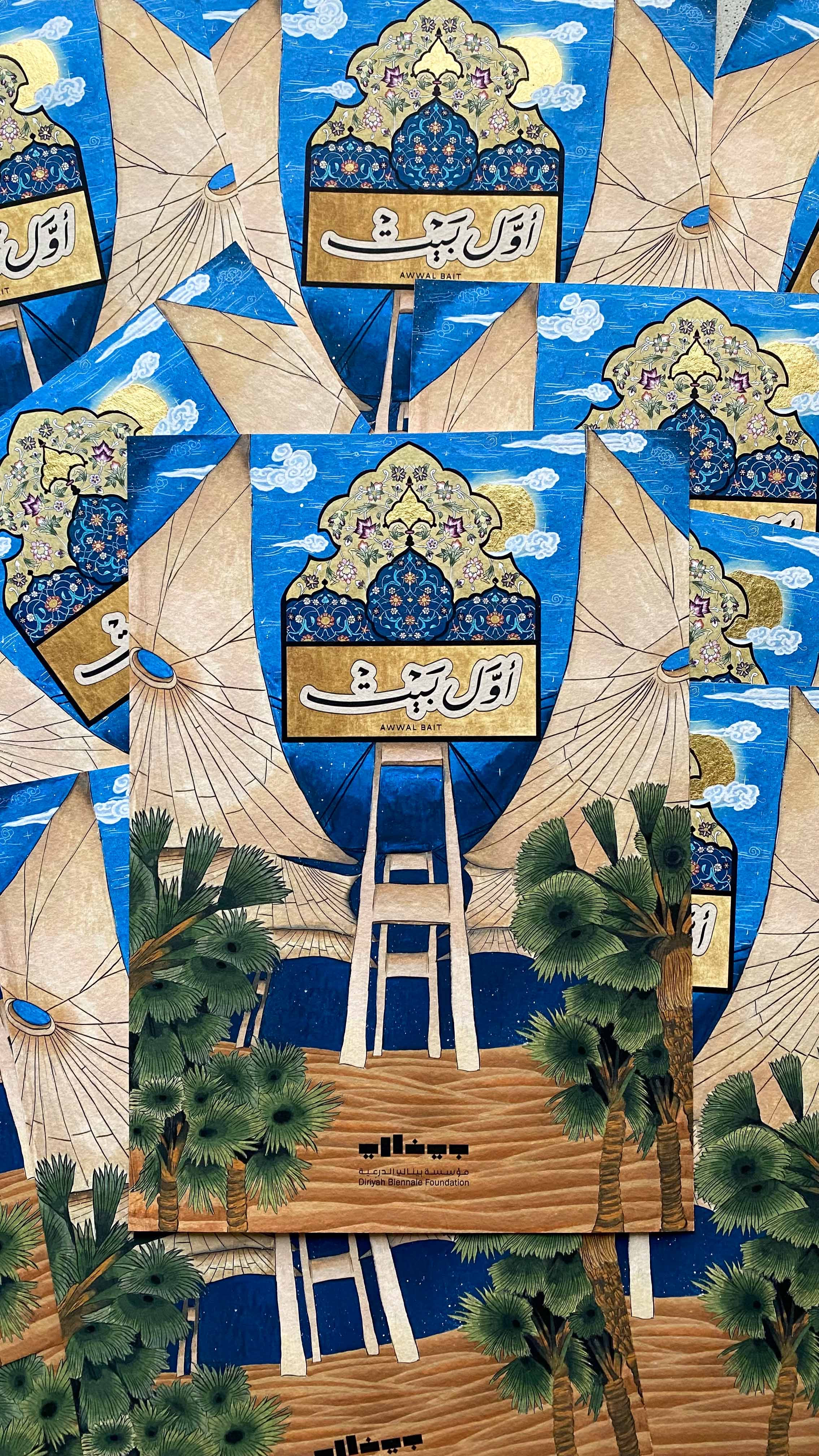
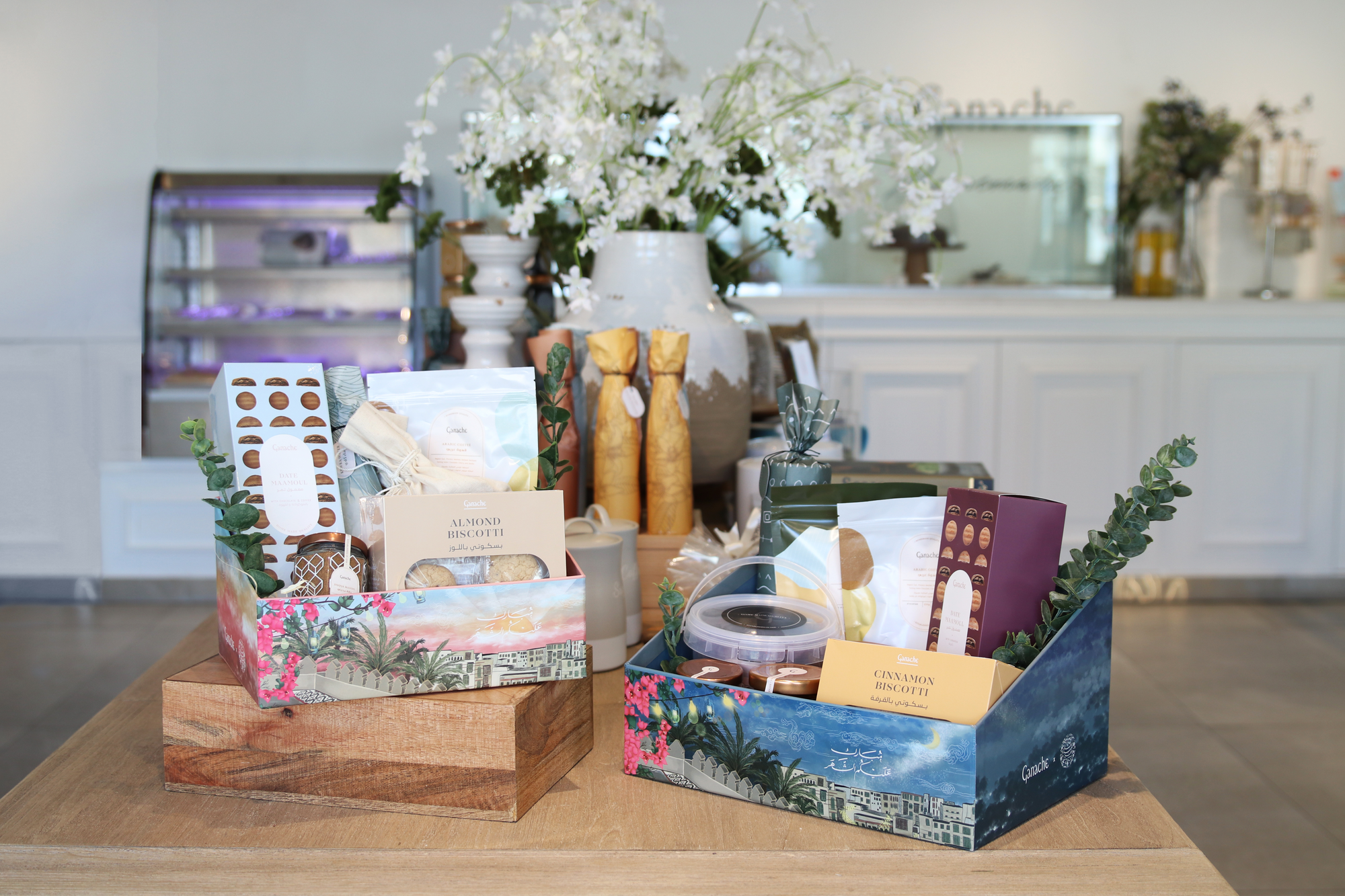
For Ganache, she created custom packaging that turned recognisable Jeddah scenes into richly illustrated objects. The boxes transform gifting into a visual encounter with place, combining local architecture, landscape and atmospheric colour. Her collaboration with Bab Boutique carried her imagery onto embroidered accessories, while another commissioned work honoured the first Islamic Arts Biennale through a composition inspired by the monumental canopies of Jeddah’s Hajj Terminal.
These projects do not dilute the seriousness of her studio practice. Instead, they reveal the adaptability of her visual language. A painting can become a bag, a box or a commemorative design while retaining its relationship to story, movement and heritage.
Doa Bugis now operates an independent studio in Jeddah’s Al-Basateen district. Alongside her own production, the space hosts workshops connected to Islamic floral ornamentation, painting and gilding. The studio extends her practice from preservation into transmission. Traditional art survives not by remaining untouched, but by being studied, practised and reinterpreted by new hands.
Doa Bugis creates art at the meeting point of discipline and vulnerability. Her practice protects the patience of miniature painting while opening it to contemporary emotions, social histories and changing forms of cultural identity. She does not modernise Islamic art by stripping away its complexity. She keeps the detail, the slowness and the reverence for material, then asks those qualities to hold stories of migration, grief, healing and spiritual return.
Through this balance, Bugis is building a distinctive place in contemporary Saudi art. Her work reminds us that heritage is not a closed archive. It is a living visual language, capable of travelling across time while gathering new meanings along the way.
Discover more art stories reshaping Saudi culture at KSAArt.