Saad Al Howede is Giving New Life to Forgotten Memories
Discover Saad Al Howede, the Saudi artist preserving cultural memory through archival exhibitions, artworks and Noor Riyadh installations.


Discover Saad Al Howede, the Saudi artist preserving cultural memory through archival exhibitions, artworks and Noor Riyadh installations.
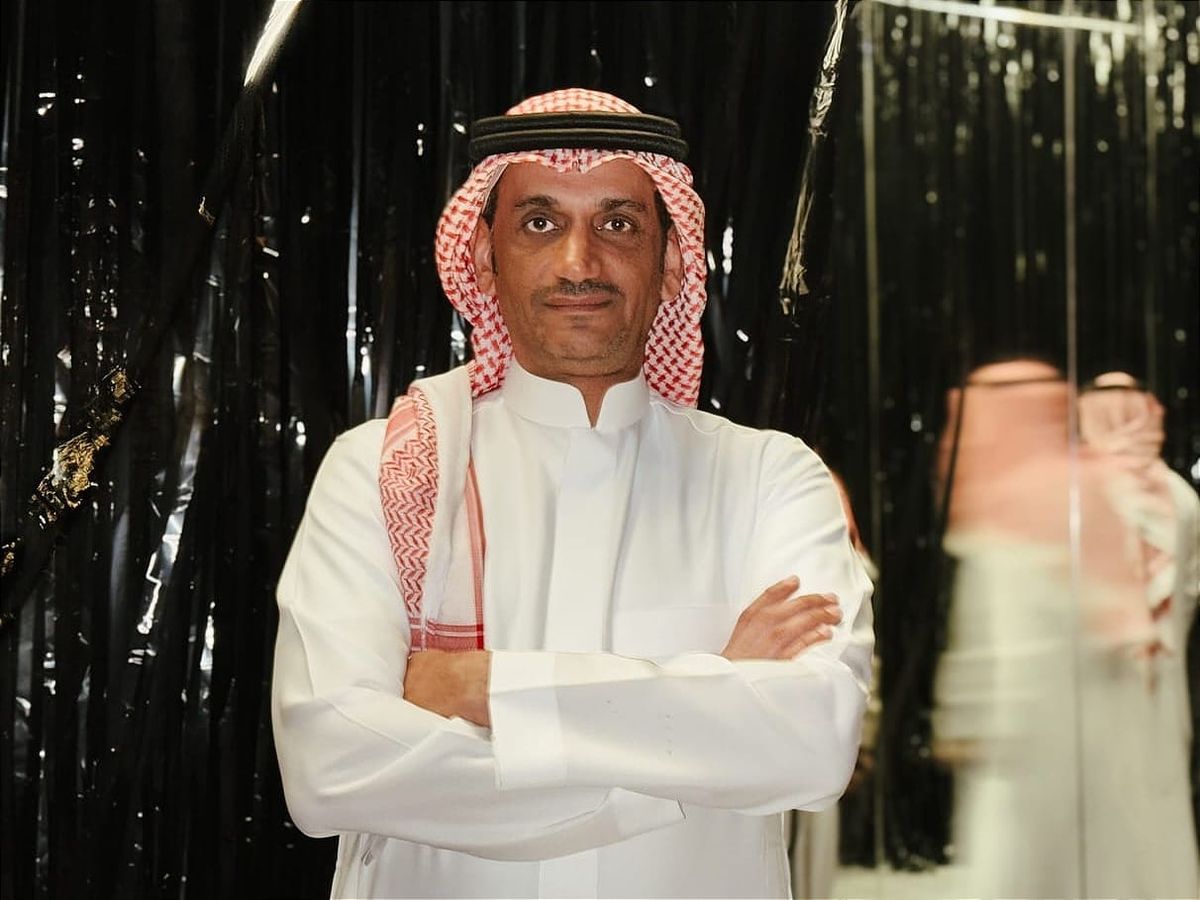
“Memory, to me, is the treasure of nations.”
For Saudi artist Saad Al Howede, an old cassette tape, a discarded childhood toy or a familiar cultural image can reveal stories that might otherwise be forgotten. He has spent years collecting traces of the past and finding ways to bring them into the present. Through light installations, archival exhibitions and experimental materials, he transforms everyday objects into reflections on Saudi Arabia's cultural memory.
Born in Riyadh in 1975, Al Howede is a multidisciplinary artist with a PhD in Art Philosophy. His career began in newspaper caricature before developing into conceptual art that explores heritage, identity, historical revisionism and the ways memories are passed between generations. Today, his work has reached audiences across Saudi Arabia, France, Argentina and Uruguay, with major appearances at Noor Riyadh and BIENALSUR. His artistic practice reflects a fascination with how people remember their experiences and how societies preserve the cultural details that shape their identity.
Saad Al Howede's relationship with art began at an early age. At 16, he participated in his first group exhibition, beginning a creative journey that would eventually move across several artistic disciplines. Between 1990 and 2013, he worked as a journalist and caricaturist for local newspapers, using illustrations to interpret people, events and social behaviour.
His interests later expanded beyond drawing into conceptual installations and archival art. With a PhD in Art Philosophy, he developed a practice concerned with how history is recorded, how memories change over time and what happens when cultural experiences disappear from public consciousness. Concepts such as post-memory, collective forgetting and historical revisionism became central to his work.
Curiosity about people and their customs also shapes his artistic perspective. By observing similarities and differences across cultures, he develops visual stories that connect individual experiences to larger social histories. His approach often begins with a familiar object or historical trace and develops into a work that encourages audiences to reconsider its meaning.
Alongside his independent practice, Saad Al Howede co-founded Wasm Studio in Riyadh with fellow Saudi artist Hmoud Al-Attawi in 2016. He also expanded his international experience through the Alma Mater artist residency in Avignon, France. Now working between Riyadh and Avignon, he continues to explore how contemporary art can preserve cultural experiences while giving them new interpretations.
For Saad Al Howede, preserving heritage involves more than documenting historical events. He is interested in the smaller details of everyday life, including the music people listened to, the objects they used, the games children played and the images that became familiar across generations. Over more than a decade, he assembled an extensive personal collection of materials relating to Saudi Arabia and the wider region. Music recordings, films, electronic devices, newspapers and magazines became part of an archive documenting how people lived and experienced cultural change.
His interest in these materials reflects his belief that objects can preserve the emotions associated with particular moments. A recording may bring back memories of a celebration, while an old household item may recall experiences shared by an entire generation. This connection between physical objects and human experience appears throughout his installations. Rather than leaving collected materials in storage, he reintroduces them to audiences through exhibitions that encourage interaction, discovery and reflection. His work also examines how collective memory is shaped by the stories societies choose to preserve and those that gradually disappear.
Saad Al Howede's artworks take many forms, from illuminated fingerprints and enormous sculptures made of children's toys to historical music archives and intricate compositions created with LEGO bricks. Although the materials vary, each project explores the relationship between memory, cultural identity and the passage of time.

Presented at Noor Riyadh 2022, On Instinct explores the human fingerprint as a physical trace of presence and identity. Through light, Al Howede examines how something as small and personal as a fingerprint can become evidence that an individual existed and interacted with the world.
The work reflects his interest in the relationship between people and the marks they leave behind. Although memories may fade, physical traces can continue to communicate something about the past. By bringing this idea into a contemporary light installation, Al Howede connects the individuality of human experience with broader questions about remembrance and existence.

In September 2023, Saad Al Howede's archival collection became central to FenaaPhone, an exhibition at Fenaa Alawwal in Riyadh's Diplomatic Quarter. Curated by Sawtasura, a research project dedicated to documenting Saudi women's vocal heritage, the exhibition explored the evolution of Saudi popular music from the late 1950s to the 2000s.
The exhibition was organised into five immersive sections that traced the development of Saudi music from traditional performances to recording studios, international concerts and the growth of the pop music industry. Visitors encountered rare recordings, album artwork, cassettes, historical photographs and press materials documenting influential musicians.
Among the featured artists were Tarek Abdulhakim, Etab, Talal Maddah, Mohammed Abdu, Abadi Al-Johar, Rashed Al-Majed and Abdulmajid Abdullah. The exhibition also displayed a recording of Mohammed Abdu's 1983 London performance and historical materials documenting the growing popularity of Saudi music.
Al Howede's collection helped visitors experience the cultural atmosphere surrounding these artists and recordings. His involvement was particularly meaningful as Saudi Arabia's contemporary music industry continued expanding through concerts, festivals and new cultural venues.
“My motivation was to preserve history, the memory of the person hearing a song, living through it, and enjoying it, where it’s been sung in various occasions and places. I want people to live through that nostalgia when they see this history displayed 30 years, or more, later.”
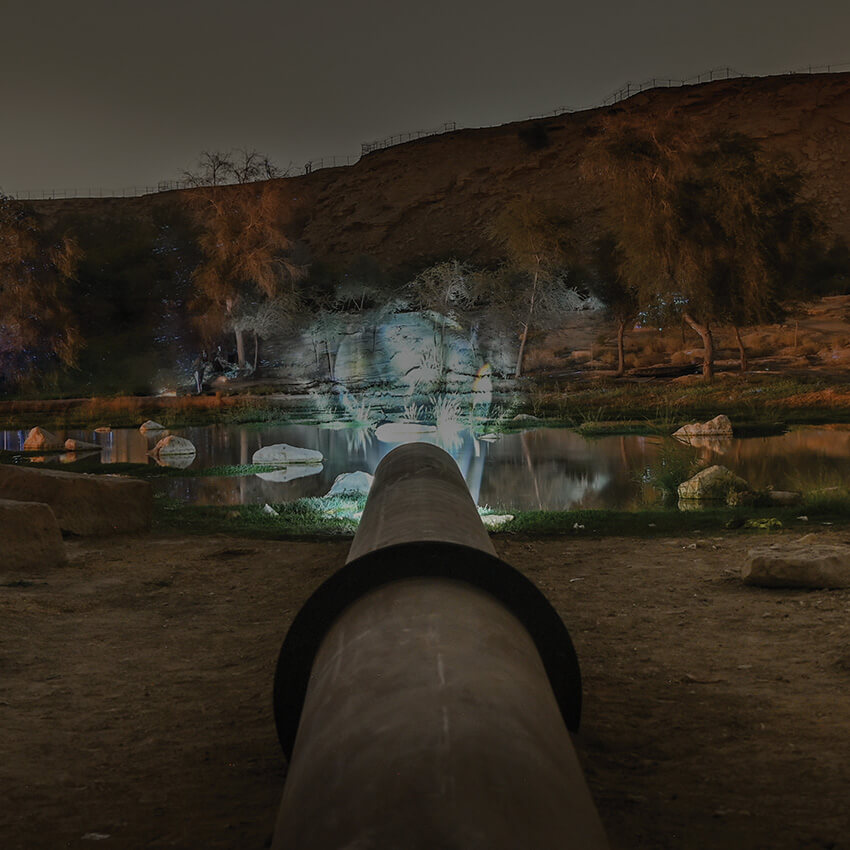
Saad Al Howede continued his participation in Noor Riyadh with The Tapline, presented during the festival's 2024 edition. The project pays tribute to the historic Trans-Arabian Pipeline, which once connected Saudi Arabia's oilfields to Western markets. The pipeline, now recognised as a heritage site, played a significant role in the region's economic development.
Installed along the edge of Wadi Hanifah, the steel structure reimagines the original pipeline, with one end extending away from viewers and projecting a continuous beam of light across the water. The light symbolises the economic prosperity that developed along the pipeline's route from East to West. Through this installation, Al Howede connects Saudi Arabia's industrial history with modern society's dependence on oil and electricity. The artwork invites viewers to consider how artificial light, and the world built around it, might have developed if oil had never been discovered.

At Noor Riyadh 2025, Saad Al Howede presented Memory Melting, one of his most ambitious public installations. Displayed at STC Metro Station, the work featured three enormous illuminated spheres constructed using discarded plastic toys collected from Saudi Arabia and countries around the world.
Each sphere measured approximately three metres in diameter. Thousands of toy fragments, including figurines, building blocks and doll parts, were fused into colourful surfaces shaped like oversized emojis. The sculptures created a visual connection between the physical toys of earlier childhood experiences and the digital symbols through which people increasingly communicate. Al Howede began developing the project after observing changes in how children play. Traditional games often encouraged physical interaction, imagination and shared experiences, while digital entertainment increasingly allows children to play alone through screens.
“The real story of the child is disappearing.”
For Al Howede, the discarded toys represented more than unwanted plastic objects. Each one carried traces of a child's experiences, relationships and imagination. By bringing them together in a single installation, he transformed personal belongings into a shared expression of childhood memory. The project also achieved a Guinness World Records distinction for the world's largest illuminated emoji, marking an important milestone in his career and bringing further international attention to the installation.
In September 2026, Al Howede was featured in JAX District's Tirhal series through The Other Face of the Icon, a project connected to Saudi Arabia's 96th National Day celebrations. The artwork explores a recognisable image rooted in Saudi culture through an unexpected material: LEGO bricks. Using numerous small pieces, Al Howede carefully constructs a larger composition, allowing a familiar cultural image to emerge through an intricate process of assembly.
The project demonstrates how his artistic practice continues to evolve through experimentation. Materials commonly associated with childhood play become a means of representing national identity and cultural memory. Each individual brick contributes to a larger image, giving the work a visual relationship to the many details and experiences that collectively shape a culture. It also connects with the ideas explored in Memory Melting. Both projects use toys to examine how familiar objects can acquire different meanings when removed from their original settings and introduced into contemporary art.
Presented by Lift Gallery during the inaugural Art Week Riyadh in April 2025, Passages featured Saad Al Howede alongside Saudi artists including Nasser Al Turki and Hmoud Al-Attawi. The exhibition explored personal histories, cultural heritage and contemporary interpretations of Saudi identity. Al Howede presented symbolic compositions inspired by traditional Najdi windows and fabrics, drawing on familiar architectural and decorative elements to explore memory, preservation and renewal. Through these references, he examined how cultural identity can evolve while maintaining a connection to the past.
The project reflects his wider artistic interest in preserving Saudi Arabia's heritage through contemporary forms. By reinterpreting details associated with traditional homes and everyday life, Al Howede encourages audiences to consider how cultural traditions acquire new meanings as society changes.
Saad Al Howede's international exhibition history reflects the growing reach of his artistic practice. In 2022, he participated alongside Hmoud Al-Attawi in Stereotype at the Cluster Contemporary Art Fair in London, bringing Saudi artistic perspectives to an international audience. His involvement with BIENALSUR expanded his presence across South America and Saudi Arabia. In 2023, he participated in Strangers in the Palace, presented across Argentina and Uruguay, and Imagine: Fantasies, Dreams, Utopias at the Saudi Arabia Museum of Contemporary Art (SAMoCA) in Riyadh. These exhibitions placed his exploration of memory and cultural identity within wider international conversations about contemporary art.
In 2025, his work appeared in Let's Play at MUNTREF in Buenos Aires. Curated by Diana B. Wechsler, the exhibition explored play, imagination and the ways people participate in creating meaning through art. The international programme brought together artists including Michelangelo Pistoletto, Erwin Wurm, Vik Muniz and Marta Minujín. Running from July 2025 to December 2026, the exhibition placed Al Howede's work within a global discussion about play as both a creative activity and a way of understanding human experience.

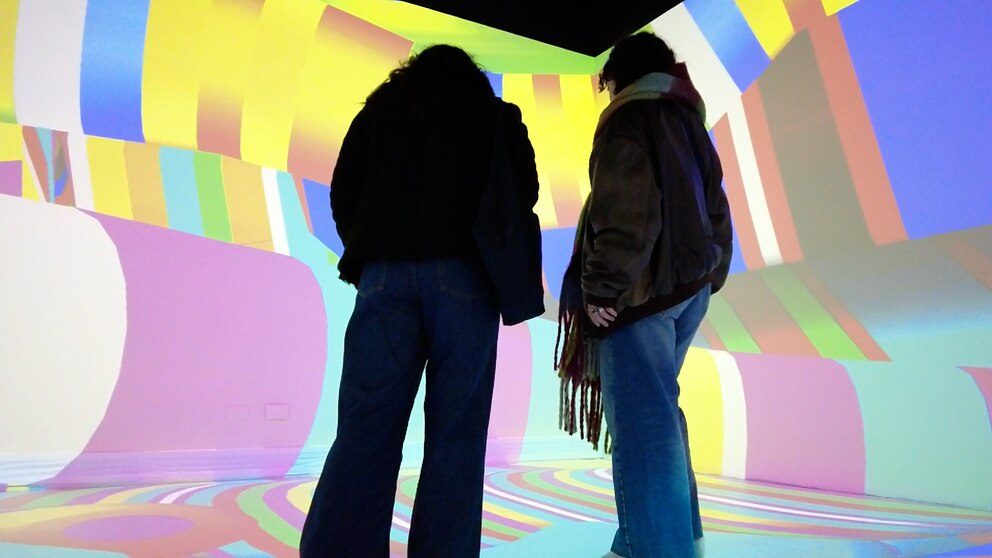
Let's Play at MUNTREF, Buenos Aires, part of BIENALSUR 2025–2026.
Saad Al Howede's recent work continues to develop his interest in the relationship between everyday objects and cultural identity. In 2025, he participated in Echoes of the Familiar at Ithra in Dhahran, an exhibition examining the memories, objects and domestic traditions associated with Saudi homes. Curated by Gaida Al-Mogren, the exhibition brought together 28 Saudi artists exploring how family life and household belongings preserve aspects of the country's social history.
Al Howede contributed Nostalgia (2025), an installation constructed using steel, VHS tapes, cassette recordings and archival footage from Saudi television during the 1980s. The materials came from a collection he had developed over more than a decade, preserving moments ranging from private family gatherings to national events. The installation offered another perspective on his long-standing archival practice. While FenaaPhone explored music, Nostalgia examined a broader history of Saudi domestic life through the recorded images and sounds that families once collected and shared.

Across more than three decades of artistic development, Saad Al Howede has moved from interpreting society through newspaper caricatures to creating installations that invite audiences to experience their own memories. For Al Howede, the past remains an active source of artistic discovery. Through the objects people once used, cherished or discarded, he continues finding new ways to make their stories visible.
Discover more artist stories at KSAArt.