Architecture Meets Calligraphy in Yousef Yahya’s Work
Explore Yousef Yahya's journey from architecture to Kufic calligraphy and discover how he builds new meaning through Arabic letters.

Explore Yousef Yahya's journey from architecture to Kufic calligraphy and discover how he builds new meaning through Arabic letters.
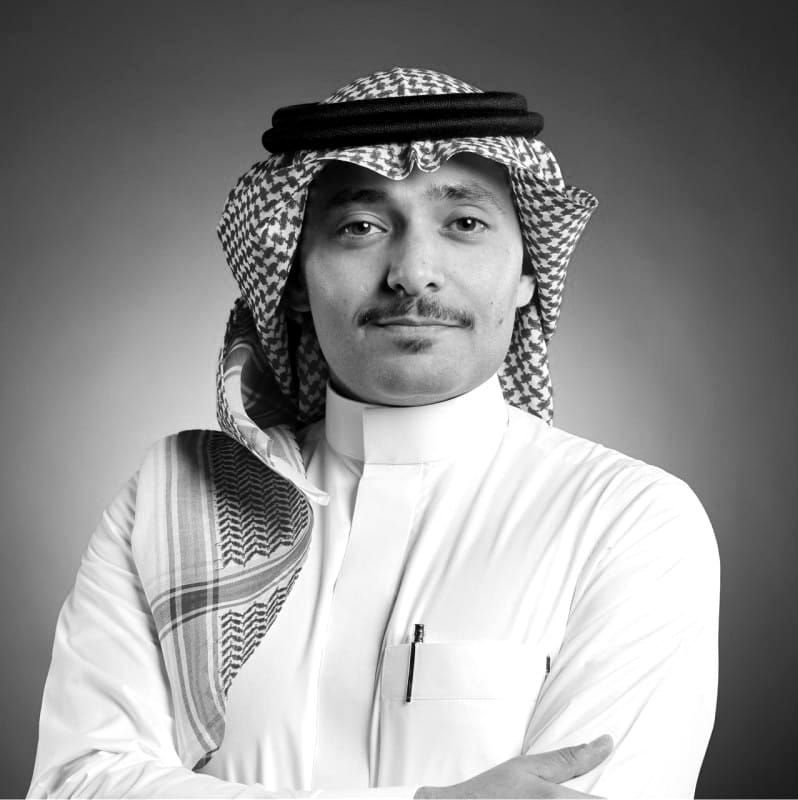
“Art is something I enjoy doing, it relaxes me and it is my getaway when life gets hard.”
For Saudi architect and calligrapher Yousef Yahya, the Arabic letter is not simply written. It is measured, balanced, constructed and given space to breathe. His practice sits at an unusual intersection between architecture and calligraphy, two disciplines connected by proportion, geometry and rhythm. For Yahya, that connection became the foundation of an artistic journey rooted in Islamic heritage while remaining open to contemporary design.
Behind the precision of his work is something deeply personal: a creative practice that has followed him from childhood curiosity to architectural study, from gallery walls to jewelry and furniture, and into a professional life still closely connected to the built environment.
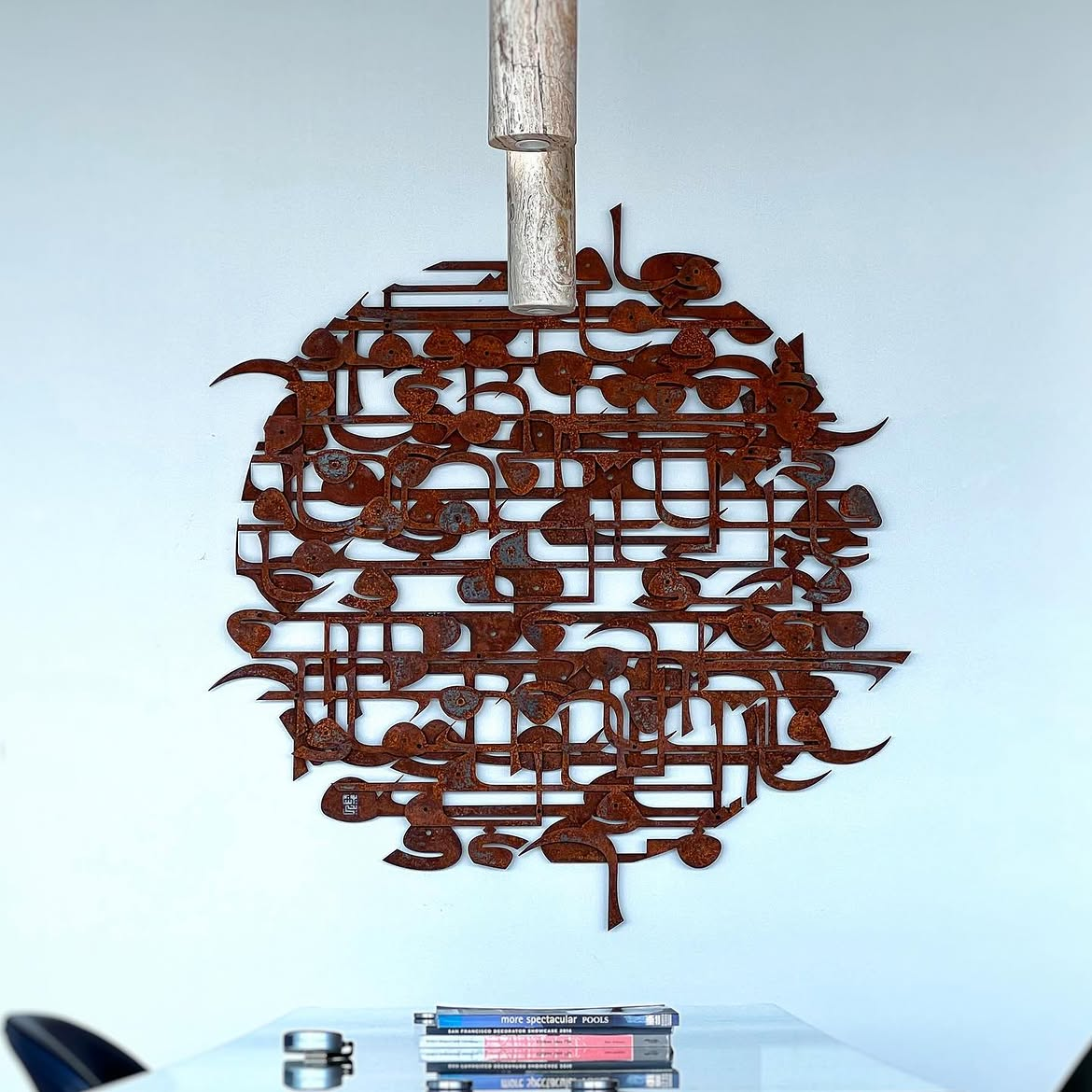
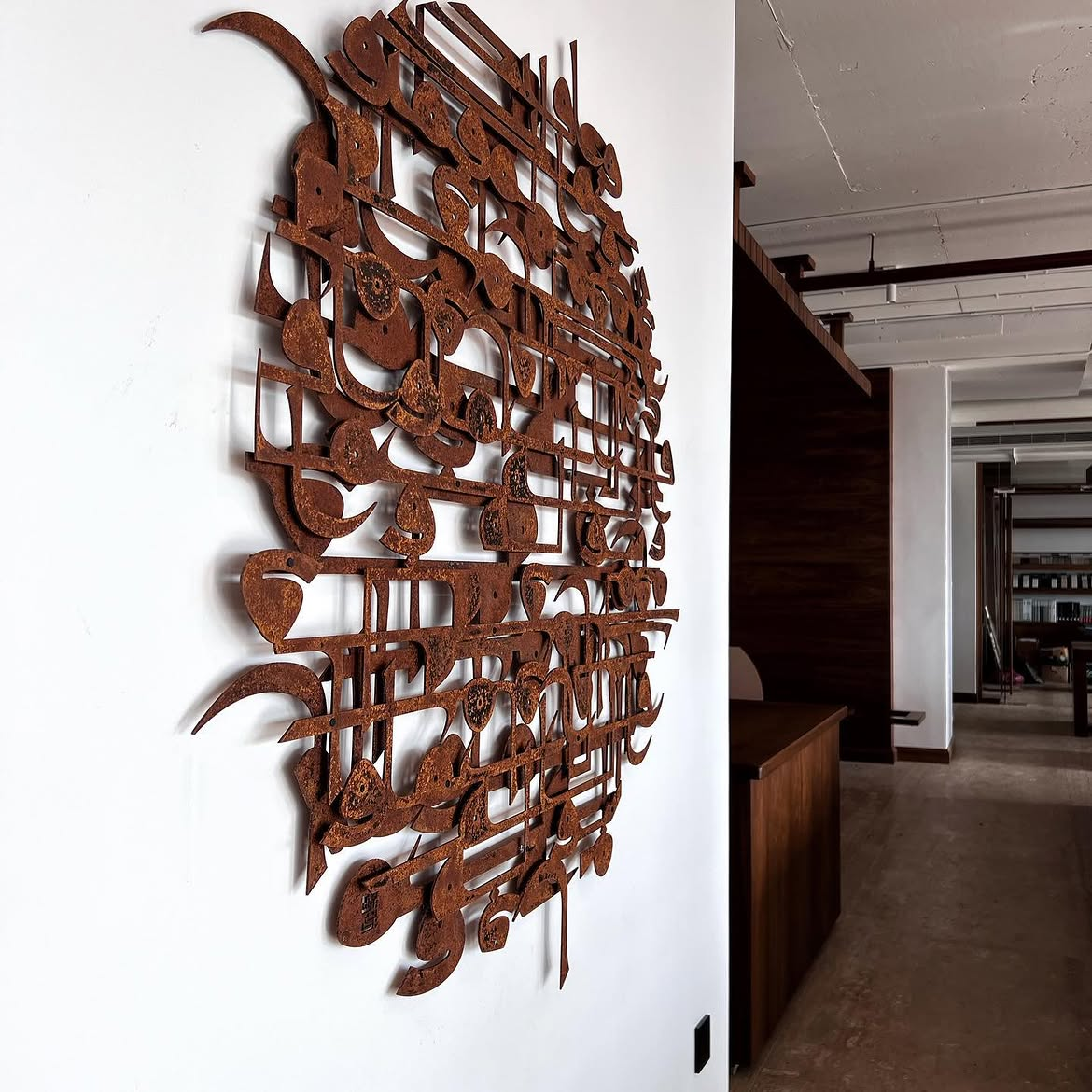
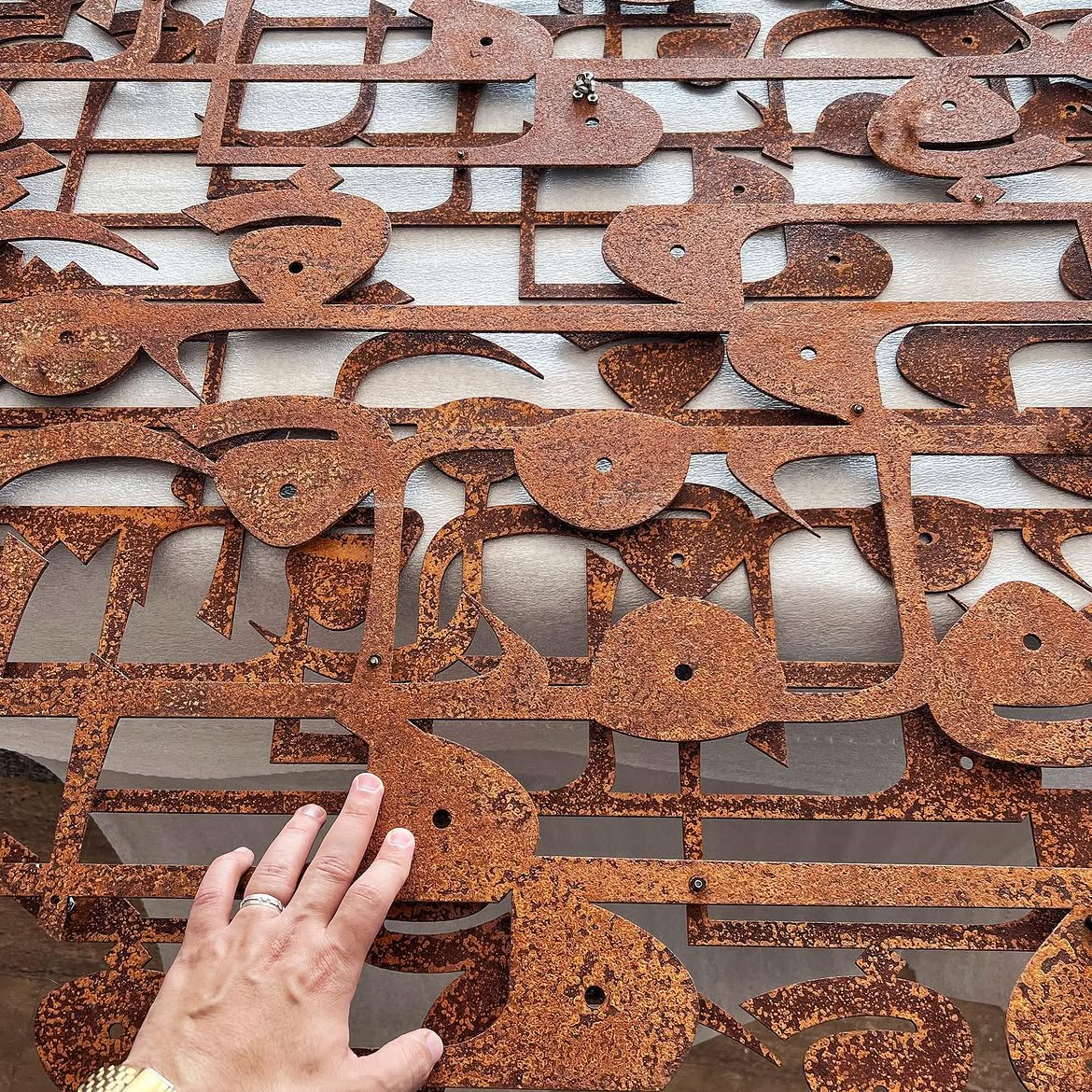
Abstract Arabic calligraphy of a Qur’anic verse about deeds and divine witness, crafted in oxidized iron with a 140 cm diameter in collaboration with artist Moath Al-Jadani.
Yousef Yahya's relationship with calligraphy began long before he formally studied it. As a child, he watched his older brother, who was skilled in calligraphy, and tried to imitate what he saw. The fascination was already there, but access was not. Without the tools or support needed to properly develop the skill, that early interest remained instinctive. Years later, architecture would give that instinct a structure.
While studying in the Department of Architecture at the Faculty of Environmental Design, Yahya began to recognize a striking connection between architectural geometry and Kufic calligraphy. Both depended on grids, reference lines, measurements and carefully considered relationships between form and space.
In 2013, that realization became a turning point. Yahya found what he described as the missing link between architectural design and Arabic calligraphy. He began studying Square Kufic, drawn to its geometric construction and its natural relationship with his architectural training. Architecture had not pulled him away from calligraphy. It had taught him how to see it.
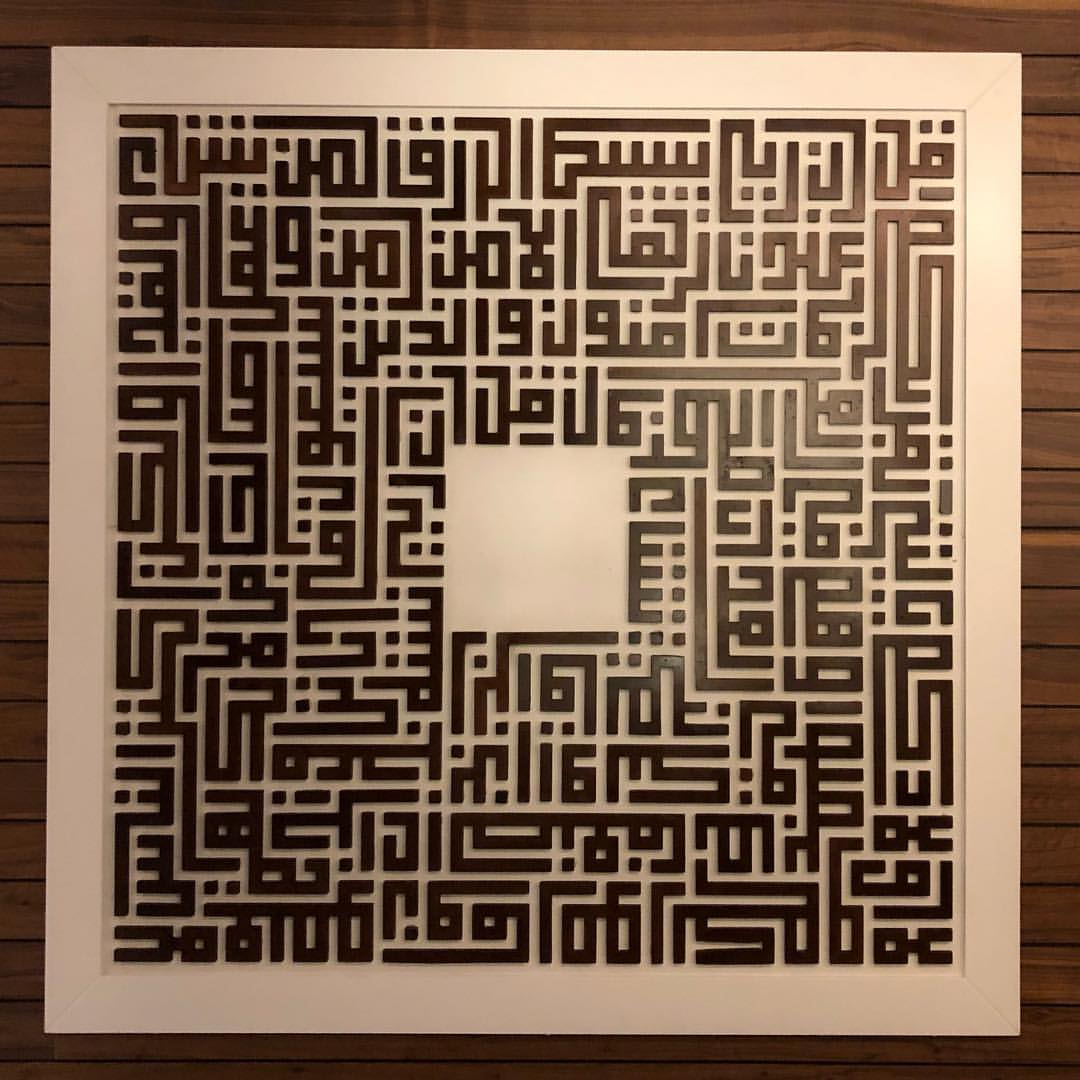
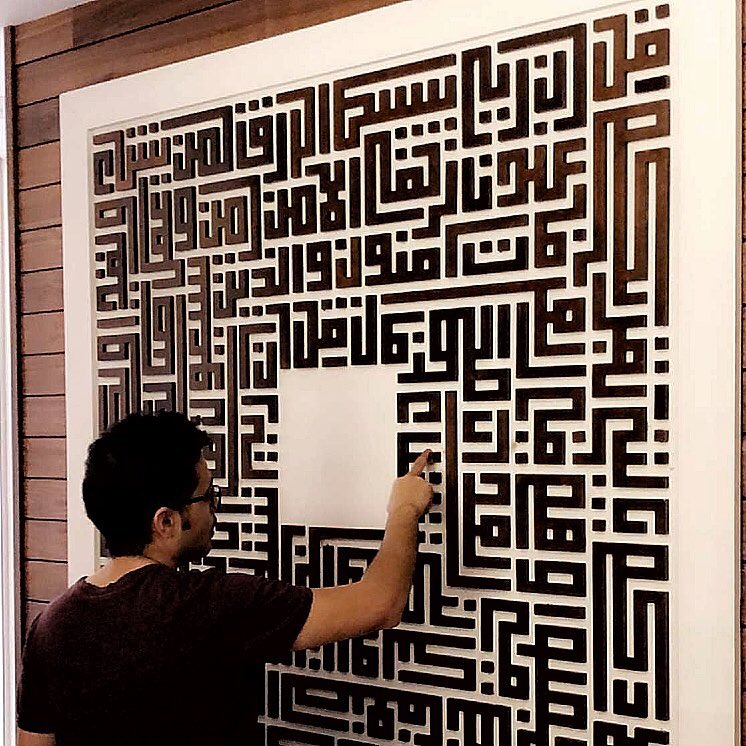
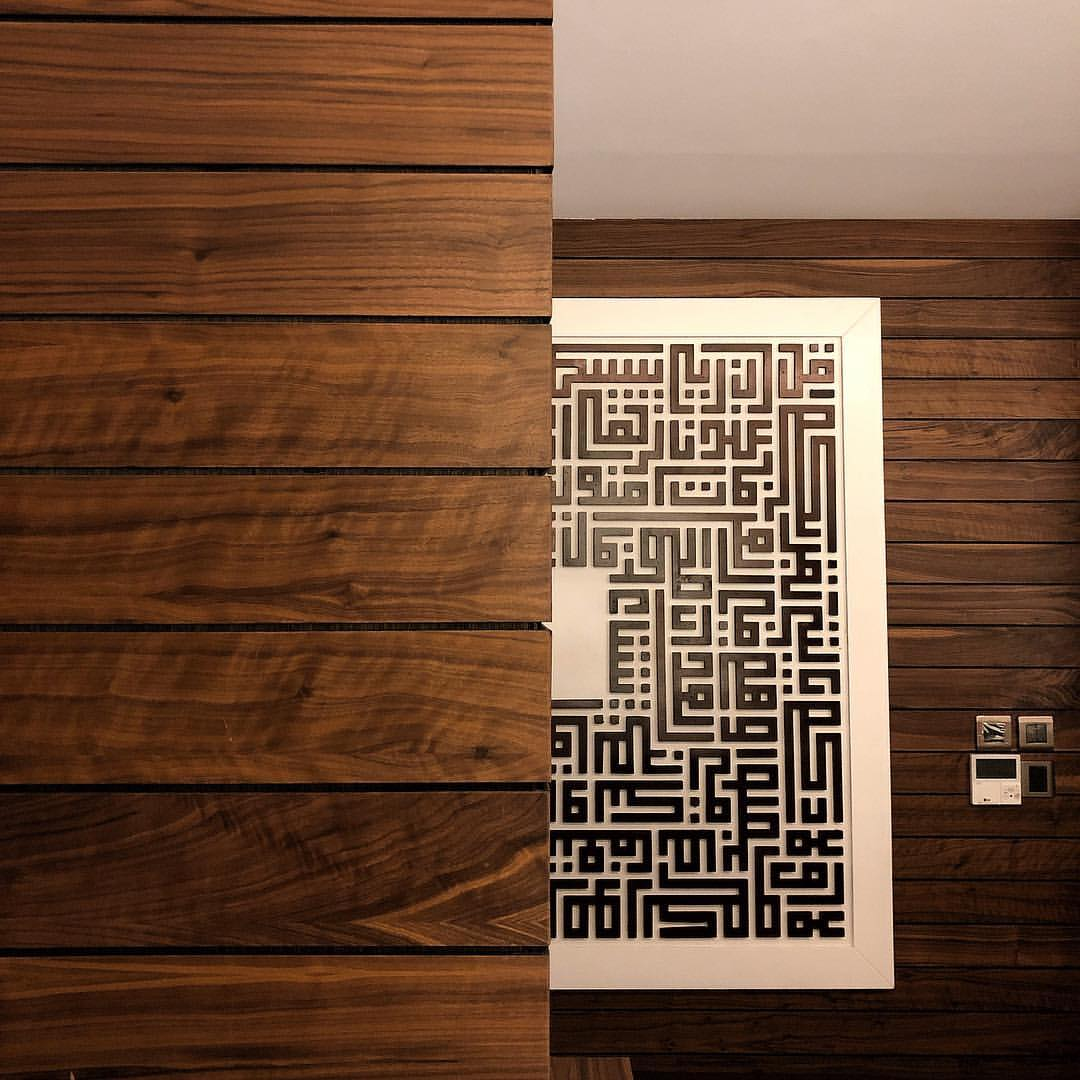
Square Kufic calligraphy featuring a Qur’anic verse on divine provision.
Square Kufic, or Kufi Murabba, is particularly suited to Yahya's way of thinking. Unlike flowing cursive scripts, its compositions can feel almost built. Letters are planned into grids, arranged into defined shapes and balanced through deliberate measurements. Compass, ruler, proportion and spatial organization become as important as the gesture of the hand. This is where his two identities begin to merge.
A line can become a boundary. A letter can become a structure. Negative space carries weight. Repetition becomes rhythm. A composition can be read both linguistically and architecturally. Yousef Yahya's work suggests that calligraphy does not have to sit on the surface of design. It can become the design itself.
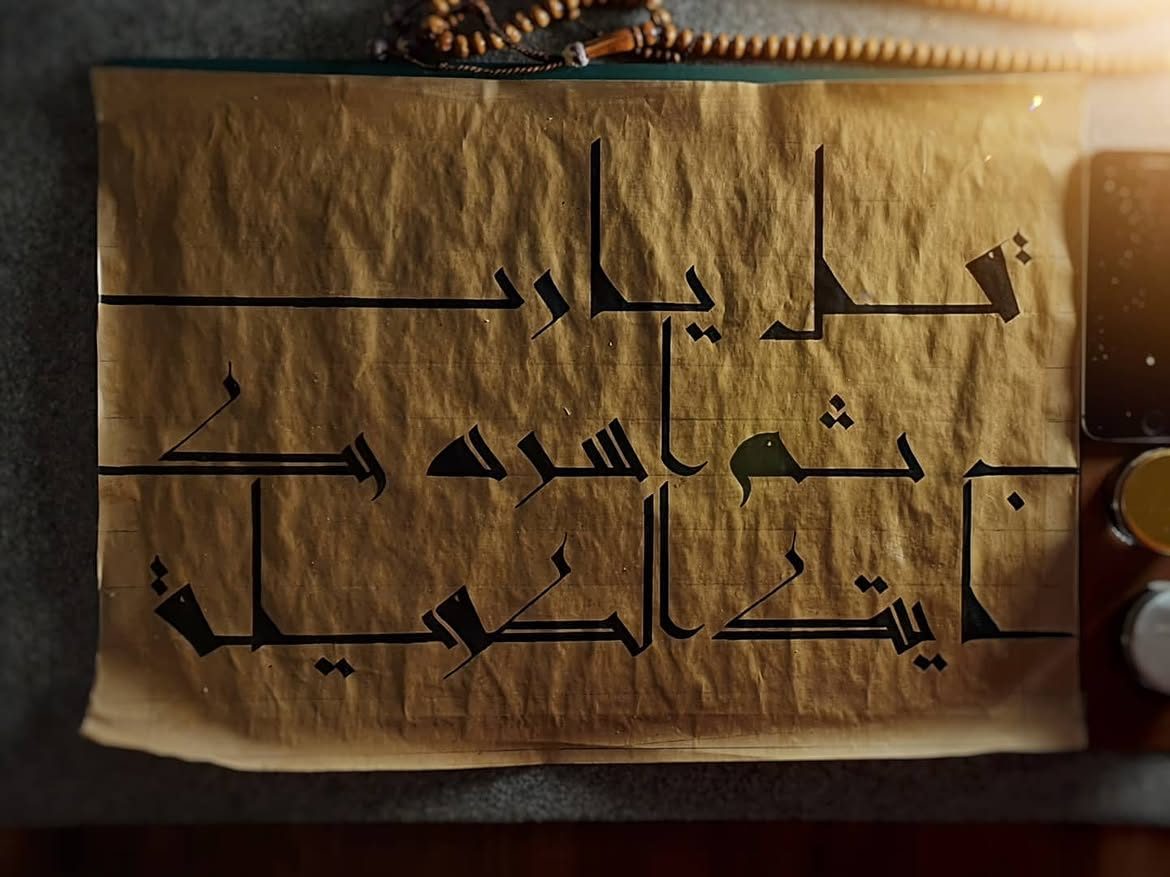
Yousef Yahya's understanding of Kufic did not arrive through an easy or conventional route. When he began seriously pursuing the script, he found relatively few accessible resources that could teach him the fundamentals he was looking for. Instead of allowing that absence to stop him, he turned to the work of experienced Kufic practitioners. He observed, studied and analyzed their compositions, gradually extracting principles through visual research and practice.
“Beginnings are always challenging. The first challenge laid in not finding sources and references to teach me the basics. My main source became the visual feeds of the pioneers of the Kufi art.”
It is a revealing part of his story. Yahya did not simply learn how to reproduce a script. He learned to investigate it. His approach reflects the mindset of both architect and designer: study the system, understand its internal logic, then build from it. Experience became part teacher, part laboratory.
One idea has stayed particularly close to Yahya's understanding of his craft.
“A writer chooses his script, but a calligrapher is chosen by the script.”
For Yousef Yahya, the thought resonated because his relationship with Kufic extends beyond the finished artwork. Calligraphy has become intertwined with both his professional and personal life. When asked how he develops his concepts, he returns to the phrase itself. The words often lead the composition, shaping the form before the form is fully understood. There is technical discipline in this process, but also surrender. The artist studies the script, yet eventually the script begins shaping the artist.
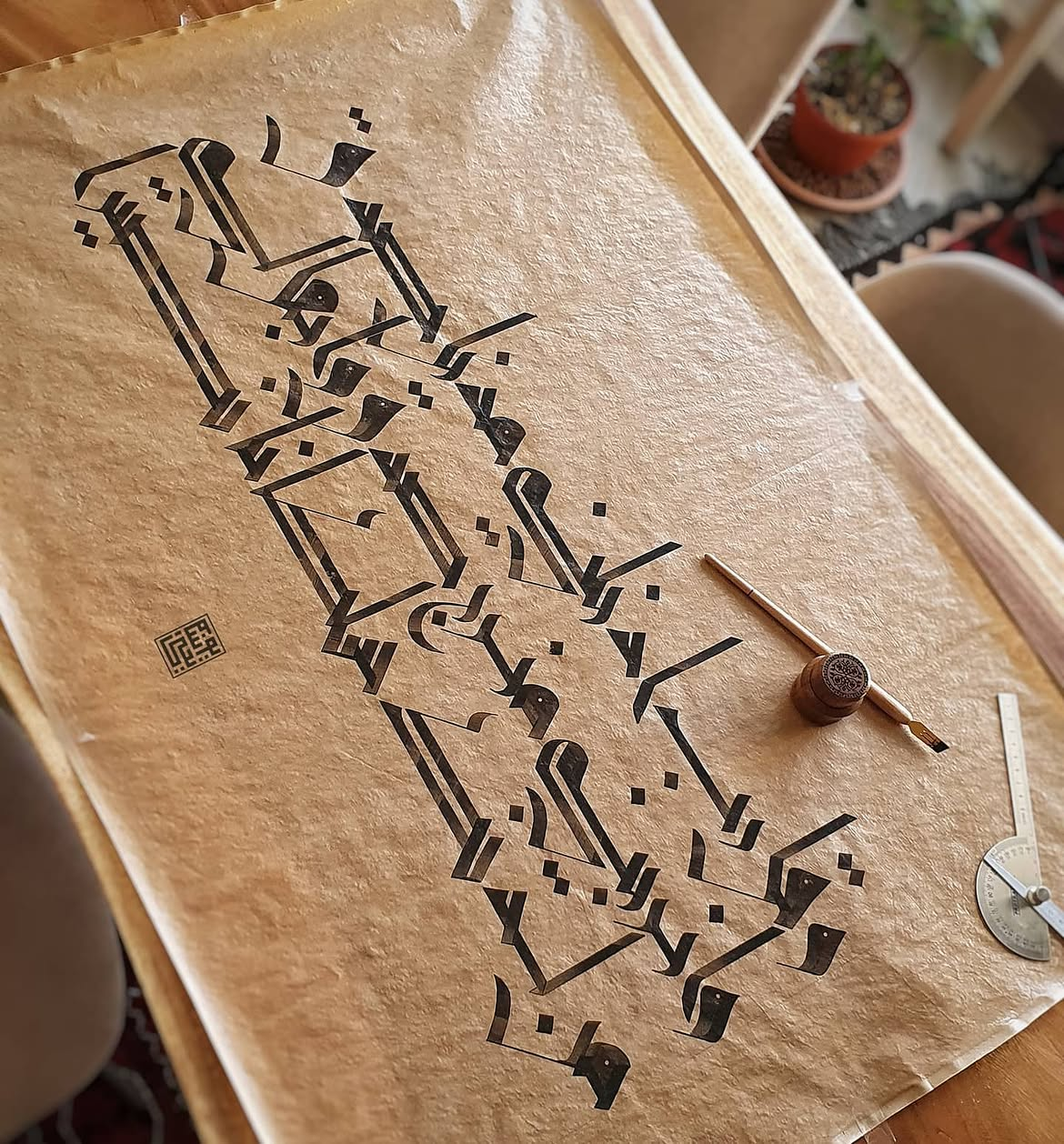
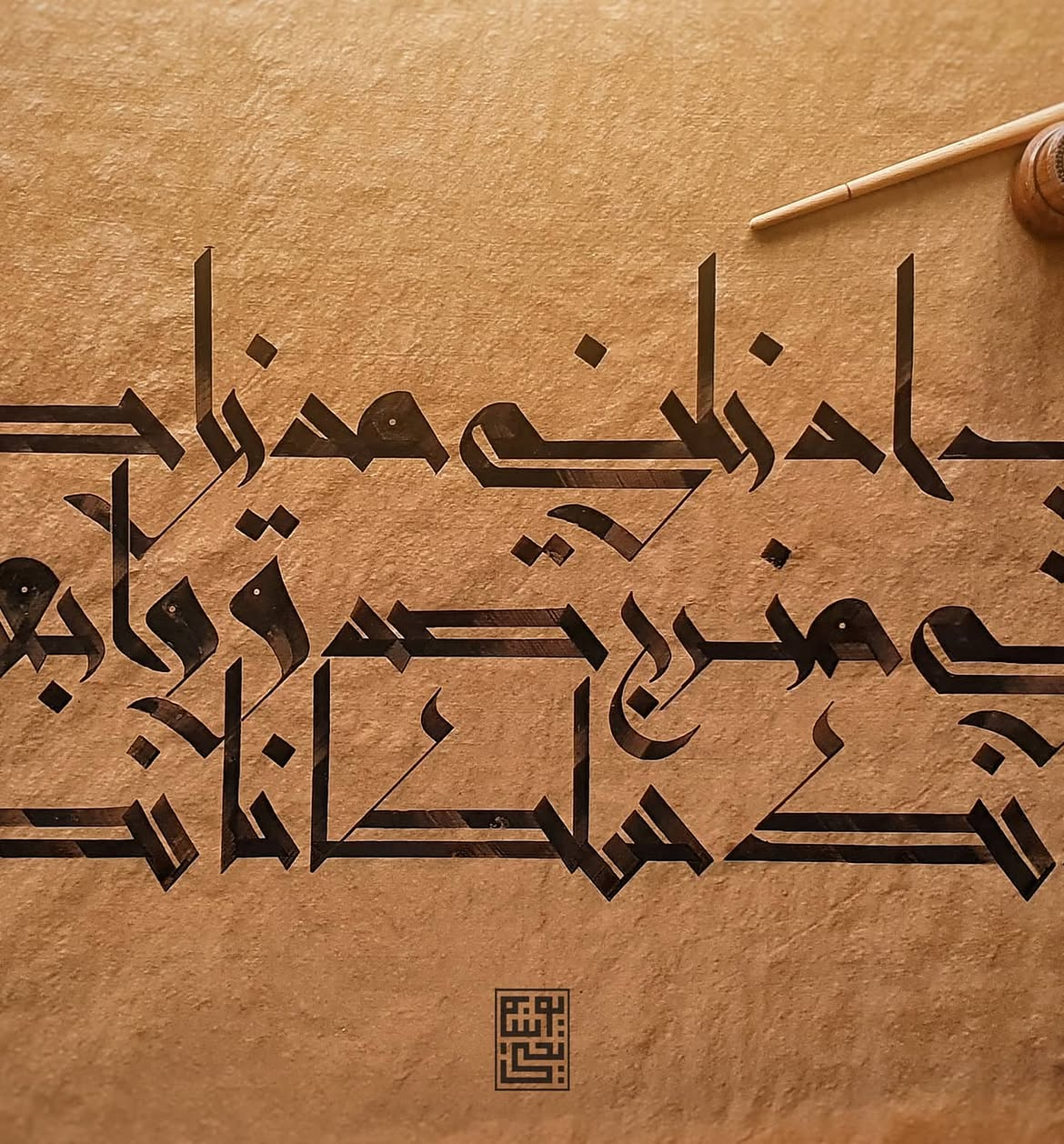
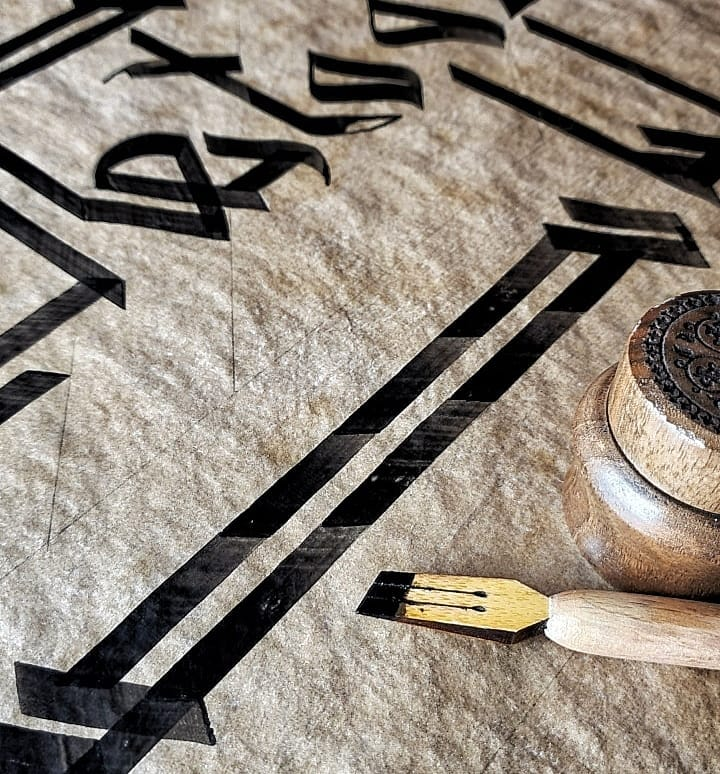
Kairouani Kufic calligraphy of the verse, “My Lord, cause me to enter in truth and exit in truth, and grant me from Yourself a supporting authority,” on treated paper.
The geometry may provide Yousef Yahya with structure, but the words provide meaning. His inspiration is deeply connected to Islamic and Arabic heritage, particularly verses from the Qur'an and the emotional depth of Arabic poetry. These texts are not simply phrases selected to occupy a composition. Their meaning becomes part of the visual decision making. A phrase can suggest density or openness. Poetry can hold tenderness, longing or reflection. Qur'anic language can invite contemplation before a viewer has fully decoded the geometric form.
Yahya has drawn inspiration from historic masters such as Ali Toy, Abdullah Zuhdi and Mustafa Haleem, alongside contemporary calligraphers including Ibrahim Al-Orafi, Mohammed Jamal Al-Rabeia and Nasser Al-Salem. The lineage matters, but so does what comes next.
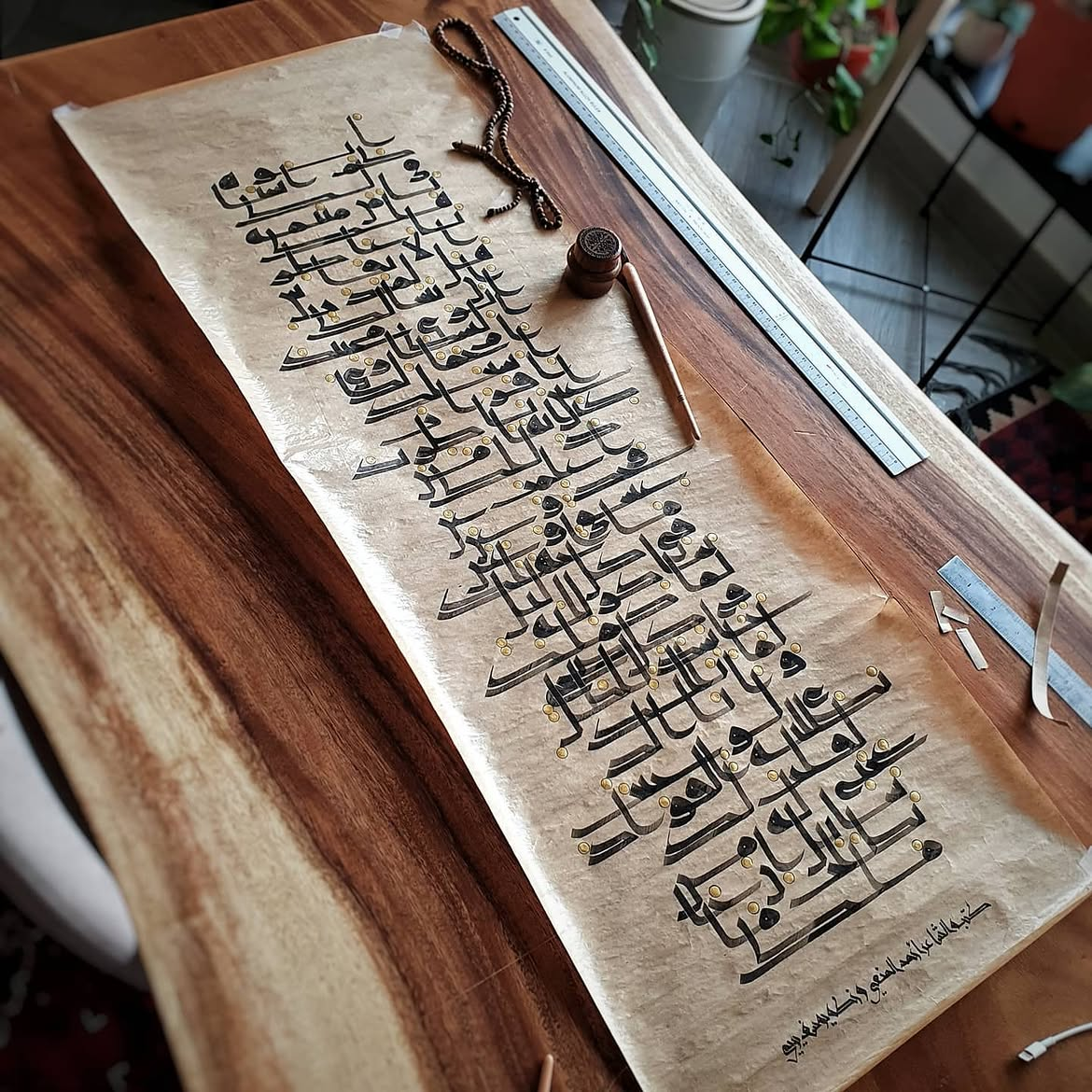
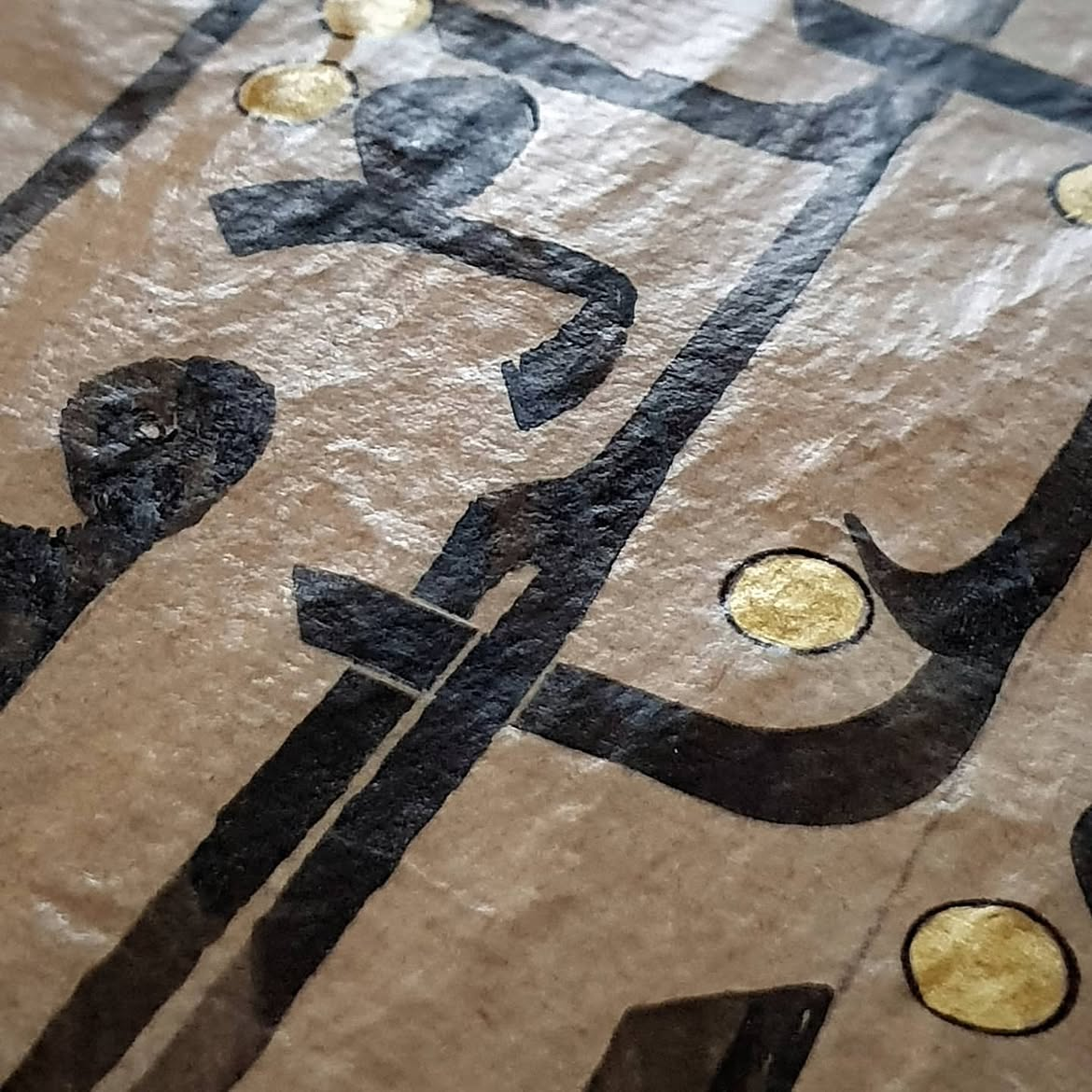
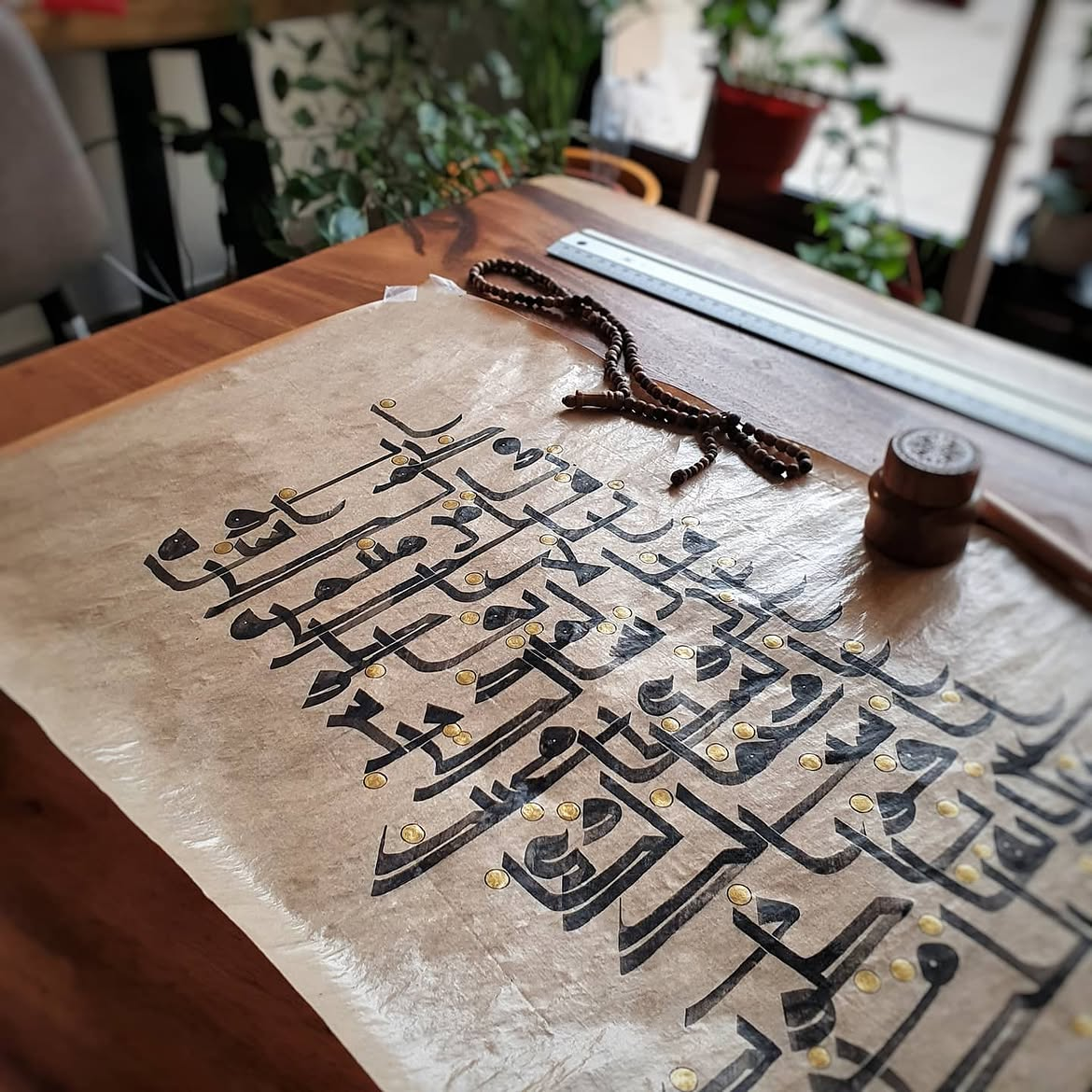
Arabic calligraphy of the phrase “Yes… how I long for you” from a poem by Ahmed Al-Manai, written in Qur’anic manuscript script.
Yousef Yahya's architectural background has encouraged him to think about calligraphy beyond conventional formats. Over the course of his practice, he has explored ways for Arabic lettering to enter architecture, interior design, furniture and jewelry, treating Kufic as a design system capable of moving between scales and materials. He has also explored the possibility of applying Kufi to jewelry and diamonds, as well as incorporating Kufi Murabba into furniture design.
The significance is not simply that calligraphy can decorate an object. It is that the structure of the letter can inform the object itself. A Kufic composition can become a facade, a pattern, a spatial divider, an engraved surface or a piece worn against the body. The language travels, but its underlying geometry remains intact.
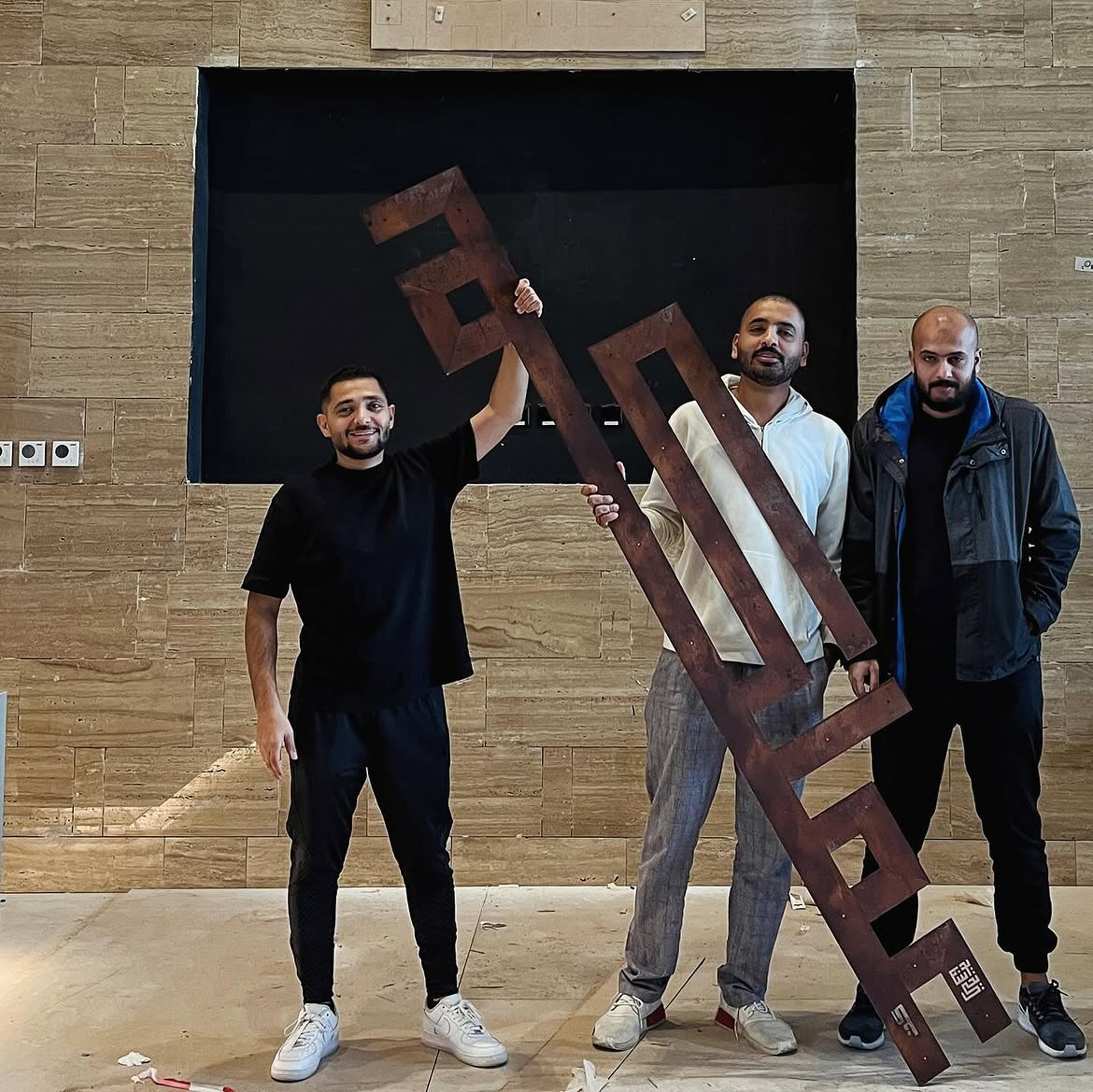
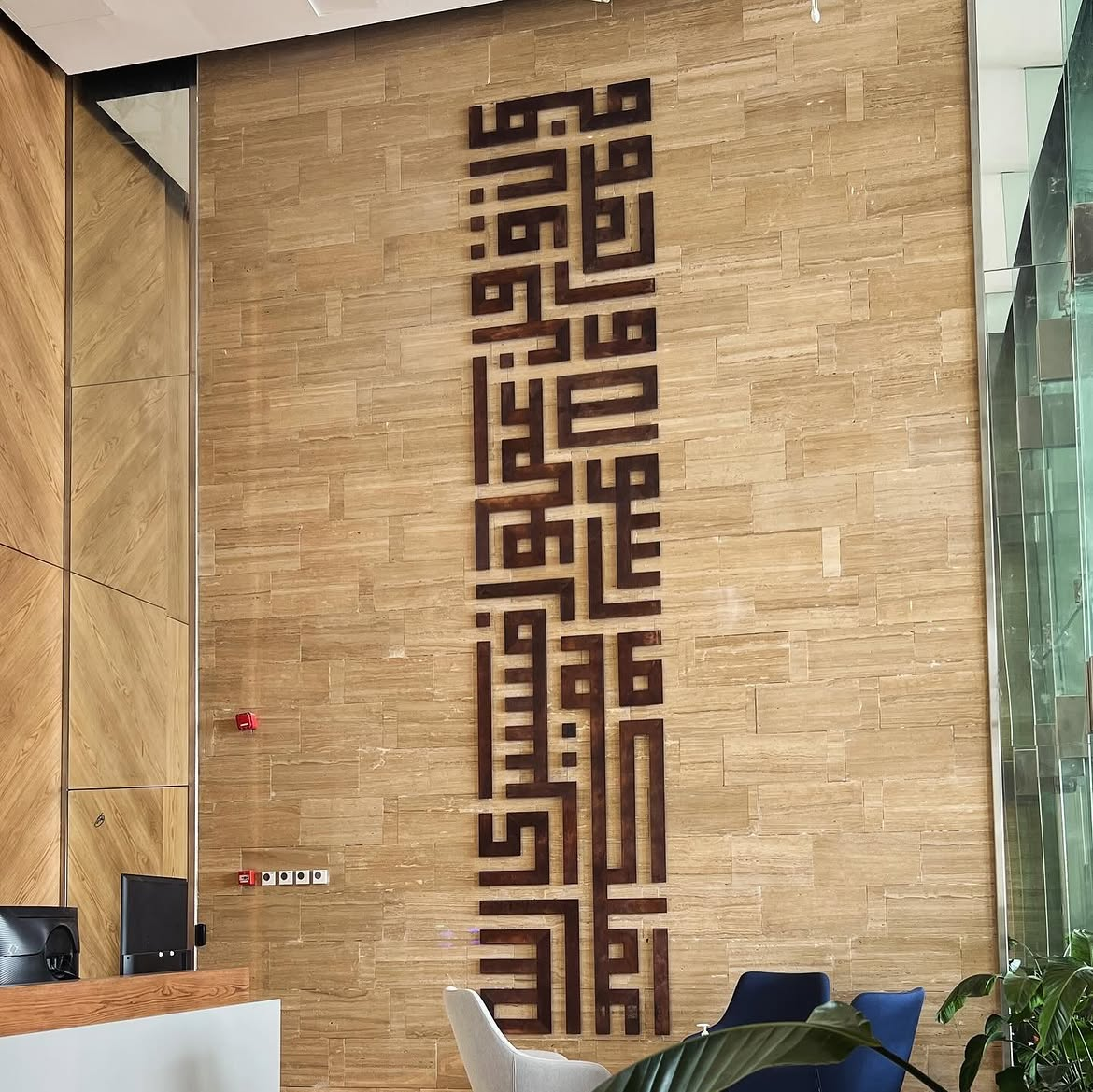
Square Kufic calligraphy of the Qur’anic verse “And say, ‘Do [as you will], for Allah will see your deeds, and [so will] His Messenger and the believers,’” created in oxidized iron in collaboration with Kaf.Non Creative Lab.
Yousef Yahya's work has gradually become part of Saudi Arabia's evolving contemporary art landscape. He has participated as a calligrapher in exhibitions and initiatives connected with Athr Gallery, the Tasami Charity Auction and Shara Gallery.
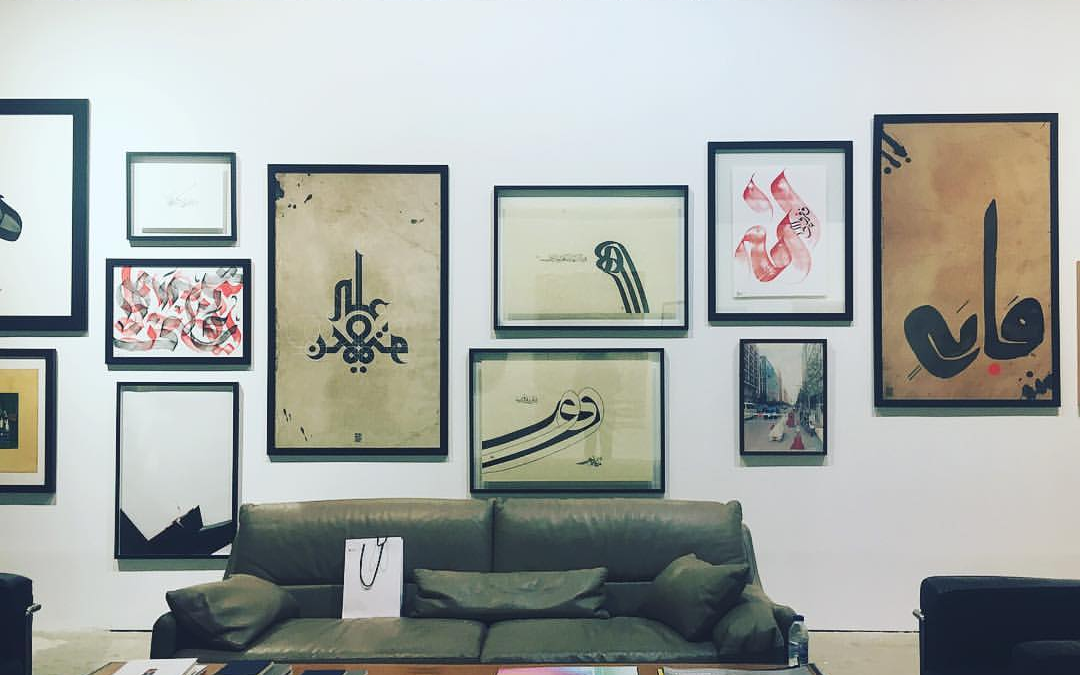
He also exhibited work in Jeddah, where he ranked third among participating artists in a Behance exhibition. His practice has continued to appear within contexts that connect calligraphy to spirituality, visual culture and cultural heritage. In 2023, Yahya participated in Qur'aniyat at Naila Art Gallery in Riyadh, an exhibition centered around Qur'anic language and artistic interpretation.
In 2025, he also participated in Eternal Crafts: The Art of the Manuscript, an exhibition exploring manuscript traditions, calligraphy and the crafts connected with their preservation. These appearances place his work within a broader Saudi cultural moment in which traditional disciplines are not being treated as static inheritances, but as active languages for contemporary expression.
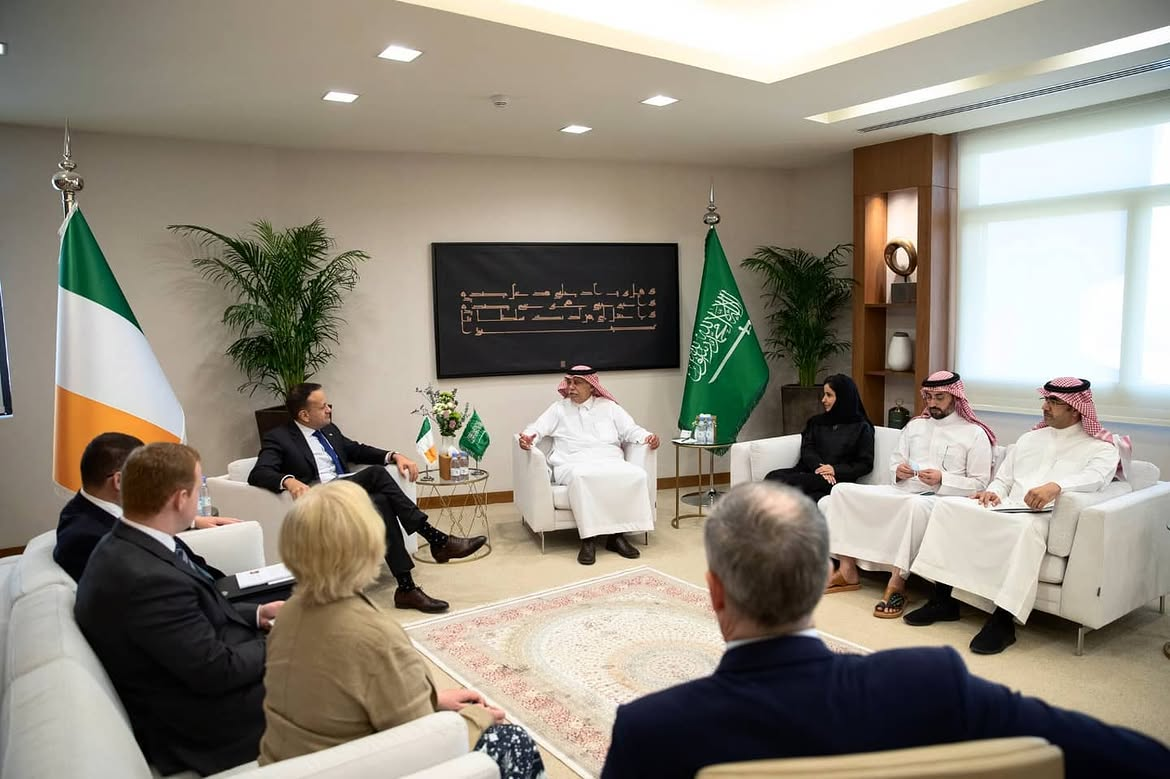
There is another dimension to Yousef Yahya's story that makes his artistic identity especially compelling. Alongside his calligraphic practice, he has continued building a professional career in architecture and development and currently serves as Senior Development Manager at ROSHN. It would be easy to describe architecture as his profession and calligraphy as his artistic escape. His story suggests something more interconnected.
Both ask him to think about structure. Both require precision. Both depend on balance between individual elements and the larger whole. Both transform lines on a surface into something capable of carrying meaning. One creates spaces people move through. The other creates forms the eye moves through.
Yousef Yahya has spoken about wanting to deepen his calligraphic knowledge through academic study while contributing through art to the ambitions surrounding Saudi Vision 2030. The idea feels particularly relevant to his practice because his work does not ask Saudi culture to choose between heritage and modernity.
Instead, it demonstrates how naturally the two can inform one another. Kufic is among the oldest visual languages associated with Arabic and Islamic culture, yet in Yahya's hands its geometry can speak comfortably to contemporary architecture, product design, interiors and artistic experimentation. That ability to move across disciplines gives his practice its relevance. Preservation, here, does not mean freezing tradition in time. It means understanding its principles deeply enough to let them evolve.
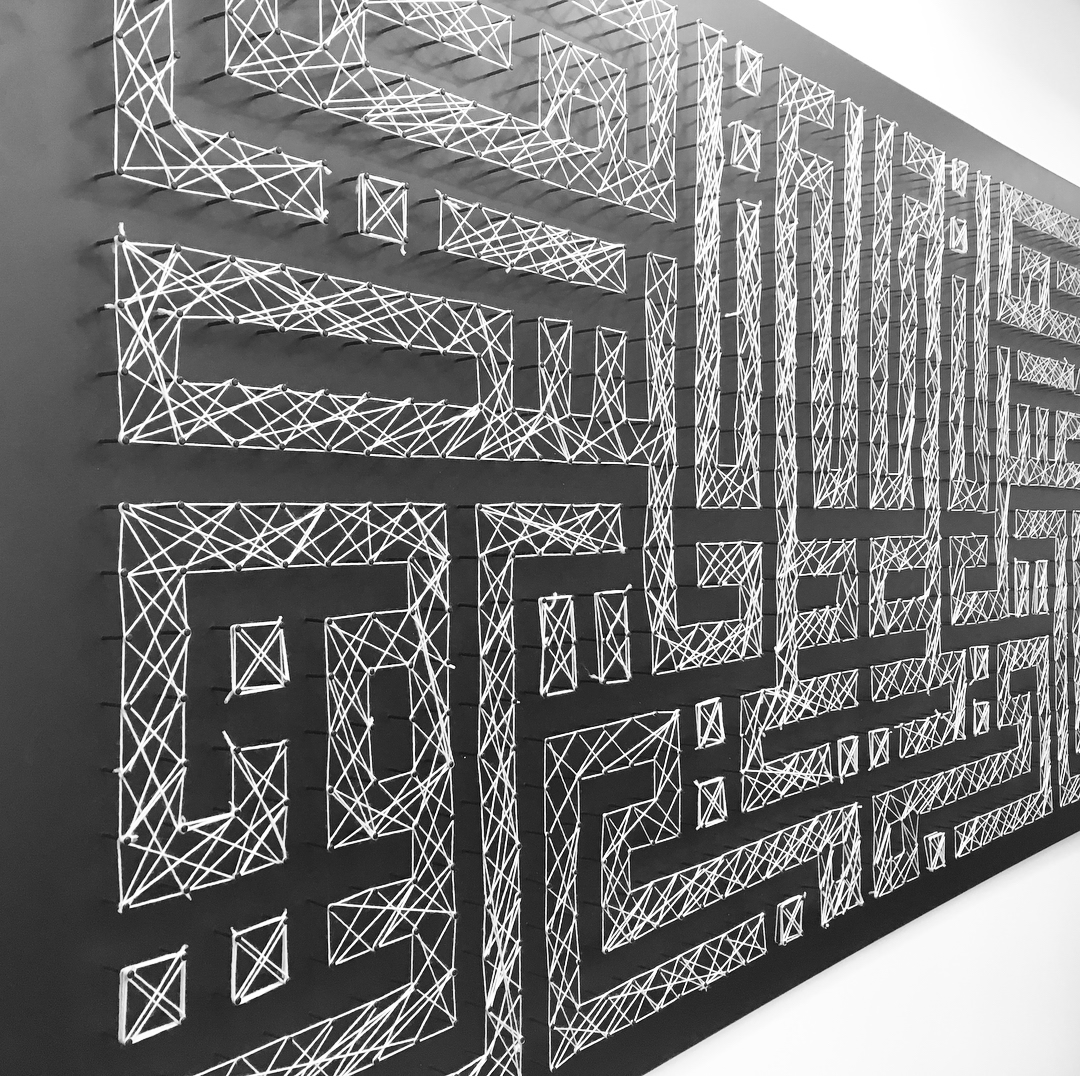
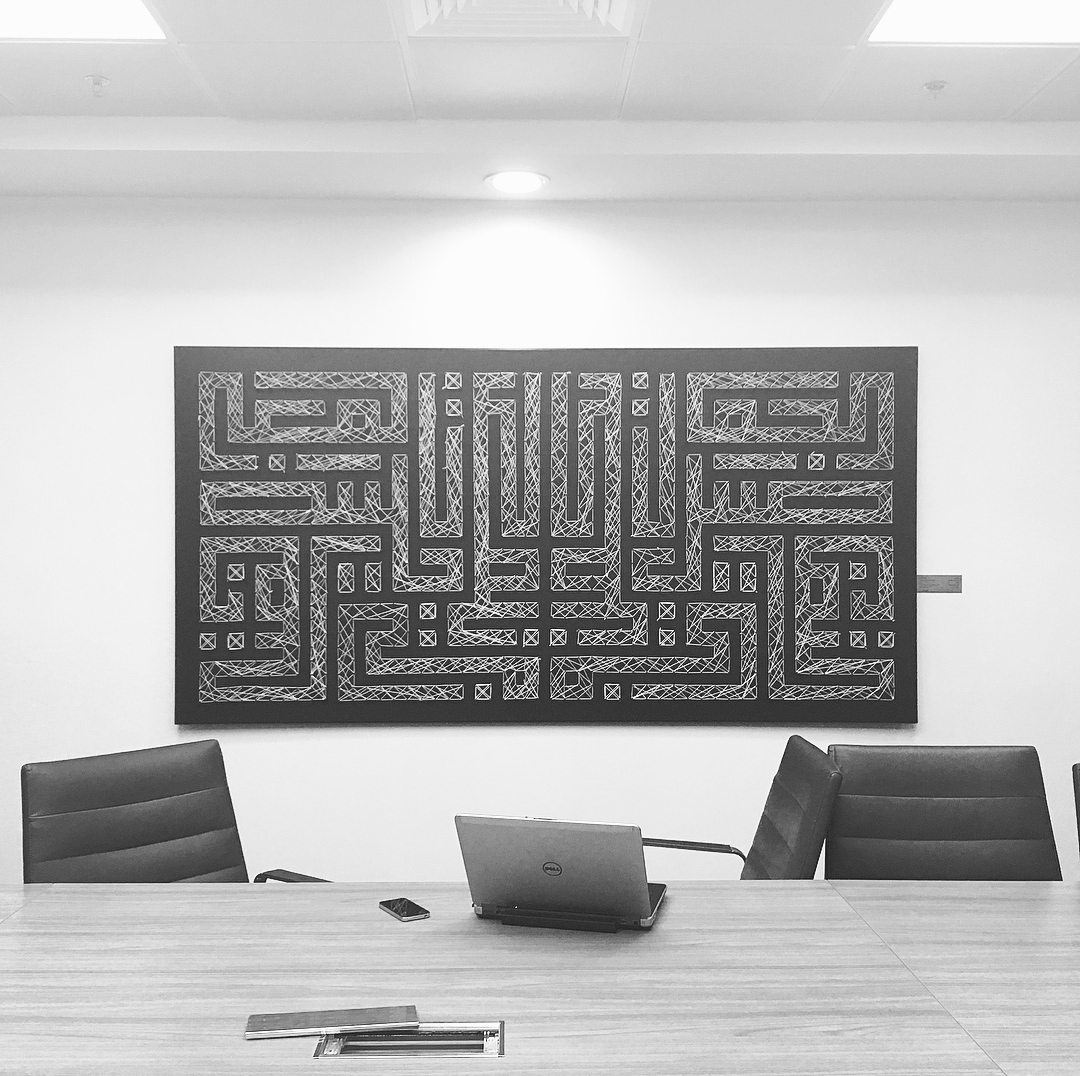
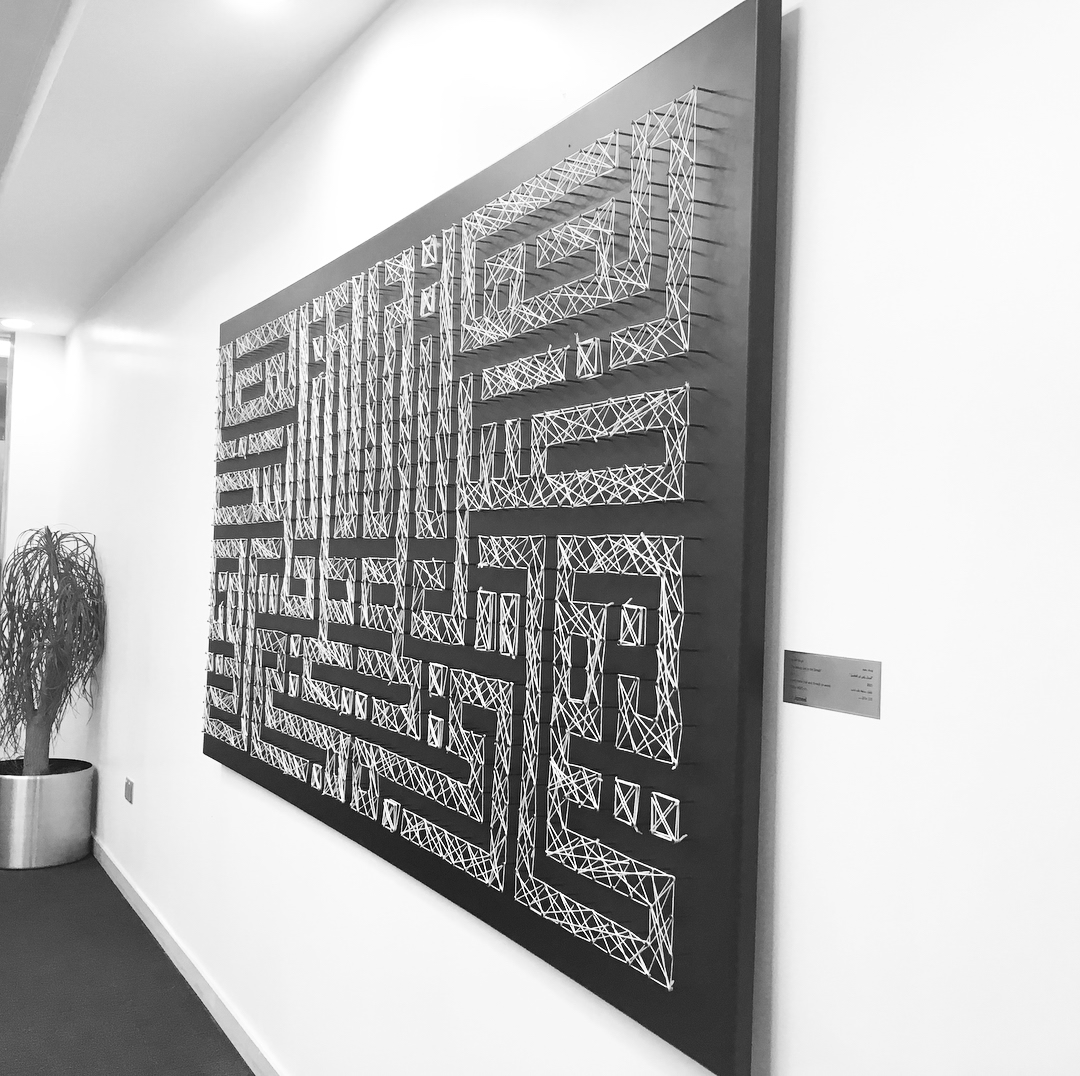
Arabic calligraphy artwork titled “Beauty Lies in the Details,” part of the Abdul Latif Jameel collection.
There is something fitting about an architect becoming absorbed by Square Kufic. Both architecture and calligraphy begin with a line, but neither ends there. A line becomes proportion. Proportion becomes structure. Structure creates rhythm. Rhythm creates an experience.
Yousef Yahya's calligraphy reminds us that Arabic script is not only read. It can be entered, explored and inhabited. And perhaps that is what makes his relationship with Kufic so compelling. He approaches every composition with the discipline of someone trained to build, but returns to art for something architecture alone cannot always provide: refuge, contemplation and a deeply personal connection to language.
Discover more art stories reshaping Saudi culture at KSAArt.