Hatem Al-Ahmad’s Art of Nature, Ruins and Human Traces
Explore Hatem Al-Ahmad's evolving practice, from surreal painting in Abha to environmental research, installation, Noor Riyadh and ATHR.


Explore Hatem Al-Ahmad's evolving practice, from surreal painting in Abha to environmental research, installation, Noor Riyadh and ATHR.
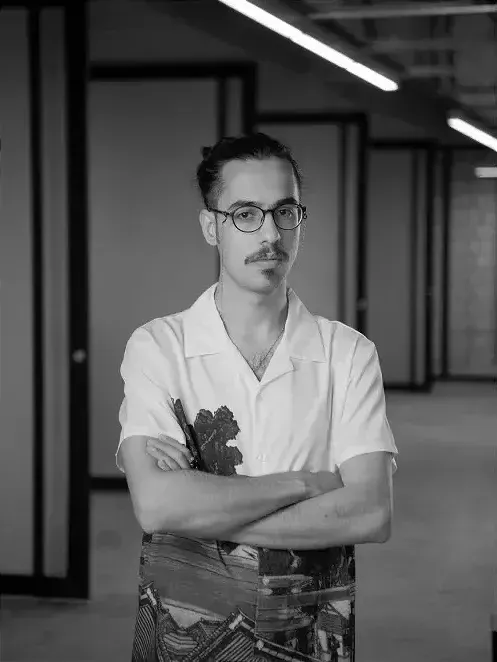
“I find in art a broad space through which we can research ways and methods of living.”
For Hatem Al-Ahmad, the environment is not simply something to represent. It is something to observe, research and question. Born and raised in Abha, the Syrian multidisciplinary artist works across painting, installation, video and archival practices, examining the relationships between people, natural environments and the systems they create around them.
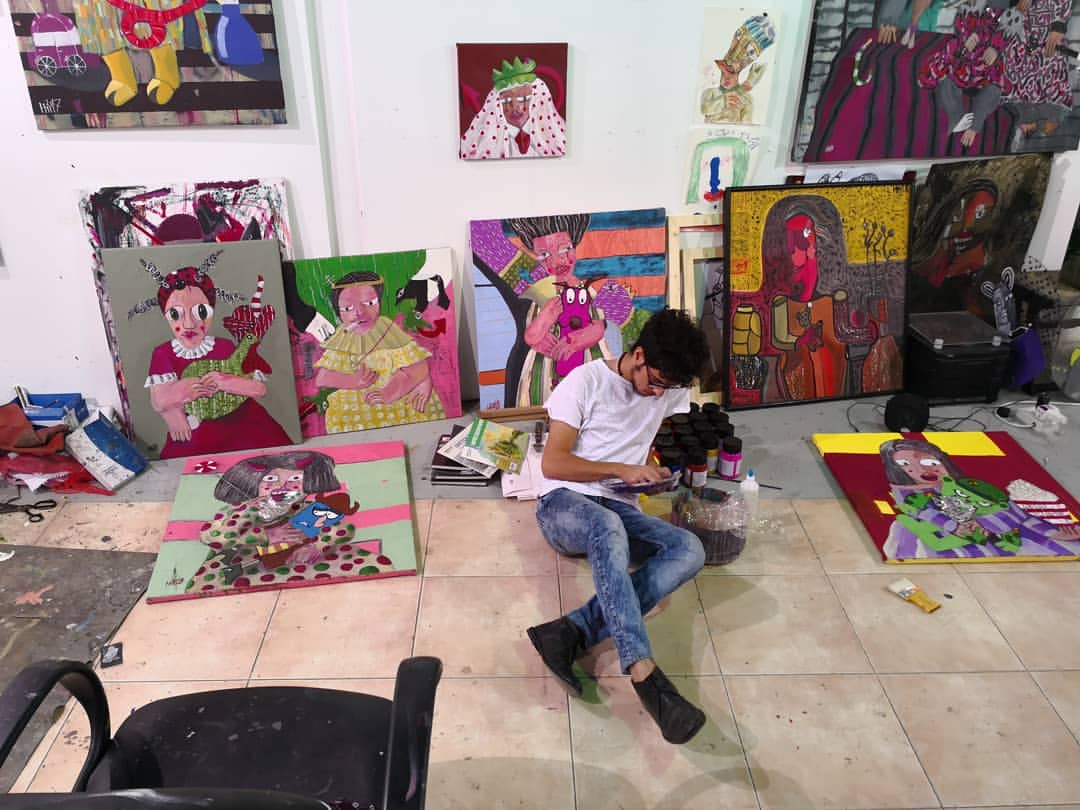
His practice has developed significantly over the past decade. Early paintings introduced surreal figures and ambiguous narratives, while more recent projects have moved into environmental research, natural materials and installations concerned with sustainability, decay and inherited knowledge. Across these different forms, Hatem returns to questions of time: what we inherit from the past, how we act in the present and what traces those actions leave for the future.
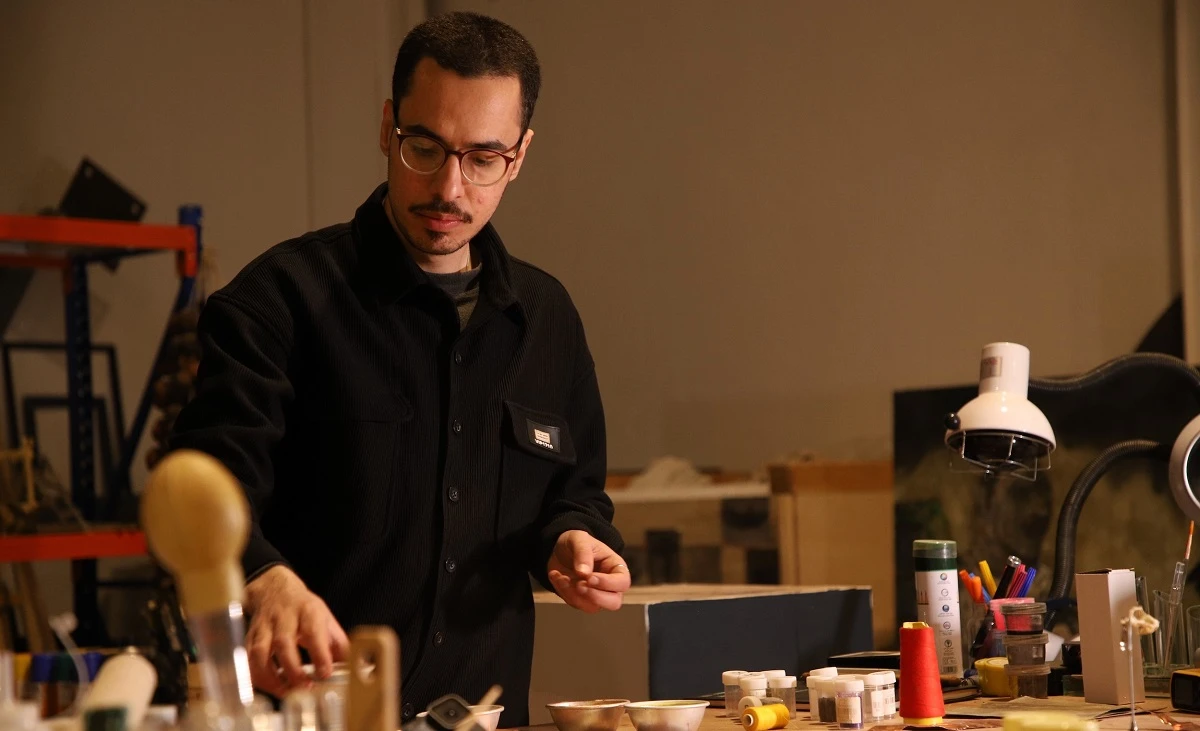
Hatem Al-Ahmad's artistic education began in Abha at Al-Miftaha Cultural Village, where he trained in drawing, painting, sculpture and printmaking. The cultural center introduced him to an active community of artists and writers and became an important part of his early development.
“I began my artistic practice through observation and experimentation,”
That idea of observation continues to shape his work today. Rather than approaching a subject through one medium, Hatem often begins by researching it and allows the information he gathers to determine how the final work should take form. Alongside his artistic development, he studied Computer Engineering at King Khalid University, graduating in 2021. The degree may seem distant from his visual practice, but Hatem's descriptions of his working process reveal a similarly systematic way of thinking. He has described his practice as an “algorithm,” where research is organized and translated into visual elements.
Abha remained central throughout this development. Hatem Al-Ahmad describes the city as a fertile environment for his practice and has spoken about choosing to continue working there. The wider Asir region, with its mountains, agriculture, biodiversity and inherited systems of knowledge, would eventually become one of the most important subjects in his work.
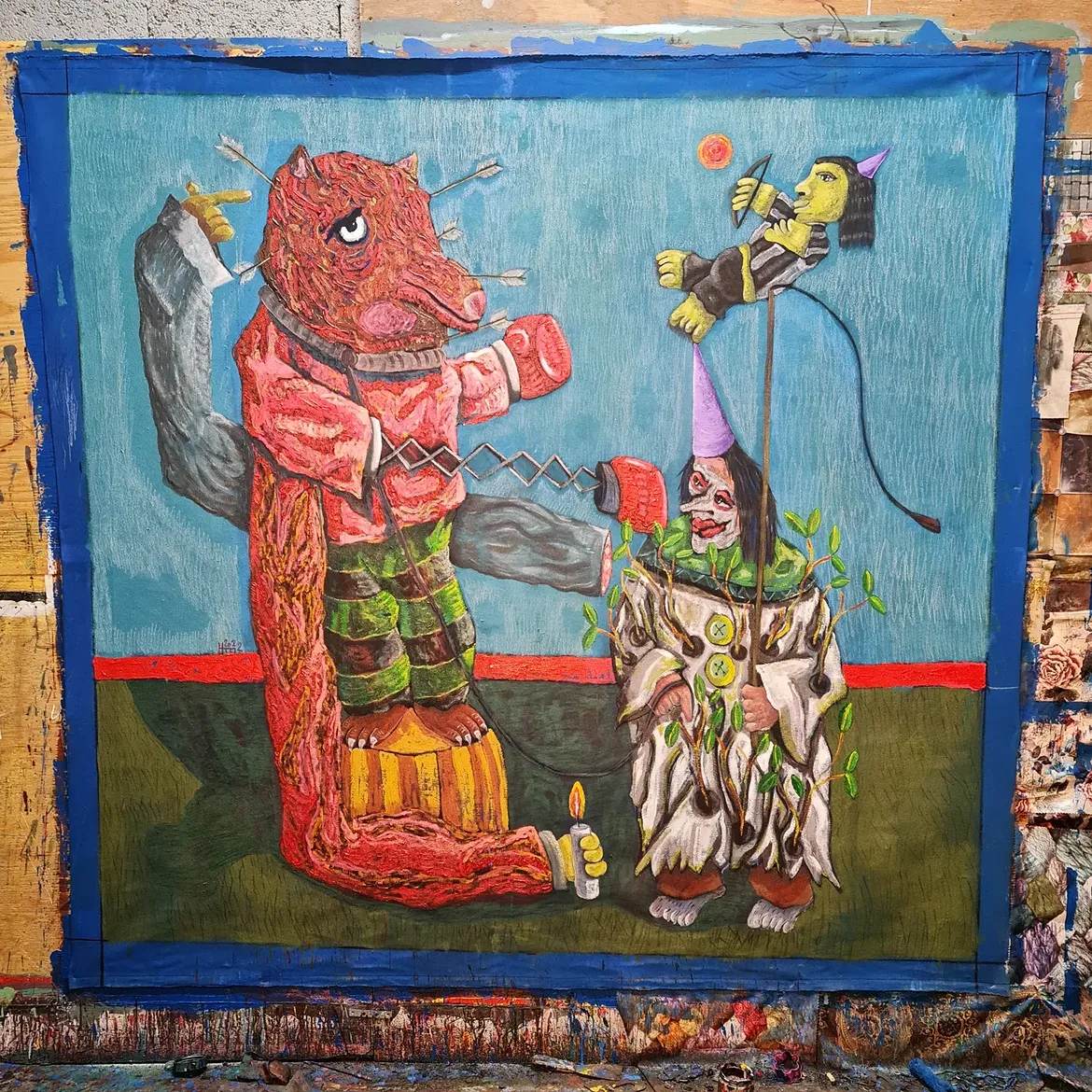
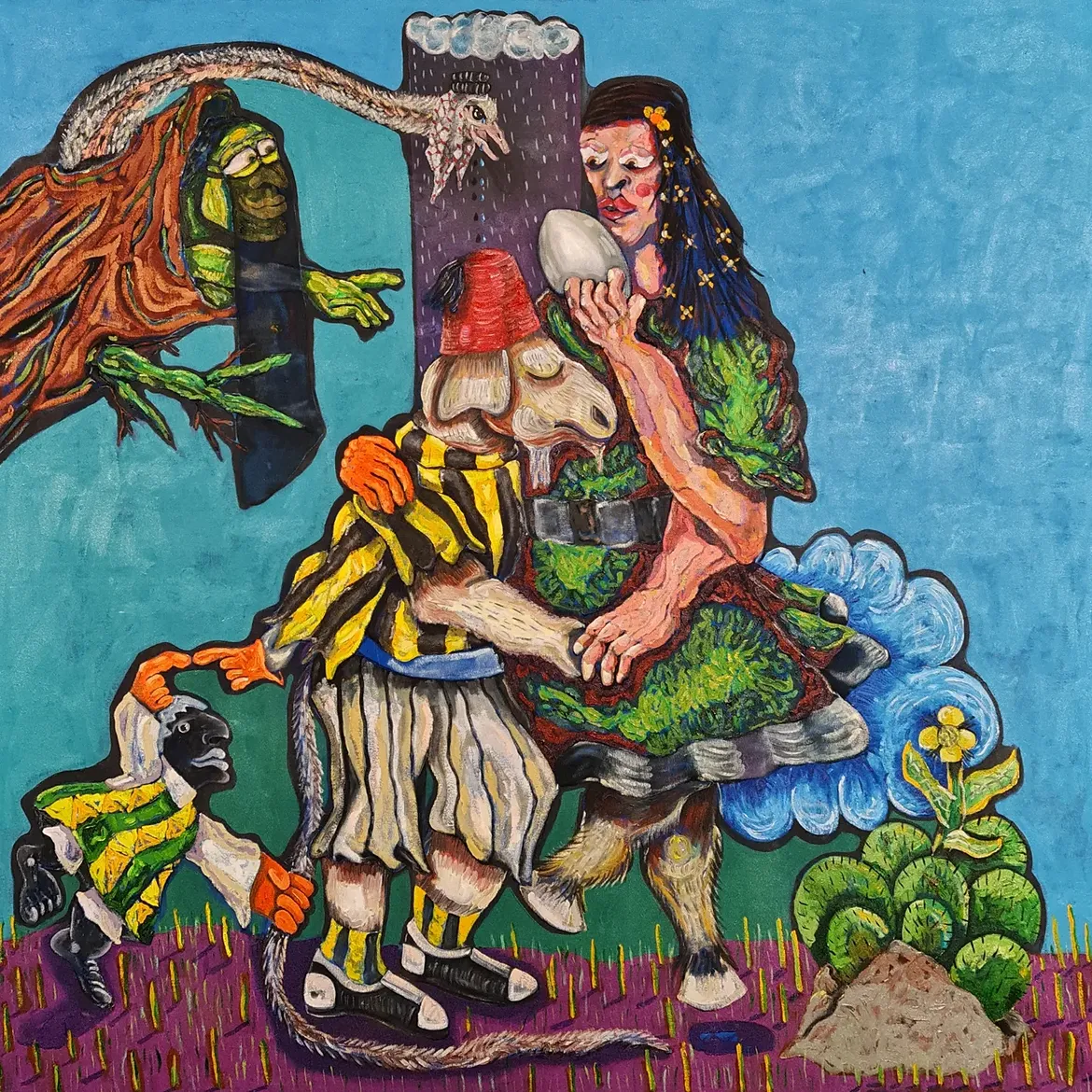
In Theatrical Indicators, painted in 2022, Hatem Al-Ahmad brings together exaggerated bodies, animal forms, plants and theatrical characters within a large blue composition. The figures appear to interact, but their relationships remain deliberately unclear. Human and non-human forms overlap, while familiar objects are altered until they become difficult to identify. The work reflects the surreal and figurative language that characterized an important stage of Hatem's painting. His characters can appear spontaneous and psychologically charged, but his process is more structured than the images suggest.
Hatem plans compositions, colors and visual elements before executing them. He has even compared his role to that of a contractor following an approved blueprint. The painting becomes less an act of spontaneous expression than a process of arranging researched elements into a visual system. This distinction is important to understanding his figures. Hatem has said they are not self-portraits. Instead, they operate as components within larger ideas, allowing him to create ambiguous situations without providing viewers with a fixed narrative.
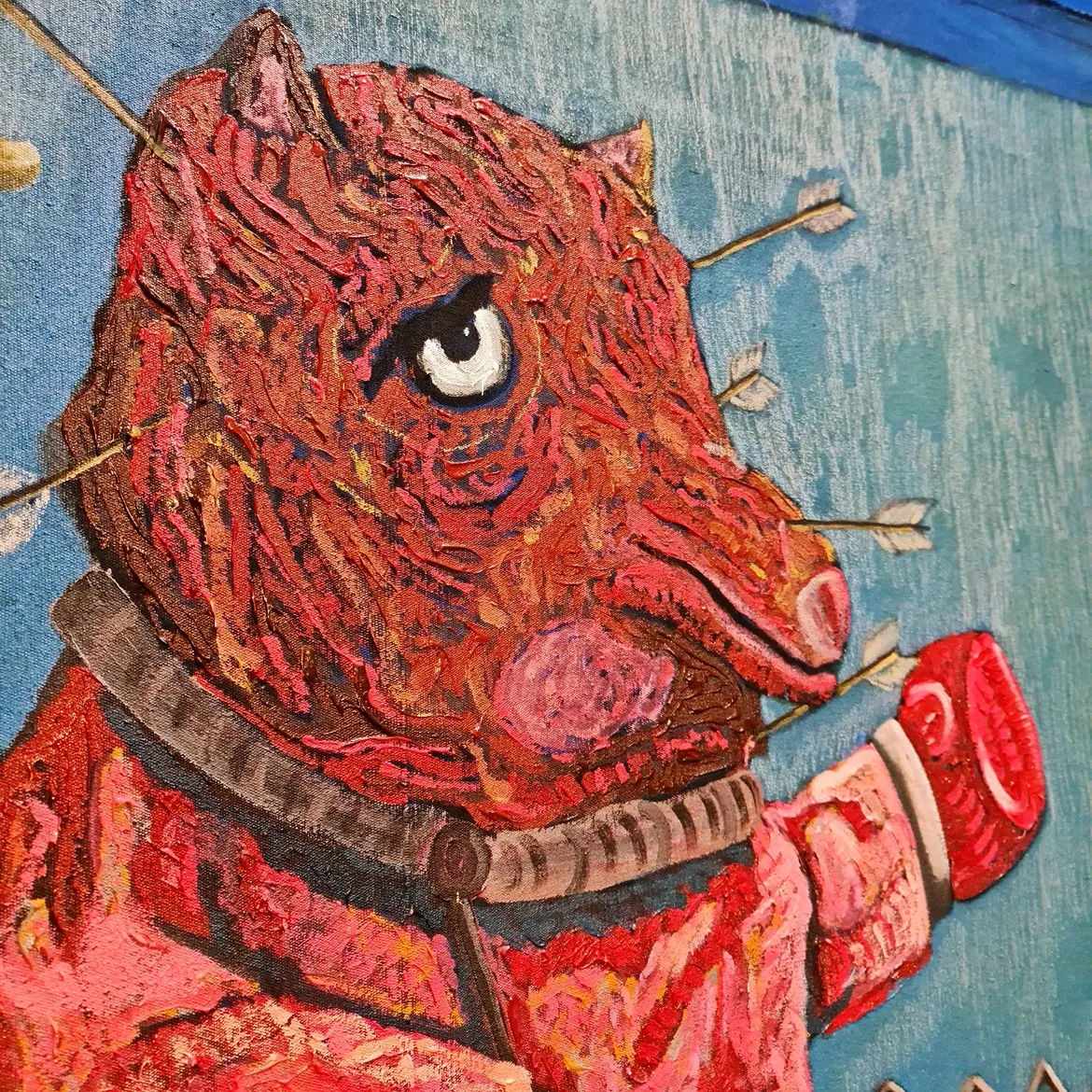
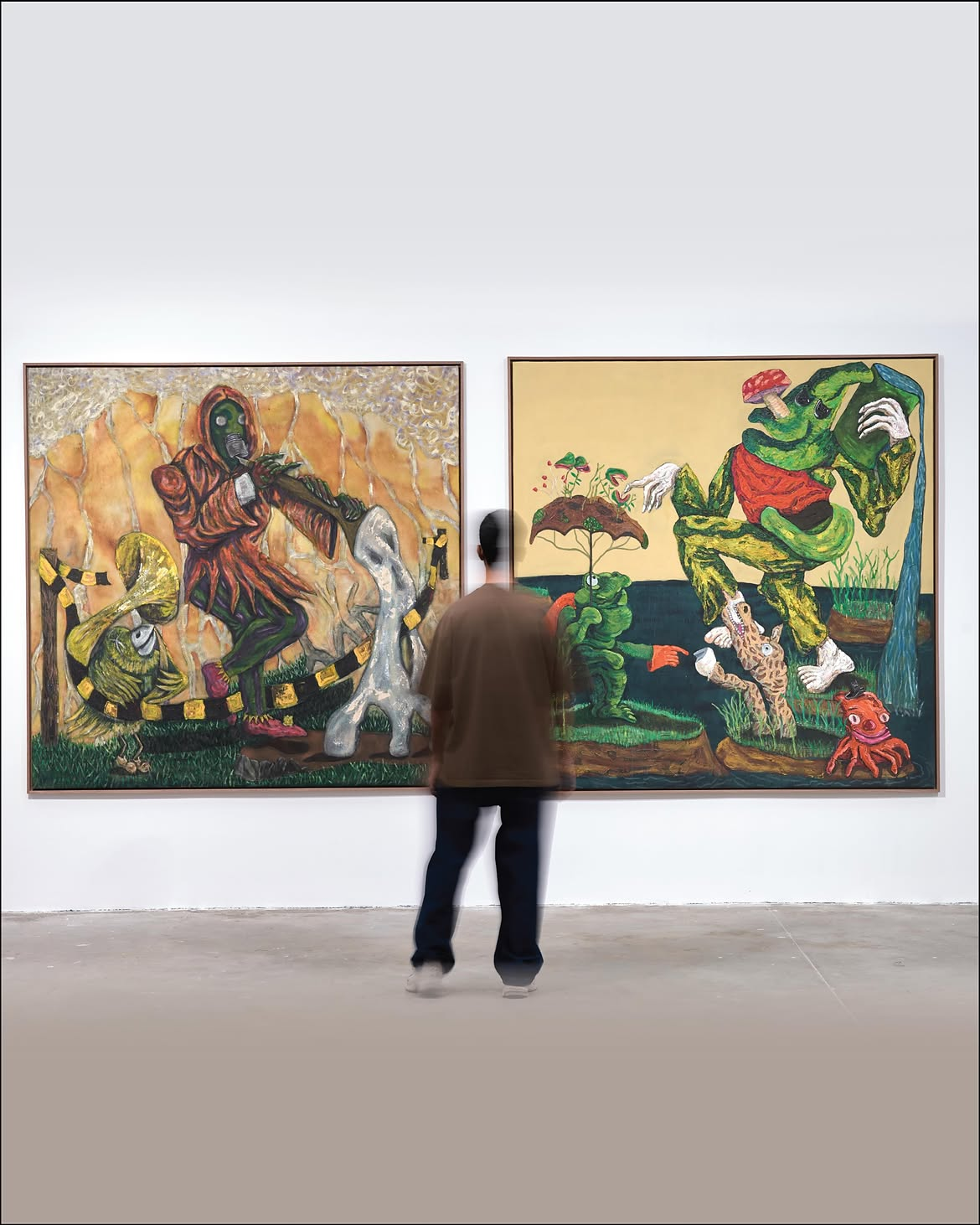
That visual language continued in Intentionally Neglected, created in 2023. The painting combines human, animal and vegetal forms within another crowded composition, but nature takes on a more active presence. Plants grow around and through bodies. Figures appear partially transformed into other organisms. The boundaries between human life and the surrounding environment become increasingly unstable.
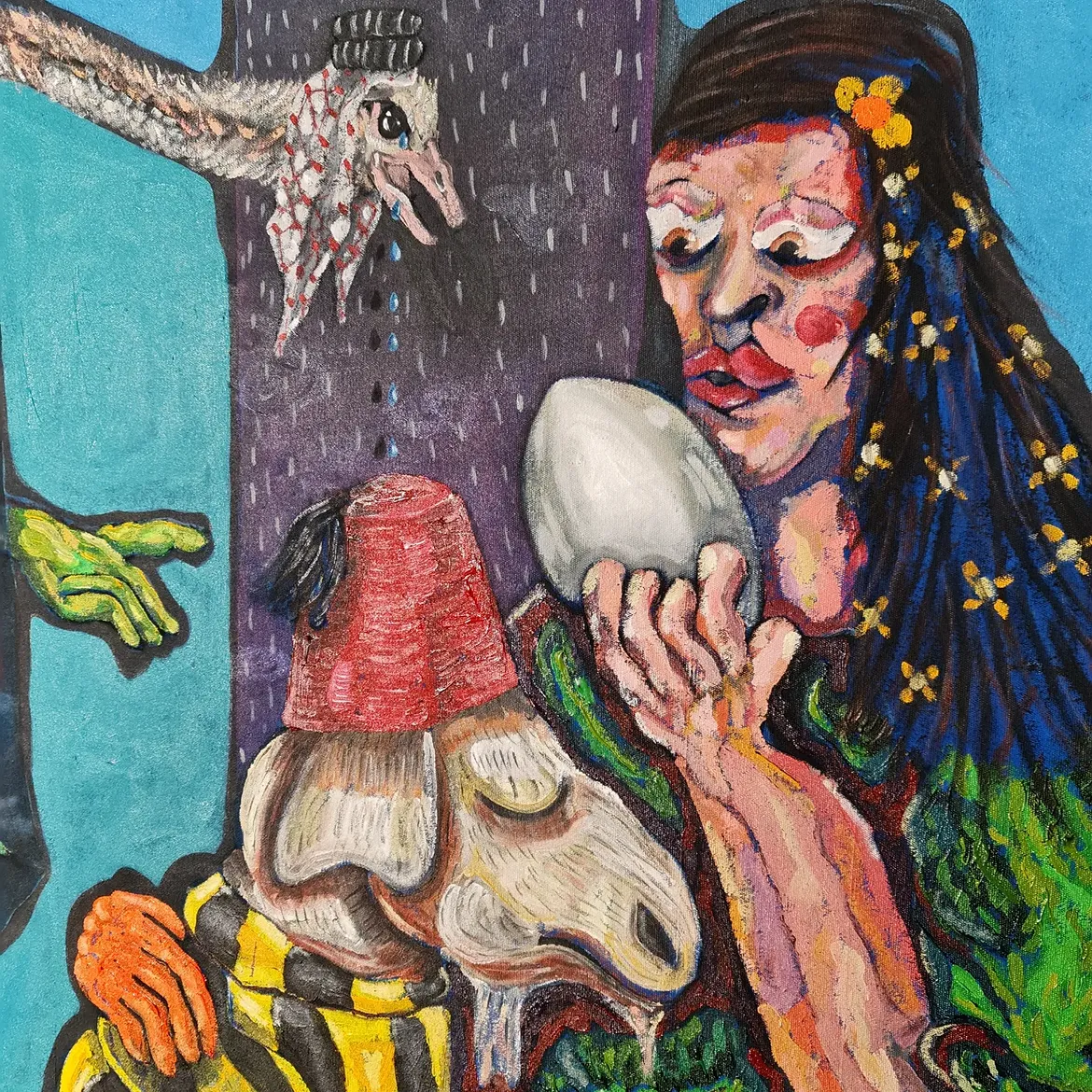
The work connects to an environmental interest that was becoming more prominent in Hatem Al-Ahmad's practice. Rather than treating nature as landscape or background, he began examining the systems through which humans interact with it. This includes agriculture, environmental damage, traditional methods of resource management and the consequences of human intervention. Hatem is careful, however, about describing this work as activism.
“I am not an activist, but an archivist.”
The distinction helps explain his approach. His work often gathers information rather than presenting solutions. Research is transformed into paintings, installations and visual metaphors that allow different environmental histories and possibilities to exist together.
The forest fires that affected the Abha region in 2020 became an important moment in Hatem Al-Ahmad's developing environmental practice. Rather than focusing only on the destruction itself, he became interested in what happens afterward. That question informed Find Me Through the Fog, a project of 8 local artists, that investigated damaged forests and methods used to care for trees after fire.
For his contribution, Hatem Al-Ahmad focused not on documenting the destruction, but on how an artist could participate in environmental recovery. Drawing from agricultural and gardening practices, he worked with copper sulfate and calcium hydroxide, a treatment used to help damaged trees recover from cracks and fire injuries. The project marked an important development in his environmental practice, connecting artistic research with ecological responsibility, community awareness and direct engagement with the landscape.
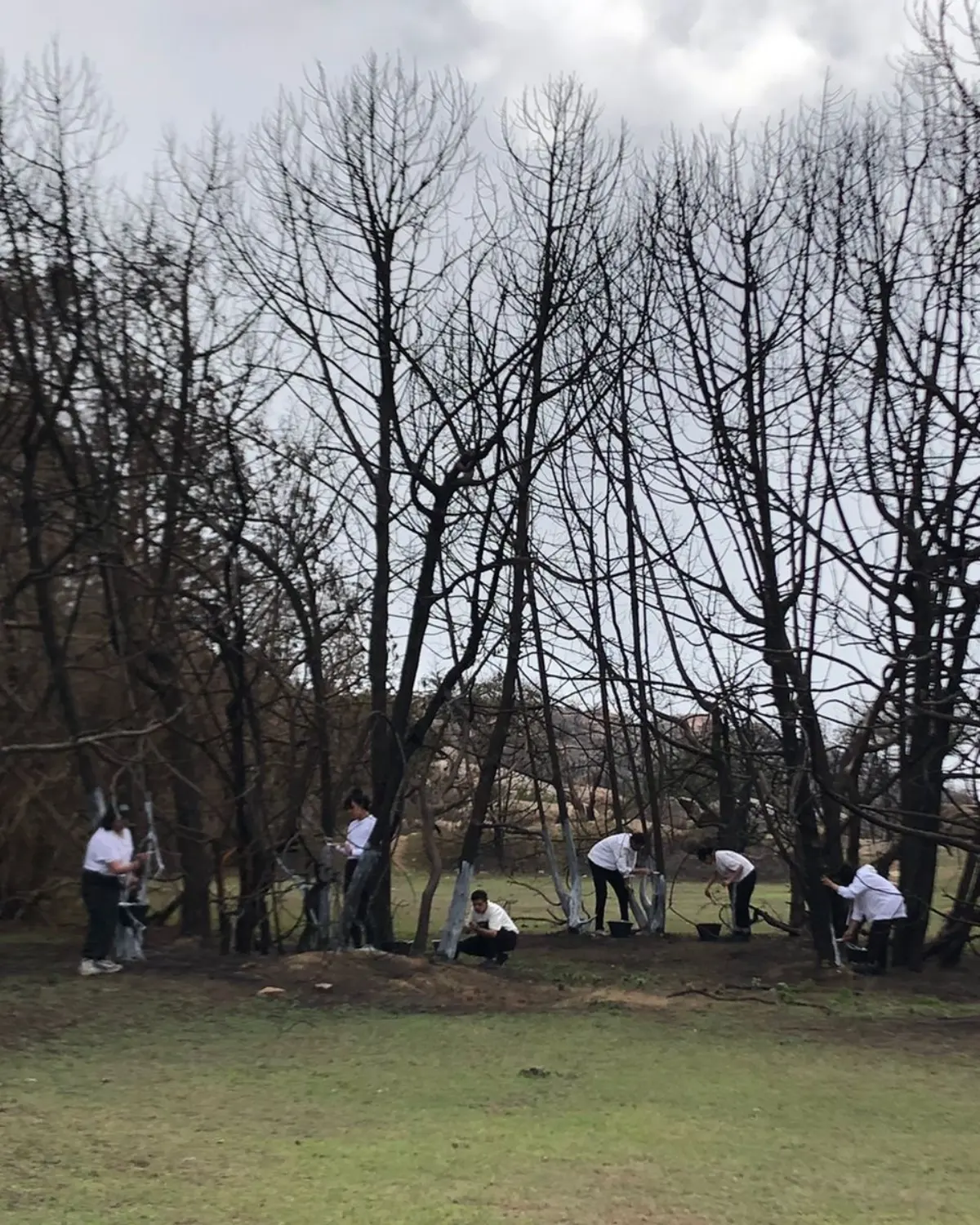
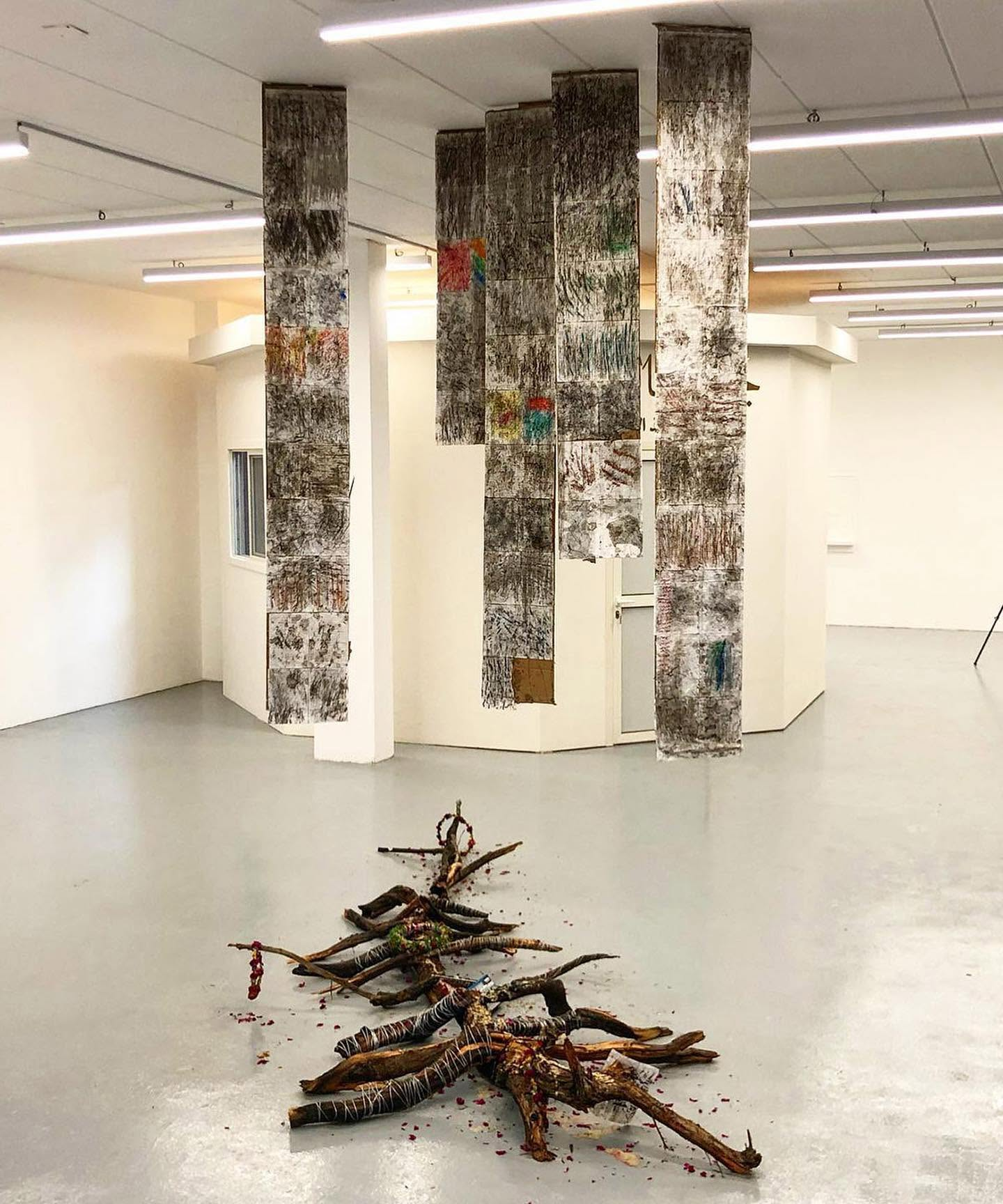
“I don't care about what happened in the past. I care about how we act in the present and what is our responsibility towards this environment.”
In 2022, this research-based direction developed further through the Masaha Residency at Misk Art Institute. Hatem Al-Ahmad participated in Archival Aesthetics, a program concerned with memory, archives and different methods of producing records. The archive would become increasingly important to the way he understood his own practice.
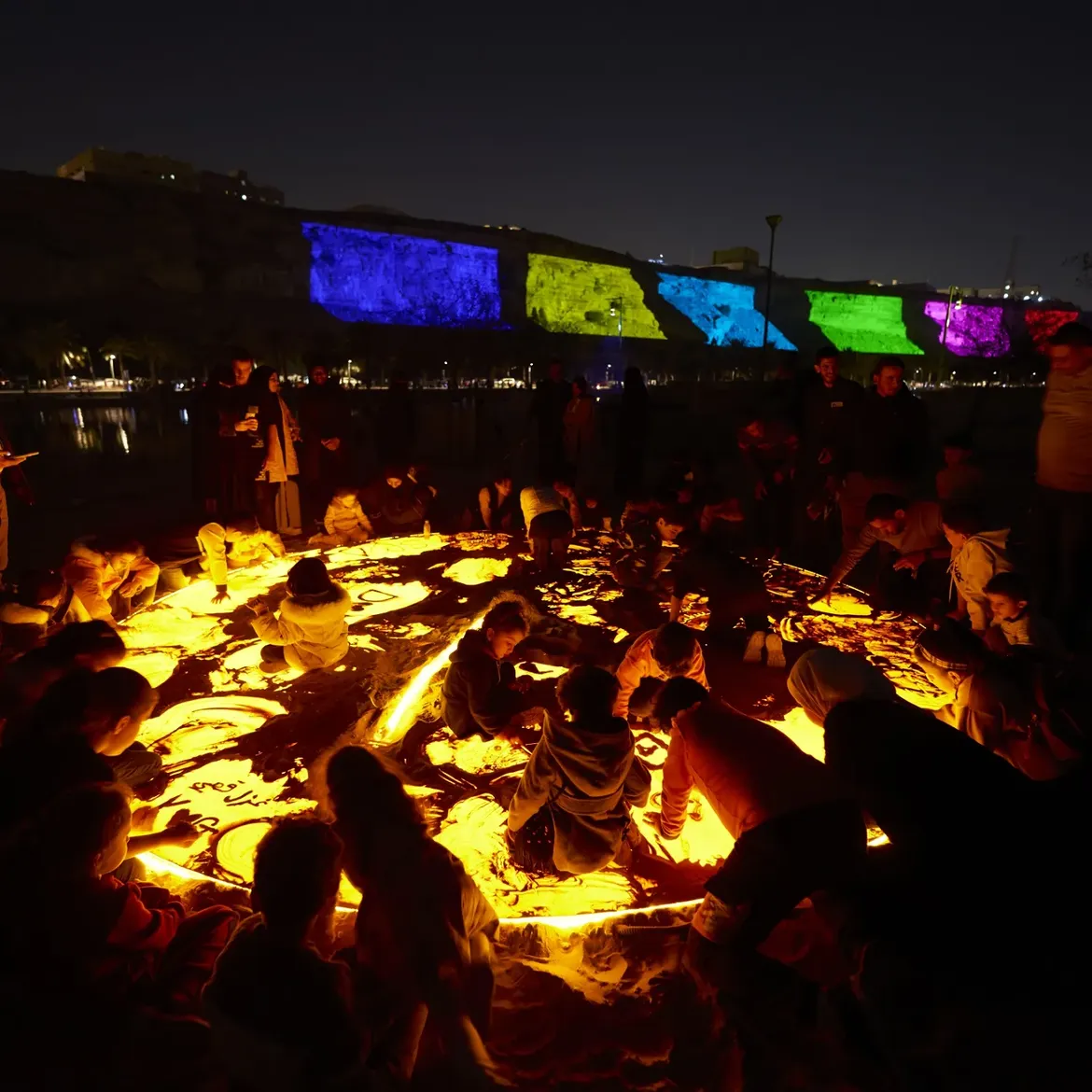
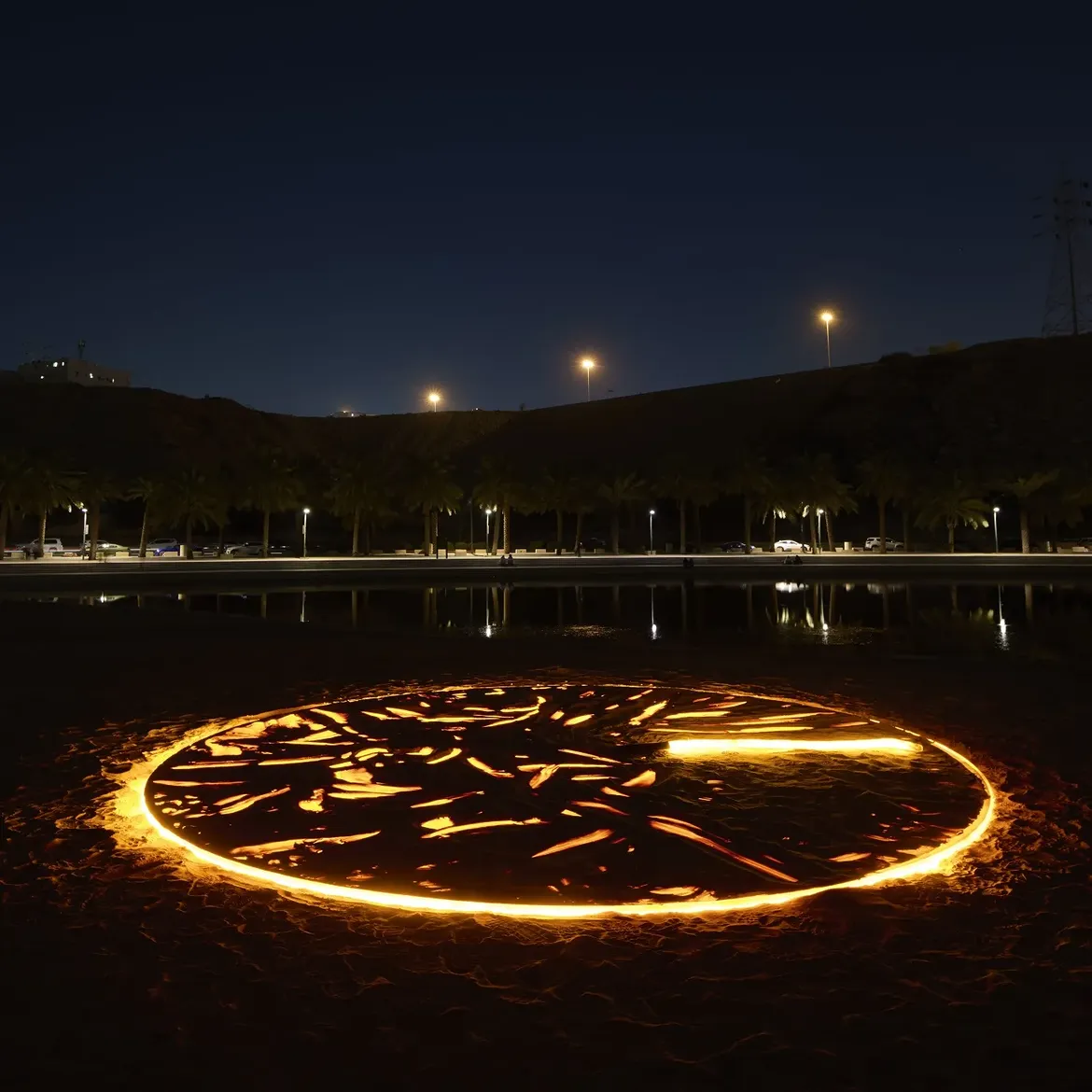
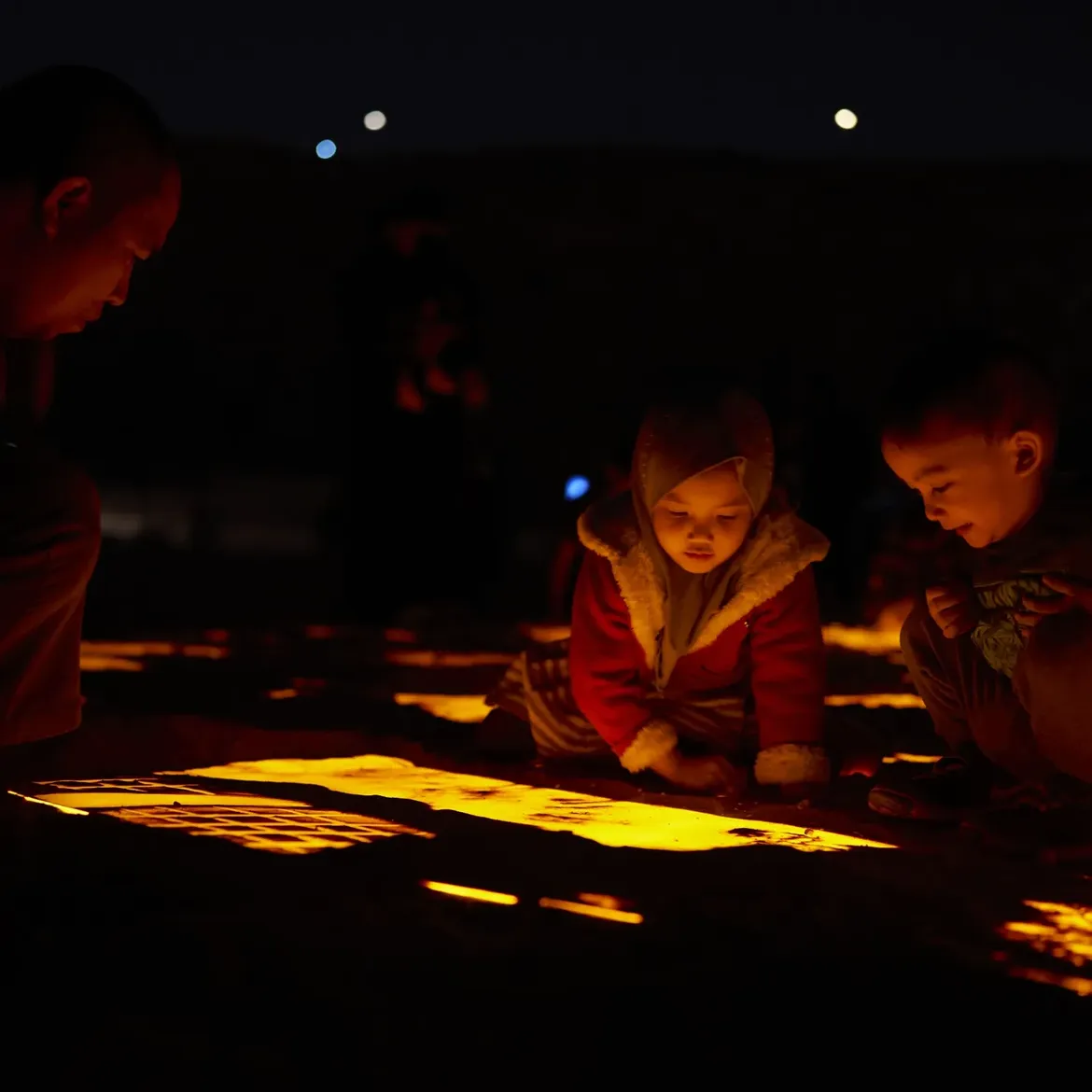
Hatem Al-Ahmad's experimentation across disciplines is central to PHI Studio, which he co-founded in Abha with industrial engineer Saeed Gebaan. The collaborative practice brings together art, science and different forms of knowledge, allowing Hatem's work to move beyond painting into installation, video, light, sound and natural materials. This approach came into focus with Still From Here, presented at Noor Riyadh in 2023, an installation using sand, light and sound to explore Bedouin knowledge of desert environments, including navigation, mirage, the oasis, security and orientation.
The work also reflects Hatem's wider interest in what he calls “the wisdom of previous generations in achieving sustainability of resources.” Rather than simply representing this knowledge, Still From Here transforms it into a physical experience visitors can enter and interact with. PHI Studio allows this kind of experimentation to develop from Abha, reinforcing the city not only as Hatem's home, but as an important source of the environmental and cultural knowledge shaping his practice.
In 2024, Hatem Al-Ahmad was selected for the Misk Art Grant and presented work within Digital Civilization during Misk Art Week. The exhibition examined contemporary relationships with technology, digital systems and connectivity. Hatem developed Winged Echoes, a project shaped through research, development and collaboration. Supported by Misk Art Institute, the work reflects the research-led approach that has become central to his practice, allowing an idea to evolve through collective knowledge and experimentation before taking its final form. The project also highlights the increasingly collaborative nature of Hatem's work, bringing together different contributors and disciplines as part of the artistic process.
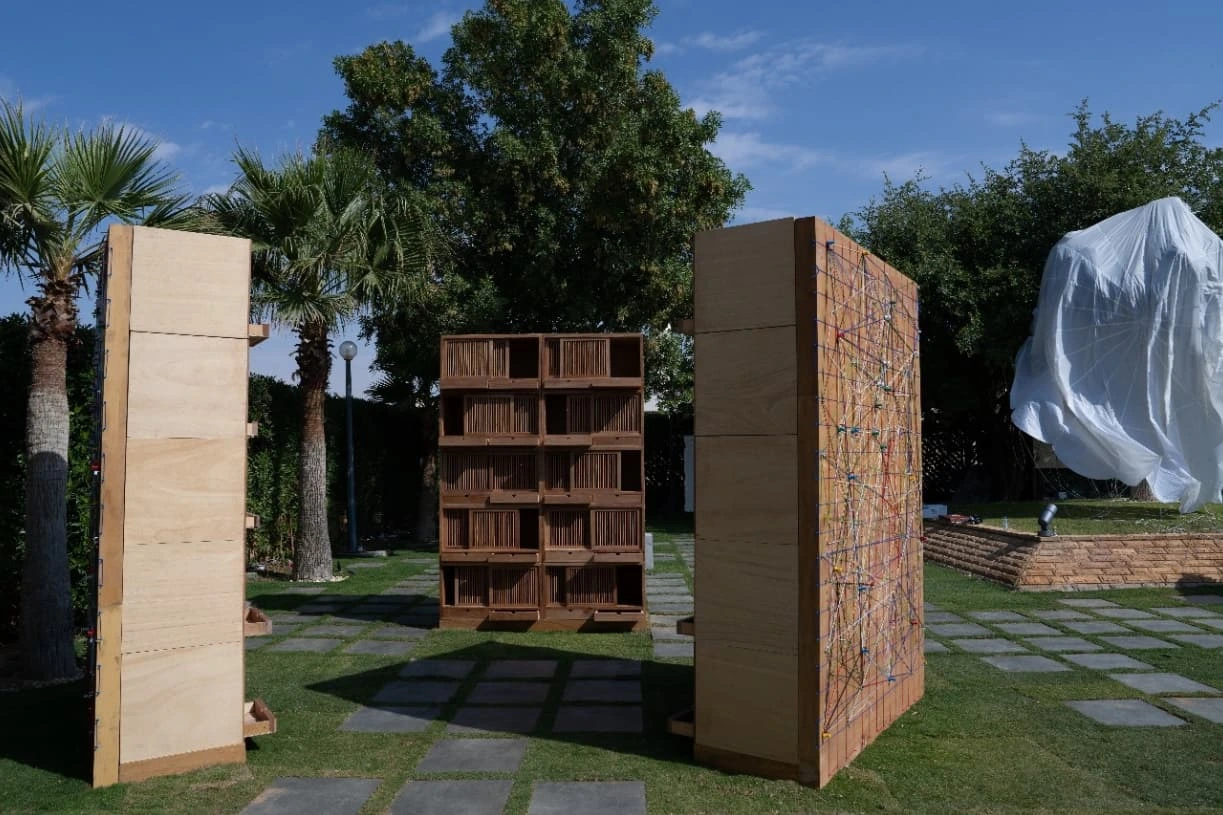
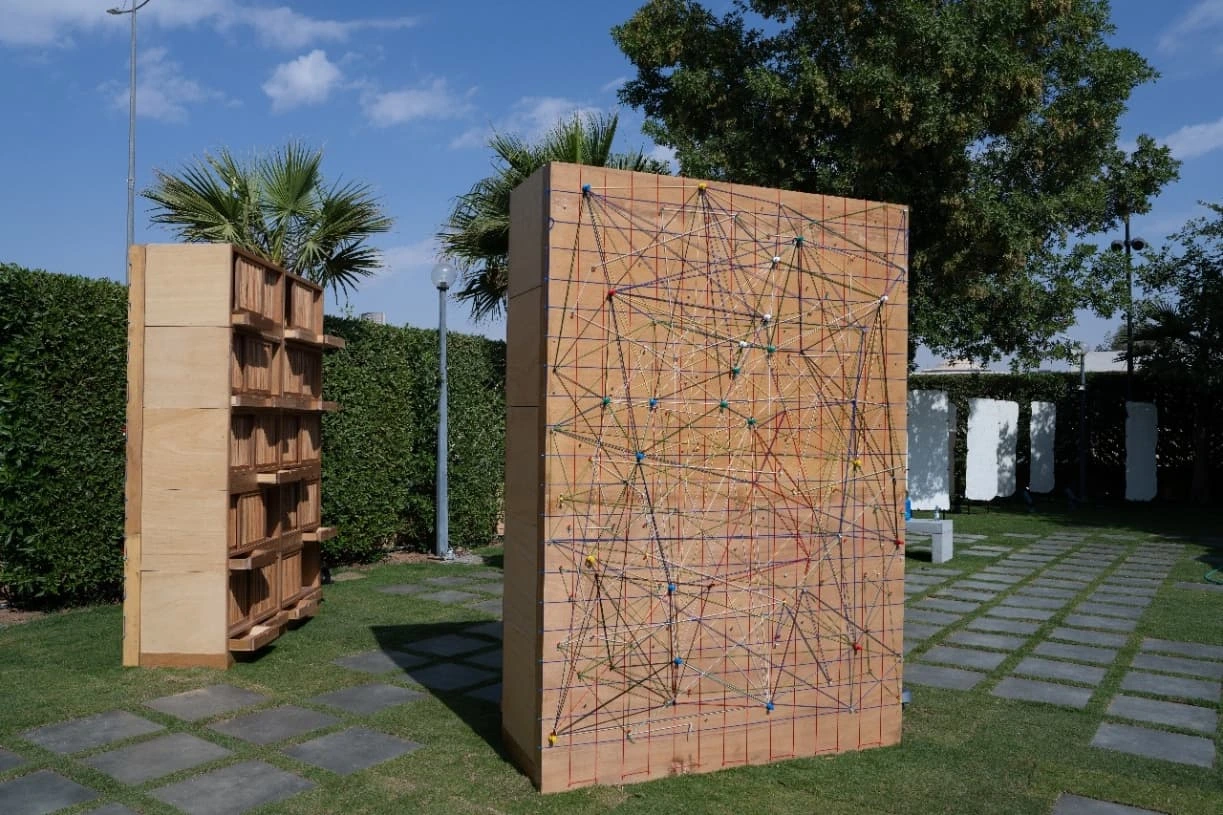
Technology does not replace environmental research in his practice. Instead, both subjects allow Hatem Al-Ahmad to investigate systems and their effects on everyday life. His participation in Misk also formed part of a growing exhibition history across Saudi Arabia and internationally. His work and collaborative projects have appeared through platforms including the Saudi Art Council, Institut du Monde Arabe in Paris, Misk Art Institute, Noor Riyadh, BIENALSUR and the Saudi Museum of Contemporary Art at Jax.
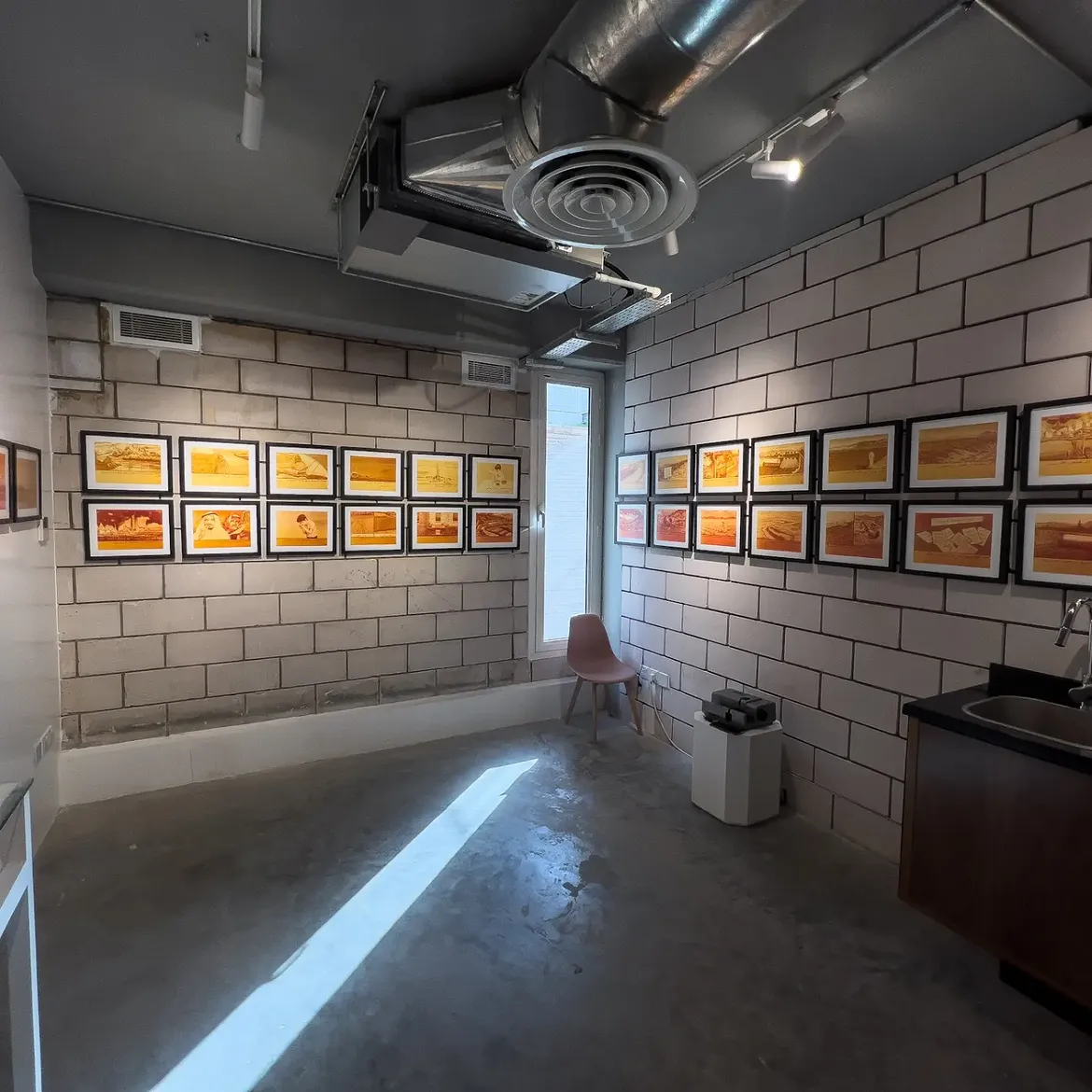
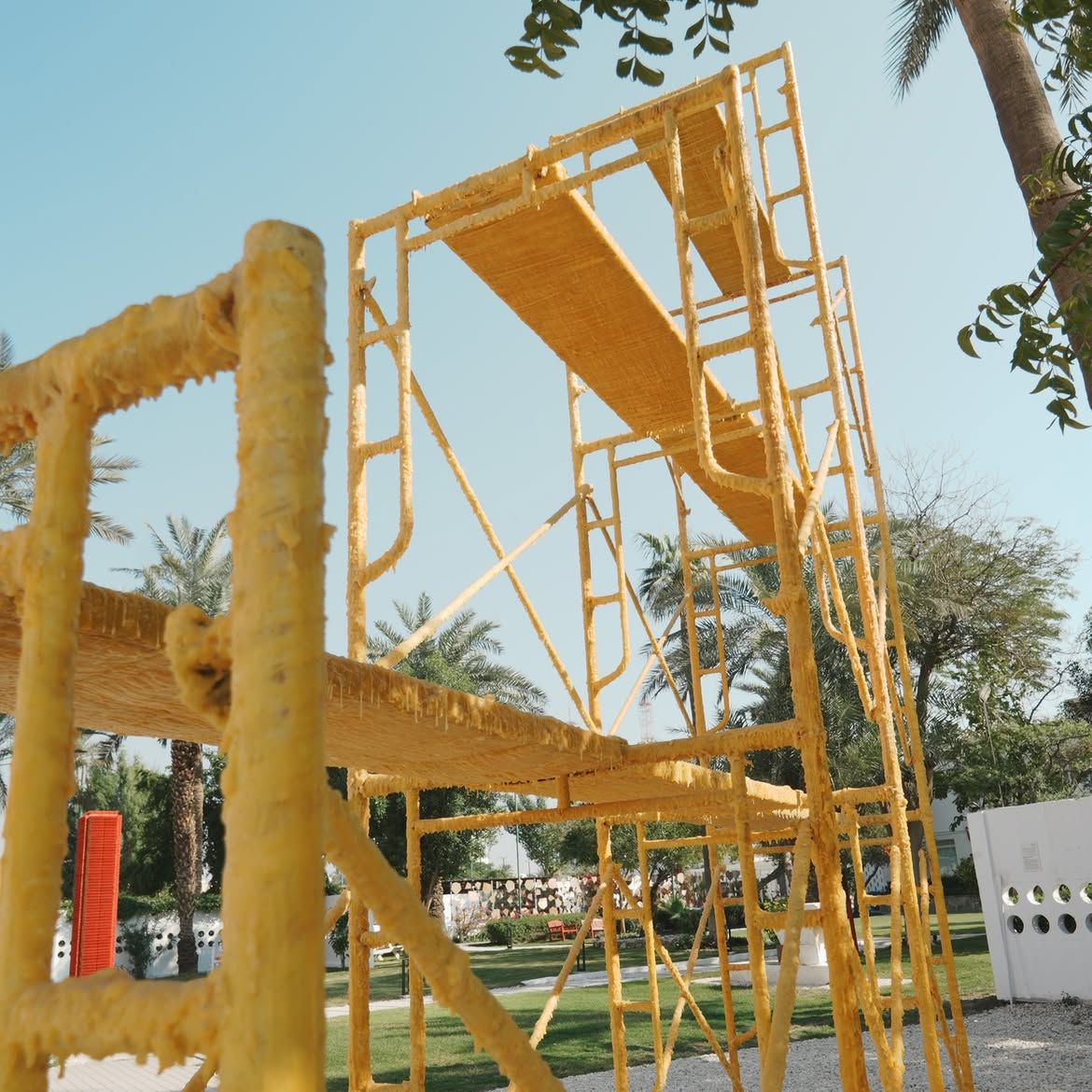
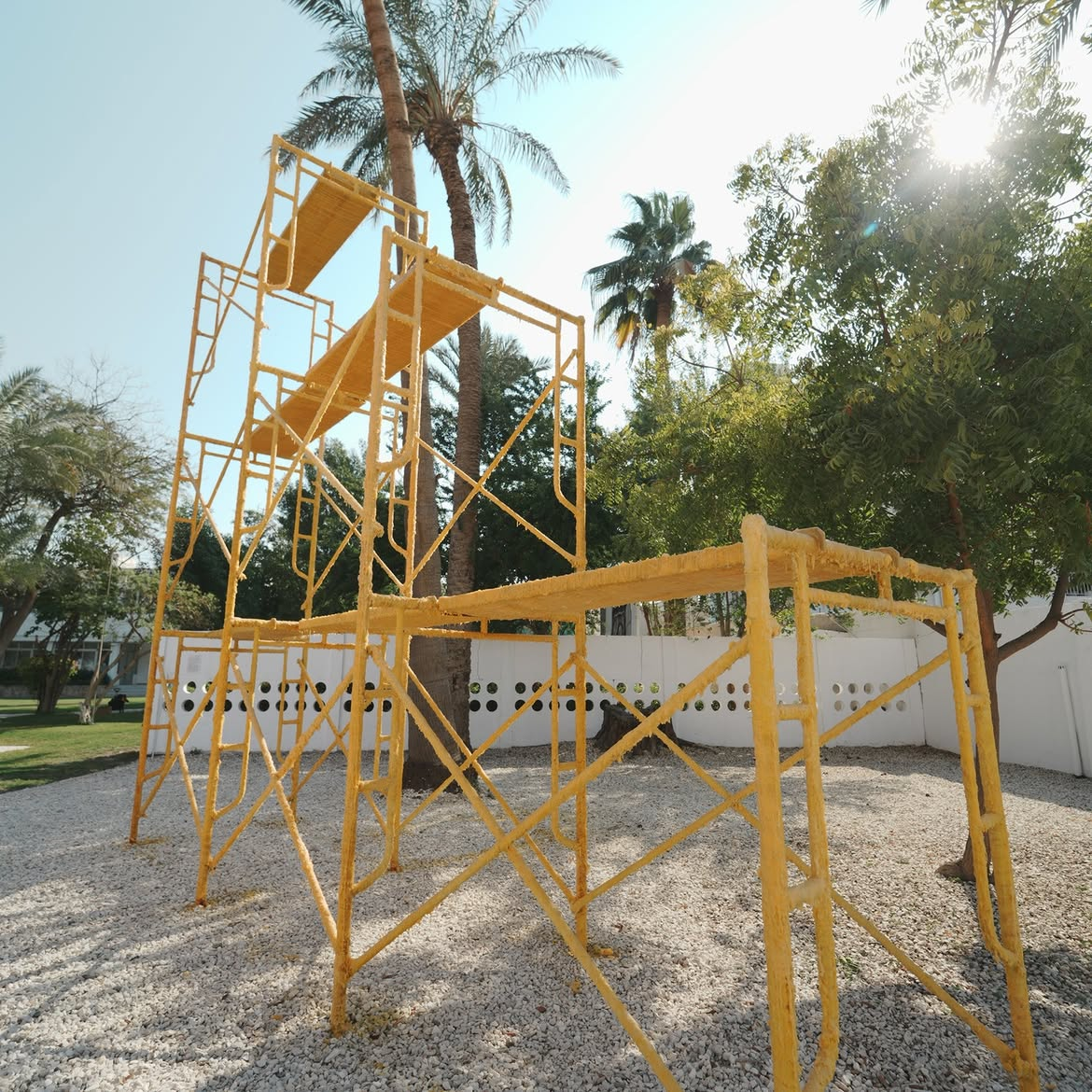
In Where Are the Builders, created in 2024 and shown at Al Riwaq in Bahrain in 2025, Hatem Al-Ahmad turned his attention toward an object normally designed to disappear: scaffolding. The installation recreates a scaffolding structure using paraffin wax and natural pigments.
Scaffolding exists to support construction or restoration, but it is rarely intended to remain once that process is complete. Al-Ahmad describes it as a form of invisible labor, a temporary structure that disappears when a building or monument is finished. By reconstructing it in wax, he reverses that relationship. The temporary support becomes the artwork.
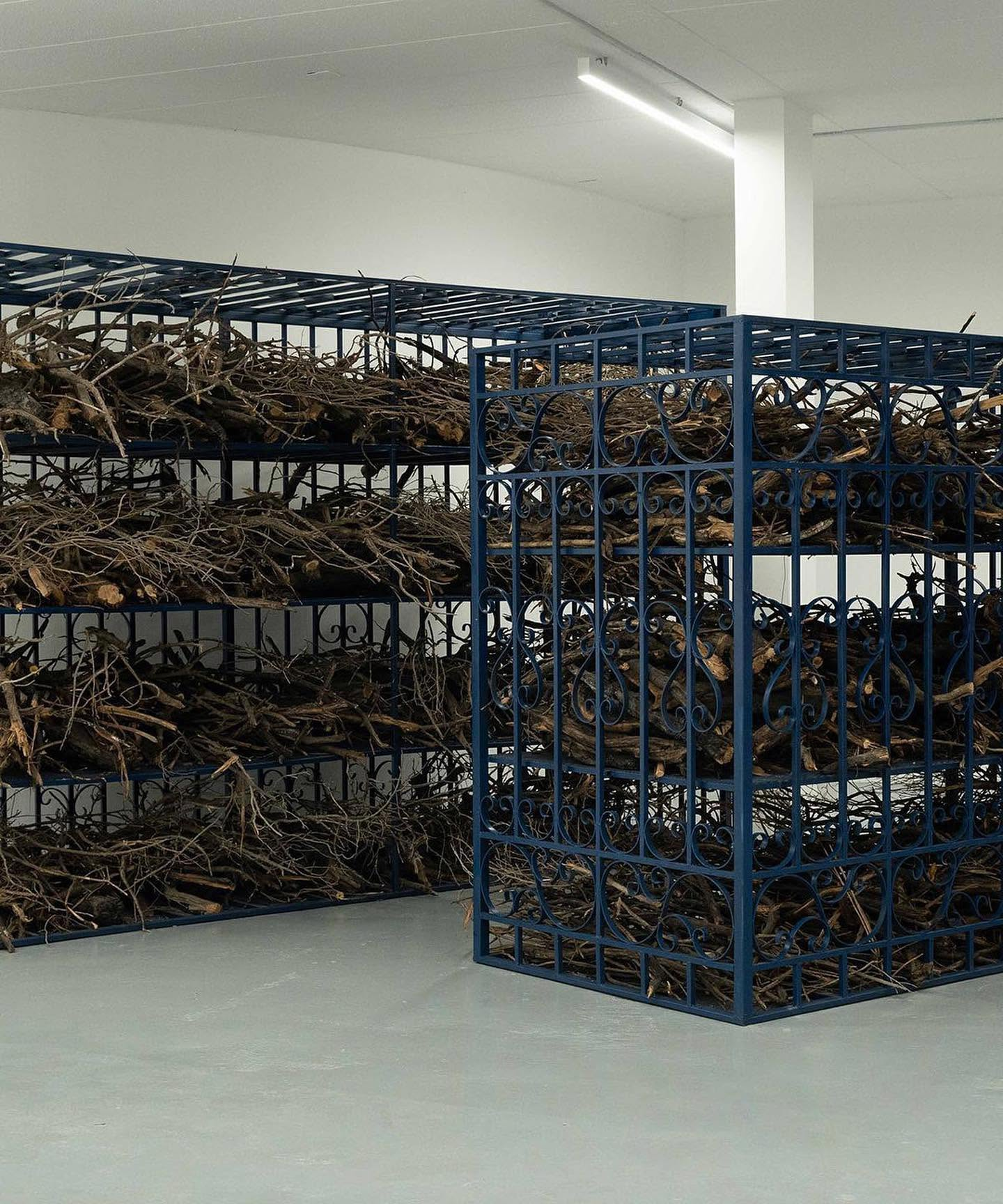
Those ideas came together in Sensitivity of the Ruins, Hatem Al-Ahmad's 2026 solo exhibition at ATHR Gallery in Riyadh's JAX District, curated by Rania Majinyan. The exhibition brought together paintings and sculptural works exploring ecology, pollution, environmental degradation and the traces left by human activity. Part of the project developed through Hatem's visits to abandoned farms in Asir. These spaces encouraged him to reconsider the conventional idea of a ruin.
For Hatem, Asir provides an ideal environment for his research. He has described the region as an “open laboratory,” where its varied geography, biodiversity and agricultural traditions allow local observations to connect with broader environmental questions.
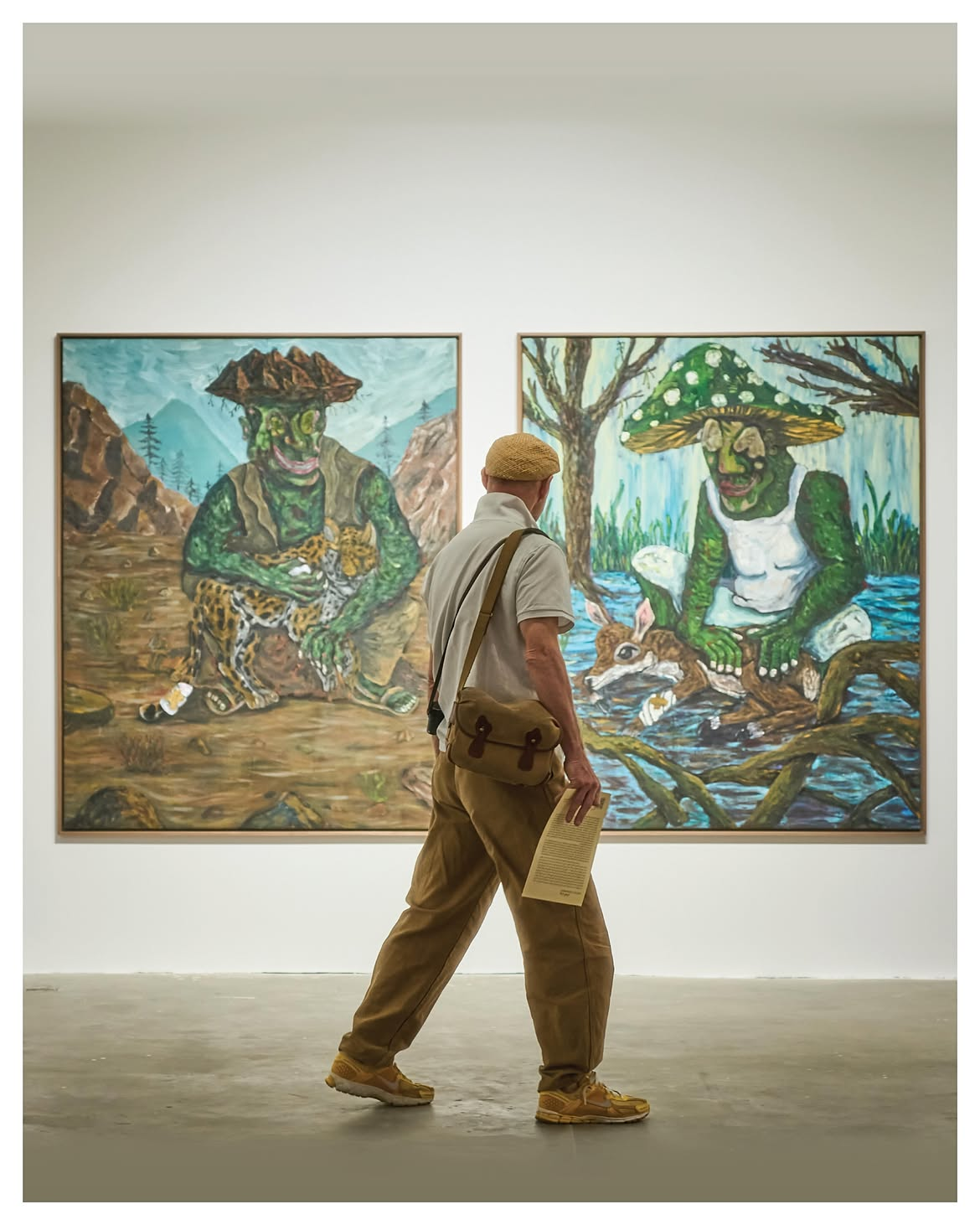
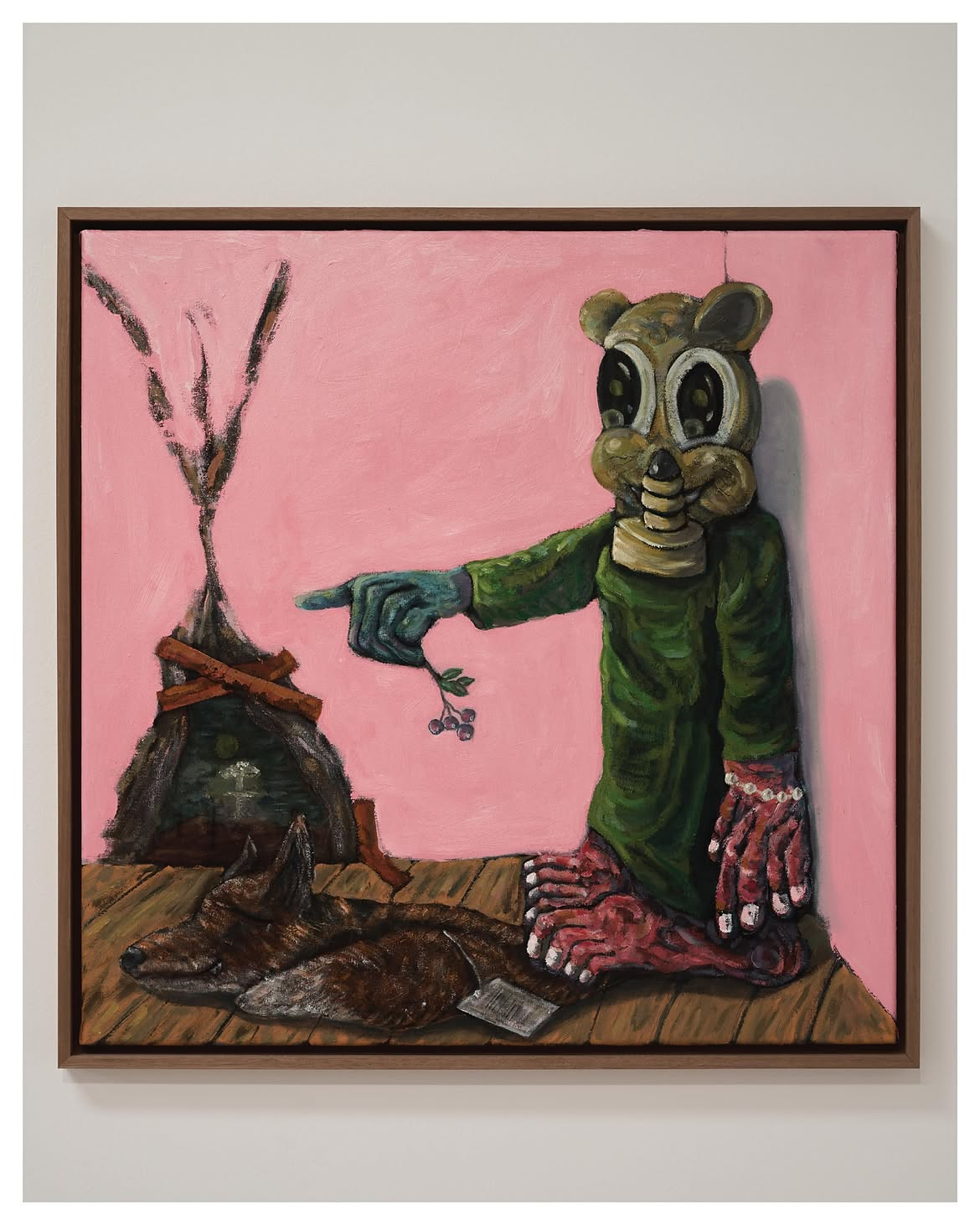
Hatem Al-Ahmad's practice may move between painting, installation and environmental research, but it continues to begin with observation. From the landscapes of Asir to inherited knowledge, animals and abandoned farms, he looks closely at how humans exist within larger natural systems. His next direction pushes that thinking further:
“I aspire in the next stage to take on the voice of the non-human.”
It is a fitting evolution for an artist increasingly interested in what the world might reveal when nature is treated not simply as a subject, but as a participant in the story.
Discover more art stories reshaping Saudi culture at KSAArt.