An Artist in Dialogue: Saad Al Howede
Meet Saudi artist Saad Al-Huwaidi, whose research-led practice explores cultural memory, identity and heritage through contemporary materials, traditional symbols and artistic experimentation.

Meet Saudi artist Saad Al-Huwaidi, whose research-led practice explores cultural memory, identity and heritage through contemporary materials, traditional symbols and artistic experimentation.
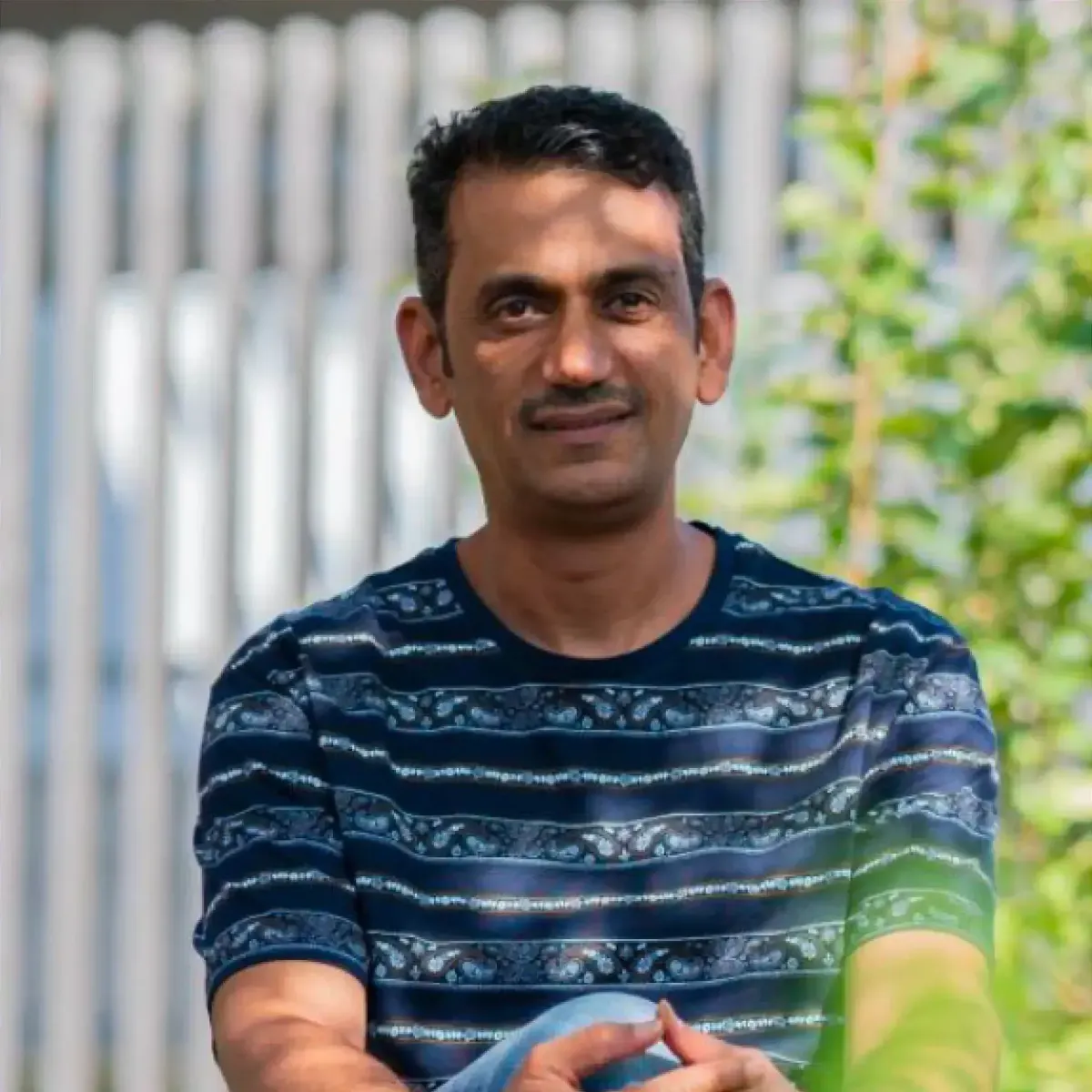
“For me, a symbol is not merely a decorative element. It is a tool that carries meaning.”
For Saudi artist Saad Al Howede, art begins long before a material is chosen or a visual form takes shape. It begins with research, an idea, and a question about the relationship between people, their memories and the cultural objects that connect them to their past.
From publishing caricatures in Saudi newspapers at an early age to earning a PhD in Philosophy of Art, Saad Al Howede has developed a practice that brings academic inquiry together with artistic experimentation. His work moves between familiar objects and historical narratives, exploring how toys can preserve childhood memories, how the Saudi bisht can communicate identity, and how the region's history can be interpreted through contemporary visual language.
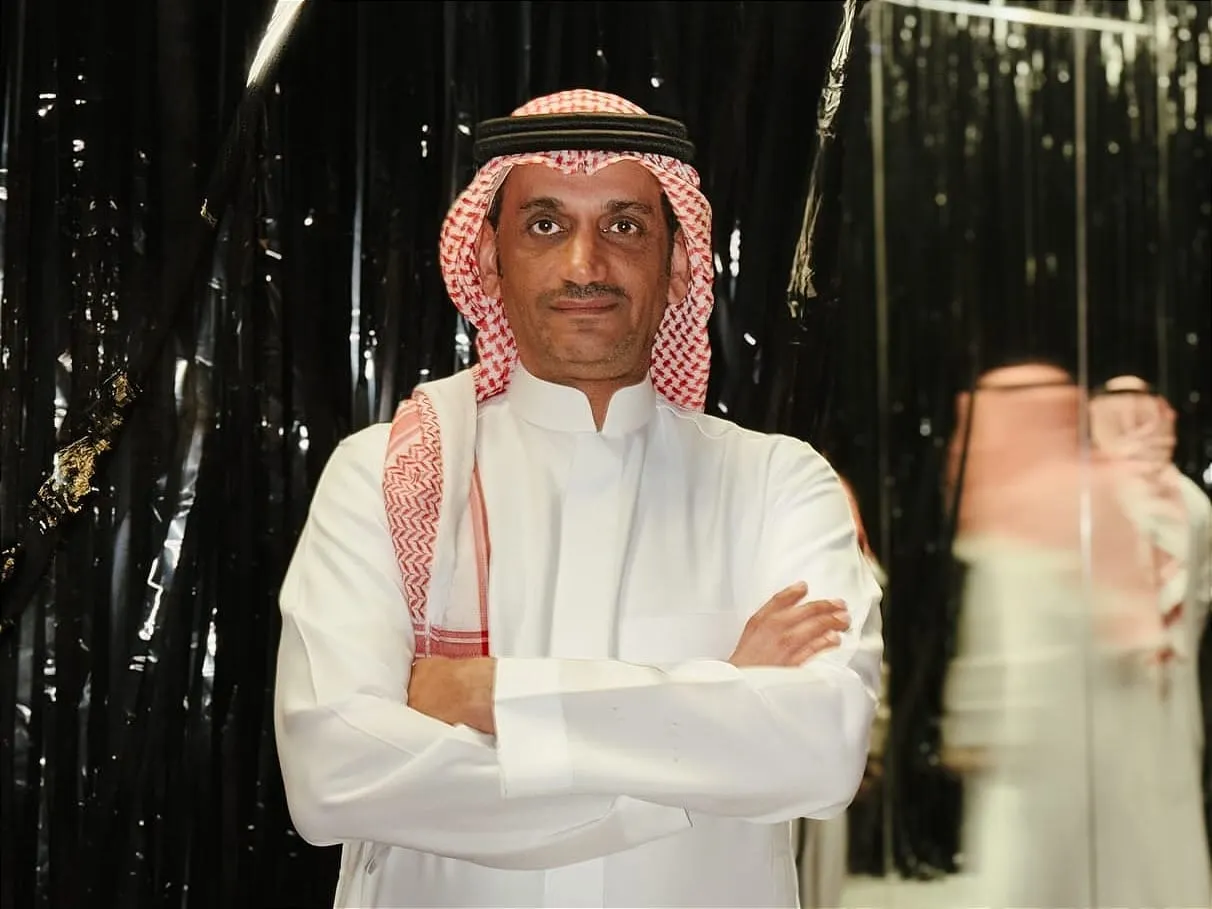
Q: How would you describe yourself as an artist?
Saad: I consider myself an independent artist who seeks to explore themes connected to heritage and human memory, and to reinterpret them through a contemporary vision that combines intellectual research with visual experimentation, while maintaining a strong connection to identity and culture.
Q: Can you take us back to the beginning of your artistic journey?
Saad: My artistic journey began through my passion for drawing and calligraphy. I later joined specialized training courses under the guidance of artists and experts. At an early age, I started publishing caricature drawings in Saudi newspapers and participated in art exhibitions from my middle school years.
I later pursued academic studies in art until I earned a PhD in Philosophy of Art. This extended journey between artistic practice and academic research enabled me to work in teaching across general and university education, while continuing to create artworks and participate in local and international exhibitions. I have also provided artistic consultations, contributed as an art mentor within programs by the Ministry of Culture and “Riyadh Art,” and participated in developing art curricula in Saudi Arabia as an artist and academic researcher.
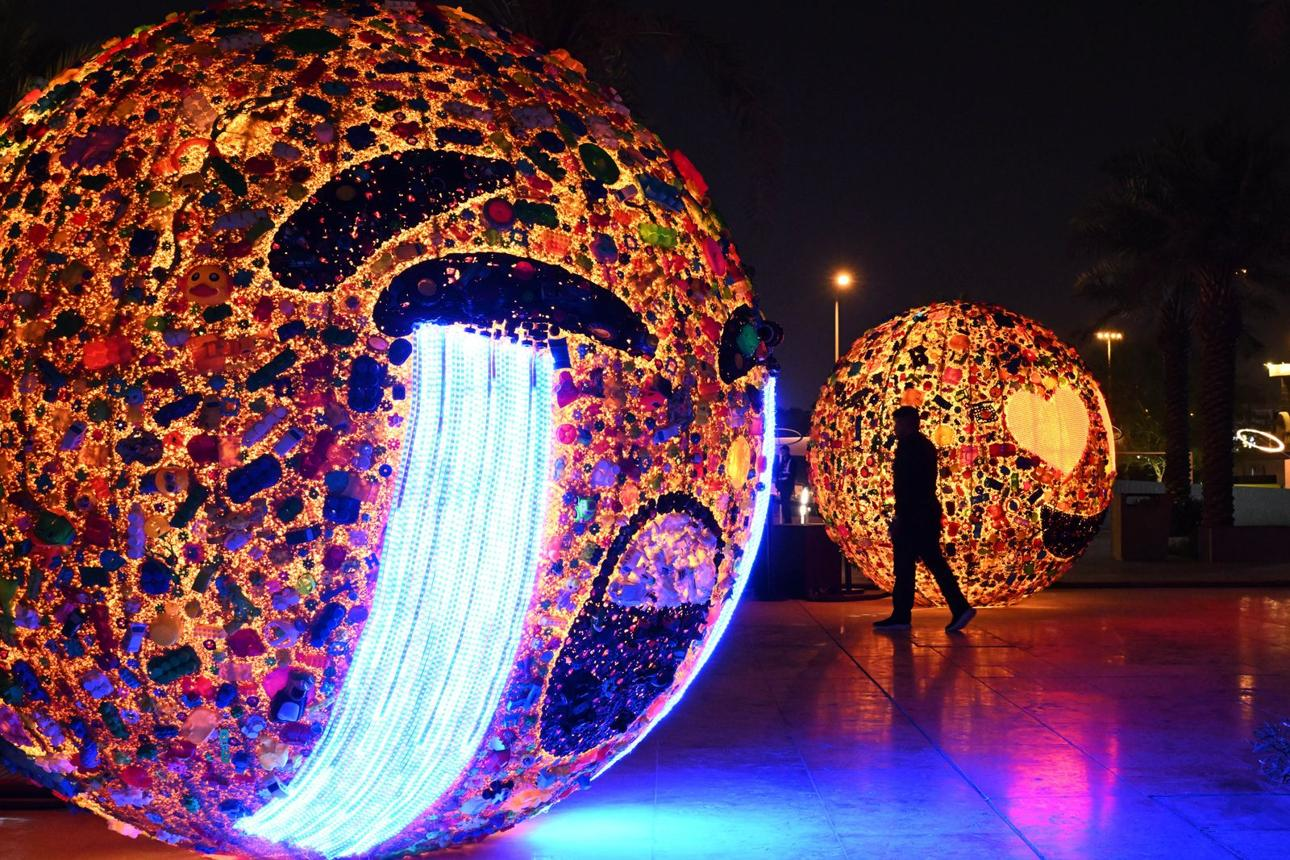
Rather than identifying himself with one medium, Saad Al Howede approaches materials according to the ideas he wants to explore. His process places research and experimentation before execution, allowing the concept to guide the final artwork.
Q: What materials or tools do you use in your artworks?
Saad: The choice of material always comes after completing the concept and the research associated with it. I do not limit myself to a specific medium; instead, I approach each material as a tool for expression and experiment with it until I confirm its ability to serve the artistic concept. In some projects, I explore multiple materials to study their suitability for the idea, their interaction with the audience, and their ability to visually translate the concept.
One of the most present materials in my work is toys, as they represent the first memories of human beings, the beginning of imagination and discovery. They carry stories and personal experiences that go beyond being simple physical objects. I also presented the “Bisht” series, which holds great importance to me. Through this series, I reintroduced the Saudi bisht in a contemporary form while preserving its symbolism as a representation of identity, pride, and social status. I focused on highlighting its aesthetic details, such as the gold trimming, craftsmanship, and decorative elements.

Memory, belonging and the relationship between people and place are recurring concerns in Saad Al Howede's artistic thinking. His interest in heritage goes beyond preserving recognizable forms. He seeks to explore the human experiences and cultural meanings those forms carry.
Q: What inspires your artistic practice?
Saad: Everything related to humanity inspires me: memory, culture, belonging, and the relationship between people and place. I also find many unexplored subjects within cultural and historical heritage, and I aim to reinterpret them and present them through a contemporary artistic language.
Q: Is there a recurring theme or symbol in your artworks?
Saad: I do not intentionally repeat a specific theme or symbol, but some materials may reappear because they are connected to the concept I am exploring, rather than being a goal in themselves.
Q: Why is symbolism important to your work?
Saad: When I use a symbol in an artwork, it serves as a way to highlight a cultural or human value, or to draw attention to a subject that deserves reflection. For me, a symbol is not merely a decorative element; it is a tool that carries meaning.
Saad Al Howede's journey has developed across both academic and artistic environments. For him, the challenges encountered along the way are closely connected to the process of learning and refining an artistic practice.
Q: Have you faced challenges throughout your artistic journey? How did you deal with them?
Saad: Certainly. Every artistic experience carries its own challenges. I believe challenges are not obstacles, but an essential part of growth and creativity, as they encourage the artist to research, experiment, and continuously develop their tools.
Among Saad Al Howede's projects, three works hold particular personal significance. Each approaches memory and identity from a different perspective, moving between the Kingdom's economic history, Islamic artistic traditions and spiritual reflection.
Q: Which artworks are closest to your heart, and why?
Saad: There are three artworks that I consider especially close to my heart because they represent significant milestones in my artistic journey and reflect my interest in memory, identity, and reinterpreting history through contemporary approaches.
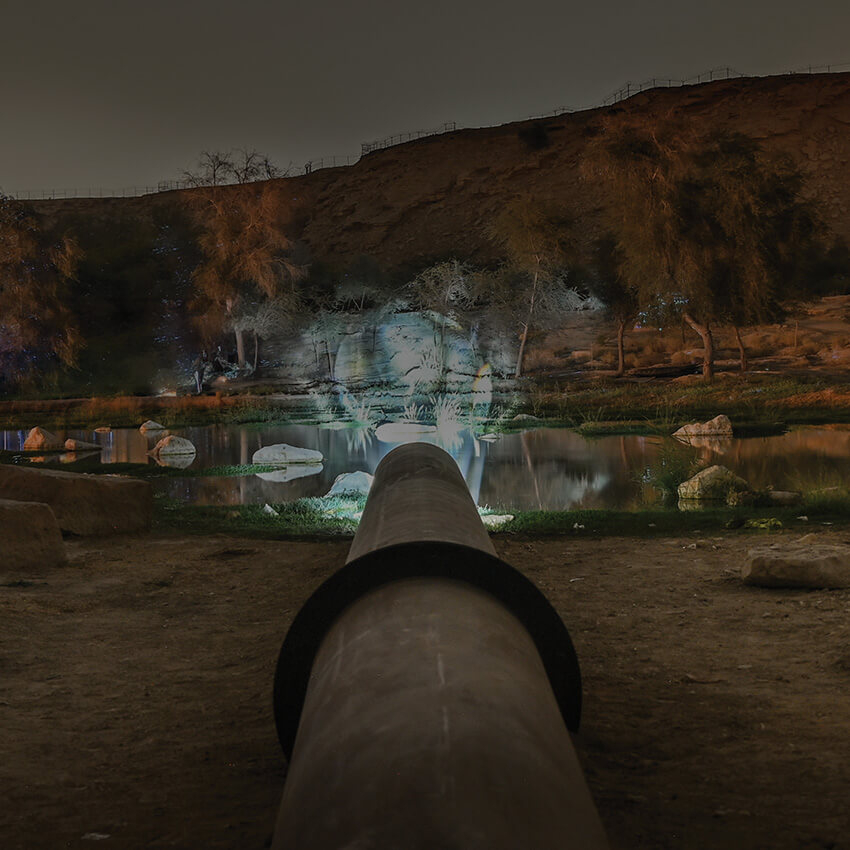
Saad: This work is meaningful to me because it highlights one of the most important historical and economic transformations in Saudi Arabia and presents this heritage from a contemporary human and visual perspective. It was featured in the Noor Riyadh 2024 festival.
Q: What inspired you to combine Islamic miniature art with modern technology in this series?
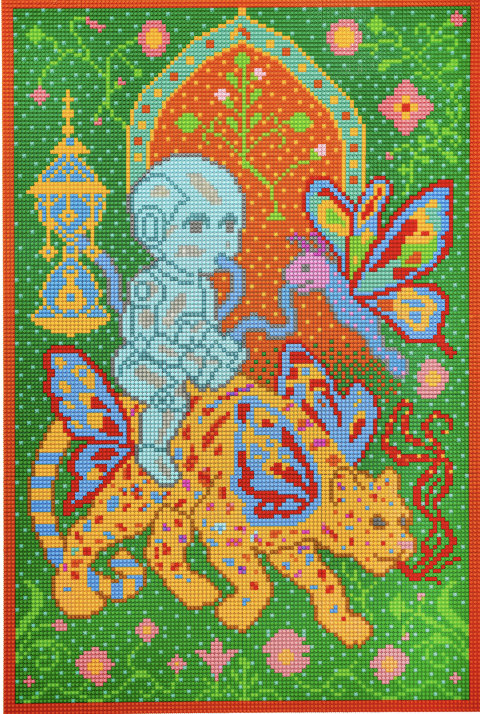
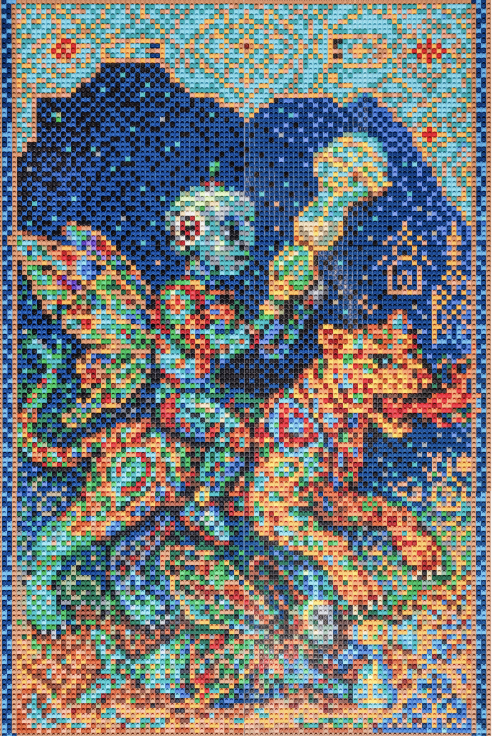
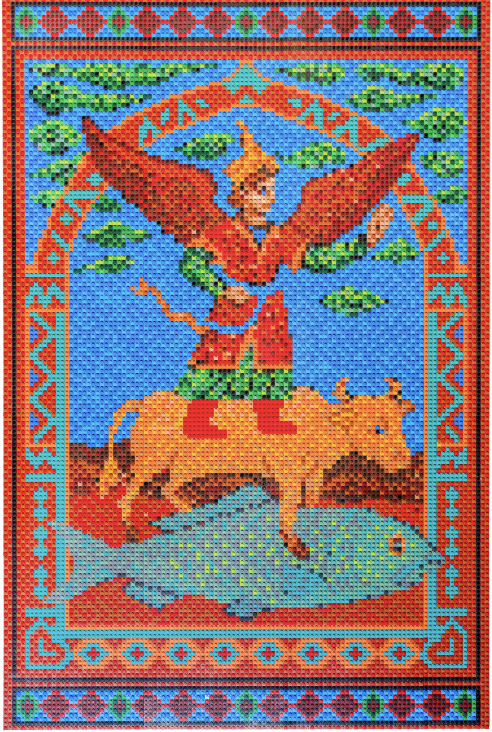
Saad: The idea began with exploring the relationship between spirituality and modern knowledge. I wanted to revisit Islamic miniature art through a contemporary visual language, using LEGO bricks as symbols of play and reconstruction. The series brings together the physical and spiritual worlds, where traditional artistic forms meet digital intelligence. Through colour, geometric compositions and light, I explore the relationship between presence and absence, memory and technology, and the visible and invisible.
For me, the work represents a bridge between the past and the future. It is a contemporary interpretation of miniature art, where the traditional language of storytelling and intricate details is preserved while introducing materials and ideas that reflect our time.
Q: What materials did you use, and where have the artworks been exhibited?
Saad: The series uses LEGO bricks to create contemporary miniatures inspired by Islamic artistic traditions. The first two artworks were exhibited at Al Riwaq Gallery in Bahrain, while the third was exhibited in Doha, Qatar, with Al Hosh Gallery.
The 2025 work has not yet been exhibited in an art gallery. It continues the exploration of spirituality and technology through a visual language that brings together material simplicity, cultural memory and contemporary ideas.
Saad: This is one of my most personal works, as it explores a deep human and spiritual subject. It reflects on concepts of faith, belonging, and shared memory through a visual approach that invites contemplation and dialogue.
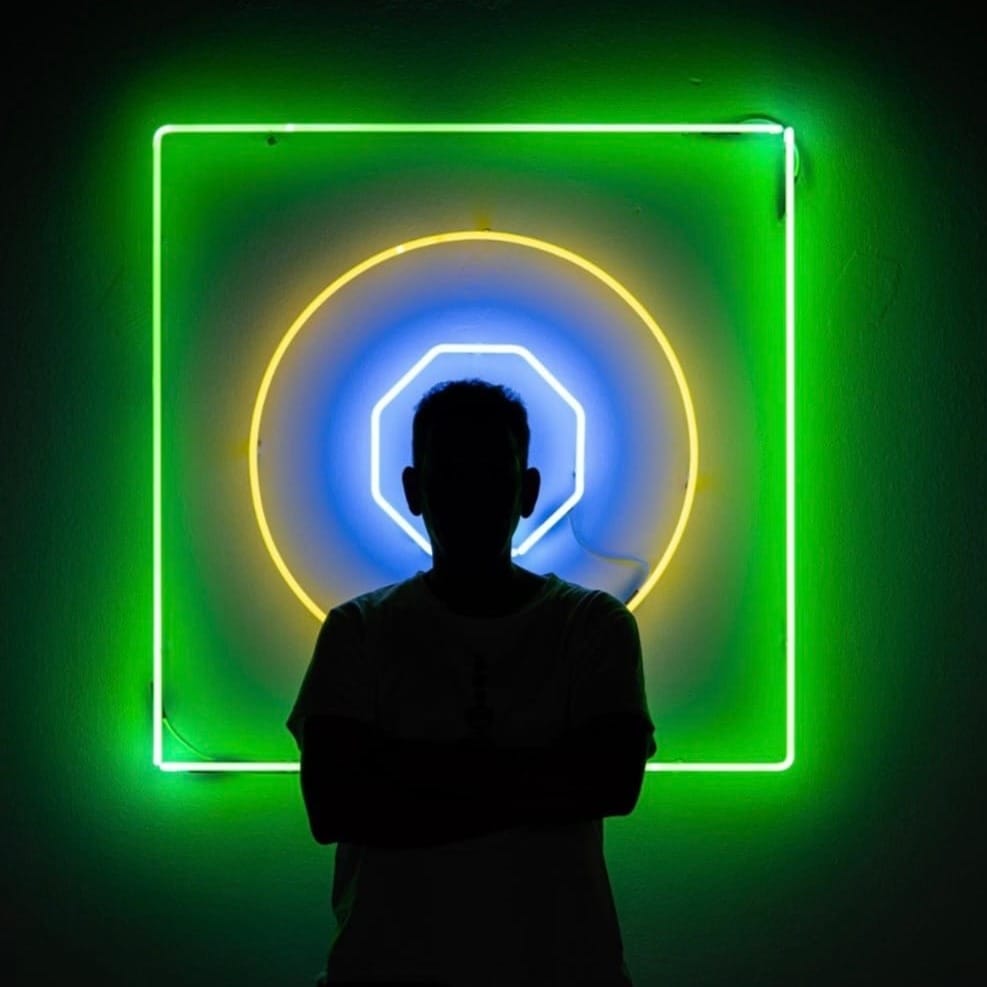
While Saad Al Howede's artworks often begin with his own research and cultural interests, he does not expect audiences to arrive at one fixed understanding. Instead, he hopes viewers will connect the work to their own experiences and discover meanings beyond the artist's original intentions.
Q: What would you like the audience to feel or understand when viewing your artworks?
Saad: I hope my artworks provide the audience with space for reflection and encourage them to ask new questions. I aim for my work to connect with their memories and personal experiences. I do not seek a single answer, but rather an open dialogue between the artwork and the viewer, allowing each person to create their own interpretation and experience.

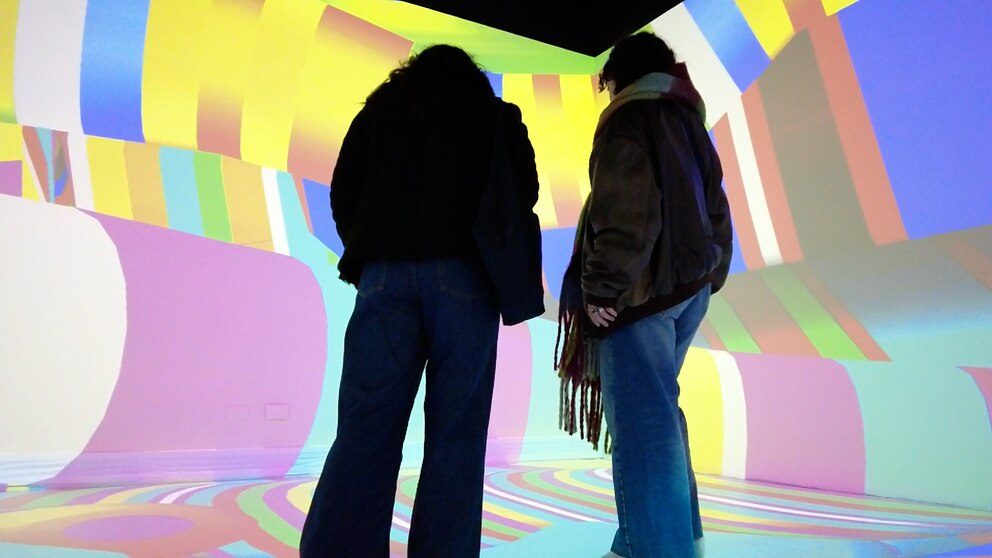
Let's Play at MUNTREF, Buenos Aires, part of BIENALSUR 2025–2026.
Looking ahead, Saad Al Howede hopes to expand the scale of his artistic projects while continuing to explore the connections between cultural identity, academic research and contemporary technology.
Q: How do you hope your artistic path will develop in the future?
Saad: I aspire to create large-scale artistic projects that bring together art, technology, and research, and to participate in more international exhibitions and museums.I aim to continue producing works rooted in local identity and culture while communicating with people everywhere.
For Saad Al Howede, art is more than a way to represent heritage. It is a means of understanding the memories, experiences, and cultural values that give it meaning. His journey as both an artist and academic reflects a continued commitment to research, experimentation, and creative exploration. As he looks toward larger projects combining art and technology, his focus remains on creating work rooted in Saudi identity while opening conversations that extend beyond cultural and geographical boundaries.
Ultimately, Al Howede's work reminds us that heritage is not only something we inherit, but something we can continue to explore, reinterpret, and connect with through art.
Stay close to Saad Al Howede’s evolving artistic practice and upcoming projects through his Instagram.
We’d love to hear from you! Reach out to share your own artistic journey.