Painting Heritage Differently: The Cubist Art of Faisal Alkheriji
Explore Faisal Alkheriji’s story, notable artworks, and achievements as the Saudi artist reimagining culture through cubism and surrealism.


Explore Faisal Alkheriji’s story, notable artworks, and achievements as the Saudi artist reimagining culture through cubism and surrealism.
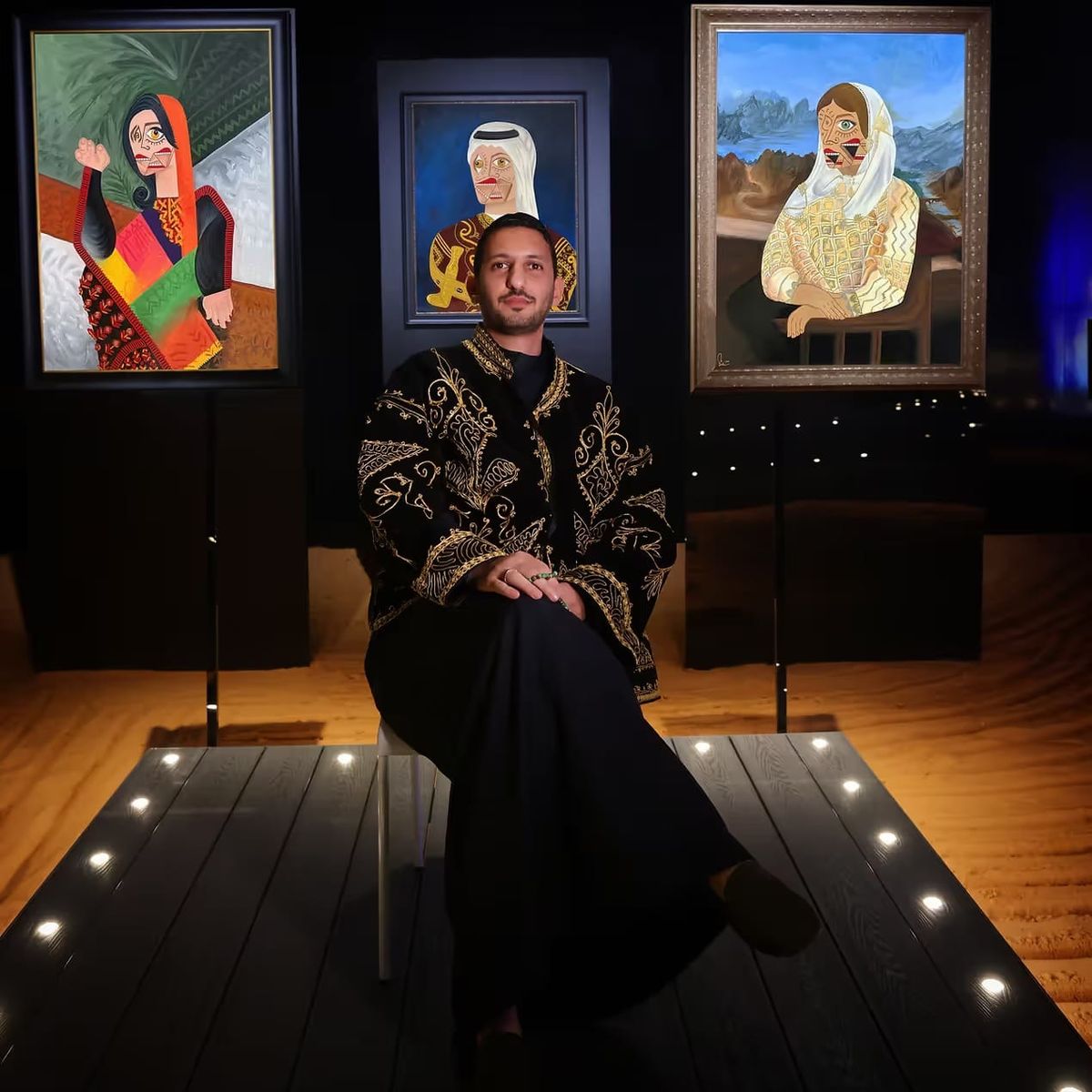
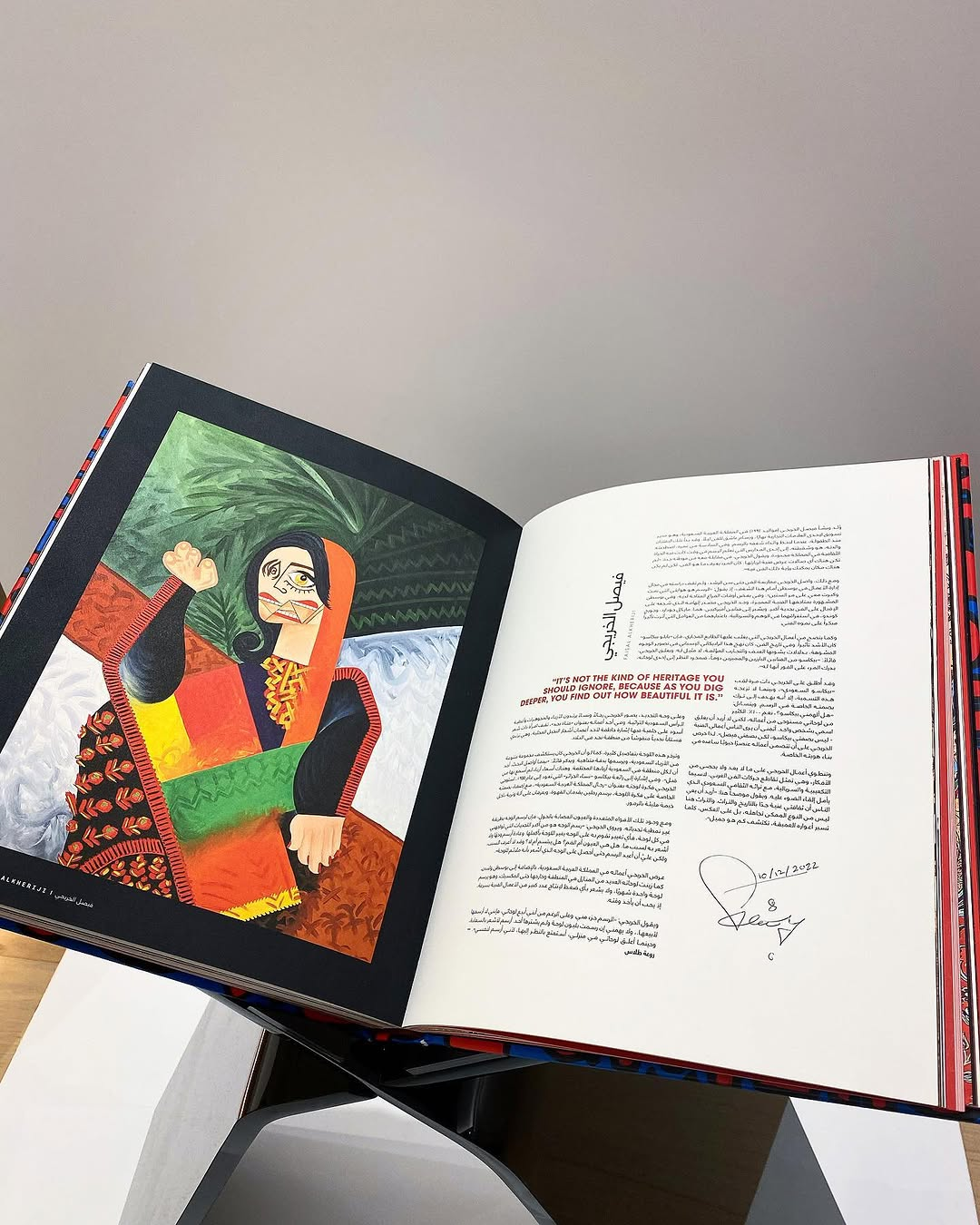
“My goal is to represent my culture differently with my art, to show how rich and beautiful our culture is but by painting it in a slightly different and unique way.”
In Faisal Alkheriji’s work, Saudi culture does not sit still. It shifts, fractures, glows, and returns in bold planes of color, carrying the intimacy of heritage into the language of contemporary painting. The self taught artist has built a practice that feels both rooted and restless, one that turns memory, dress, ritual, and identity into something unmistakably his own.
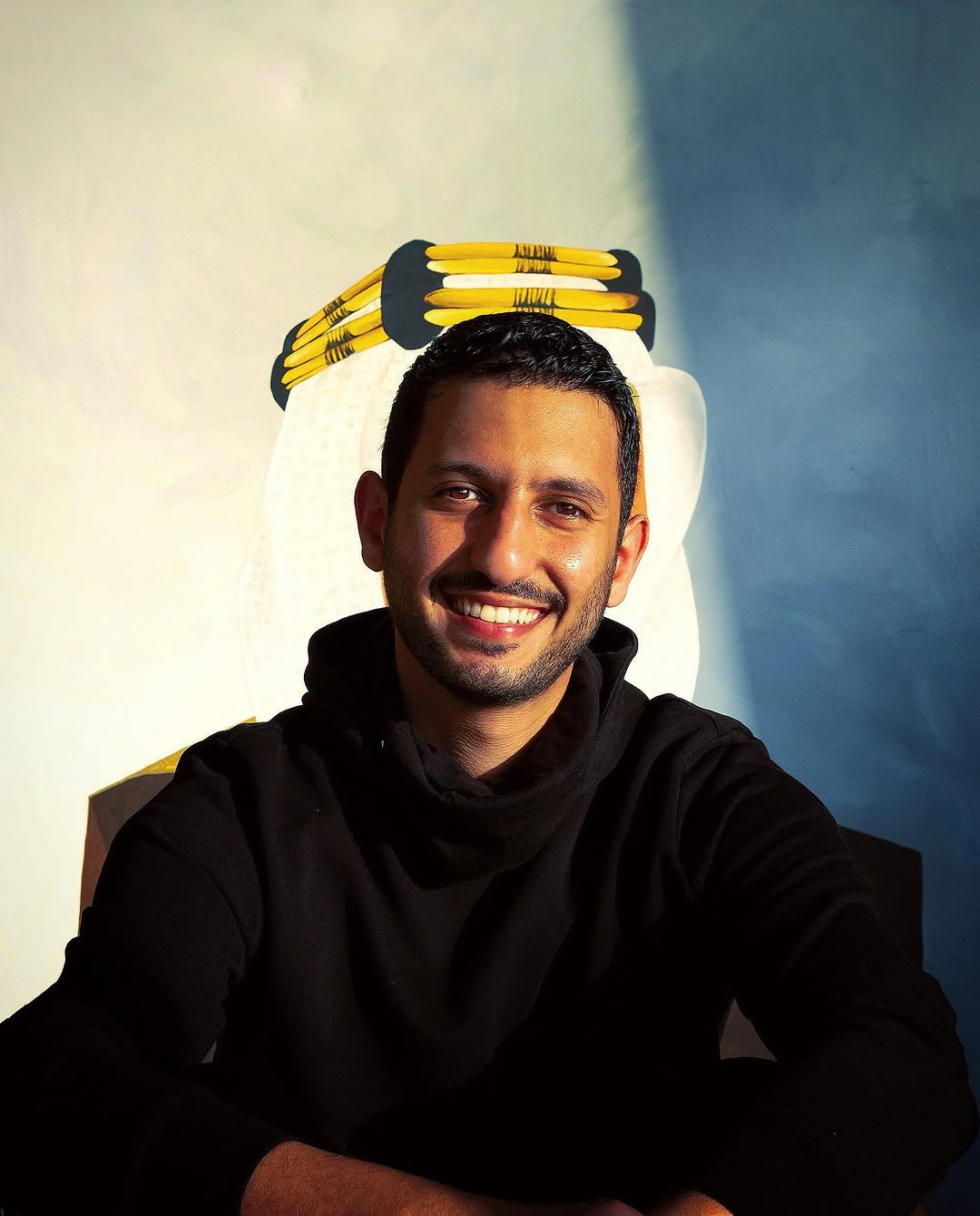
Faisal Abdulaziz Alkheriji is a Saudi contemporary artist from Jeddah whose work blends Saudi heritage with cubism and surrealism. His journey into art did not emerge from a formal academic path, but from years of sketching, experimenting, and gradually shaping a visual language that felt true to him. That background makes his practice feel deeply personal. Even when his work nods to global modernism, its emotional center remains close to home. His paintings are not distant studies of culture. They are intimate acts of translation.
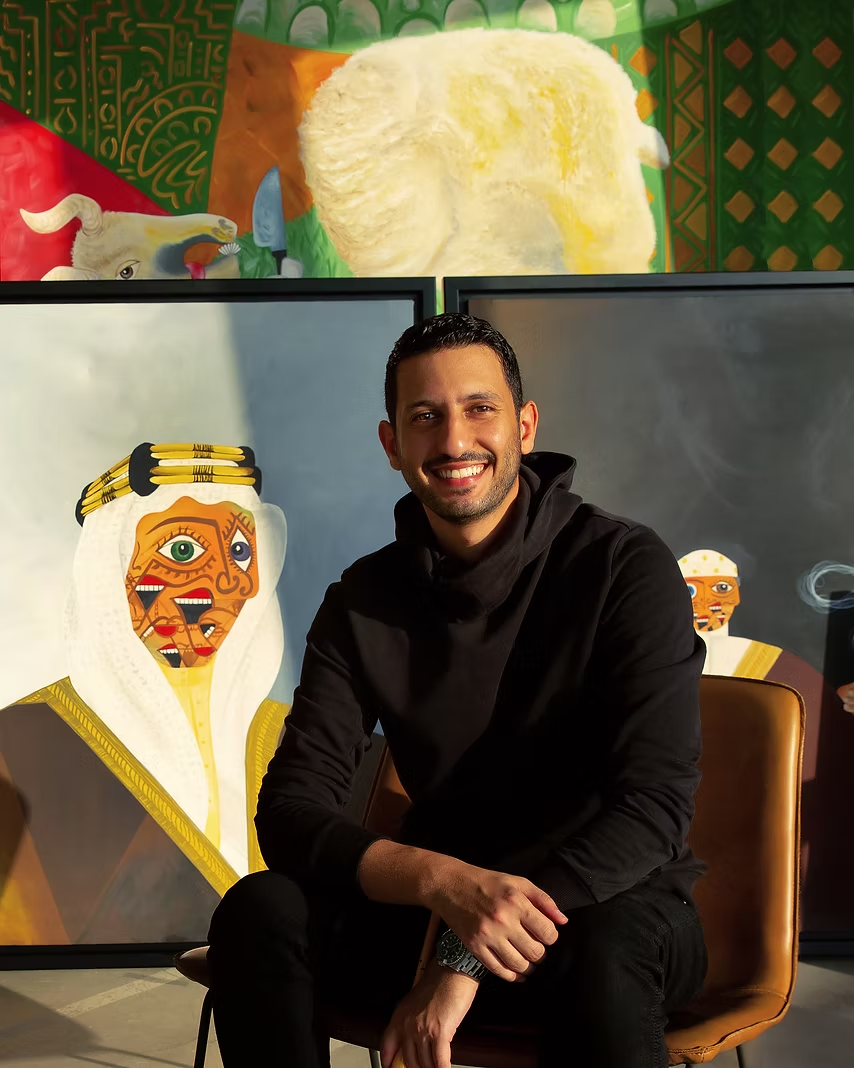
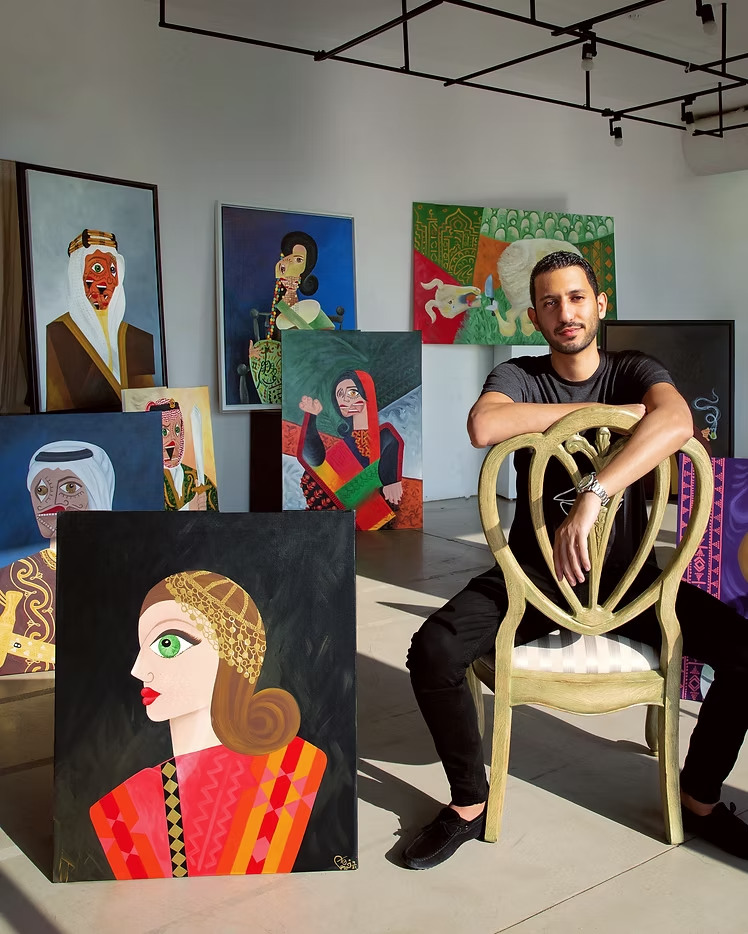
One of the most revealing things about Faisal Alkheriji is that he did not begin with a strategic career plan. Art began as something natural, something that grew with him over time as a hobby and a form of pleasure. Painting offered him a space of calm, a place where the outside world could fall away.
That sense of ease is central to understanding his story. He became more serious about art during his university years, and sharing his work online gave him the encouragement to continue. But even as visibility grew, the core of his relationship with painting remained unchanged. It was never only about recognition. It was about enjoyment, freedom, and the instinct to keep creating.
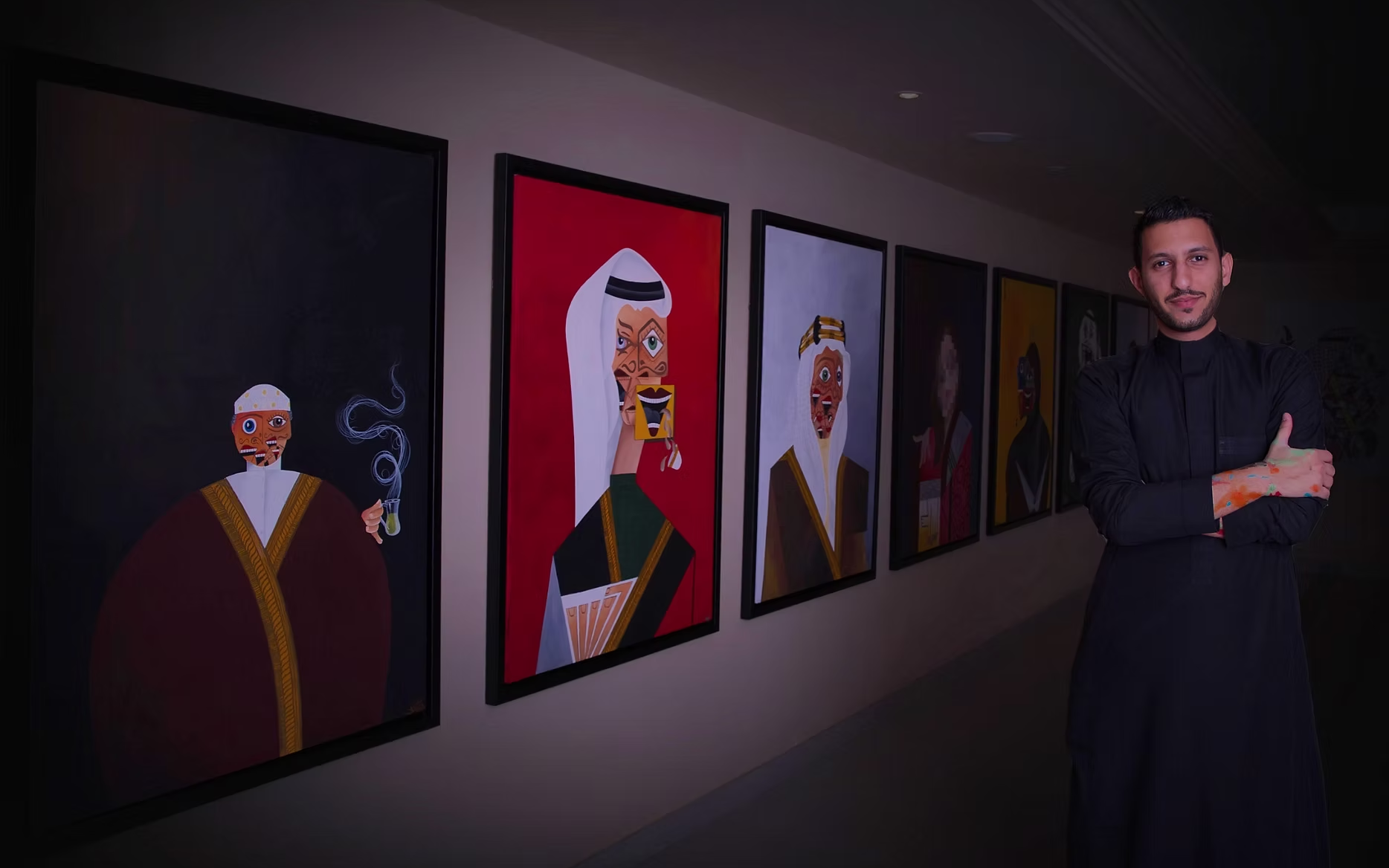
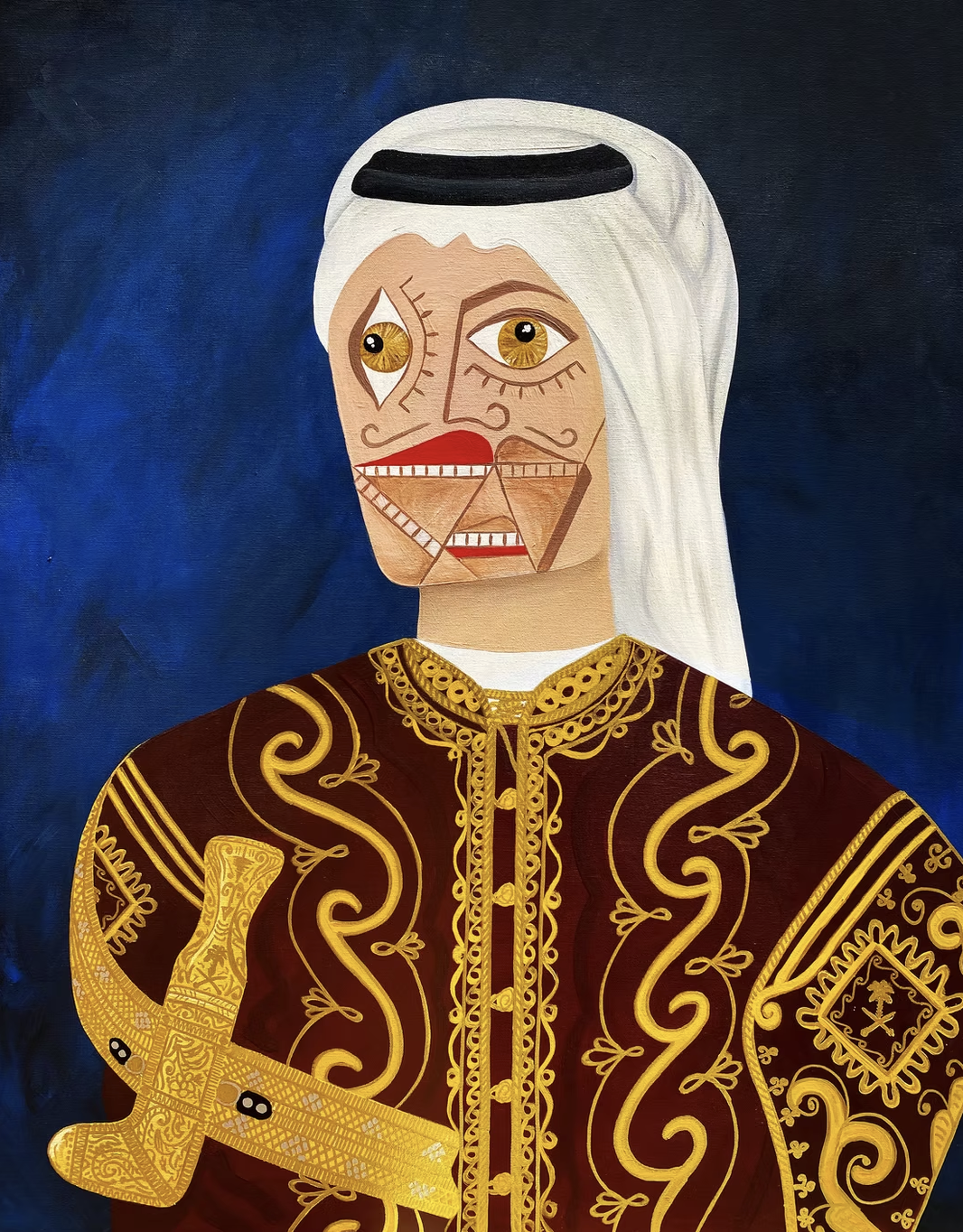
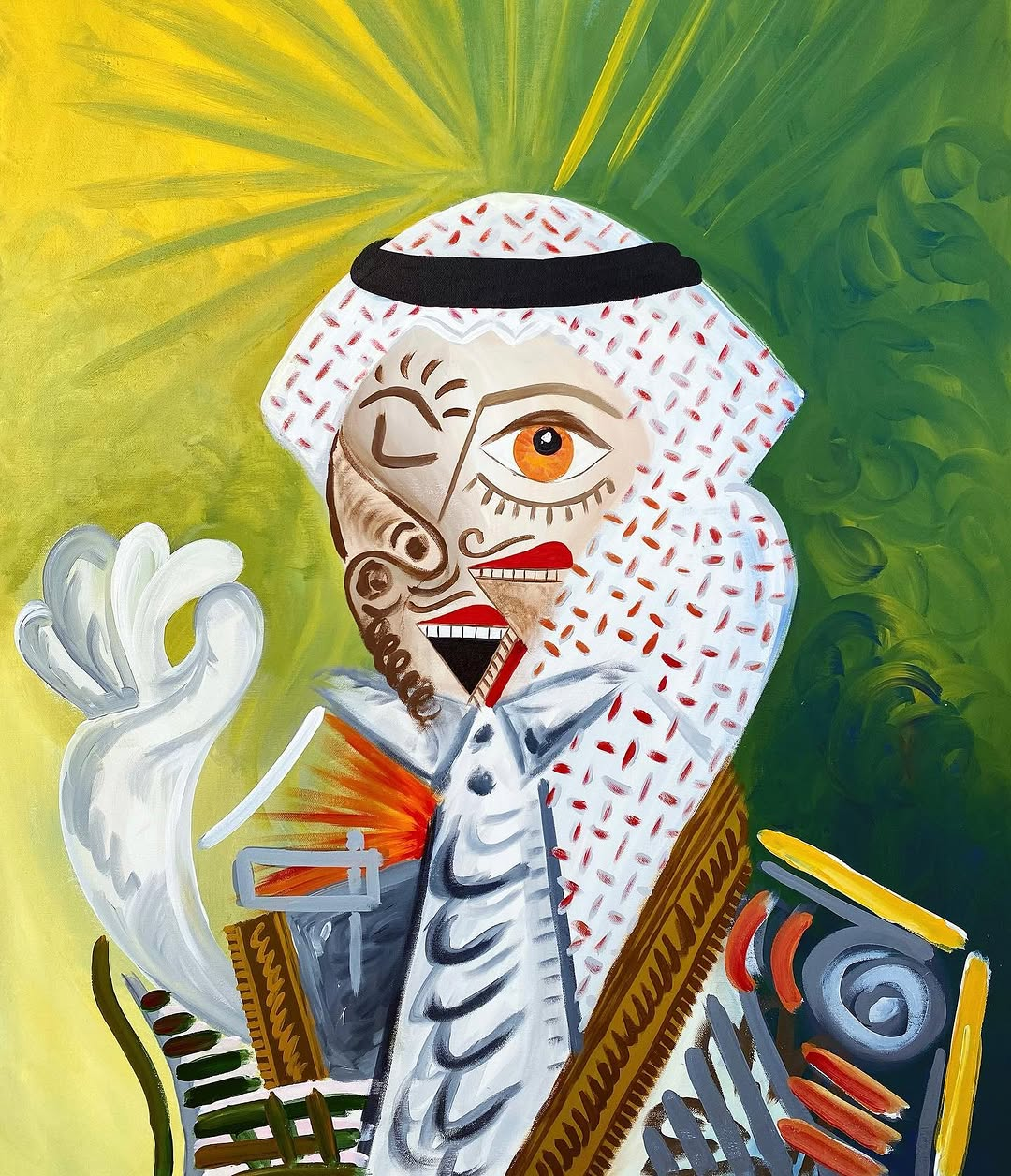
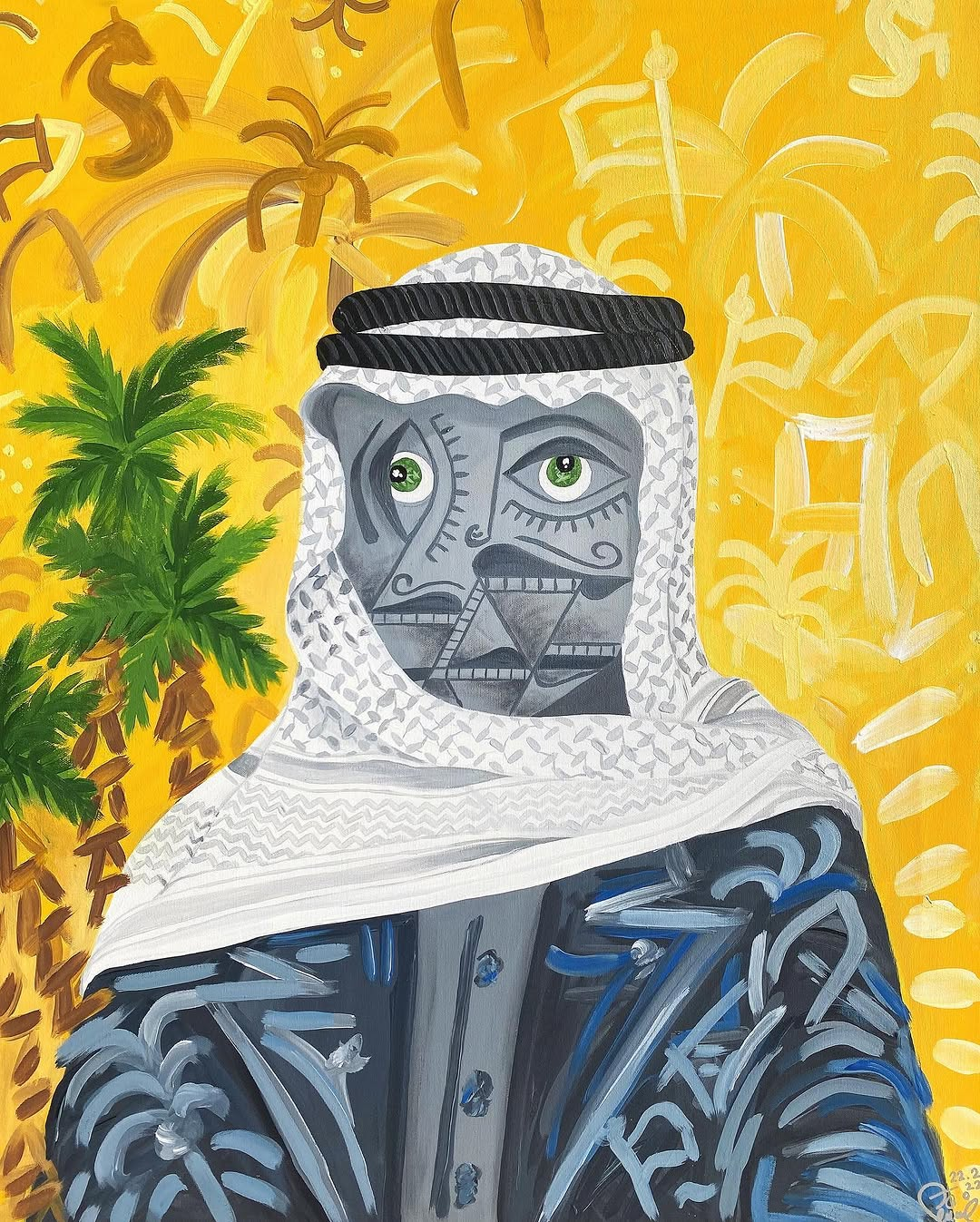
Faisal Alkheriji’s work is often described through cubism, but that label only tells part of the story. His paintings draw on traditional clothing, regional customs, hospitality, tents, gatherings, and collective memory, yet they do so through fractured compositions and abstracted faces that feel contemporary rather than documentary. He has said that cubism felt like the right language for portraying his culture differently. That is what gives his paintings their distinct energy. He is not simply depicting Saudi heritage, but reimagining it through form, color, and rhythm.
This is where his art becomes especially powerful. Heritage in his work is not static. It moves. It evolves. It steps into the present without losing the weight of where it came from. His paintings make culture feel alive.
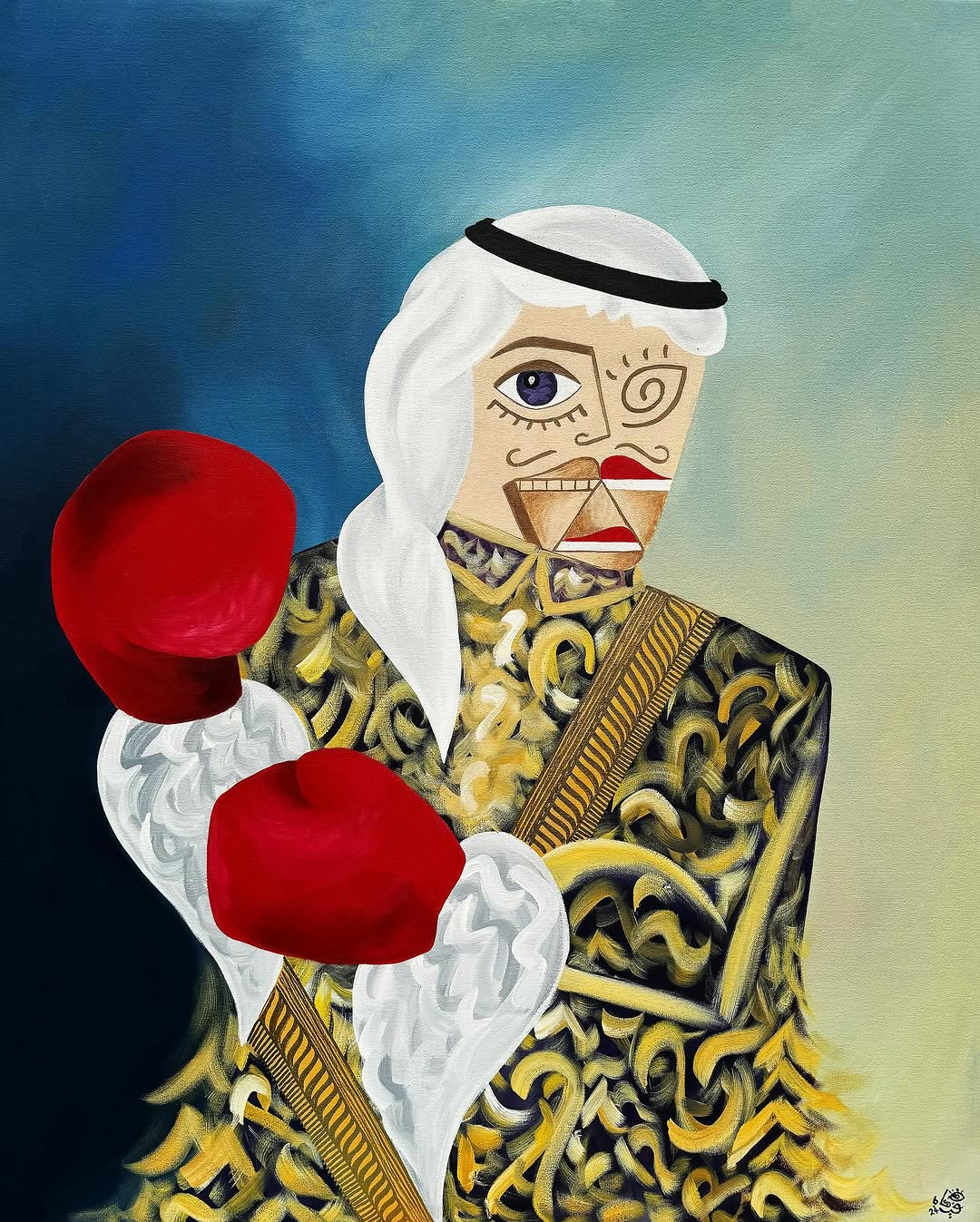
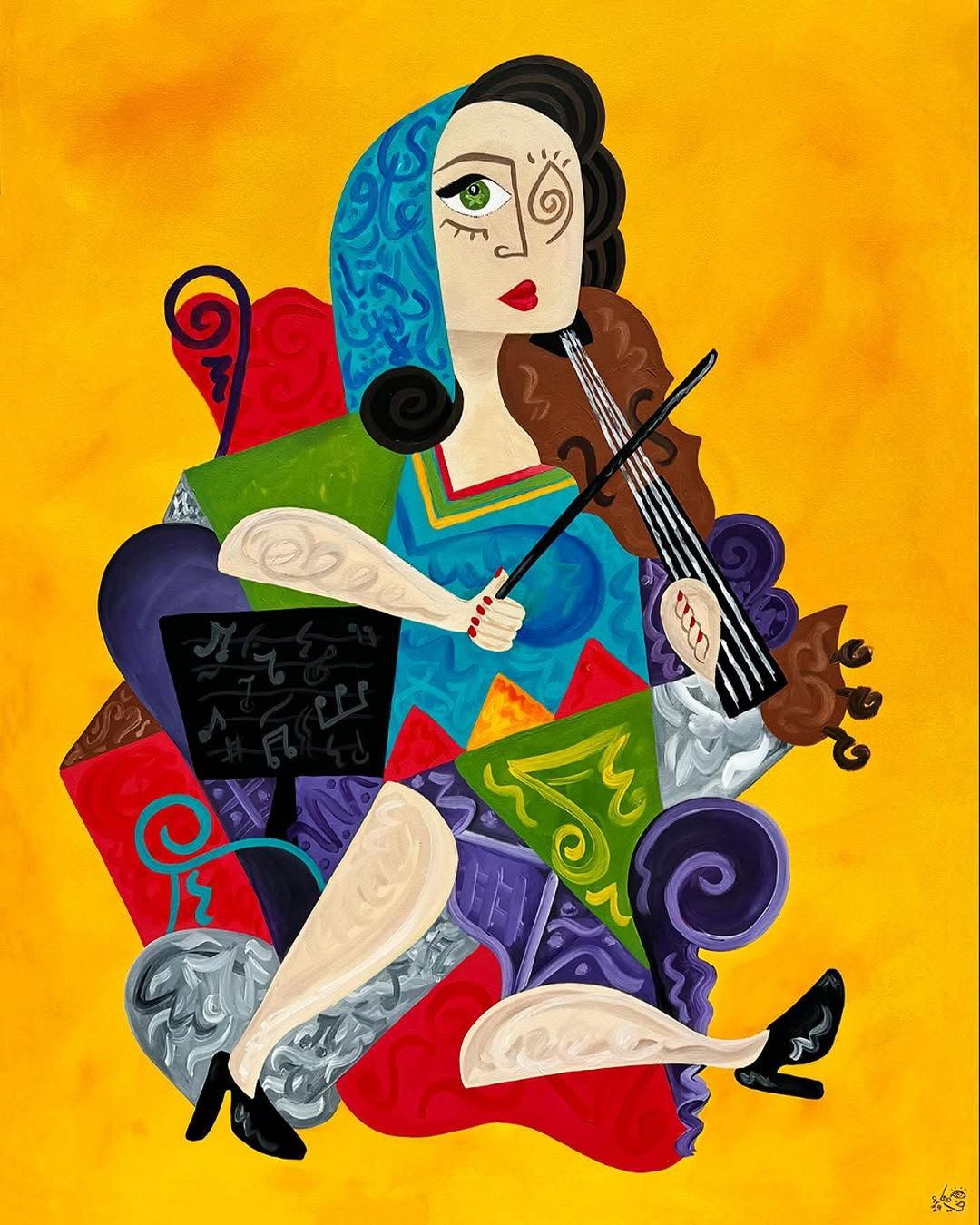
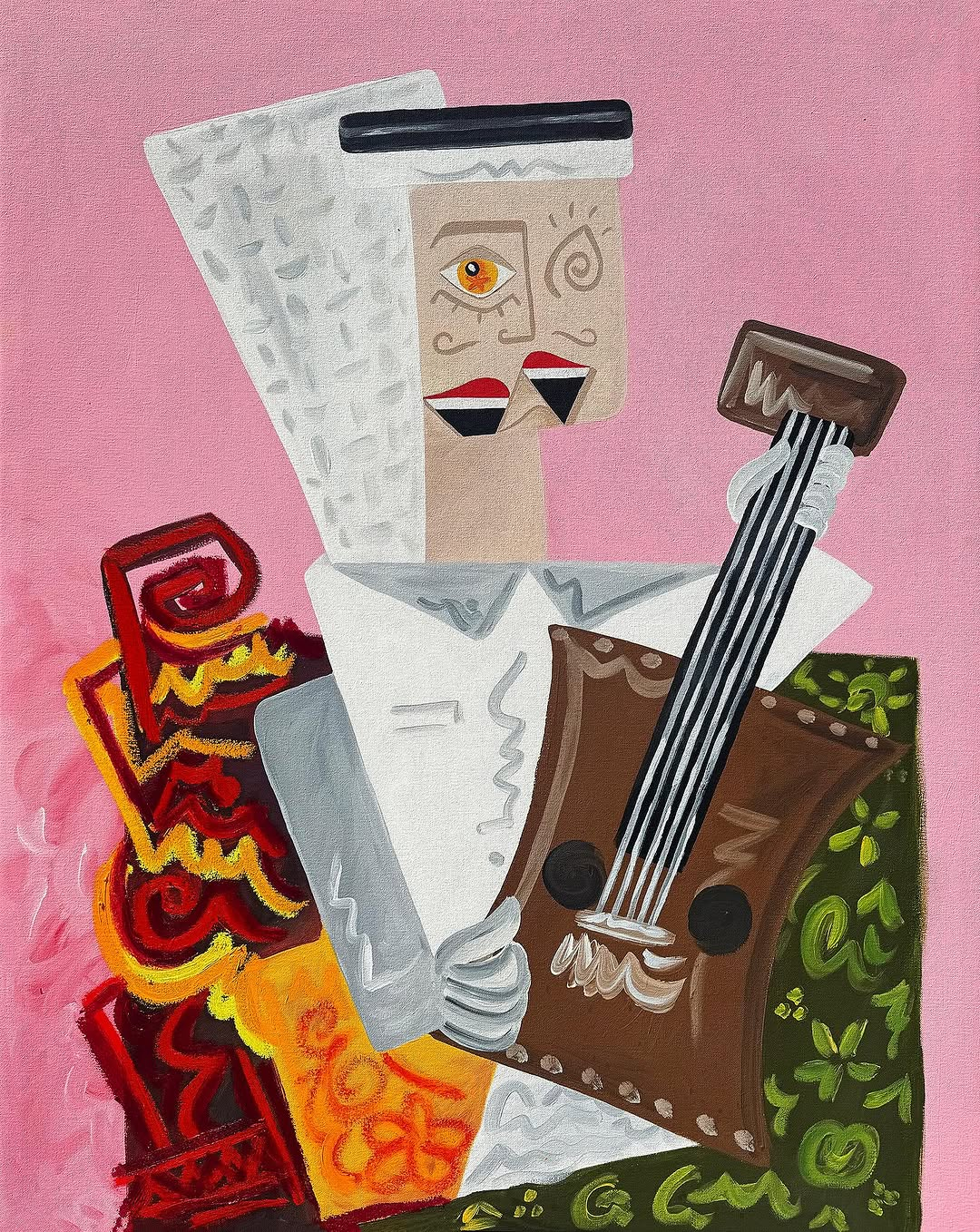
Faisal Alkheriji’s visual language is shaped by the interplay of cubism and surrealism, two movements that give his work both structure and atmosphere. From cubism, he draws fractured forms, layered perspectives, and geometric composition. From surrealism, he brings a sense of dreamlike mood, emotional distortion, and visual freedom. Together, these influences allow him to reinterpret Saudi culture in a way that feels bold, contemporary, and unmistakably personal.
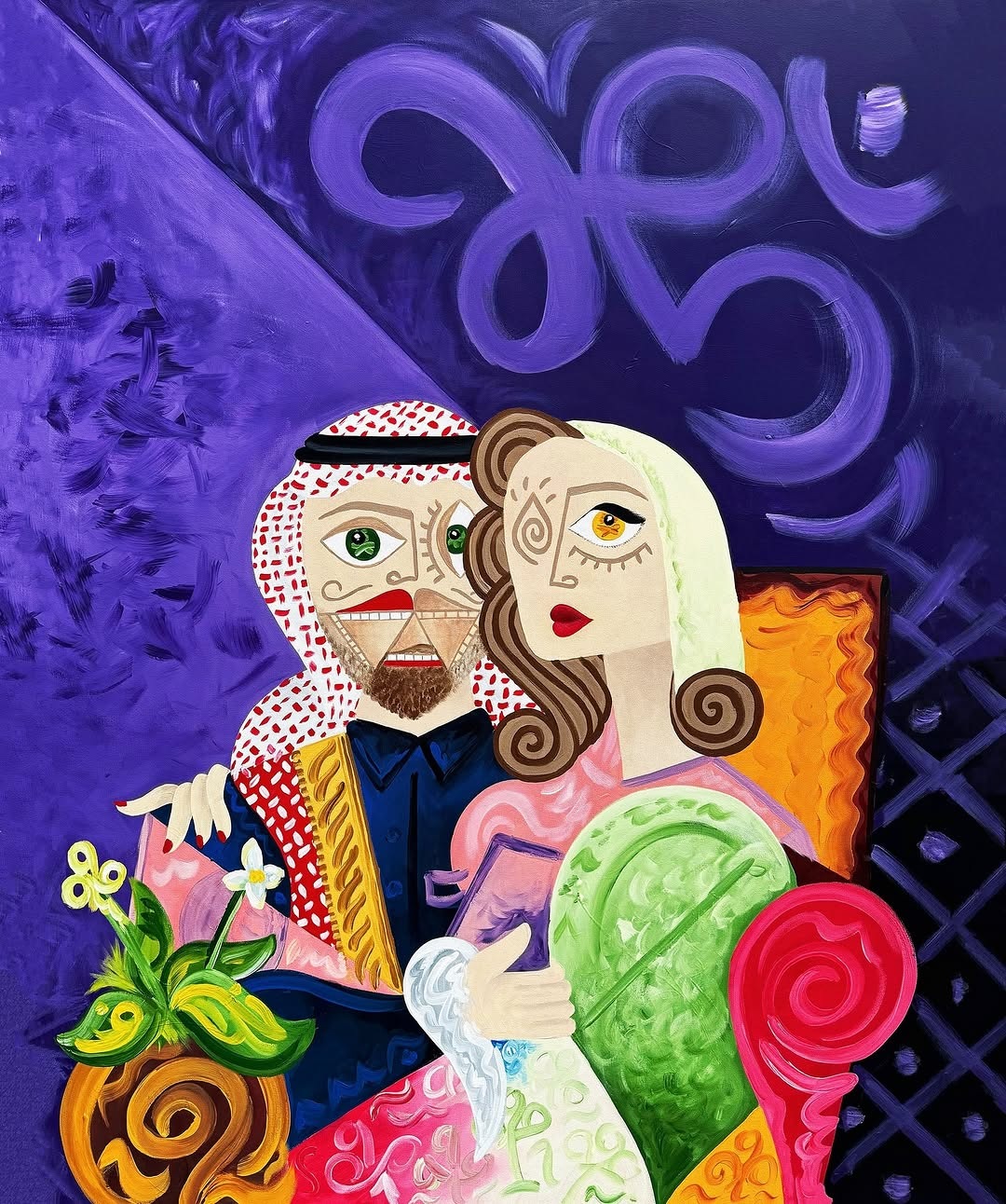
Picasso is one of Alkheriji’s most openly acknowledged influences, especially in the way cubism opened up new possibilities for structure and perspective. But his influences stretch beyond that single reference. Surrealism also plays a role in the atmosphere of his work, as do artists whose bold imagery and stylized forms shaped his early imagination.
What makes Alkheriji’s practice distinctive is that these influences never overpower his voice. He borrows visual tools, but not identity. The grammar may echo international art history, yet the imagery remains deeply Saudi. The result is a body of work that feels globally legible while remaining culturally specific.
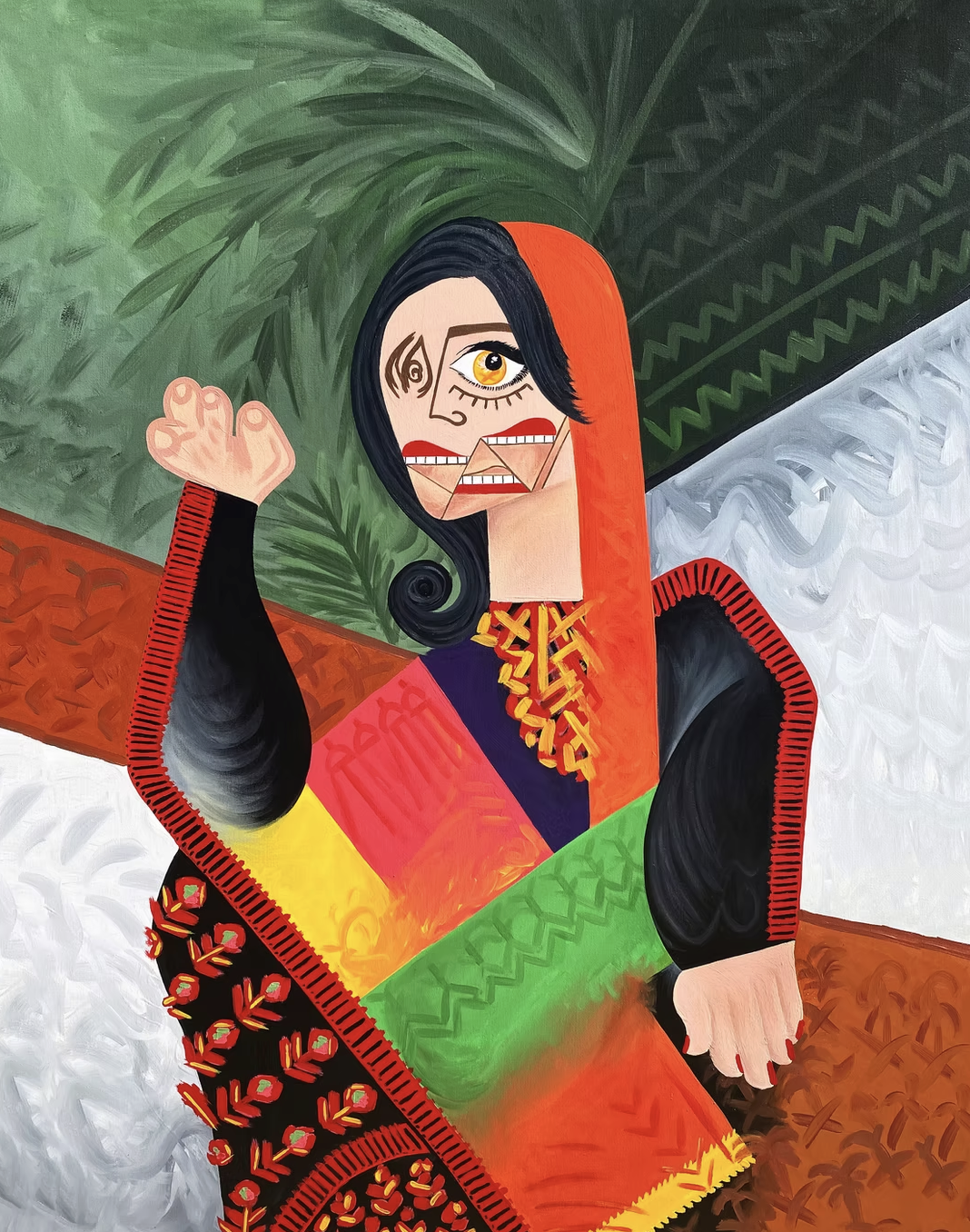
One of Faisal Alkheriji’s most resonant works, Najd’s Girl draws from traditional Najdi dress and feminine cultural identity. Rather than treating clothing as a decorative detail, the painting uses it as a visual language of memory, place, and heritage. The figure feels both symbolic and intimate, carrying the elegance of tradition while being rendered through his fractured, contemporary style.
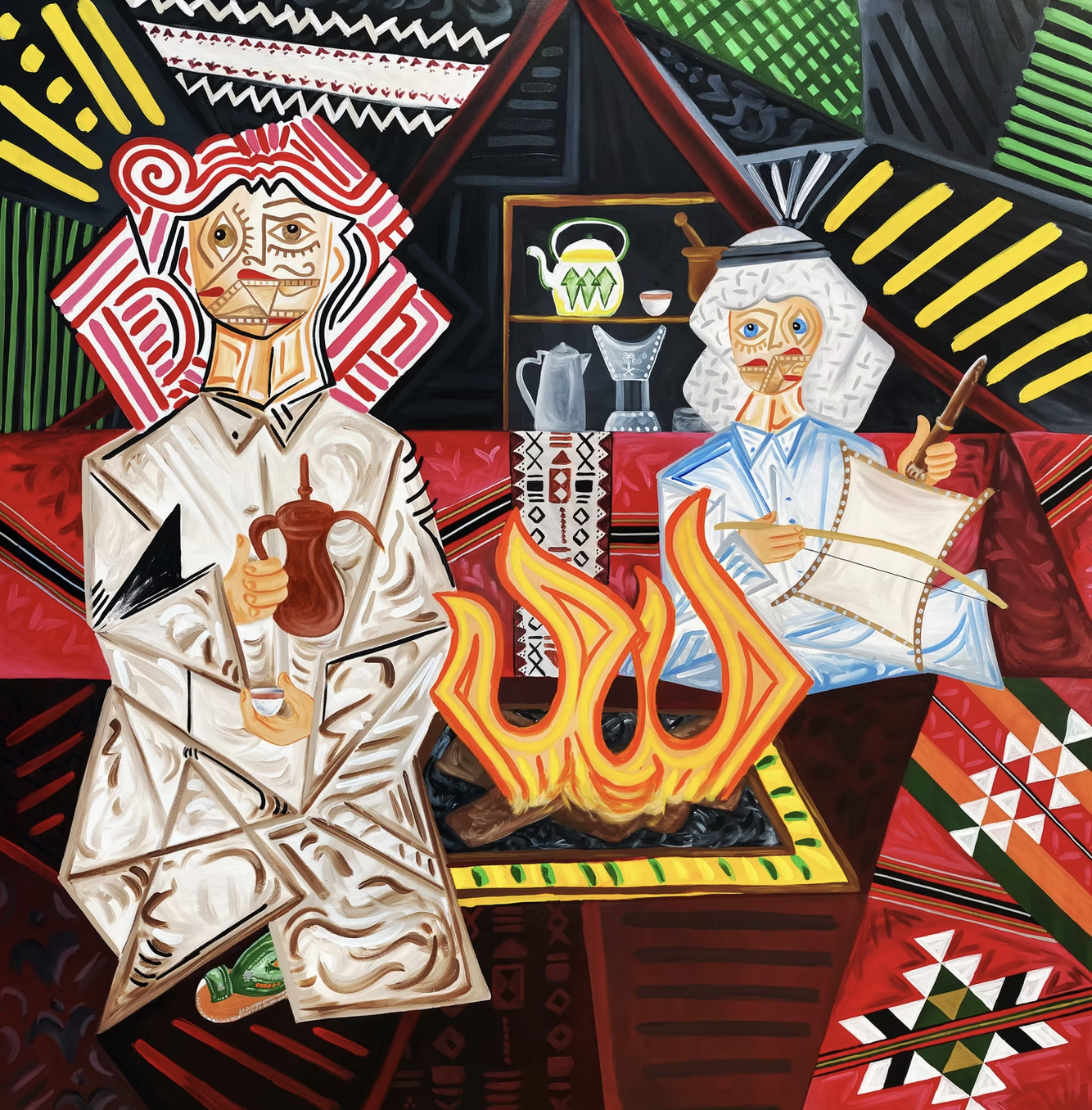
In Men of Saudi Arabia, Alkheriji reinterprets a classic cubist reference through a distinctly Saudi lens. By placing Saudi men within a traditional tent setting and surrounding them with culturally specific details, he transforms an art historical structure into something rooted in local life. The work captures one of his defining strengths: the ability to borrow from global visual language while keeping the emotional and cultural center entirely his own.
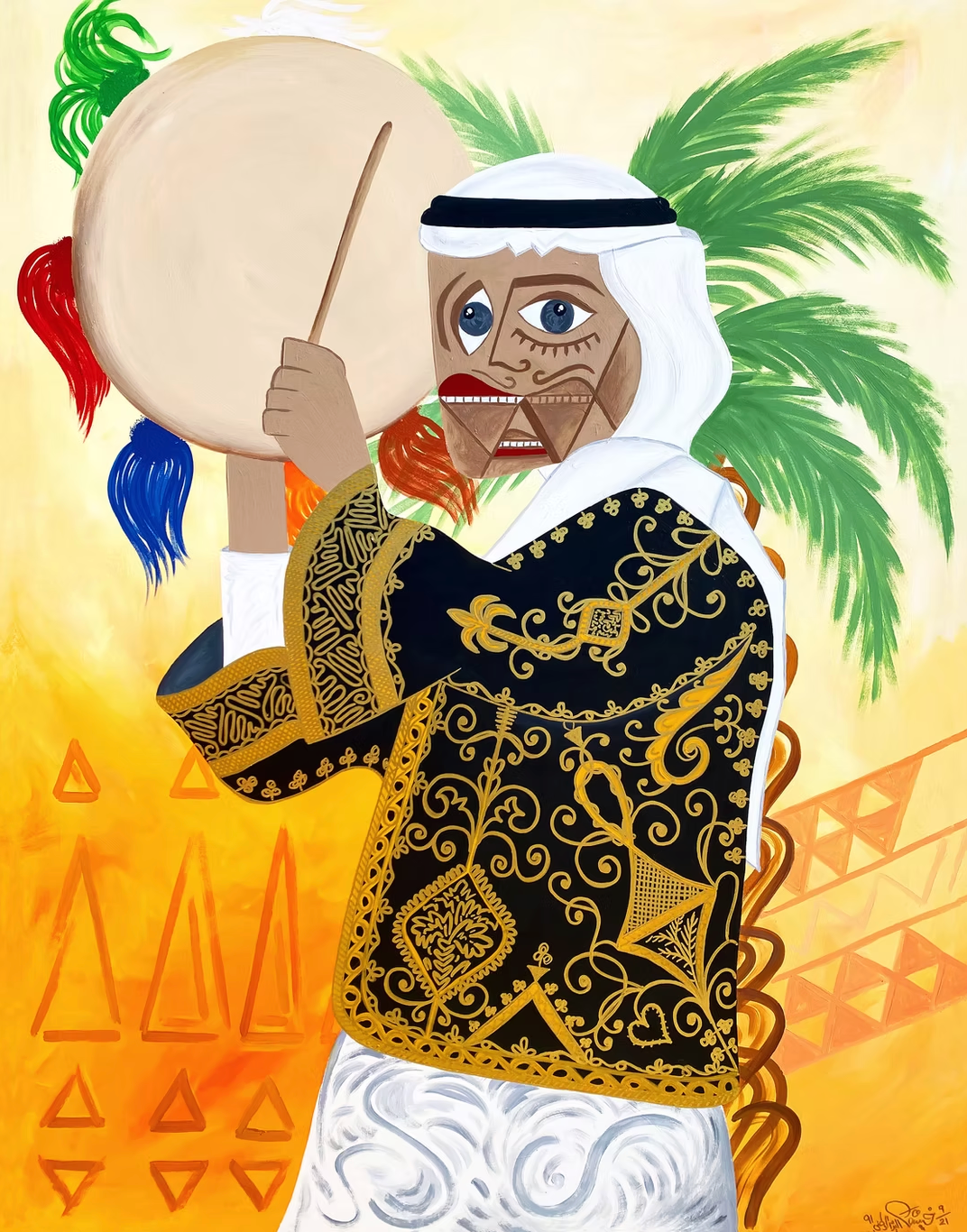
Ardah reflects Alkheriji’s interest in collective ritual, movement, and ceremonial identity. The title immediately evokes one of Saudi Arabia’s most iconic cultural traditions, and the work channels that energy into a stylized visual composition. Rather than documenting the ritual literally, he distills its spirit through the drummers exceptional outfits (al-framliah), a black embroidered robe with gold threads.
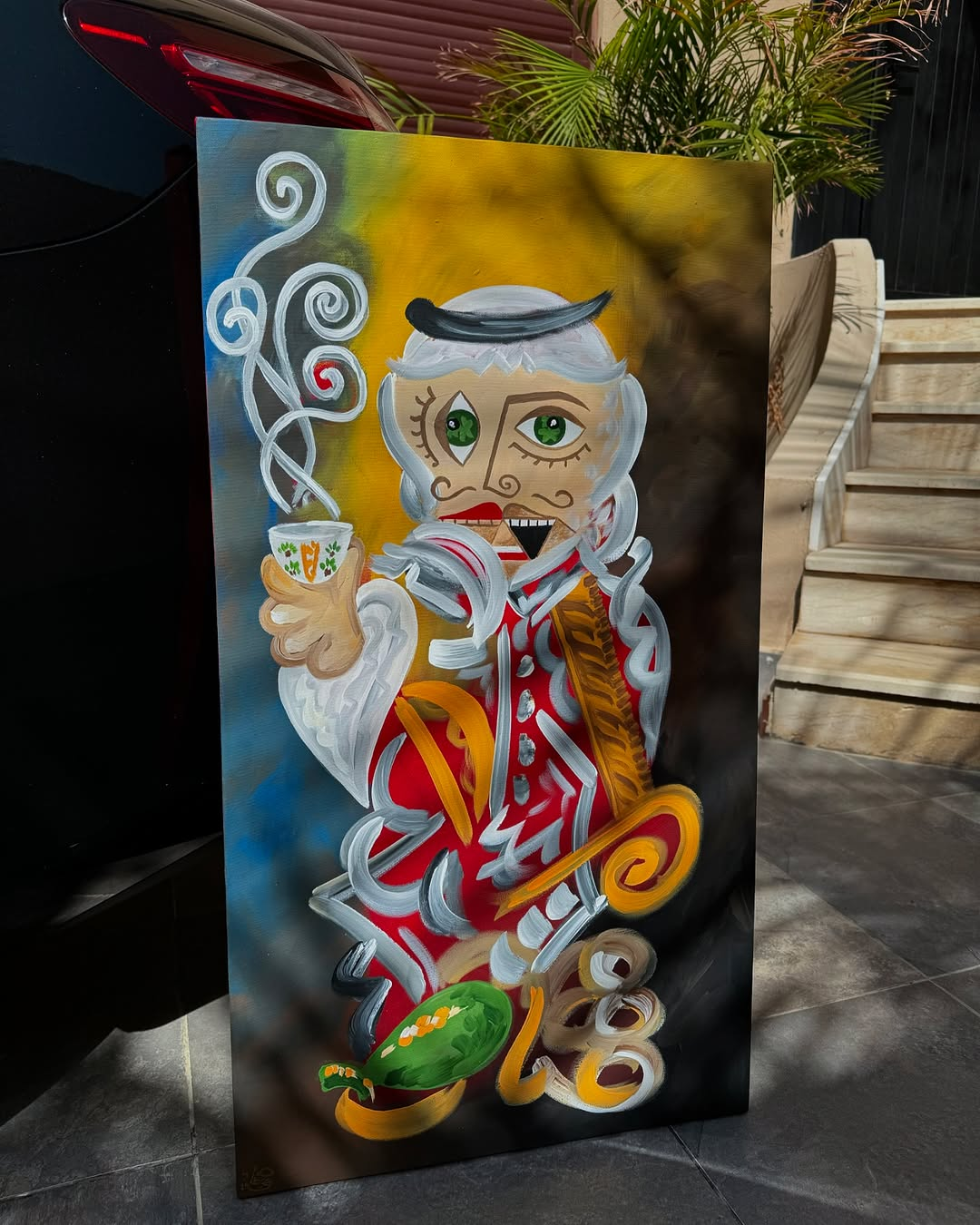
With Mujawakh, Alkheriji draws on the symbolism of the Jokha, also known as the Mahoud, a red garment traditionally made of velvet or wool and embroidered with gold in intricate motifs. Historically, it was worn by leaders, kings, and knights to distinguish them on the battlefield, and the person wearing it was often referred to as “Mujawakh.” In Alkheriji’s hands, Mujawakh becomes more than a visual reference to clothing. It becomes a meditation on status, heritage, and the way garments can carry the weight of history. Through his contemporary style, the piece reintroduces this traditional symbol with renewed intensity, allowing the past to feel both regal and vividly alive.
Over the course of his career, Faisal Alkheriji has expanded his practice across exhibitions, commissions, and cultural collaborations that reflect both artistic innovation and growing public recognition.
Alkheriji’s significance lies in the way he bridges worlds without diluting either of them. He speaks fluently in the language of contemporary art, yet remains committed to Saudi cultural memory. He draws from international visual traditions, yet his paintings continue to return to garments, gatherings, rituals, and symbols shaped by place. In a Saudi art scene that is rapidly evolving, his work offers something especially memorable: a style that feels instantly recognizable, yet inseparable from its cultural source. His paintings do not use heritage as decoration. They use it as substance.
That is what makes his work timely. It speaks to a broader cultural moment in which Saudi identity is being rearticulated across art, design, and public life. But it does so with intimacy and visual conviction.
Faisal Alkheriji’s story is not one of sudden reinvention, but of steady refinement. A childhood habit became a serious practice. A love of cubism became a means of cultural translation. A personal visual language became a public one. Across all of it runs the same impulse: to honor Saudi culture by seeing it again, differently.
And perhaps that is what makes his work linger. It does not simply show heritage. It lets heritage evolve in full color.
Discover more art stories reshaping Saudi culture at KSAArt.