Muhannad Shono: An Artist of the Imagined World
Explore how Saudi artist Muhannad Shono transforms absence, belonging, and reinvention into immersive contemporary art.

Explore how Saudi artist Muhannad Shono transforms absence, belonging, and reinvention into immersive contemporary art.
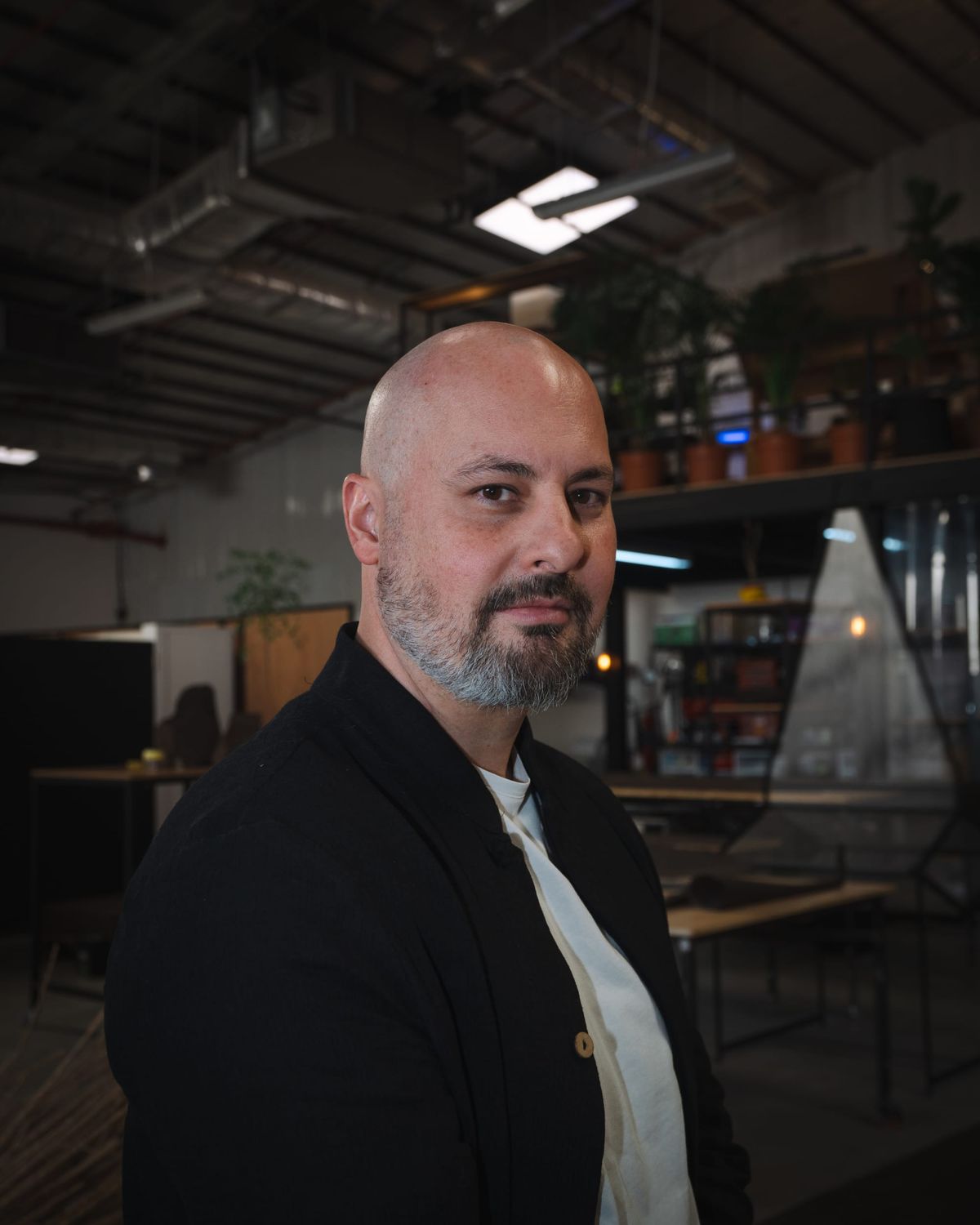
“The black, the void, isn’t nothing, it is an endless source of the imagined world.”
For Muhannad Shono, absence is never empty. It is a site of possibility, a threshold where erased meanings return in new forms. Across sculpture, drawing, installation, and immersive environments, the Riyadh-born artist has built a practice shaped by what resists definition: memory, displacement, censorship, myth, and the fragile architecture of belonging.
Rather than offering fixed narratives, Shono creates works that breathe in uncertainty. His art moves through the tension between what is seen and what is withheld, turning the line, the mark, and the void into living instruments of reinvention. In a cultural moment that often demands clarity, Muhannad Shono stands apart for his willingness to remain in the unsettled, and to show how imagination begins precisely where certainty ends.
Muhannad Shono’s background in architecture continues to echo through his artistic practice. Even when his works appear fluid, fragmented, or organic, there is an underlying awareness of structure and spatial logic. He understands how bodies move through environments, how tension is created through scale, and how materials can guide emotion as much as thought.
This architectural sensibility is especially visible in his installations, which often feel less like objects and more like worlds one enters. He builds atmospheres rather than statements. Space becomes narrative. Form becomes a way of thinking. But where architecture often seeks permanence, order, and resolution, Shono is drawn to the opposite edge. He is interested in what happens when systems break open, when structures lose their certainty, and when controlled forms give way to entropy. That friction between order and disruption gives his work its pulse.
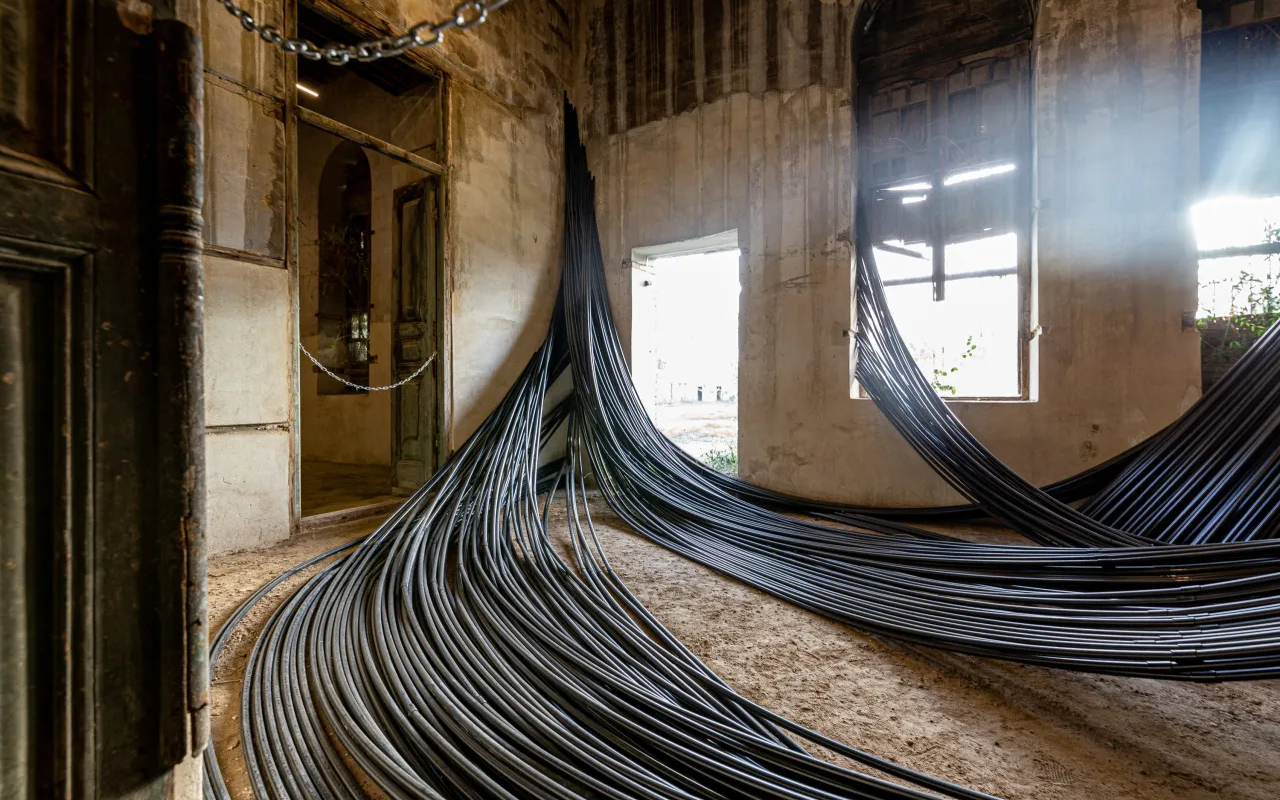
For Muhannad Shono, the line was never neutral. As a child, he encountered comics altered by censorship, where blacked-out sections disrupted image and text. Instead of closing meaning, those marks drew him toward what was missing. The act of erasure became an invitation to imagine, turning absence into possibility.
That experience shaped his visual language. Across his work, the line and the void are not just signs of removal, but sites of renewal. His compositions often feel minimal, yet they carry a quiet tension, filled with withheld narratives and shifting meaning.
Over time, this thinking expanded beyond the page. What began as illustration moved into large-scale installations, where drawing became physical space. Shono carried the same ideas into architecture, material, and scale, allowing viewers to step inside his imagined worlds. The line no longer sits on paper, it surrounds the body. In his work, absence is active, and scale becomes a way of making the unseen felt.
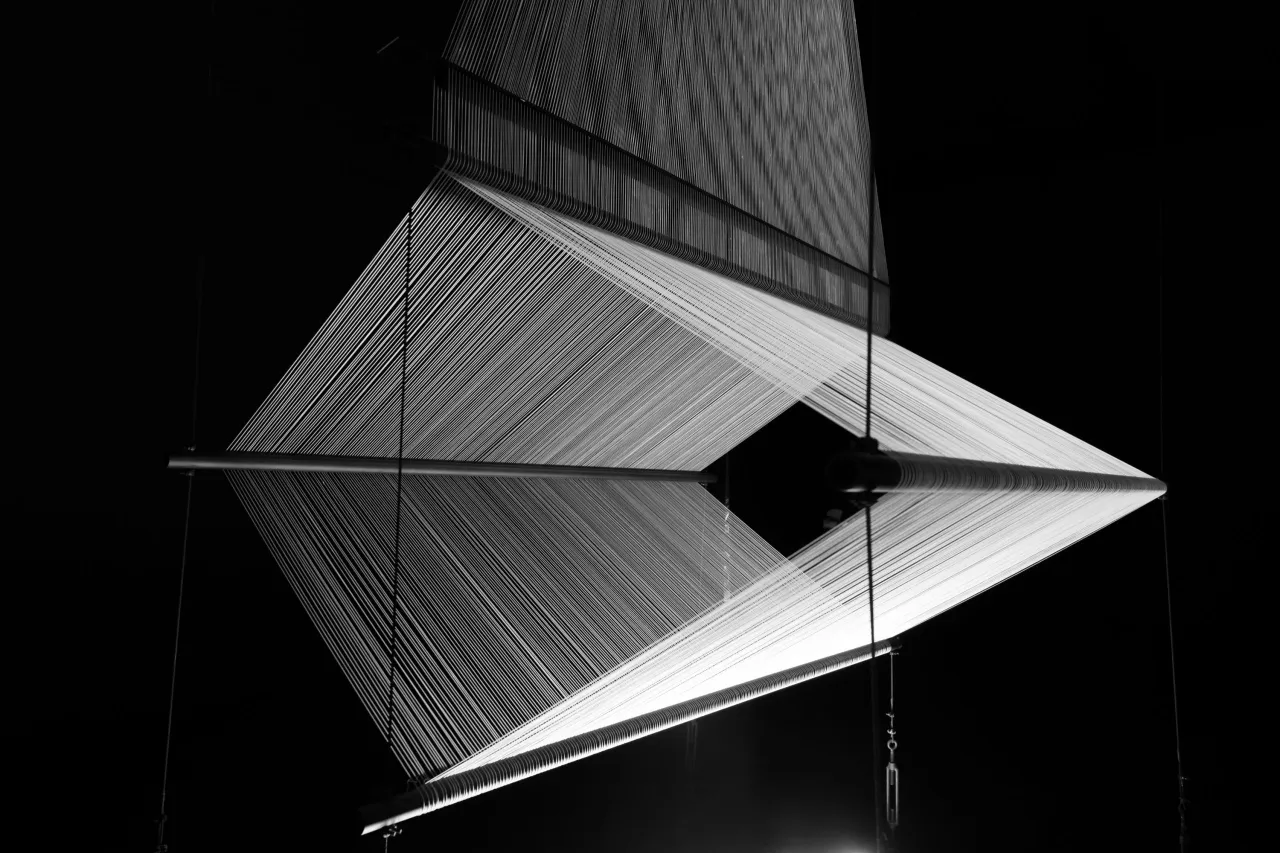
Muhannad Shono’s work returns to non-belonging because he sees identity as fluid, shaped by movement and constant renegotiation. Raised by Circassian migrant parents in Saudi Arabia, he grew up understanding that home is not fixed, and identity is never singular or settled. This perspective informs his practice as a broader inquiry rather than simple autobiography. Shono resists rigid definitions, instead embracing contradiction and multiplicity. His work rejects the idea of a single, stable narrative, keeping meaning open and in flux.
That openness reflects a wider cultural shift in contemporary Saudi Arabia. Shono speaks of a country ready for new stories and imagined worlds, moving away from fixed interpretations toward continuous rewriting. In this context, his work feels less like commentary and more like a reflection of the moment itself, where identity is not defined by permanence, but by the willingness to remain unfinished.
“The country has changed. I think people were ready for new stories, new imagined worlds.”
Part of the force of Shono’s work lies in his ability to transform ordinary materials into charged visual systems. Plastic pipe, string, sand, paper, and other elemental or industrial materials are reconfigured into works that feel at once tactile and symbolic. He moves fluidly between raw matter and constructed form, often blurring the line between the natural and the manufactured.
This material intelligence is one of his great strengths. His large-scale installations are especially powerful in this regard. They do not merely occupy space, rather alter the emotional temperature of it. The viewer is drawn into systems that feel unstable yet precise, intimate yet monumental.
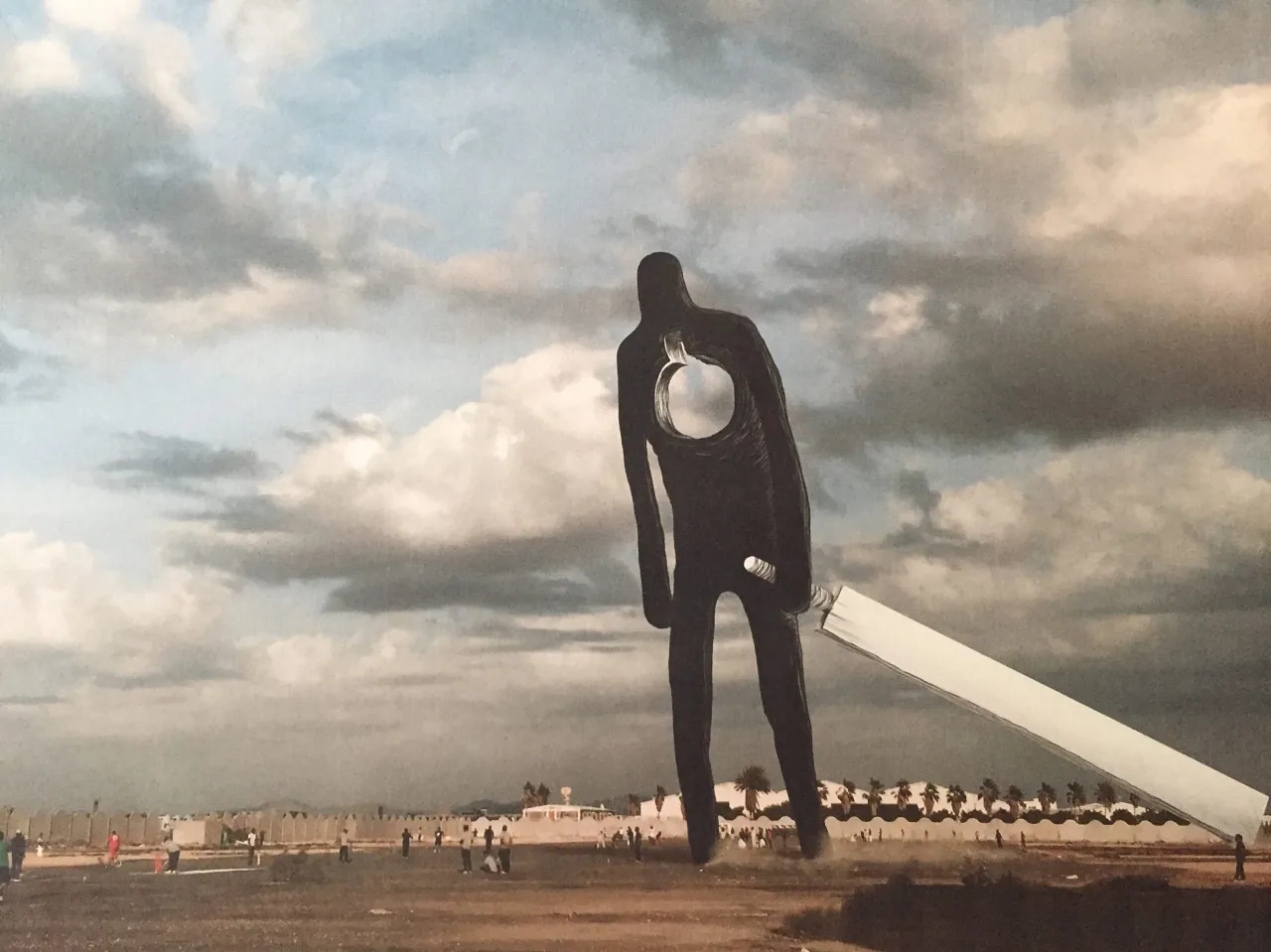
A defining milestone in Shono’s career came in 2022, when he represented Saudi Arabia at the 59th Venice Biennale with The Teaching Tree. The project marked a major international moment, placing his practice within one of the most visible platforms in global contemporary art. It also affirmed his position as a key voice in a rapidly evolving Saudi cultural landscape. But that moment did not emerge in isolation. It built on years of sustained practice and increasing visibility through major exhibitions and biennials. His participation in Desert X AlUla in 2020 demonstrated his ability to work with land, scale, and the symbolic charge of place. Appearances in the Diriyah Biennale, Noor Riyadh, the Lyon Biennale, the Islamic Arts Biennale in Jeddah, and the Sea Art Festival in Busan further expanded his reach.
He has also exhibited at institutions and platforms including Louvre Abu Dhabi, Parcours at Art Basel, the British Museum, MACBA, Ithra, and Haus der Kulturen der Welt. Together, these exhibitions trace the rise of an artist whose work travels across contexts while remaining deeply anchored in his own conceptual concerns.
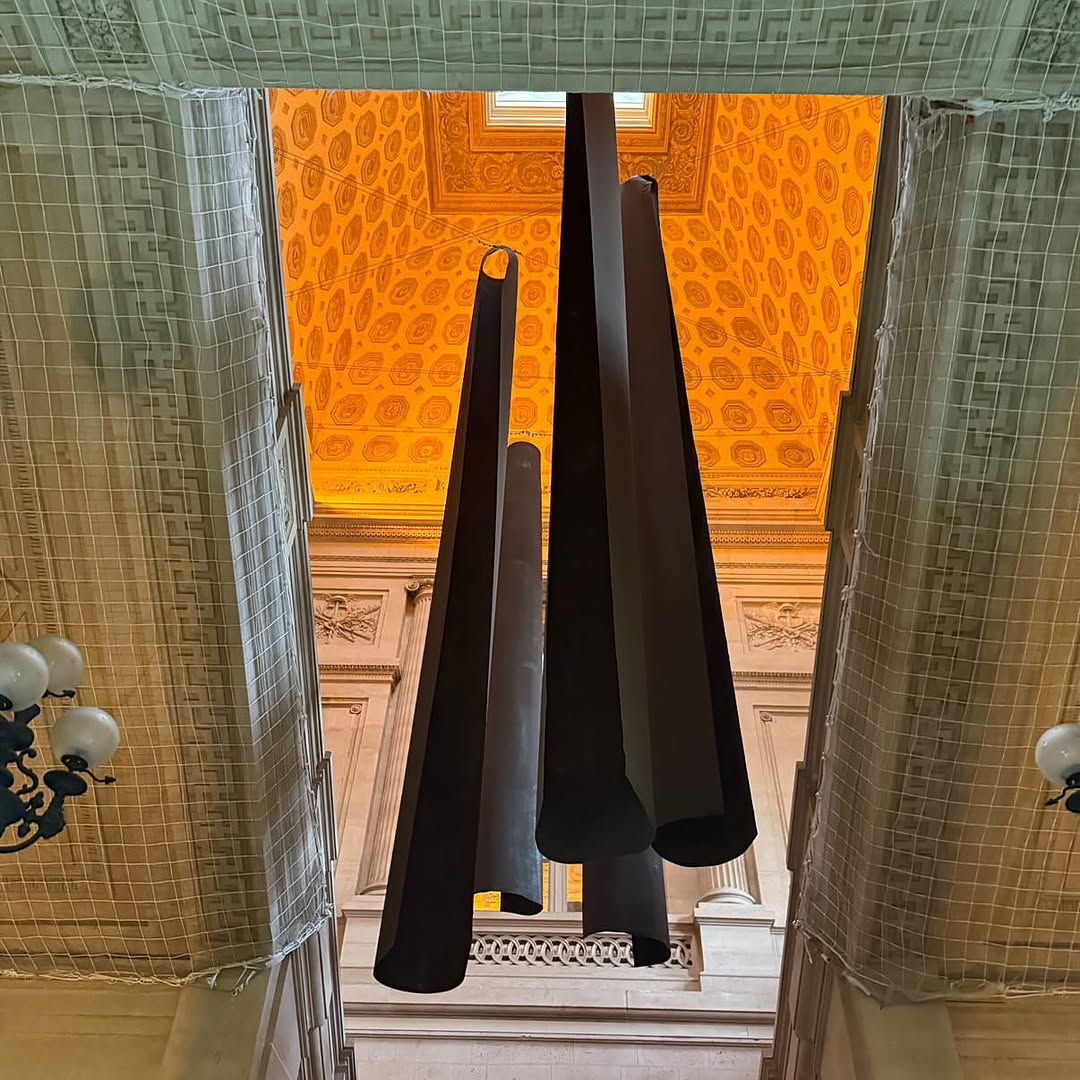
Topographies of Belonging, Homeskins I–V is Muhannad Shono’s installation first presented at Asia NOW 2025 and installed within the staircase of the Monnaie de Paris. The work imagines land and self as a single surface, asking how a country is held not only through territory, but through bodies in motion and the bonds that connect a community.
Made from geotextile fabric, reclaimed foundry sand, and stainless steel, the suspended forms resemble portable memories of ground: folded, lifted, and carried through space. Gathered together like a family in transit, they reflect migration, survival, and the instability of origins, while suggesting that belonging is something continually re-rooted through shared movement rather than fixed location.
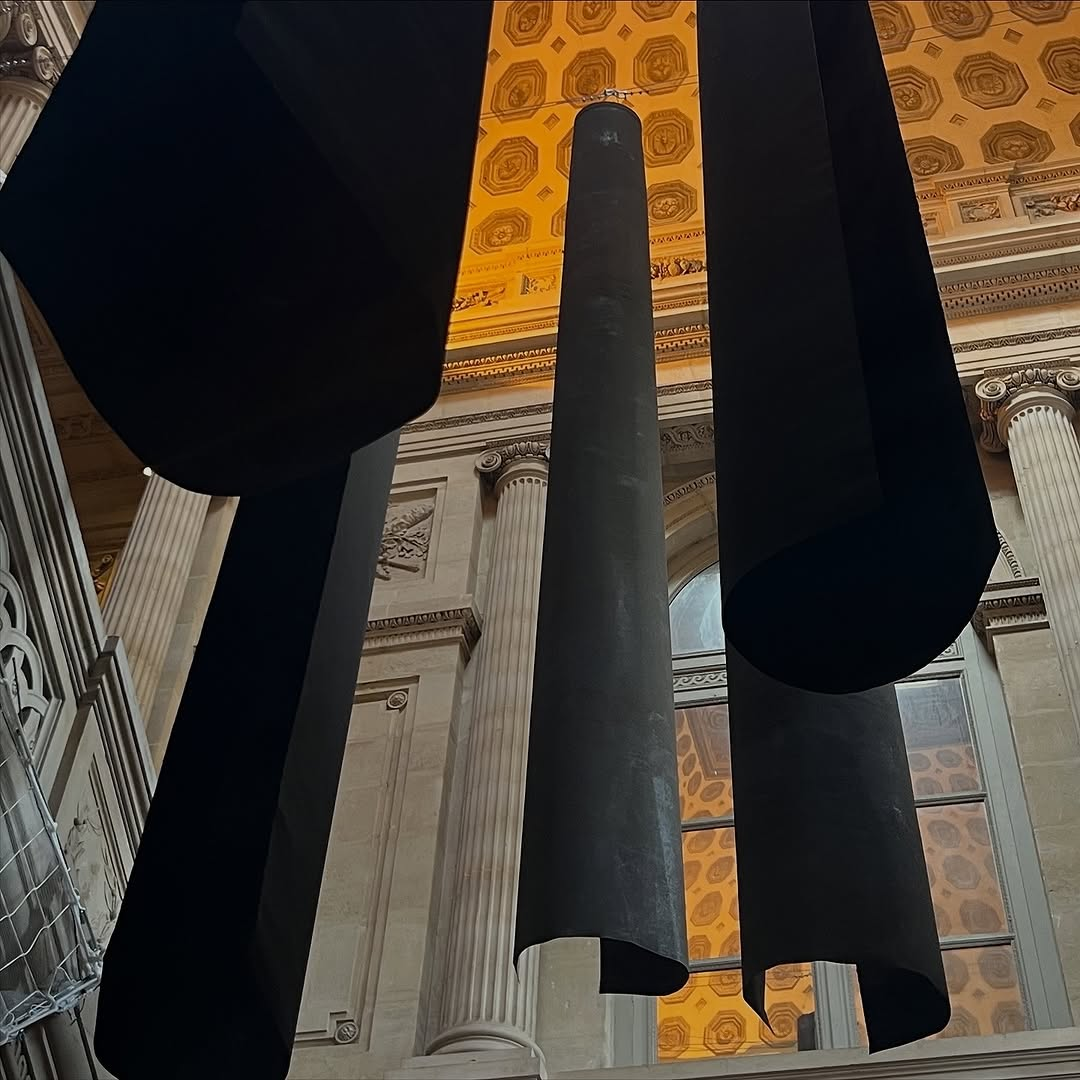
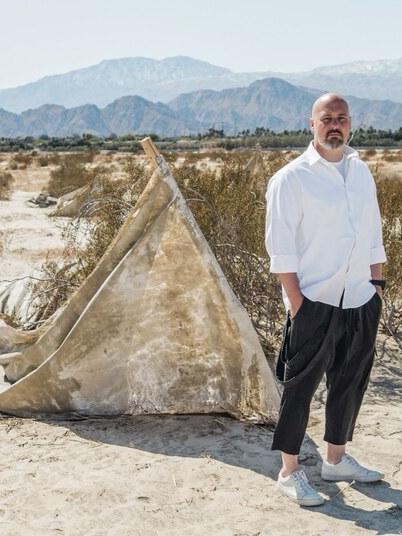
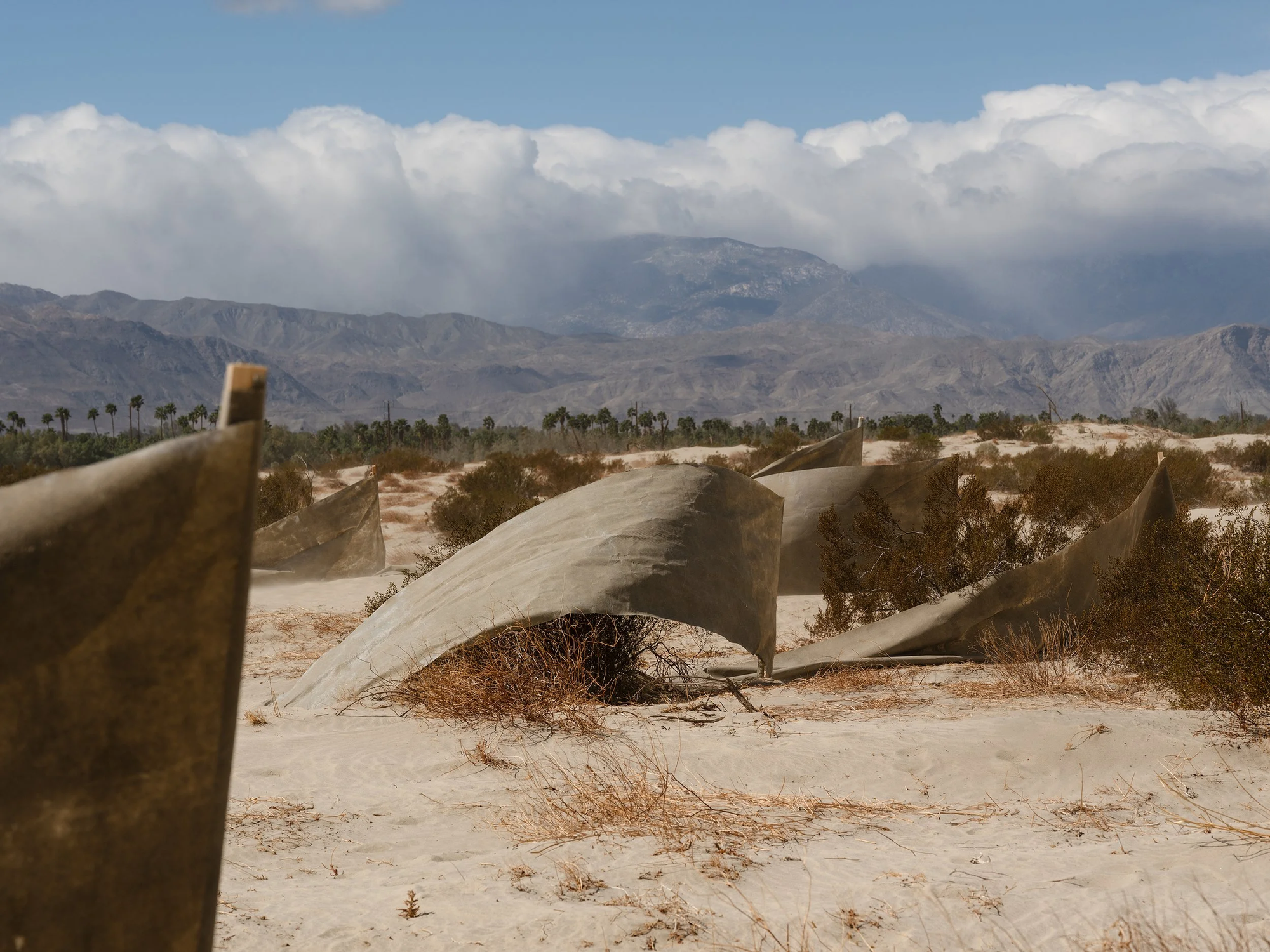
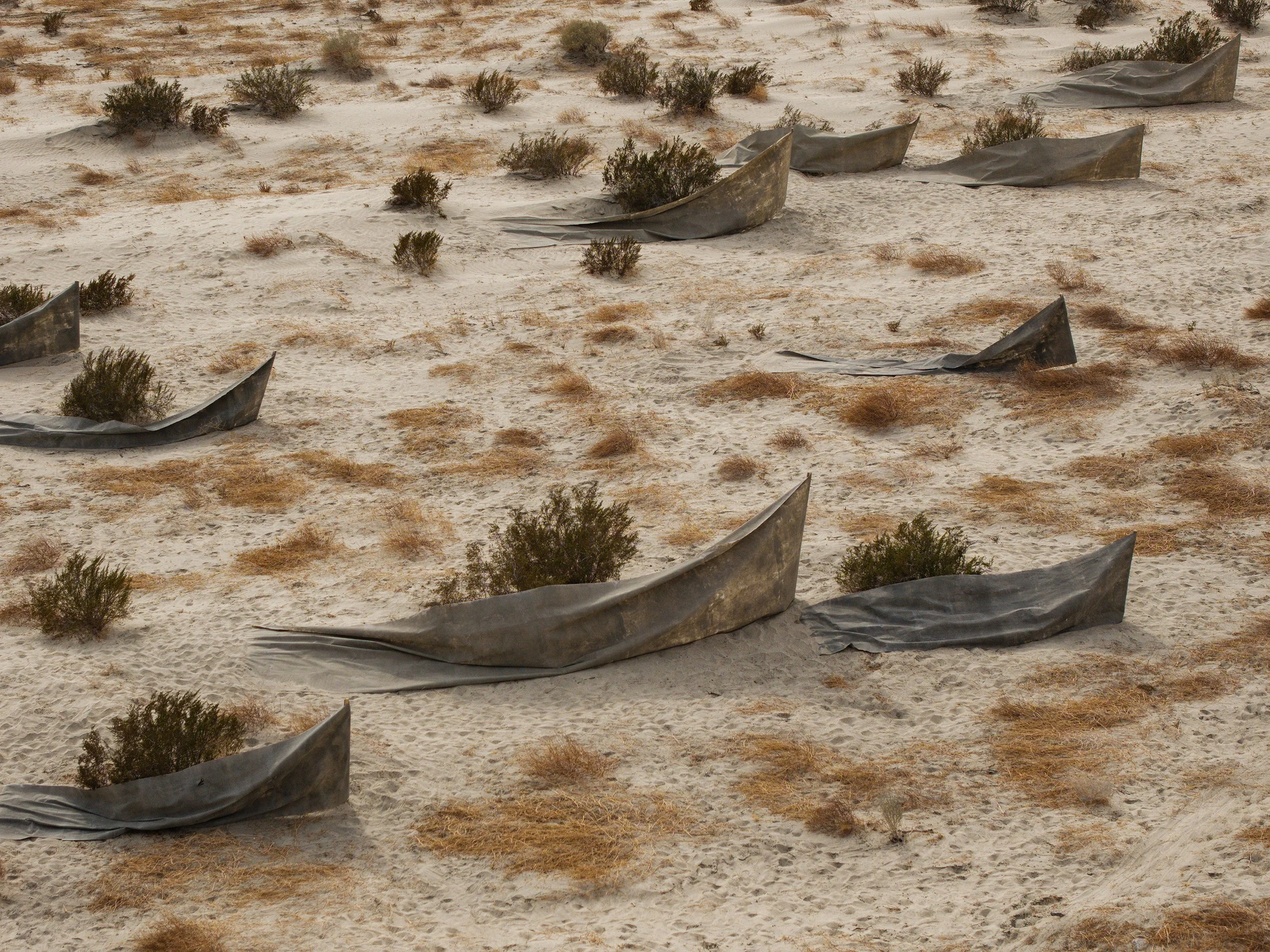
What Remains is Muhannad Shono’s installation for Desert X in Coachella Valley, California, where shifting fabric forms move through the desert as reflections on land, memory, and displacement. The work considers what remains when home becomes unstable and stories are untethered from place, suggesting that even through fracture and loss, traces of belonging and new narratives can still persist.
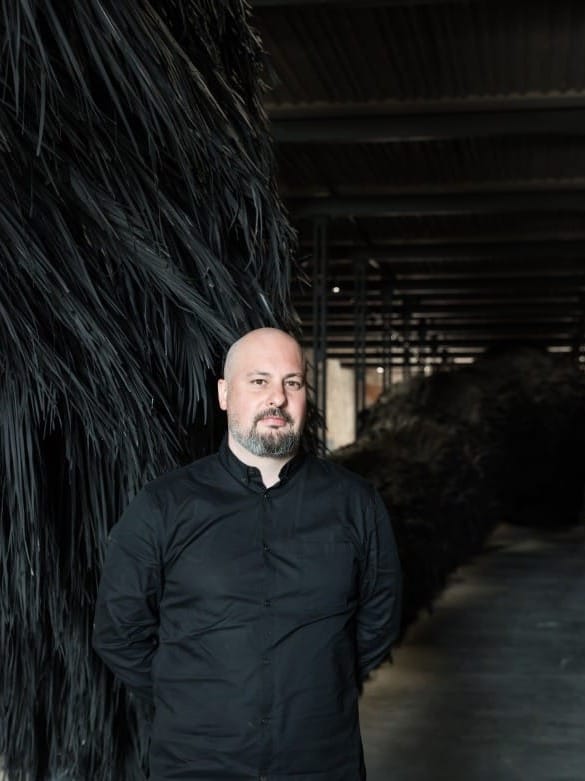
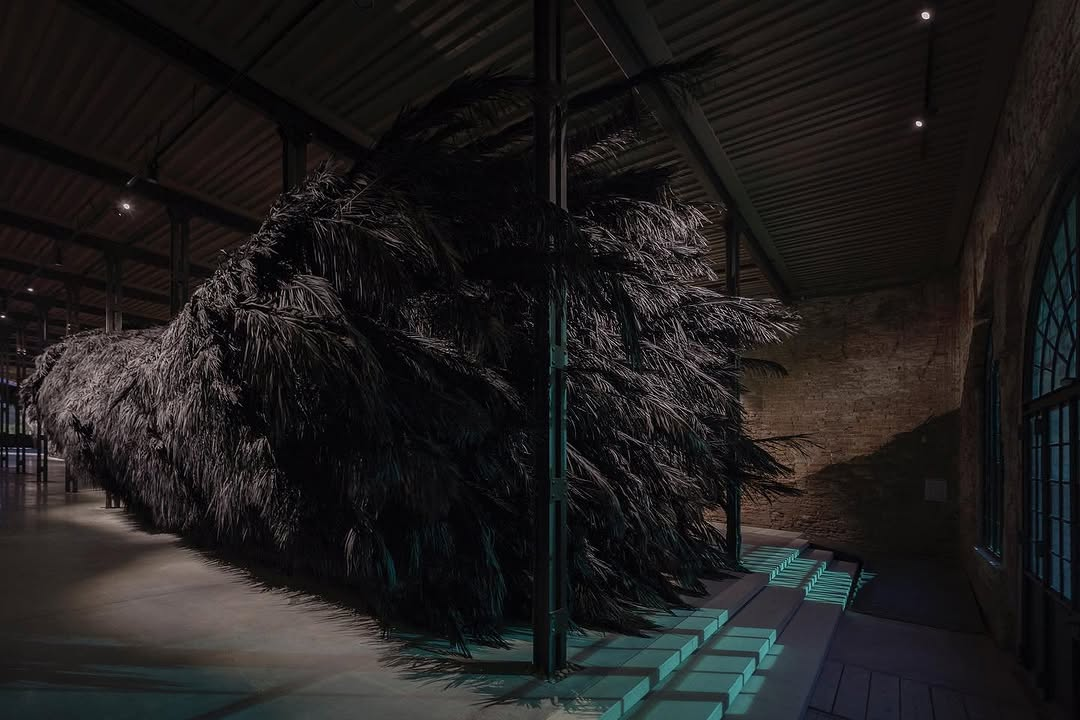
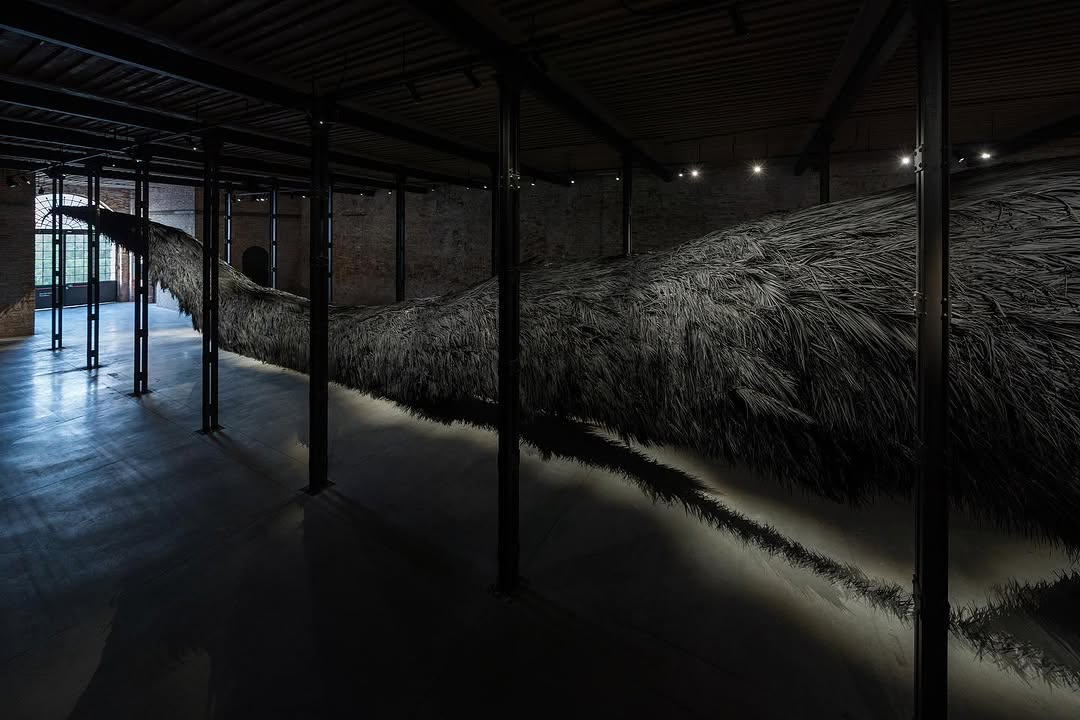
The Teaching Tree is Muhannad Shono’s sculptural installation for the National Pavilion of Saudi Arabia at the 2022 Venice Biennale, where he transforms a childhood memory of censorship into a large-scale meditation on imagination and resistance. The work begins with the punitive line once drawn through figures in Saudi classrooms, then reclaims that same gesture as the starting point for growth, turning suppression into a living act of creative defiance.
Made with palm fronds, pigment, pneumatics, and a metal structure, the installation appears as a breathing, branching form built from charred material that refuses finality. Its tree-like body becomes both a personal timeline and a wider reflection on Saudi transformation, suggesting that attempts to silence imagination can instead make it stronger, more fertile, and impossible to contain.
"The Teaching Tree is the embodiment of the living imagination, an act of creative resistance made stronger in spite of attempts to limit our imagined worlds."
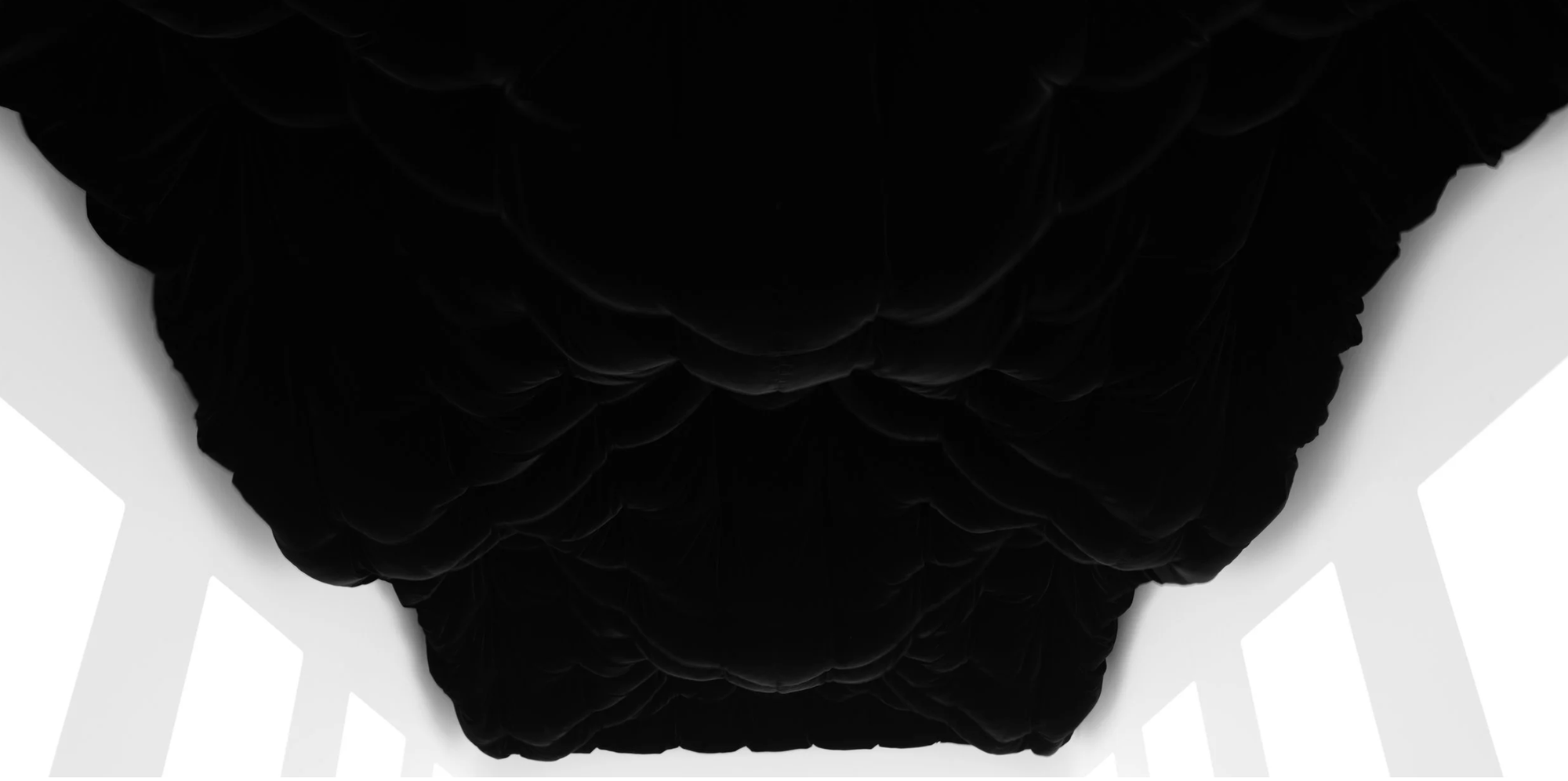
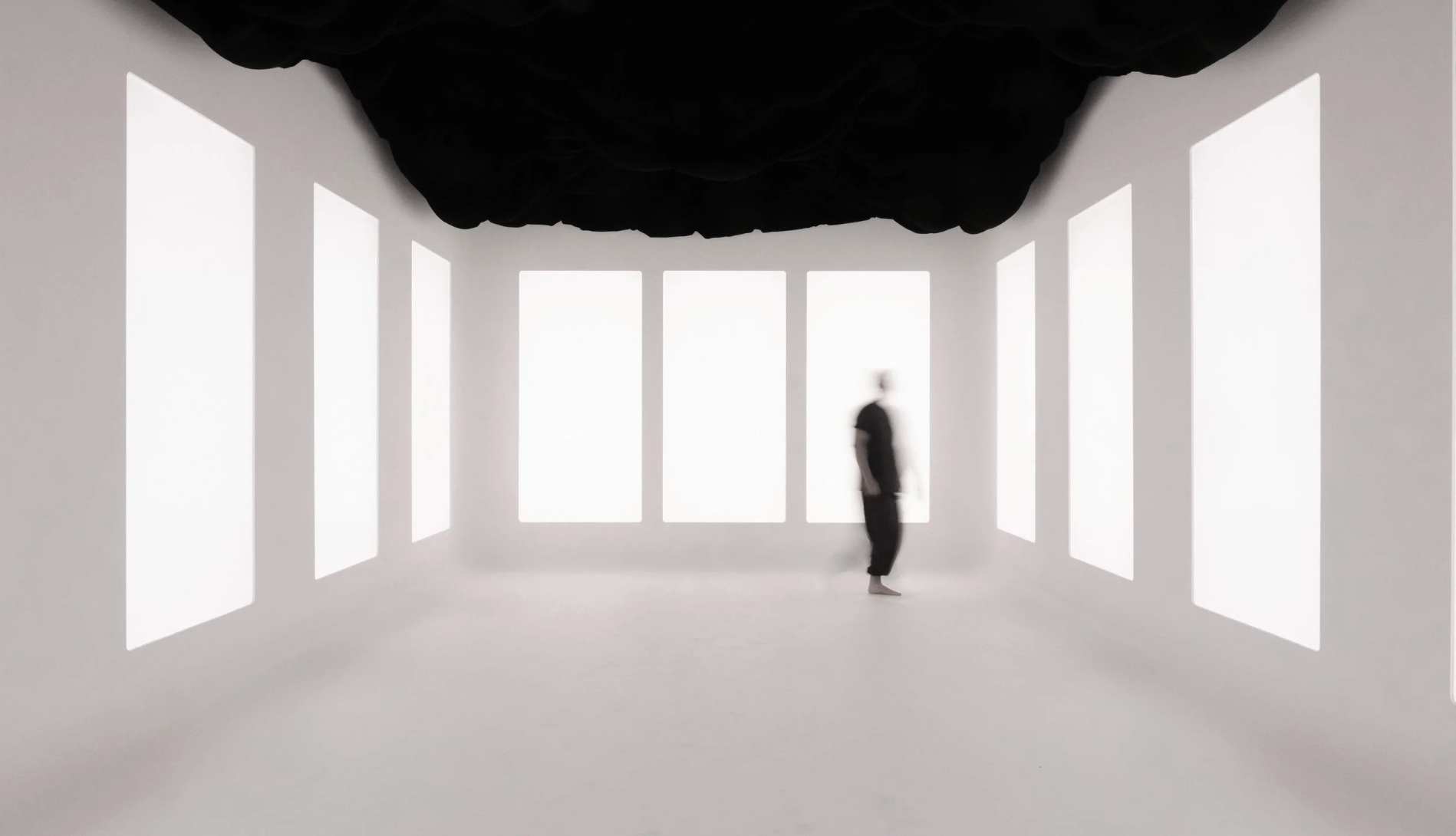
Absent Sky is Muhannad Shono’s installation for Noor Riyadh 2023, where he turns darkness into something active rather than empty. The work is described as an encounter with absence, creating a space where light and void meet, and where perception begins to loosen at the edges.
Rather than presenting darkness as stillness or lack, Absent Sky treats it as movement, presence, and unfolding force. The work suggests a space that bends, shifts, and folds into itself, allowing the unseen to become palpable through atmosphere, light, and scale.
Muhannad Shono’s work resonates now not just for its scale or beauty, but for how it meets the emotional reality of the present. In a time that demands clarity and fixed identities, he offers something else: the value of uncertainty, interruption, and the unseen.
A decade-spanning view of his practice feels especially timely now, as his work gains wider international attention while revealing a deeper internal continuity. Rather than resolving meaning, Shono’s practice invites us to sit within it, suggesting that honesty lies not in answers, but perhaps in embracing what remains unresolved.
Discover more artist stories at KSAArt.com.