Dana Awartani Builds a Monument to Memory at the Venice Biennale 2026
Explore Dana Awartani’s 61st Venice Biennale work and how clay, craft, and memory preserve endangered Arab cultural heritage.


Explore Dana Awartani’s 61st Venice Biennale work and how clay, craft, and memory preserve endangered Arab cultural heritage.
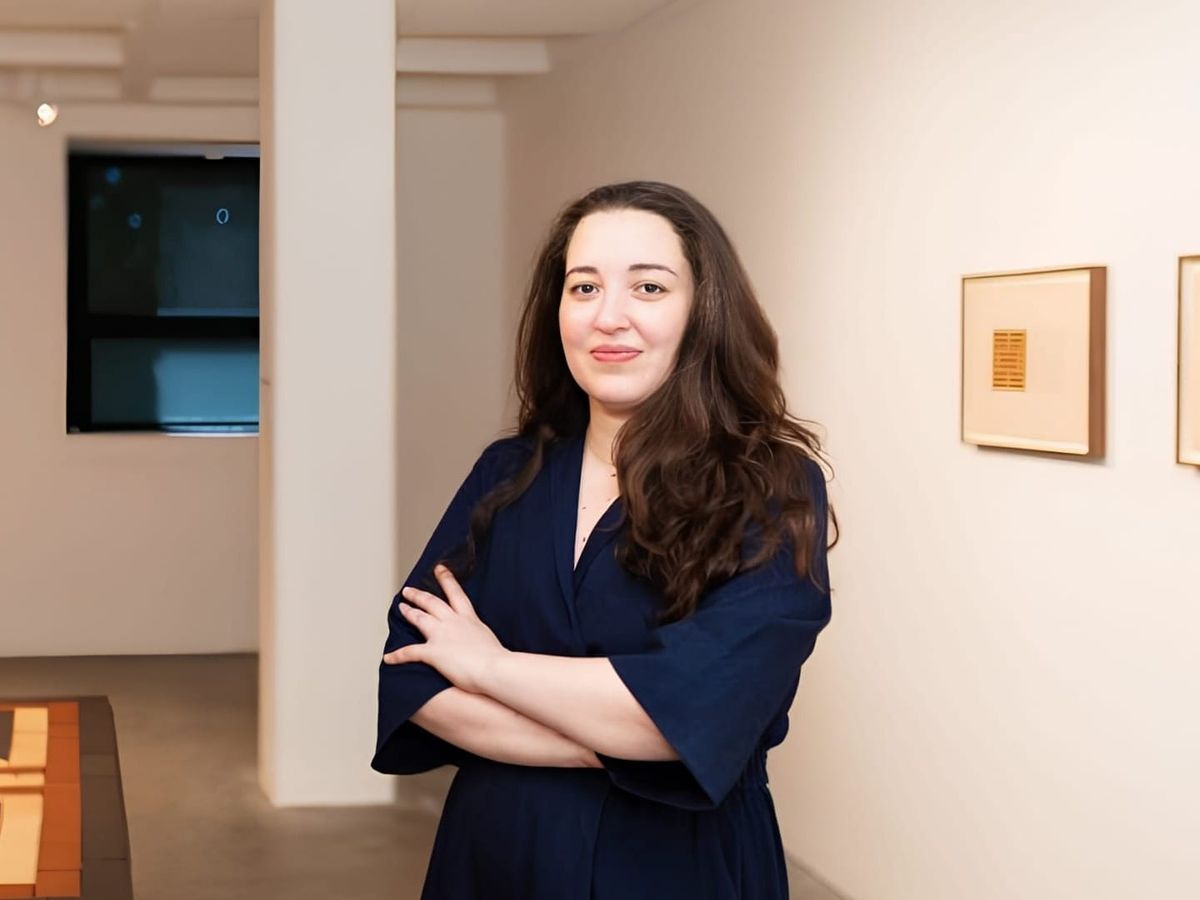
“These sites are not merely stones, they are vessels that carry our stories and identities across time.”
At the 61st International Art Exhibition of La Biennale di Venezia, Saudi-Palestinian artist Dana Awartani turns clay, craft, and collective memory into one of Saudi Arabia’s most emotionally charged international art presentations to date. Presented by the National Pavilion of Saudi Arabia from 9 May to 22 November 2026, "May your tears never dry, you who weep over stones" is more than a monumental installation. It is an act of mourning, preservation, and cultural witness, rooted in the fragile beauty of places across the Arab world that have endured destruction through conflict and violence.
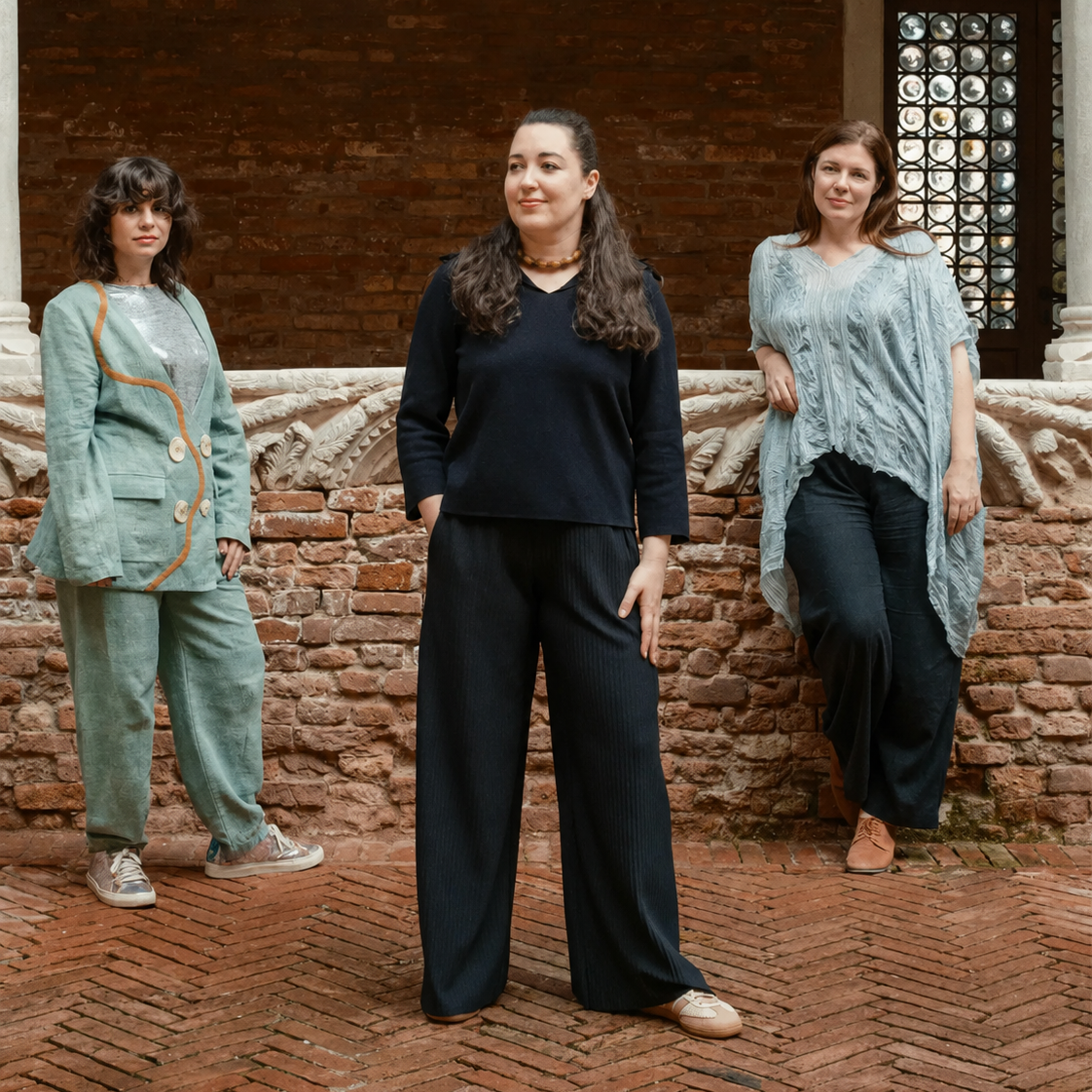
Curated by Antonia Carver with assistant curator Hafsa Alkhudairi, the work marks Awartani’s most ambitious project yet. It stretches across the entire pavilion floor, inviting visitors not simply to look, but to walk through a landscape of memory.
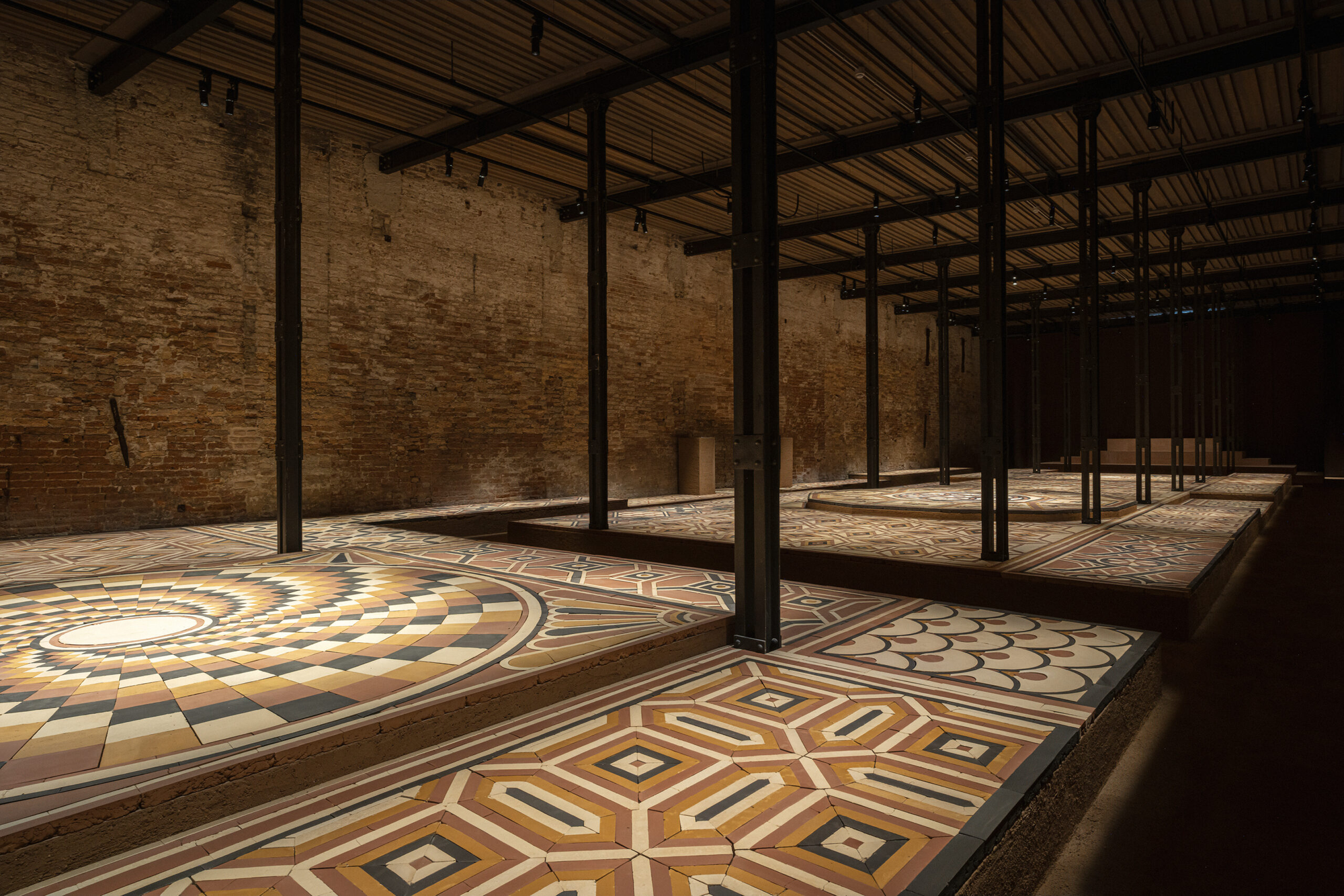
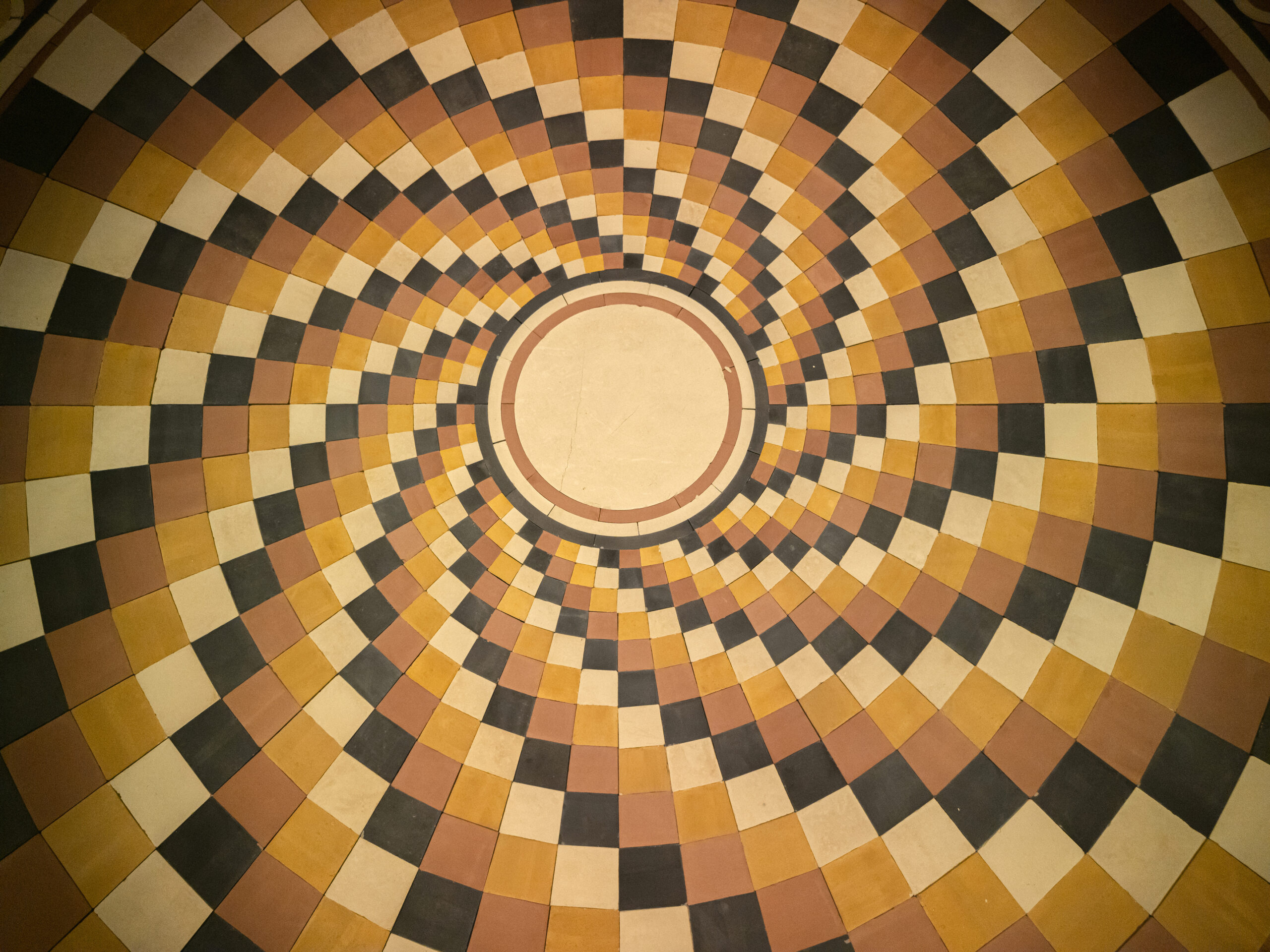
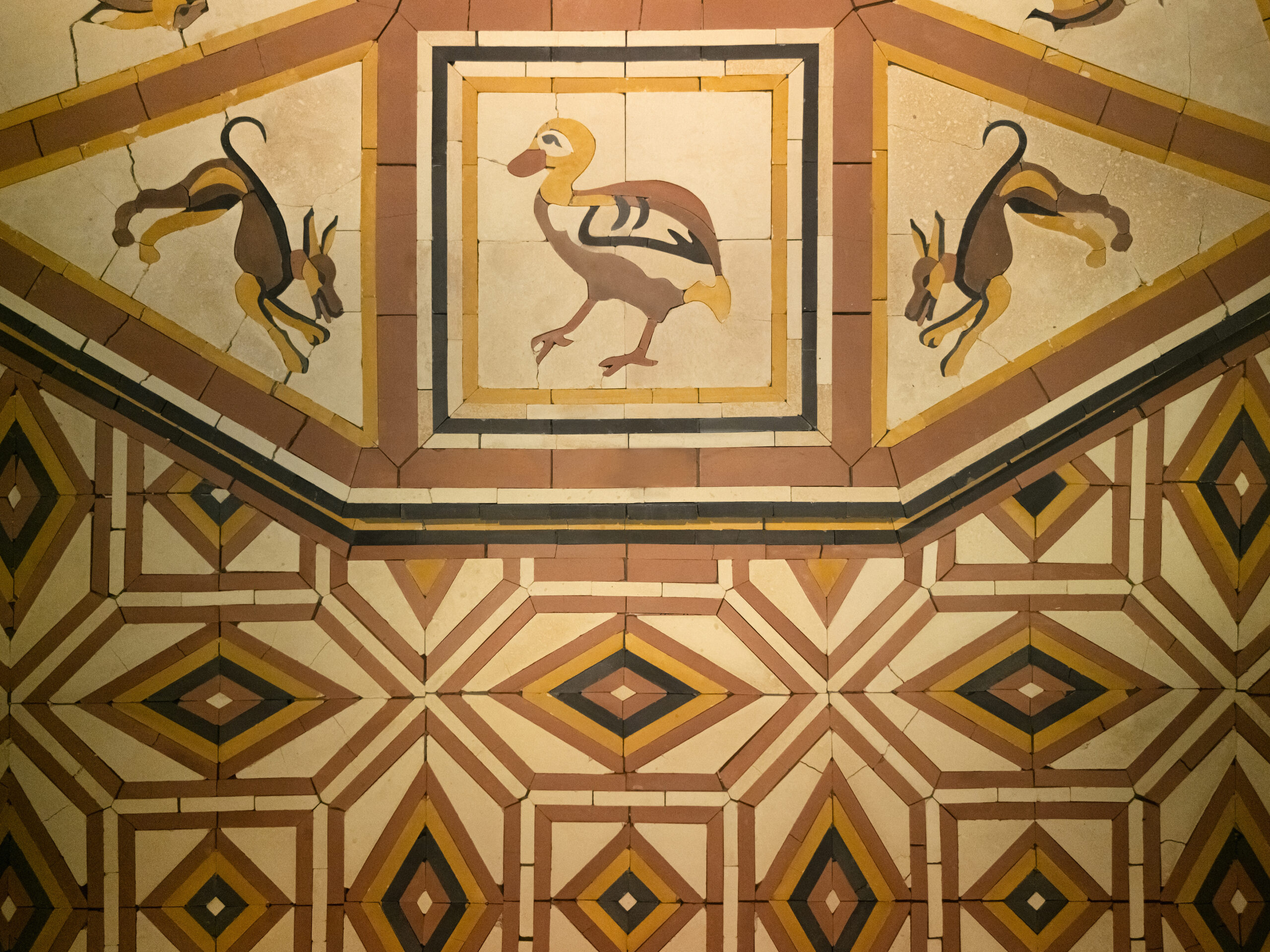
Dana Awartani’s installation transforms the Saudi Pavilion into an imagined archaeological site. Across the floor, more than 29,000 sunbaked clay earth bricks form a delicate field of geometric, floral, and faunal patterns inspired by mosaic traditions from Syria, Lebanon, and Palestine. These are not decorative references. They are fragments of shared cultural inheritance.
The work draws attention to histories that span nearly three millennia, revealing how deeply connected Arab, Mediterranean, and wider regional visual cultures have always been. Mosaics, which originated in Mesopotamia and evolved through Greek, Roman, Byzantine, and modern contexts, become a language through which Awartani speaks about continuity, rupture, and survival.
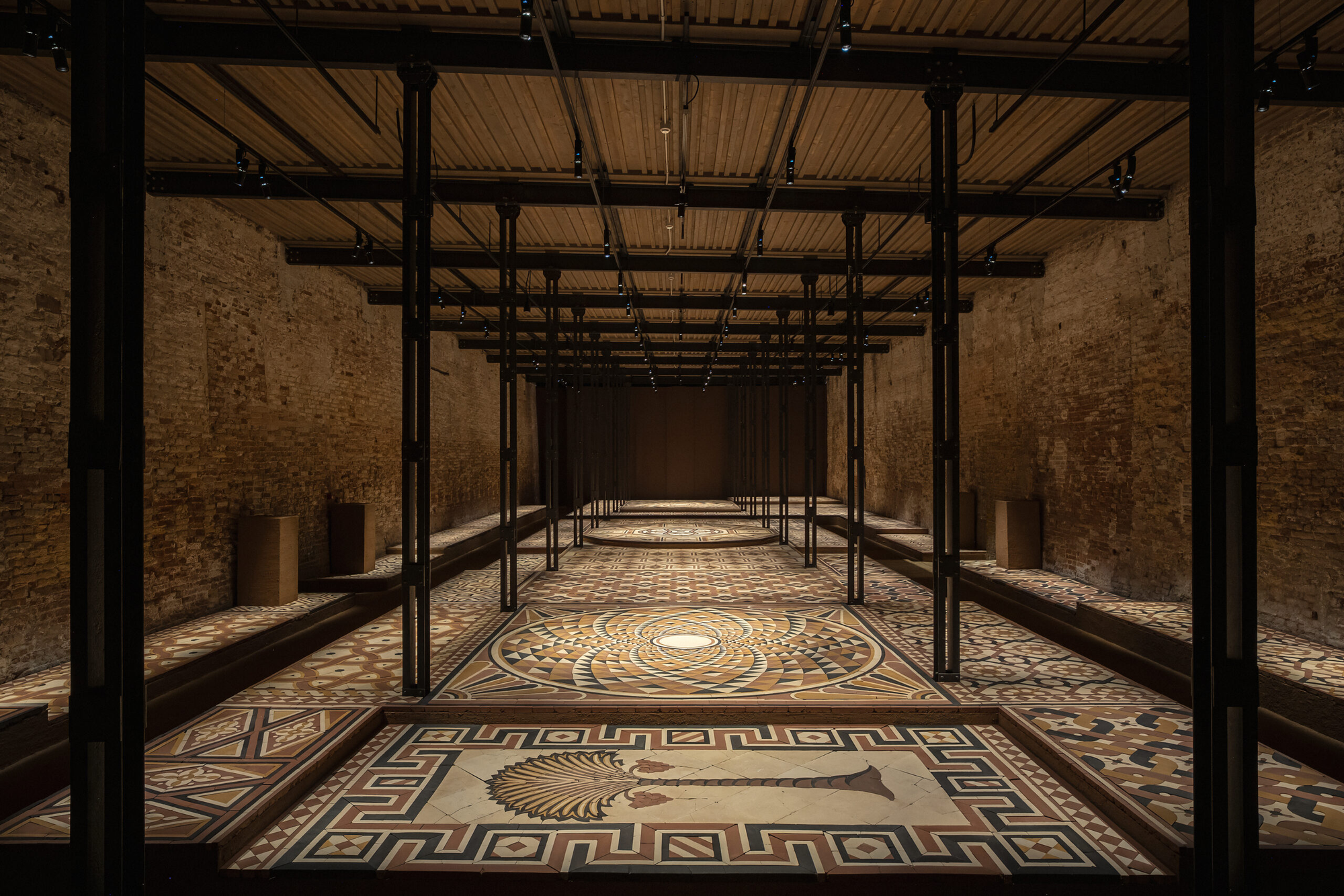
Visitors move through earthen pathways, encountering designs that appear ancient and immediate at once. The floor holds beauty, but also vulnerability. The bricks are made without binding agents, which means they will crack as they dry. In that slow fracture, Awartani makes loss visible. The cracks are not failures. They are part of the work’s truth.
Created over nearly 30,000 artisan hours, the installation is also a profound statement on labor, care, and transmission. Awartani worked with Saudi-based artisans and master craftspeople at a studio site in the mountains outside Riyadh, sourcing four differently hued clay earths from distinct geographies across the Kingdom. This Saudi material grounding is essential. The work may speak of Syria, Lebanon, Palestine, and the wider Arab world, but it is physically born from Saudi land and shaped through local knowledge.
Awartani’s practice has long honored craft as a living archive. Here, collaboration is not an afterthought. It is the structure of the work itself. The idea of “many hands” becomes both method and message, recognizing artisans as custodians of knowledge whose skills carry memory across generations. In an age of speed, mass production, and digital disappearance, Awartani chooses slowness. She chooses touch. She chooses the communal intelligence of making together.
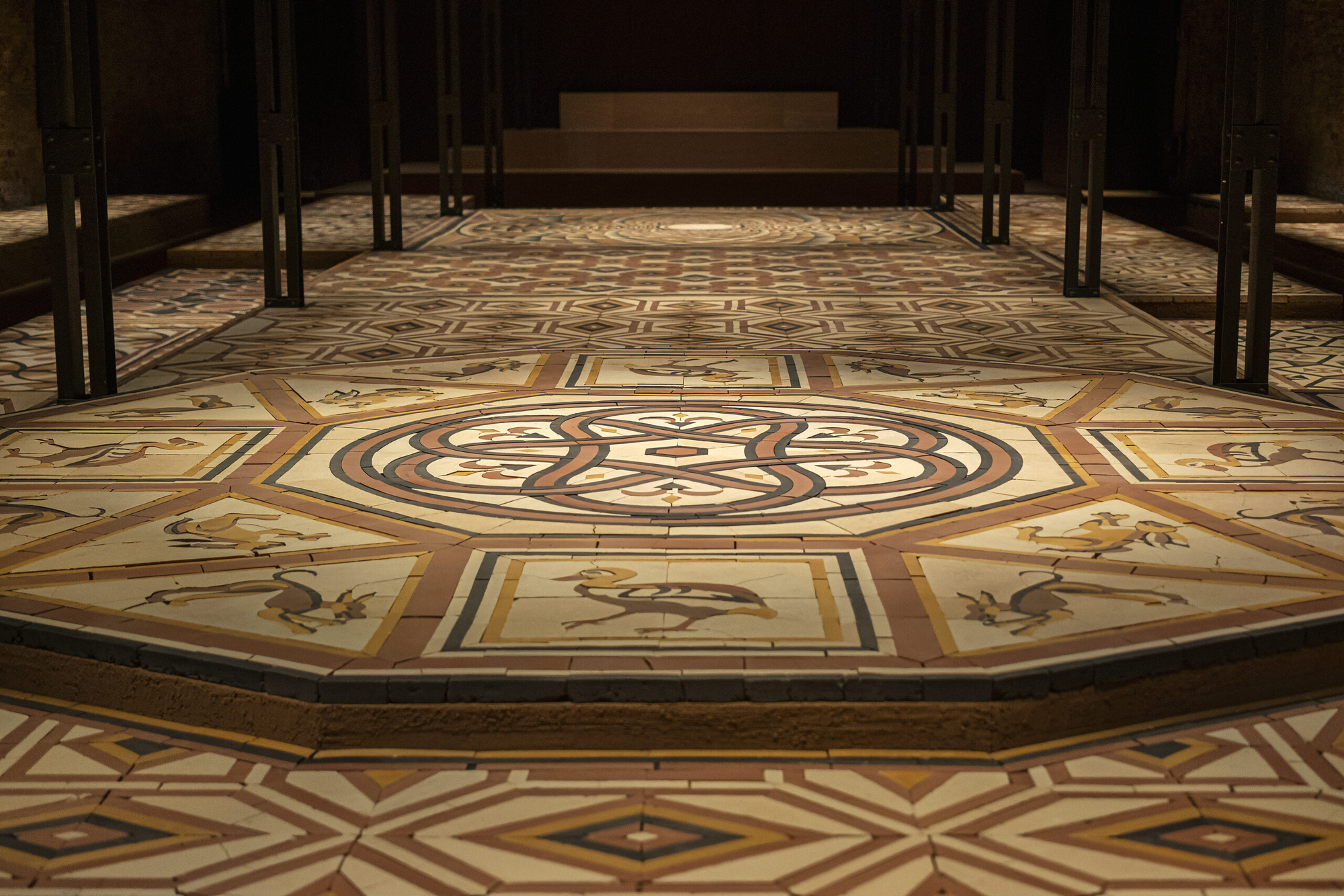
The title May your tears never dry, you who weep over stones borrows from classical Arabic poetry, where pausing before ruins is a contemplative act. To stop before stones is not to indulge nostalgia. It is to remember, to grieve, and to recognize the human lives and histories held within material remains. Just as tears are never just tears, stones are never neutral, especially when they lie in ruins. Awartani’s installation is not a replica of a single place, but an imagined archaeological site shaped by research into mosaic traditions, techniques, and histories across geographies and generations.
Drawing from twenty-three sites of cultural significance, with histories spanning three millennia, the work gathers references from places now imperiled through man-made action. Some have been continuously inhabited across centuries. Others exist today as archaeological sites. Many are recognized as under threat by bodies including UNESCO and the ALIPH Foundation. In this context, the clay floor becomes more than an artwork. It becomes a field of witness. Each motif carries a trace of shared cultural memory, reminding us that these histories predate and transcend today’s borders.
Awartani describes the referenced sites as vessels carrying stories and identities across time. For her, heritage is not separate from people. It is not static, distant, or merely historical. It is emotional, political, and alive.
The National Pavilion of Saudi Arabia in Venice has become an important platform for the Kingdom’s evolving visual arts scene. With Awartani’s commission, that platform takes on a deeply regional and humanitarian voice. This is not art that seeks spectacle for its own sake. Its scale is immense, but its emotional register is intimate. It is a work of quiet force, aligned with the 2026 Biennale theme In Minor Keys, where subtlety, vulnerability, and care carry profound weight.
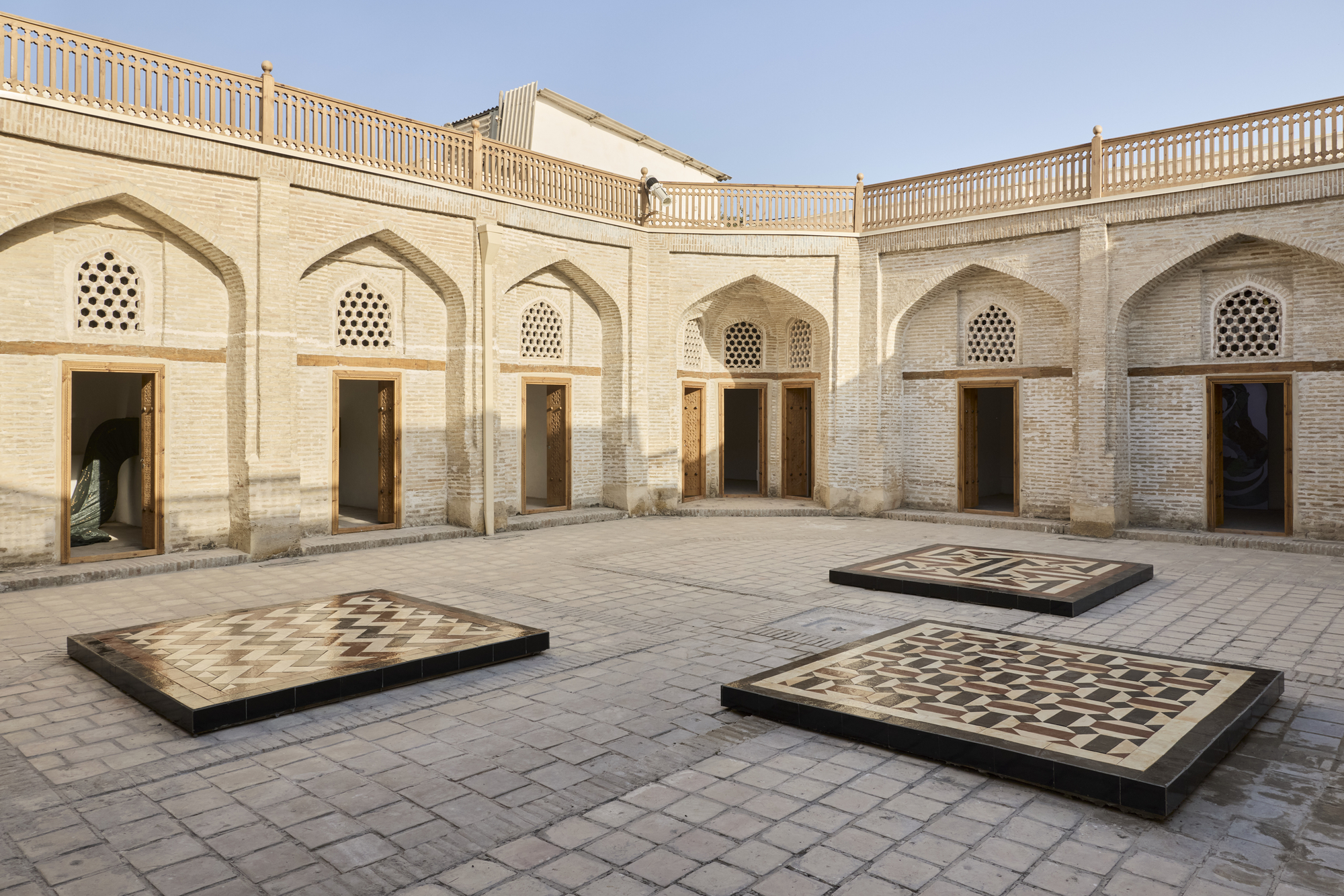
Dina Amin, CEO of the Visual Arts Commission, described the commission as a collective achievement across artistic, artisan, and research practices. That language matters. Awartani’s pavilion does not present Saudi contemporary art as isolated from its neighbors. Instead, it positions the Kingdom as part of a larger cultural conversation about memory, inheritance, and the fragile responsibility of preservation.
"A result of deep collaboration across artistic, artisan and research practices it’s a tremendous collective achievement that thinks about our collective history as humanity, and the cultural legacy that we as humankind have left for ourselves and for future generations."
– Dina Amin, CEO of the Visual Arts Commission
Awartani has long worked at the meeting point of Islamic geometry, traditional craft, architecture, and contemporary conceptual practice. Her art often considers what is damaged, what is inherited, and what can be restored, not always physically, but symbolically and spiritually. In Venice, that language expands.
The installation is monumental, but it is not imposing. It does not shout. It asks viewers to slow down and enter a field of fragile patterns, each one shaped by research, labor, and remembrance. It honors the physical beauty of endangered sites while acknowledging the violence that has marked them.
Assistant curator Hafsa Alkhudairi describes the exhibition as a reminder of storytelling’s power, between artist and artisans, curators and audiences, poets of the past and viewers of the present. This is one of the work’s most moving dimensions. It understands heritage not only as architecture, but as narrative. Not only as material, but as memory.
May your tears never dry, you who weep over stones matters because it refuses to separate beauty from grief. It reminds us that cultural heritage is not a luxury. It is evidence of who we are, how we lived, what we loved, and what we owe to those who came before us. When heritage is destroyed, the loss is not only architectural. It is emotional, historical, and human.
Through clay from Saudi Arabia, mosaic memories from the Levant, and the hands of dozens of artisans, Dana Awartani creates a work that feels both ancient and urgent. It stands as a plea for empathy, but also as a call to action. In Venice, she does not simply represent Saudi Arabia. She represents a larger cultural conscience, one that understands stones as vessels, ruins as witnesses, and craft as a form of care.
Discover more art stories reshaping Saudi culture at KSAArt.