Ali AlHamoud (Alif): Sculpting Arabic Letters in Wood and Granite
Explore Saudi artist Ali AlHamoud (Alif) from Tarout Island calligraffiti to carved wood and granite, including his spoon-inspired turn to sculpture, shaped by emotion, spirituality, and connection.
“I am an artist who is insane to the point of sanity, and sane to the point of insanity.”
In Ali AlHamoud’s world, that contrast is a working method. The “insane” part is the leap of faith it takes to treat a single Arabic letter as a universe. The “sane” part is what happens next: the discipline, the tools, the patience, and the precision that turn language into something weight-bearing.
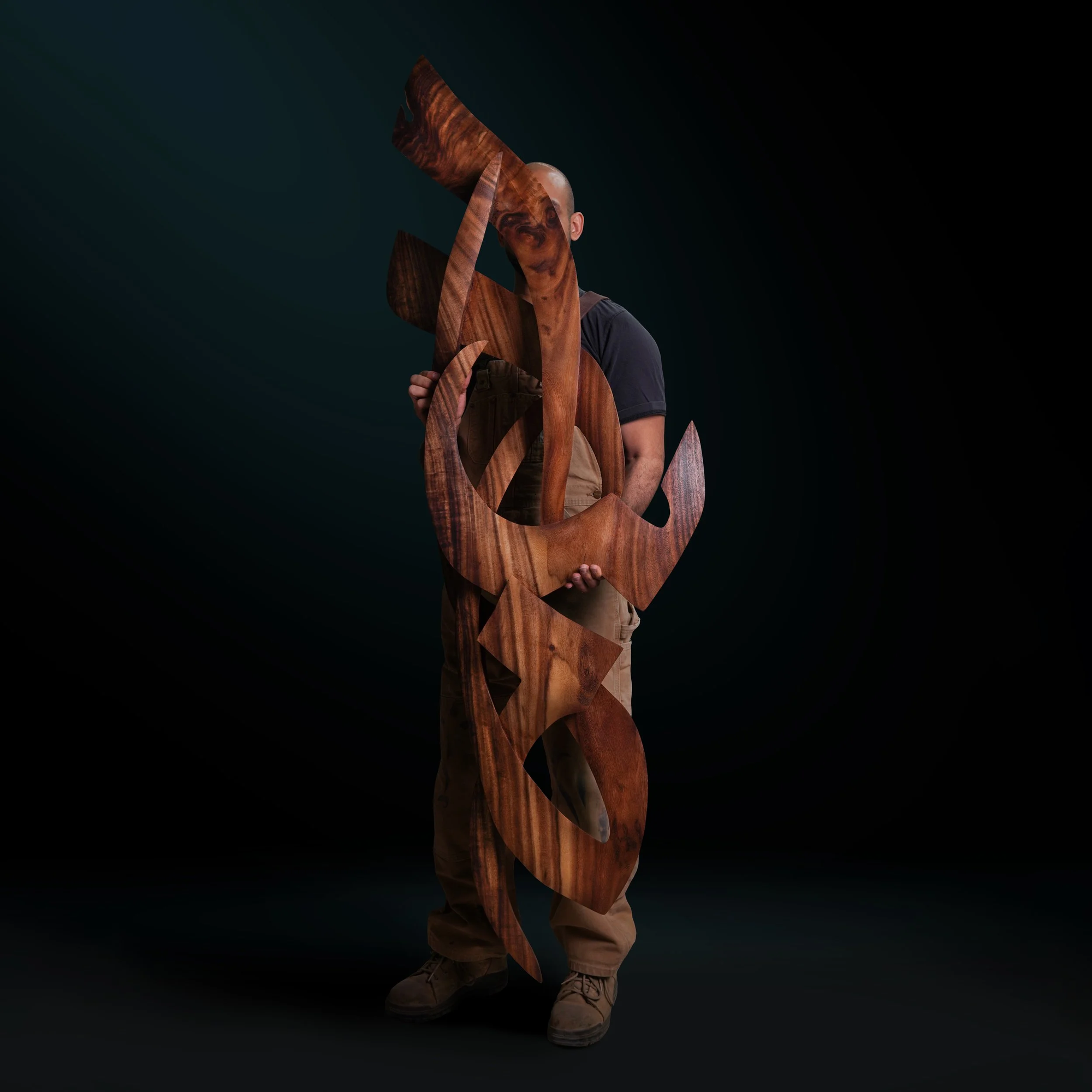
Known professionally as Alif, the Saudi contemporary calligrapher and sculptor moves between calligraffiti, wood sculpture, and monumental stone, transforming Arabic calligraphy into sculptural forms that carry emotions, spirituality, and connection. His letters are not simply written. They are lifted, carved, and shaped until meaning becomes physical, something you can circle, touch, and feel lingering in the air.
Tarout Island and the First Public Works
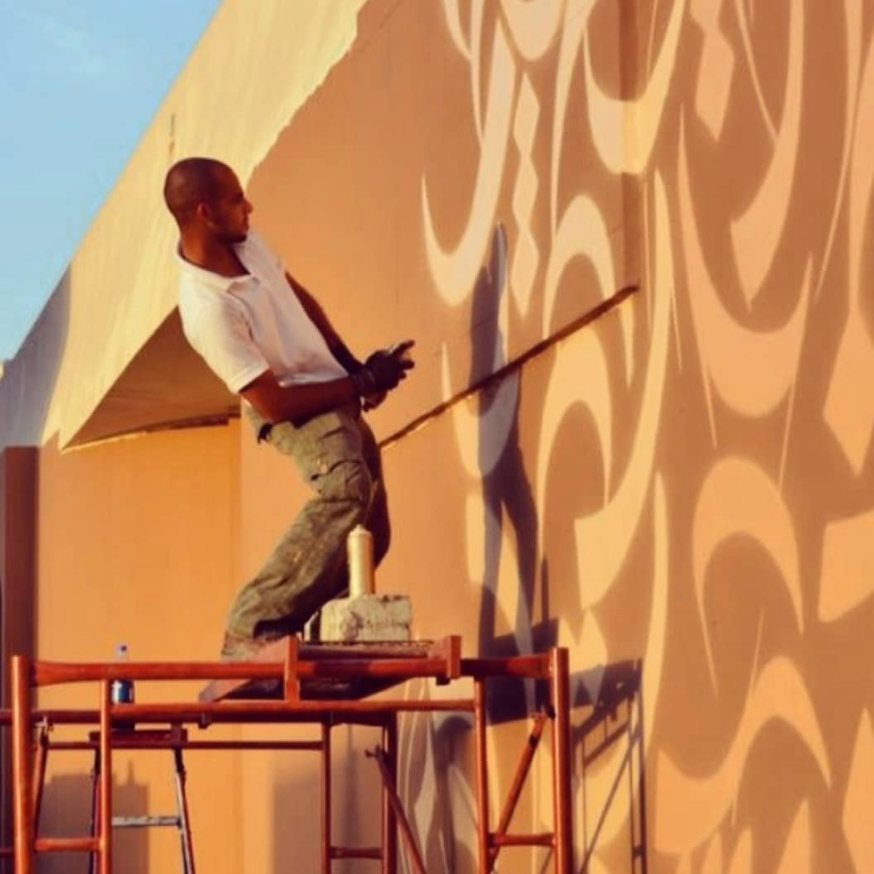
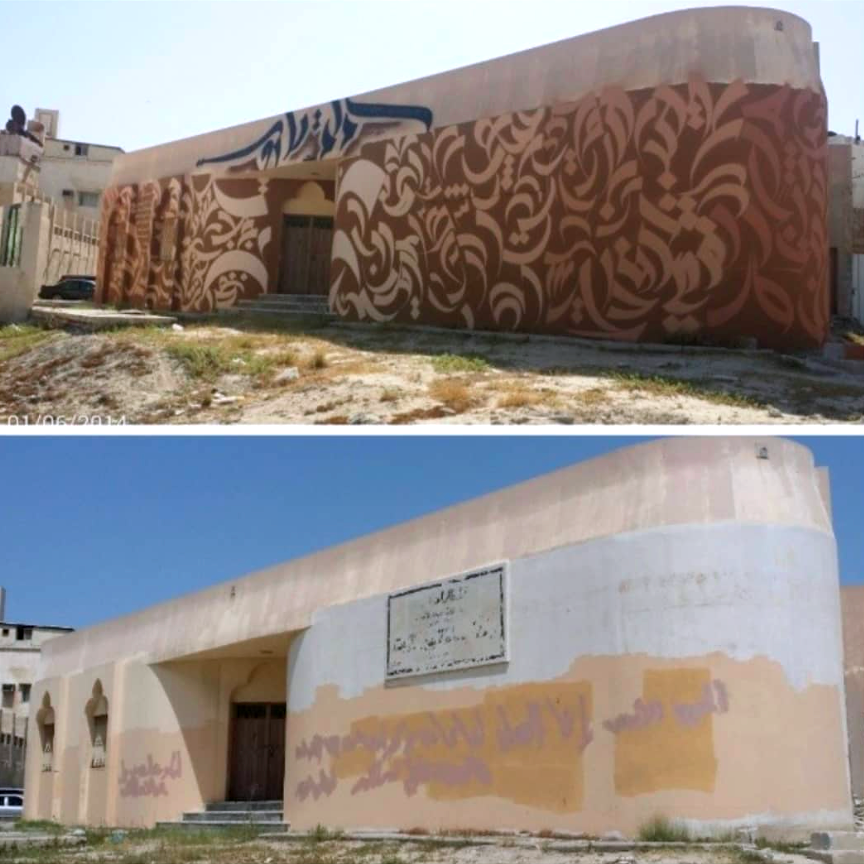
Before the gallery lighting and finished installations, there is Tarout Island, a small coastal island off Saudi Arabia’s Eastern Province near Qatif. Its close-knit communities and slower pace shape Alif’s approach to making through patience, restraint, and attention to process. His relationship with public space began there in 2014, when he completed one of his first major calligraffiti works on the walls of Hammam Tarout, translating the poem Al-Awda (The Return) by poet Adnan Al-Awami into large-scale Arabic calligraphy. Spanning more than 120 square meters and completed over ten days, the project treated the wall as a cultural surface carrying language, memory, and place.
Today, while Tarout remains his grounding point, Alif’s practice has expanded internationally through his role as an artist-in-residence atPOUSH in France, where his sculptural language continues to grow in dialogue with a wider global context, without losing its rootedness in Arabic form and material discipline.
Why Wood Became Central to His Practice
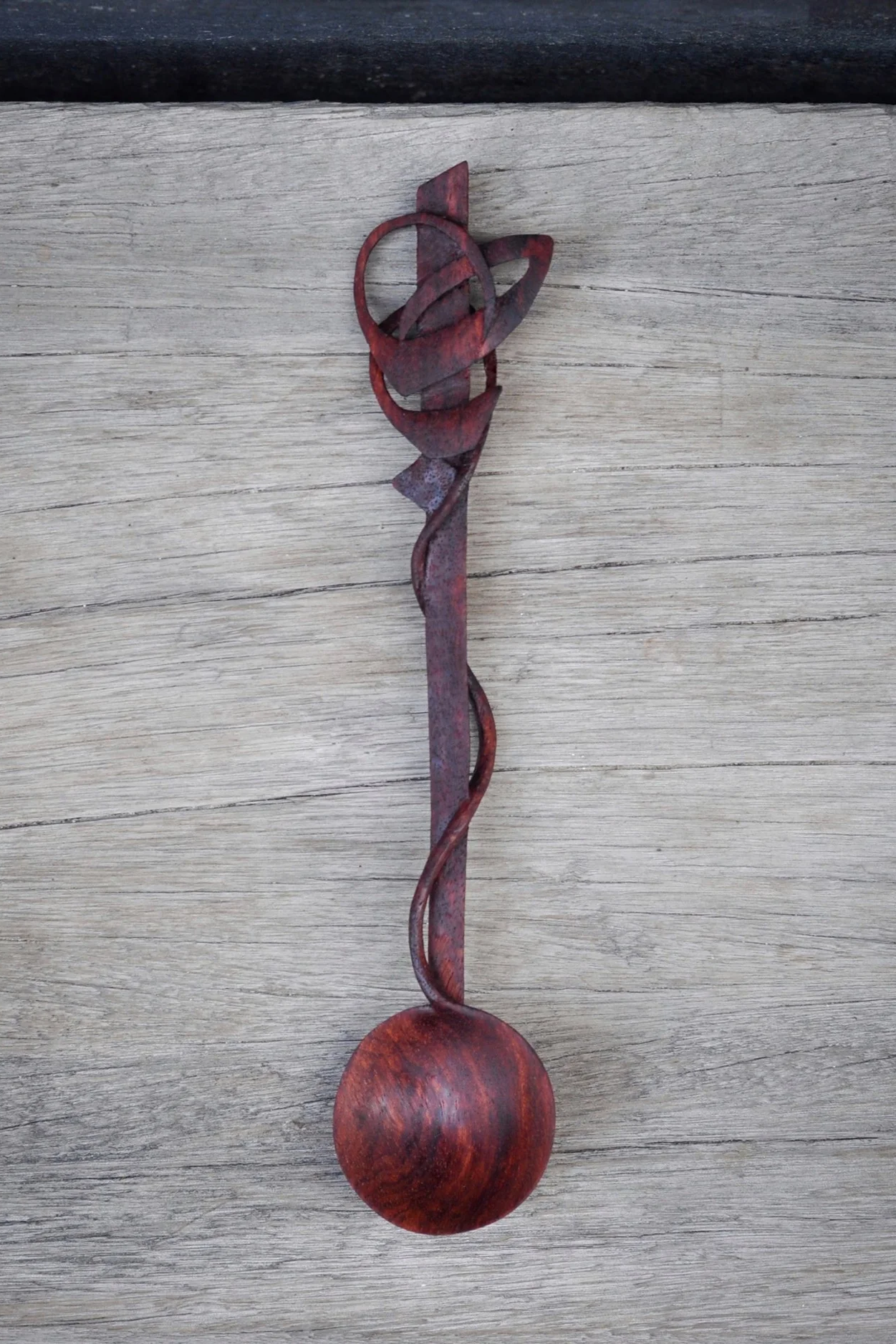
Ali AlHamoud began working with wood in 2018, drawn to it through a deeply personal impulse rather than a conceptual one. He often speaks about his love for cooking and feeding the people he cares about, describing it as a sacred act, creating something with no expectation of return, something that disappears the moment it is shared.
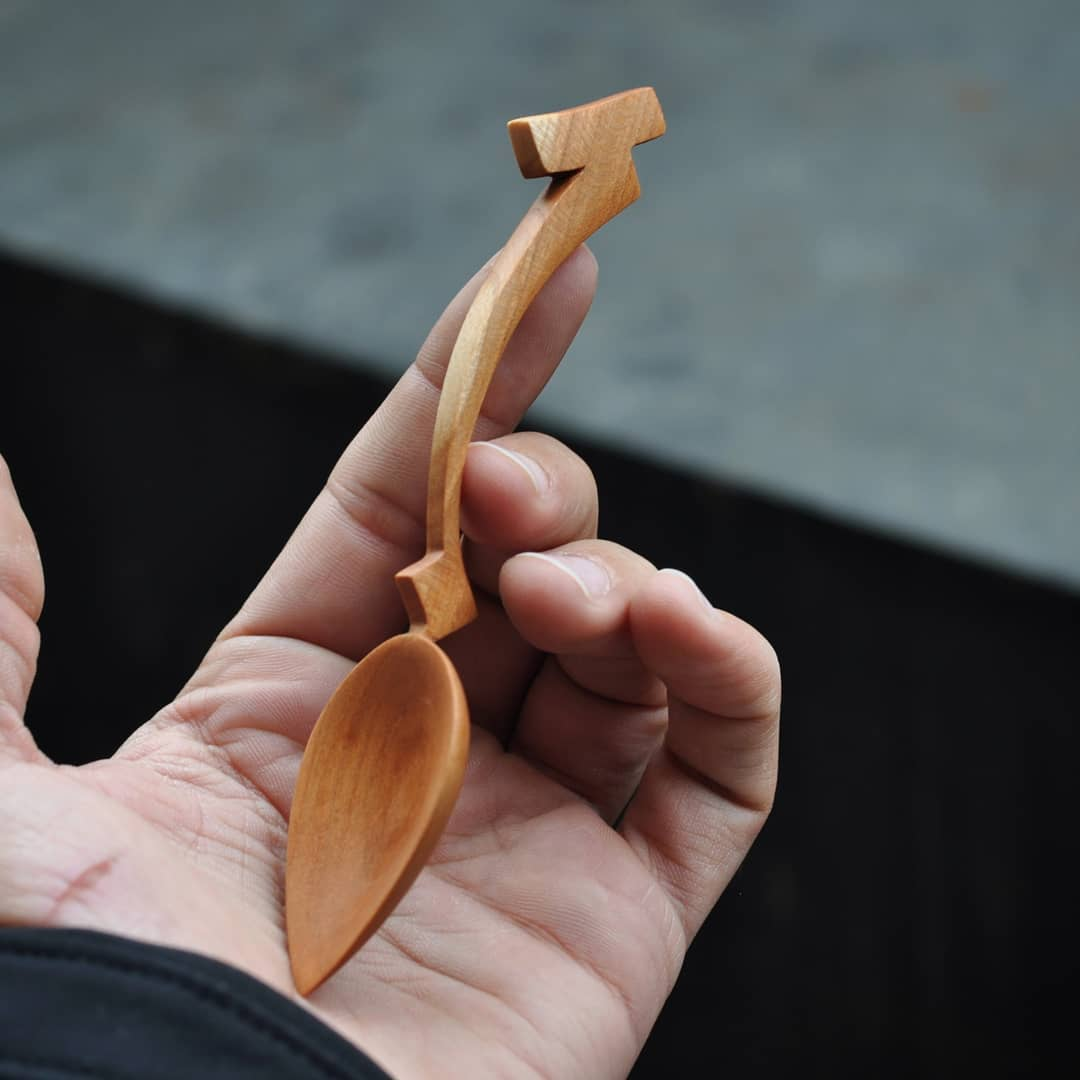
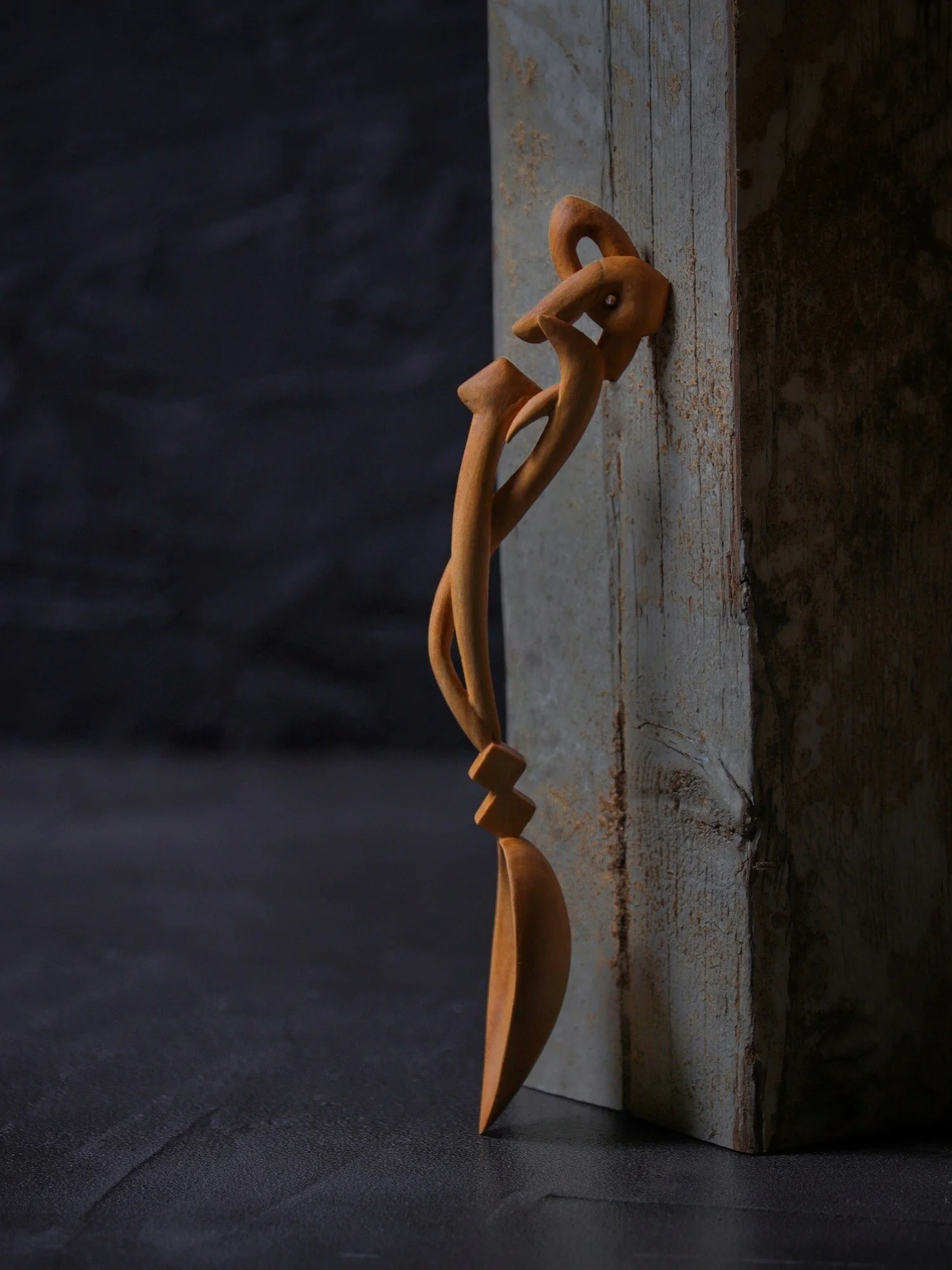
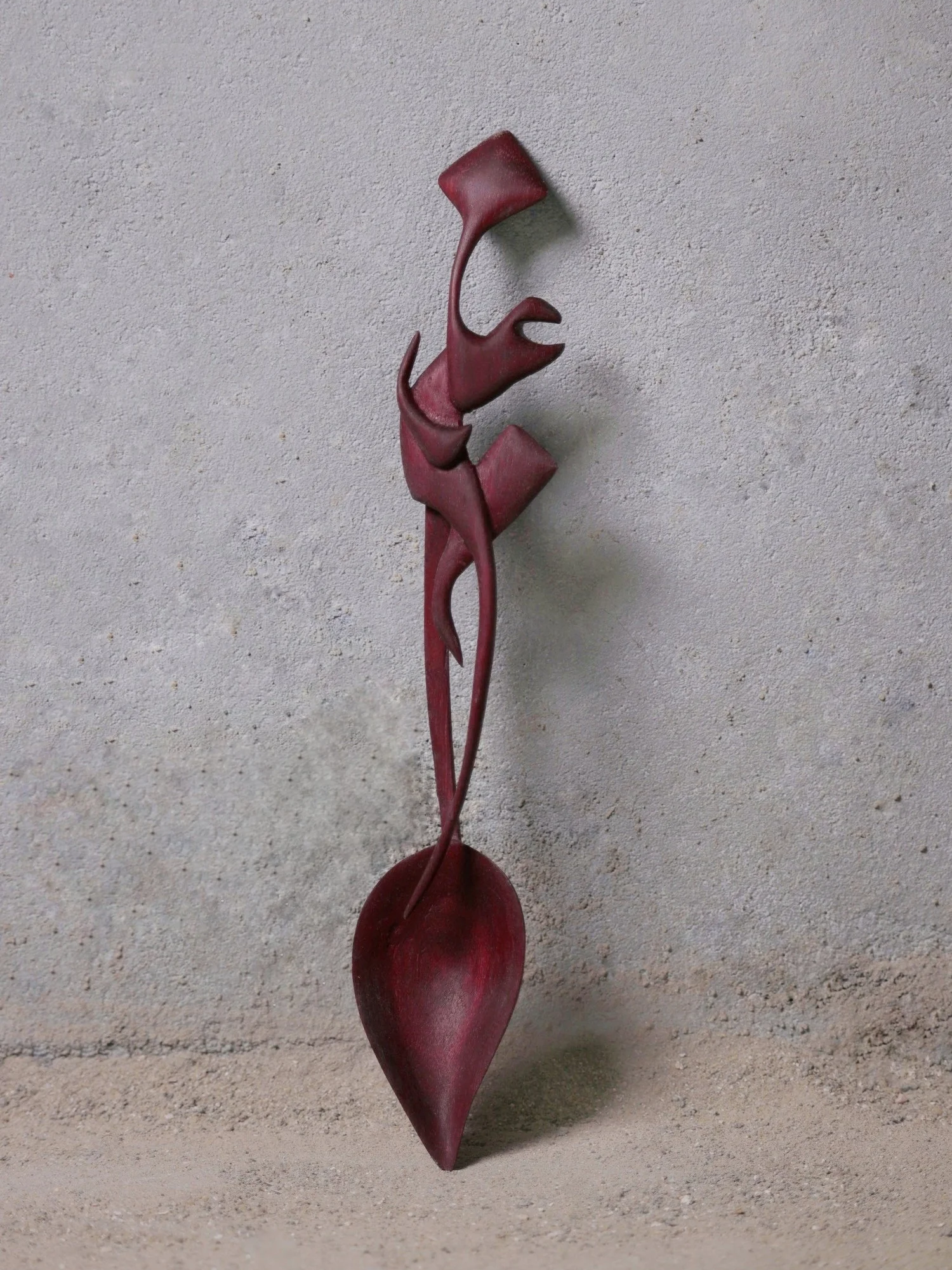
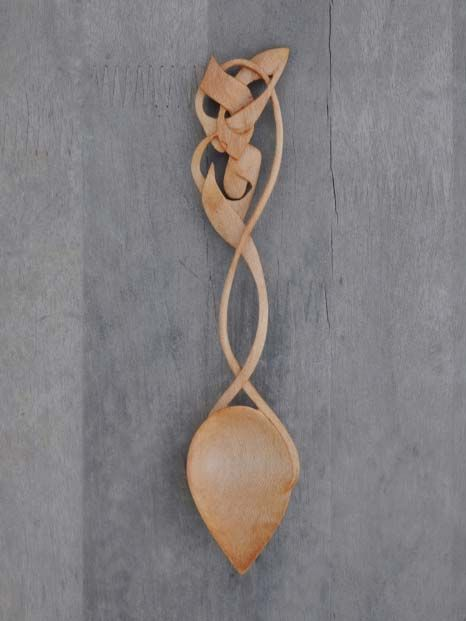
That way of thinking led him to carve a spoon, one of the simplest and most intimate tools of nourishment. Through that act, he discovered his relationship with the knife, and carving quickly became a passion. Wood, for him, offered resistance, warmth, and permanence all at once. It allowed the Arabic letter to move beyond the surface and into something that could be held, carried, and lived with. From that point on, wood became central to his practice, not as a medium of tradition, but as a material capable of holding emotion, spirituality, and connection.
Signature Work Spotlight
Ali AlHamoud's body of work reveals a steady evolution. Across different materials and scales, his sculptures trace a progression from intimate, hand-carved pieces to architectural forms, each reflecting a deeper engagement with language, emotion, and space.
Intimate Carvings and the Language of Love (2020 to 2022)
These pieces operate like emotional studies: precise and quietly intense.
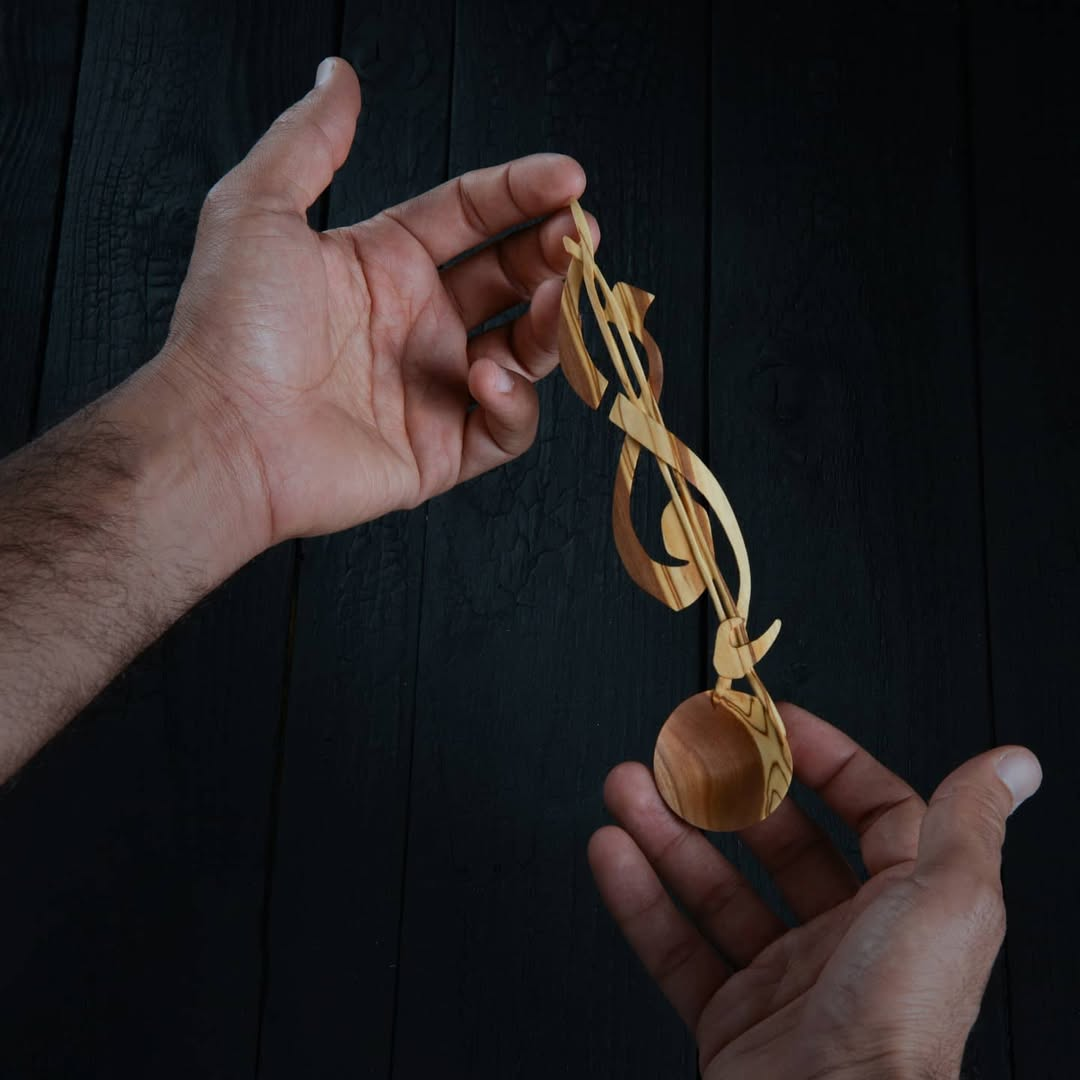
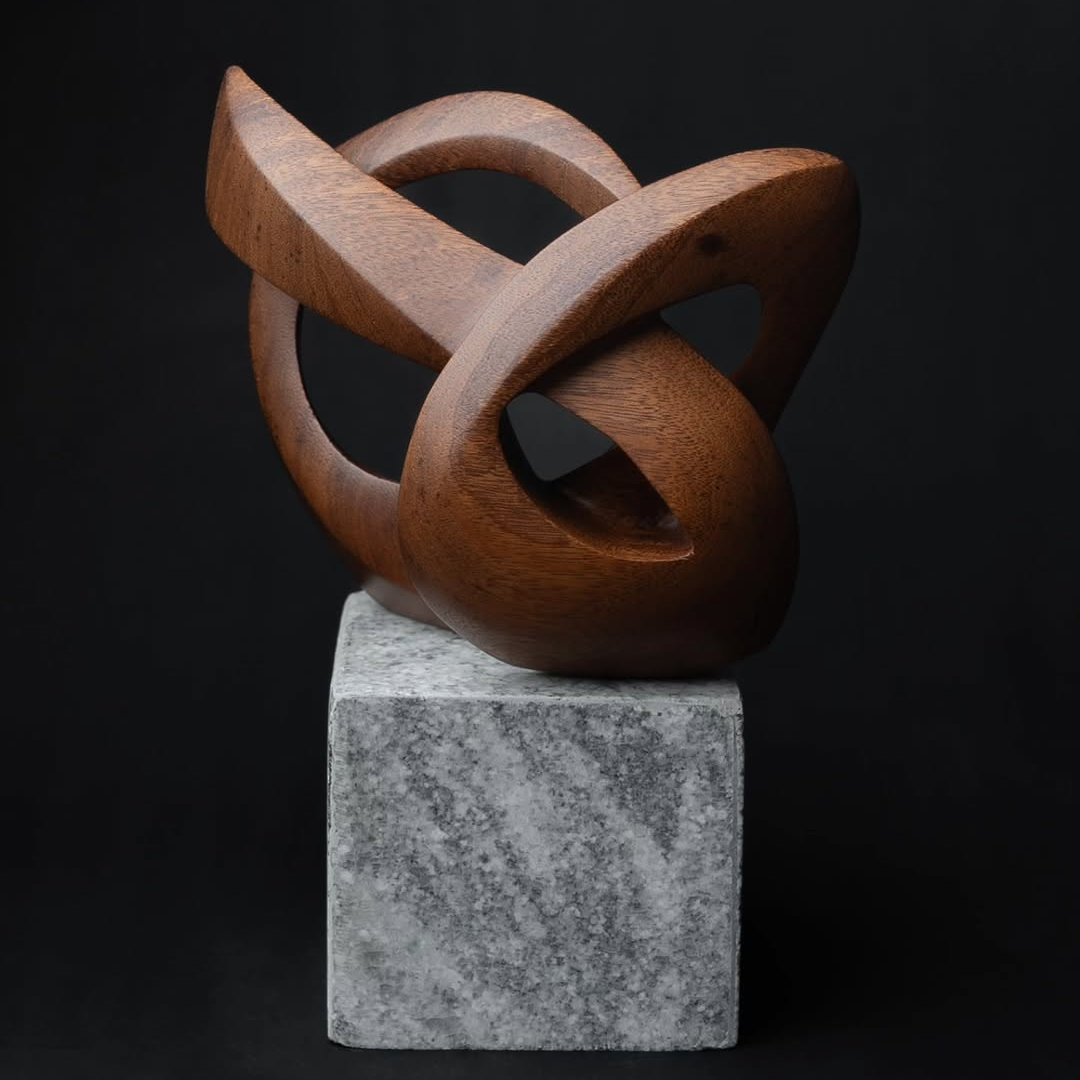
Huyam (2020), local olive wood
Hawa (2020), sycamore wood
Gharam (2020), purpleheart wood
These works operate at an intimate scale, produced as hand-carved wood pieces meant to be experienced up close. Made during a period when Alif was working with object-scale forms, they invite proximity rather than distance. The viewer notices the grain, edges, and balance of the letter, where emotion becomes tactile and spirituality unfolds quietly through material.
Wall Scale Presence in Wood (2021 to 2022)
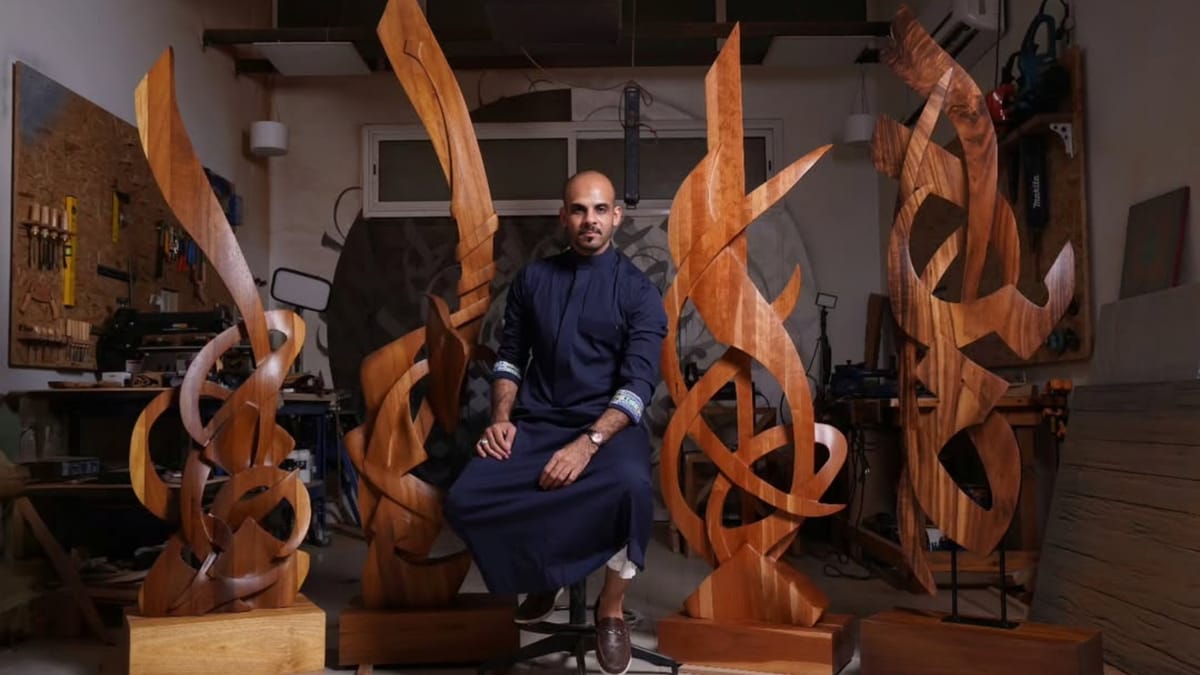
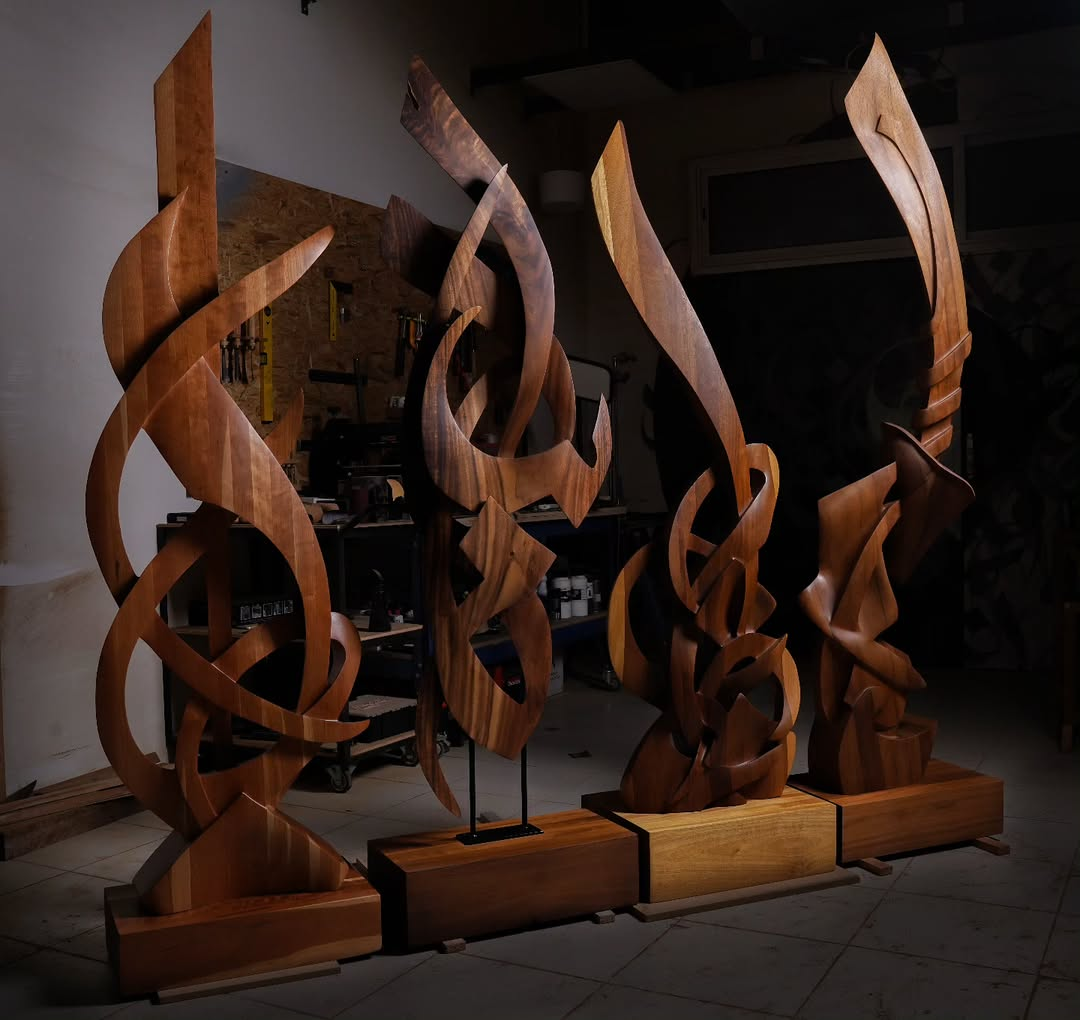
These are the works many audiences first recognize: tall, architectural letterforms that stand like bodies.
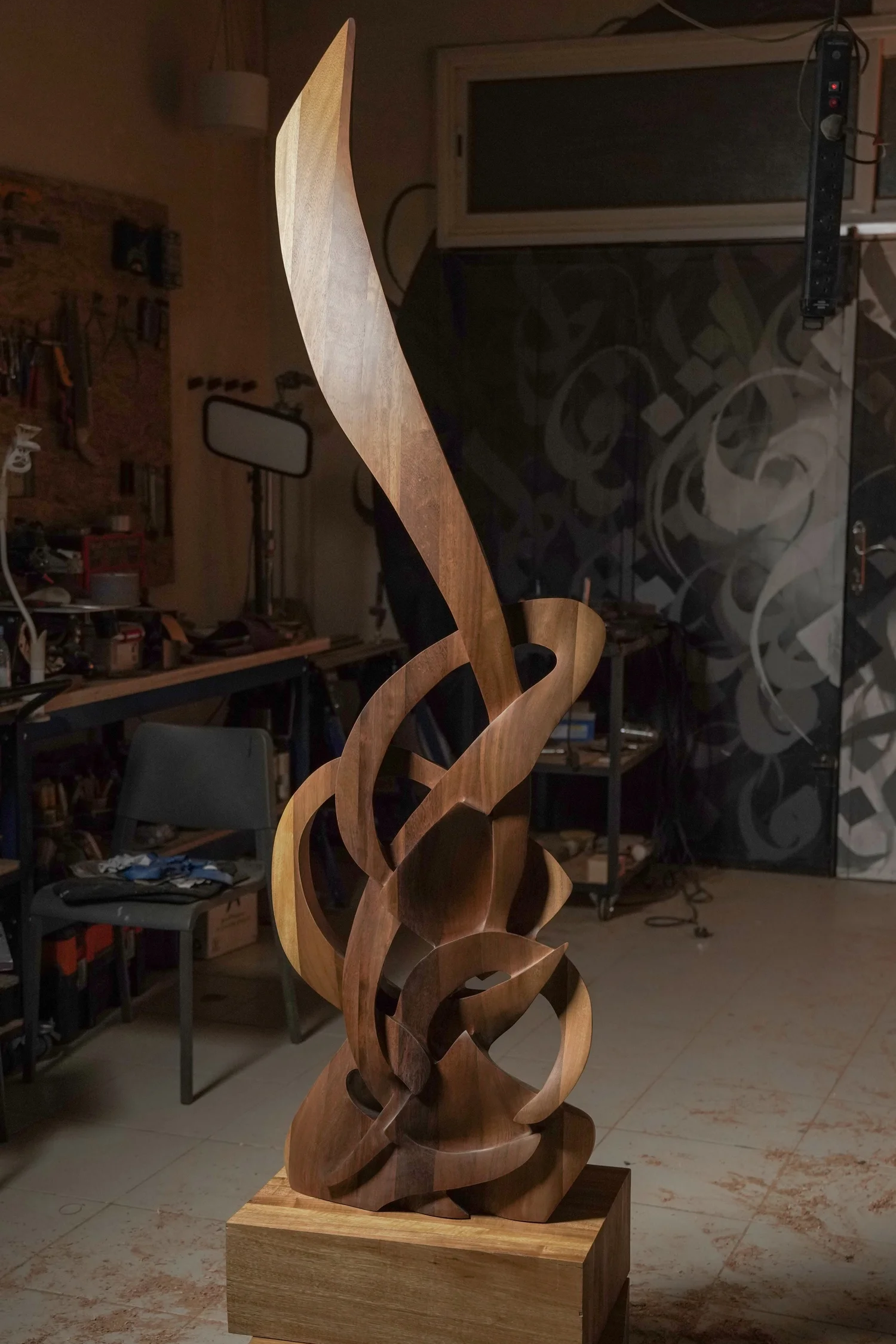
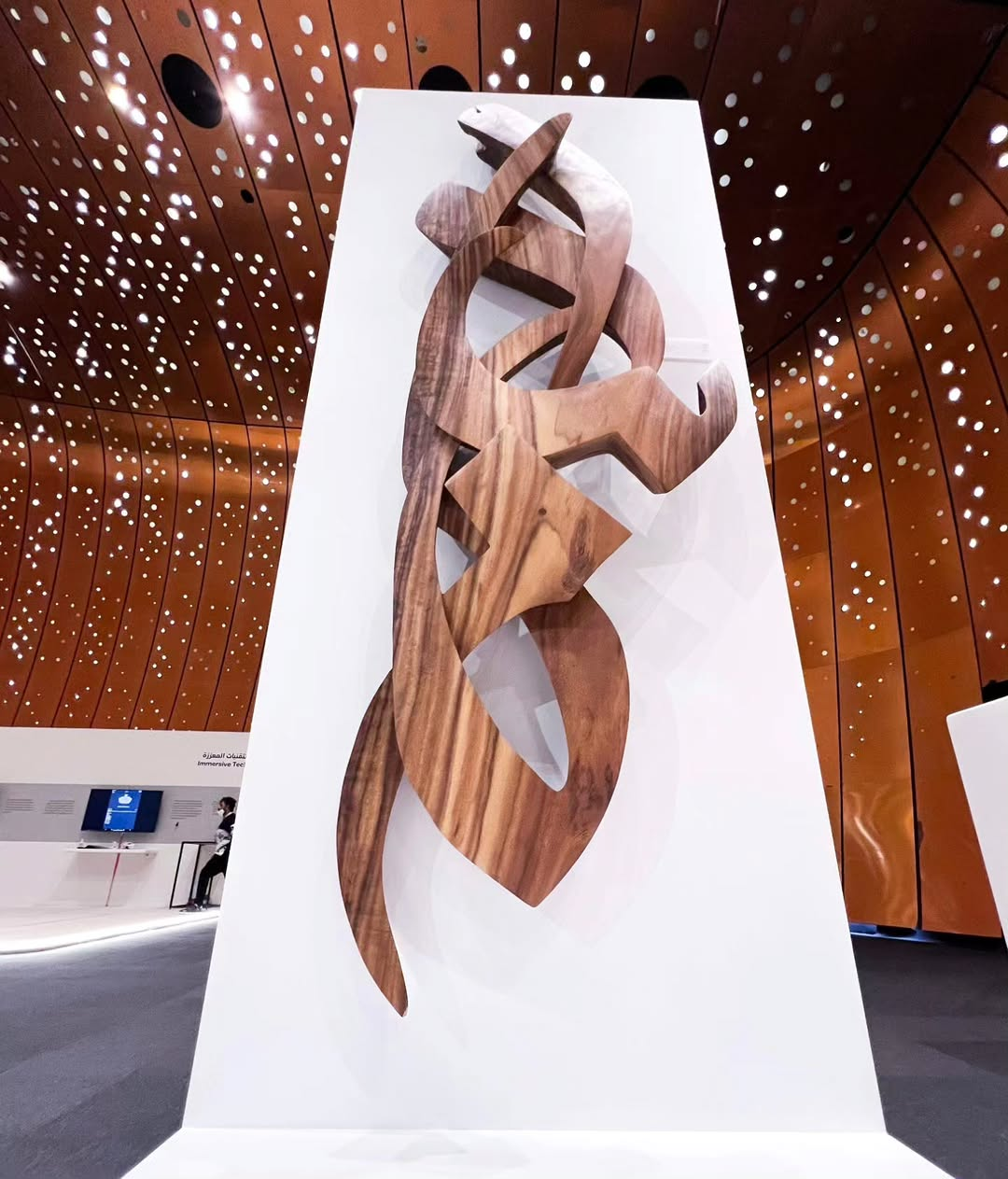
Salam (Peace) (2021), local berham wood, (199 x 54 x 15 cm)
Hob (Love) (2022), cherry wood, (212 x 59 x 15 cm)
Mirage (Ascension) (2022), African teak shades, (200 x 51 x 16 cm)
In these pieces, the Arabic word becomes a sculptural presence that can hold a room. The emotion is no longer private. It becomes spatial. Connection becomes something physical: you do not just look at the word, you stand beside it.
Object Culture and Design Crossovers (2024)
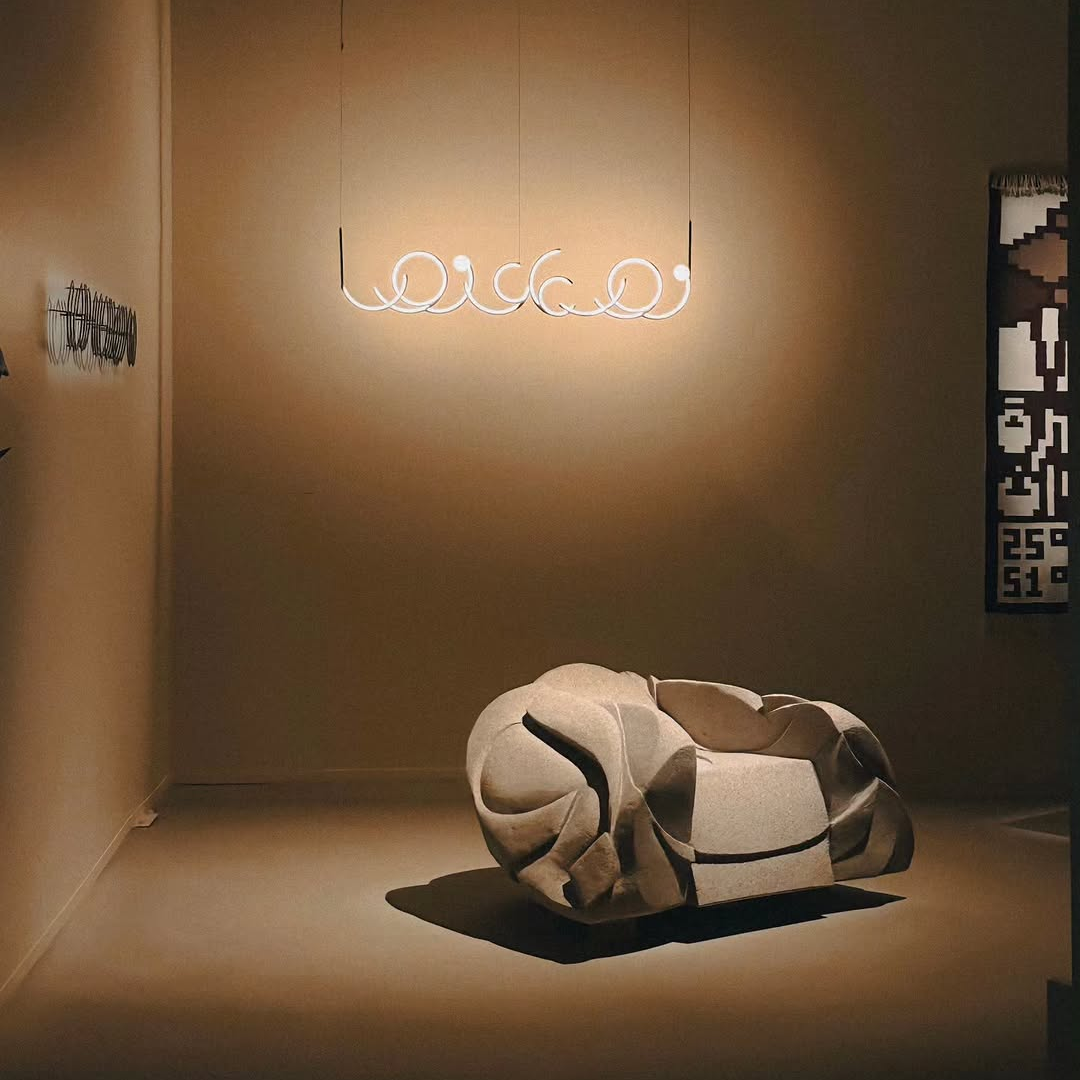
By 2024, Alif’s letterforms begin to enter the realm of object culture without losing their conceptual weight.
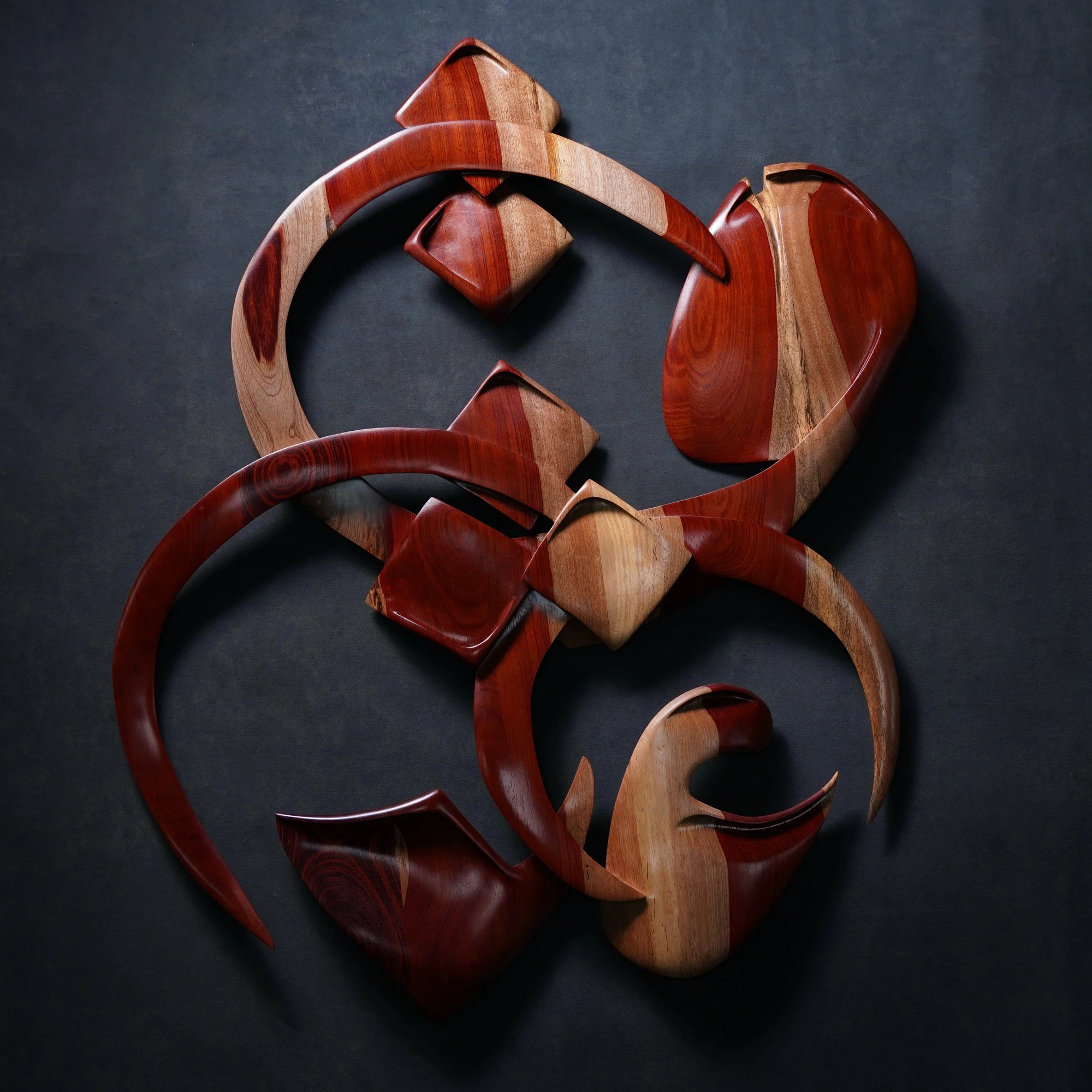
Rubi Ishq (2024), rosewood, (110 x 90 x 12 cm)
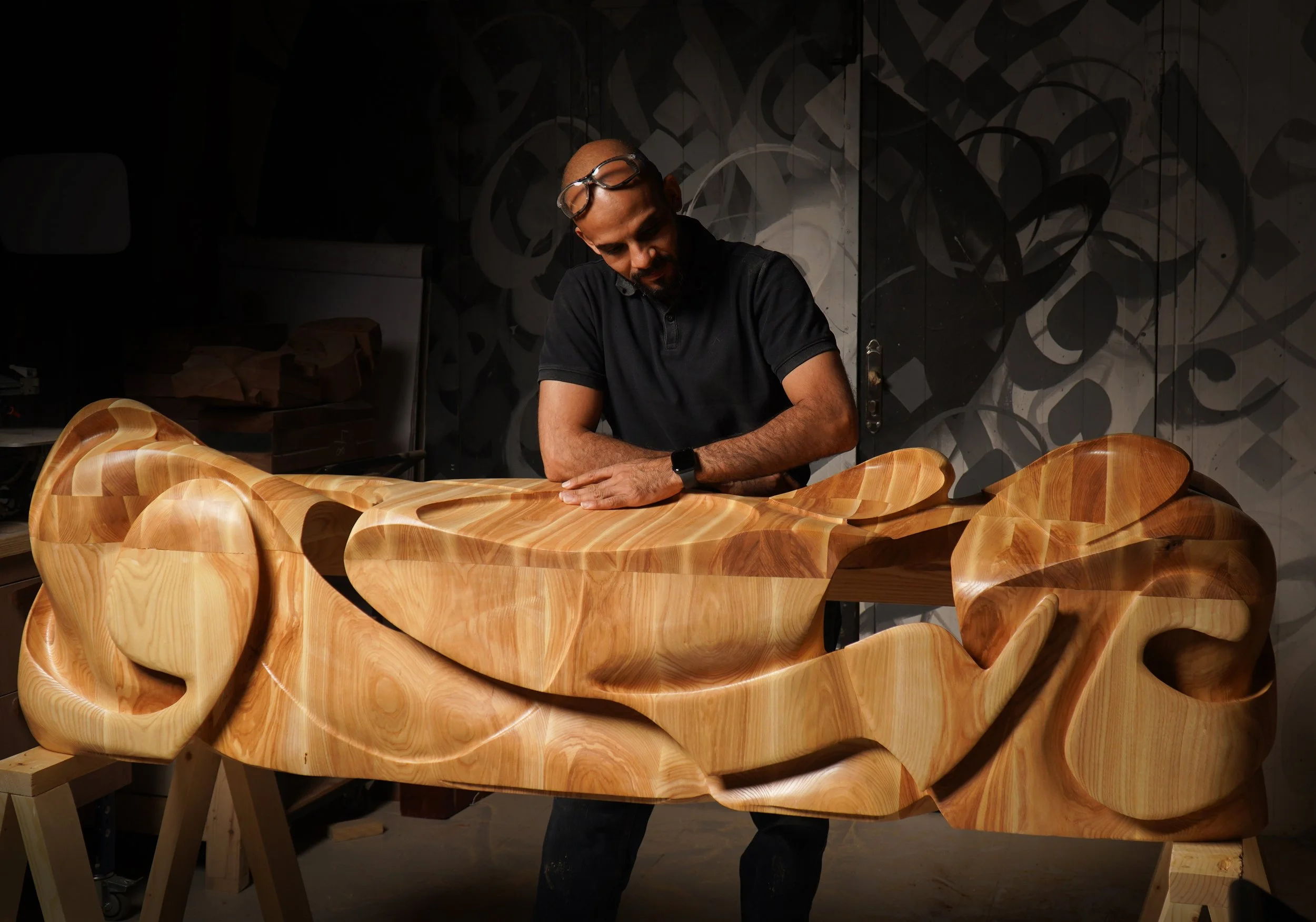
Ishq Cloud Bench (2024), ash wood, (53 x 189 x 43 cm)
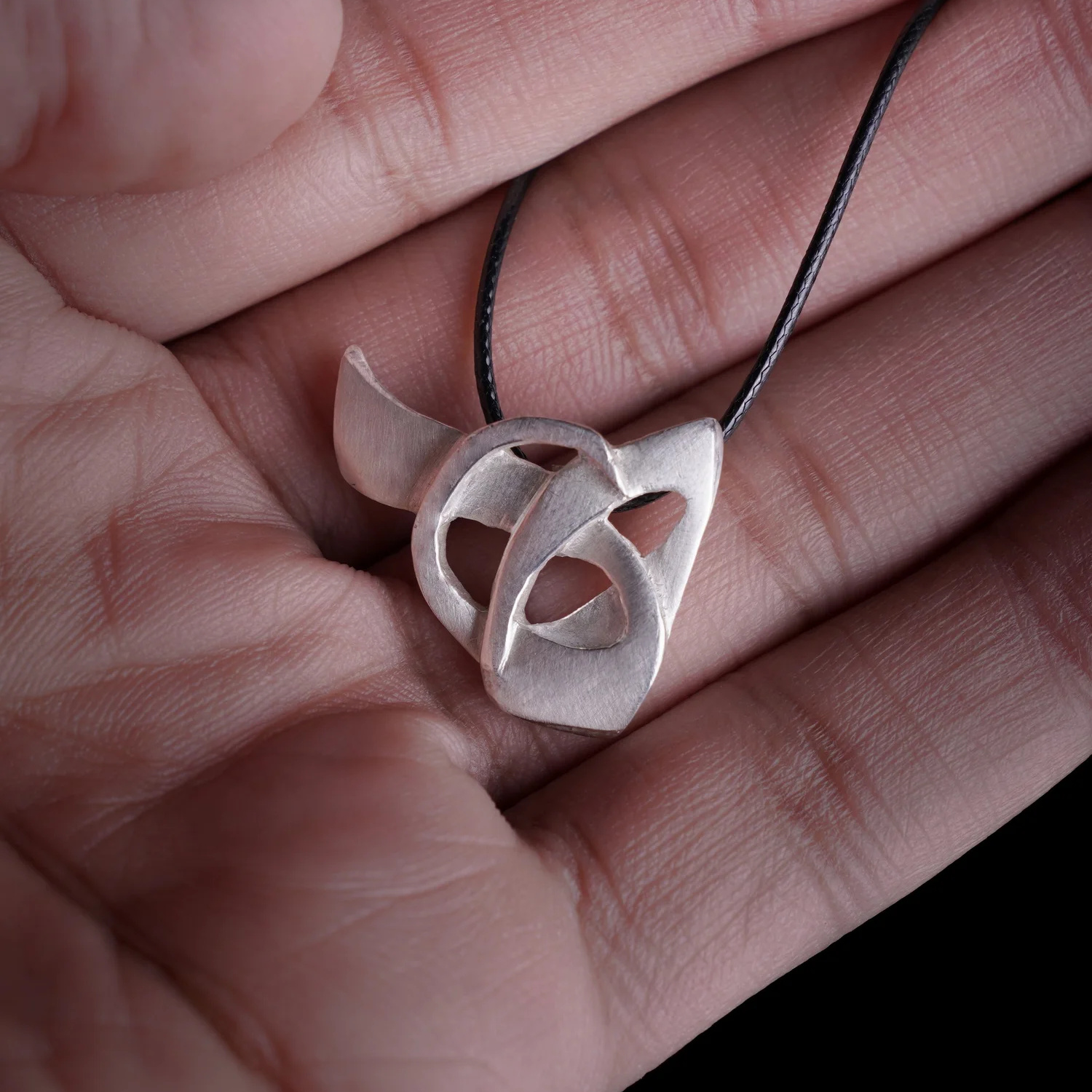
Haa’ Necklace (2024), knife-carved cherry wood
This is a crucial expansion. It suggests that his work can live in everyday environments, not as decor, but as designed presence. The letter becomes something you can inhabit, sit with, wear, and carry. Connection becomes literal.
Monumental Stone and Public Permanence (2025)
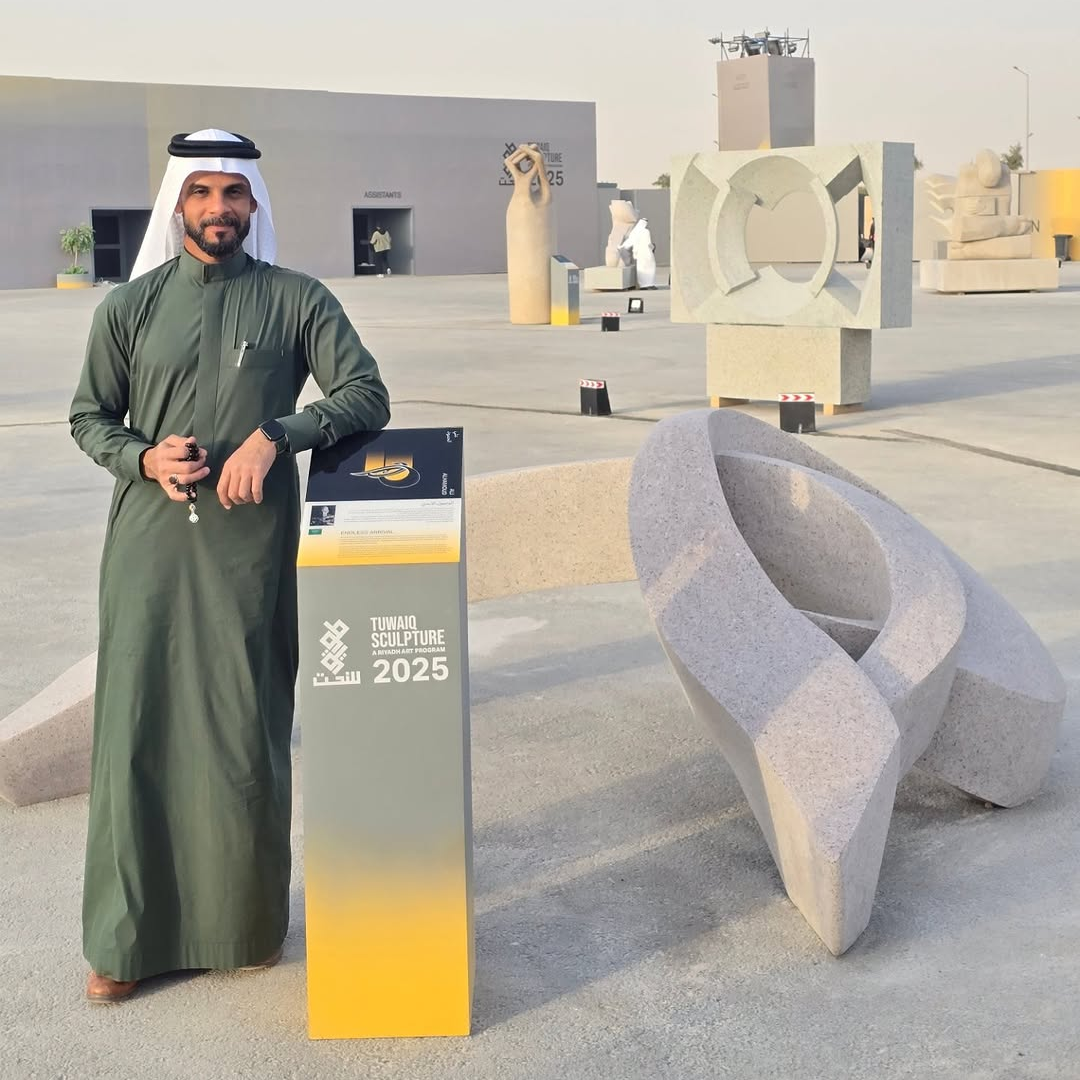
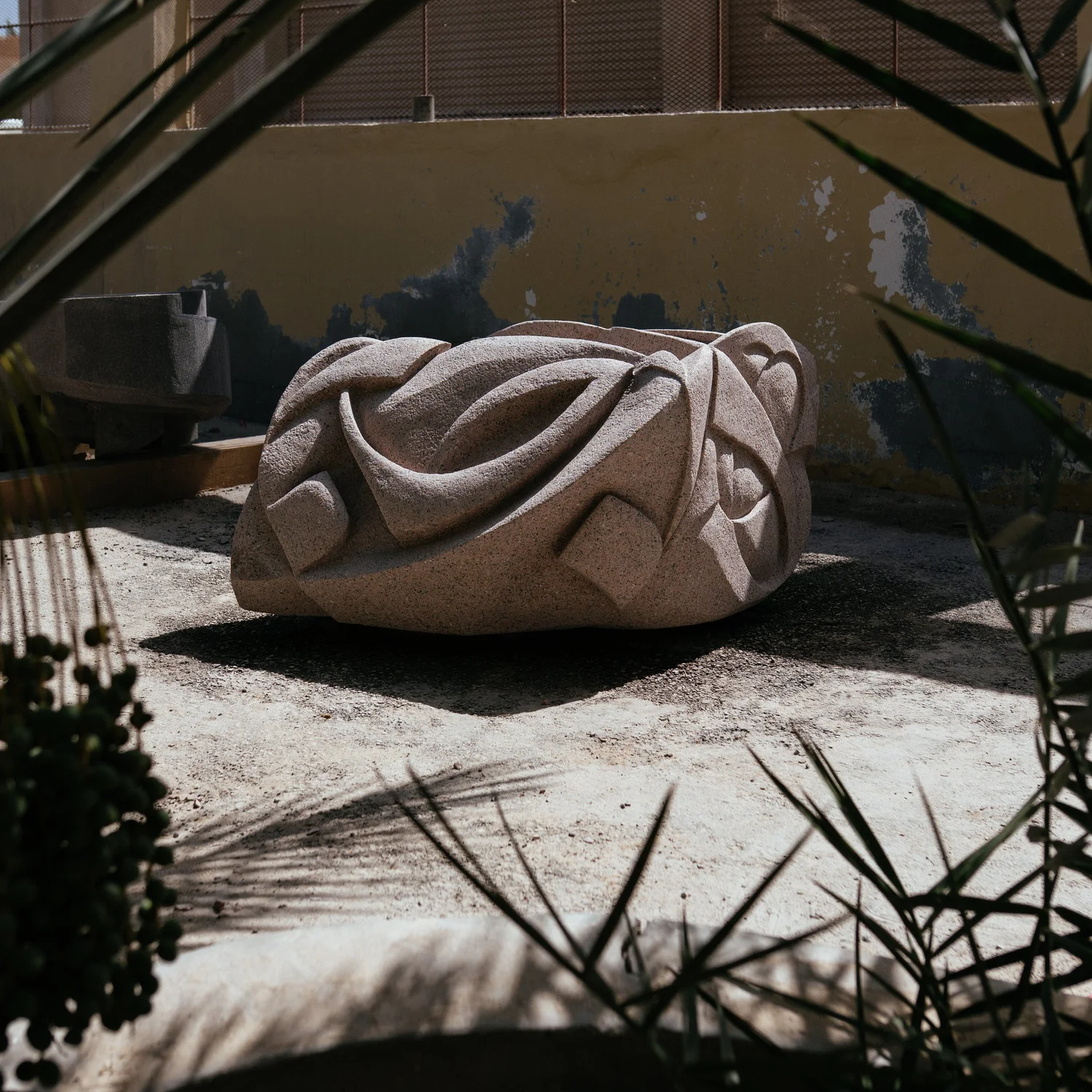
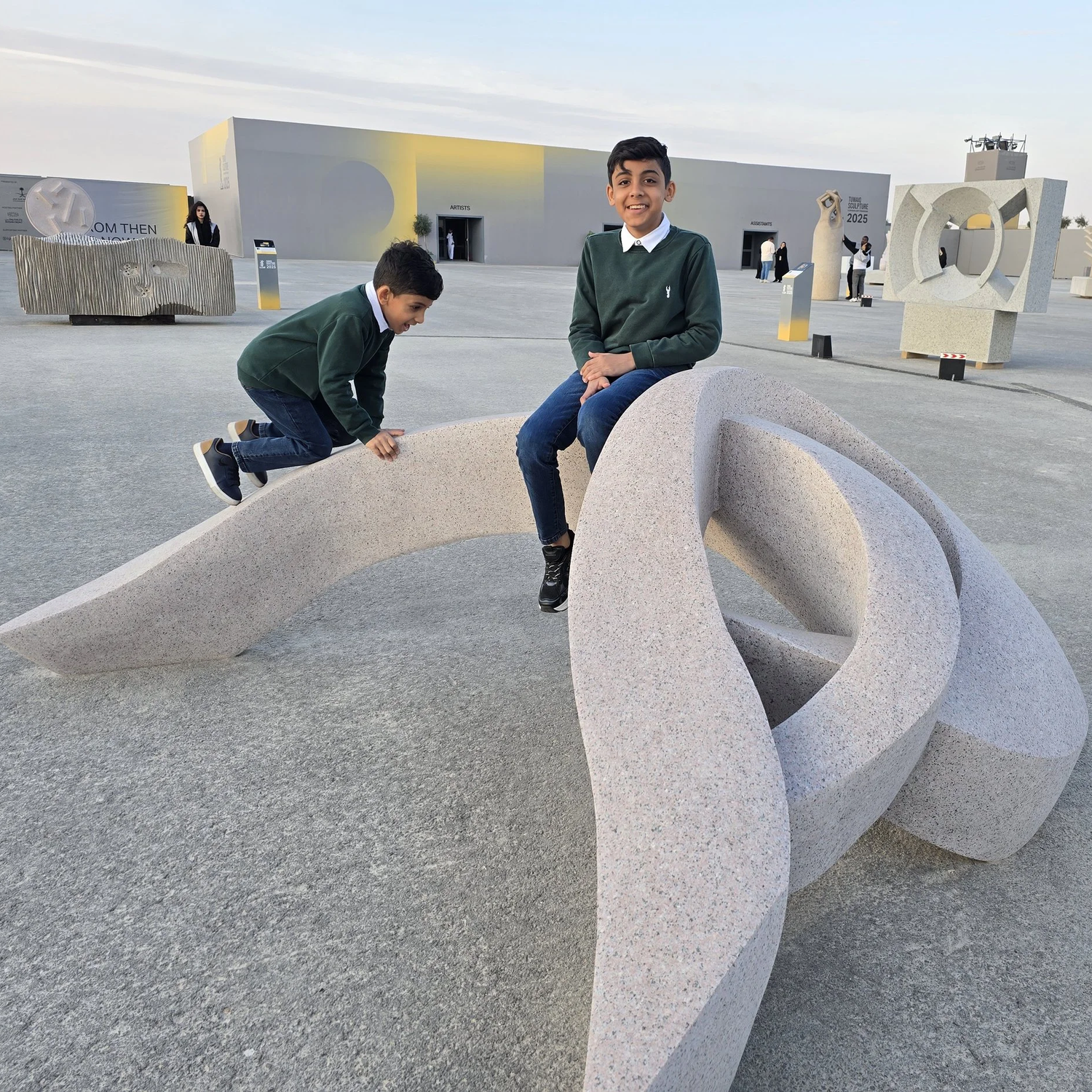
In 2025, Alif’s practice moves into Saudi granite, and the letter becomes civic in scale.
Eternal Access (2025), Tuwaiq Sculpture, Saudi granite Royal Rose, (1 x 2.8 x 1.85 m)
Sababa (2025), Saudi granite Royal Rose, (0.65 x 1.45 x 1 m)
Stone brings a different kind of silence. Wood can feel intimate and alive, warm with grain. Stone feels eternal, public, uncompromising. Yet the emotional throughline remains. His forms still aim to carry feeling, spirituality, and connection, just with more weight and more permanence.
Exhibitions and Milestones
Alif’s exhibition path offers a clear timeline of growth, tracing how his work moved from early visibility to major cultural platforms, then expanded into design and public sculpture.
Selected Exhibitions
2019 East Art, Aramco Cultural Center, Dhahran
2021 Tanween (Featured Artist), Ithra, Dhahran
2022 Eastern Calligraphers, Desert Designs Gallery, Al Khobar
Seen together, these milestones show a steady widening of context. From gallery and institutional platforms to design-facing visibility, and finally to sculpture in public space. The letter keeps evolving, but the themes remain consistent.
Collections and Recognition
Alif’s work has been exhibited across Saudi Arabia and can be found in both hospitality and private collections, including Banyan Tree in AlUla, as well as the private collection of Hamza Serafi, co founder of Athr Gallery in Jeddah.
These placements matter because they reveal where his work lives best: in spaces where design, architecture, and meaning overlap. His sculptures do not depend on wall text. They hold their own through form.
Where His Practice is Heading
Alif’s practice continues to expand rather than reinvent itself. While wood remains central, his move into granite reflects a growing interest in permanence and public space, allowing his work to move between intimate contemplation and civic scale. This direction will come into sharper focus with his upcoming solo exhibition in Riyadh in 2026, marking the next chapter in the evolution of his sculptural language.
Ali AlHamoud's practice stands out not because it follows trends, but because it deepens over time. With every shift in scale and material, his work becomes more assured, more precise, and more expansive in its reach. He treats the Arabic letter as a living form, capable of carrying emotion, spirituality, and shared meaning.
As his work moves further into public space and larger contexts, it feels like a natural unfolding. If his trajectory so far is any indication, what lies ahead will not simply be bigger in size, but greater in impact.