Ziyad Alroqi: Mapping Paradox Through Landscape & Culture
Discover Ziyad Alroqi, the Saudi artist and culturist redefining deserts through paradox, poetry, shadow, and craft. From London exhibitions to cultural work in Riyadh.

Discover Ziyad Alroqi, the Saudi artist and culturist redefining deserts through paradox, poetry, shadow, and craft. From London exhibitions to cultural work in Riyadh.
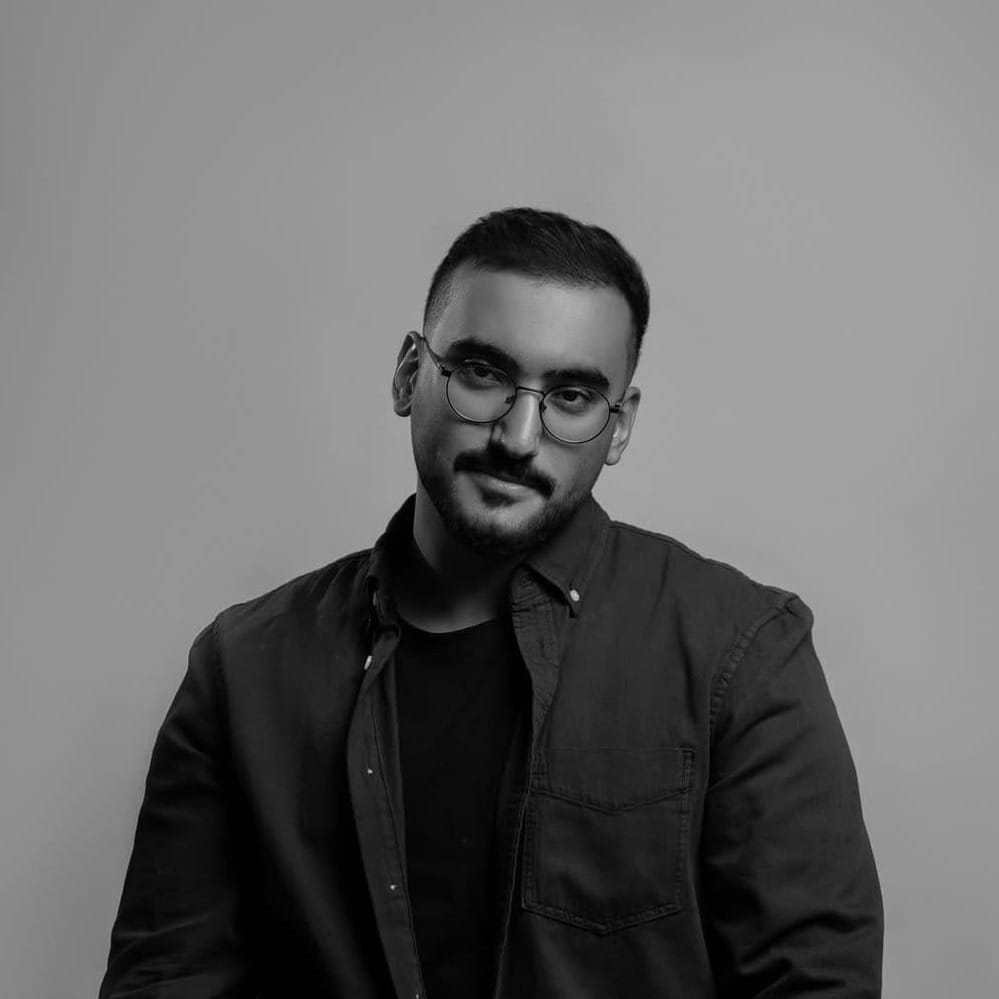
“My work seeks not to offer answers, but to create a deeper awareness of the contradictions that shape our perception of time, identity, and reality itself.”
That impulse toward awareness begins with what can be felt before it can be explained. In Saudi Arabia, the desert holds these contradictions effortlessly, and Ziyad Alroqi has made it his most enduring collaborator. He approaches it as intimacy rather than distance, a living archive where time stretches, identity gathers, and reality shifts with every change in angle. Through shadow and light, earth and memory, poetry and material, his work draws the viewer into the in between, where meaning is not delivered as an answer, but discovered as a sensation.
Born in Afif in 1998 and raised in Riyadh, Alroqi’s journey began with a devotion to artistic expression that eventually led him into architecture, then back toward art with sharper tools and deeper questions. Today, his practice moves between mediums and roles with the same steady logic: culture is not only made, it is carried. Across film and sound, material experiments, and public initiatives, he keeps tracing the same essential line. How does a place shape identity, and how does identity reshape the meaning of place?
Alroqi’s path begins in architecture. He graduated in 2021 with a Bachelor’s degree from King Fahd University of Petroleum and Minerals, a training that continues to shape his sense of proportion, material, and spatial presence. Architecture also gave him a way to think about culture as something built and inhabited, not reduced into symbols. In 2023, he expanded that approach with a Master’s in Situated Practice at UCL, grounding his work in the idea that contemporary art is formed through society, history, and proximity. The result is a practice that treats the desert less as an image and more as a living system of memory.
Across Ziyad Alroqi's work, meaning is shaped in the space between opposites: permanence and impermanence, tradition and innovation, silence and sound, presence and absence. Nothing is forced into resolution. The tension stays alive, and that friction becomes the work’s atmosphere. What emerges feels less like a message and more like an encounter, a situation where clarity meets ambiguity and the viewer is left to test their own assumptions. Memory and cultural reference move alongside material and process, until ideas feel physical and the physical begins to think.
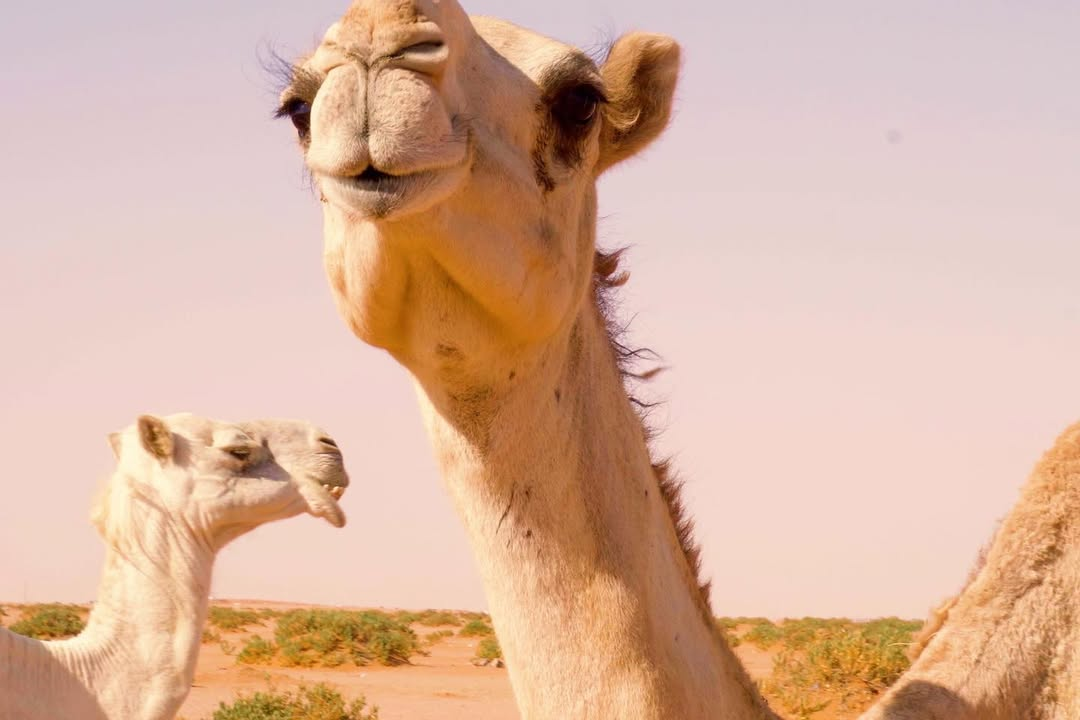
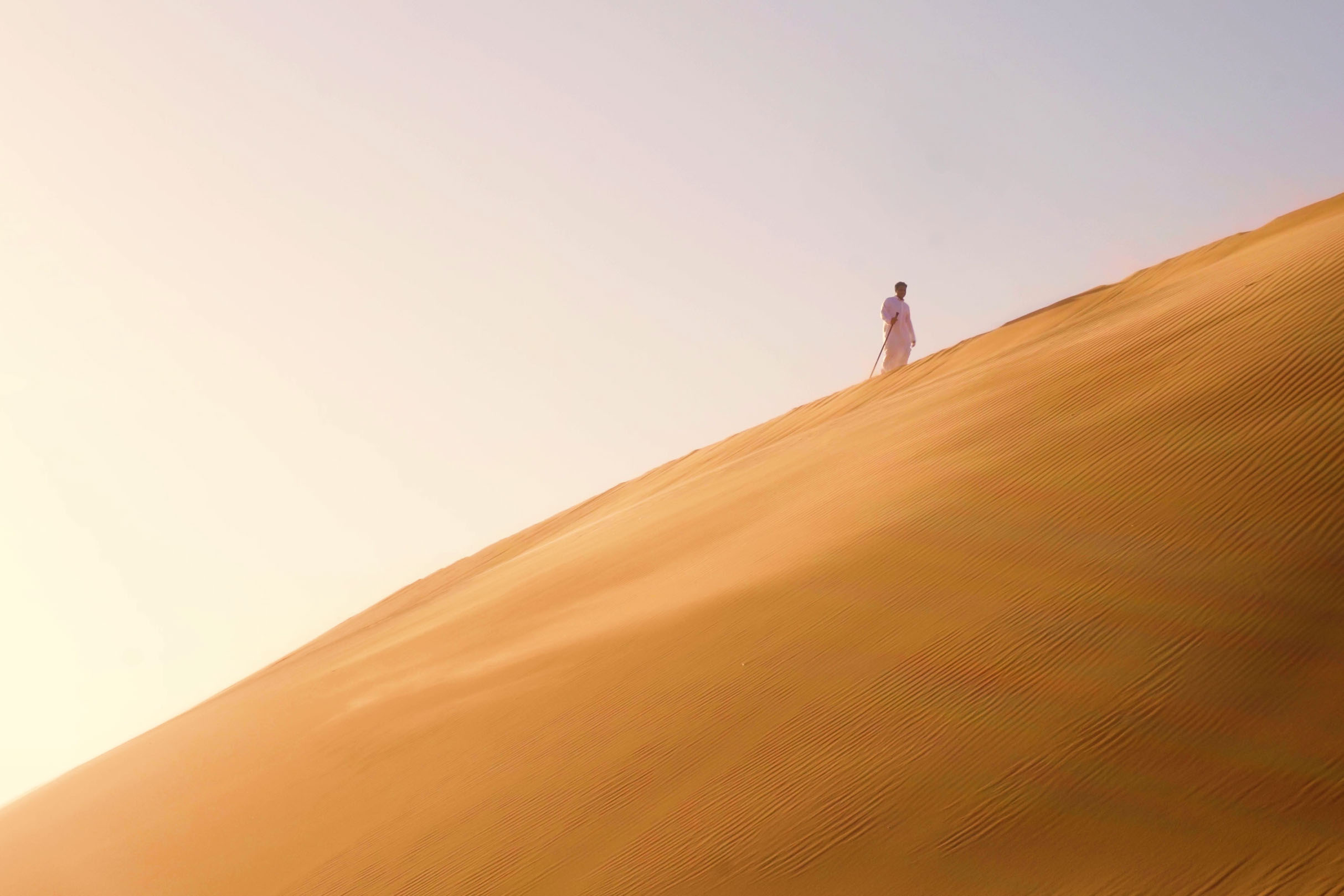
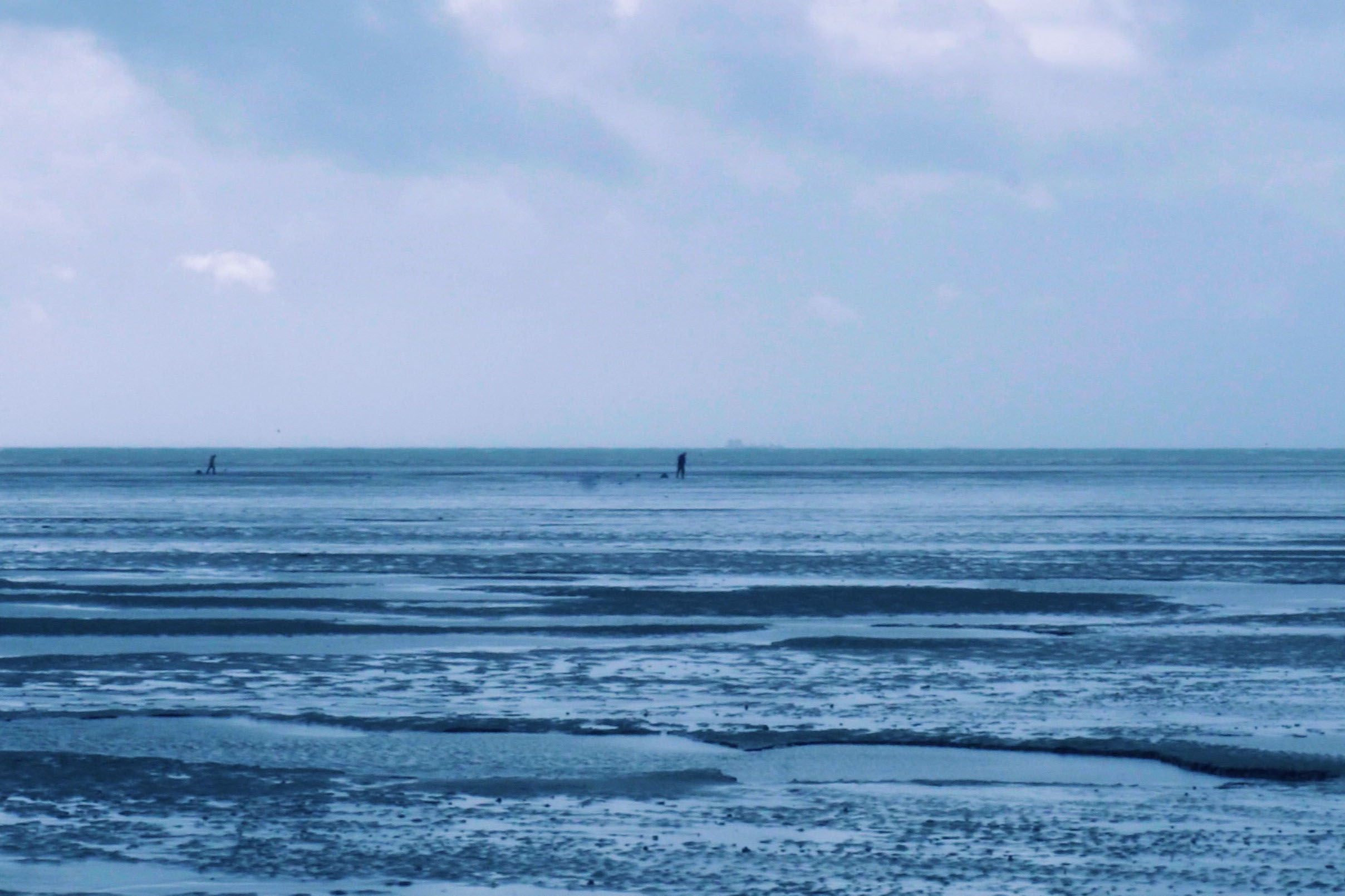
Alroqi’s first solo exhibition, Deserts Talk, opened in London in October 2023 as a film and sound project unfolding between the deserts of Dhanna in Saudi Arabia and Dungeness, the UK’s closest edge to the Arabian Peninsula. The work operates as a cultural bridge, a conversation between two landscapes shaped by movement, memory, and nomadic knowledge.
Through recorded journeys and layered soundscapes, Deserts Talk reframes the desert as an un-empty terrain, dense with craft, tradition, and lived experience. Rather than presenting a single narrative, the project transcribes a voyage, allowing heritage and contemporary Saudi identity to coexist. At its core, it invites a collective reimagining of the desert, where ancestral knowledge and cultural progress move forward together.
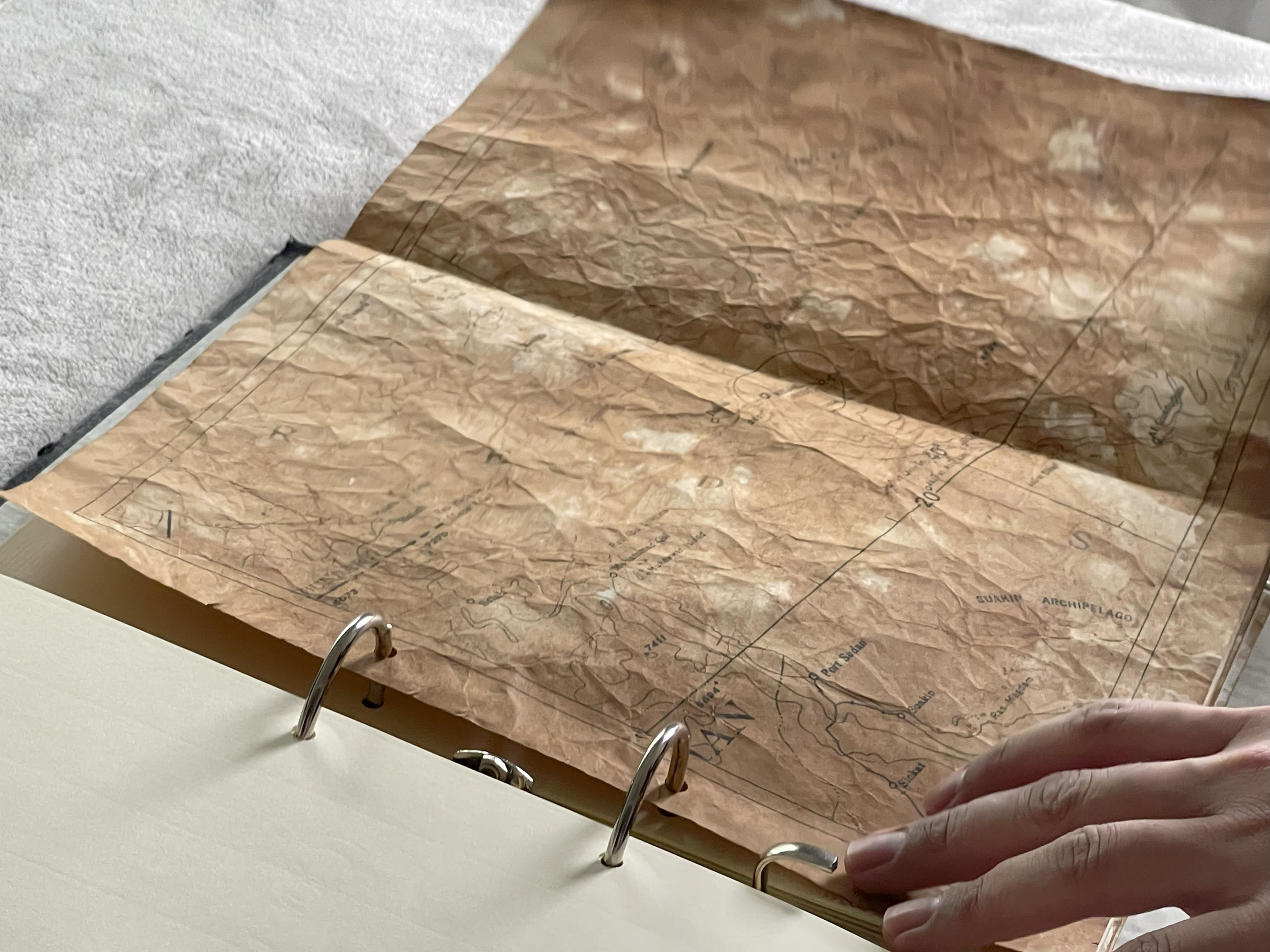
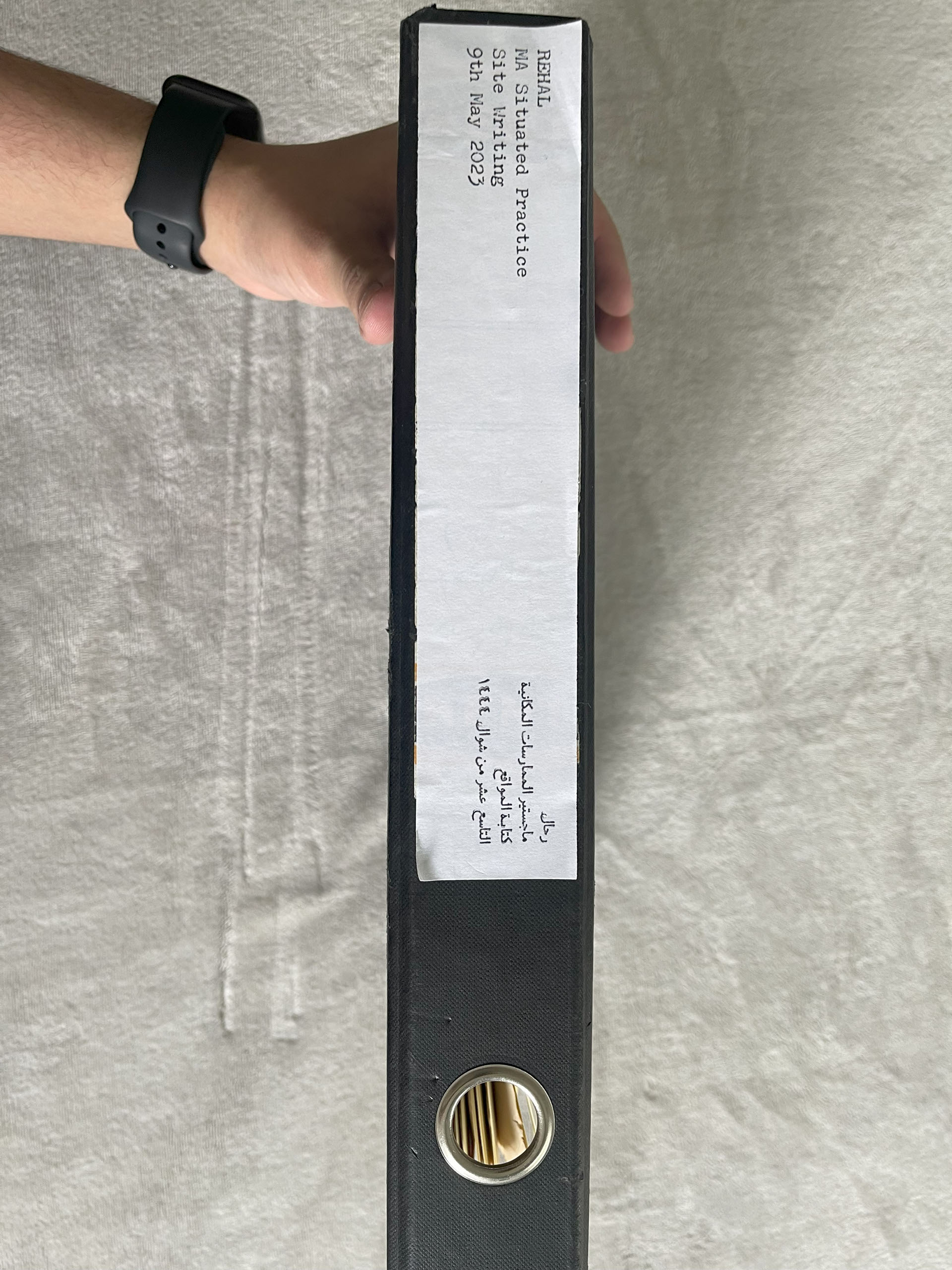
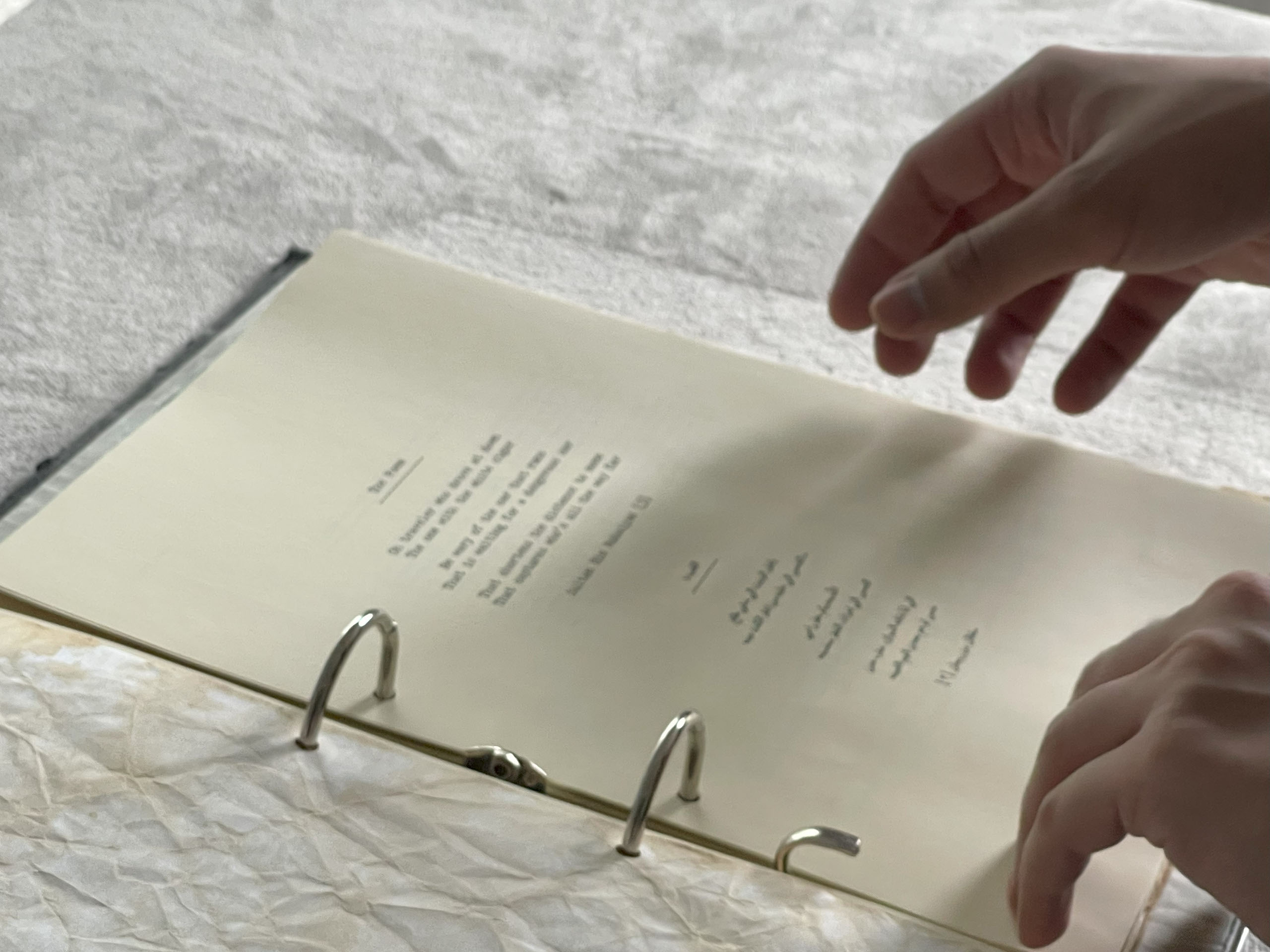
Later in 2023, Alroqi presented REHAL in London, a project that reimagines the Arabian Najd as a terrain mapped through memory, poetry, and lineage. Drawing on ancestral poems, REHAL charts the desert as an emotional and cultural geography, where writing becomes both remembrance and navigation. The page turns into a route: a space for creative reinterpretation carried across generations. Here, Najd is measured not in kilometers, but in lived layers of experience and inherited memory. From that accumulation, a contemporary literary atlas takes shape, holding tradition with care while opening onto new poetic ground.
In January 2024, Ziyad Alroqi became part of Wasm Studio, continuing to develop his artistic methodologies within the Saudi ecosystem. The timing is significant. Saudi Arabia’s cultural scene has been expanding rapidly, yet the most compelling artists are often the ones who stay close to specificity: a place, a material, a story that cannot be outsourced.
Alroqi’s practice sits comfortably in that kind of specificity. His work draws from the desert as lived experience, from the rhythms of Saudi cultural memory, and from the contemporary reality of a society evolving in public. Within that context, his paradox framework feels less like abstraction and more like portraiture. A way of describing a present where the inherited and the new exist side by side, sometimes harmoniously, sometimes sharply.
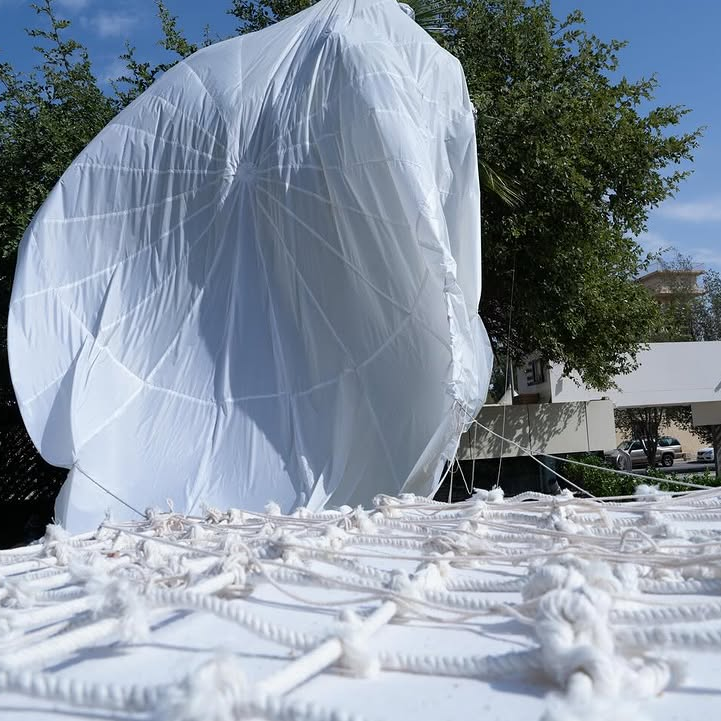
In 2024, Alroqi won the Misk Art Grant and presented Airdrop during Misk Art Week in December 2024. The recognition placed him within a broader national conversation about contemporary Saudi art, and it aligned with the direction his work has been taking: transmission, movement, and the emotional charge of what arrives from elsewhere.
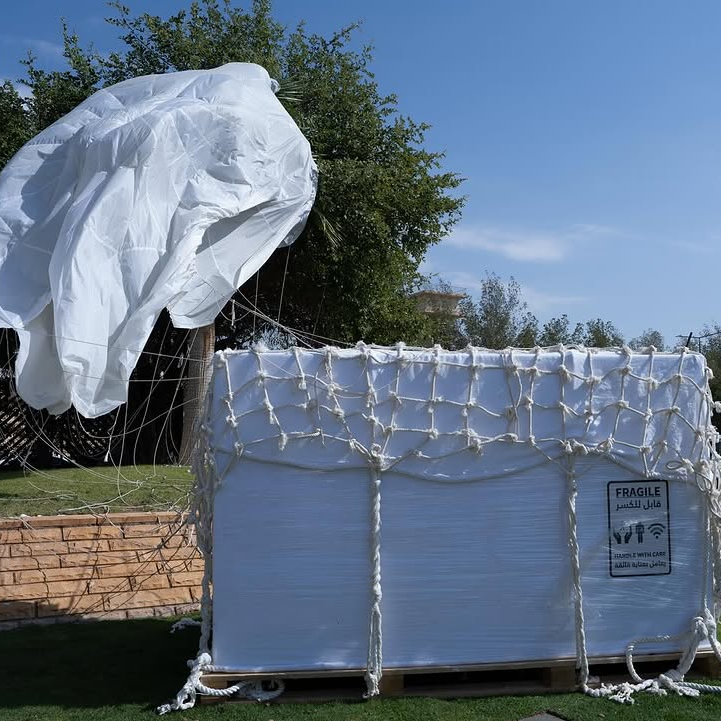
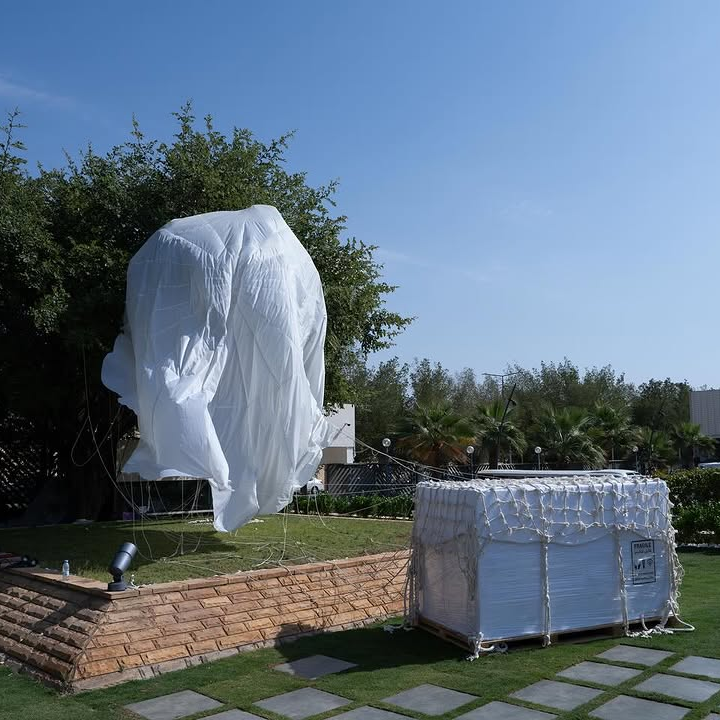
Airdrop is an interactive installation built around the suspended arrival of an industrial cargo box, held mid-moment as if just released by parachute onto the exhibition ground. NFC-embedded cards scattered across its surface carry curated audio messages, inviting visitors to unlock fragments of sound and listen in close. The work leans into a paradox: the heavy certainty of the object against the weightless intimacy of what it contains. Between cargo and voice, mass and memory, presence and disappearance, Airdrop turns delivery into a feeling and arrival into an echo.
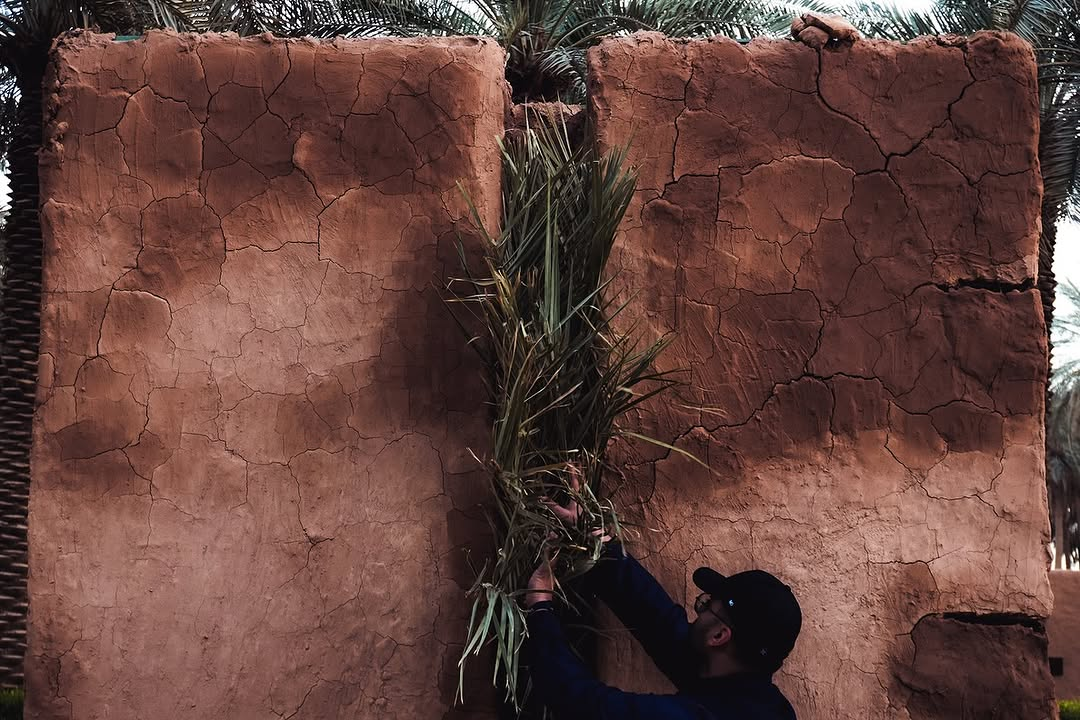
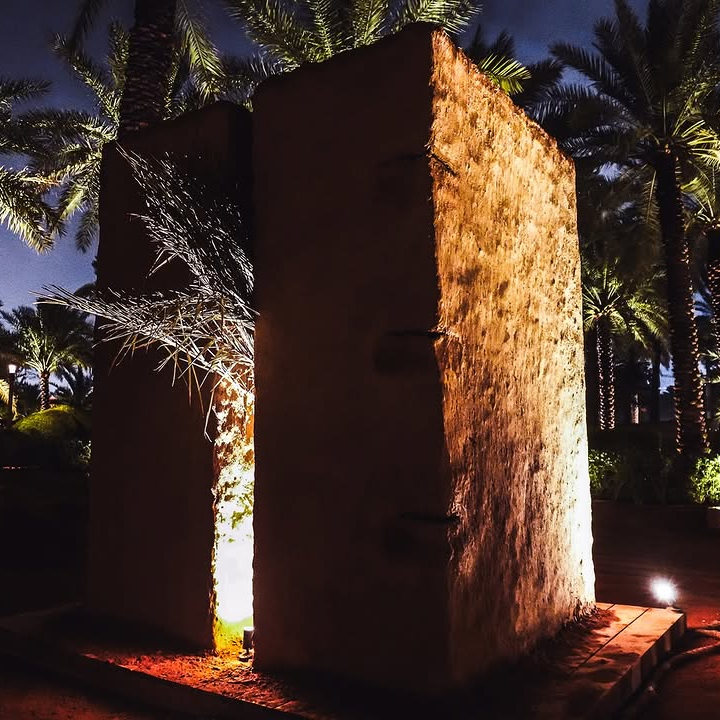
In 2025, Alroqi participated in the Diriyah Mud Art Symposium with Timeless Pulse, a work that investigates nature, humans, and time, and the evolving relationship between tradition and contemporary artistic expression. It centers on a live palm tree held within a rammed-earth structure, with fragments of the trunk revealed through deliberate breaks in the cured material. The gesture feels both protective and disruptive, allowing nature to appear in glimpses rather than in full. In that tension, the work holds its questions: tradition set against innovation, the organic against the constructed, and time not as a backdrop, but as a force that reshapes everything it touches.
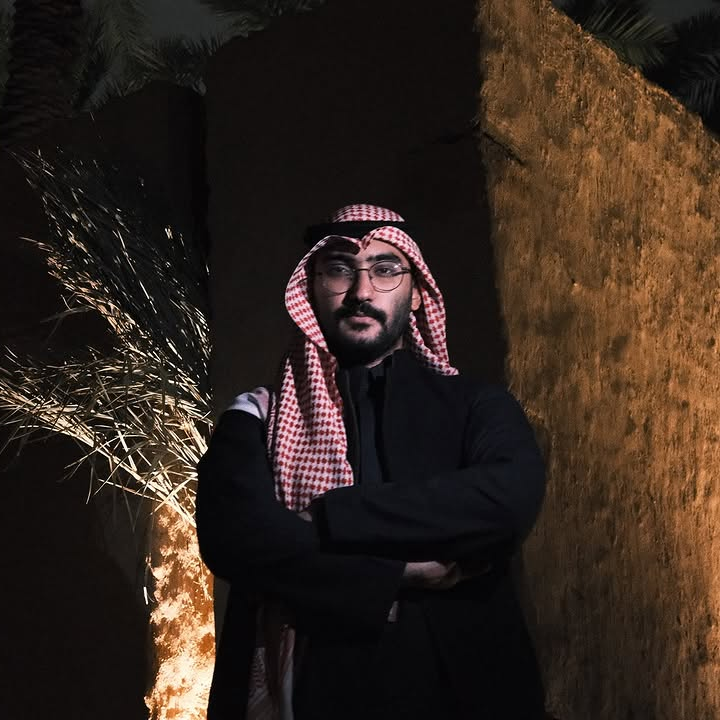
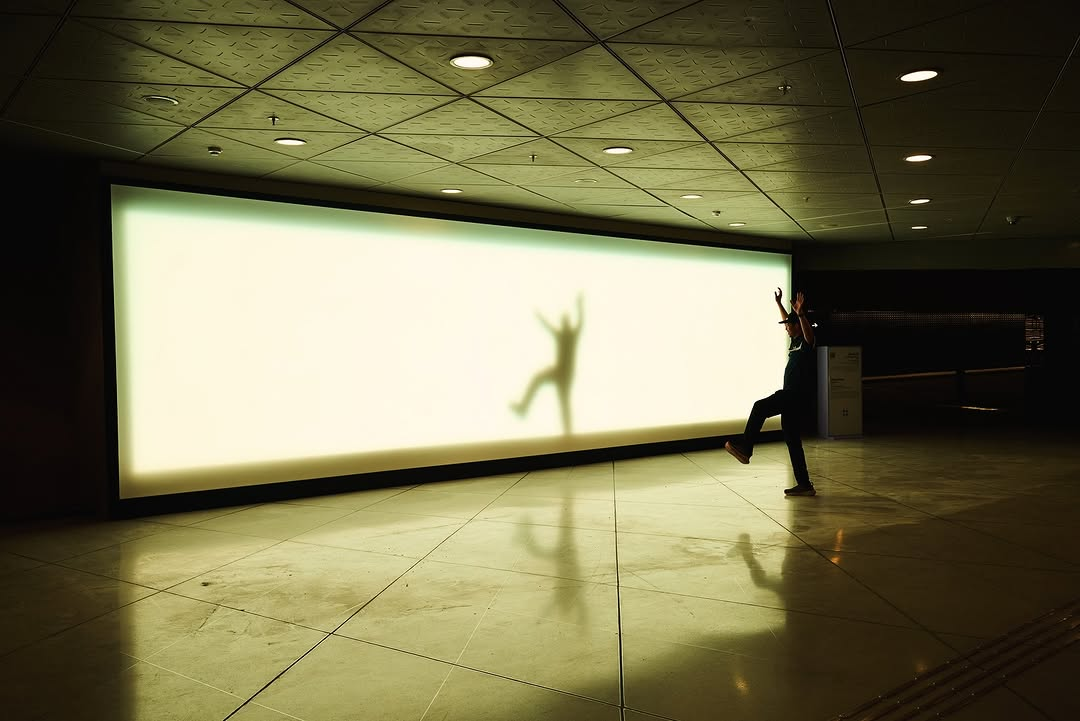
Most recently, Alroqi presented at Noor Riyadh 2025 The Shadow Within, an installation that shifts attention away from illumination and toward what emerges when light is withheld. Rather than treating shadow as a byproduct, the work positions it as presence. Light is subtracted, not added, allowing form and emotion to surface through absence rather than exposure.
The Shadow Within is an immersive light-based installation that repositions shadow as the central material of the work. Rather than illuminating space to reveal form, Alroqi subtracts light, allowing silhouettes, movement, and distortion to emerge across a luminous surface. Visitors become part of the composition, their bodies translated into shifting shadows that appear, dissolve, and overlap, turning presence itself into content. The work draws on the concept of the shadow self, not as a metaphor, but as a spatial experience.
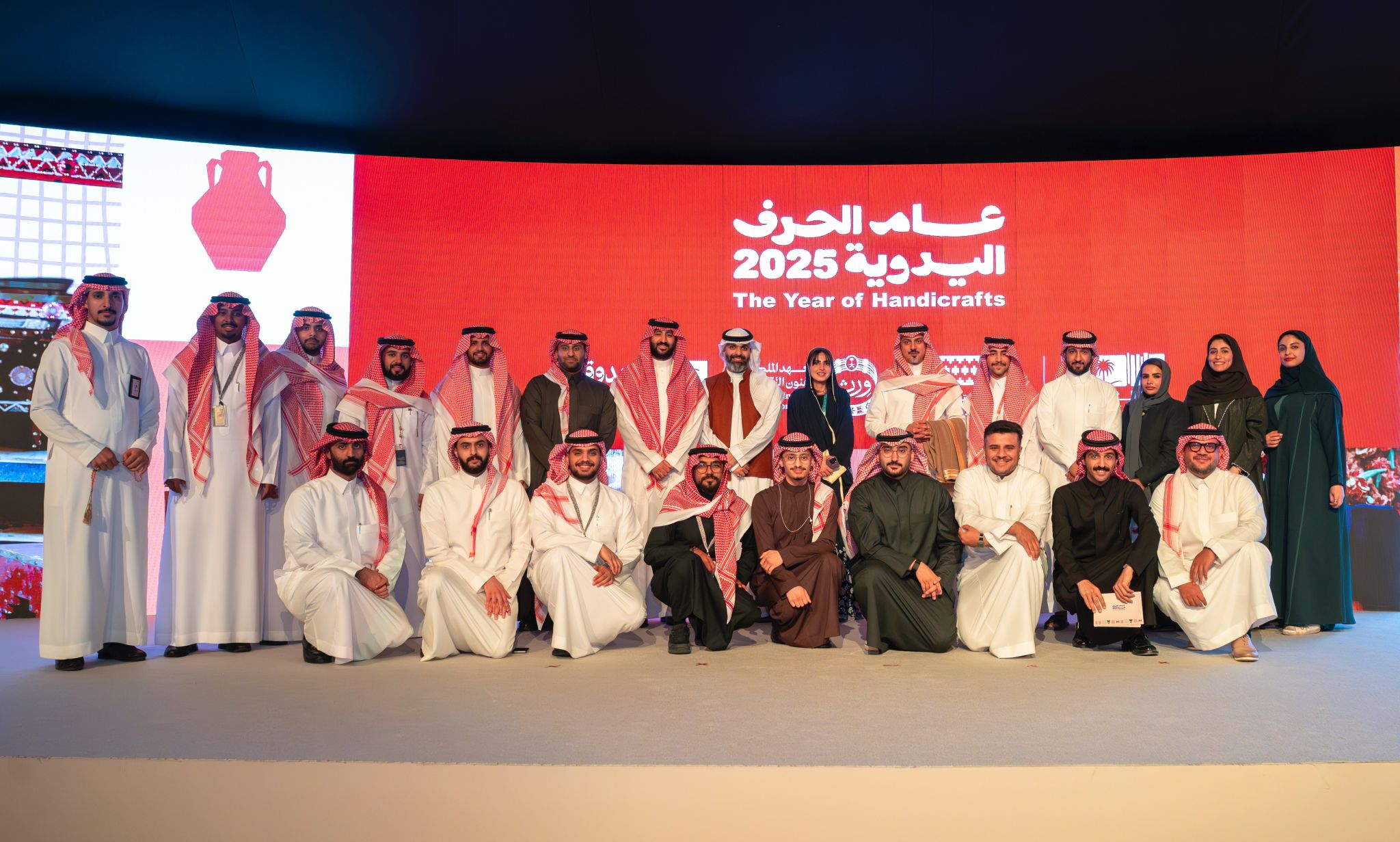
Alongside his studio practice, Alroqi now holds a role as Senior Communication and Community Engagement Specialist at the Ministry of Culture, with a focus on strategy, innovation, and project management. He has also worked on the Year of Handicrafts project, a national initiative devoted to elevating craft, its makers, and its cultural continuity.
There is an elegant alignment here. Handicraft sits at the intersection Alroqi repeatedly explores: tradition and innovation, permanence and impermanence, material and meaning. It carries the emotional weight of heritage while requiring contemporary systems to survive and flourish. Community engagement, in this sense, becomes an extension of his artistic logic. A practice of creating encounters, only at a larger scale. The same impulse appears to create spaces where culture can be felt, understood, and shared, without being reduced into a slogan.
Ziyad Alroqi's style can feel like a love letter to the desert and, at other times, a love letter to the inner world the desert awakens: shadow, memory, and the quiet parts of identity that only surface when everything else falls away. Across mediums, his signature stays consistent, letting what is hidden emerge in fragments, letting absence carry as much meaning as presence.
And perhaps that is exactly what the art scene needs right now: an artist who trusts subtlety. Someone who can approach contemporary form without losing emotional heat. In Alroqi’s hands, meaning arrives gently, but it lands.
Explore more artist stories at KSA Art.