Zeinab Al-Mahoozi Turns Saudi Arabia's Streets Into Stories
Discover Saudi street artist Zeinab Al-Mahoozi, whose expressive stencil murals celebrate heritage and everyday life.

Discover Saudi street artist Zeinab Al-Mahoozi, whose expressive stencil murals celebrate heritage and everyday life.
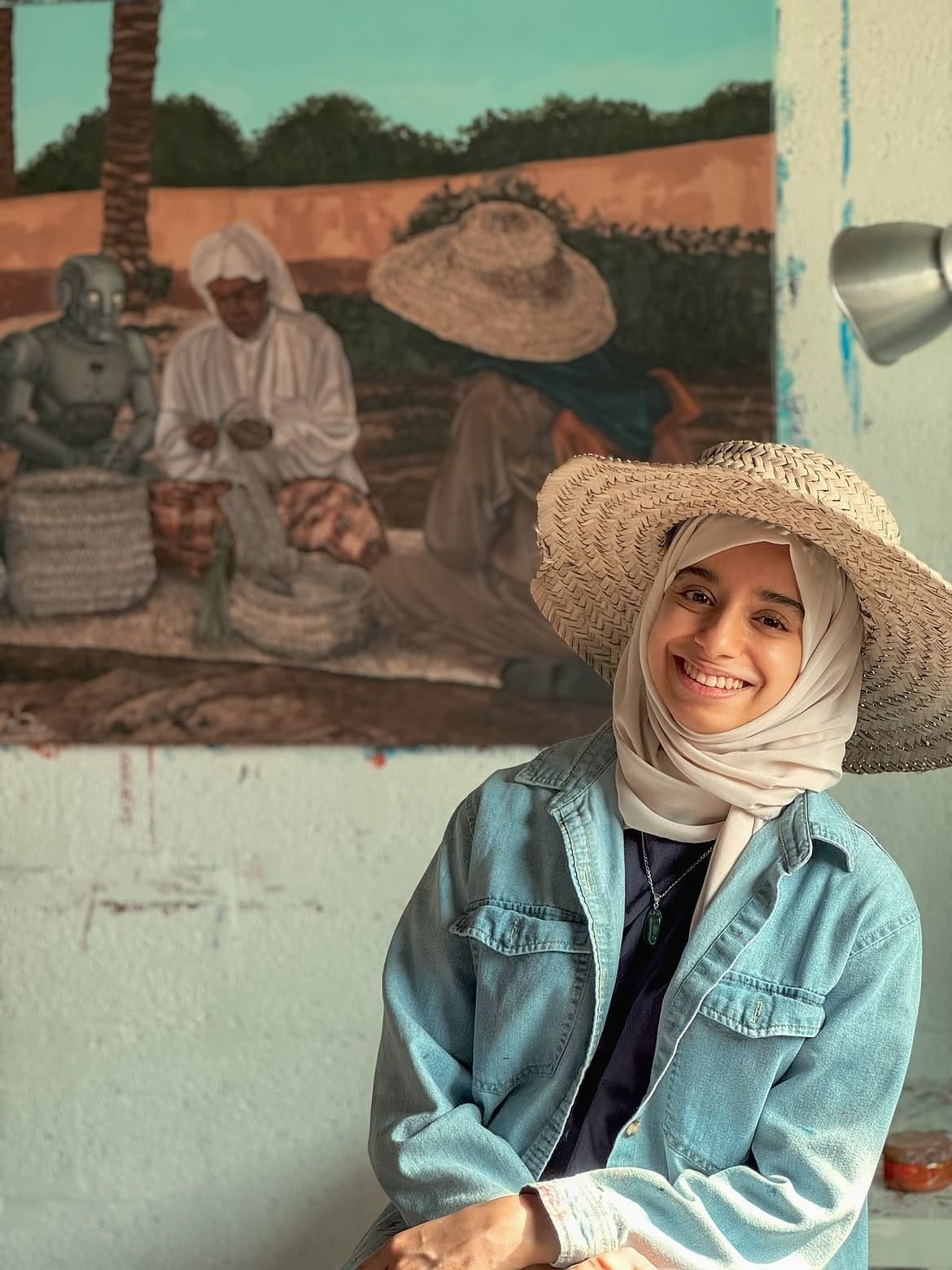
"I want my art to deliver messages for society and be the voice of those who do not have a voice."
In the evolving landscape of Saudi contemporary art, Zeinab Al-Mahoozi has found her canvas beyond the walls of traditional galleries. Born and raised in Qatif, the Saudi street artist transforms ordinary urban spaces into powerful expressions of memory and human connection. Through her distinctive stencil graffiti, she brings together the traditions of the past and the realities of the present, creating art that feels both deeply personal and universally accessible.
Her murals are more than striking additions to Saudi Arabia’s streets. They are visual stories of overlooked individuals, changing generations, and the cultural heritage that continues to shape the Kingdom's identity. At a time when Saudi art is reaching new audiences, Al-Mahoozi reminds us that some of the most meaningful artistic encounters happen in the places we pass every day.
For Zeinab Al-Mahoozi, creativity began long before she discovered the possibilities of street art. As a child, she spent her school breaks drawing Pokémon characters in a notebook, finding joy in creating imaginary worlds. When her mother once confiscated the notebook after she neglected her studies, the young artist was undeterred. Instead, she began drawing on other surfaces, including the walls around her. What might have seemed like a small act of childhood determination would eventually become a defining element of her artistic identity.
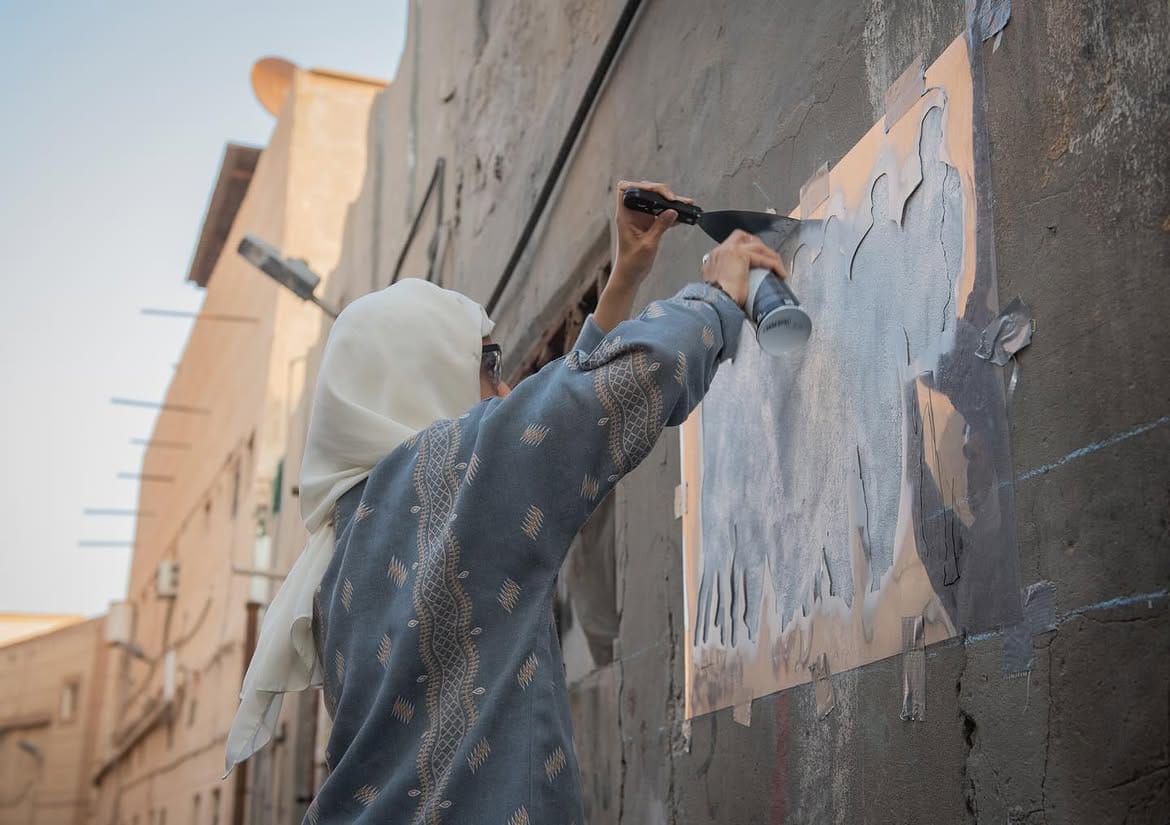
Self-taught and driven by curiosity, Al-Mahoozi began experimenting with stencil graffiti in 2011. Inspired by the expressive possibilities of urban art and artists such as Banksy, she developed a visual language that could communicate directly with the public. Stencil techniques offered her a way to translate recognizable figures and cultural symbols into layered compositions that could be encountered outside conventional exhibition spaces.
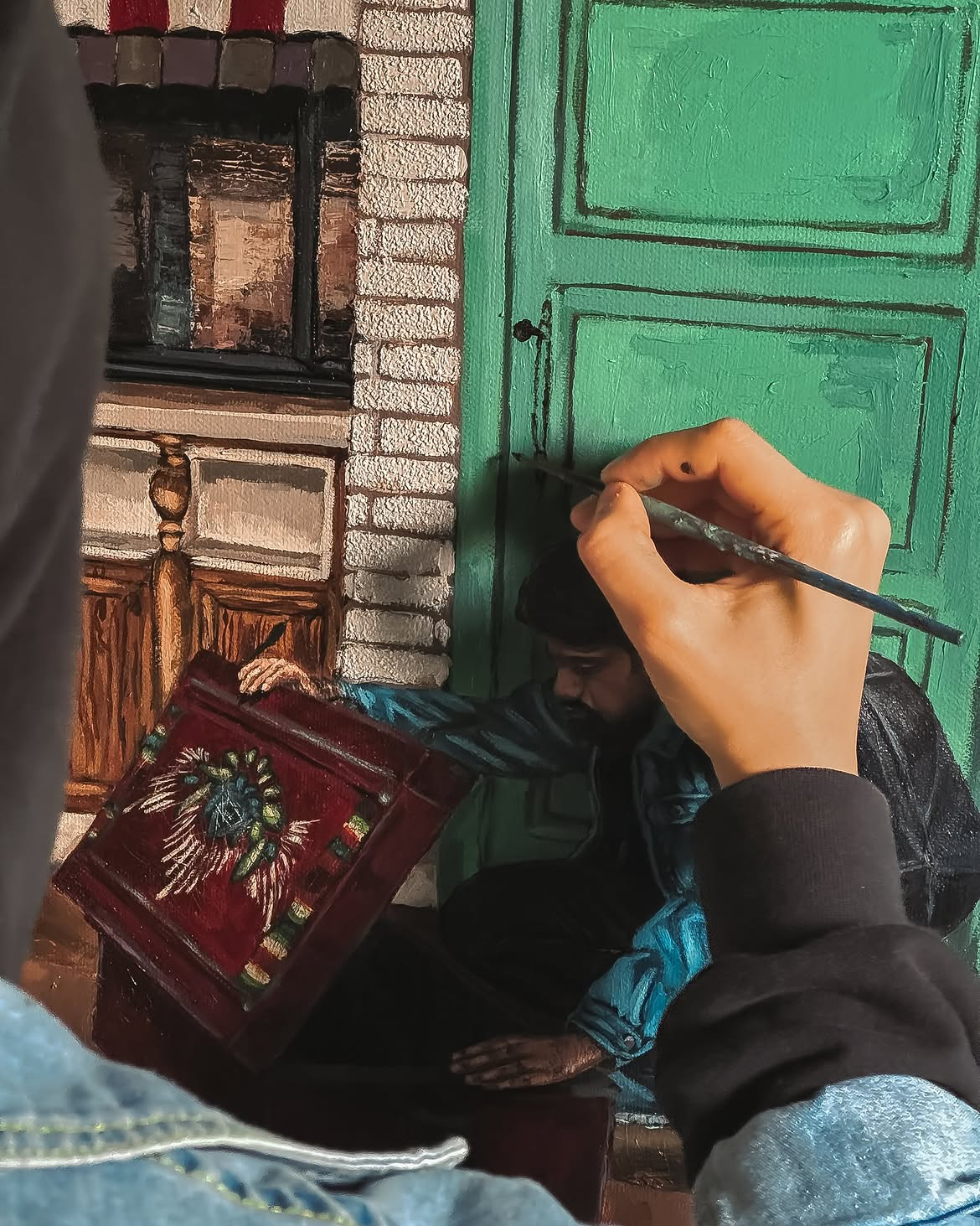
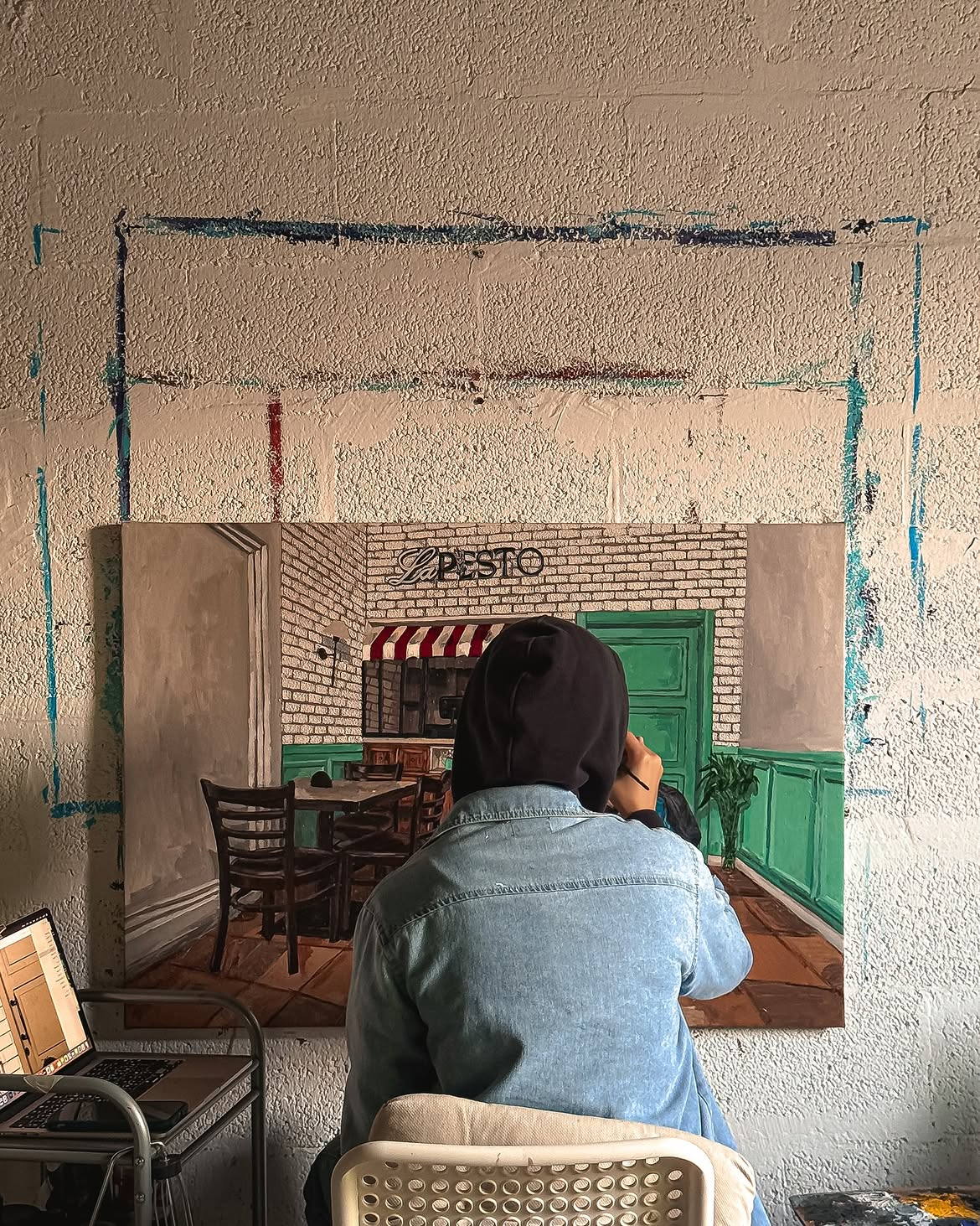
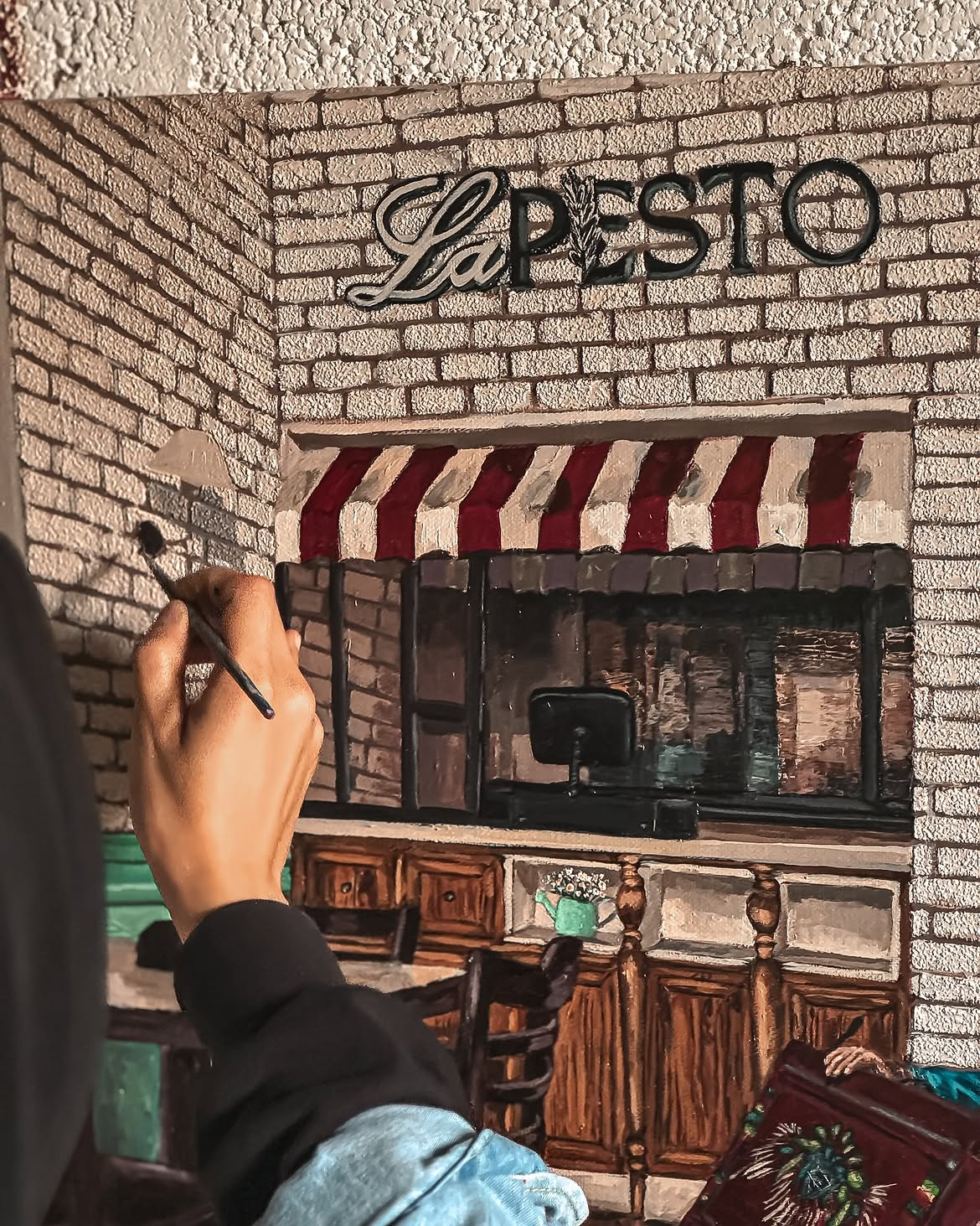
For Al-Mahoozi, the street is a democratic space where art belongs to everyone. She deliberately chooses public locations where commuters, pedestrians, and passersby can discover her work, even during the most ordinary moments of their day. Her willingness to challenge expectations extends beyond visual art. In her hometown of Qatif, she also became known as its first female Saudi coffee barista, learning the craft from Saeed Bazroon. It was another expression of her adventurous spirit and her belief that creativity can exist in unexpected forms.
“I truly feel alive when I do art.”
That sense of vitality continues to guide an artistic practice shaped by experimentation, cultural curiosity, and a desire to connect with others. Her curiosity extends beyond painting and coffee-making. From exploring new artistic techniques to taking an interest in boxing, Al-Mahoozi approaches life with the same openness that defines her creative practice. Each new experience becomes an opportunity to challenge expectations and discover another side of herself.
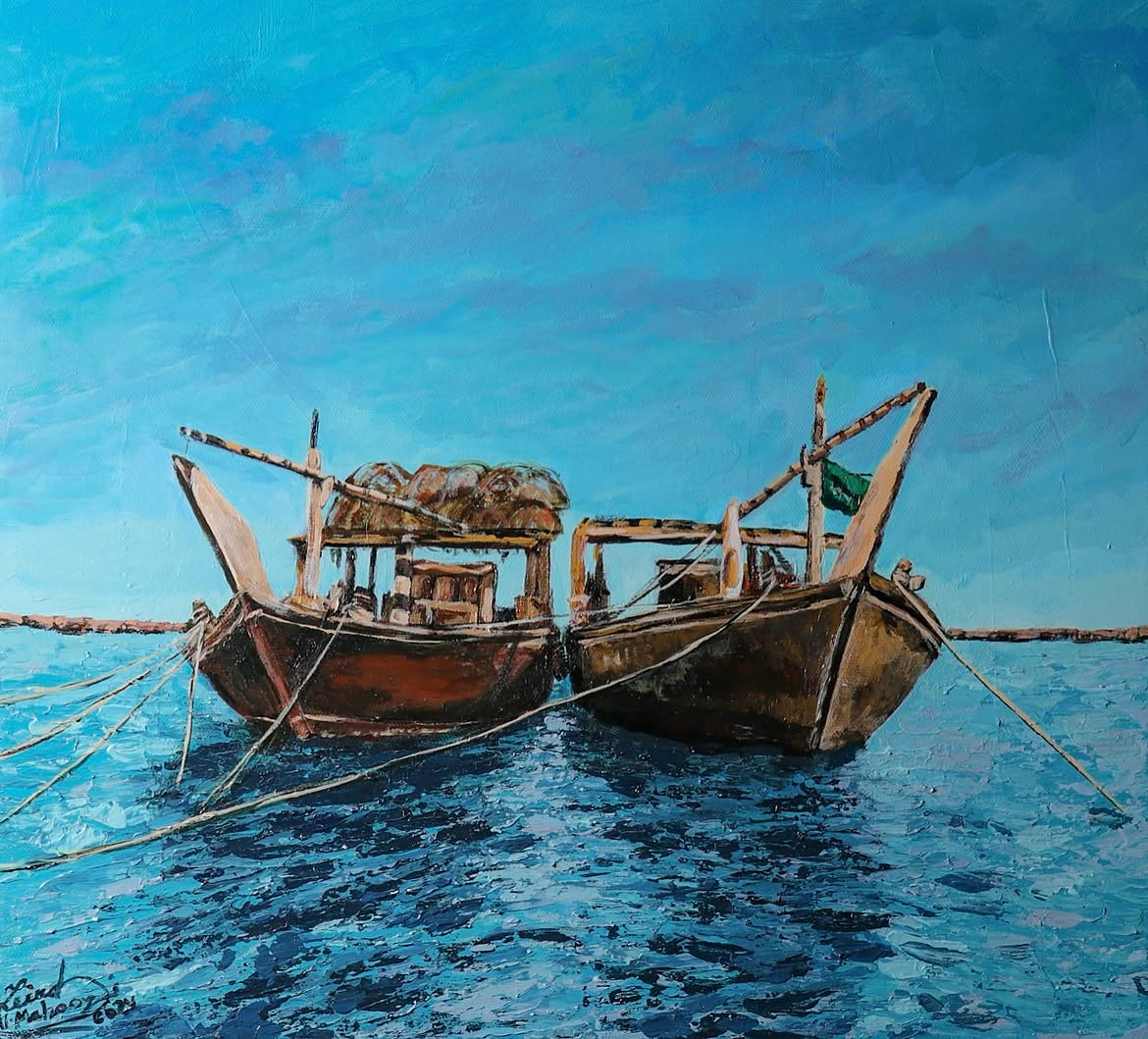
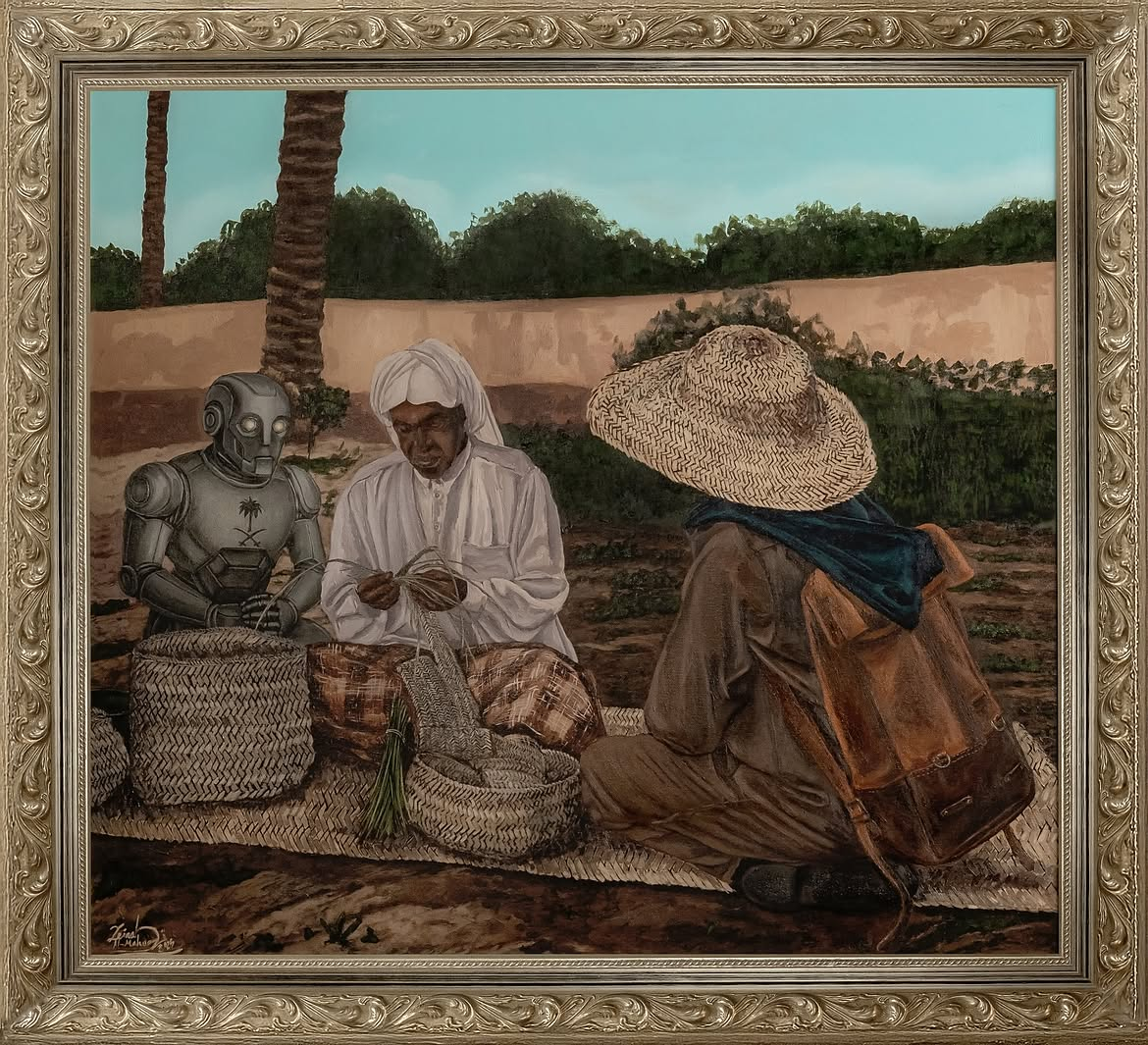

Among Zeinab Al-Mahoozi's most heartfelt works is The Street Cleaner, a mural created along the Qatif Corniche in 2017. Dedicated to sanitation workers, the piece honors individuals whose contributions to everyday life often go unnoticed. Created during a year focused on cleanliness, the mural was her personal expression of gratitude to the people responsible for keeping public spaces welcoming and cared for. Rather than portraying celebrated figures, Al-Mahoozi chose to elevate the dignity of ordinary workers, making them the subject of public appreciation.
The artwork took on an even deeper significance when sanitation workers visited the mural and saw themselves represented. Their emotional response affirmed something fundamental to her philosophy: art can make people feel recognized, respected, and valued. The Street Cleaner demonstrates how Al-Mahoozi uses public art as a form of social connection, transforming a simple street wall into a place of shared humanity.
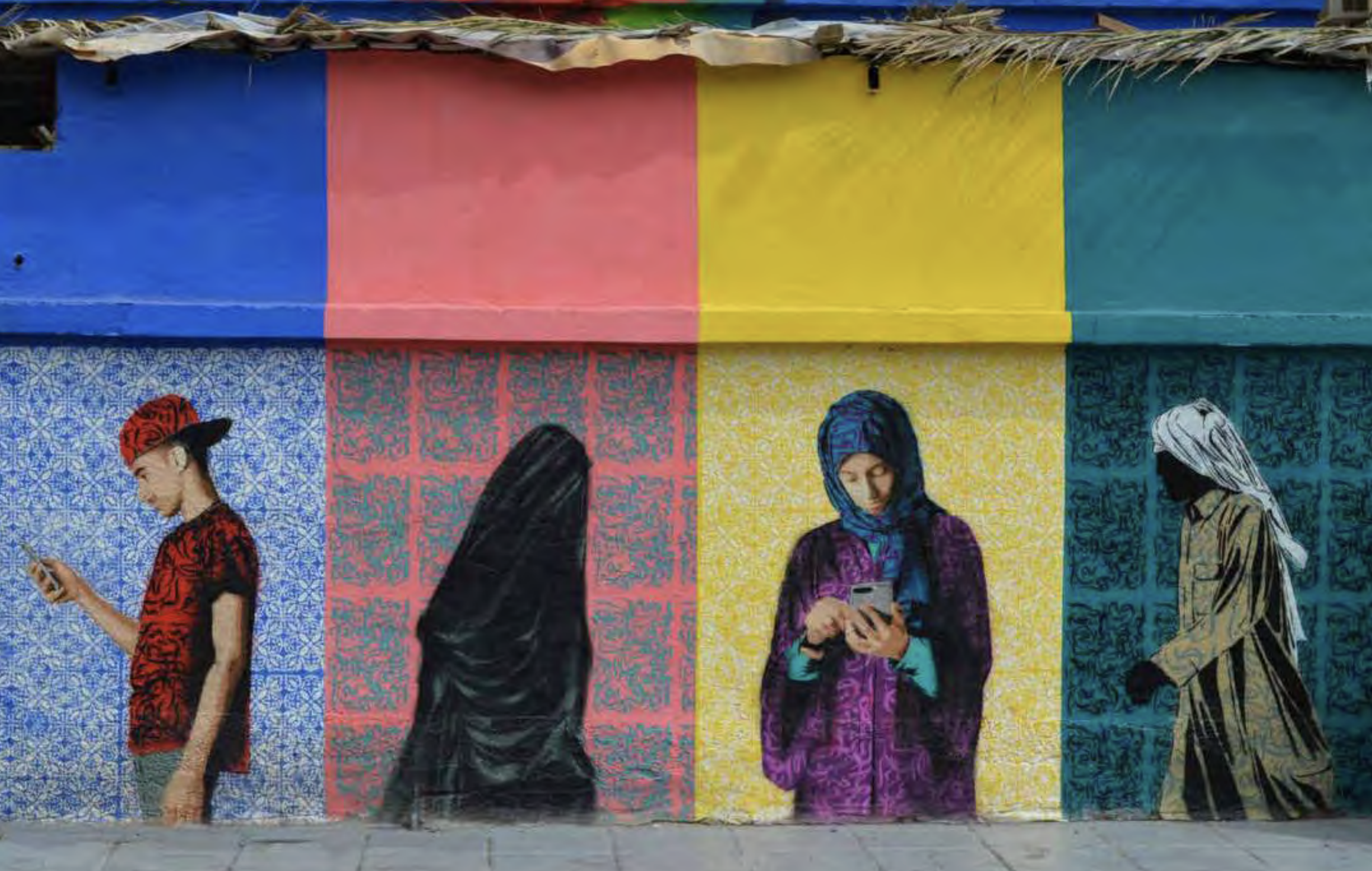

Nostalgia and cultural preservation are recurring themes in Zeinab Al-Mahoozi's practice, particularly in Jadi Wa Jadati, a series whose title translates to My Grandfather and My Grandmother. Through portraits of different generations, traditional Saudi clothing, and references to contemporary technology, she explores the contrast between past and present. Her work in old Khobar's Subykha neighborhood is especially evocative, bringing grandparents and younger generations into the same visual conversation.
Rather than treating tradition as something frozen in time, she presents heritage as a living influence that continues to evolve alongside modern Saudi society. In Al-Mahoozi's hands, memory is not simply preserved. It is reintroduced to new generations, inviting them to consider how much has changed and what remains worth carrying forward.

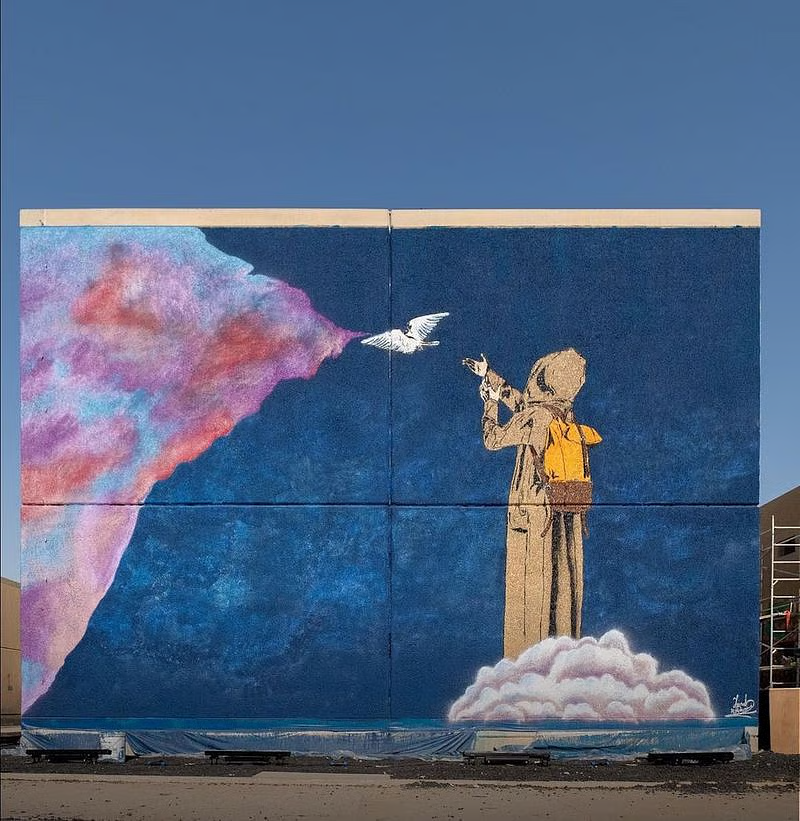
In 2022, Al-Mahoozi participated in Shift22, a mural art festival staged within the atmospheric grounds of the former Irqah Hospital in Riyadh. Her contribution, Rouh Min Noor (Spirit of Light), marked a particularly introspective moment in her practice. The mural presents a whimsical self-portrait of the artist releasing a bird toward a corner of the universe. Poetic and dreamlike, the image evokes freedom, peace, and the emotional courage required to let go.
Set against the abandoned hospital's architecture, the work gains an additional layer of meaning. A place once associated with healing becomes the setting for an artistic reflection on release and possibility. The mural also expresses themes of peace and tolerance, illustrating Al-Mahoozi's ability to bring emotional intimacy into large-scale public art. Where some of her earlier works focus on collective memory and social recognition, Rouh Min Noor turns inward, revealing an artist increasingly interested in exploring the relationship between personal identity, imagination, and emotional freedom.
Zeinab Al-Mahoozi's creative journey has taken her from the streets of Qatif to exhibitions, festivals, and cultural projects across Saudi Arabia and internationally. Her participation in public art initiatives reflects the growing recognition of street art as a meaningful part of the Kingdom's contemporary cultural landscape.
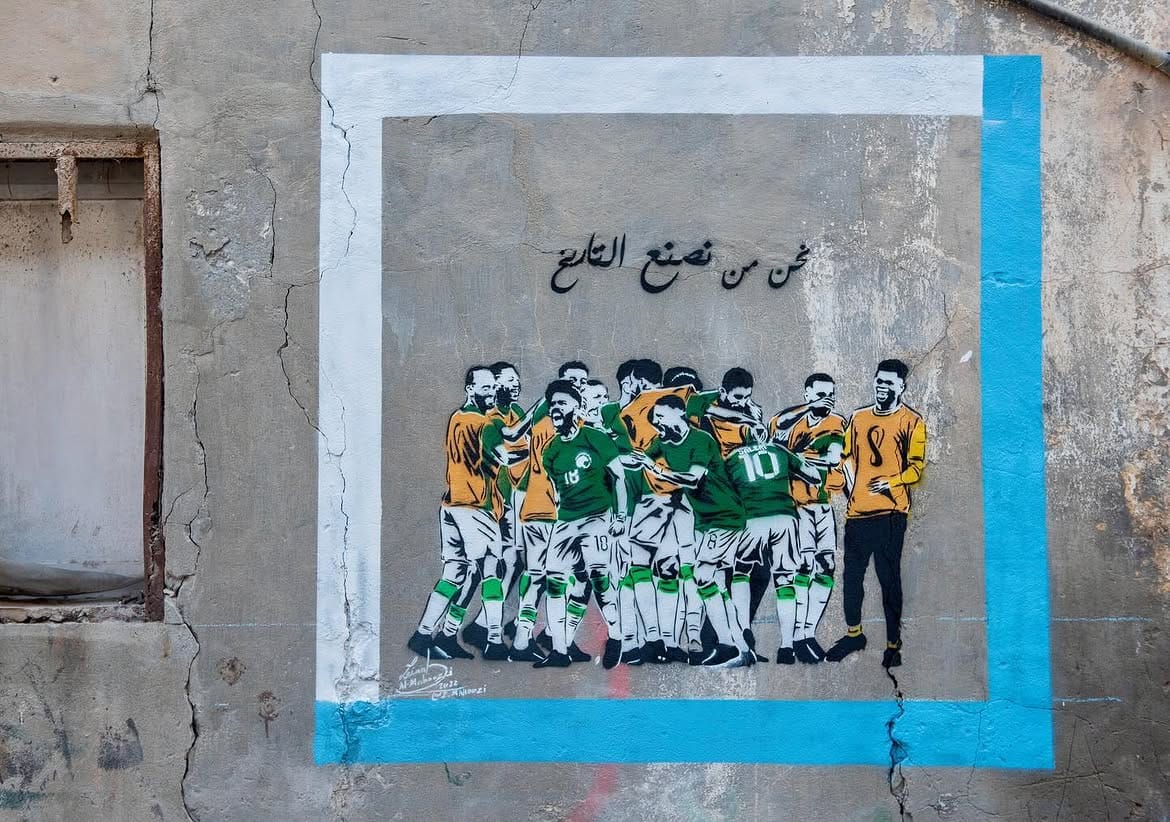
Her work has been featured at Riyadh Design Week and a Misk exhibition in Bahrain, while a sports-inspired commission appeared at Al-Jawhara Stadium in King Abdullah Sports City. Beyond the Gulf, she participated in Expo Art Workshops in Kazakhstan in 2017 and Saudi Cultural Days in Turkmenistan in 2019, bringing her distinct visual approach to international audiences.
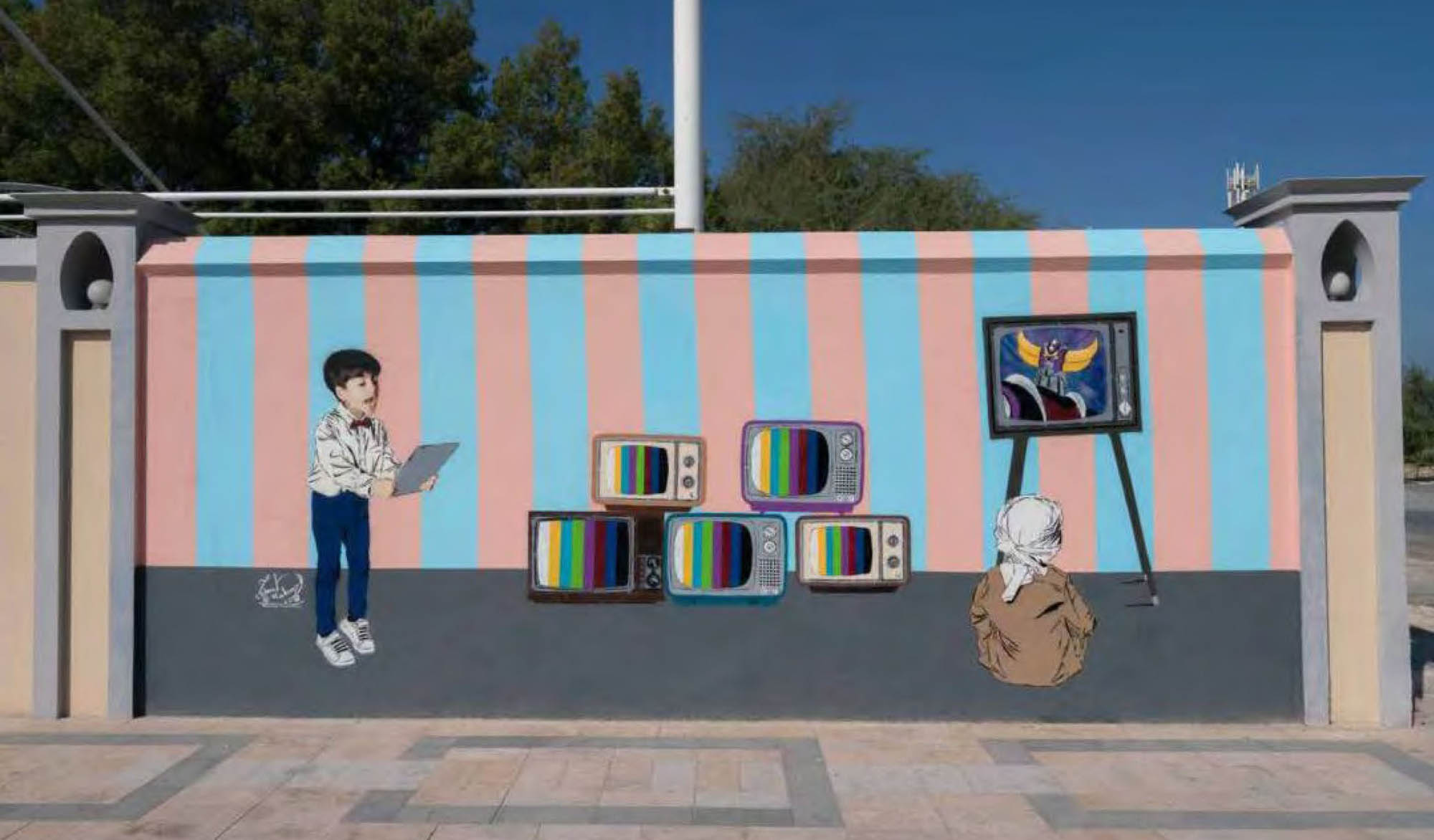
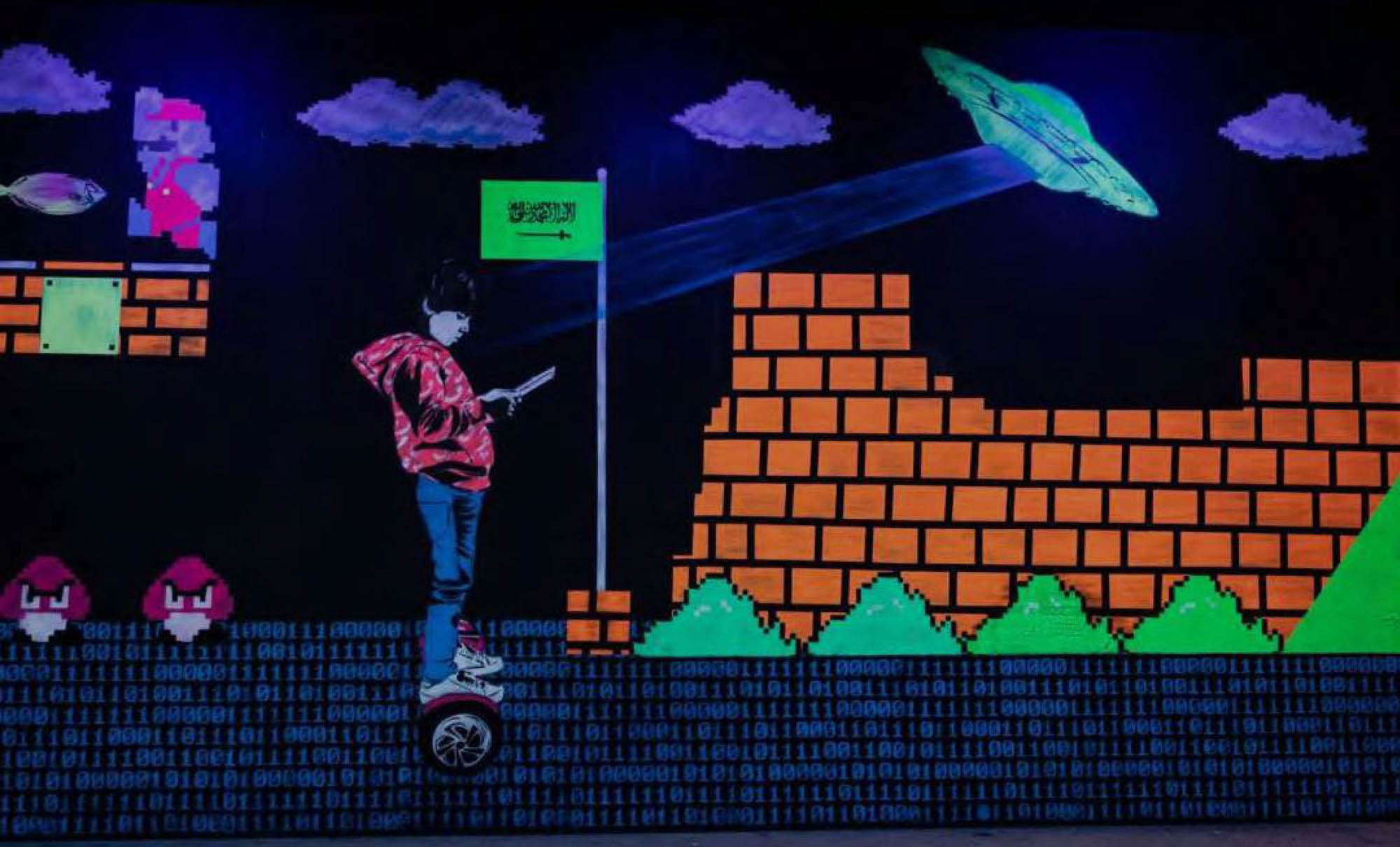
One of her most significant achievements came in 2018, when she received first place at the 24th Saudi Contemporary Art Exhibition in Jeddah for her artwork Ghaflah (Heedlessness). The piece examines how smartphones and social media can distract people from spiritual reflection and religious practices, revealing another dimension of her socially conscious artistic voice.
Her involvement in Shift22 in 2022 brought her practice into one of Riyadh's prominent contemporary mural art events, while her work has also reached public spaces in Jeddah, Khobar, and Dubai. In 2023, her artistic presence expanded through cultural projects associated with Riyadh's Mural Art Festival, AlUla's performing arts scene, and the Writers and Readers Festival at Qatif Waterfront. These settings reflect the increasingly varied environments in which contemporary Saudi artists are engaging audiences, from urban streets to major cultural gatherings.
Yet for Al-Mahoozi, recognition does not appear to be the ultimate measure of artistic success. Throughout her journey, she has remained committed to creating work that sparks reflection, preserves cultural identity, and makes art accessible beyond institutional walls.
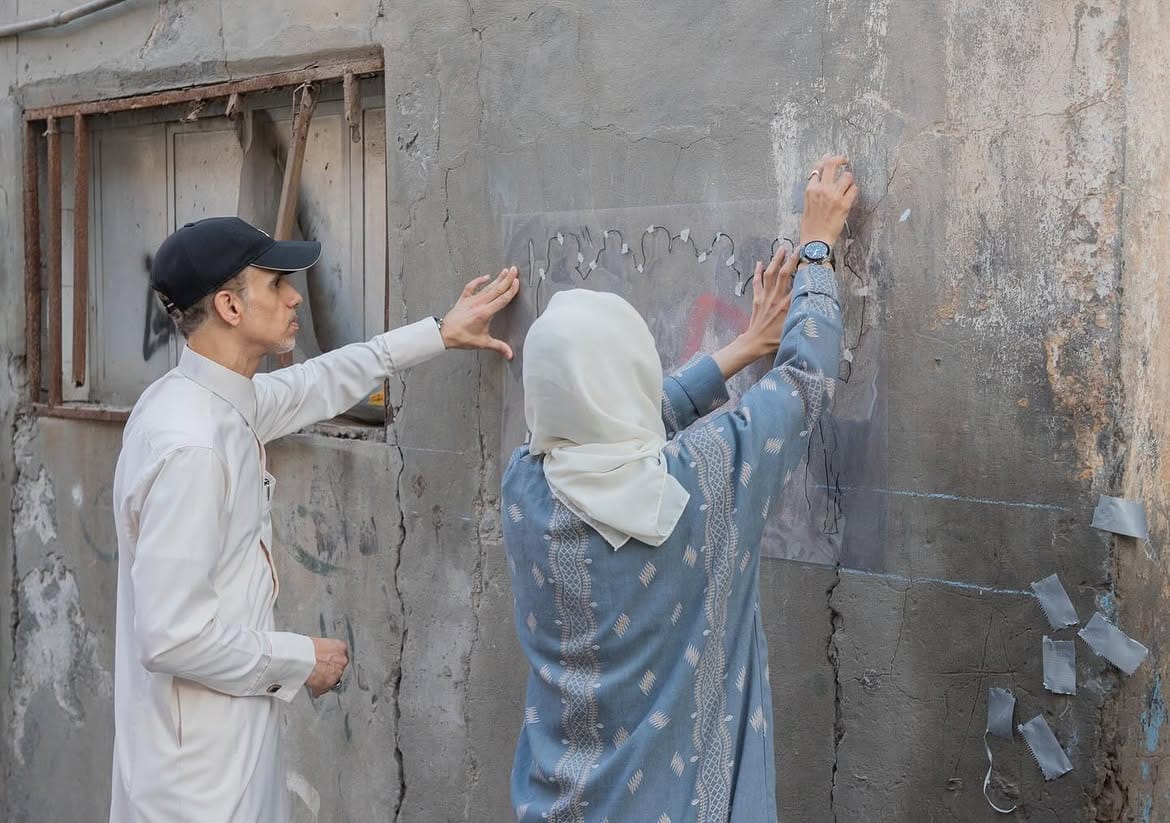
Beyond her murals, Zeinab Al-Mahoozi continues her creative practice through Zeinab Al-Mahoozi Studio, sharing artworks that explore Saudi heritage and contemporary identity. Her commitment to giving back is equally personal. Following her father's passing, she launched a charitable art initiative, directing 10% of the sale price of participating artworks to charitable associations, with the first contribution supporting orphans. Her Asmak Al-Khair (Fish of Goodness) series, exhibited in Riyadh in 2024, reflects this spirit, reimagining Qatif's marine heritage through colorful stencil art and traditional fabrics.
Zeinab Al-Mahoozi's artistic journey is a reminder that creativity does not always begin in a studio or belong inside a museum. Sometimes, it begins with a child's notebook, finds its way onto a neighborhood wall, and grows into a visual language capable of connecting generations and communities. From honoring overlooked workers to preserving Saudi heritage and exploring the freedom of self-expression, her art reflects a deeply human understanding of the world around her.
As Saudi Arabia's cultural landscape continues to expand, Al-Mahoozi is helping redefine not only what public art can look like, but also who it can speak to. Her greatest contribution may be the simplest: turning the streets we pass through into places where stories are remembered, emotions are shared, and everyone has an opportunity to encounter art.
Discover more artist stories at KSAArt.