The Making of Modern Saudi Art
Through "Bedayat: Beginnings of the Saudi Art Movement", we explore how Saudi modern art took shape through education, archives, pioneering artists, and a changing Kingdom.


Through "Bedayat: Beginnings of the Saudi Art Movement", we explore how Saudi modern art took shape through education, archives, pioneering artists, and a changing Kingdom.
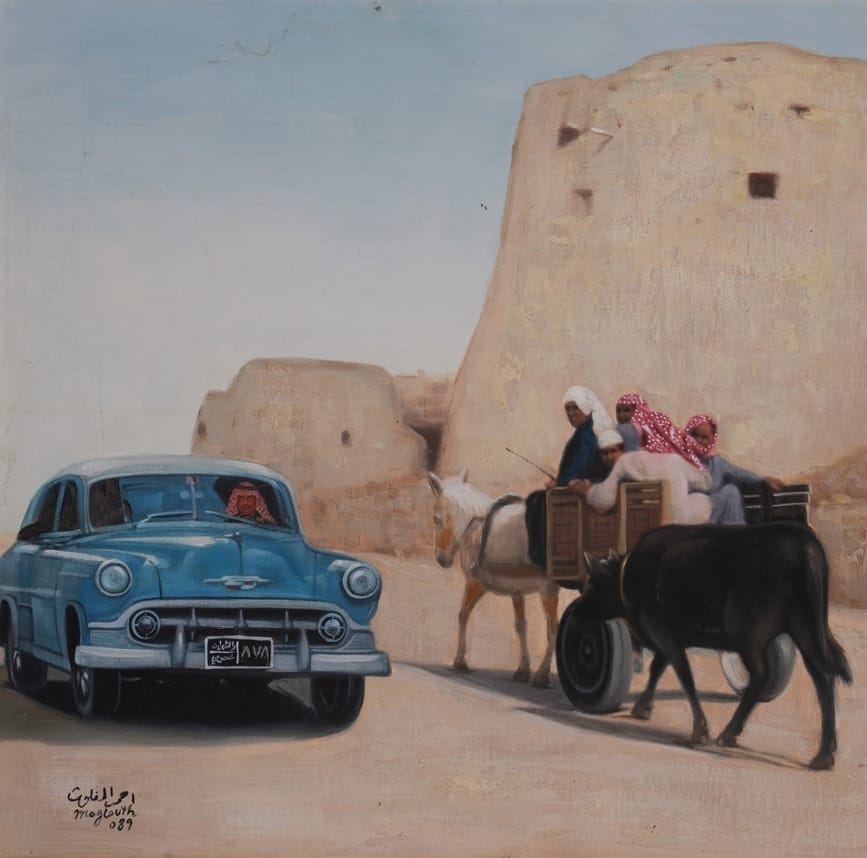
Before Saudi art gained global attention, there were artists quietly teaching the country how to see itself. Their work did not arrive in a single wave, but through a series of beginnings: a drawing lesson in a classroom, an early public exhibition, a scholarship abroad, a canvas filled with the textures of a changing world. From these gestures emerged a modernism rooted in local life and alive to transformation.
That slow emergence is what gives Saudi modern art its particular force. It was never simply a matter of style. It was shaped by artists, teachers, ministries, archives, travel, and a growing determination to record a society in motion. Bedayat: Beginnings of the Saudi Art Movement provides a powerful frame for that story, tracing how modern art in the Kingdom was built through archival foundations, evolving visual languages, and a generation of pioneers who gave the movement lasting form.
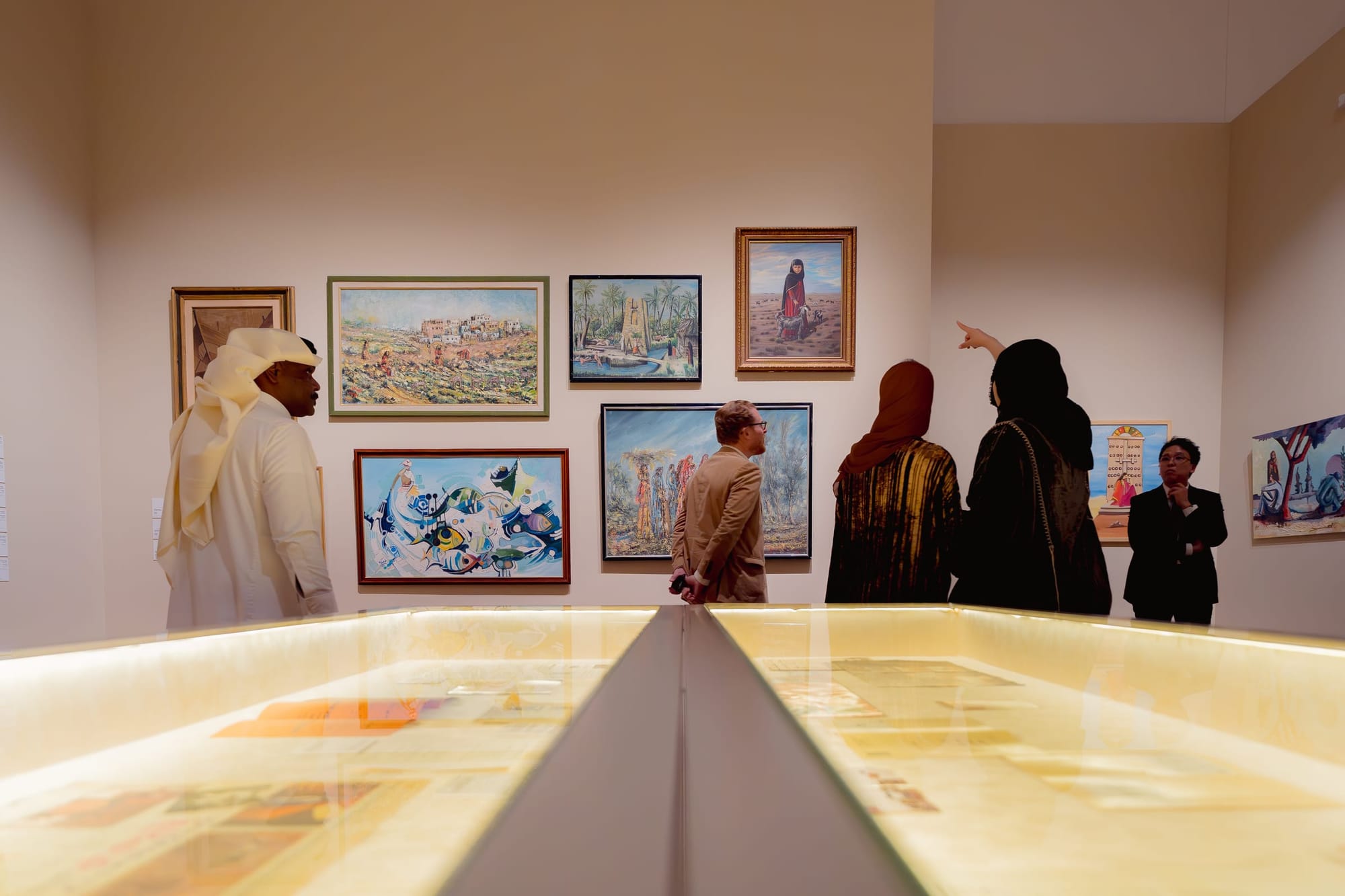
“We celebrate here the history of modern art in Saudi Arabia, and we are proud to foreground its rich legacy by honoring the pioneering figures as well as the public and private initiatives whose collective efforts shaped the art scene of this era.”
– Dina Amin, CEO of the Visual Arts Commission
The roots of Saudi modern art stretch back to the 1940s, when the first visible foundations of a national visual culture began to form. One of the earliest known public markers comes in Jeddah, where Mohammed Ahmed Rasim held what is described as the Kingdom’s first known public art exhibition at the Saudi Hollandi Bank. By 1945, drawing had entered secondary education through the Directorate of Education, placing art inside the public sphere through instruction as well as display.
What matters about this decade is not scale, but significance. Art was beginning to move from private interest into public possibility. Before there could be a movement, there had to be visibility. Before there could be artistic generations, there had to be educational access. In hindsight, the 1940s feel quiet but decisive. They planted the idea that art could belong within the educational and cultural life of the nation.
By the 1950s, those early beginnings had started to gain stronger institutional shape. In 1952 to 1953, a first school exhibition showcasing student work was held at the Saudi Scientific Institute in Makkah, while the Directorate of Education was transformed into the Ministry of Education. These developments matter because they show art becoming both teachable and publicly present.
By 1957 to 1958, art education had been formally integrated as a school subject across primary, intermediate, and secondary levels, and workshops were organized to train a new generation of art teachers. By the late 1950s, students were already receiving scholarships to Cairo’s Higher Institute of Art Education, later the Faculty of Art Education at Helwan University.
This is where Saudi modern art begins to feel structurally real. It was not developing through inspiration alone. It was being scaffolded by curriculum, teacher formation, and early transnational study.
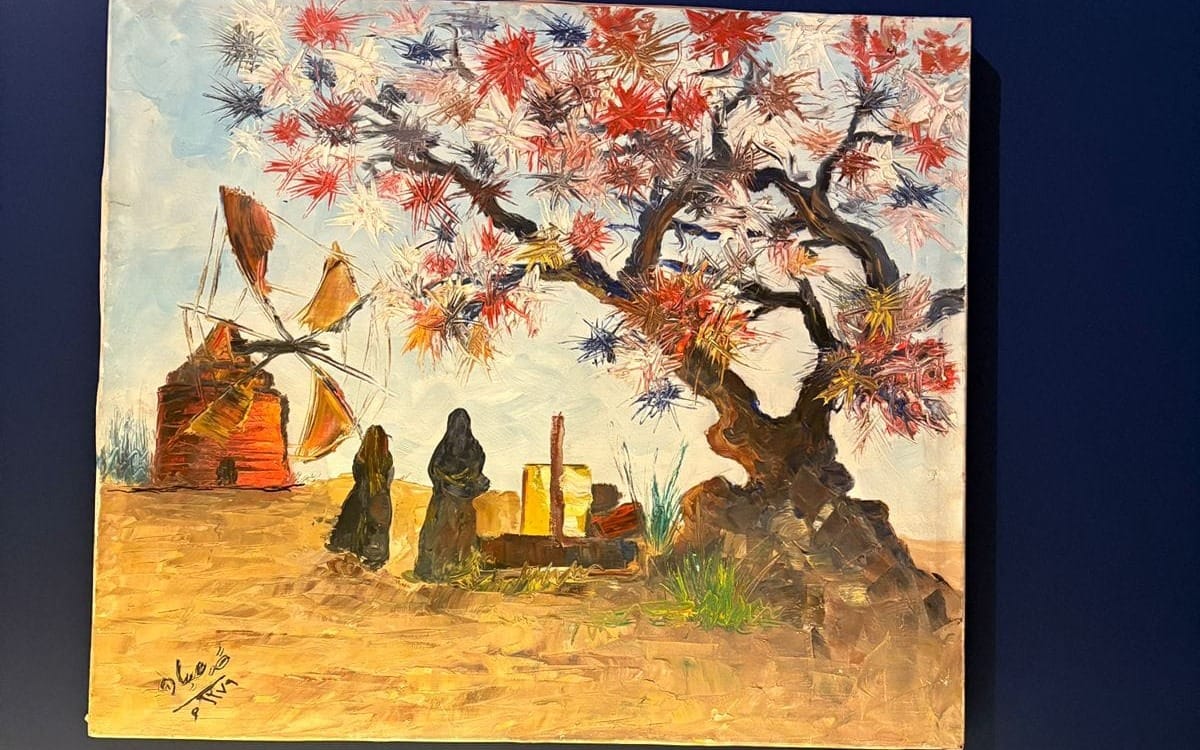
If the earlier decades opened the door, the 1960s built the architecture. Scholarship opportunities widened in 1960, allowing students to continue their studies in Europe and elsewhere. In 1962, the curriculum itself shifted, replacing the older phrasing of “drawing and handicrafts” with the more expansive term “art education.” Artists also began to organize into art circles, a sign that a scene was taking shape socially as well as academically.
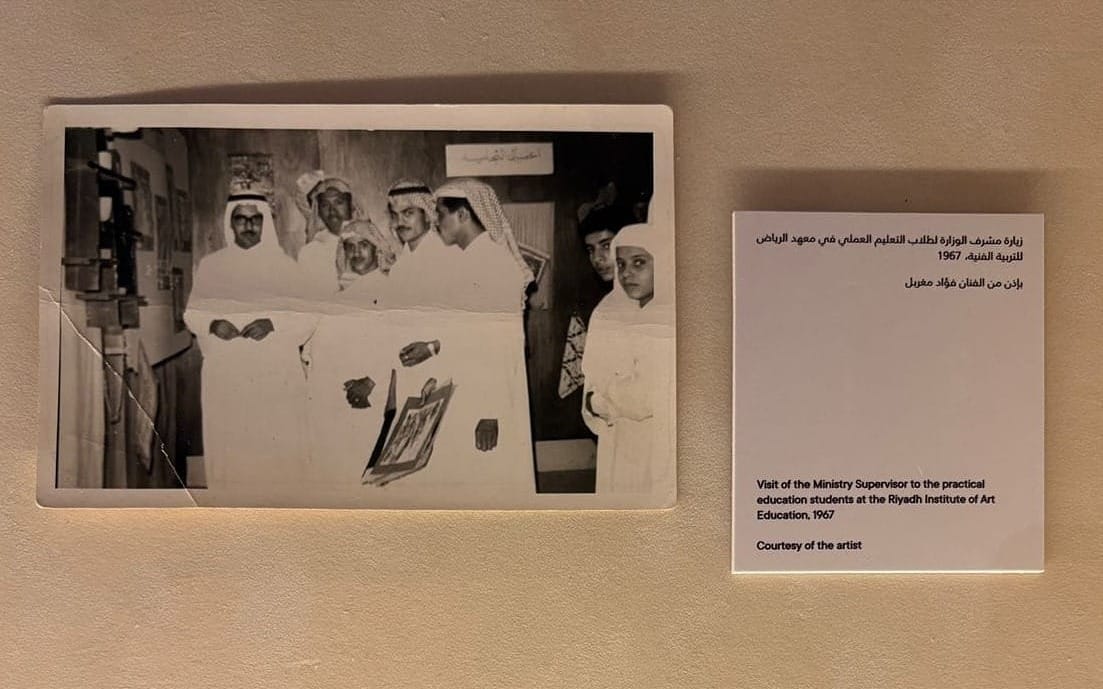
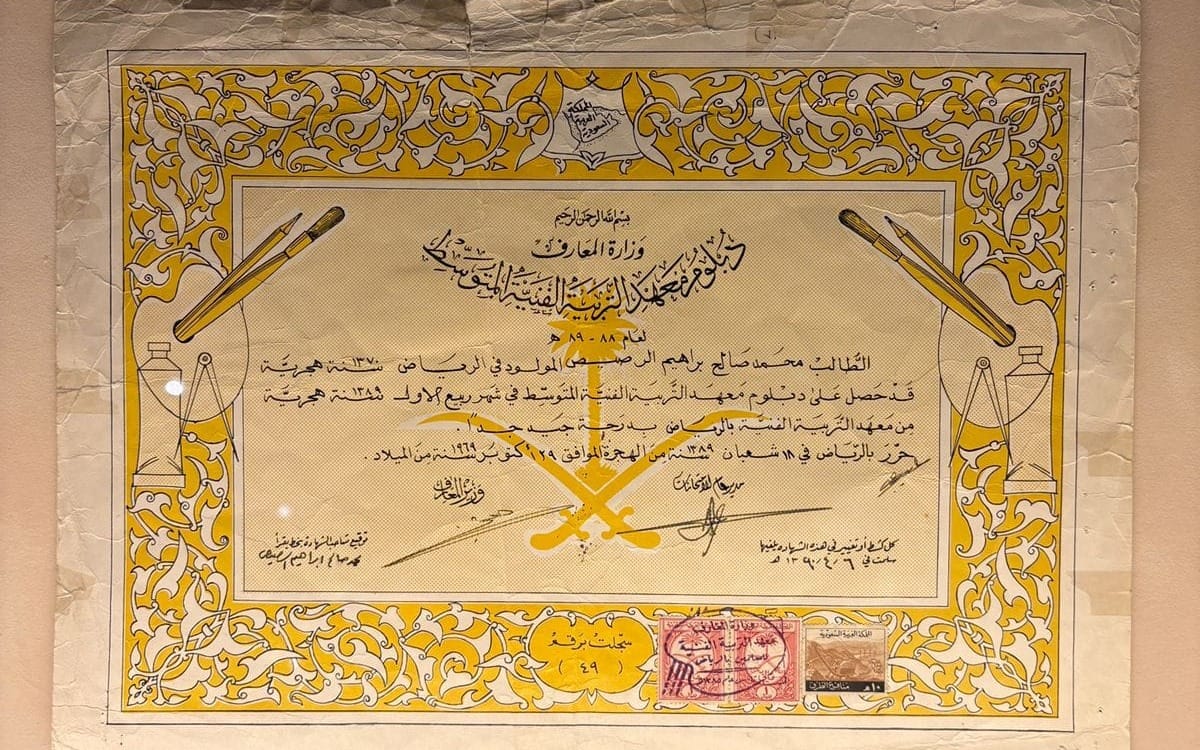
A major institutional milestone came in 1965 with the establishment of the Institute of Art Education in Riyadh. Saudi artists, Arab artists, professors, and educators collaborated to refine the curriculum and strengthen the Kingdom’s art pedagogy. By 1967, Abdulhalim Radwi had been appointed to supervise the Jeddah Fine Arts Centre, the first government sponsored center of its kind, where he organized workshops and exhibitions. That same year, he staged what came to be regarded as the Kingdom’s first professional solo exhibition at the Red Sea Club in Jeddah. The decade also saw Mohammed AlSaleem make his early public debut in Riyadh, exhibiting at the Al-Nassr Football Club.
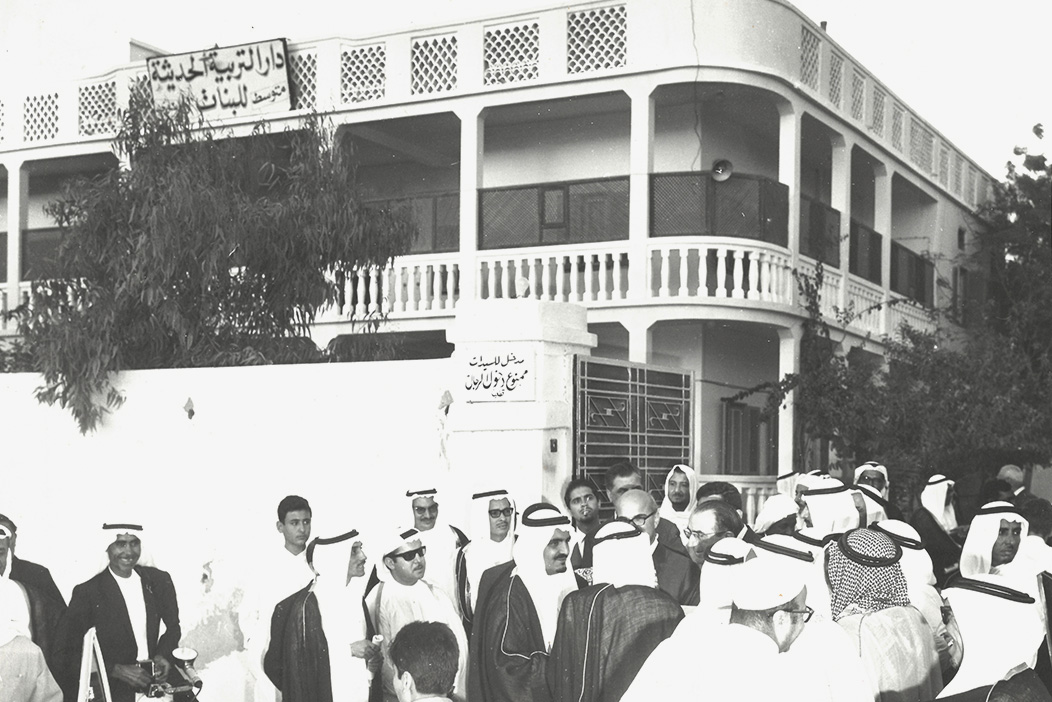
Then, in 1968, a profound shift took place. Safeya Binzagr and Mounirah Mosly collaborated on the first public exhibition by female artists in the Kingdom, held at Dar Al-Tarbiyah girls’ school in Jeddah. Yet neither artist was permitted to attend her own opening because of gender segregation. That contradiction says a great deal about the era itself. Public cultural breakthroughs were happening, but access to public space remained uneven. Binzagr and Mosly were not simply participating in the movement. They were enlarging it under conditions that still tried to keep them at a distance.
The archival materials from this period make the movement’s growth feel especially vivid. Exhibition catalogs, scholarship letters, commission drafts, newspaper clippings, and academic research show an art scene assembling itself in real time. What emerges is not only a history of artworks, but a history of infrastructure, ambition, and cultural labor.
By the 1970s, Saudi modern art had become more public, more confident, and more formally adventurous. These were the years in which the movement expanded beyond its institutional foundations and began to define its visual terrain with real conviction.
One strand of that expansion was civic. In 1972, a public art project initiated by the municipality of Jeddah invited pioneering artists to help transform the city into an open-air museum. In 1973, the Saudi Arabian Society for Culture and Arts was inaugurated in Riyadh and later opened branches across the Kingdom, providing artists with an institutional platform. In 1974, the General Administration for Youth Welfare was established as a key body for sports, youth, and cultural life. In 1975, art education diplomas were introduced at select universities. In 1976, youth exhibitions expanded across the Kingdom, and Saudi participation in Arab youth exhibitions gained coordination and scale. By 1979, Mohammed AlSaleem had founded Dar Al Funoon Al Sa’udiyyah in Riyadh, creating a vital gathering place for exhibitions, artists, materials, and exchange, while Nabila Albassam opened the Arab Heritage Gallery in Khobar.
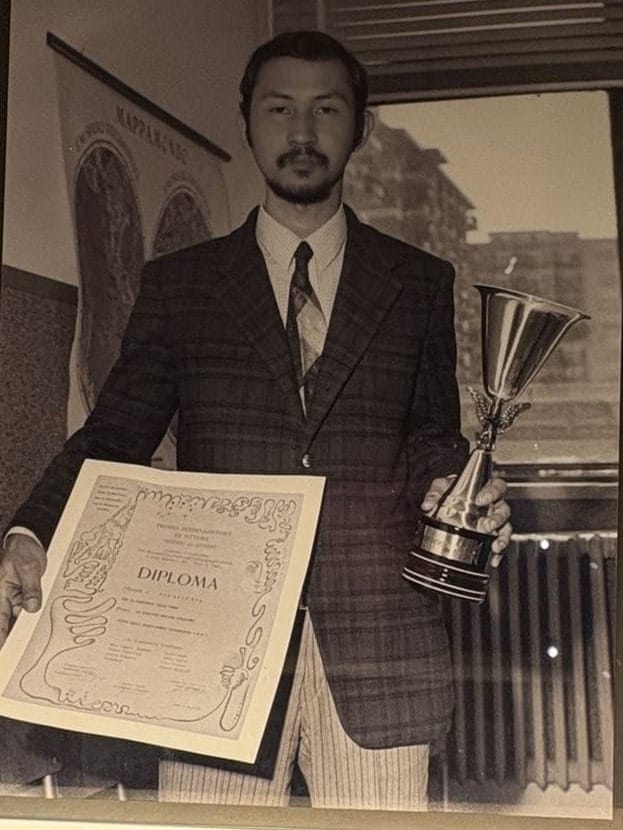
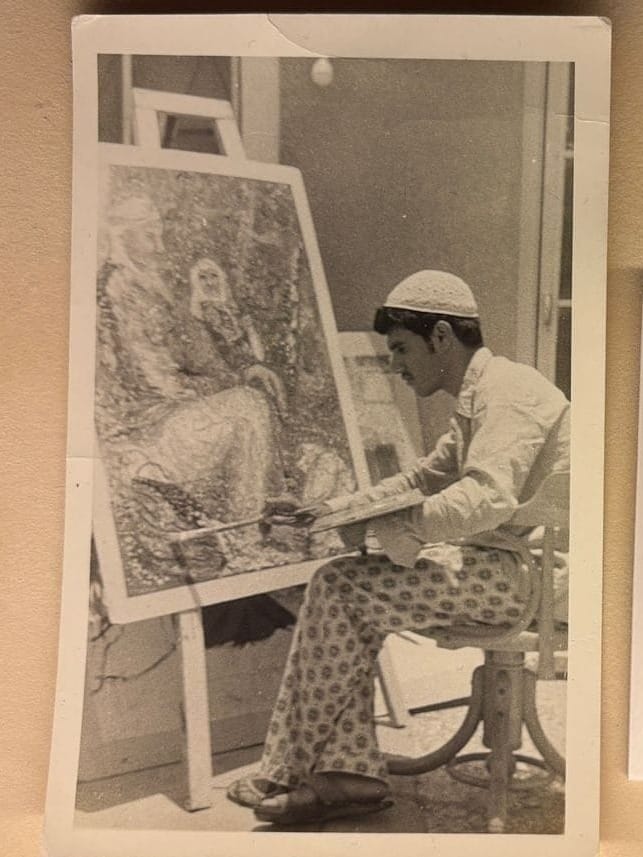
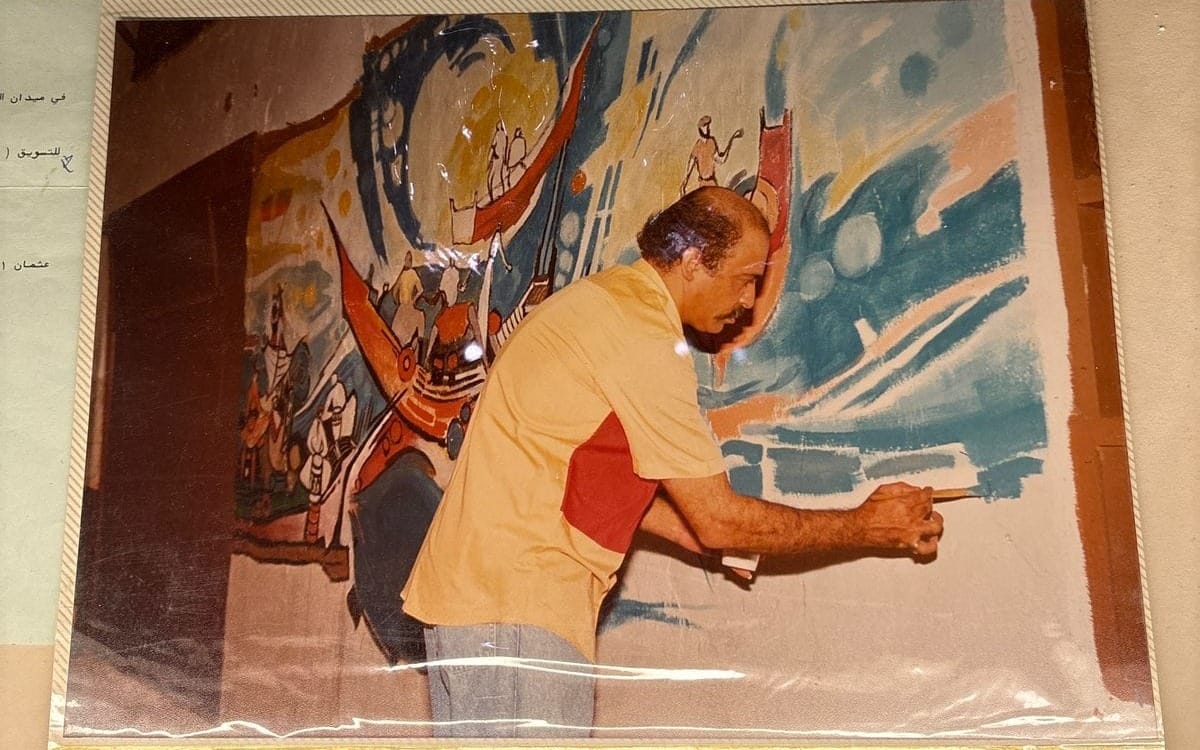
(Left) Dia Aziz Dia holding his diploma and graduation trophy from the Academy of Fine Arts, 1971. (Right) Abdullah Almarzoug seated beside his painting “Al-Harrafin,” 1970s.
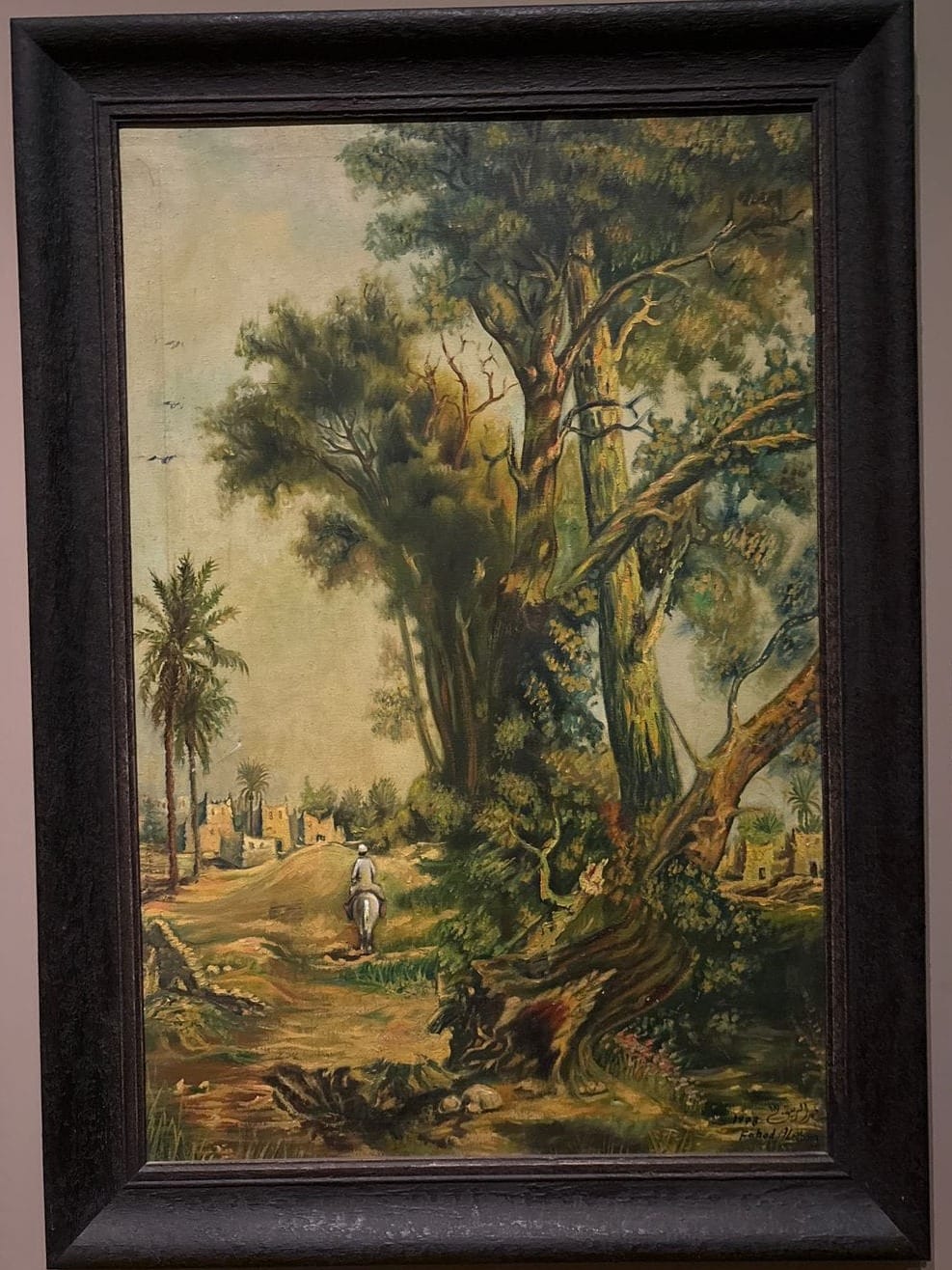
Another strand was artistic. Landscape became one of the movement’s most resonant subjects. Mountains, deserts, palm groves, village architecture, and historic neighborhoods appeared not as neutral scenery, but as carriers of memory and belonging. A line of palms could suggest inheritance. A mud wall could hold the emotional density of continuity. Even when artists moved toward stylization, the bond to place remained unmistakable.
At the same time, daily life entered the frame with equal force. Markets, ceremonies, labor, neighborhood encounters, dance traditions, coffee rituals, and forms of work from fishing to shepherding became part of the visual language of modernity. What emerges from these works is not an art of detachment, but an art of attention. Saudi modernism stayed close to people.
This broader visual field is reflected in the show’s four thematic currents: Faces and Features, Nature and Landscape, Social Life, and Dreams and Symbols. Many artists had studied or traveled abroad, especially in the United States and Europe, and their experiments with expressionism, surrealism, cubism, collage, and abstraction became ways of processing social anxiety, psychological tension, and the accelerating pace of change.
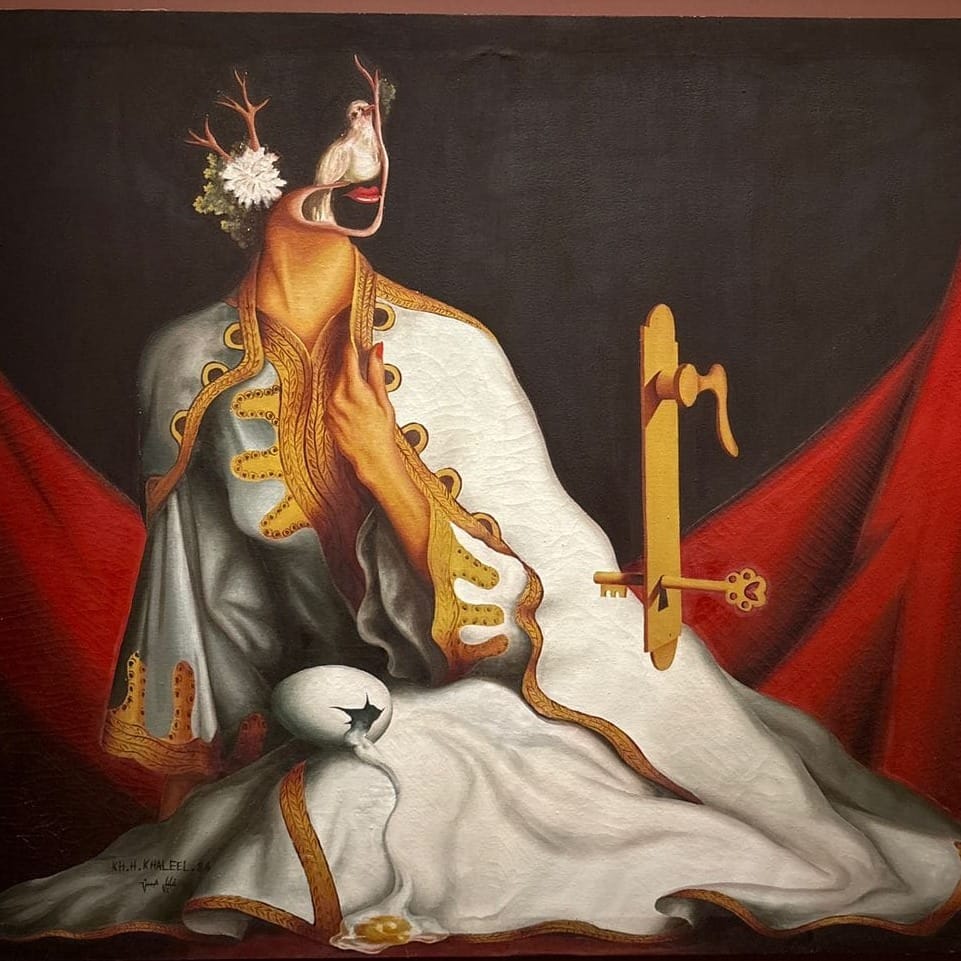
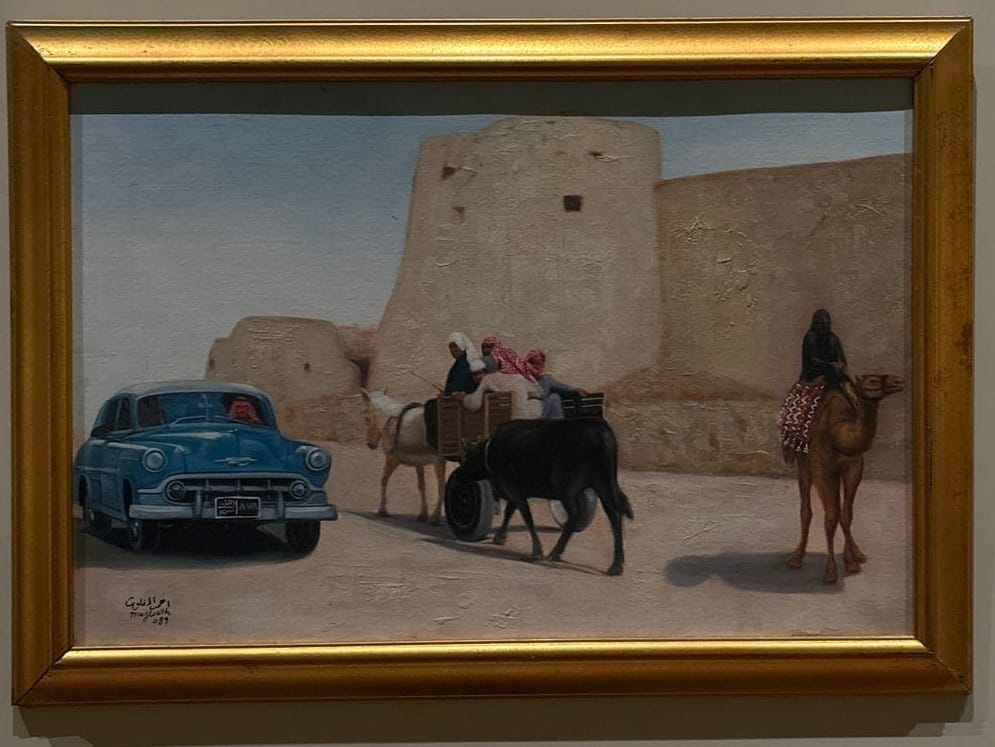
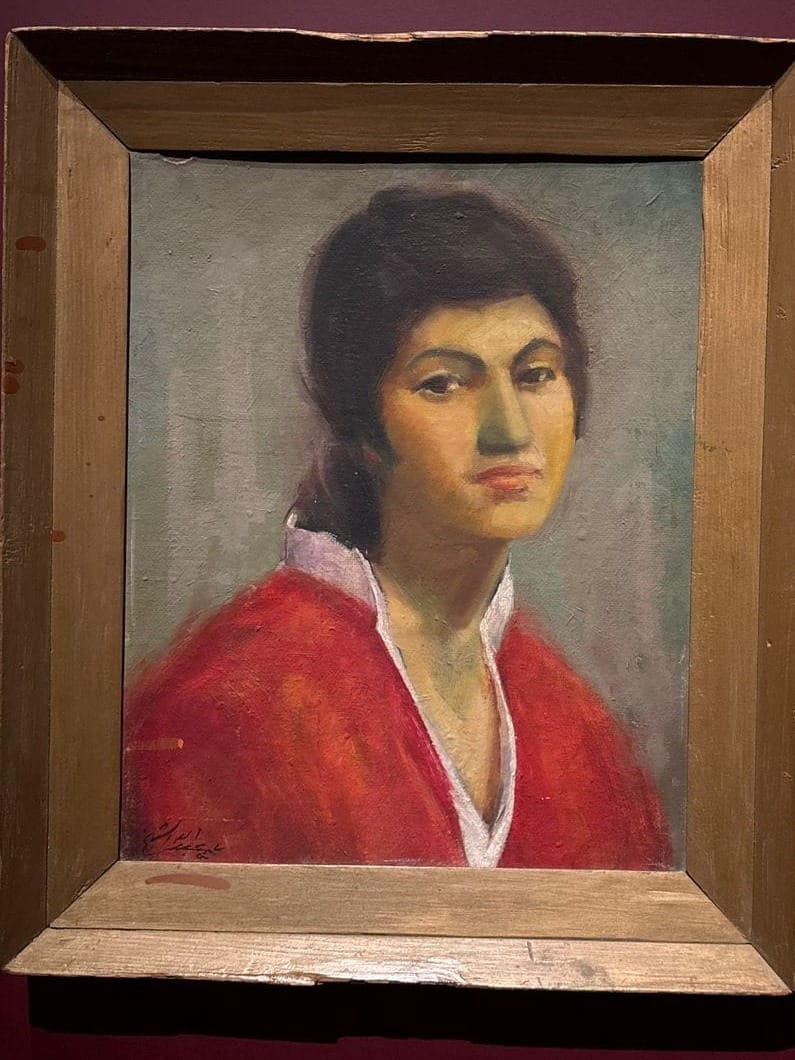
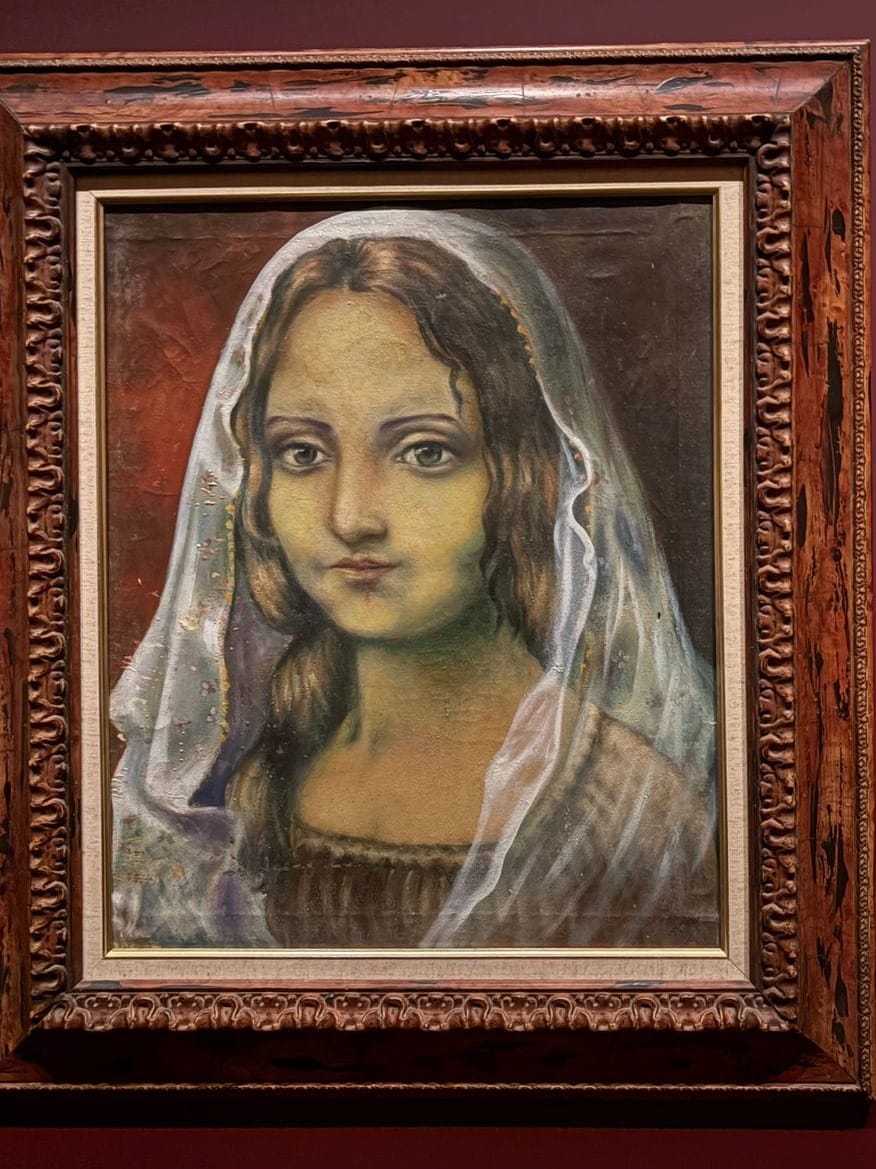
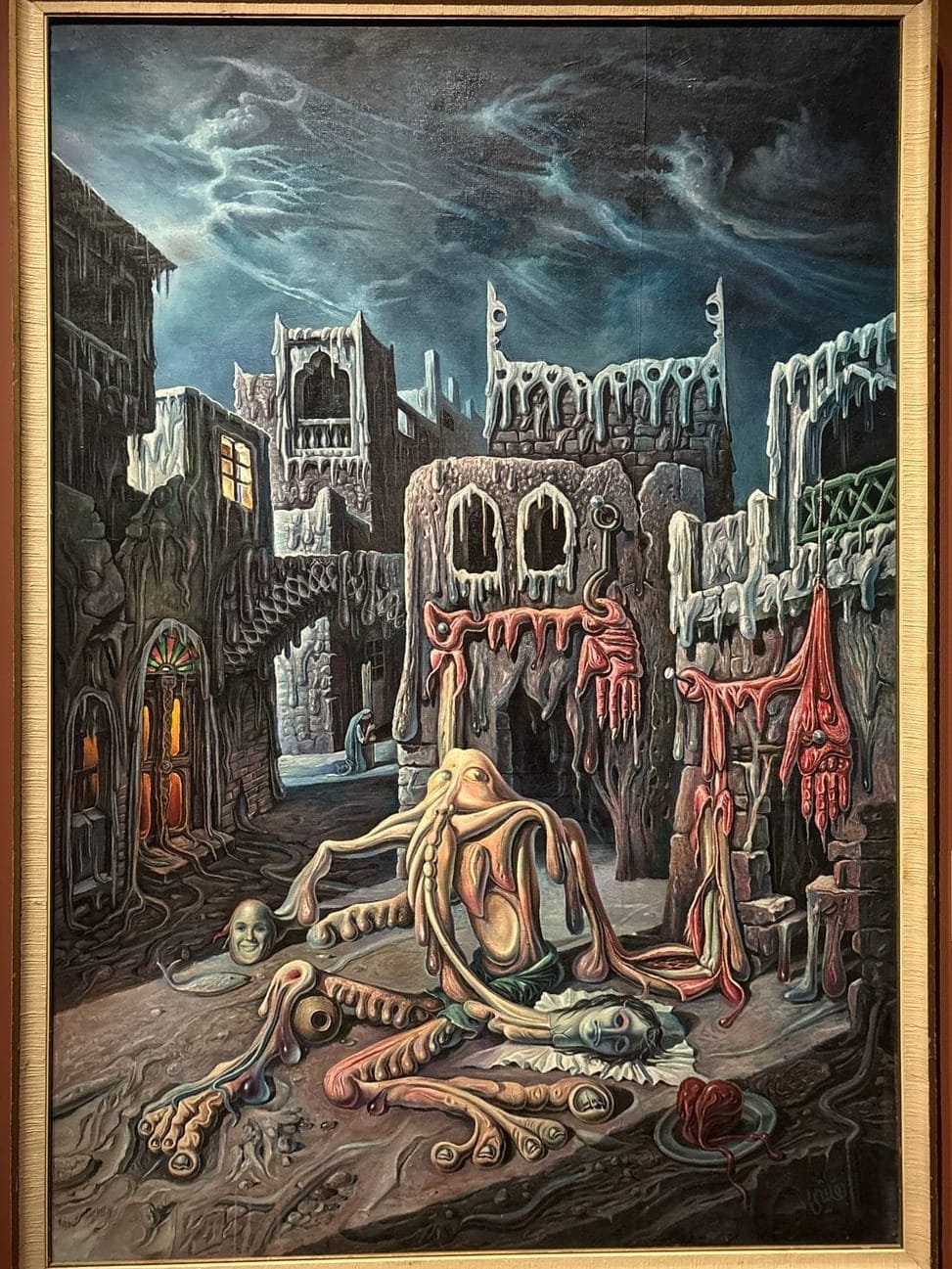
By the 1980s, Saudi modern art had reached a more layered maturity. The movement was no longer only concerned with depicting the visible world. It had also begun to explore inner states, metaphor, symbolic tension, and the fractures of modern selfhood.
Portraiture became one of the clearest vehicles for that shift. The human figure was no longer just a likeness. It became a site of introspection, ambiguity, and emotional pressure. Works such as Khalil Hassan Khalil’s The Broken Mirror (1982) turn fragmentation itself into a language of modern unease, while Dia Aziz Dia’s Father / A Study (1972) offers a composite portrait that feels both intimate and withheld. Faisal Samra’s Untitled (1985) presents a stark image of vulnerability, and Abdulsattar Al Mussa’s The Sailor (1986) distills a mood of weariness and distance into a single weathered figure.
At the same time, symbolism and surrealism entered the movement more forcefully. Old neighborhoods, local customs, inherited forms, Islamic geometry, and calligraphic rhythms were transformed into metaphorical and dreamlike languages. The result was not passive imitation of international trends, but their localization. Saudi modernism became capable of holding both the outer world and the inner one at once.
Public visibility was expanding too. Between 1981 and 1983, King Abdulaziz International Airport in Jeddah and King Khalid International Airport in Riyadh opened, and a significant number of Saudi artists were involved in embellishing their public areas. In 1984, Saudi artists participated in the Cairo Biennale, widening the Kingdom’s presence in major international forums. In 1985, the GCC Art Friend Group was formed, bringing Saudi modernism into stronger regional circulation. By the late 1980s, the Saudi Center for Fine Arts had opened in Jeddah with sections dedicated to women and children, while Al-Muftaha Arts Village was founded in Abha as a nonprofit initiative supporting artistic production and cultural exchange. By this point, the movement had become unmistakably plural: realist and symbolic, social and psychological, rooted and outward looking.
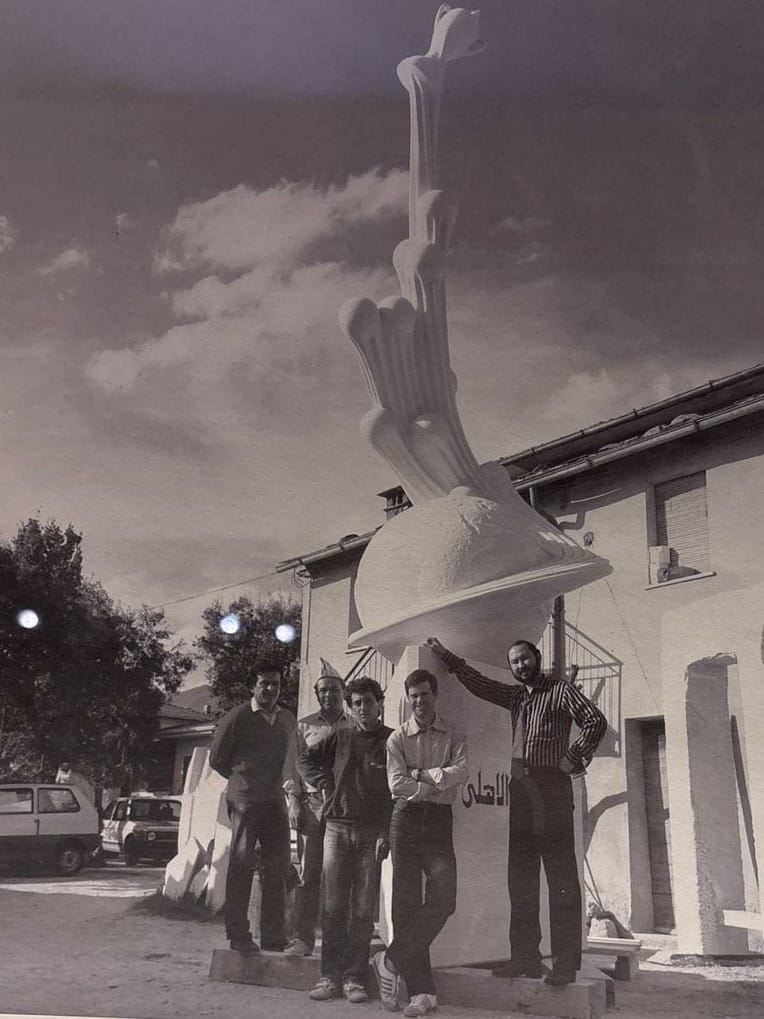
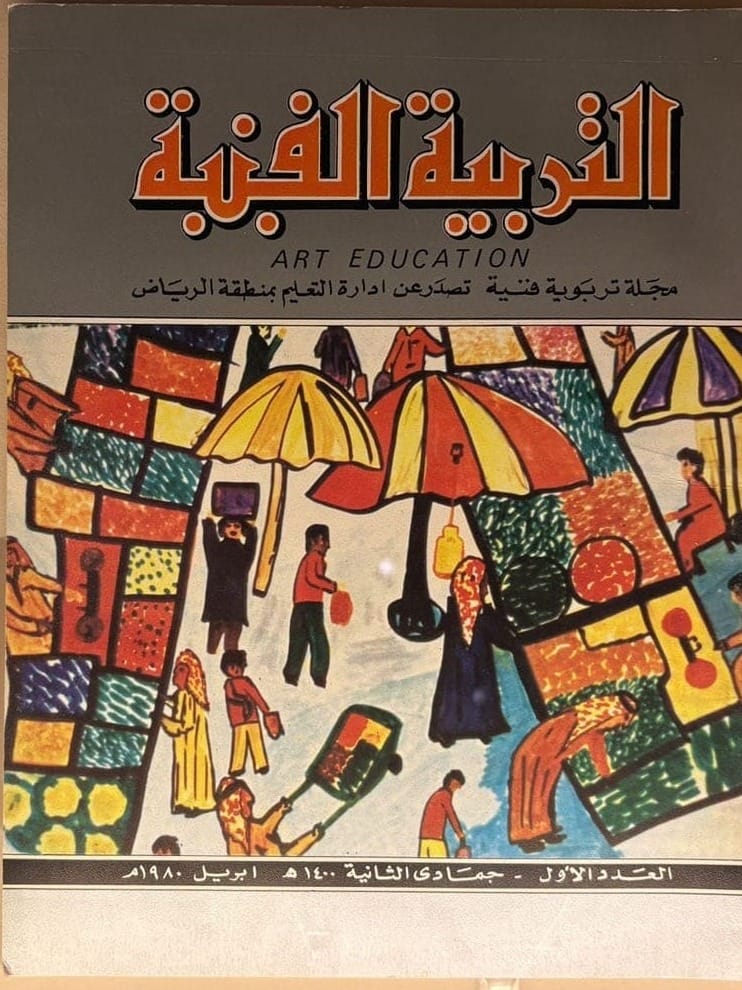
(Left) Dia Aziz Dia standing with the sculpture created for Al-Ahly Sports Club in Jeddah, 1985. (Right) Cover of the Art Education journal, issue 2, April 1981.
Four figures stand at the clearest center of this story. What unites them is not a single style, but a shared search for artistic forms capable of expressing Saudi identity with seriousness and originality. Together, these artists gave the movement its strongest human center.
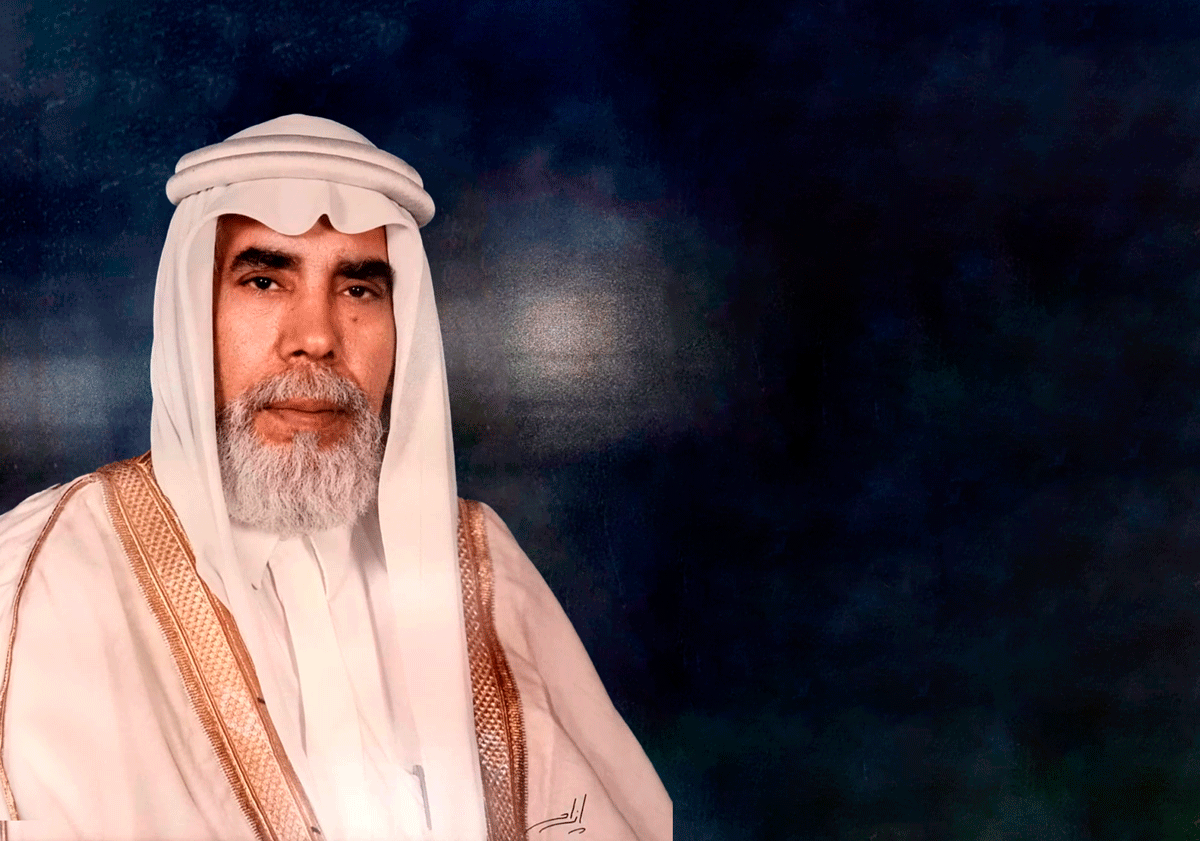
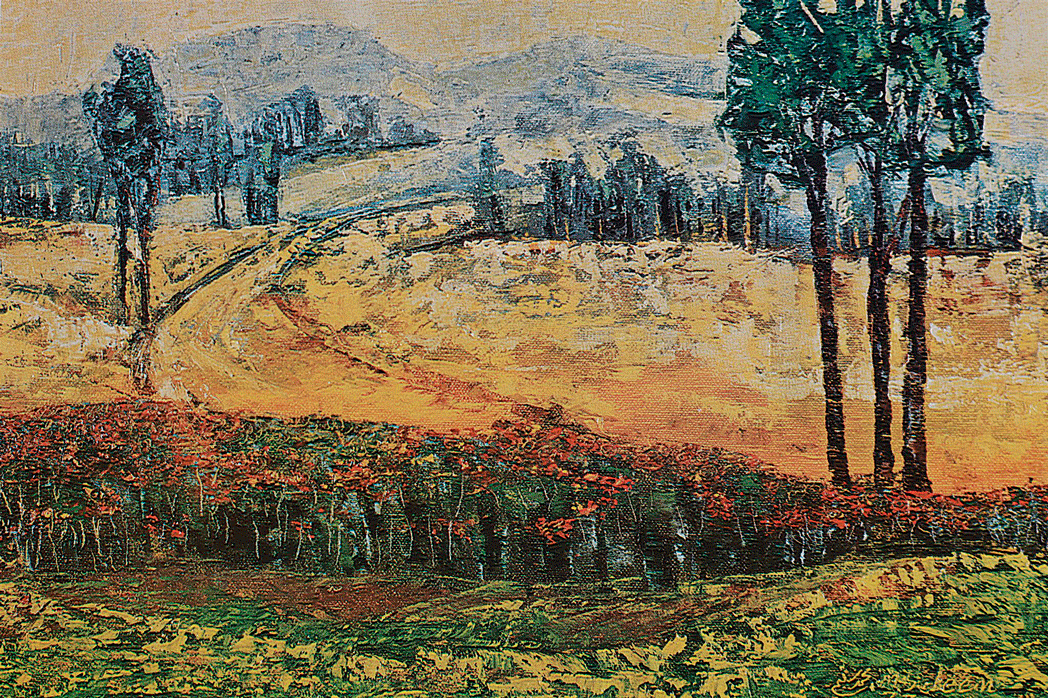
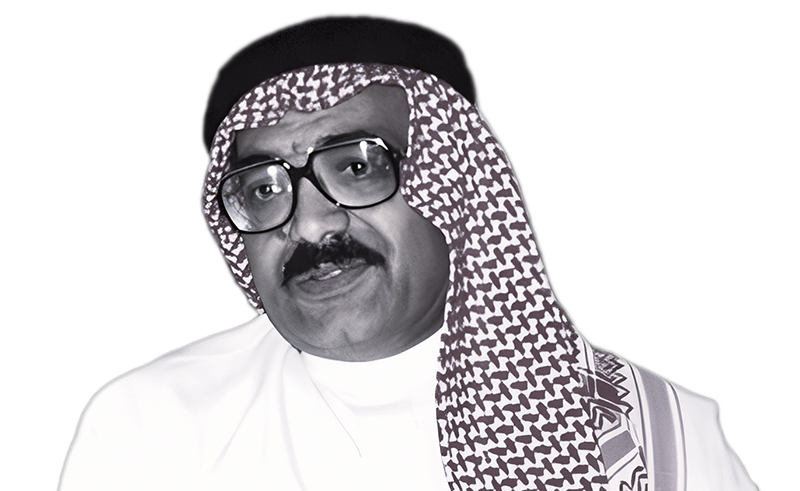
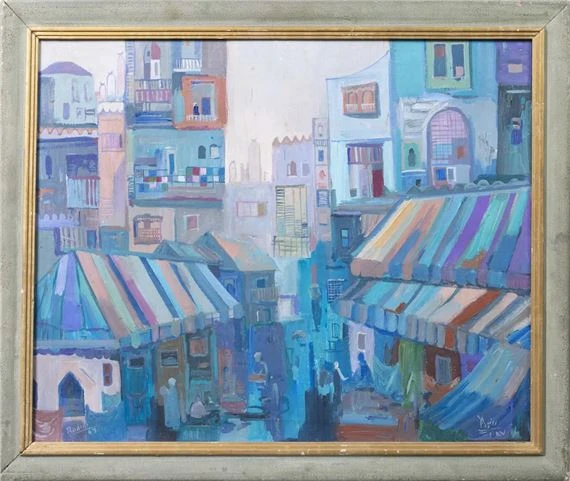
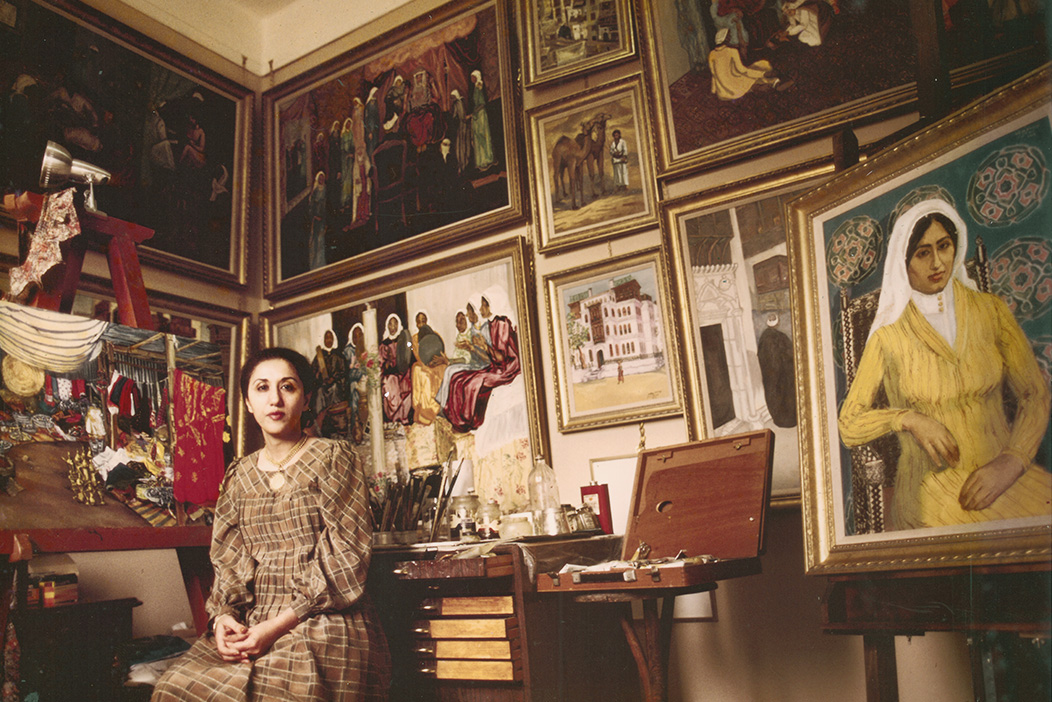
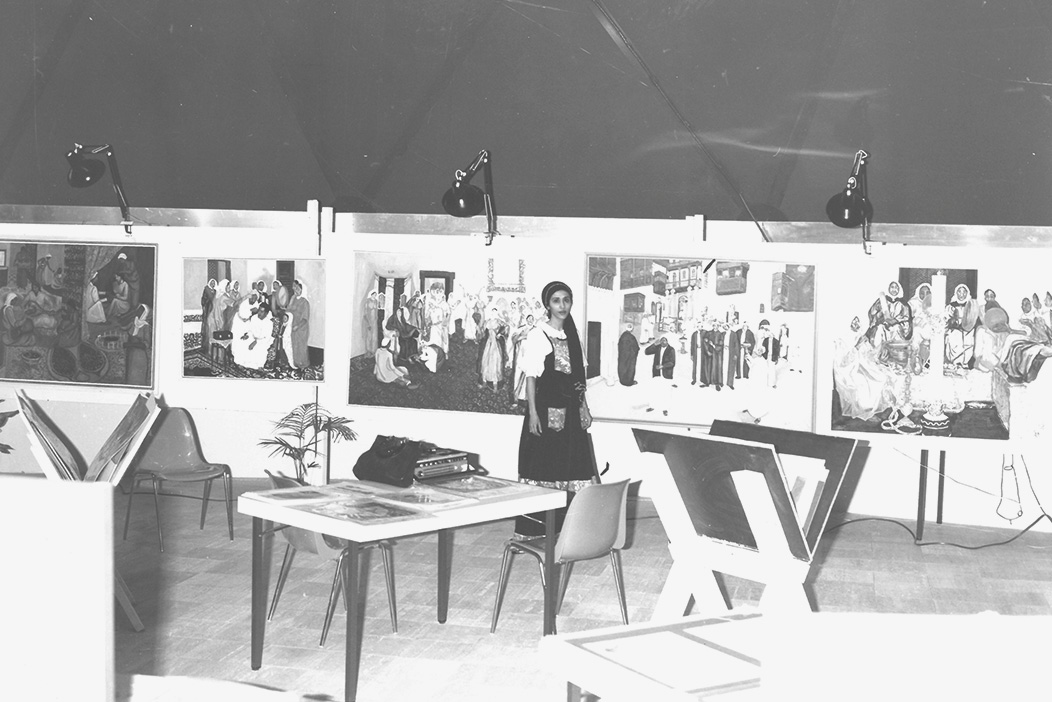
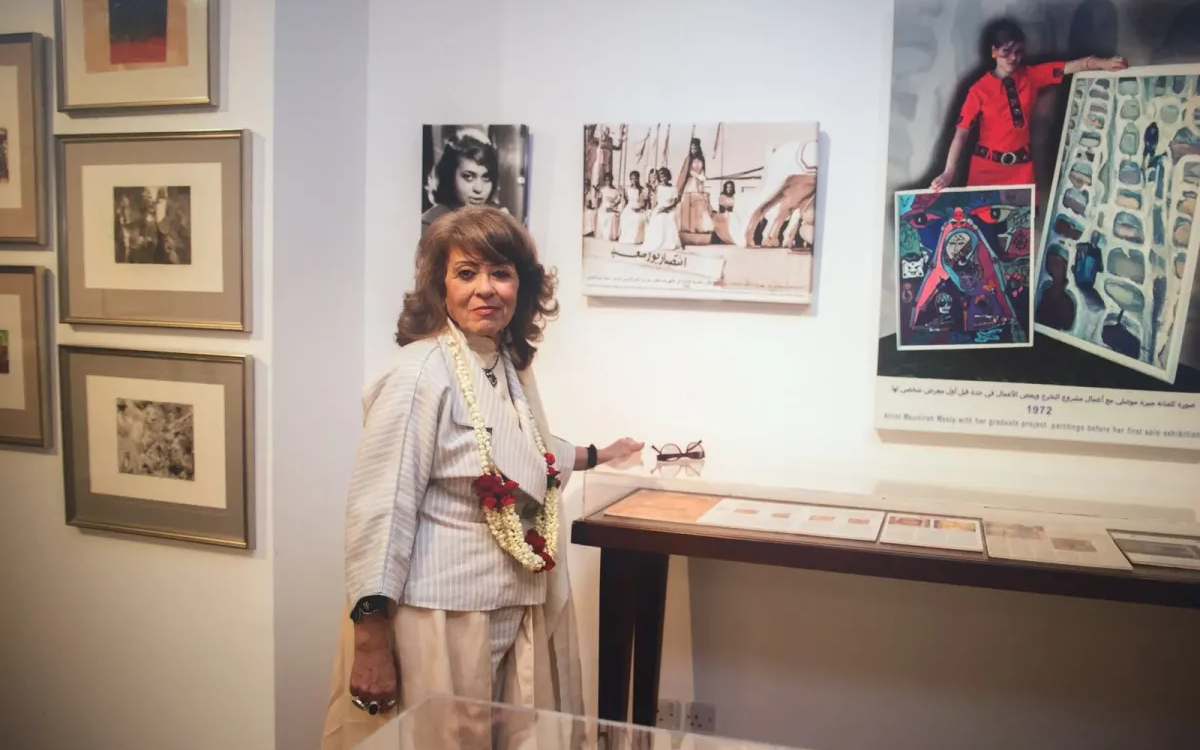
Saudi modern art was never one style, one city, or one moment. It was a layered process through which artists learned how to picture a changing nation. It took shape through ministries and art circles, school exhibitions and scholarships, landscapes and portraits, symbols and social scenes, archives and acts of preservation. What emerged was more than a movement. It was a visual language for transition, belonging, individuality, and cultural self-recognition.
And that may be the lasting significance of Saudi Arabia's modern art: it shows how a country remembers itself even as it becomes something new.
Note: Images in this article were photographed at Bedayat: Beginnings of the Saudi Art Movement at the National Museum in Riyadh, on view from January 27 to April 11, 2026.