Riyadh Art University: When Culture Becomes the Force That Builds the Future
How can Riyadh Art University shape Saudi Arabia’s creative future? Explore its potential to develop talent, expand arts careers, and grow the cultural economy.
How can Riyadh Art University shape Saudi Arabia’s creative future? Explore its potential to develop talent, expand arts careers, and grow the cultural economy.
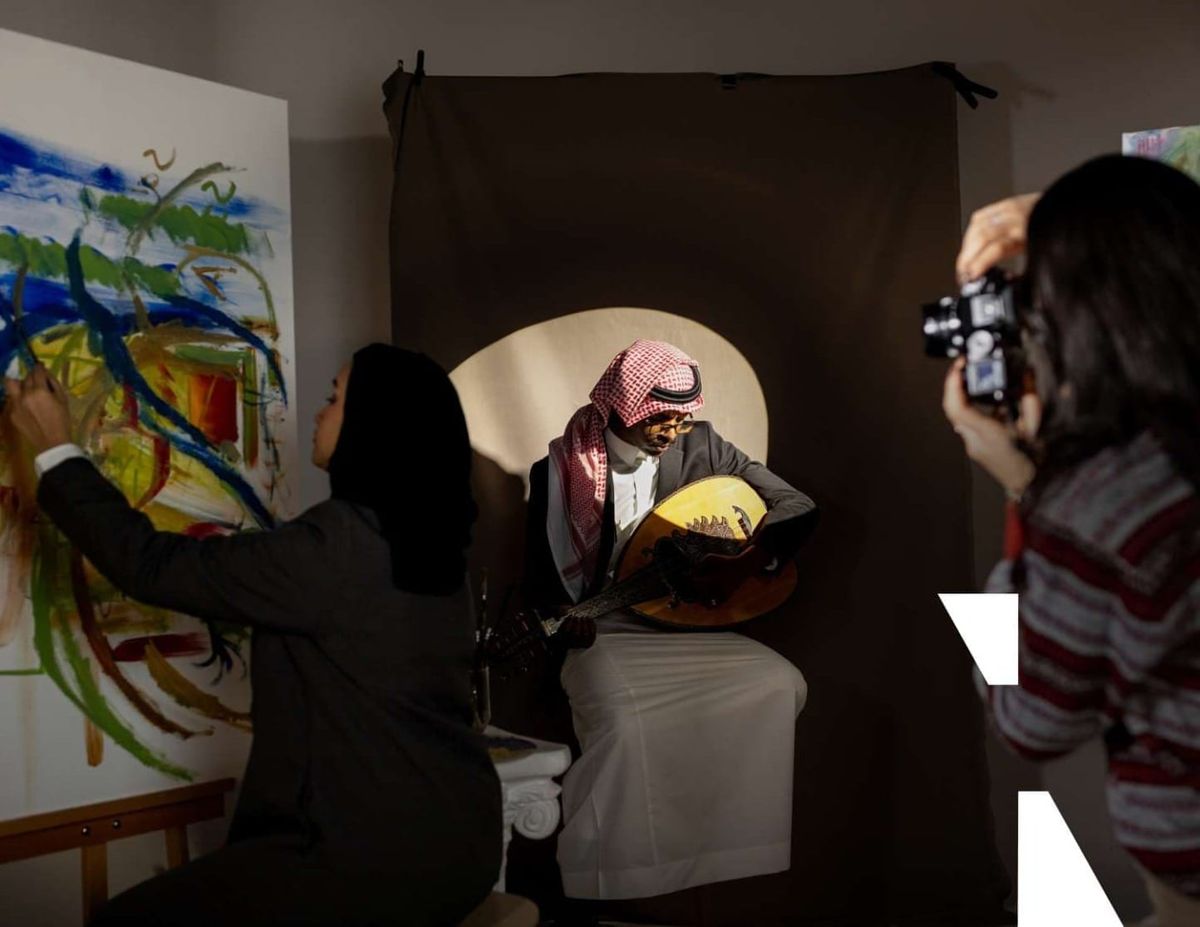
Amid the sweeping transformation unfolding across Saudi Arabia, culture has emerged as one of the most essential pillars in the project of human development and future-building. As the Kingdom accelerates toward the targets of Vision 2030, a pressing need has arisen to redefine the relationship between education and culture, between knowledge and creativity and it is precisely this need that makes the founding of Riyadh Art University a landmark moment in the history of national cultural development.
Not long ago, the educational landscape in Saudi Arabia was marked by a notable scarcity of creative and artistic disciplines. The choices available to secondary school graduates were largely traditional Arabic language, geography, history, English fields that, however important, left a vast portion of young people without a path aligned with their passions. The question that haunted so many students was painfully simple: Where do I go? Where do I find myself? How do I build a future in a field that actually speaks to who I am?
For many, the only answer was a plane ticket. They packed their bags and their dreams, setting off for universities and institutes abroad where they could study music, theater, visual arts, fashion design, or filmmaking navigating foreign environments while trying to hold onto their identity, bridging who they were at home with who they were becoming in the classroom.
Everything began to change with the launch of Vision 2030, which placed culture at the very heart of the national development project not as an ornament, but as a structural pillar for building a vibrant and flourishing society. The establishment of the Ministry of Culture, followed by a constellation of specialized commissions for music, literature, libraries, fashion, culinary arts, theater, heritage, and more, sent an unmistakable signal: Saudi Arabia was building an integrated cultural ecosystem, one that understands creativity as inseparable from comprehensive development.
Vision 2030 fundamentally reordered the relationship between culture and development so that culture is no longer development's shadow, but one of its essential conditions. In its broadest sense, culture is the patterns of life we shape, the consciousness we cultivate, the values we embed deeply enough to endure and renew not simply the art and literature we produce. And this is where the transformation becomes clear: from a culture that is preserved, to a culture that is invested in; from meaning that is kept, to meaning that is produced, reproduced, and exported within an ever-changing world.
The Cultural Investment Conference held in 2025 crystallized this vision, bringing together decision-makers, executives, creators, and investors from inside and outside the Kingdom. The conference was more than a gathering it was a declaration that Saudi Arabia had entered a new phase, one in which culture is treated as a vital economic sector capable of generating employment, catalyzing innovation, and amplifying the Kingdom's soft power on the world stage.
What the conference announced was a transition: culture is now read as material value without surrendering its creative soul. This reordering of the relationship between the arts and the market is not a zero-sum trade-off it is the very architecture of genuine innovation. Cultural investment, from this vantage point, is far more than funding art projects. It is the reconstruction of an entire ecosystem one in which employment is generated as an organic feature of the sector itself, and in which artists and creators become essential partners in the development story.
It is within this context that the founding of Riyadh Art University reads as the natural and inevitable extension of a cultural movement long in motion. This university embodies a strategic vision: to cultivate a generation of specialists across the full spectrum of the arts a generation equipped with the tools of artistic knowledge, deeply rooted in the traditions and culture of their homeland, and fully capable of expressing that heritage in a global language.
The university's significance lies in the kind of academic environment it creates: a space where rootedness and modernity are not in tension but in conversation, where identity and openness reinforce rather than undermine each other. Students will be able to pursue the arts within an authentic local context without the need for self-imposed exile while drawing on the finest global practices in arts education. This alone is a transformation that redefines the meaning of higher education in the Kingdom, and opens entirely new horizons for an entire generation.
Also Read: Riyadh University of Arts: How I Imagine It
The university will play a pivotal role in closing the persistent gap between educational outcomes and the actual needs of the cultural labor market. As creative industries continue to expand film, music, game design, fashion, digital arts the demand for skilled, specialized talent has become urgent. The university answers this demand through intensive practical training, meaningful partnerships with cultural institutions, and applied project-based learning that connects the classroom to the real world.
But its role does not stop at academic instruction. Riyadh Art University has the potential to become a center for knowledge production in the arts a platform for supporting artists and creators, a laboratory for testing new ideas, and a custodian of cultural heritage, presenting the legacy of the past through innovative forms that speak to the aspirations of new generations.
There is also a deeper symbolic dimension to founding an arts university in Riyadh. The capital a city experiencing rapid urban and cultural transformation is actively positioning itself among the most prominent cultural capitals in the region and the world. A dedicated arts university accelerates that ambition, turning the city into a magnet for creative talent from across the Kingdom and beyond.
In recent years, Riyadh has seen a proliferation of cultural initiatives, festivals, and art exhibitions that have already begun to shape it as a fertile ground for creativity. A specialized arts university will not only reinforce this momentum it will ignite it, creating the conditions for a living, breathing cultural exchange that transforms the city itself.
This project also reflects a profound shift in how society regards the arts. Fields that were once viewed with hesitation are now recognized as integral to national identity and as a promising economic sector a recognition driven by far-sighted leadership that understands what it truly means to invest in the human being.
The new cultural policies have contributed to a broader opening, a growing awareness of the power of creativity, and an environment that is more receptive to the arts and more supportive of those who practice them. The artist is no longer merely a hobbyist they are a professional with expertise, someone who can build a successful career that contributes meaningfully to economic and social development. This is the essence of the knowledge economy.
Where the question once was: Where do I go? Today, it has become: What will I create?
This shift in the nature of the question reveals everything the move from searching for opportunity to forging it; from waiting for the future to authoring it. Under Vision 2030, Saudi Arabia moves with confidence toward a diversified economy, a creative society, and a cultural identity in perpetual renewal one that makes art a shared language, and culture a bridge between the past and the future.
In short, Riyadh Art University cannot be seen as merely an educational institution. It is a sweeping expression of a different state of consciousness one that sees culture as a fundamental element in the formation of human beings, and creativity as the means by which we understand the world and leave our mark upon it.

An opinion piece by Fayy Al-Otaibi.