An Artist in Dialogue: Fawaz Shamma
Discover Jordanian artist Fawaz Shamma’s line-driven world, where atmosphere, and emotion shape paintings that speak through color and form.


Discover Jordanian artist Fawaz Shamma’s line-driven world, where atmosphere, and emotion shape paintings that speak through color and form.
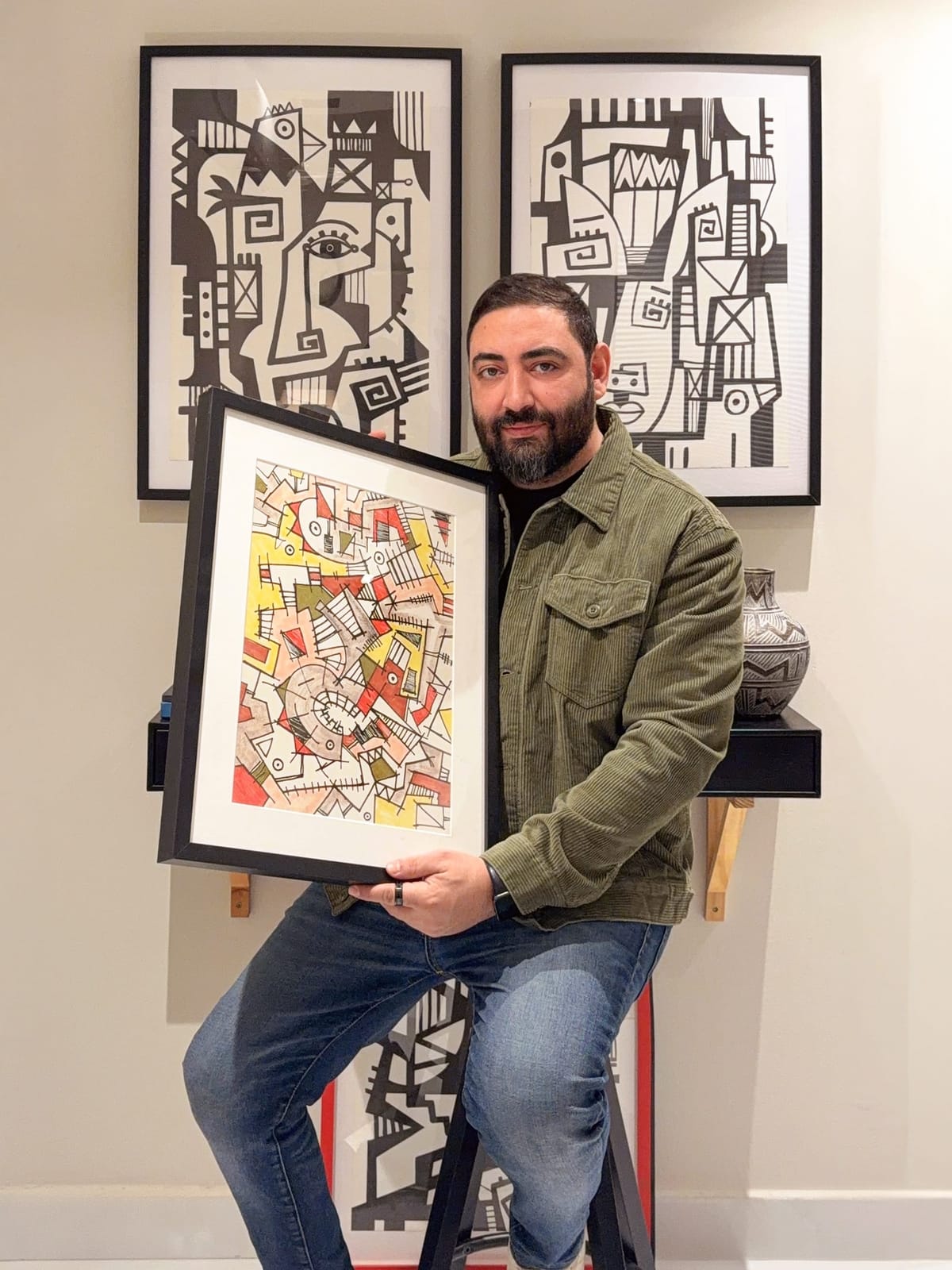
"Color is not decoration for me. It’s psychology, and it’s culture."
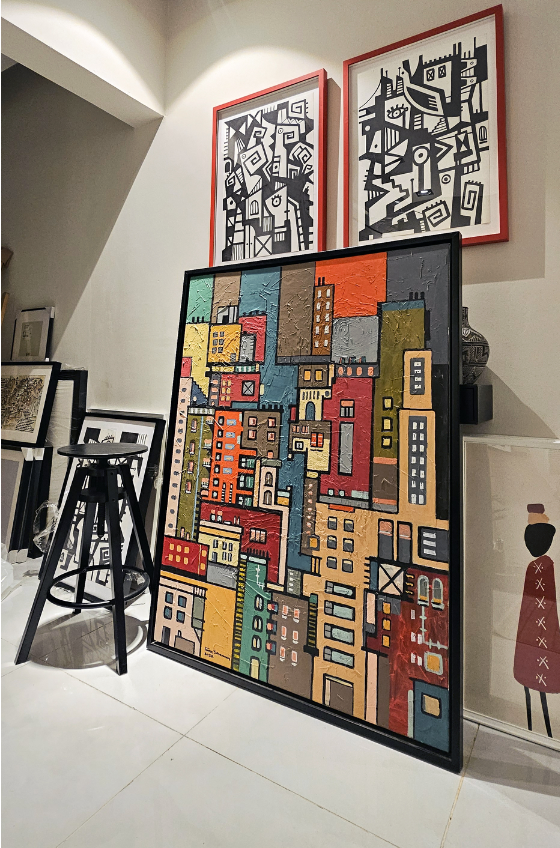
In a Saudi art scene that is learning to speak in many languages at once, Fawaz Shamma’s voice returns again and again to one element: the line. Not as an outline, but as a pulse. A pressure. A decision. His work moves between spontaneity and structure, between childlike freedom and architectural discipline, building paintings that do not narrate a literal story so much as they carry a mood you can almost touch.
Q: When did you start loving art?
Fawaz: My father was interested in the arts in general, and in photography in particular, back in the days of film cameras. We had a room prepared like a darkroom for developing film and printing photos. That room was not just a workspace, but for me as a child, it was always a beginning.
On its wall shelves were stacked books and references on the visual arts, alongside boxes of wooden and water-based paints, as well as an airbrush tool with a compressor, which was used to create special backdrops for portrait photography and product shoots. The room also included tools for cutting wood and glass to make frames for paintings and photographs.
And from that small room, which to me was a world full of experiments and curiosity, at a time before digital tablets existed, the first signs of my passion for learning to draw began. There I got to know the tools, flipped through art books, and studied images of paintings, trying to draw what looked like them, or what I could understand from them.
Q: Was there a moment or object at the time that pushed you from drawing into experimenting?
Fawaz: By coincidence, we had airbrush colors at home, with an electric compressor connected to a spray tool. Experimenting with these colors sparked my curiosity to learn more about drawing. From there, I explored different kinds of paints and materials until university.
Q: How has your education influenced your practice?
Fawaz: I specialized in interior design, but I studied it within a college of art. The first two years were preparatory, focused on visual and fine arts. We studied sculpture, photography, freehand drawing, artistic anatomy, as well as the psychology, sociology, and philosophy of art.
This shaped me both professionally and intellectually. Because an artist is not just someone who draws. They also need psychological, social, and philosophical depth.
I started asking new questions: What makes something beautiful or ugly? Who teaches children to see something as beautiful or unpleasant? Even with smells, who decides which ones are pleasant or disturbing? These things surround us all the time, but we don’t think about them deeply until we study them.
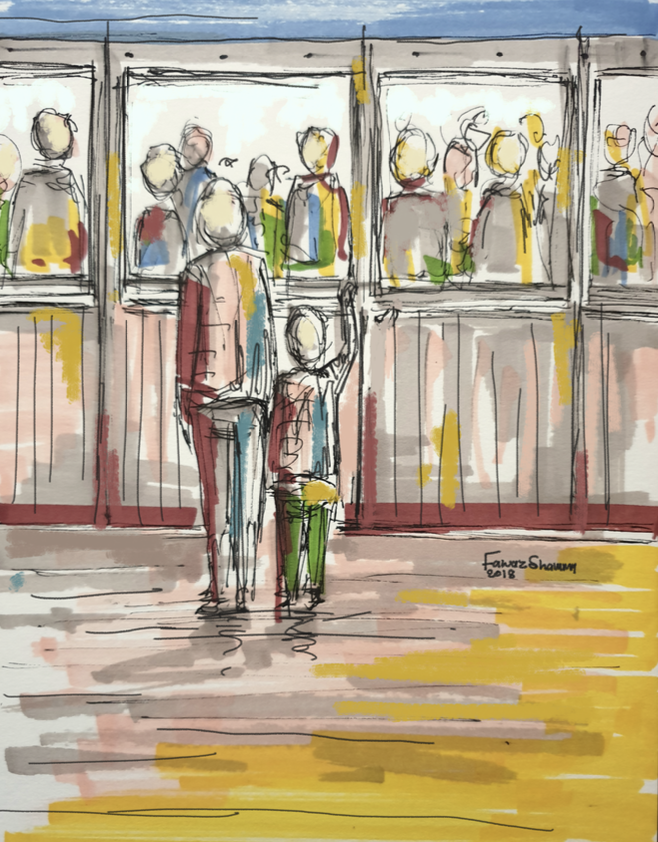
Q: "Is there something you’ve learned to see as an artist that feels invisible to most people, but central to you?"
Fawaz: You know, once you study art deeply, you can’t unsee certain things.
I studied color theory, how colors affect us both psychologically and sociologically. Psychologically, some colors trigger similar reactions in most people. But sociologically, meanings change with culture. For example, black symbolizes sadness for us, but in Japan it can represent joy. Red might mean blood or war here, but in China it symbolizes celebration.
I also learned how lines carry emotion. Vertical, horizontal, dotted, circular, sharp. Each shape has a feeling. Vertical lines can feel strong or strict. Horizontal lines feel calm and stable. Most people move through the world without noticing these things, but artists are trained to read them emotionally. That’s when my work started to shift.
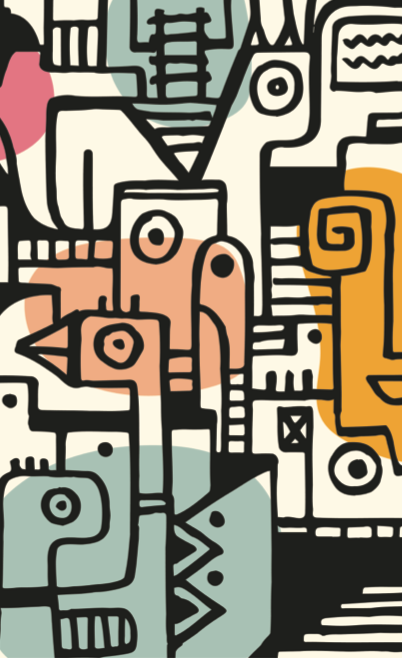
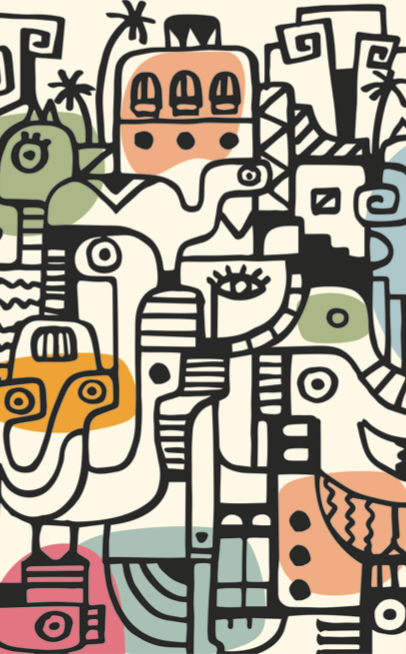
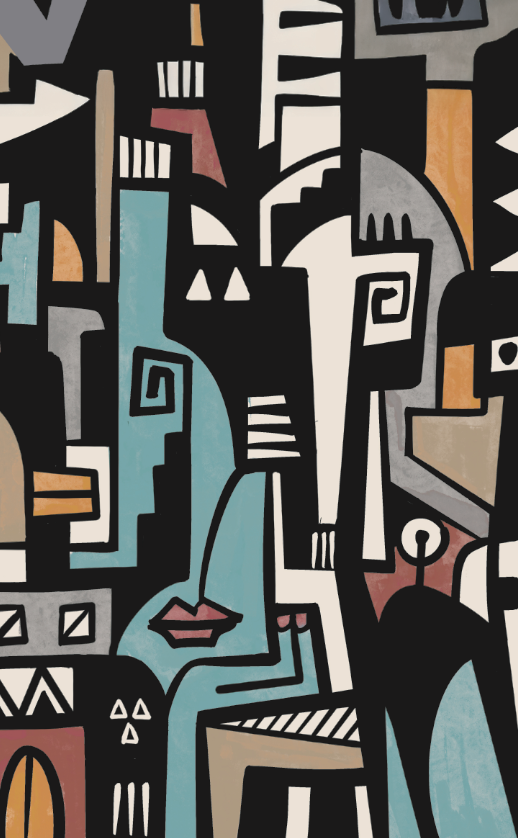
Q: How would you describe your artistic direction today?
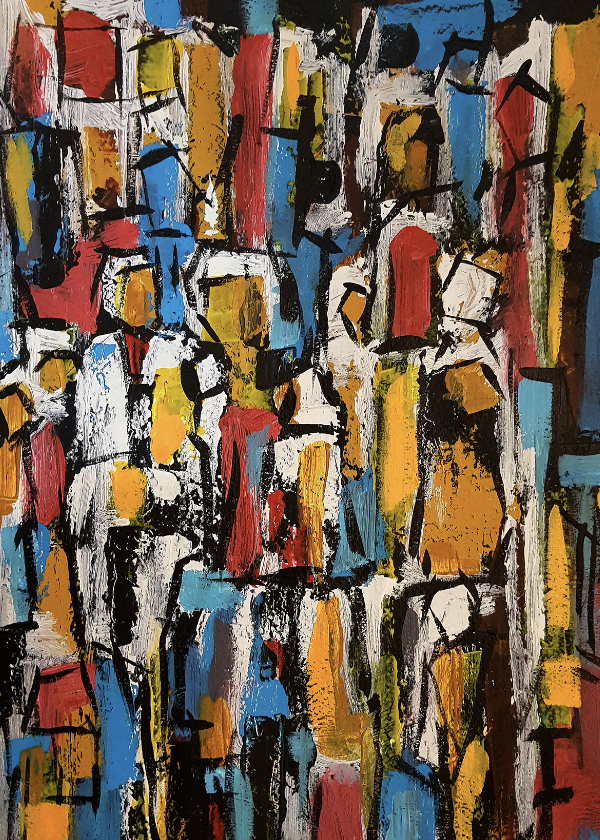
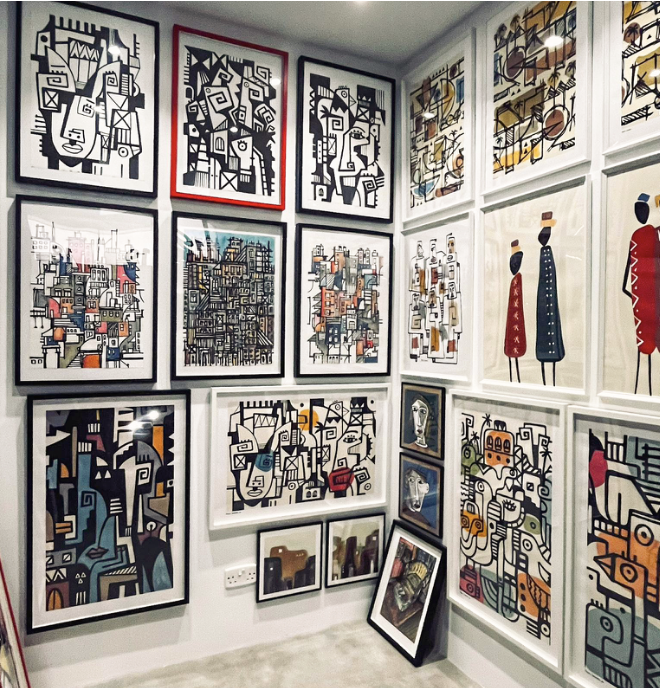
Fawaz: My work has two main directions. One is spontaneous, where I paint freely without focusing on perfect line endings or intersections. The other is geometric, precise, and structured. But both share the same foundations: composition, balance, the weight of forms, and how color is distributed.
A painting needs a dominant color, a supporting color, and rhythm, so the eye moves across the work. Even in chaotic drawing, lines still connect in a way the viewer’s eye naturally links together.
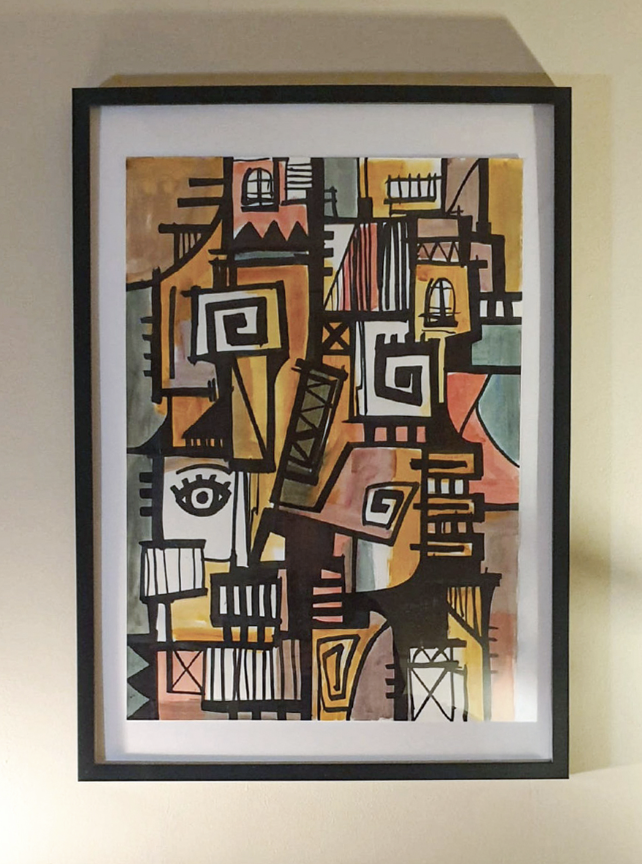
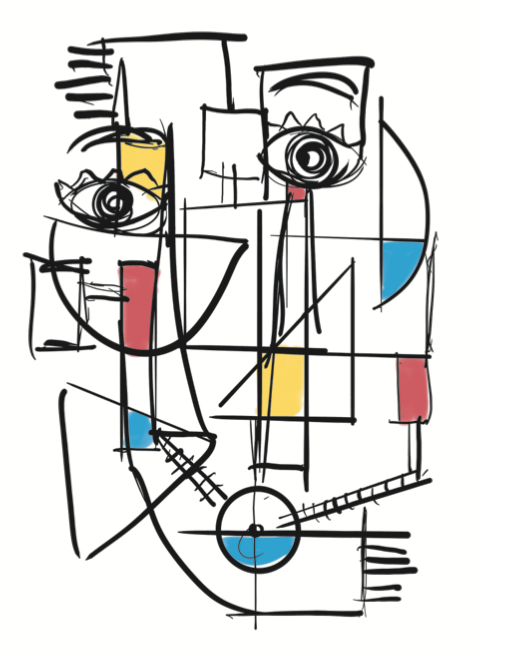
Q: I noticed architectural elements in your paintings. Is that from your specialization?
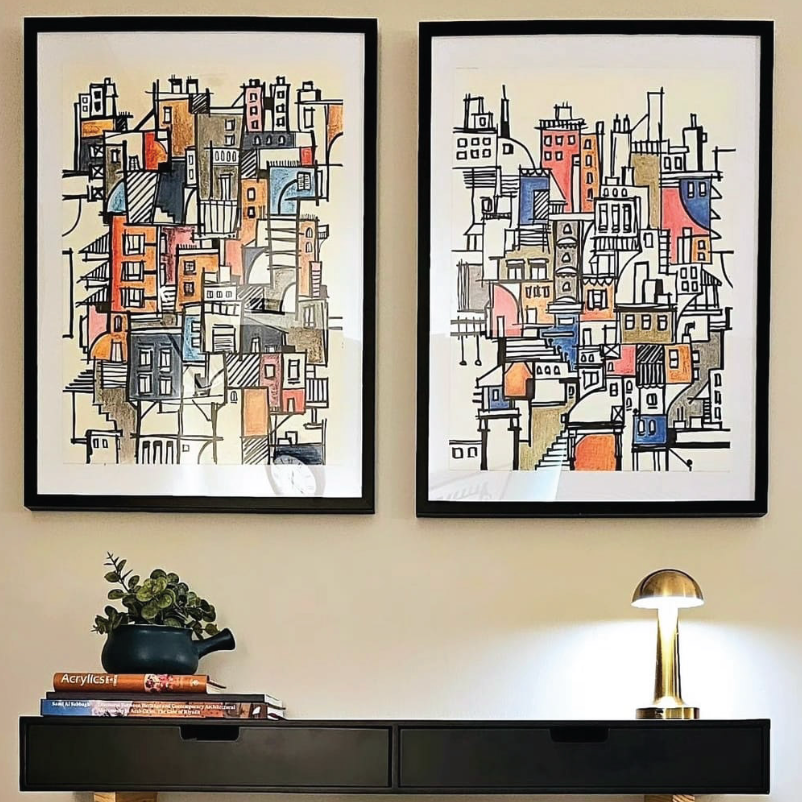
Fawaz: Yes, I believe so. Humans exist within space and architecture. Most of my drawings lean toward architectural settings, and placing human figures within them.
Q: Are these buildings from imagination or places you’ve seen?
Fawaz: Mostly imagination, but sometimes inspired by memories of places I’ve visited or works I admired. Many people have said my work feels close to Picasso, geometric fragmentation and cubist forms. Not because I copy him, but because of the childlike freedom in that style.
He could draw realistically, but later chose to free himself from precision, returning to spontaneity, almost like therapy. That is similar to my direction. Freedom, but still with compositional foundations.
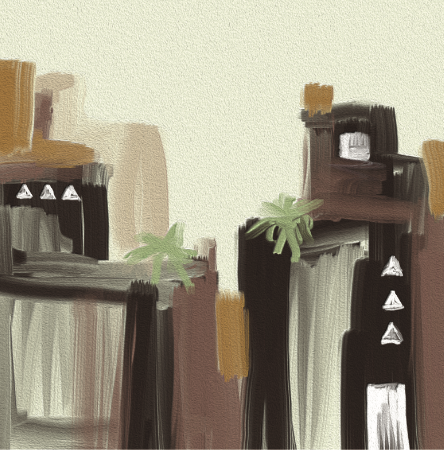
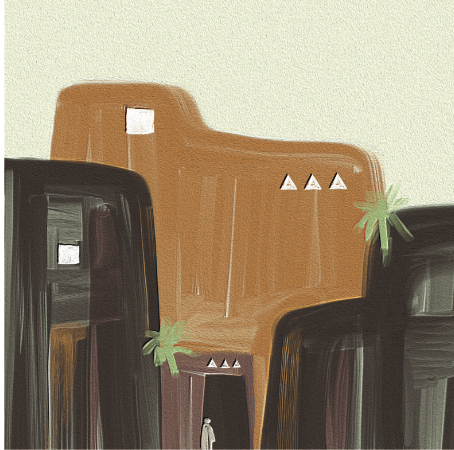
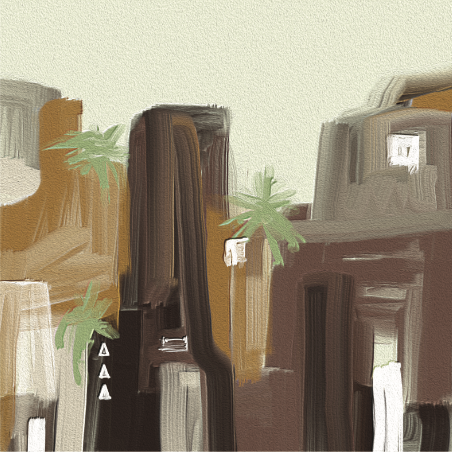
Some artists talk about tools. Fawaz talks about atmosphere, as if the room itself becomes a collaborator.
Q: What inspires you most when you’re creating?
Fawaz: Honestly, the place I’m in is often what inspires me most. If I’m not psychologically comfortable, I can’t create. Art is feeling. Music can be part of inspiration. Lighting, scent, atmosphere, all of it combines to place the artist in a mental artistic state.
Sometimes I create the environment intentionally to produce a certain outcome. Like writers such as Naguib Mahfouz, who wrote in cafés surrounded by music, tea glasses, voices. That atmosphere made their stories close to people. Every place has its own feeling, and it affects the artistic outcome.
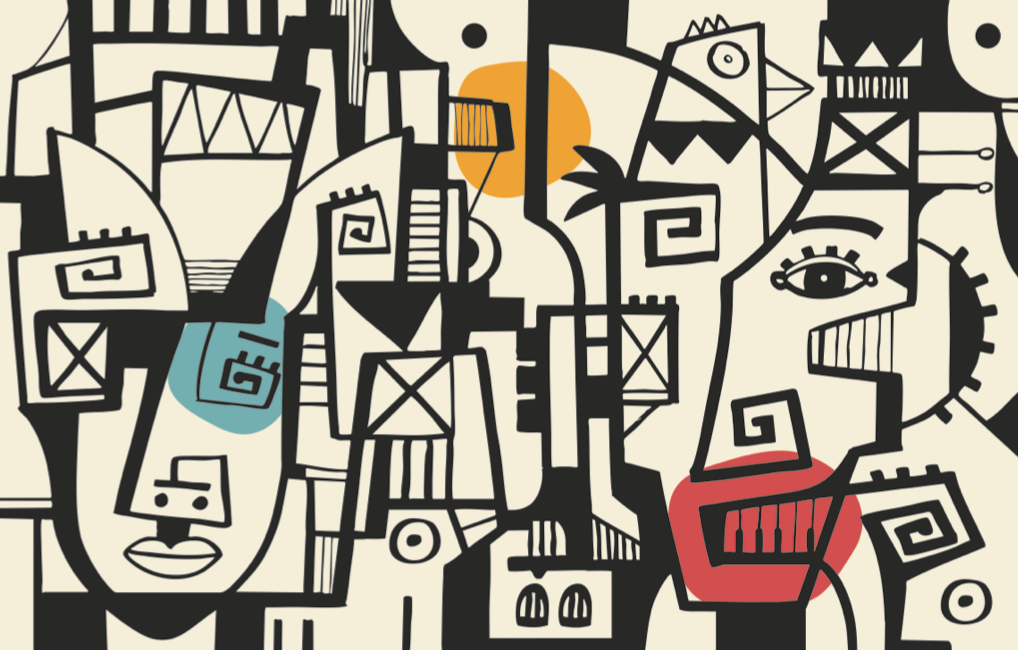
Q: Do you have materials that repeat often in your work?
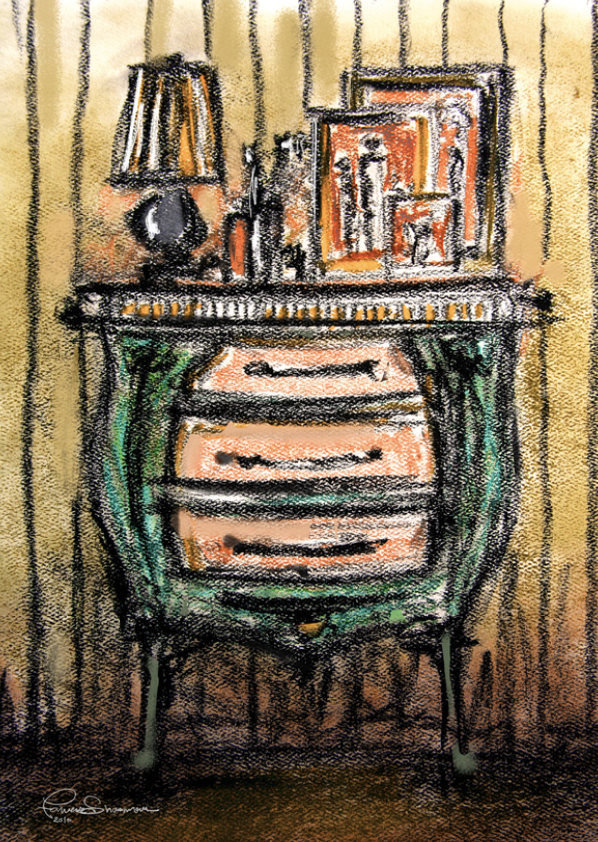
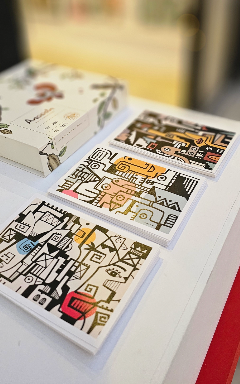
Fawaz: Yes. Mostly pastel and acrylic. I usually paint on canvas or thick art paper. I also use black ink, and sometimes digital art. Drawing on an iPad is easier in certain moments.
Q: It seems lines are a recurring theme for you, the meeting between lines.
Fawaz: Exactly. Lines are the core symbol for me. Through lines, cuts, pressure, colors, a painting can feel calming or angry. Pastel texture feels different from acrylic. Viewers can even sense where the hand moved and pressed.
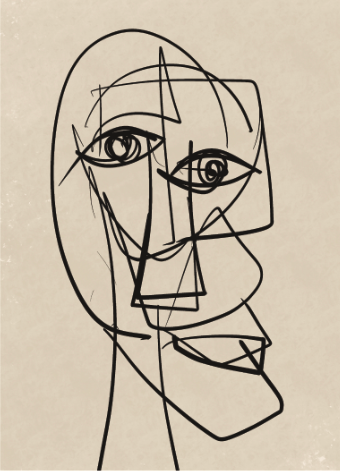
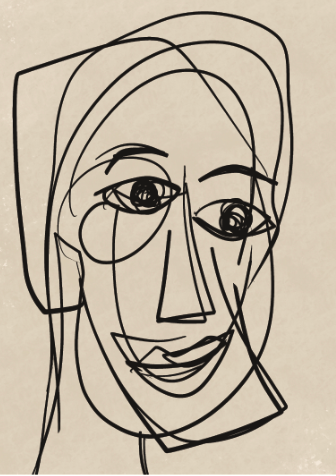
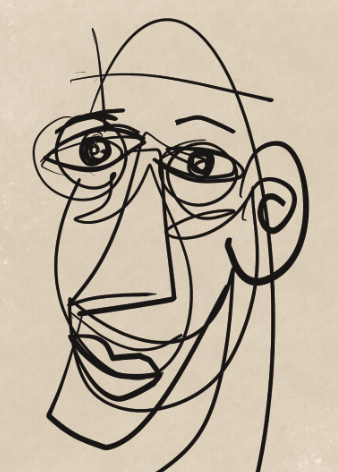
There is a quiet discipline in the way he describes audience. He respects the viewer, but tries not to create for validation.
Q: Do you want people to feel a specific emotion when they see your work?
Fawaz: I prefer each painting to have its own feeling. When I paint, I don’t think about what the audience wants. If you paint only to please people, you fall into a trap. Some people will love the work, others will reject it, and that’s normal.
When I exhibit and find unexpected fans, it motivates me to develop my style further. But the emotions are personal. I struggle internally not to think about others while painting.
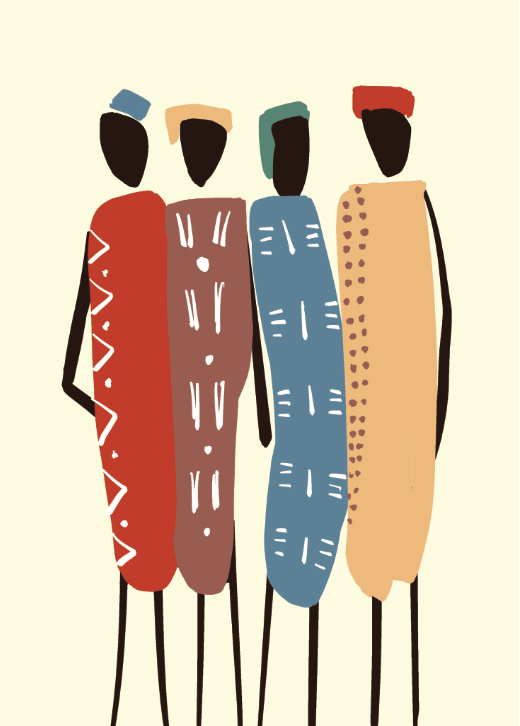
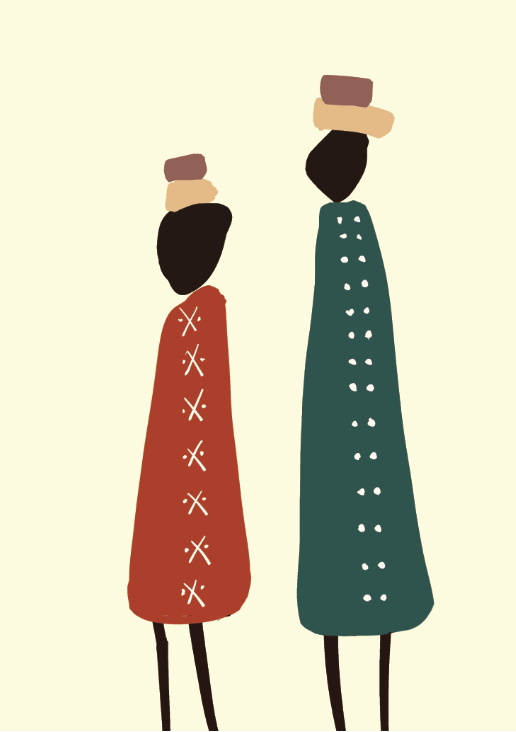
Q: Are there works you feel especially attached to?
Fawaz: Most of my works are close to me, but some are special because of their composition, the coincidence of how they emerged. If I tried to recreate them, I couldn’t. That’s why some paintings become the most valuable, because they cannot be repeated.
Sometimes I raise the price because I secretly wish no one buys it, so it stays with me. The attachment comes from its difficulty, my admiration for it, and its uniqueness.
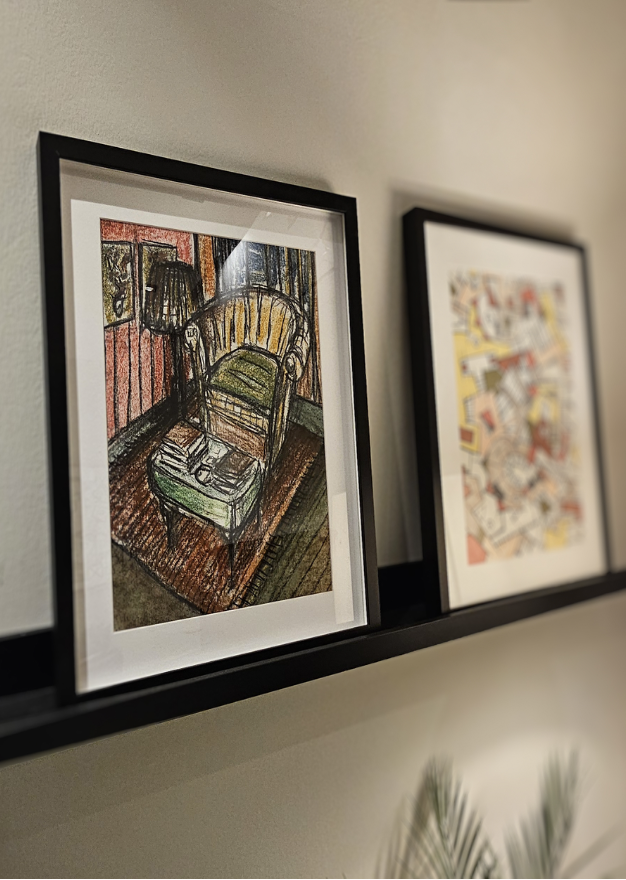
Q: Where have you shown your work so far?
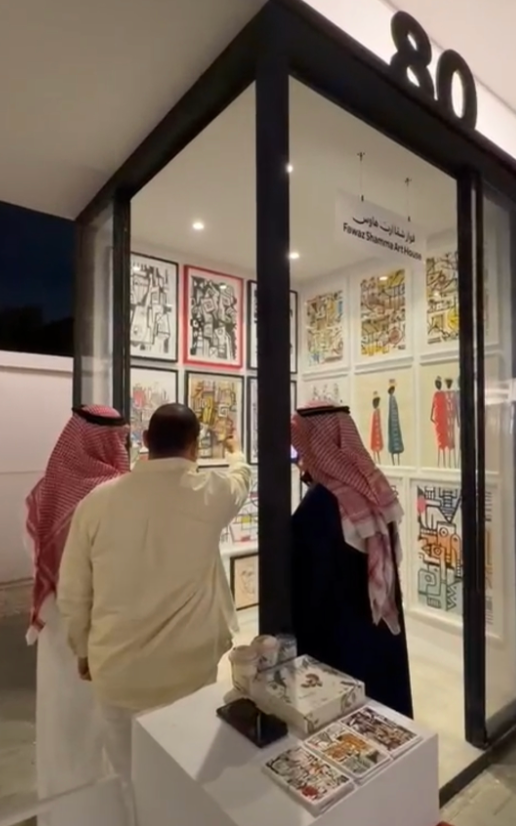
Fawaz: The most recent was Misk Art Week, about a month ago. Before that, I participated in three exhibitions in Jordan, Amman Street Art Fair and others. In the US, I had work shown in New Mexico, in Santa Fe, a city famous for galleries. One gallery displayed about four of my works there.
His answer about the future does not romanticize success. It names what most artists quietly negotiate: time, and the shrinking space around it.
Q: How do you hope your artistic path develops in the future?
Fawaz: Development happens naturally with time and experience. As you go through more experiences, you grow both intellectually and artistically. Over time, an artist moves from simply practicing art to creating work that carries a clear personal imprint, a unique vision, and a defined artistic direction.
In the middle of a fast-paced life and work pressures, what I really hope for is to expand the space I give to art in my life. I want to have more time to give art the attention it deserves. I want to focus on creating deeper work, to participate more in both public and private exhibitions, and to be more active in the visual arts scene.
Today, Saudi Arabia has become a rich and supportive artistic environment. Artists are closer to each other, and the distance between artists and people interested in art is much smaller. Because of that, I truly believe the artistic future is promising. It encourages more experimentation and growth, both for the individual artist and for the wider cultural and artistic landscape.
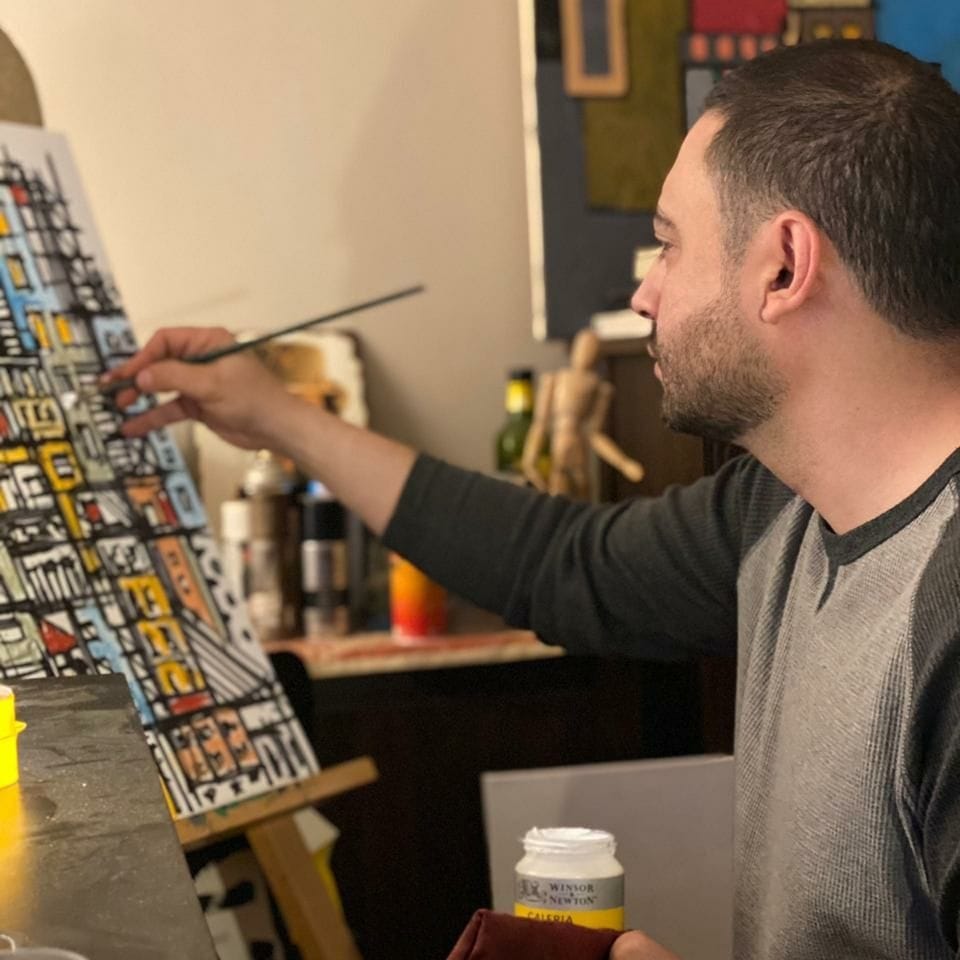
Fawaz Hisham Shamma doesn’t paint for attention. He paints to translate what can’t be spoken. A quiet architecture of emotion built through line, rhythm, and restraint. In each piece, he leaves behind not a message, but a mood. This is not art that explains itself. It lingers, pulses, and waits to be felt.
Stay close to Fawaz Hisham Shamma’s lines, layers, and visual language on Instagram at @fawaz.shamma.
We’d love to hear from you! Reach out to share your own artistic journey.