Where Womanhood Becomes a World: Inside Mahdih Al Talib’s Art
Explore Saudi artist Mahdih Al Talib’s mythic feminine world, from Fruit Of Ash to My Mother’s Letters and her latest Gulf exhibitions.

Explore Saudi artist Mahdih Al Talib’s mythic feminine world, from Fruit Of Ash to My Mother’s Letters and her latest Gulf exhibitions.
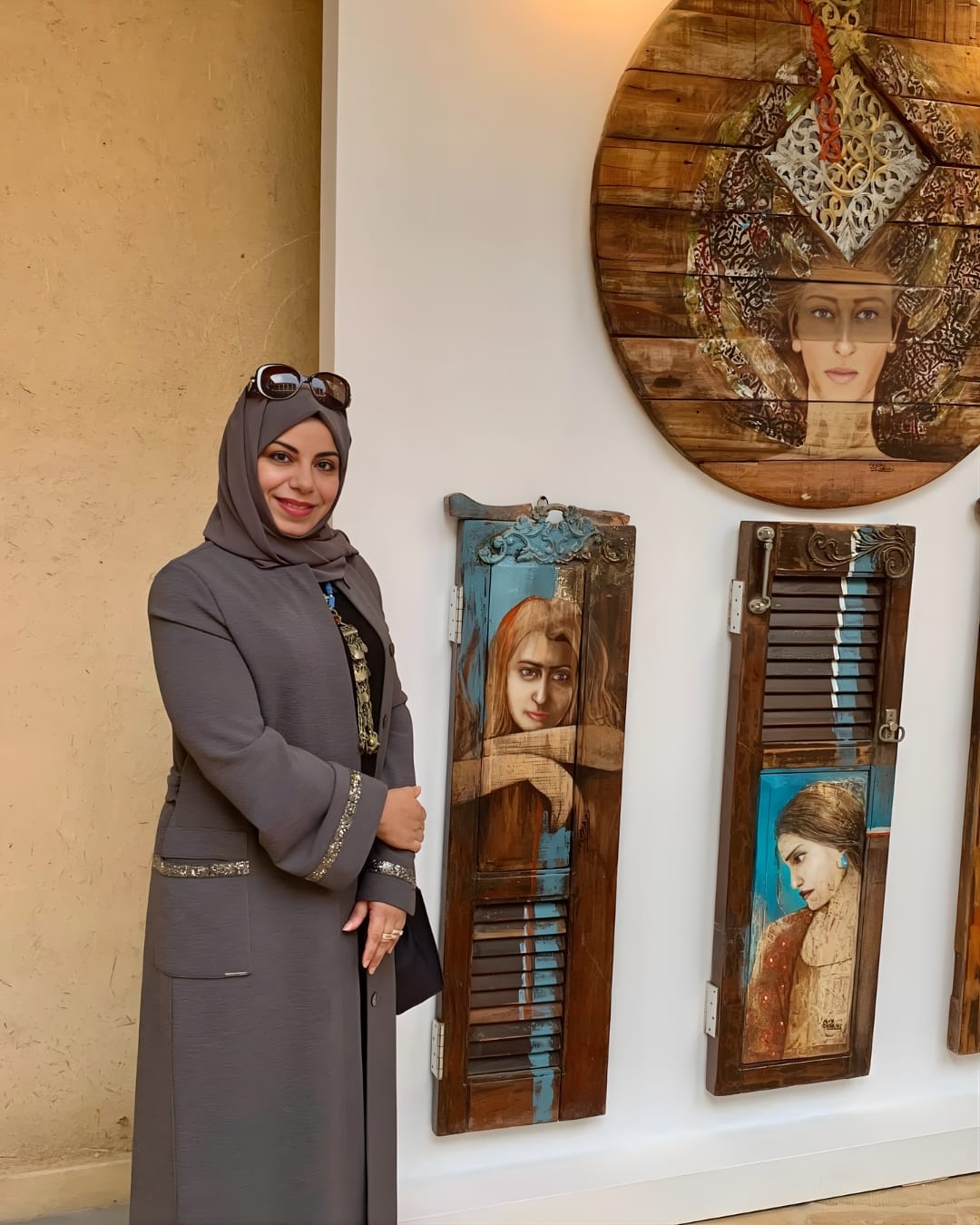
Mahdih Al Talib paints as if memory has its own weather. Women surface in her work not as portraits, but as presences, surrounded by signs and creatures that feel borrowed from folklore and returned as something contemporary. There is a softness in her surfaces, and an insistence underneath, a quiet refusal to simplify what women carry.
A Saudi visual artist and sculptor from the Eastern Province, Al Talib has built a long, multi-medium practice spanning painting, silkscreen, carving, pottery, and sculpture. Her career has traveled widely through exhibitions and cultural platforms inside the Kingdom and across the region, yet her visual language remains unmistakably hers: symbolic, layered, and emotionally precise.
Mahdih Al Talib’s relationship with color began at the age of five, when she would secretly take her brothers’ crayons and draw on the walls at home. At school, she recalls feeling happiest simply because she had access to the colors she loved. With her father’s permission, she began sketching on the roof of their house, capturing her family and their “shadows in the sun.” Recognizing her early talent, she pursued formal art classes and, by the age of 21, was already participating in exhibitions, marking the beginning of a serious artistic journey that would continue to evolve in depth and ambition.
Across her body of work, there is a visible progression from bold aquatic palettes to a dreamlike surrealism where women appear mystical and contemplative. Calligraphic accents and geometric motifs weave consistently through her pieces, while her practice expands beyond painting into sculpture and photography. In her art, women are not merely subjects but landscapes intertwined with nature, domestic animals, and sea creatures, sometimes merging into a single unified form. For Al Talib, women embody beauty, sacrifice, peace, and boundless tenderness. By drawing parallels between women and nature, she subtly reflects on their shared histories of reverence and oppression, inviting viewers to consider the deeper implications of how both have been treated and perceived.
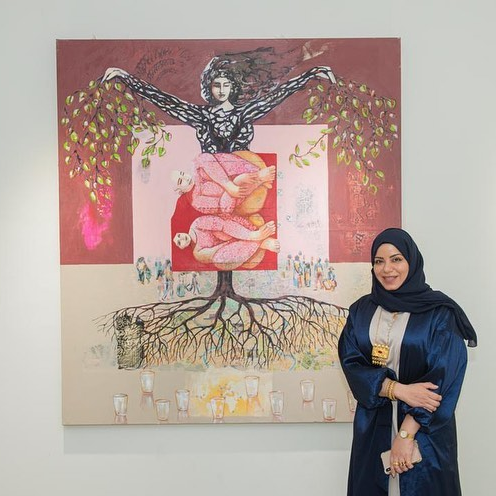
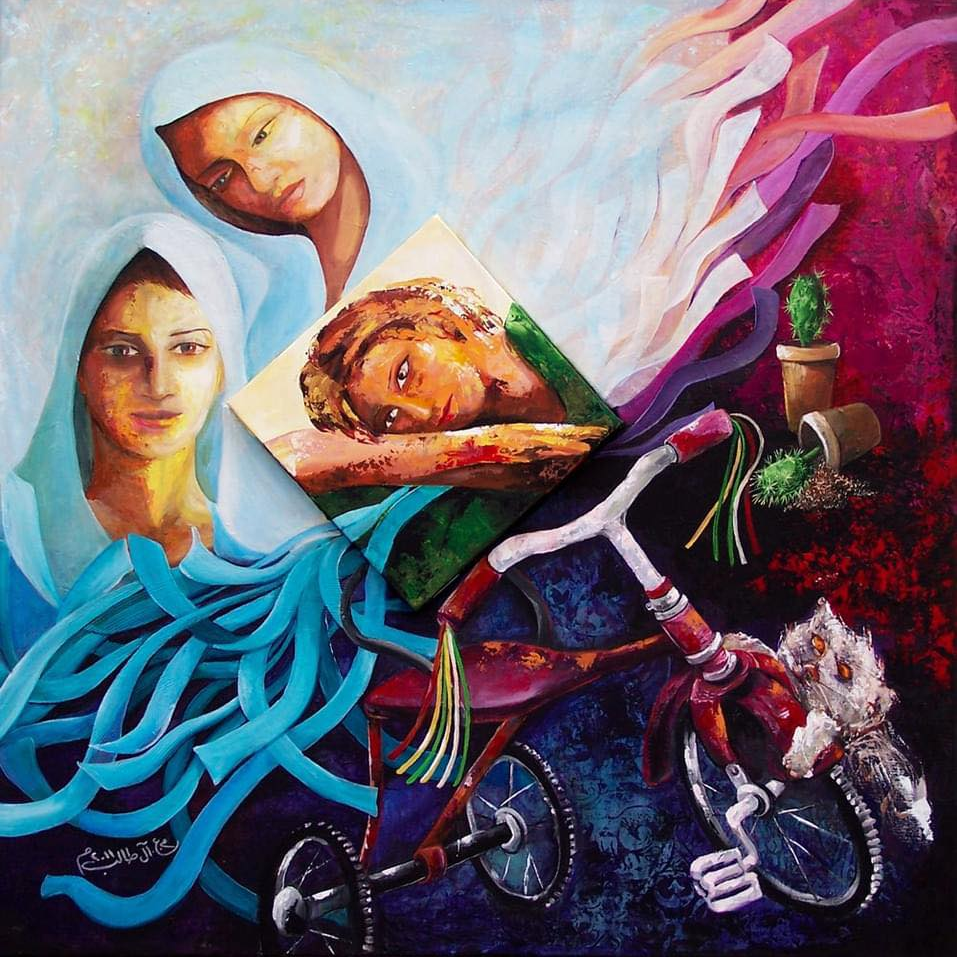
In Fruit of Ash (ثمرة الرماد), Mahdih Al Talib turns the title into a portrait of womanhood under pressure. “By fruit of ashes, I mean the woman,” she explains, pointing to the insecurity and grief that shadow so many lives across the Arab world: the loss of the beloved, the protective father, the hopeful son, the supportive brother. Yet even in that landscape of ache, her figures carry something stubbornly intact: the dream of peace, still visible in the expressions we keep returning to.
The exhibition unfolds through more than sixty acrylic works, including 63 paintings and two monumental murals created in 2017. Within the body of work, two languages coexist: one that extends her earlier, more detailed approach, and another that leans into minimal, simplified form and color, refreshed with a new expressive and spiritual charge. Together, they read like two ways of surviving the same truth: one through abundance, the other through restraint.
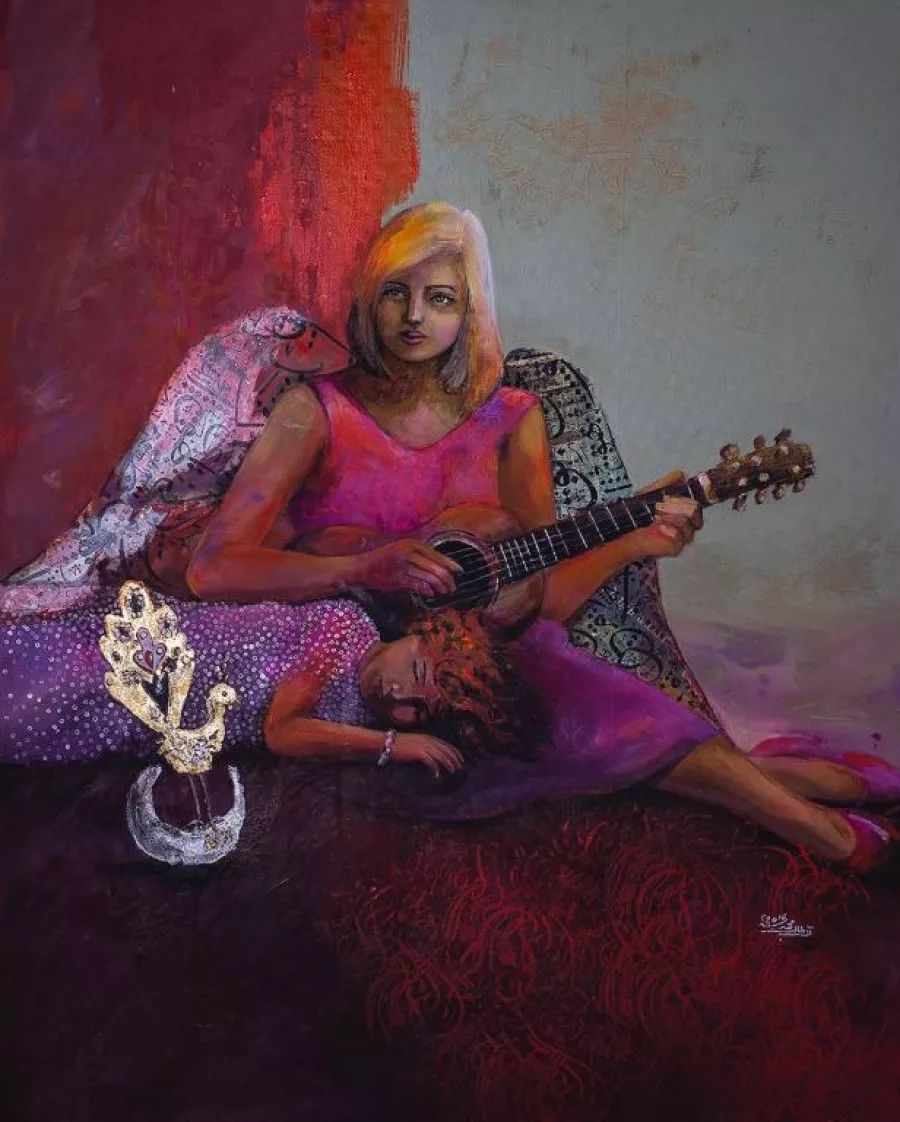
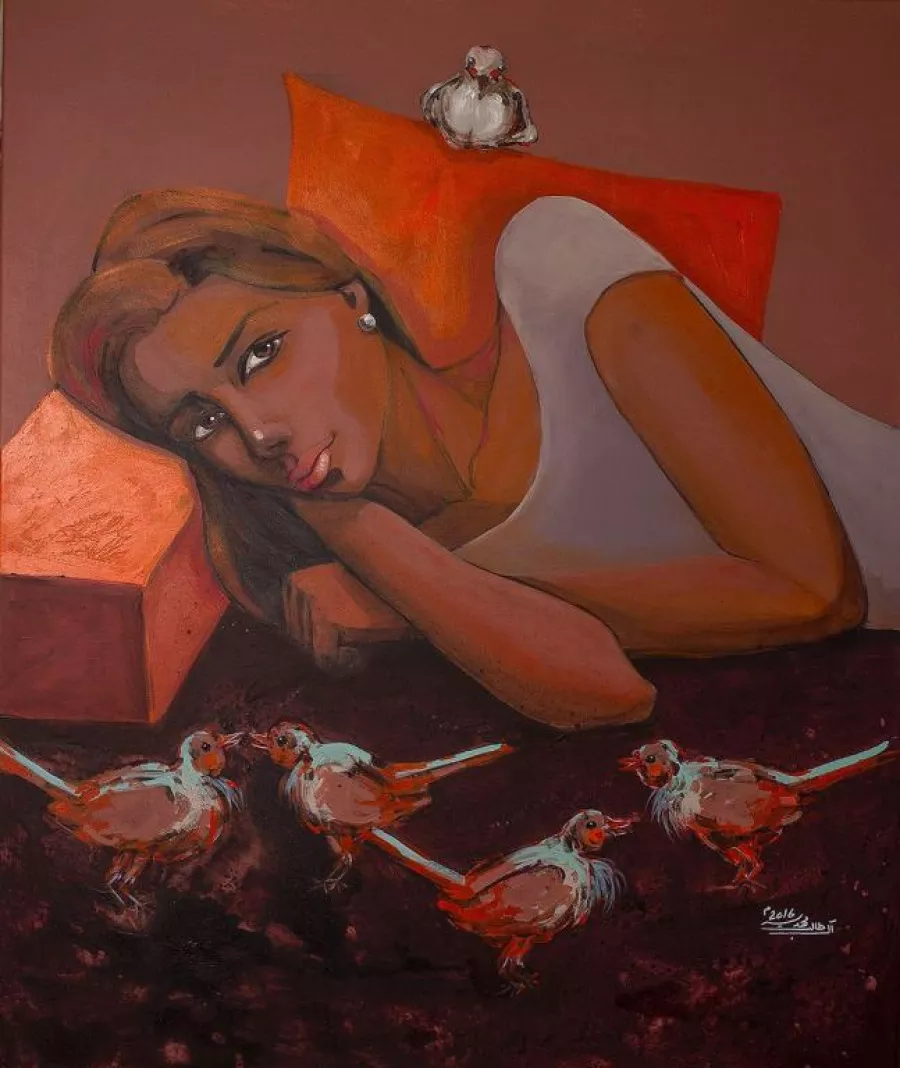
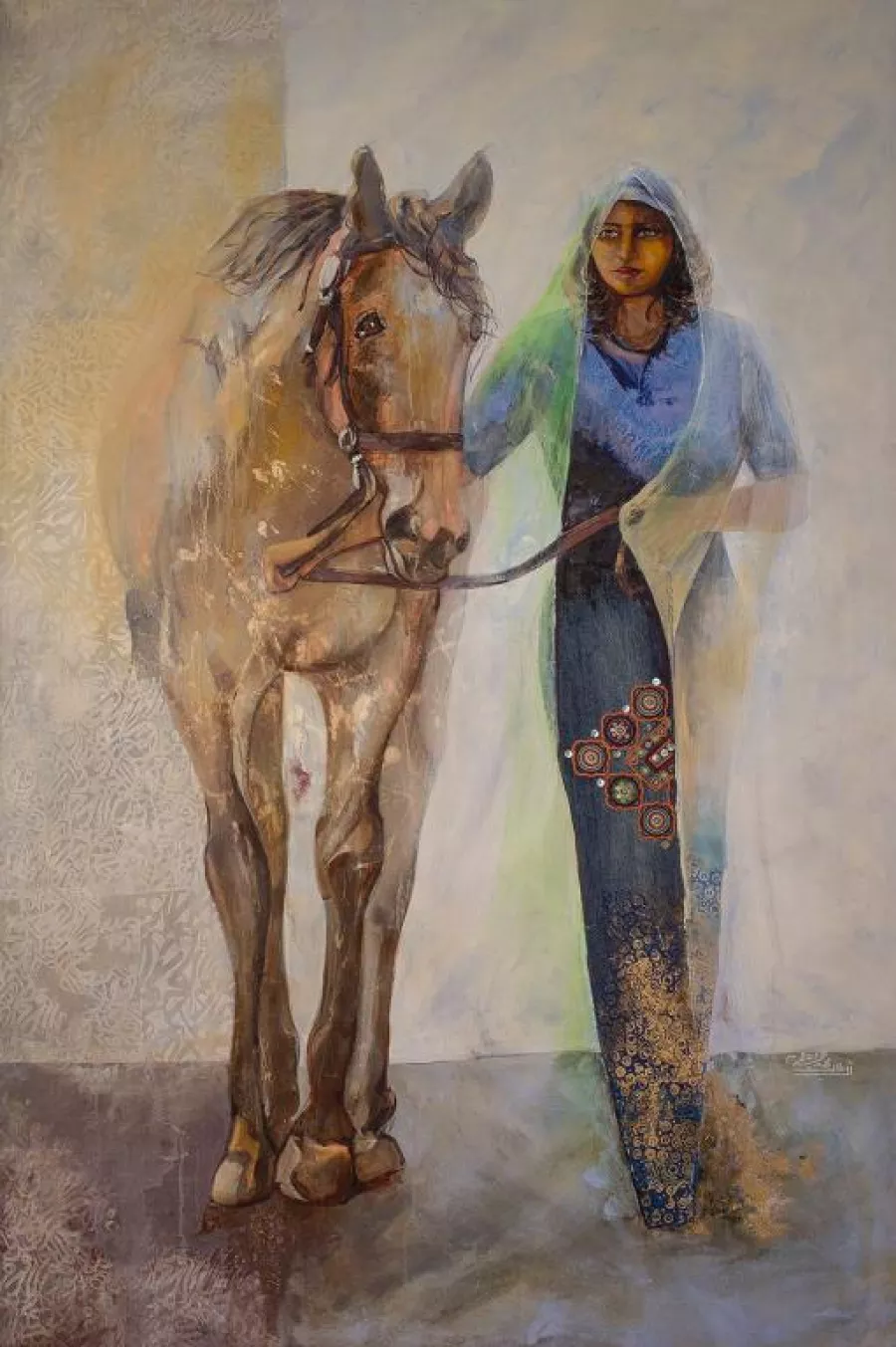
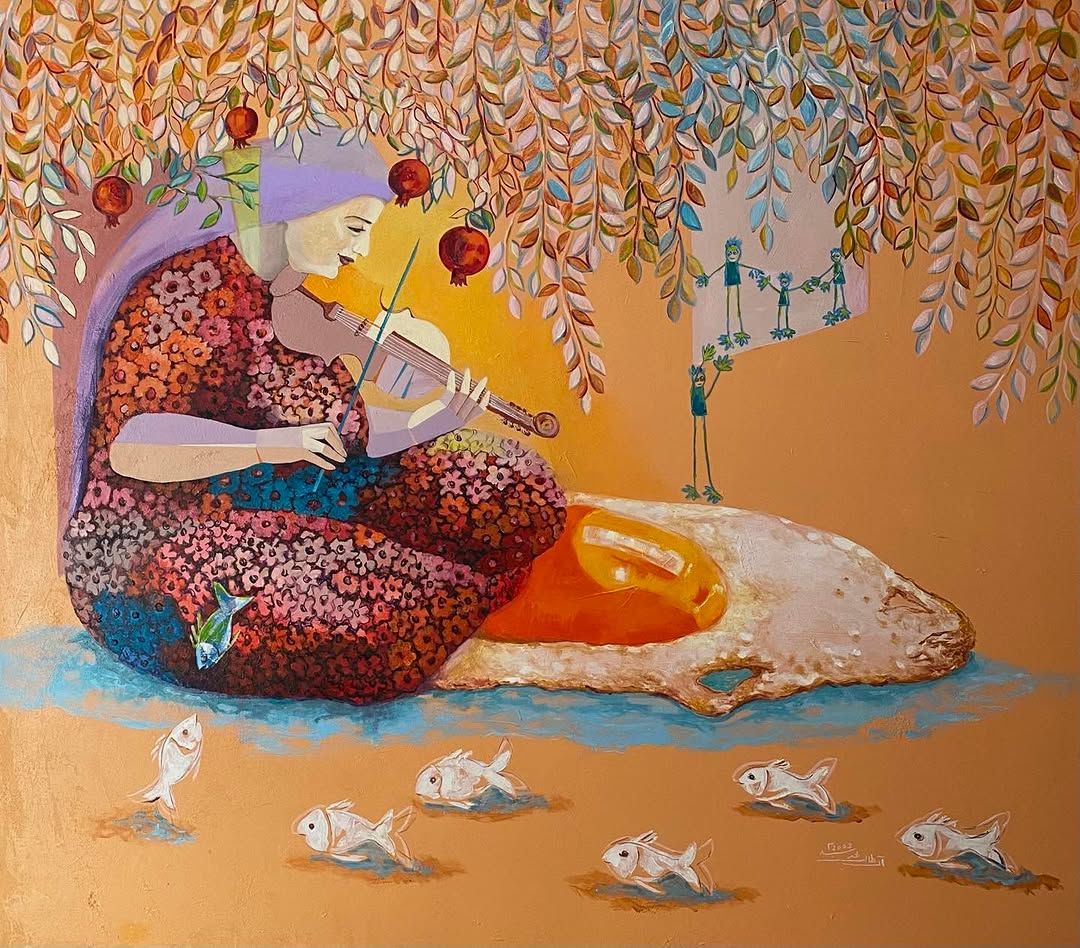
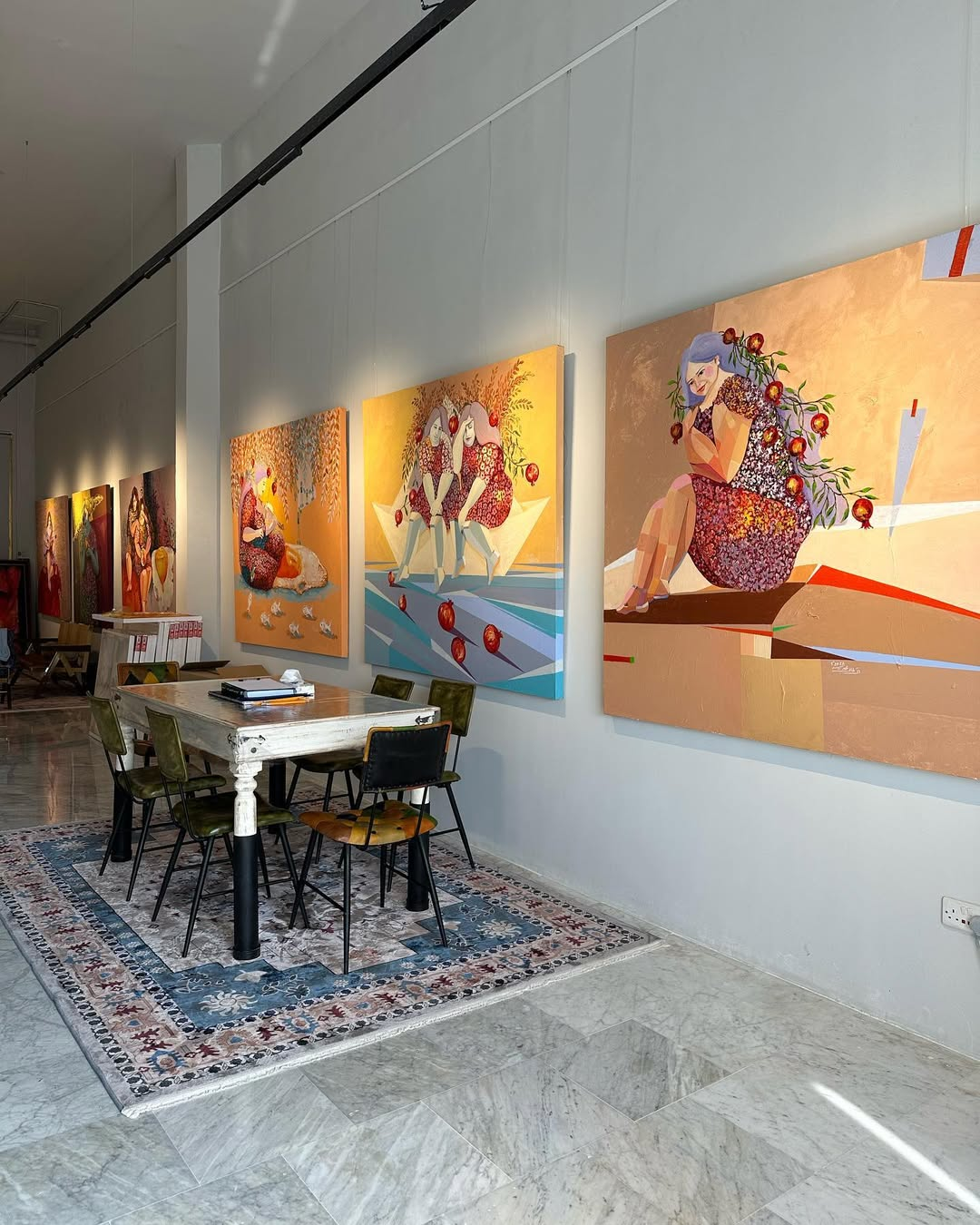
If Fruit Of Ash expanded her social lens, My Mother’s Letters narrowed it into an intimate grief that feels universal. Exhibited at Ahlam Gallery in Riyadh, Mahdih Al Talib presented around 40 works that read like intimate, visual messages rather than traditional “letters.” At the center of the series is the pomegranate, a symbol that has fascinated her since childhood, first as pure wonder at its precise inner order, then as a lifelong question about creation, faith, and the unseen logic behind beauty.
As she researched and traveled, she traced the pomegranate through civilizations and spiritual histories, then brought it back home, linking it to her mother’s language and tenderness, including a memory of her mother comparing a baby’s milk teeth to pomegranate seeds. Alongside the pomegranate, motifs like the hoopoe and mythical figures appear as keys to memory, heritage, and grief, forming a symbolic archive dedicated to the mother she lost.
Ultimately, these are not paper letters. They are “artistic letters,” dedicated to a mother. And somewhere behind the entire series is one line that became an echo after loss: “Mahdia, will you paint me?”
Al Talib’s range across mediums is not a side note. It is a philosophy. Painting allows her to build atmosphere, to let figures float between interior and exterior worlds. Sculpture asks for a different kind of honesty. Weight, balance, and mass turn metaphor into object.
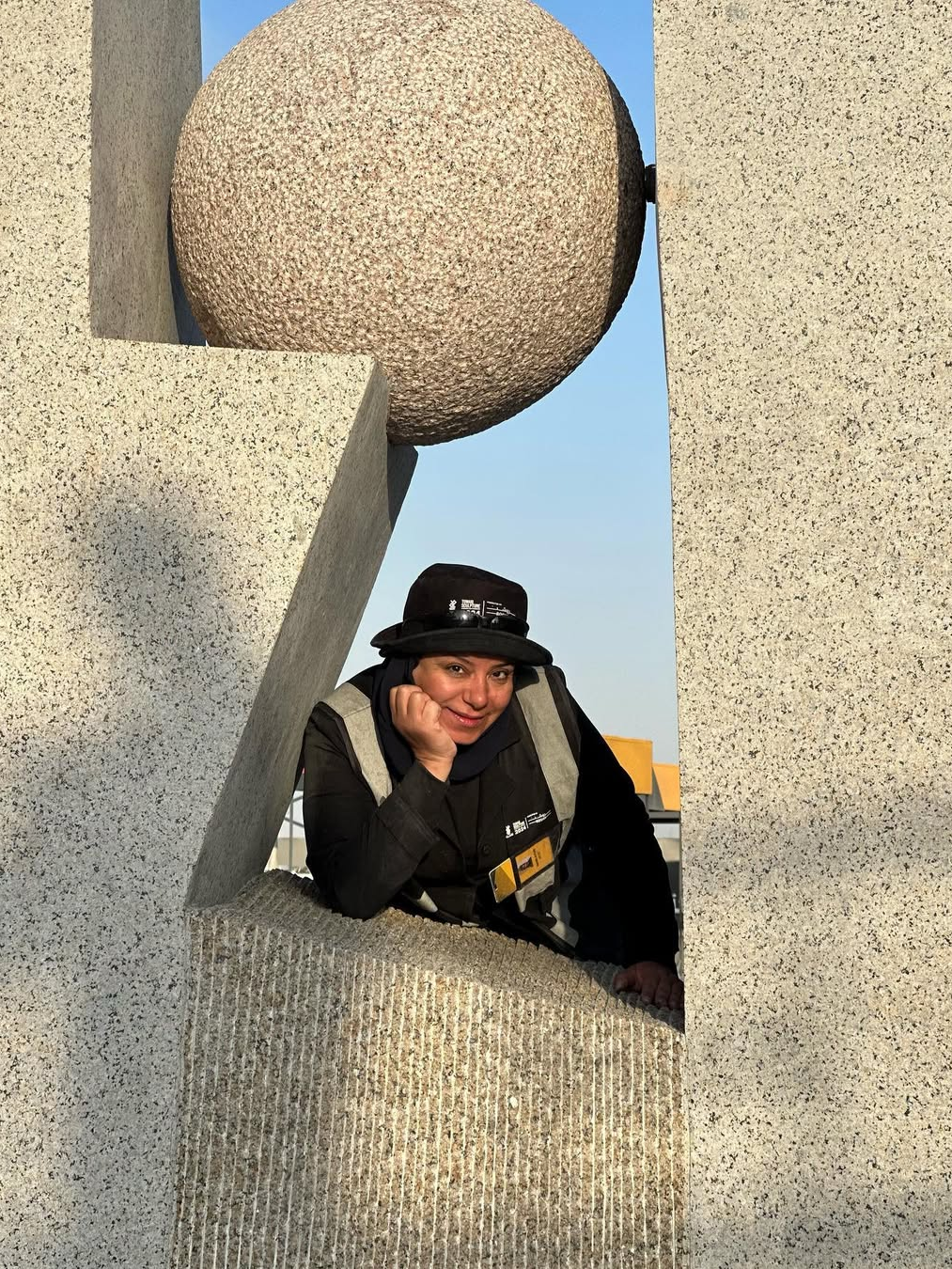
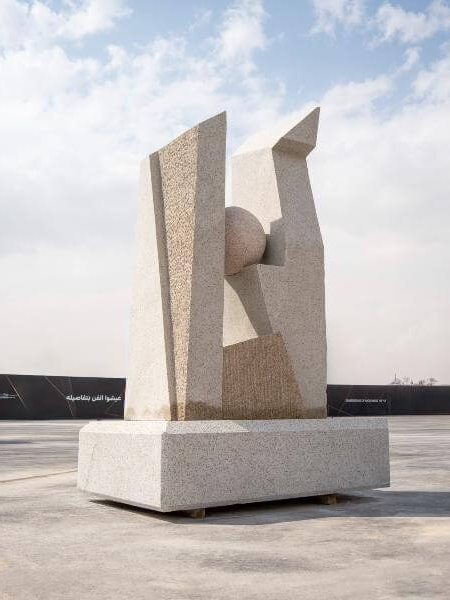
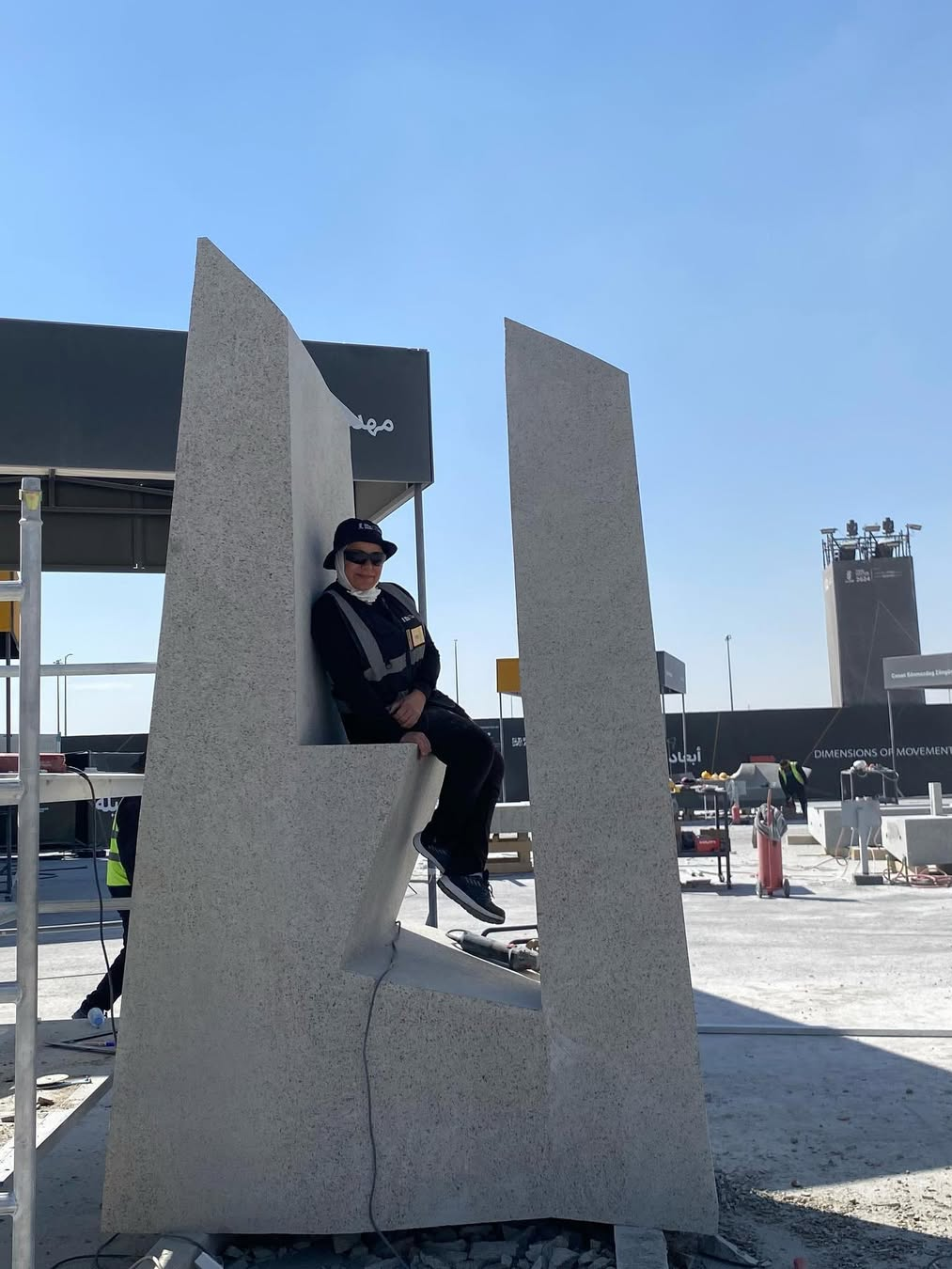
Her participation in Tuwaiq Sculpture in 2024 placed her within one of Riyadh’s most visible contemporary sculpture contexts. The work documented from that period, Structural Abstraction, reads like a conversation with the city itself: an exploration of mass and space, shifting surfaces that change as the viewer moves, gaining new dimension with each angle and each turn of light.
It is easy to see how this connects to her broader practice. Her paintings have always been about shifting perception, the way meaning changes depending on where you stand. Sculpture simply makes that principle physical.
In a region where cultural infrastructure has expanded rapidly, it is important to recognize the artists who were building long before it became a trend. In 2006, Al Talib founded Al Mada Studio in Saudi Arabia’s Eastern Province as more than a personal workspace. It was conceived as a working studio with a permanent display, a space for courses, and a hub for visiting artists. The project reflects her core values: not only producing art, but creating the conditions for art to exist. Not only seeking visibility, but building platforms for others.
She later expanded this vision with a second branch in Riyadh, extending her mission into the capital’s growing art ecosystem. Alongside Al Mada Studio, she operates Mahd Alfnon Gallery in Riyadh, using it as a platform for exhibitions and cultural programming. In this sense, Al Talib’s practice goes beyond objects on walls. It encompasses mentorship, community building, and the steady cultivation of cultural continuity, placing her within a lineage of Saudi artists who understand that legacy is not only what you create, but what you make possible for others.
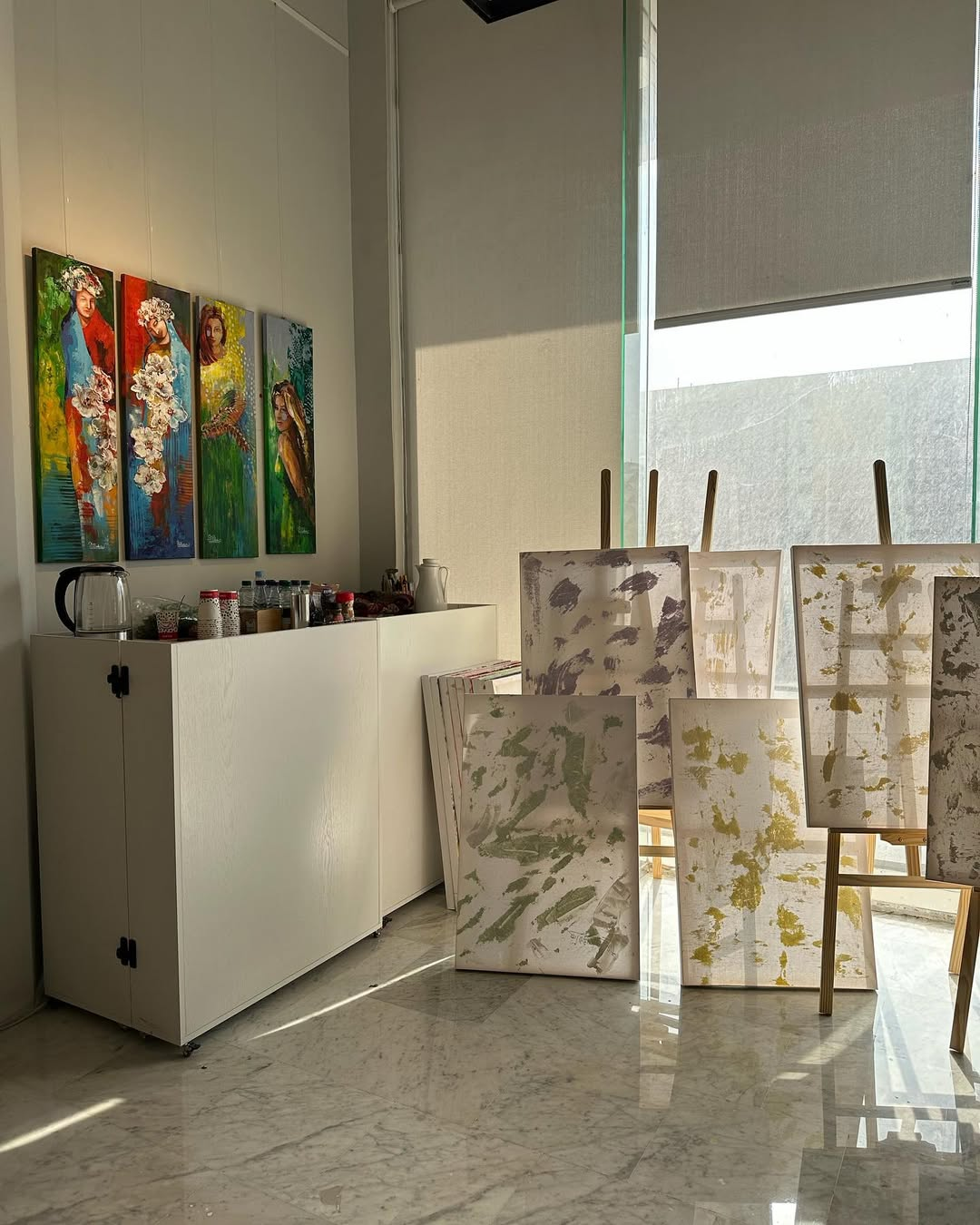
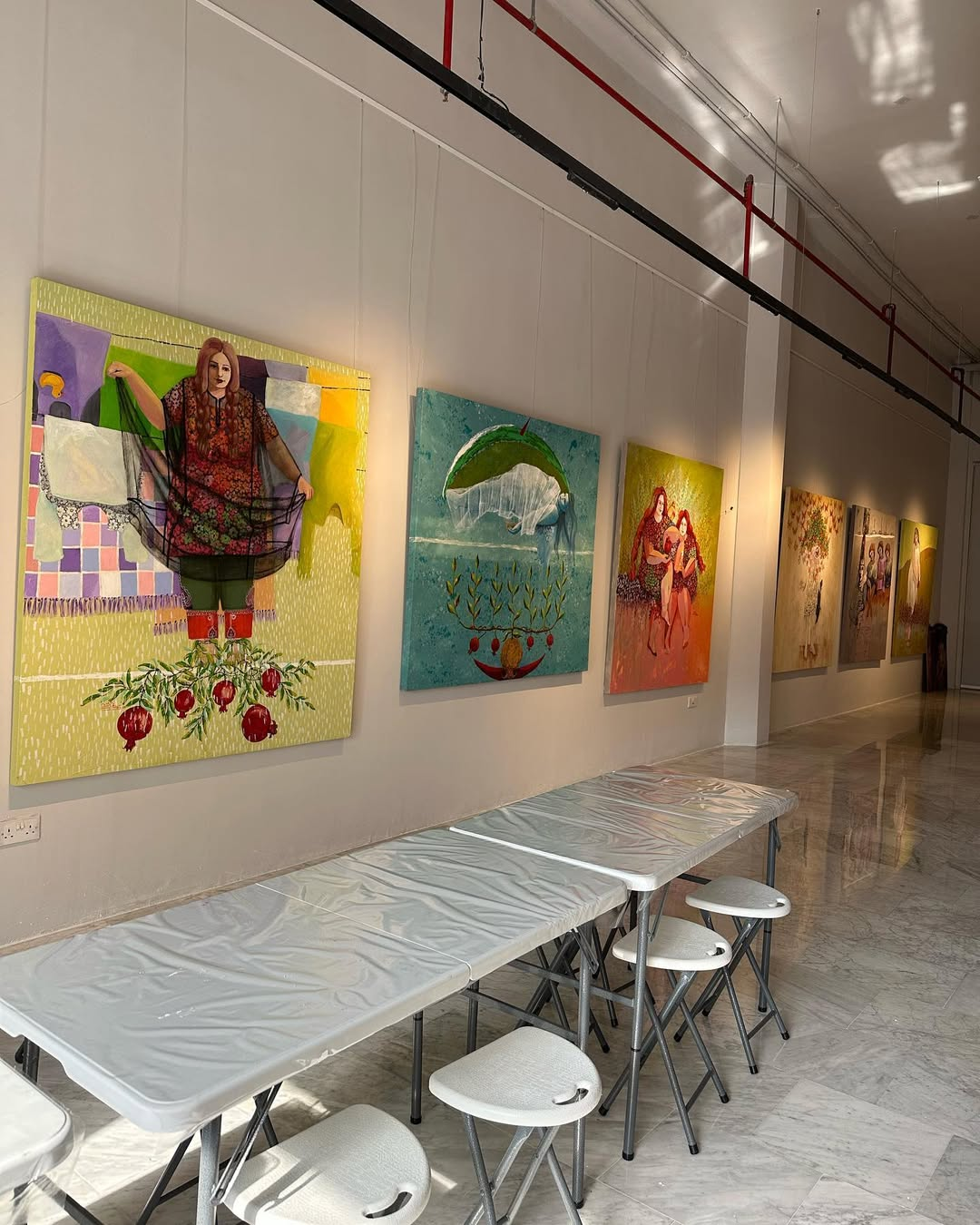
Recently, Al Talib’s work has been showing across the region in ways that underline both her symbolic language and her Gulf presence. In Bahrain, she took part in Sound of Water, a group exhibition hosted at the Arts Center of the Bahrain Authority for Culture and Antiquities and organized by the Bahrain Fine Arts Society, bringing her feminine, folklore threaded imagery into a wider regional conversation.
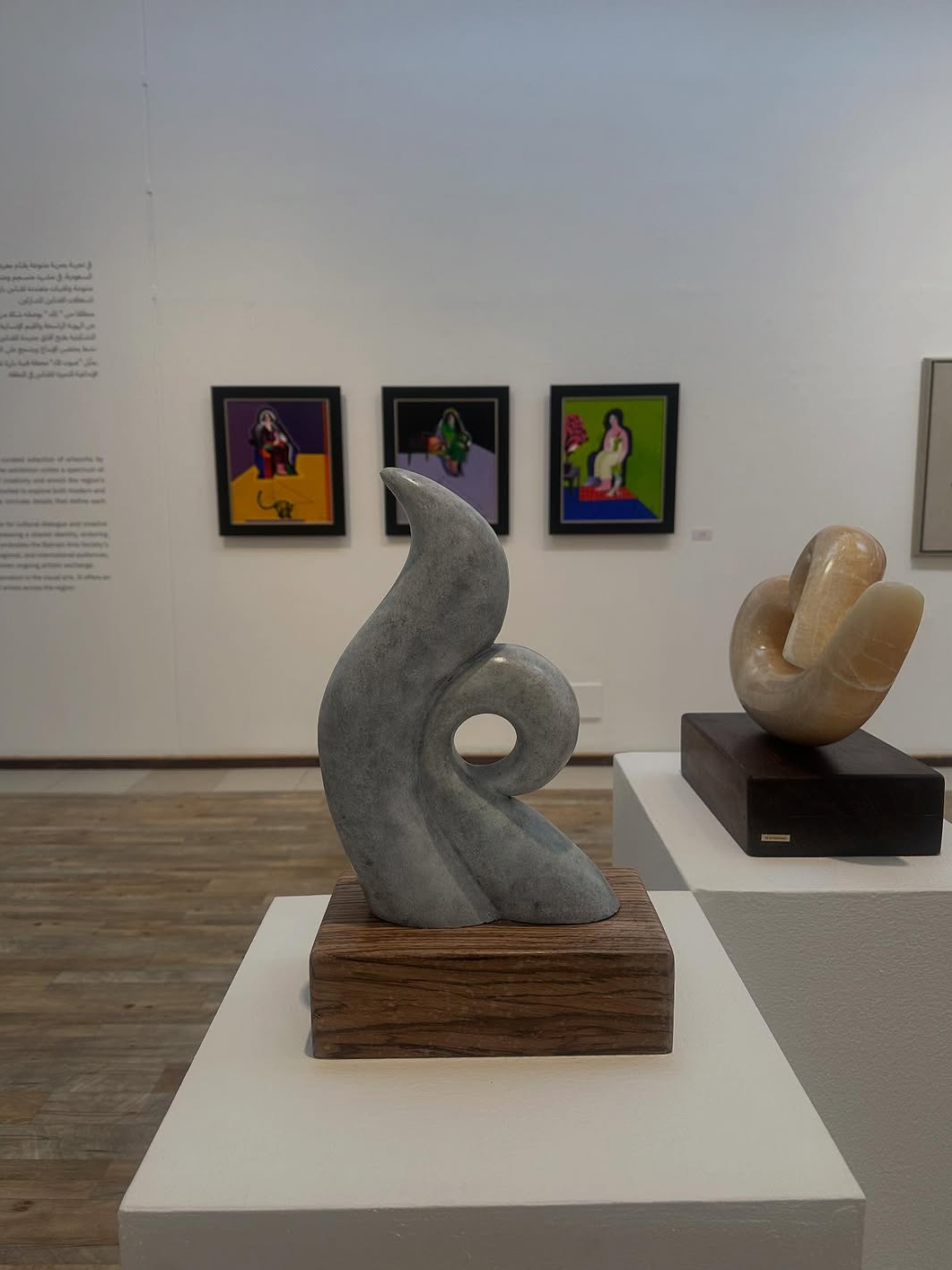
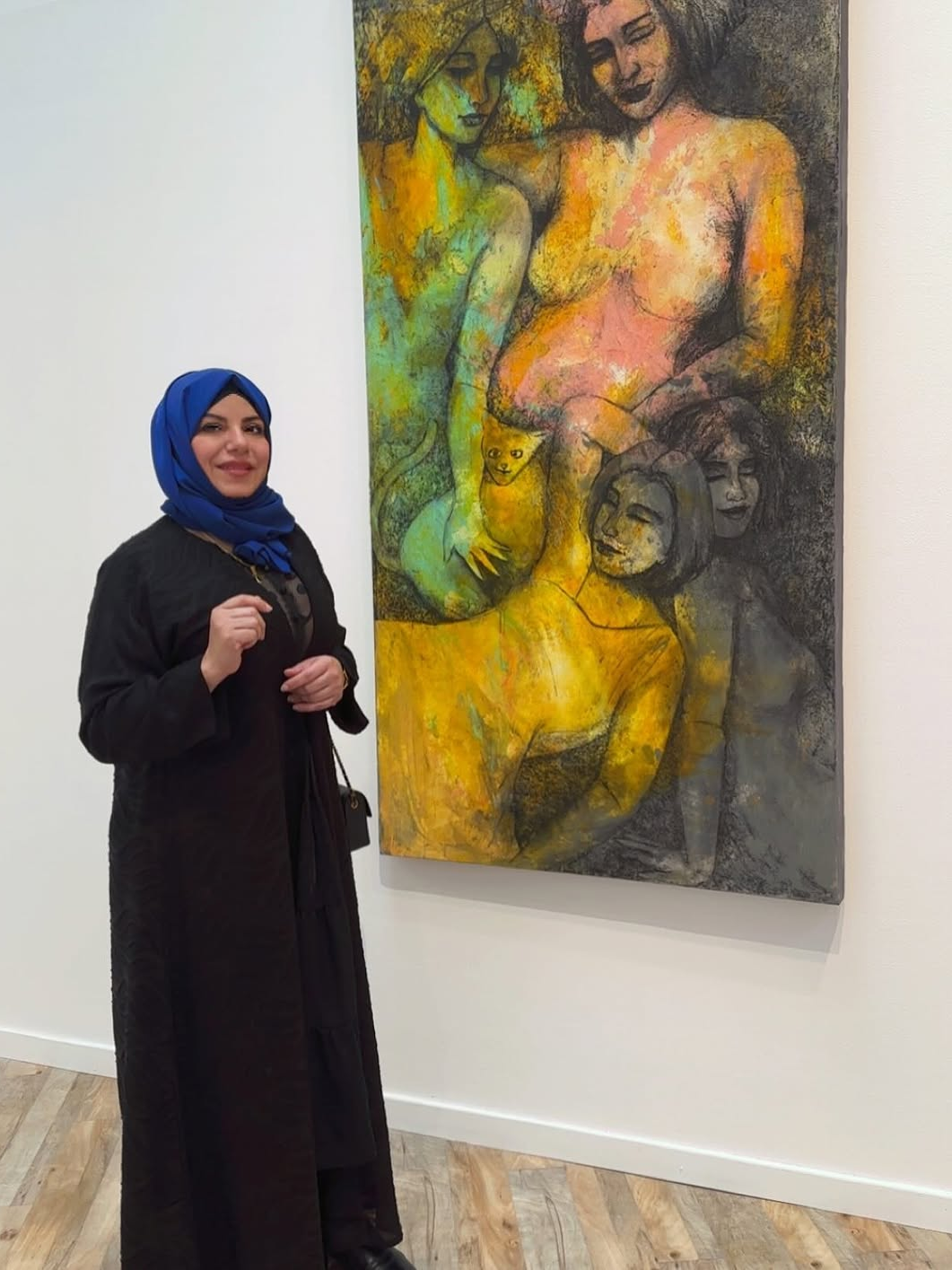
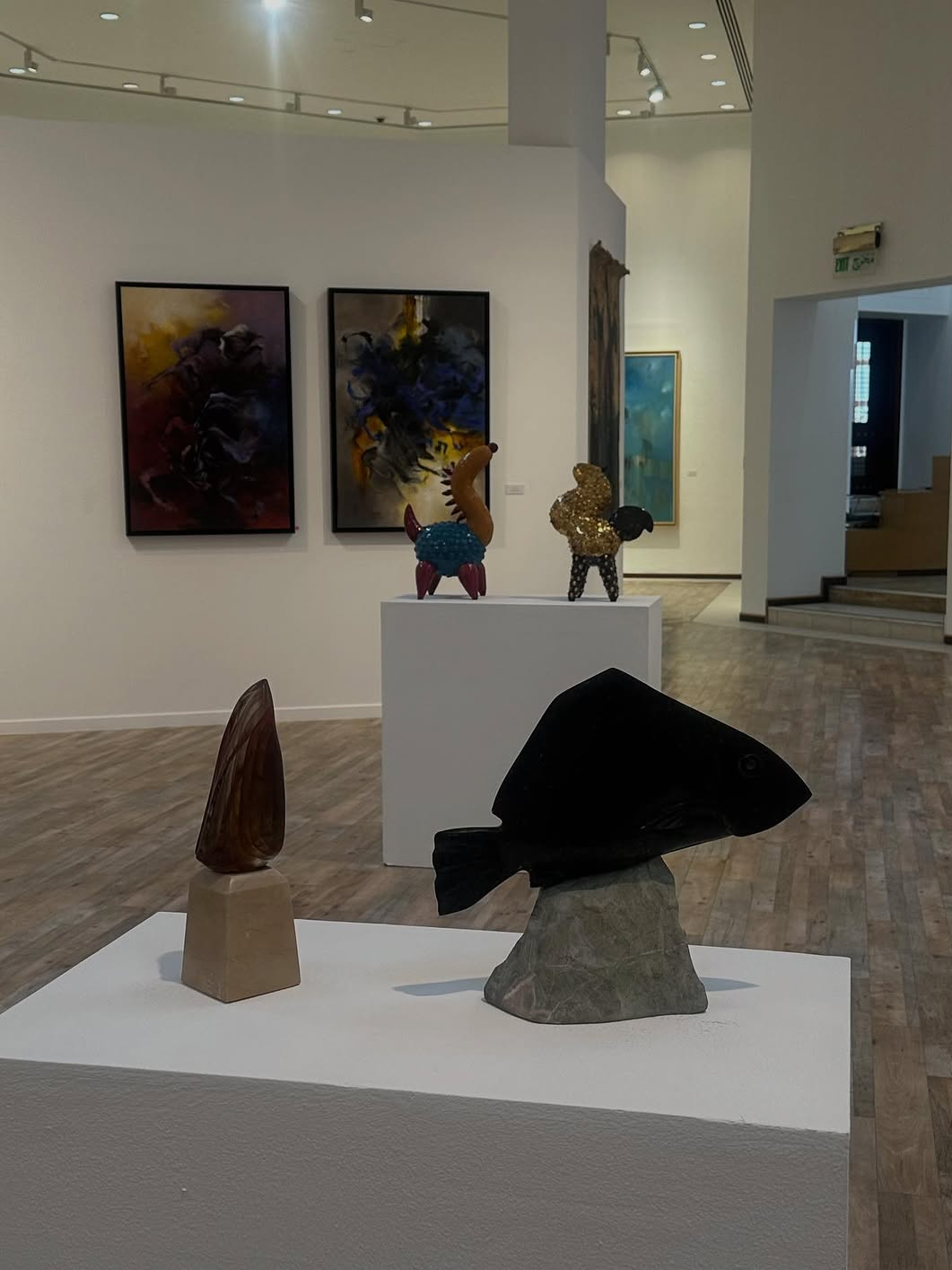
In Amman, Jordan, she presented a duo exhibition at Orfali Art Center titled Floating Rythm (كائنات منسابة) with Haythem Hassan, a show shaped around drifting, fluid figures and suspended narratives, where her signature softness meets an underlying insistence, even when the work appears to float.
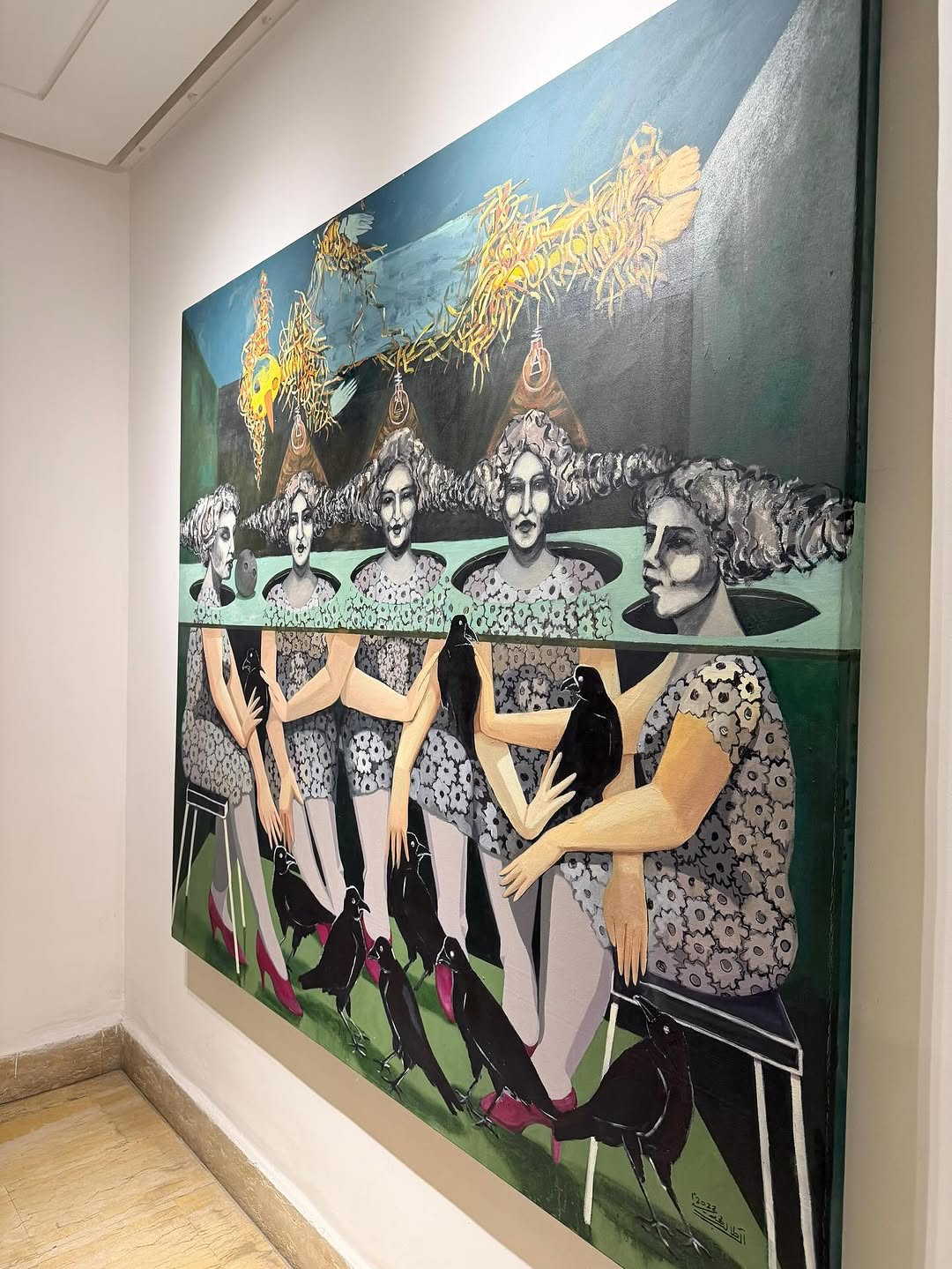
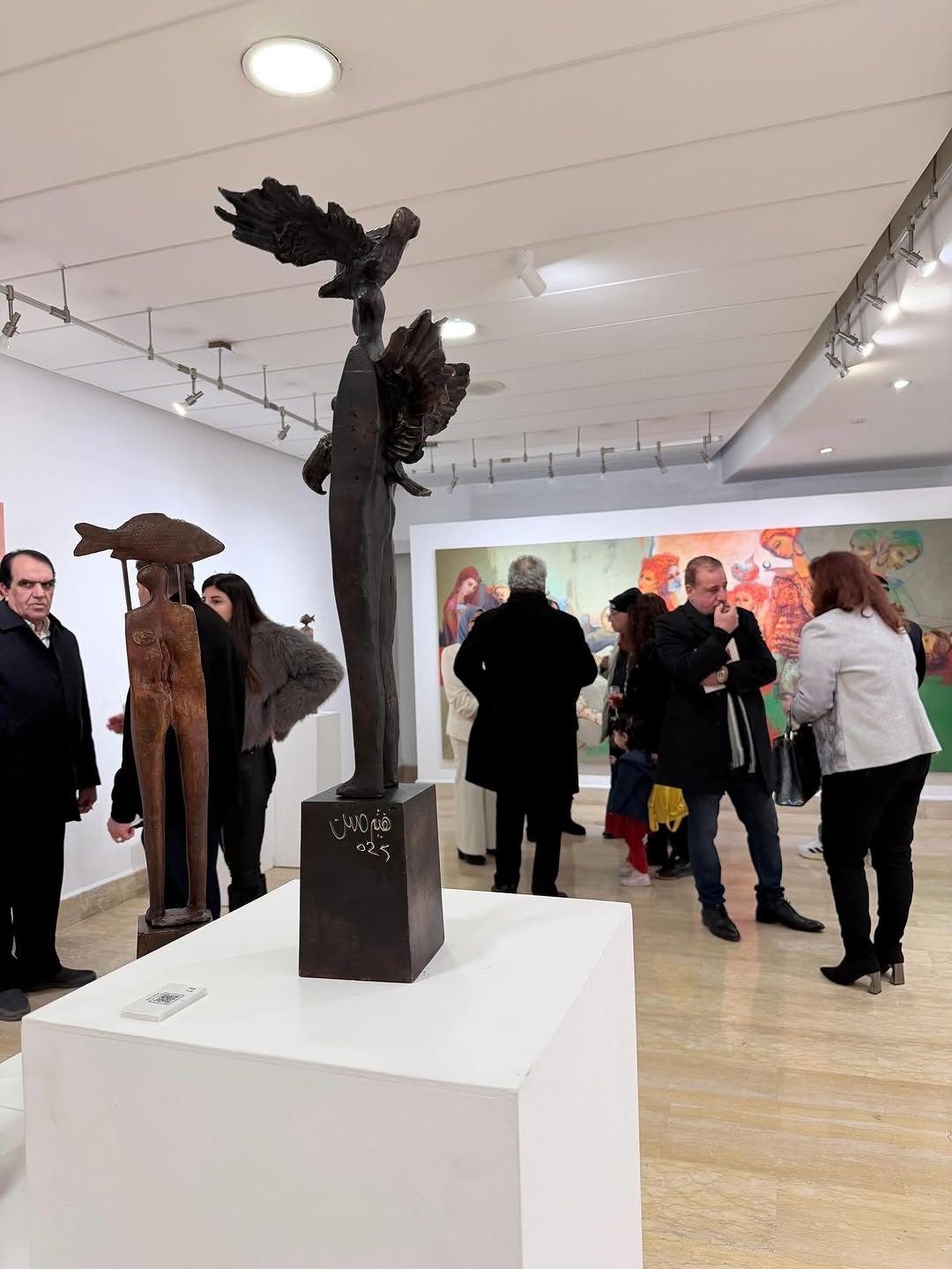
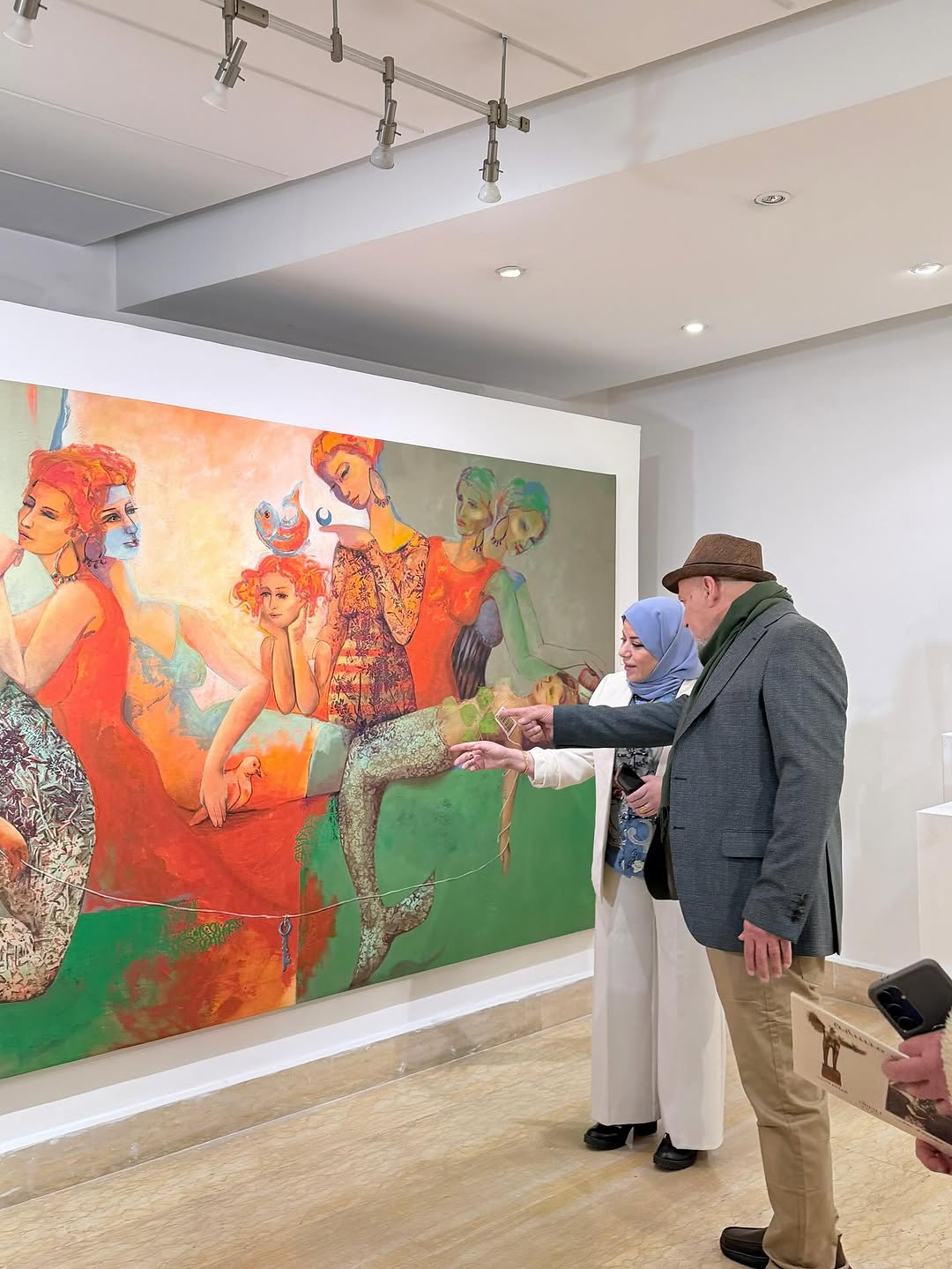
There is a sense of continuous motion around her, the kind that comes from an artist in active circulation, building collaborations, mentoring, and testing how her symbolic universe translates across cities and audiences. Whether she is presenting work abroad or shaping creative spaces closer to home, the message stays consistent: her art is not a single season. It is a long practice, still unfolding.
To encounter the work of Mahdih Al Talib is to step into a world where memory, mythology, and womanhood are treated not as themes, but as living material. She builds quietly, returns often to her symbols, and allows them to deepen rather than disappear. In doing so, she offers something increasingly vital within the Gulf’s fast-moving art landscape: a sustained, evolving feminine cosmology that does not chase relevance, but patiently becomes it.
Inspired by Mahdih Al Talib? Discover more artist stories at KSAArt.com.