Ola A Hejazi Paints a Home Out of Arabic Letters and Memory
Discover Saudi artist Ola A Hejazi, whose ink rich paintings transform Arabic letterforms and memory into intimate visual diaries.

Discover Saudi artist Ola A Hejazi, whose ink rich paintings transform Arabic letterforms and memory into intimate visual diaries.
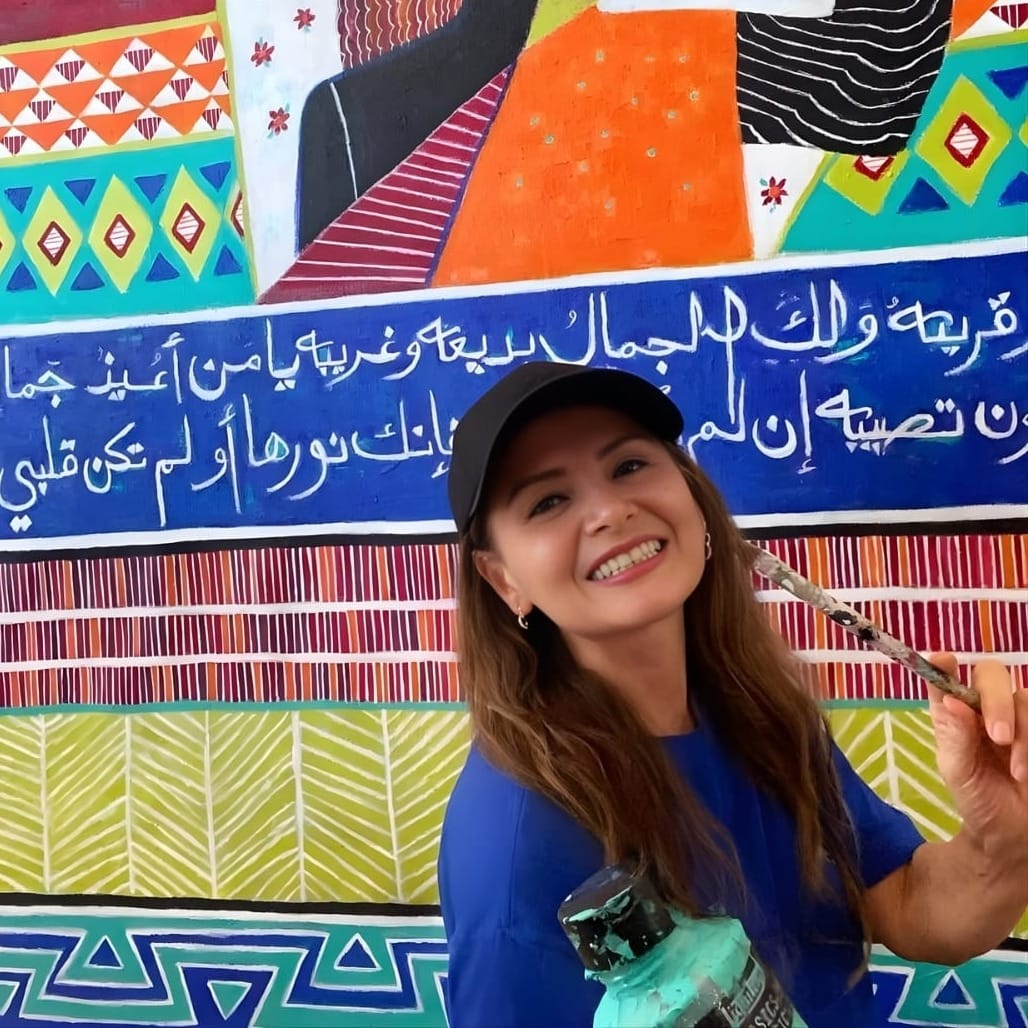
“My paintings are part of my art journal life. They are my secret diary. My memory.”
In Jeddah, Ola A Hejazi builds paintings that feel like rooms you enter slowly. Not because they are quiet, but because they are layered. A letter becomes a figure. Ink becomes weather. A childhood object becomes an emotional landmark you did not know you missed.
Her world is Saudi, but never singular. Shaped by frequent relocation, Hejazi returns to a question that is both personal and universal: what do we carry when places change, and how do we rebuild the self from what remains?
Born in 1975 in Lebanon to a Saudi family, Ola A Hejazi grew up in Jeddah, shaped by a childhood of frequent relocations that later fed her impulse to rebuild memory through art. Recognized early by teachers for her natural talent, she gravitated toward Arabic language, calligraphy, and cultural storytelling through self-directed exploration, laying the emotional and visual foundations of her later work. She earned a Bachelor’s degree in Arabic Language and Literature from King Abdulaziz University, followed by a Diploma in Educational Psychology, a pairing that deepened both her relationship with script and her future role as an educator.
Her formal art training began in 1995 at the Saudi Art Centre in Jeddah, where she explored oil painting, and later expanded in 2002 with specialized soft-ground etching training at the Slade School of Fine Art in London, strengthening the technical precision and layered texture that would become central to her practice.
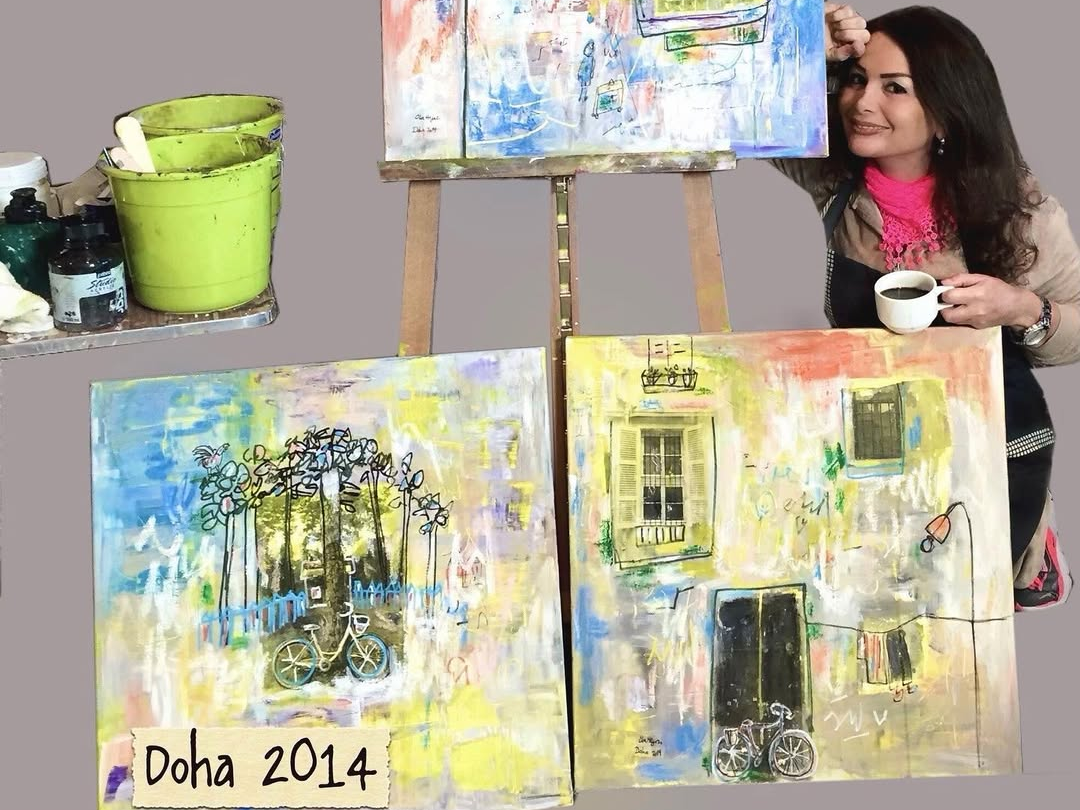
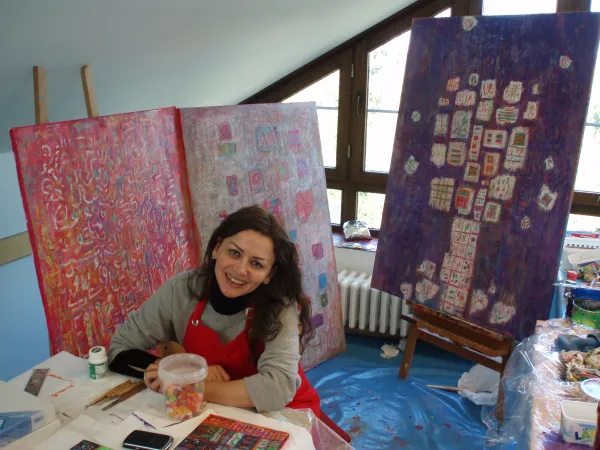
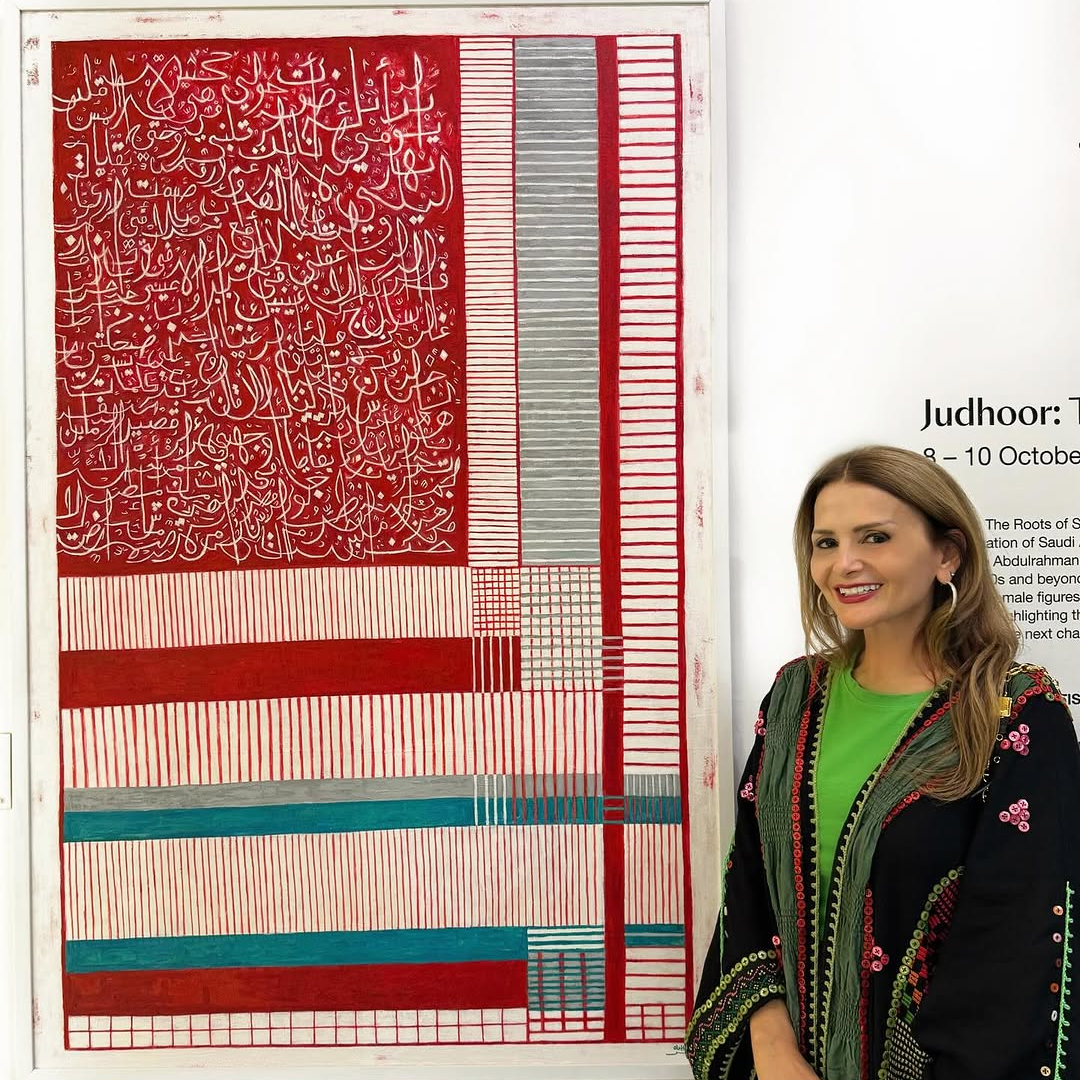
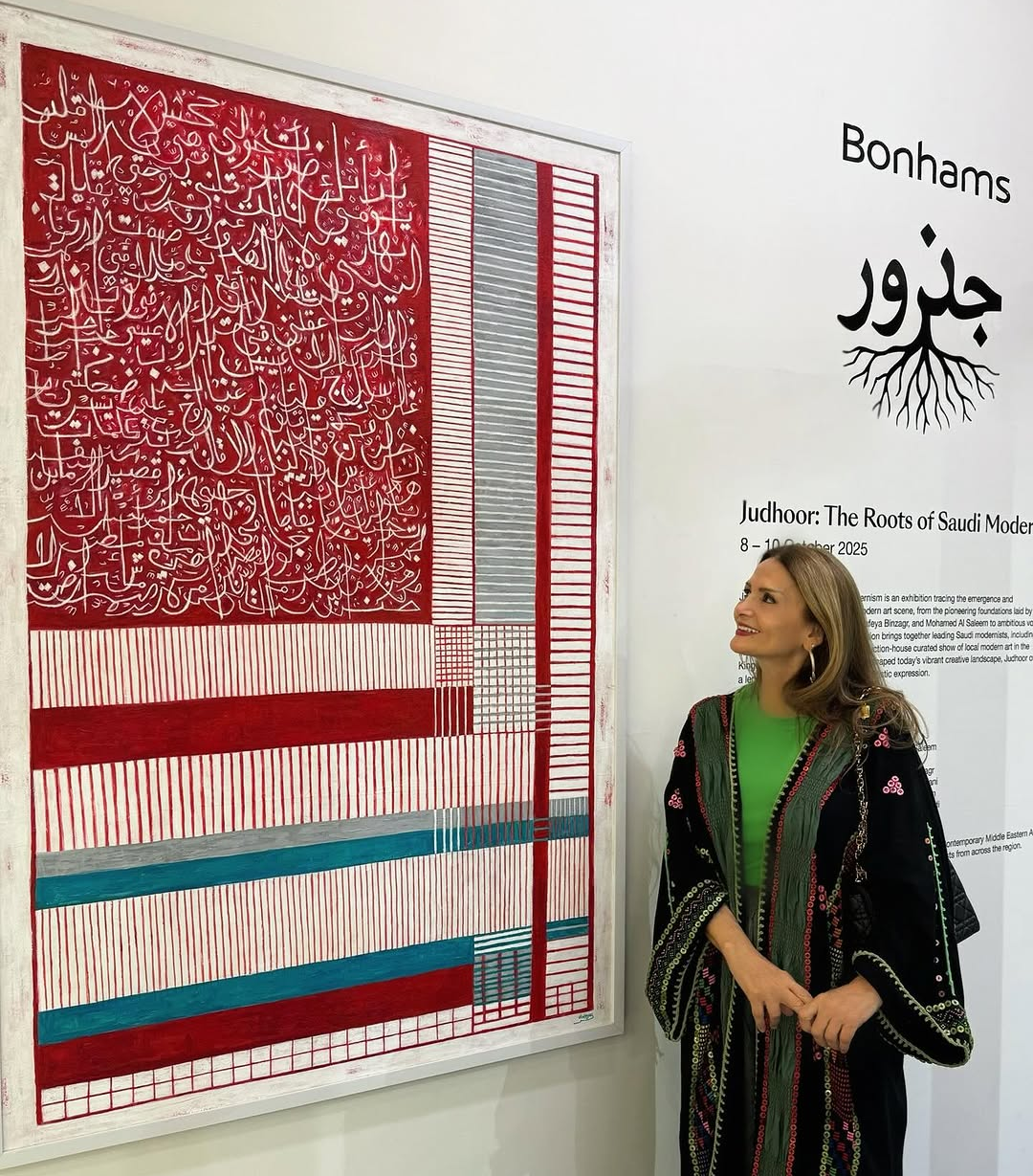
Ola A Hejazi approaches Arabic letters as visual forms first, meaning second. Rather than treating calligraphy as a strict discipline with fixed rules, she lets letter shapes behave like drawings guided by mood and instinct. In her compositions, the alphabet becomes gesture, rhythm, and structure. You do not need to read the text to feel the intention, because the letterform is doing the work of an image, not a caption.
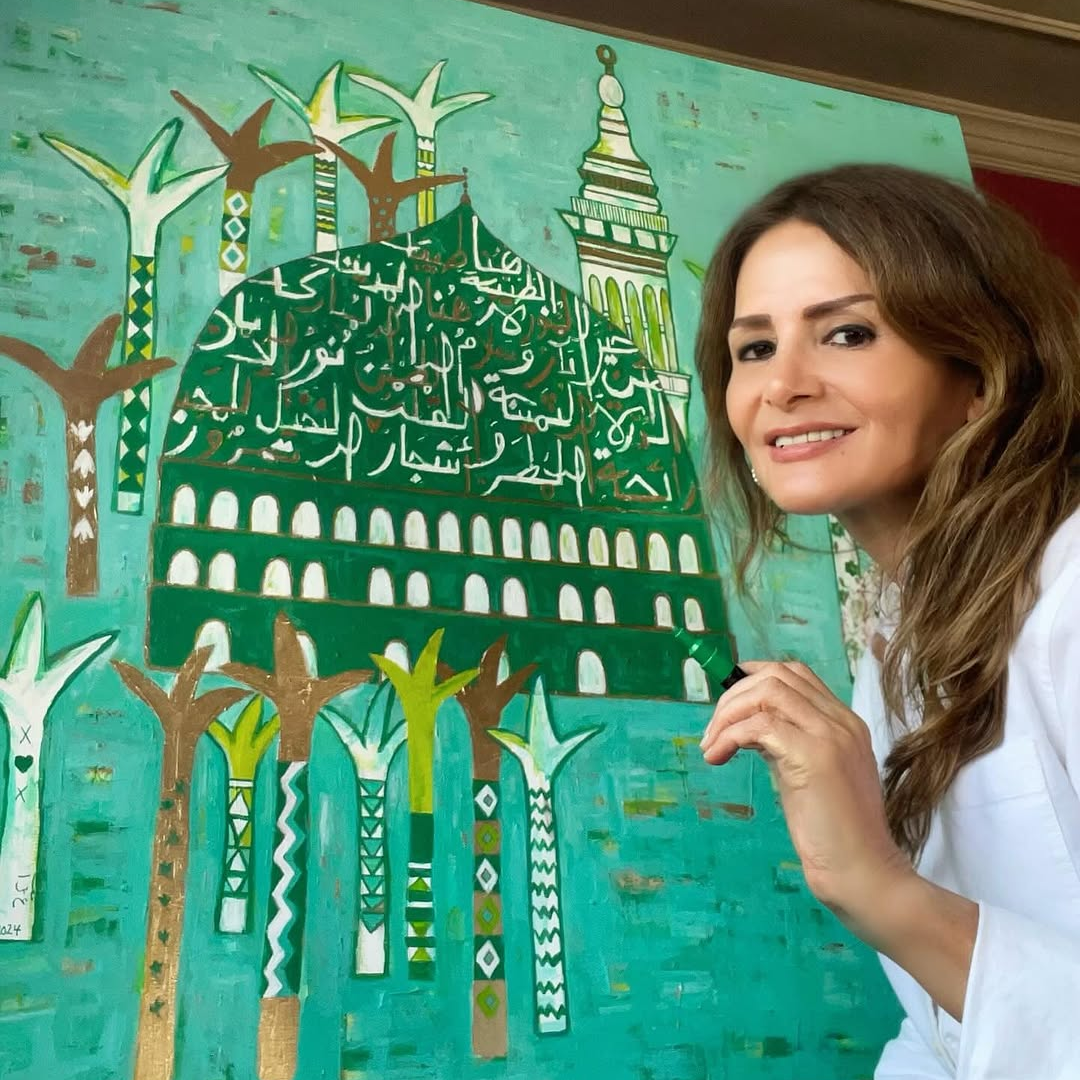
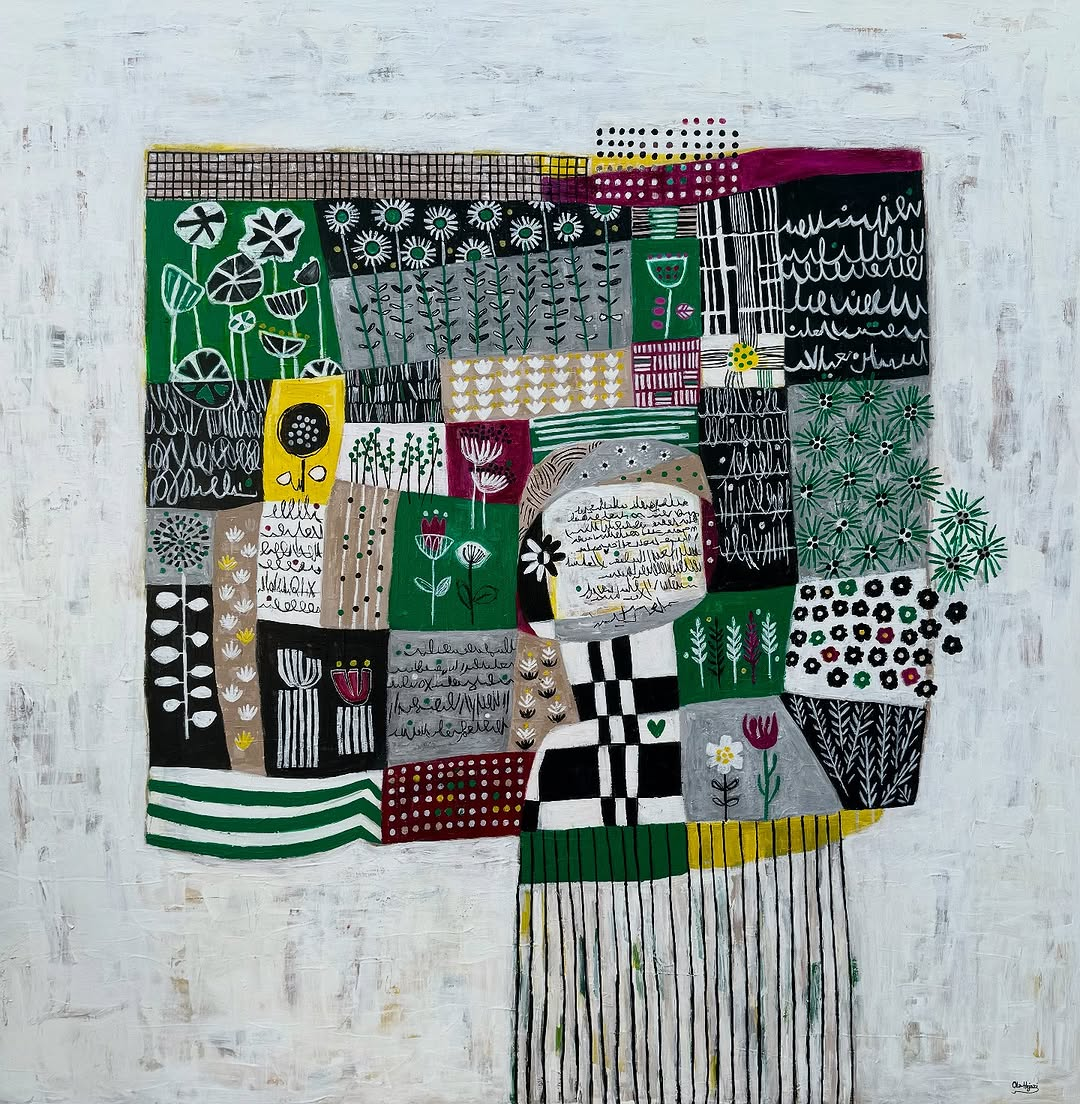
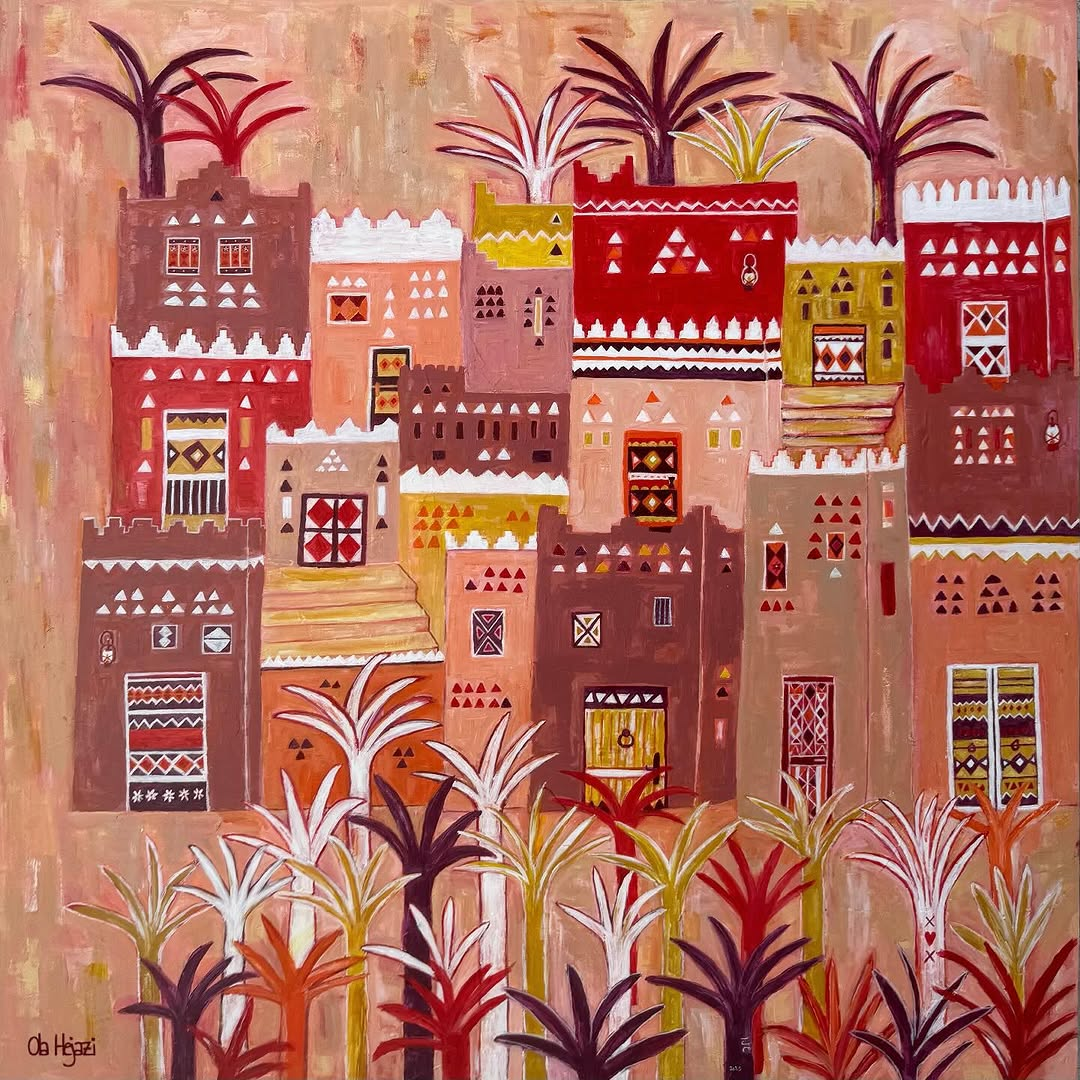
In Hejazi’s work, heritage shows up in symbols and surface language rather than literal storytelling. Traditional architecture appears in stacked forms and patterned facades, while palms, geometric motifs, and folkloric details create a visual rhythm that feels rooted in place. Even when she introduces figures like horses, they read less as subjects and more as cultural emblems, carrying ideas of strength, memory, and belonging. The result is work that feels handcrafted and intimate, like a contemporary patchwork of Saudi visual memory.
Her palette often returns to red and blue, and when it does, it arrives with certainty. These colors tend to sit in high-contrast fields that heighten emotion and intensity, turning the canvas into a charged space rather than a neutral background. Red can feel like urgency, memory, or pulse. Blue can feel like depth, reflection, or quiet. Together, they build a recognizable emotional signature, one that is confident without becoming theatrical.
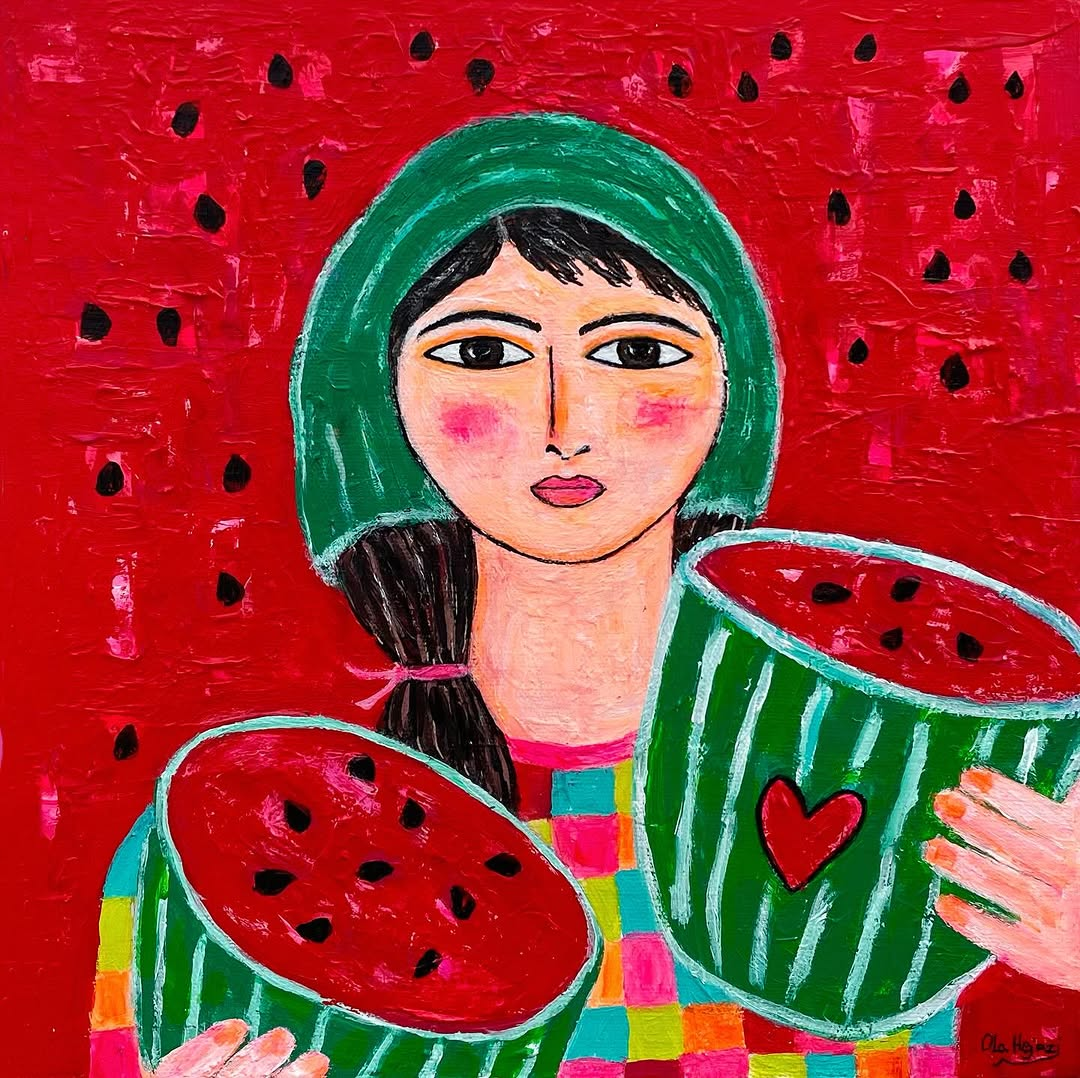
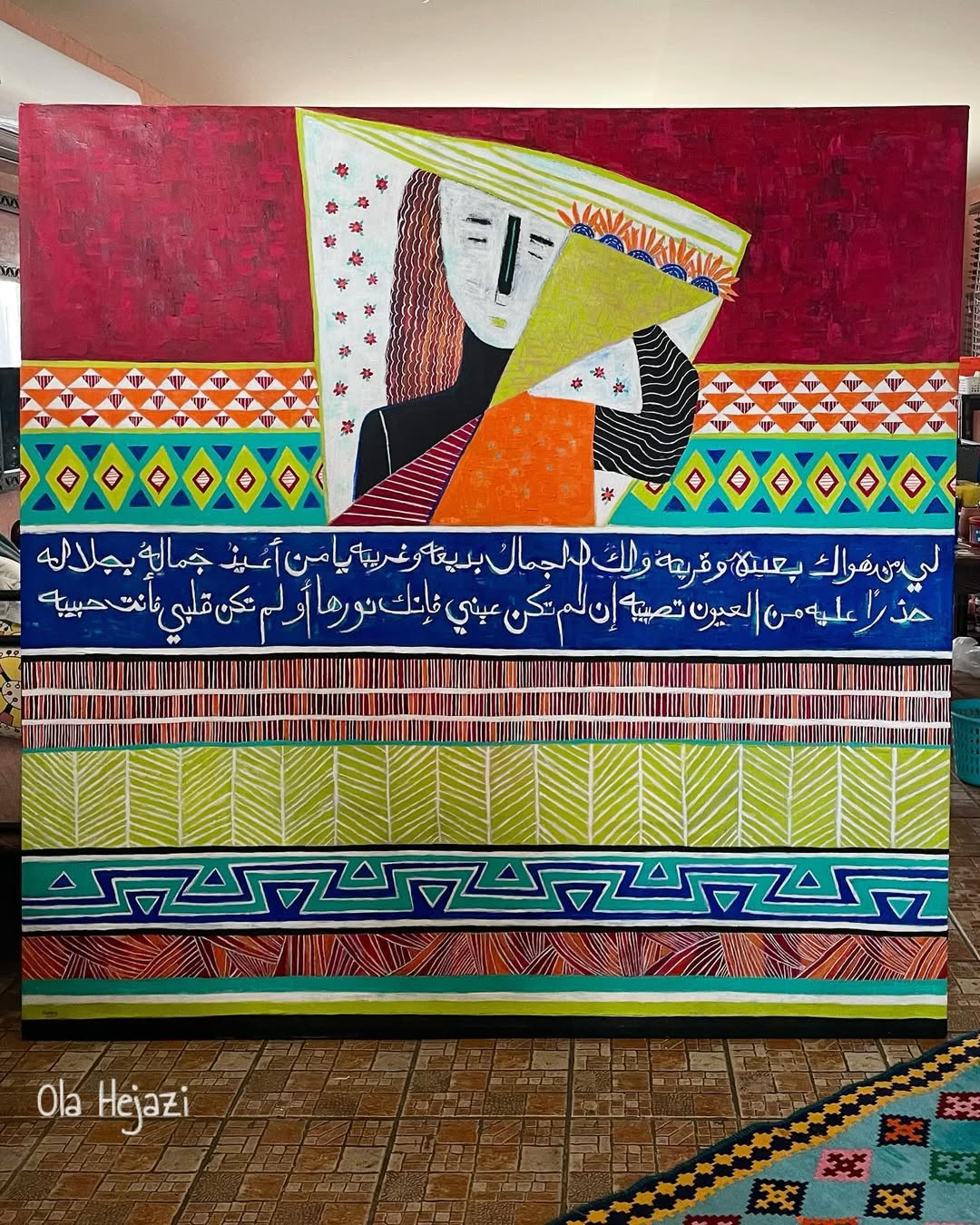
Hejazi’s work is made for the second look. The longer you stay, the more it reveals: fine marks tucked inside larger gestures, layered traces that suggest revision, and details that feel almost like private notes. This slow disclosure becomes part of the experience. The paintings do not explain themselves immediately, they unfold, rewarding patience and inviting a relationship rather than a quick impression.
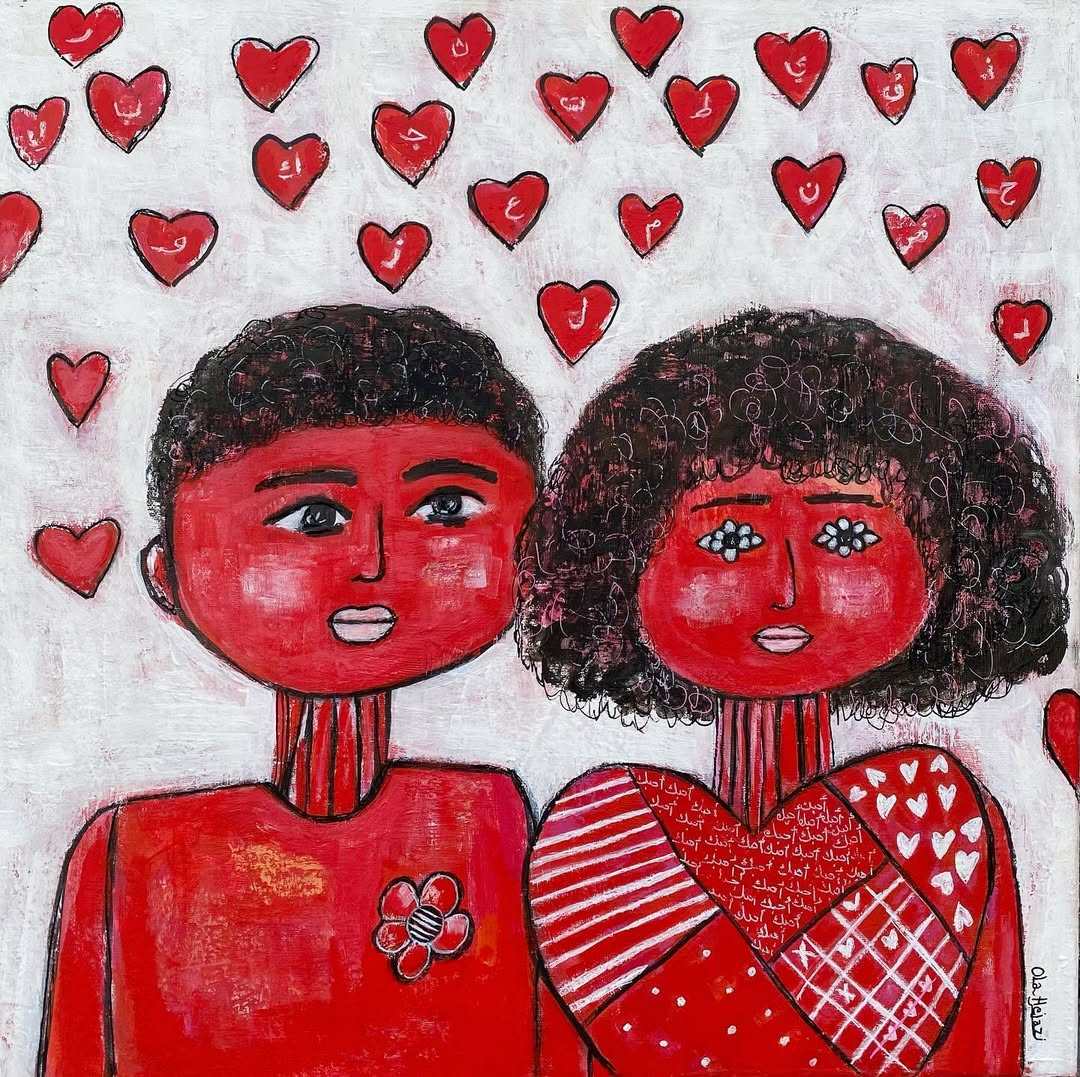
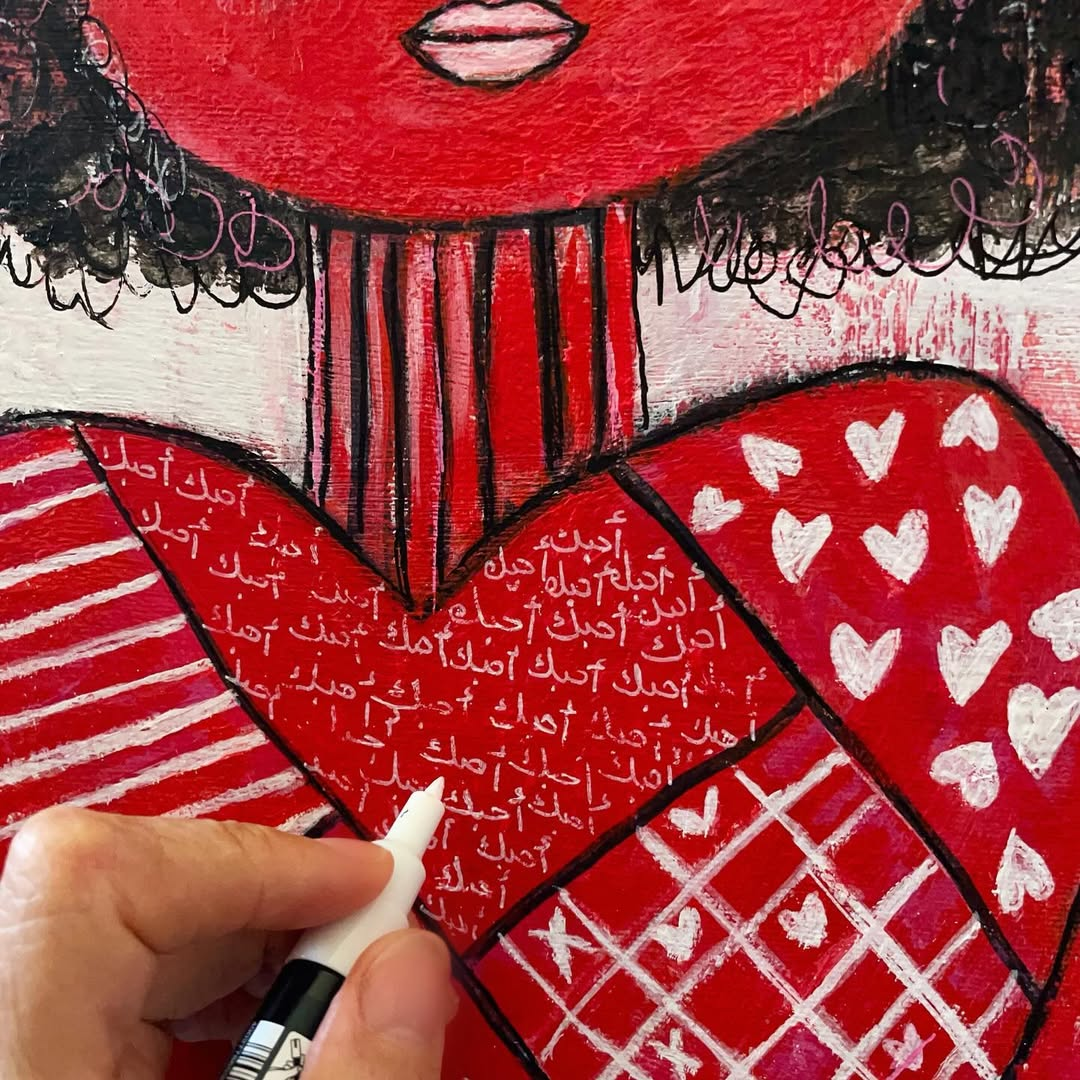
Hejazi’s frequent relocation appears as a shaping force in her practice. The act of moving, leaving, and returning becomes a psychological rhythm that shows up visually as layering, rebuilding, and fragmenting. Memory in her work is not nostalgia as decoration. It is material to construct with. Painting becomes a way to reconstruct what was left behind, to hold what could have disappeared, and to give form to emotional residue.
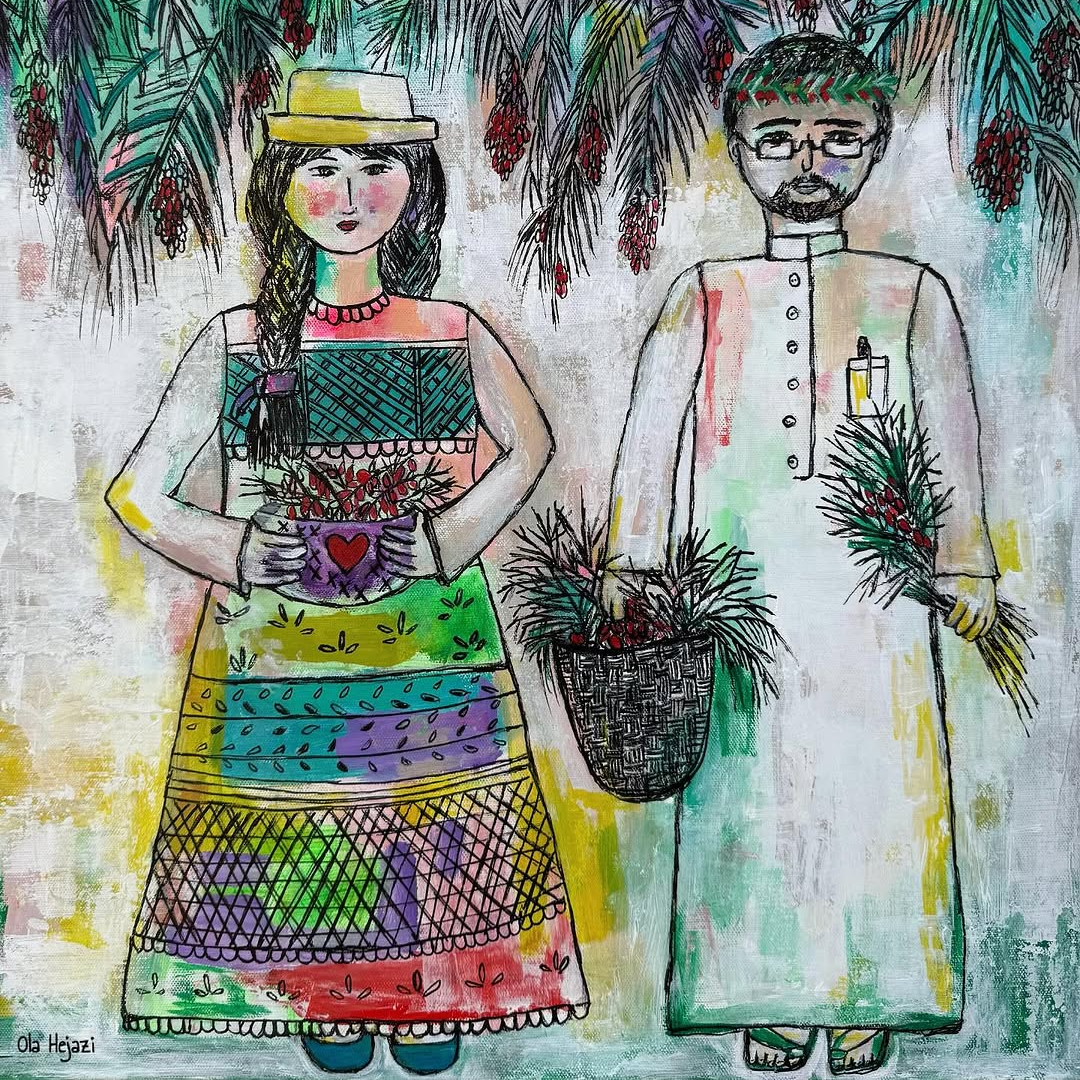
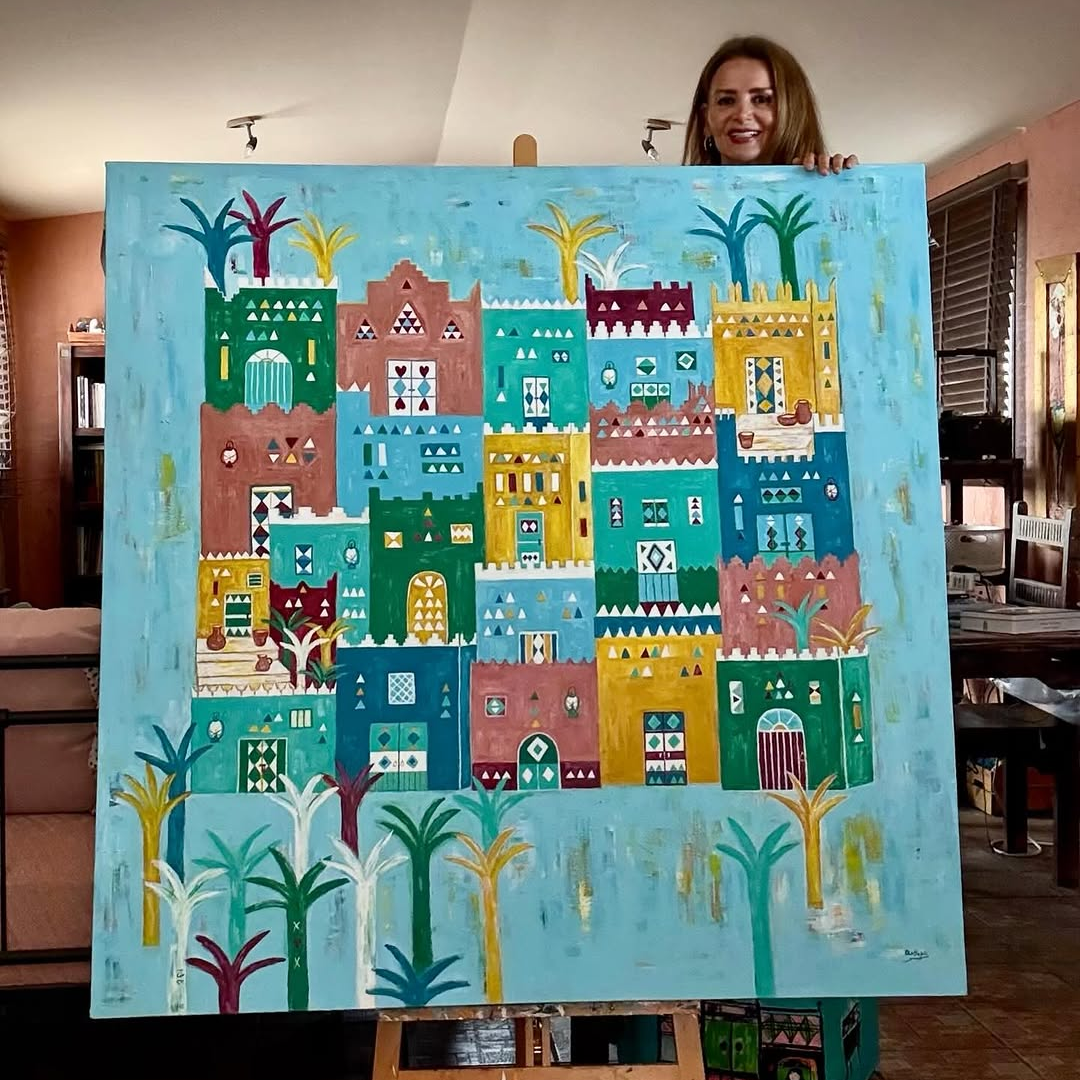
Hejazi has described her paintings as an art journal, a secret diary, her memory. That framing changes how you read the work. A diary is not written for applause. It is written to hold truth, to capture the day’s inner weather, to preserve what the self cannot afford to forget. Her surfaces often feel like pages that have been lived on, layered with thought and revision, where mark-making becomes a record of feeling rather than a performance of style.
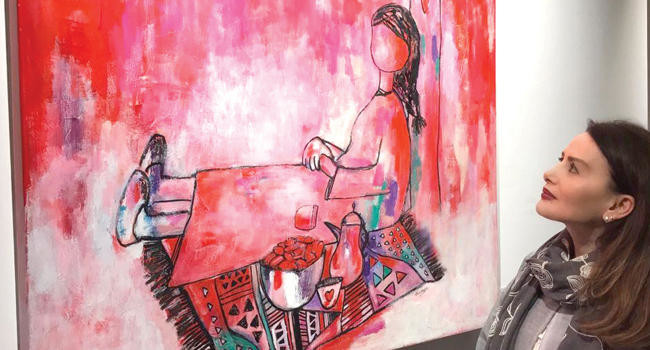
In the context of a Jeddah Islamic art exhibition, Hejazi emphasized that Islam is not only expressed through monumental architecture, but also through the intimate act of du’a. In one artwork, she shows a girl in quiet supplication, explaining that this simple gesture can represent any Muslim, a reminder that faith often lives most powerfully in the everyday.
This idea aligns naturally with her visual language, which privileges the inward over the obvious. The sacred in her work is not always announced. It is suggested through tenderness, through the quiet center of a composition, through the feeling that what matters most is private, personal, and held close.
Hejazi’s practice extends beyond the canvas through exhibitions and cultural programs, from Art Jeddah to international contemporary calligraphy contexts such as initiatives at the Islamic Arts Museum Malaysia, reflecting how her work bridges abstraction, language-based art, and the evolving role of Arabic script today. Yet her influence is equally rooted in education: she has long taught children and supported teacher development through training and mentorship, creating work that guides rather than lectures.
Today, she is an award-winning artist with over eight solo exhibitions and a track record of international engagements in exhibitions and symposiums across Saudi Arabia, the UAE, Europe, and beyond.
Saudi contemporary art is evolving fast, and in moments like this, visibility can be mistaken for depth. Hejazi offers something quieter and more lasting. Her work insists that memory is material, that letters can become bodies, and that faith can live in private gestures. She draws from culture as lived experience, not aesthetic trend.
And that is perhaps the most resonant quality of her practice. She paints what memory refuses to lose, not as a sentimental archive, but as a living structure. A diary you can enter. A language you can feel.
Explore more artist stories that shape Saudi culture at KSA Art.