Inside the Two-Dimensional World of Hayfa Algwaiz


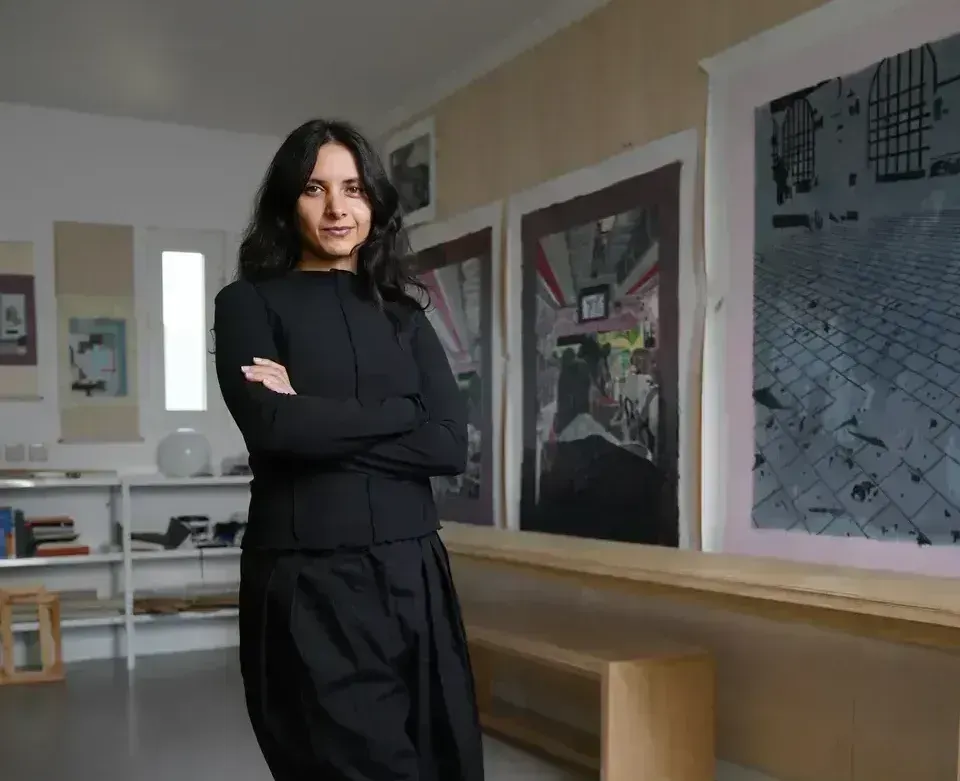
Hayfa Algwaiz sees architecture beyond its physical structures. For her, a room is more than four walls, and an exterior landscape is more than a changing skyline. Both can reveal how people live, remember, and understand their surroundings. Born in Riyadh in 1991, Algwaiz is a painter and architect whose practice explores the relationship between interior and exterior spaces through painting, drawing, and architectural representation. Her domestic scenes reflect family dynamics, culture, religion, and tradition, while her exterior landscapes examine modernization and collective identity.
Through carefully framed compositions, she brings these contrasting worlds together, turning familiar spaces into subjects of observation and reflection.
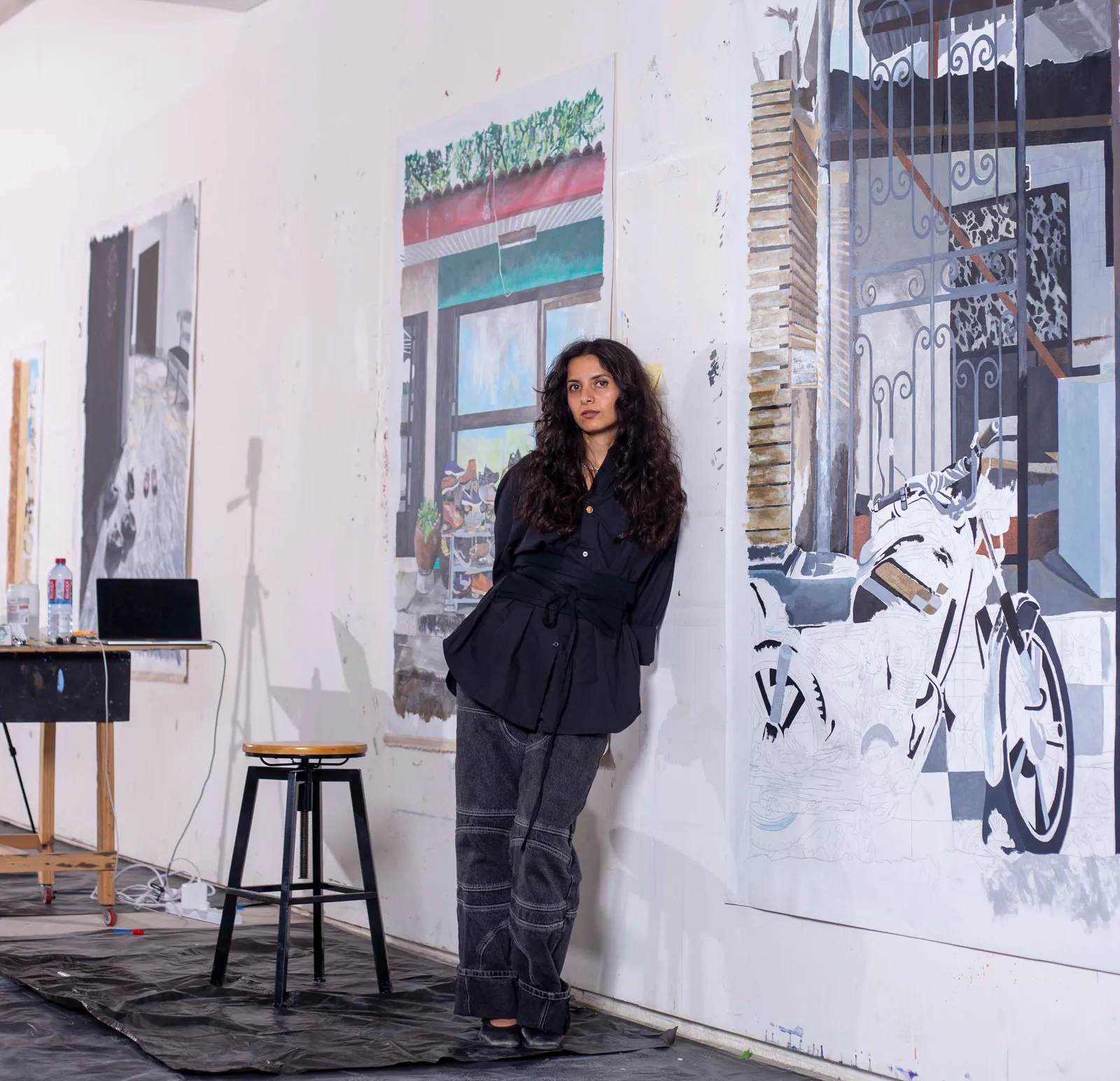
Hayfa Algwaiz's creative journey took shape when she received a Saudi government scholarship to study architecture at California College of the Arts in San Francisco. She initially saw architecture as a profession that balanced creativity with stability, but her education introduced her to a broader range of disciplines. The college's interdisciplinary approach exposed her to fashion, graphic design, painting, and film history, influencing how she understood the relationship between art and space.
After graduating, she worked at Min Design and joined The Open Workshop, an architecture collective led by her professor, Neeraj Bhatia. Through the collective, she contributed to architectural research and exhibition projects, including The Living Archive at the 2019 Seoul Biennale for Architecture and Urbanism and Commoning Domestic Space at the 2021 Venice Architecture Biennale.
During her years in San Francisco, Hayfa Algwaiz discovered that she was more interested in communicating architecture through images than constructing physical buildings. The process of translating three-dimensional environments into drawings, renderings, and compositions became central to her creative interests. This realization shaped her transition into painting, where she could explore architecture as a means of storytelling rather than simply a built structure.
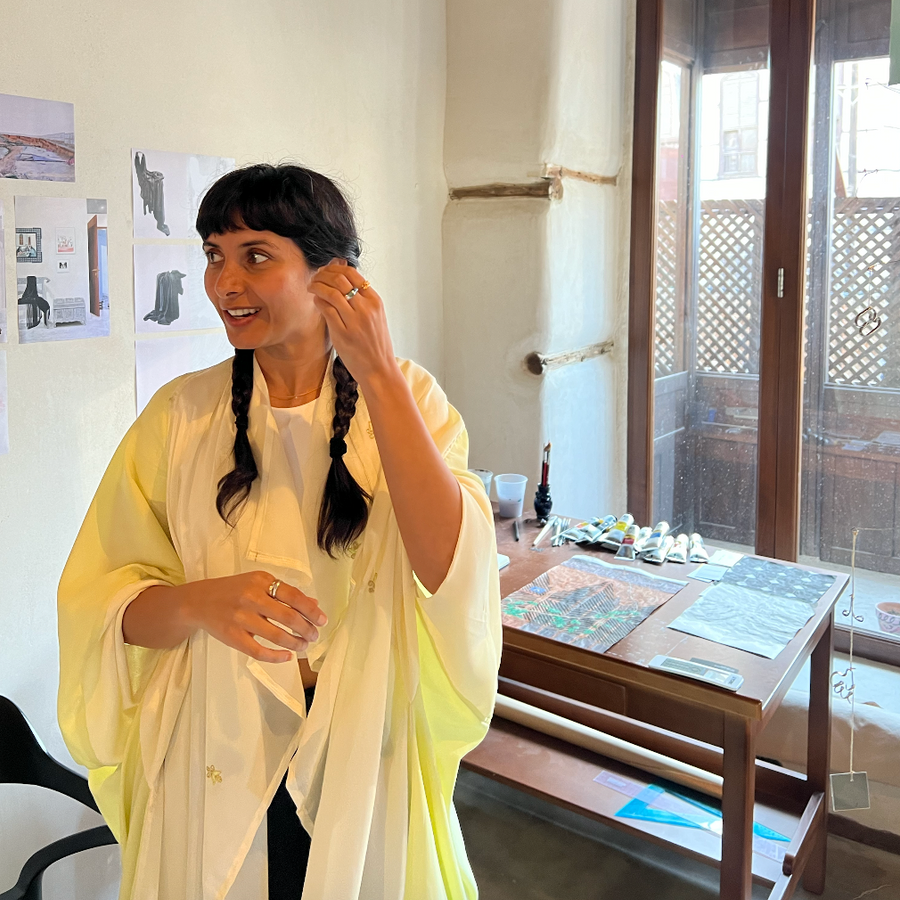
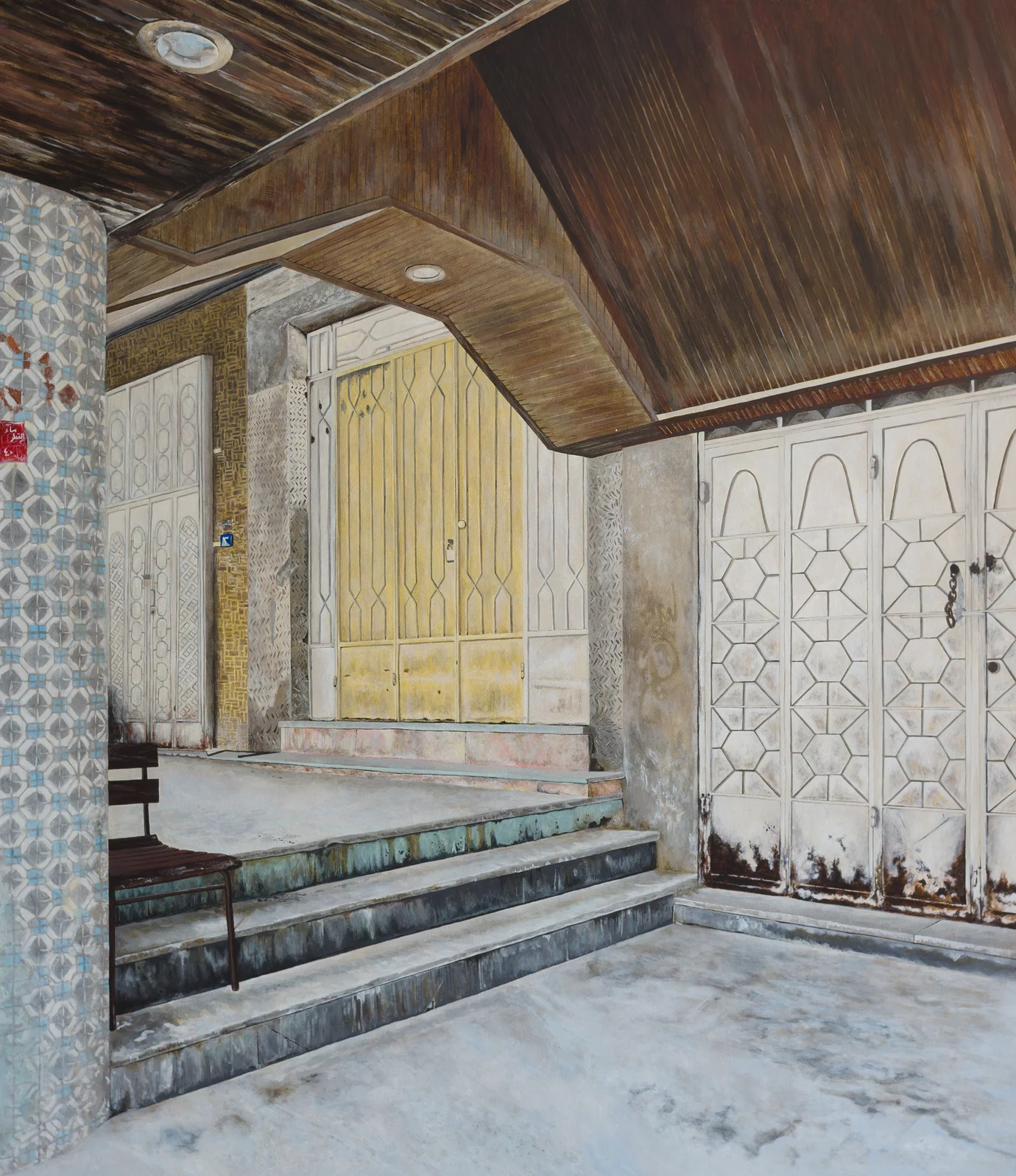
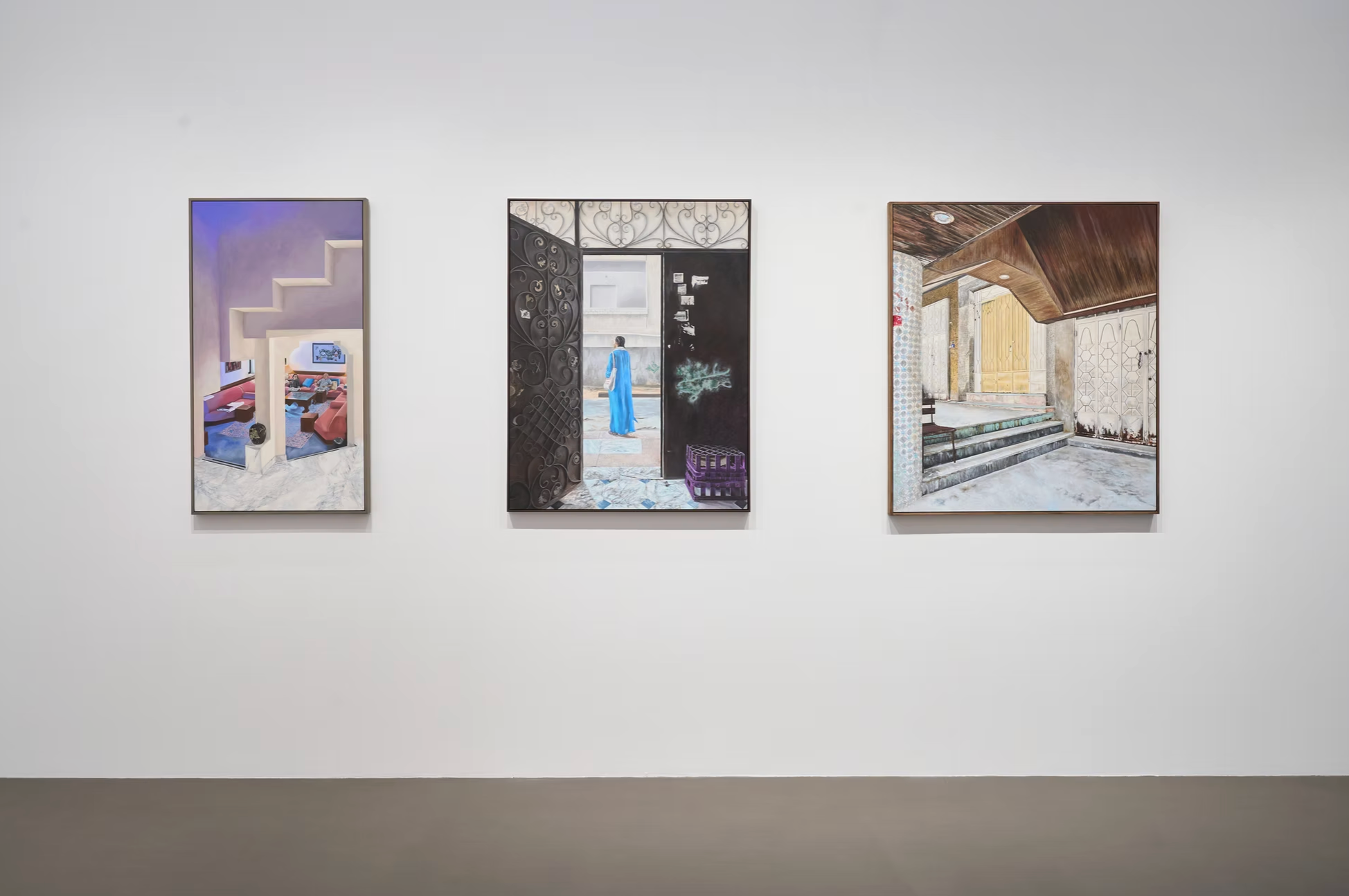
At the heart of Hayfa Algwaiz's artistic practice is the relationship between private and public spaces. Her paintings of domestic interiors examine how everyday environments reflect personal and cultural identities. Furniture, architectural details, fabrics, and empty rooms become visual references to the people who occupy them, even when those people are absent. Her exterior landscapes, meanwhile, reflect the changing environments of Saudi Arabia. Through depictions of buildings, roads, and urban surroundings, she considers how modernization influences the appearance of cities and the memories associated with them.
Photography plays a significant role in her process. Many of her paintings begin with photographs taken during ordinary moments, allowing her to document scenes before reinterpreting them through drawing and painting. Rather than staging these environments, she uses architectural perspective and composition to direct the viewer's attention toward details that might otherwise go unnoticed.
Her work also draws inspiration from French and Italian Renaissance painting. Interested in the detailed representation of European interiors, Hayfa Algwaiz began considering how similar approaches could be used to depict contemporary Khaleeji environments. The result is a visual language that combines architectural precision, photographic observation, and painting to represent spaces through her own cultural and personal experiences.
Hayfa Algwaiz's paintings often begin with everyday observations that develop into explorations of identity, perception, and the relationship between people and their surroundings. From architectural spaces to familiar objects, her works reveal how she transforms these observations into visual narratives.
Created for The House Has a Body, an exhibition held from October 14 to November 14, 2026, at Gallery 44 in London's Primrose Hill, Ground Floor and Basement explore how the experience of moving through a building can be translated into painting. The exhibition brings together works by Algwaiz, Marisa Müsing, and Monya Riachi, combining painting, sculpture, and domestic objects to examine how homes hold emotions, memories, and traces of lived experience.
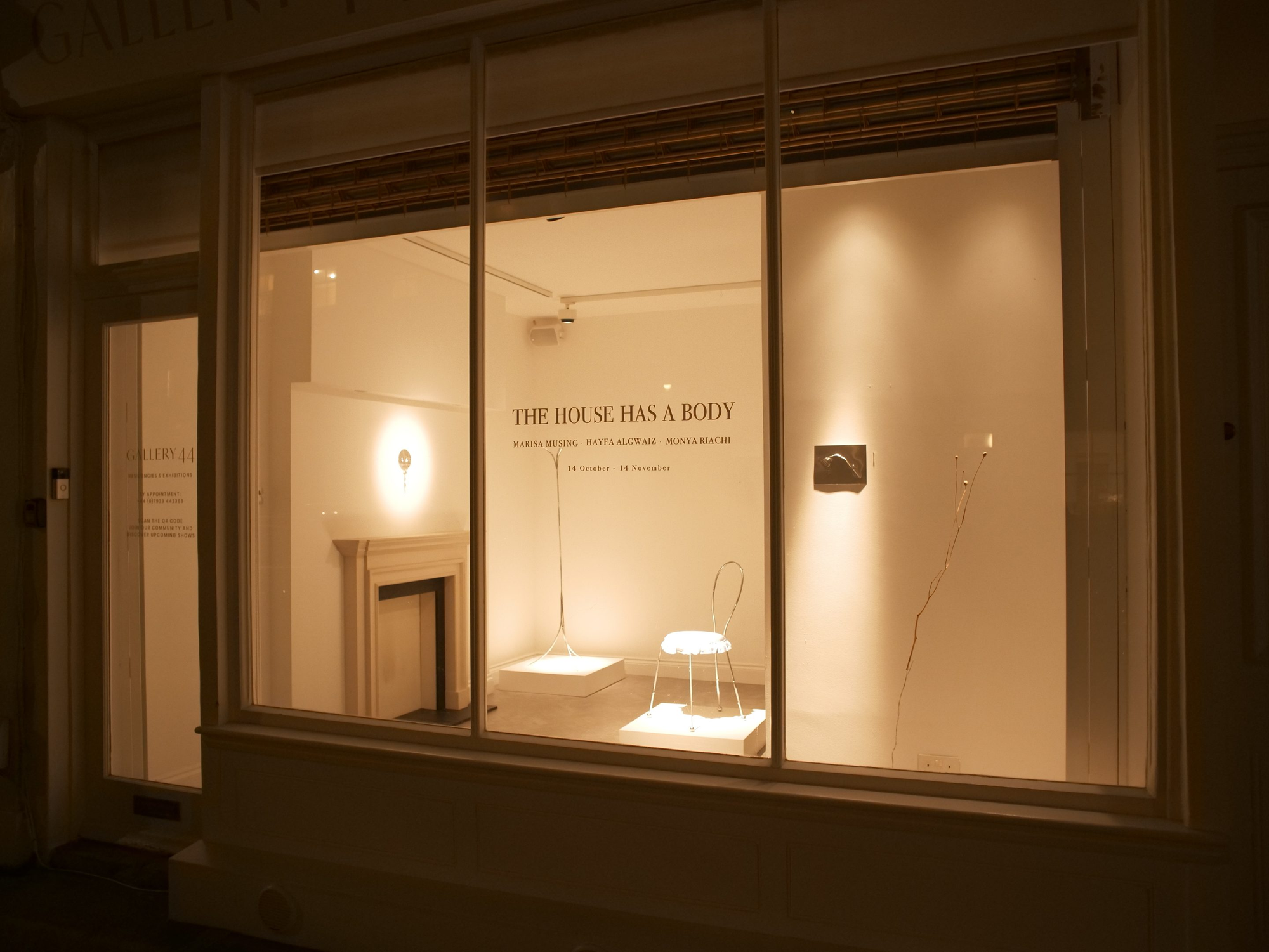
Presented within a lived-in townhouse during London's Frieze Week, the exhibition makes the building itself part of the experience. Algwaiz's two paintings document her visit to Gallery 44, following the sequence in which she moved through its rooms, corridors, and staircases. Through shifts in perspective and changing light, sharp architectural lines gradually transition into blurred passages, reflecting how physical experiences become memories. The works extend her exploration of architecture beyond its visual appearance, examining how spaces are experienced through movement and remembered over time.
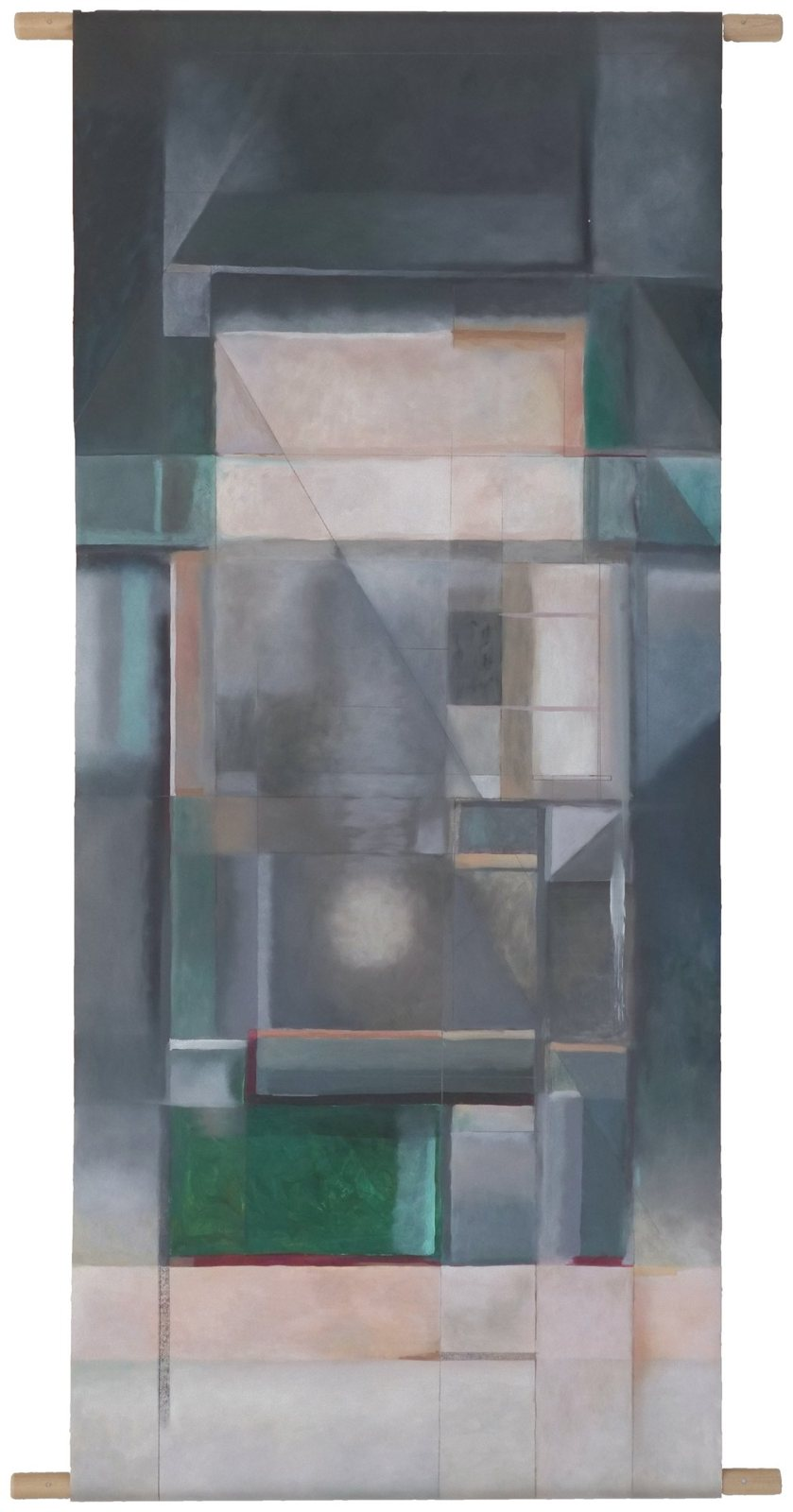
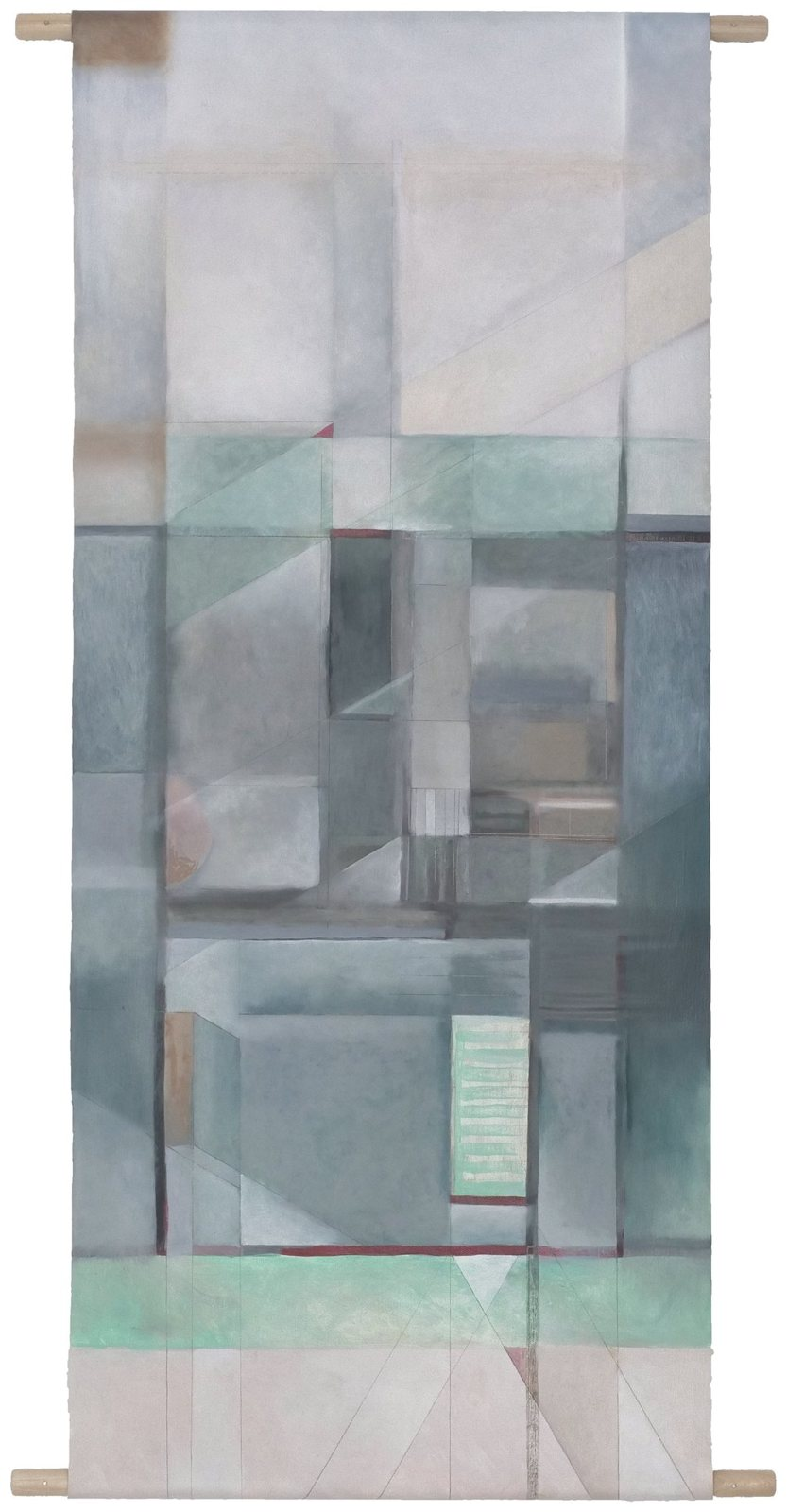
El Balad (2026), created with oil paint on linen, continues Algwaiz's exploration of architecture through painting. The work reflects her interest in the relationship between built environments, cultural identity, and the memories associated with place. Through architectural representation, Hayfa Algwaiz draws attention to the details that give spaces their character, connecting her background in architecture with her artistic practice.
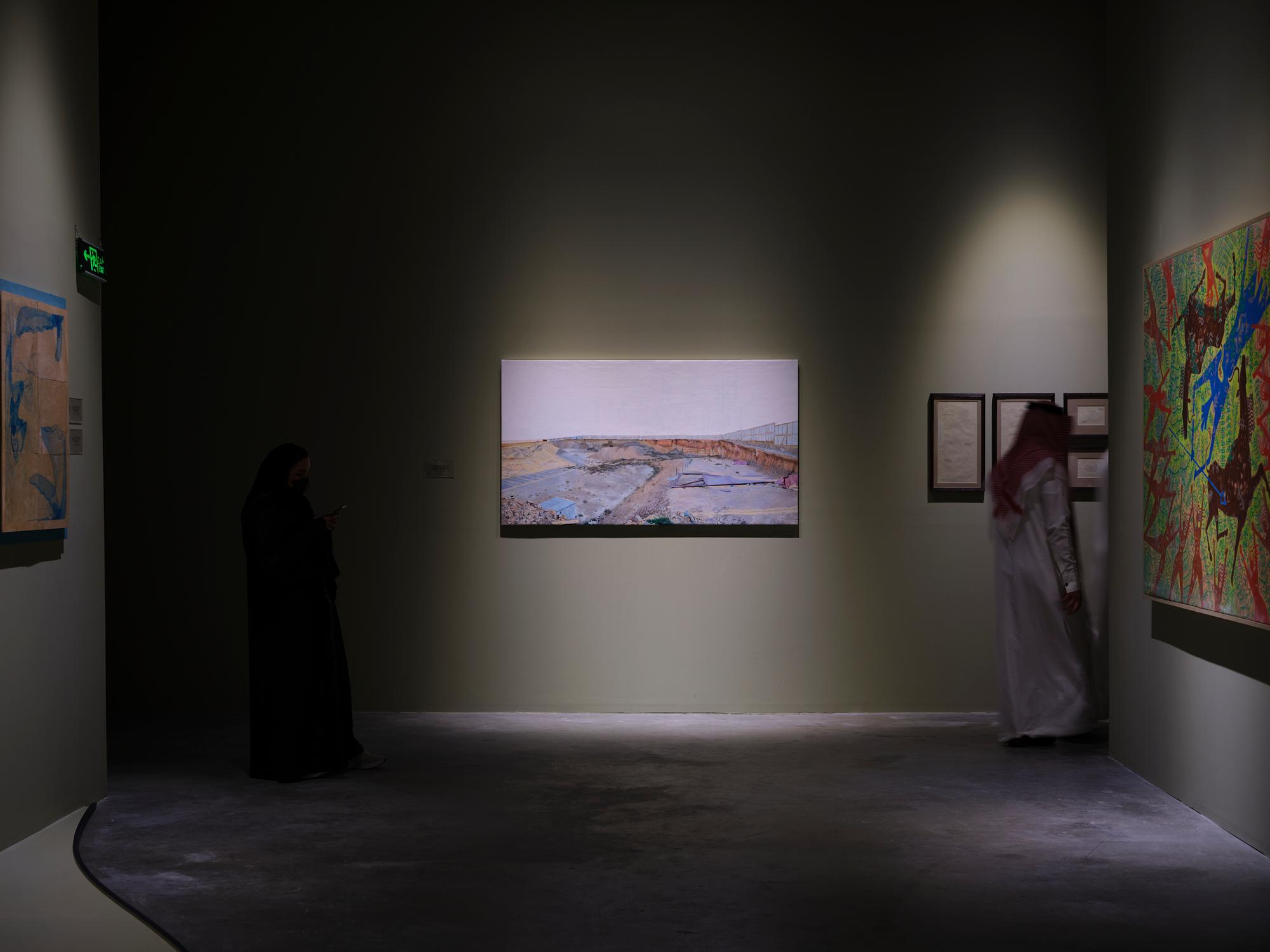
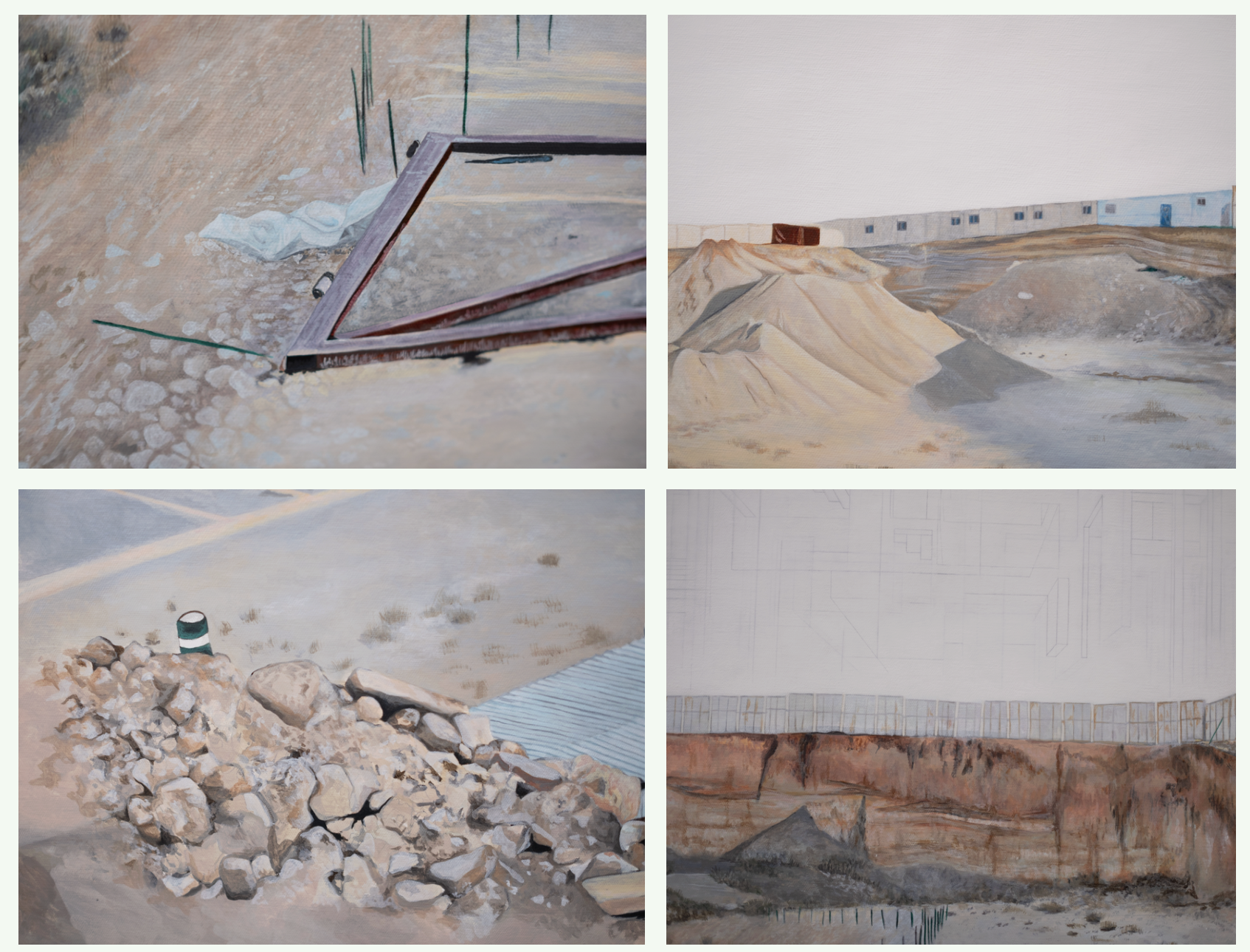
In Palace for Sale, Hayfa Algwaiz explores the relationship between absence and presence through Riyadh's changing urban landscape. The painting examines how unfinished buildings hold meaning, anticipation, and uncertainty, reflecting a city undergoing continuous transformation. To create the composition, she photographed an architectural site from multiple angles and stitched the images together into a wider landscape. She then experimented with the idea of erasure, using positive and negative space to highlight what is present and what remains unfinished.
The painting's empty sky is filled with architectural drawings of the palace-to-be, contrasting raw structures with imagined ornamentation. Through this approach, Algwaiz presents architectural drawing as a way of developing ideas rather than simply documenting physical construction. The work captures a moment between what exists and what is yet to come, reflecting her interest in how architecture represents both the present and the possibilities of the future.
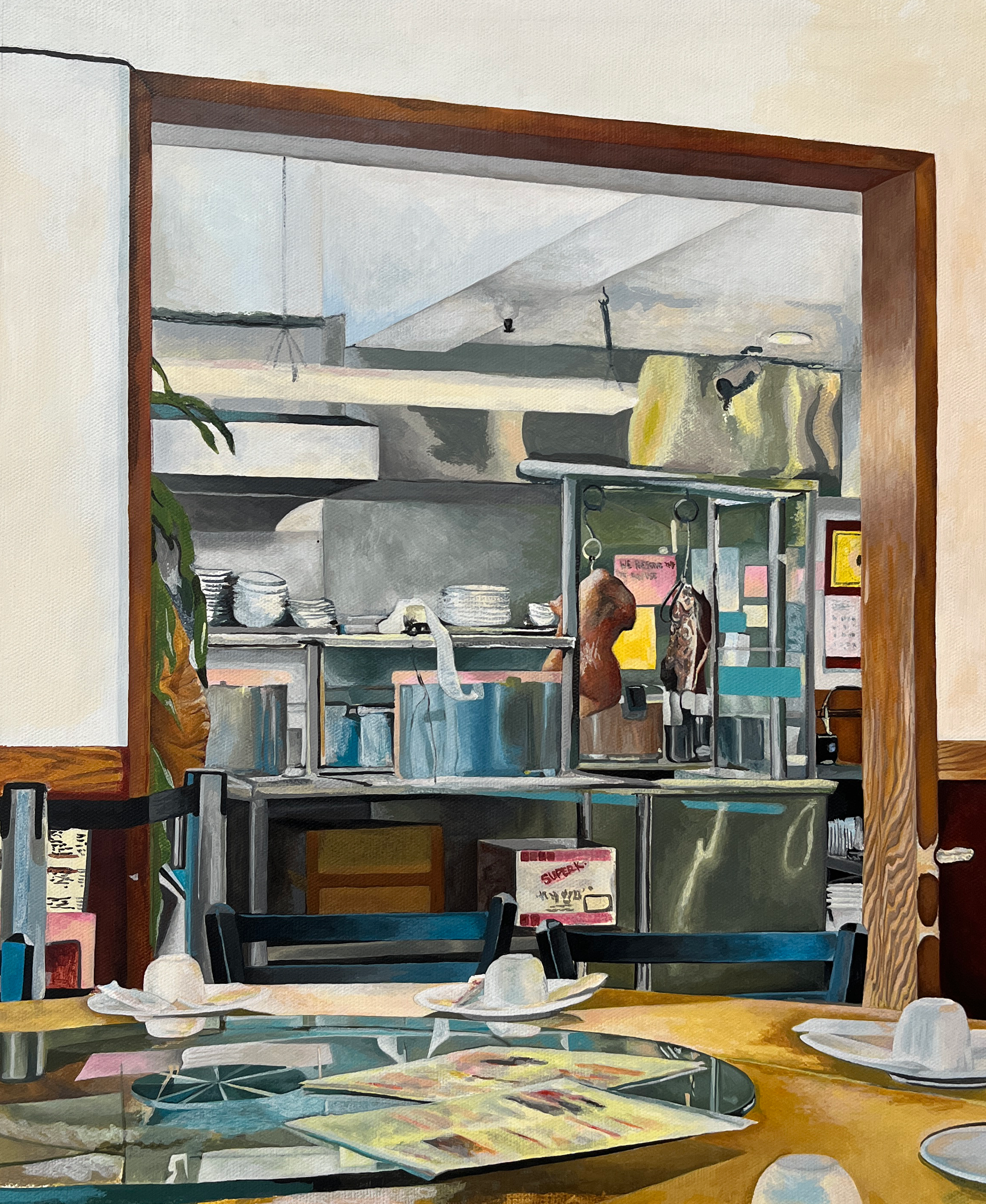
In A Piece of Meat or a Woman's Body, Hayfa Algwaiz explores the relationship between visual perception, the female form, and objectification through an unexpected everyday observation. The painting originated from a photograph she took at a Chinese restaurant in Oakland, California, where a hanging piece of meat resembled a woman's bust. The resemblance reminded her of the expression Ya lahma, a catcalling phrase comparing a woman to a piece of meat, which she had encountered growing up.
Through this connection, Algwaiz reflects on the experience of being perceived and objectified as a woman. She emphasizes the resemblance to the female body while using bright, vibrant colours that give the painting an almost candy-like appearance. The contrast between its visually appealing colours and its underlying subject invites viewers to consider how appearances can influence perception and how the female body is represented.
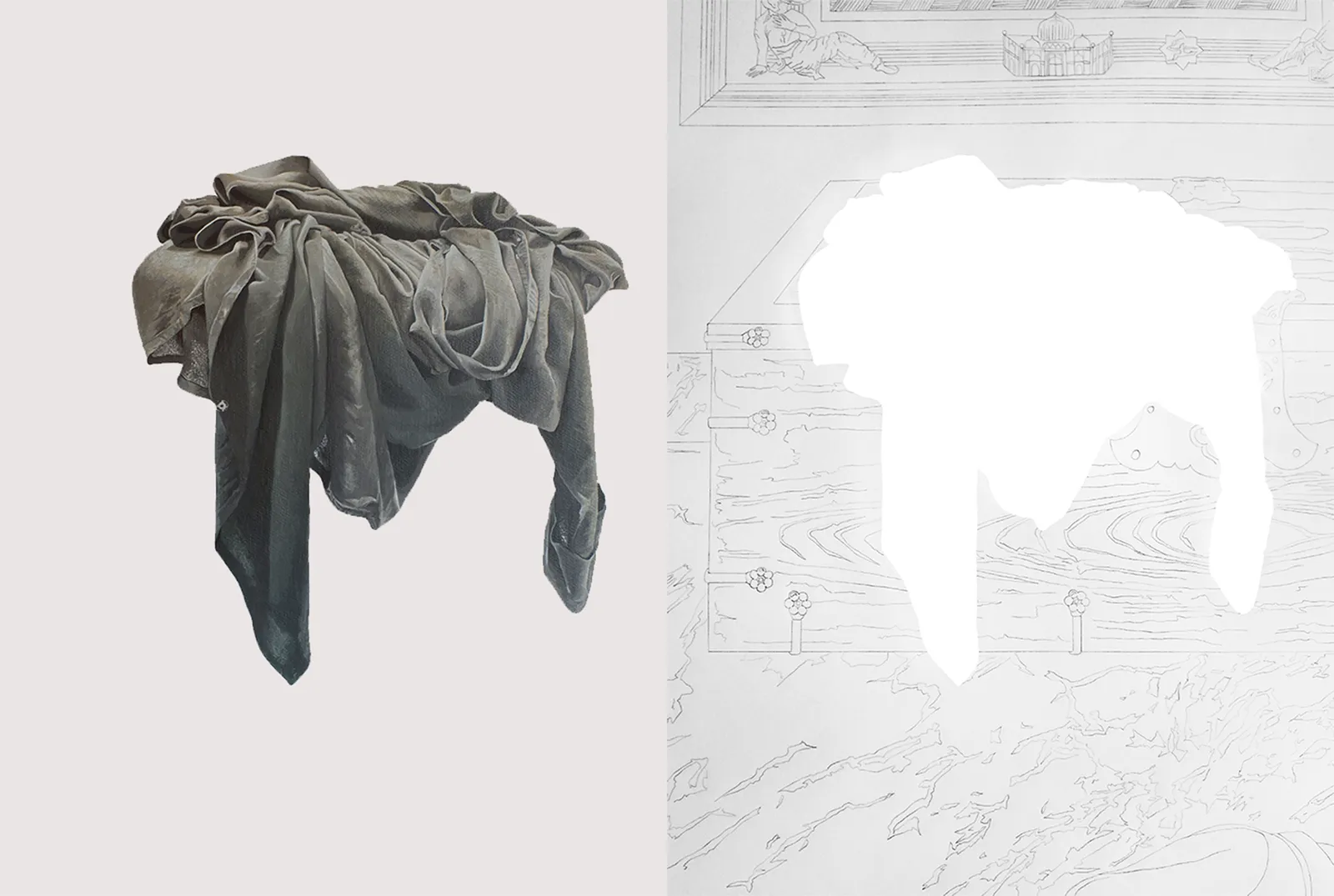
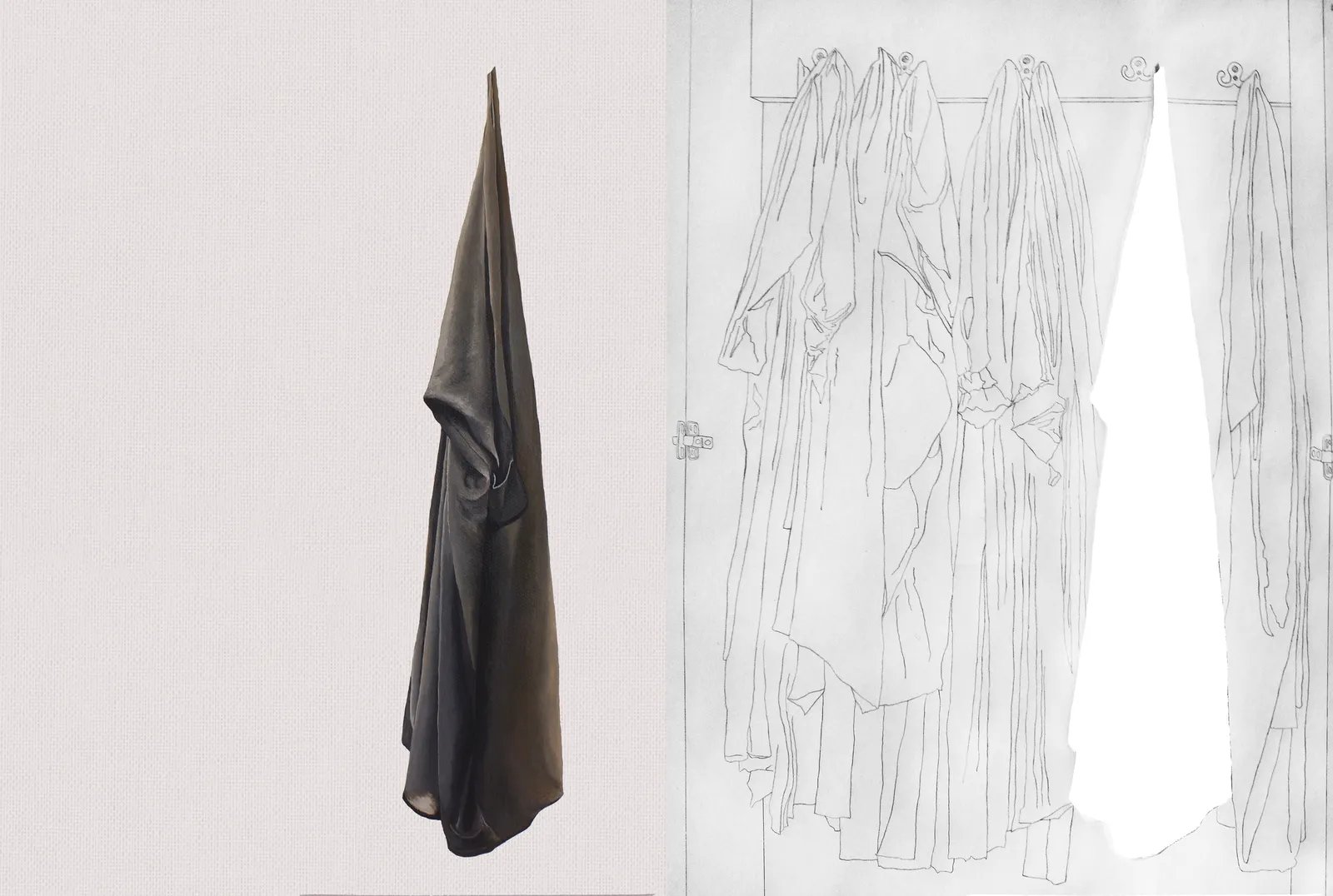
In What Lies Beneath Her Folds, Hayfa Algwaiz explores the relationship between the abaya, personal identity, and privacy. The series draws inspiration from abayas left draped over chairs during social gatherings, where the folds of each garment suggest the presence of its wearer without revealing her identity. For Algwaiz, the abaya carries personal and cultural significance, representing a familiar garment and a rite of passage for many young Saudi women. Her paintings portray it almost as a second skin, exploring the relationship between presence and absence, and between private and public life.
She photographs these everyday arrangements, removes elements of their surroundings digitally, and recreates them through painting and drawing. By selectively concealing the domestic environment, she shifts attention toward the garment while preserving the privacy of the woman it represents.
Hayfa Algwaiz's artistic career has expanded through exhibitions, grants, and residencies across Saudi Arabia and internationally. In 2023, she received the Misk Art Grant, an important milestone supporting her artistic development. That year, she participated in Tracing the Absent at Misk Art Institute and was selected for the eighth edition of Young Saudi Artists through ATHR Foundation. Her participation in the 2024 Bait Shouaib residency in Jeddah, followed by the exhibition Moving Narratives, allowed her to further explore architectural environments. She also exhibited in Common Grounds in Riyadh and Work in Progress at N.E.S.T Art Space in AlUla.
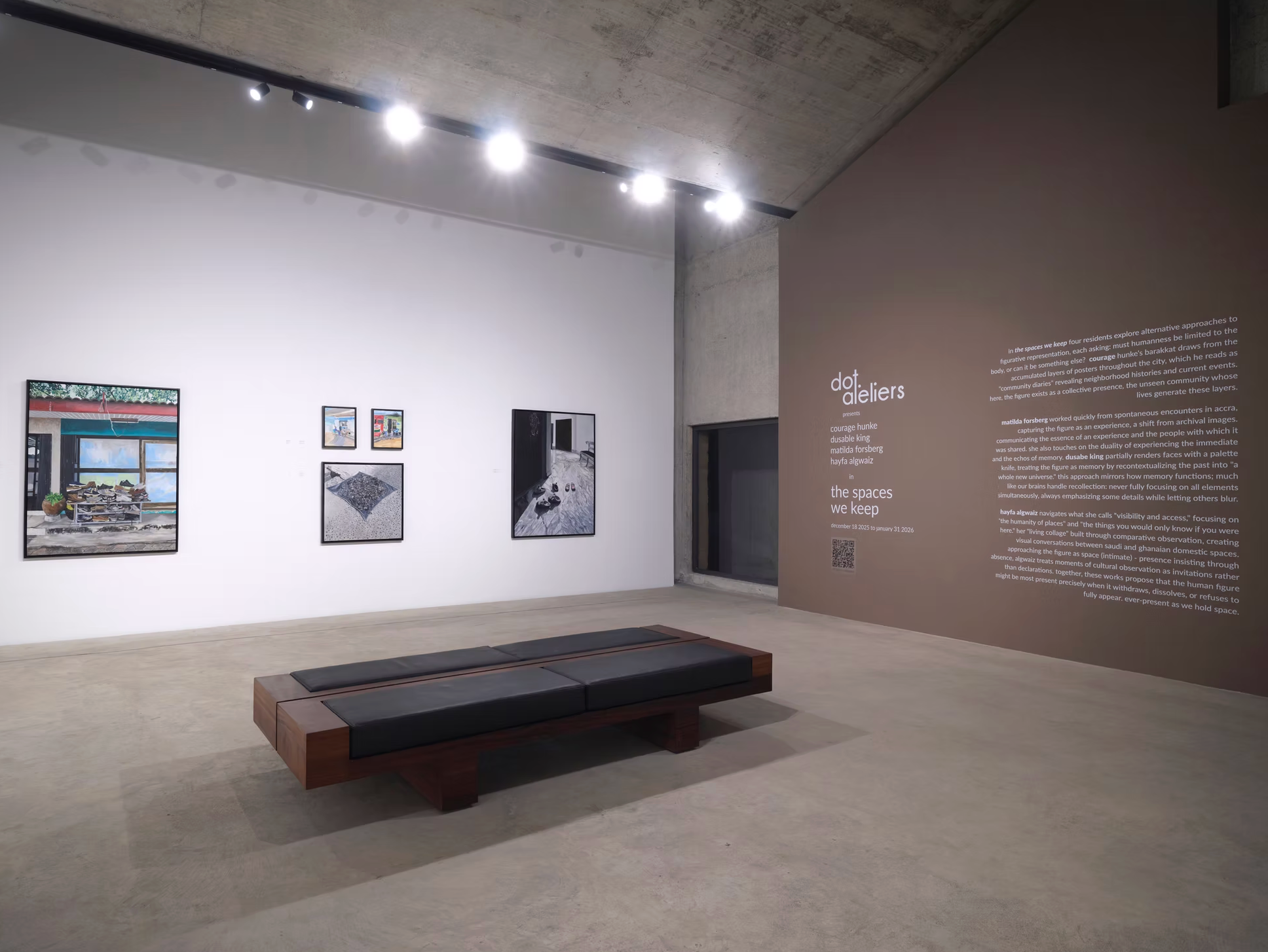
In 2025, her international activity grew considerably. She participated in a residency at POUSH in Paris, presented work at Dot Ateliers in Accra, Ghana, and exhibited at Art Basel Paris with ATHR Gallery. Her exhibitions that year also included All Beautiful Things Are Fragile at ATHR Gallery in Riyadh, Pop Culture of the Saudi Home in the 20th Century at Ithra in Dhahran, and Relics of Tomorrow in Abu Dhabi.
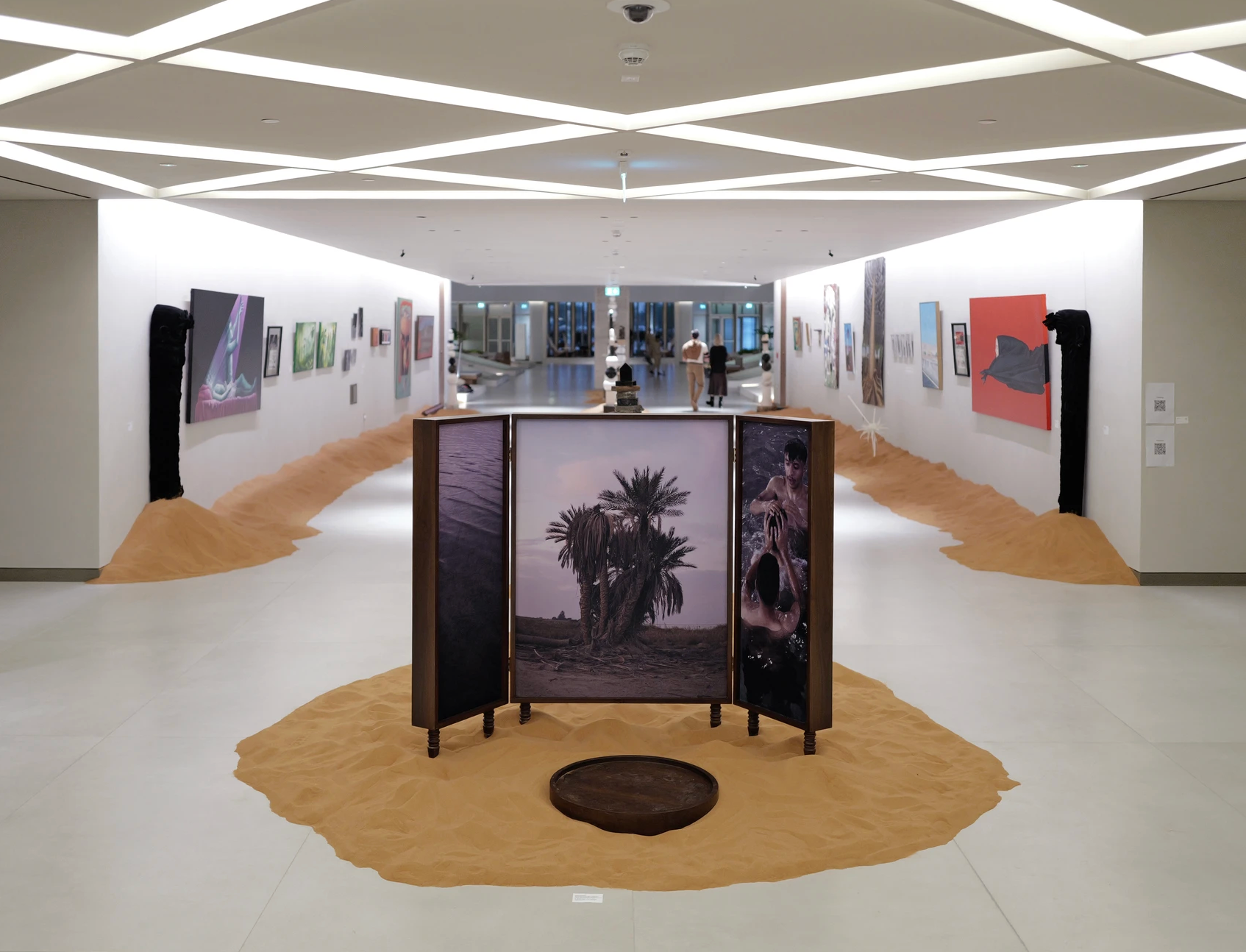
In 2026, Algwaiz participated in 5 Painters at Taymour Grahne Projects in Dubai, alongside artists Roudhah Al Mazrouei, Dalal Al-Obaidi, Latifa Alajlan, and Hawazin Alotaibi. Her latest London exhibition, The House Has a Body, runs from October 14 to November 14, 2026, at Gallery 44 in Primrose Hill. Presented alongside Marisa Müsing and Monya Riachi, the exhibition explores the emotional and physical relationships between people and domestic environments.
Although painting remains central to Hayfa Algwaiz's work, her practice continues to develop through video, installation, research, and experimentation with materials. For the Saudi Pavilion at Expo 2025 Osaka, she created a video project exploring the relationship between memory and domestic architecture. Beginning with sketches of her childhood home drawn entirely from memory, she reconstructed the house as a three-dimensional model. Rather than correcting the inaccuracies in her recollections, she incorporated them into the project, allowing the differences between remembered and physical spaces to become part of the work.
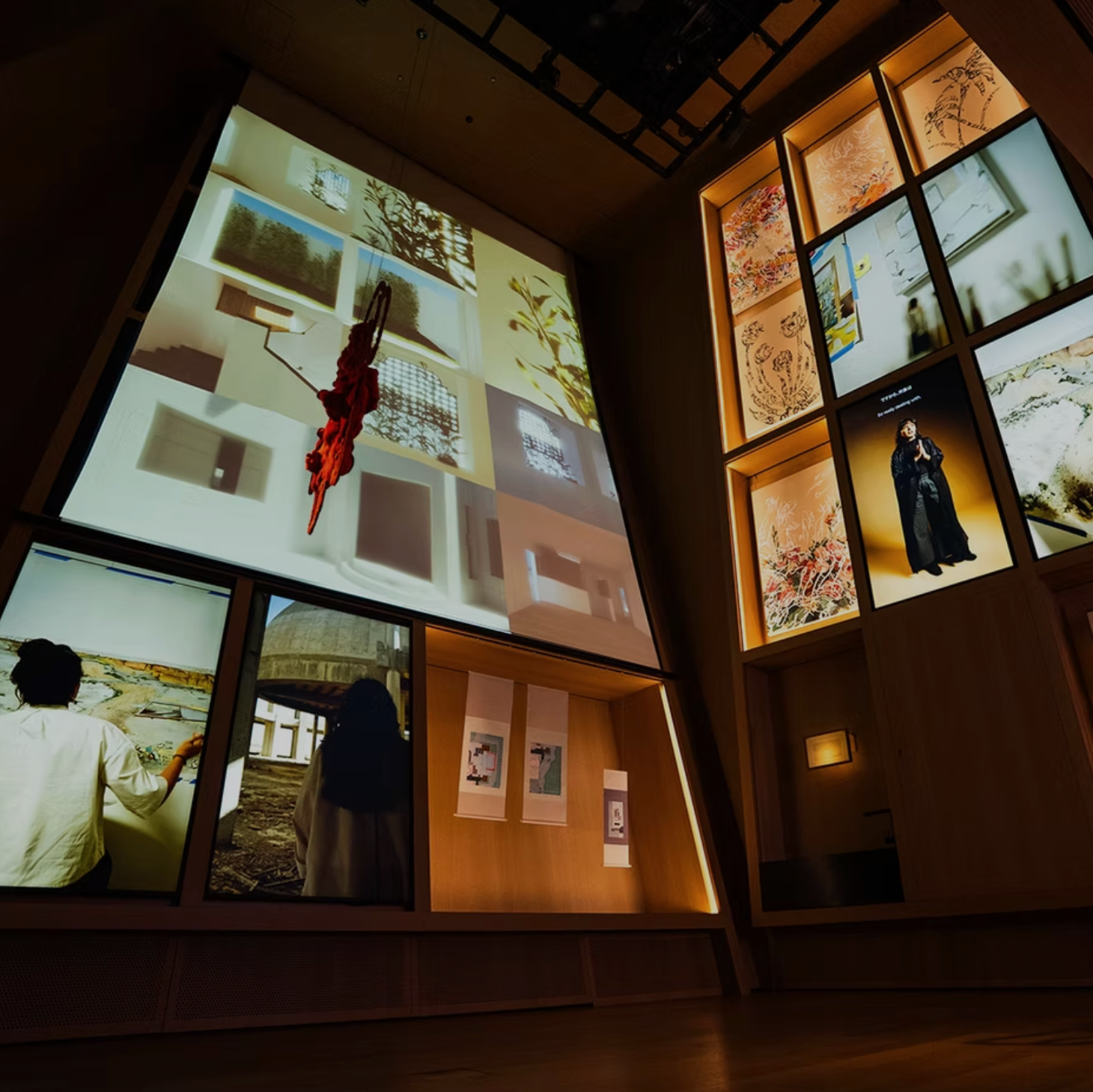
The video explored how light moves through a Saudi home, particularly the patterns created by architectural screens. Accompanying scroll paintings on upholstery fabrics extended the project into different materials and forms of representation. Her residency at Dot Ateliers in Accra also provided an opportunity to experiment with larger-scale artworks. Beyond exhibitions, Algwaiz has contributed to architectural research and writing. In 2025, she published Arriving at a Place You Never Left in the second official catalogue of Saudi Arabia's National Pavilion at the Venice Architecture Biennale. These projects reflect a practice that continues to move between painting, architectural thinking, and new ways of representing lived experiences.
For Hayfa Algwaiz, architecture is not defined only by what is built, but also by what is remembered, observed, and experienced within it. Her paintings of domestic interiors preserve personal and cultural details, while her exterior landscapes examine environments shaped by ongoing change. Together, they reveal how private experiences and collective identity can exist within the same architectural language.
From everyday photographs to reconstructed memories of her childhood home, Hayfa Algwaiz continues to explore the possibilities of two-dimensional representation, giving familiar spaces new ways to tell their stories.
Discover more artist stories at KSAArt.