Faith, Power, & Symbols in Abdulnasser Gharem’s Art
Explore Abdulnasser Gharem’s story, iconic artworks, and why he remains a defining force in Saudi contemporary art.

Explore Abdulnasser Gharem’s story, iconic artworks, and why he remains a defining force in Saudi contemporary art.
"I attempt to speak in a global language, accessible to everyone, which looks at events in the present and the past with the intention of trying to see what will happen to society in the future."
Abdulnasser Gharem has built one of the most distinctive artistic voices to emerge from Saudi Arabia in recent decades. Born in Khamis Mushait in 1973, he moves between worlds that rarely sit comfortably together: the military and the poetic, the bureaucratic and the spiritual, the institutional and the experimental. That tension gives his work its charge, turning everyday symbols into images that feel at once intimate, political, and deeply alive.
In Gharem’s hands, nothing is ever just what it seems. Across mediums, he has shaped a visual language rooted in Saudi experience but expansive enough to speak to global questions of power, memory, and public life.
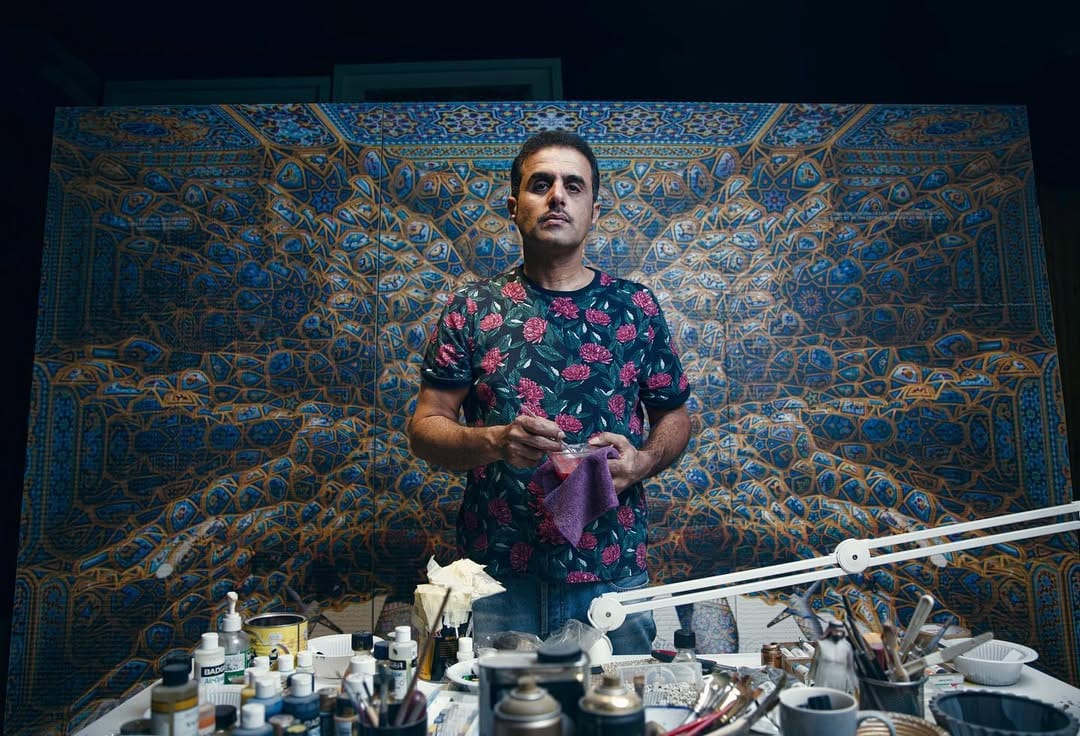
Abdulnasser Gharem stands as a transformative figure in contemporary art, uniquely bridging his past with a career as a provocative conceptual artist. His work masterfully navigates the tension between authority and individual agency, often using the tools of bureaucracy, such as official rubber stamps, to create large-scale, thought-provoking pieces. By blending traditional Islamic motifs with sharp social commentary, Gharem encourages viewers to question "blind obedience" and the structures that govern modern life.
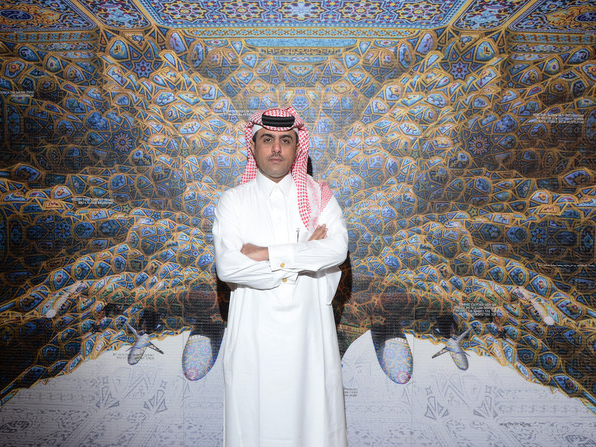
Part of what makes Gharem’s work so singular is the path he took to it. While developing as an artist, he also served in the Saudi army and eventually reached the rank of lieutenant colonel. After 23 years in service, he retired in 2013 and devoted himself fully to art and mentorship. That lived experience of hierarchy, procedure, discipline, and official language did not sit outside his art. It became one of its central materials.
Abdulnasser Gharem matters not only because of the works he has made, but because of the ecosystem he helped shape. He was a co founder of Edge of Arabia, the platform that helped bring Saudi contemporary art into broader international view, and later founded Gharem Studio in Riyadh as a nonprofit space for artists to learn, work, and connect with curators and institutions. His influence is therefore both artistic and structural. He helped build the conditions in which a new generation of Saudi artists could be seen.
In April 2011, Abdulnasser Gharem's installation Message/Messenger made headlines when it achieved a record-setting result at Christie’s Dubai (sold for USD 842, 500), placing him among the highest-selling living Arab artists at the time. For a Saudi artist working with conceptual form, spiritual symbolism, and sharp social commentary, it was a landmark moment, one that pushed his name firmly onto the international stage and signaled that his work could command both critical and market attention at the highest level.
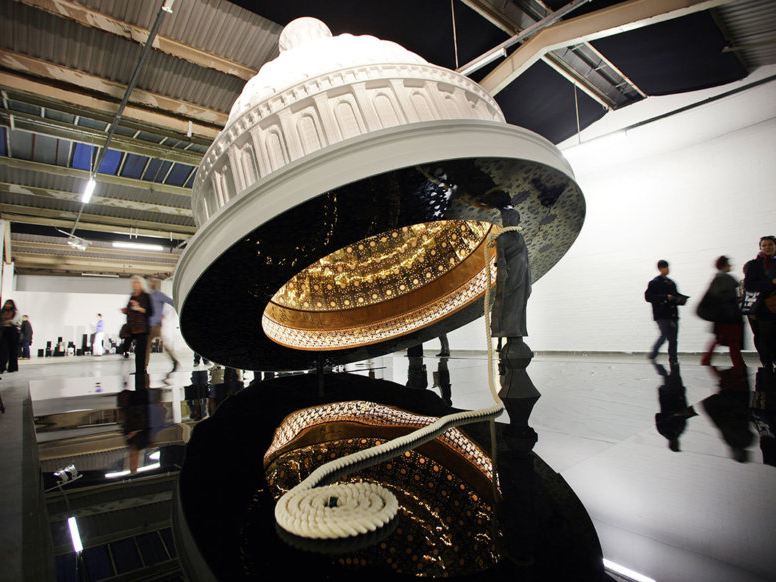
That momentum only widened. Today, Gharem’s works are held in major collections including the British Museum, the Victoria and Albert Museum, LACMA, the Pinault Collection, the Louisiana Museum of Modern Art, Guggenheim Abu Dhabi, and the Saudi Ministry of Culture and Information. Together with later auction successes such as The Capitol Dome (sold for USD 544,000), this recognition confirmed what the 2011 sale first made undeniable: Gharem was not simply emerging, he had become one of the most visible and consequential Saudi artists of his generation.
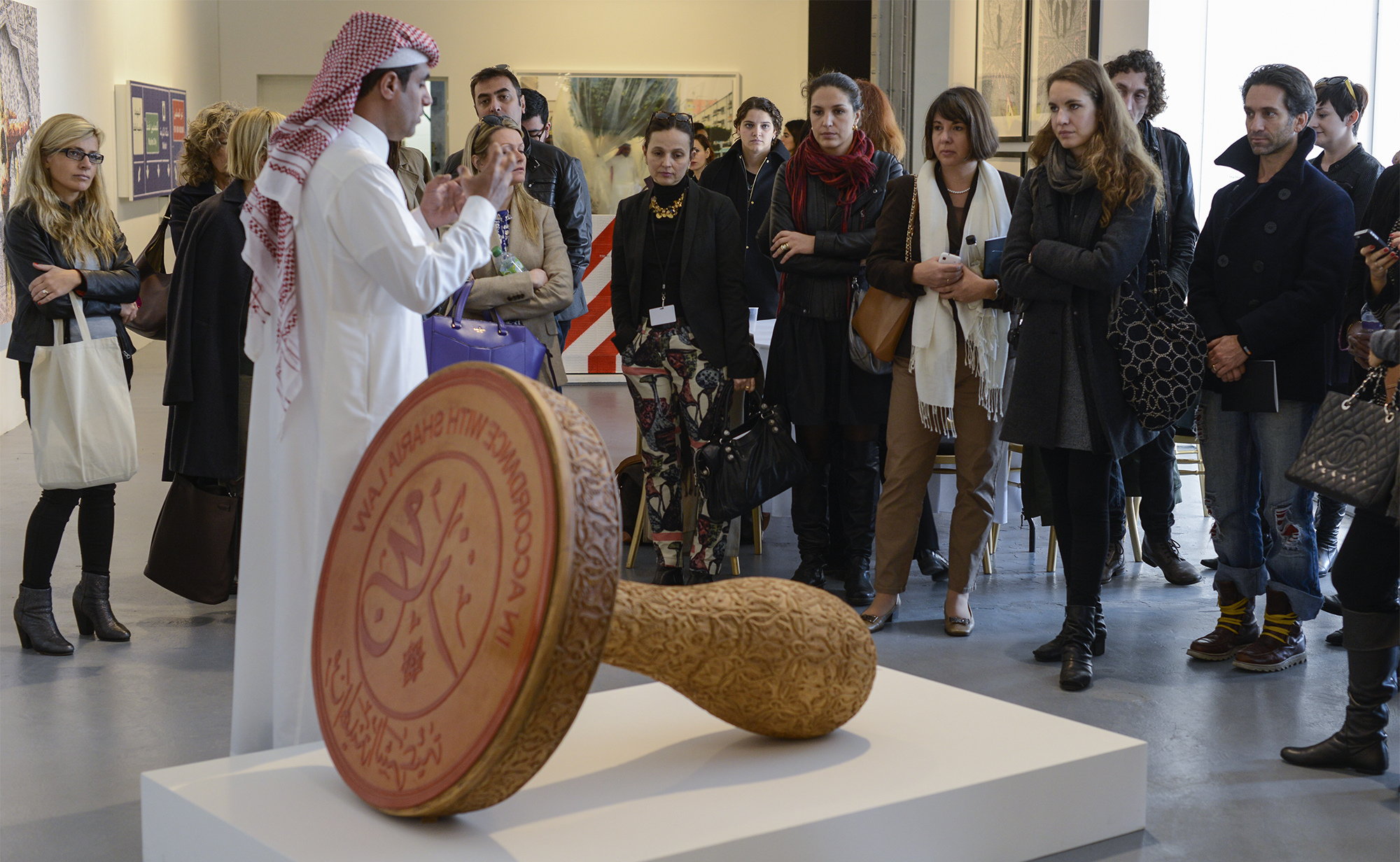
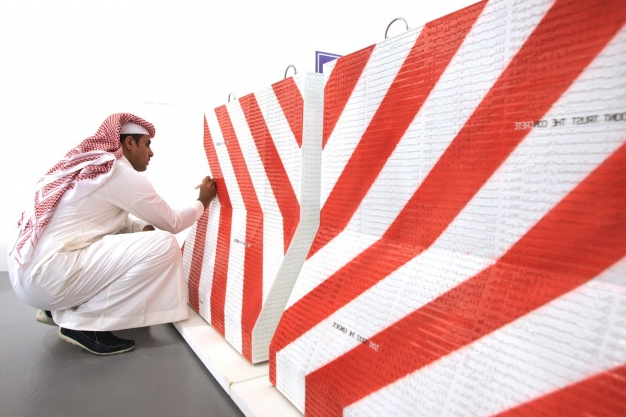
What makes Gharem’s work distinct is the way he transforms the symbols of power into something deeply human, visually compelling, and intellectually sharp. Roads, stamps, domes, tanks, and towers are never just objects in his work. They become ways of thinking about authority, faith, bureaucracy, and the systems that shape public life. He uses beauty not to soften these subjects, but to draw the viewer closer before revealing the tension beneath the surface.
In Cemetery of Martyrs, presented at Ithra Museum in Dhahran in Spring 2026, Gharem turns his attention to monuments and memorials, asking how societies shape meaning through what they choose to remember. The installation appears to examine sacrifice, heroism, and national memory not as fixed ideas, but as narratives constantly being negotiated and rewritten. In keeping with Gharem’s broader practice, the work holds reverence and unease in the same space, suggesting that memorials are never neutral. They are cultural forms through which identity is constructed, contested, and passed forward.
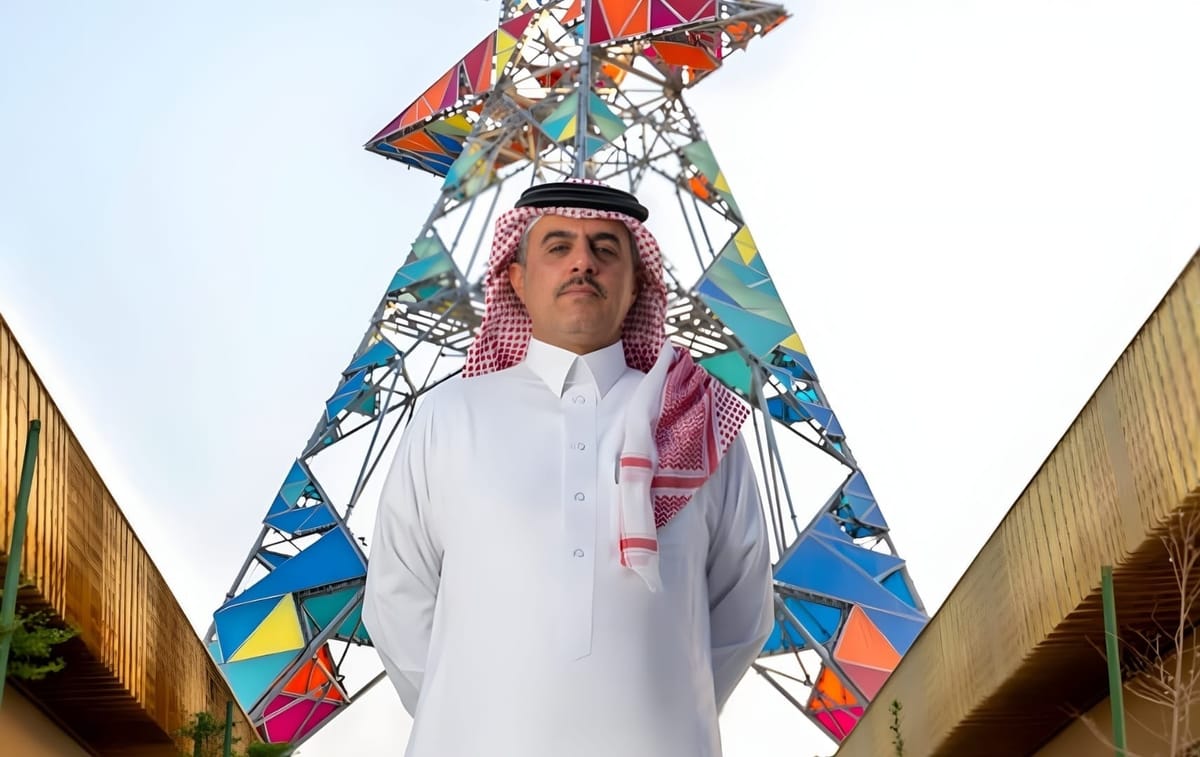
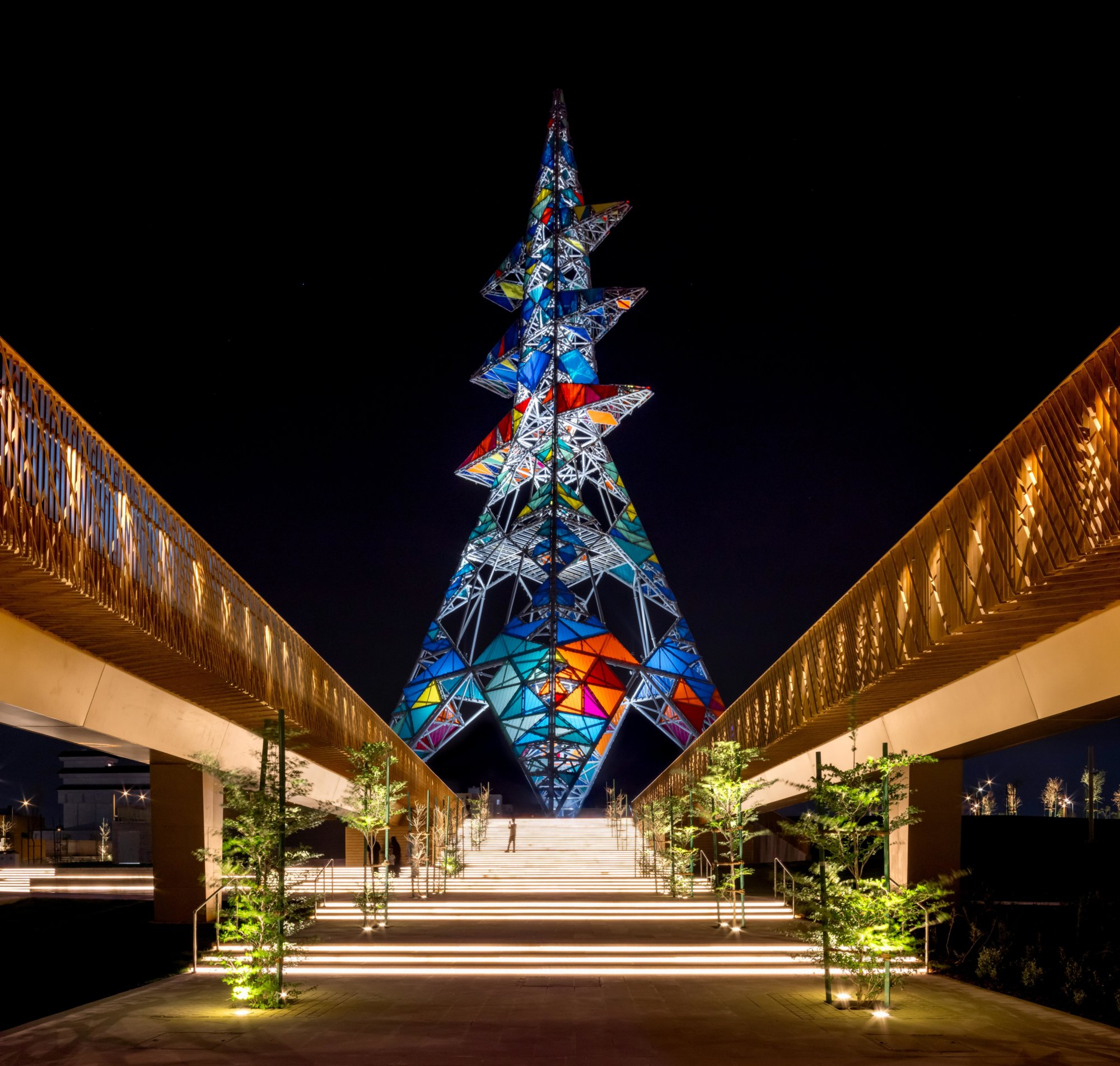
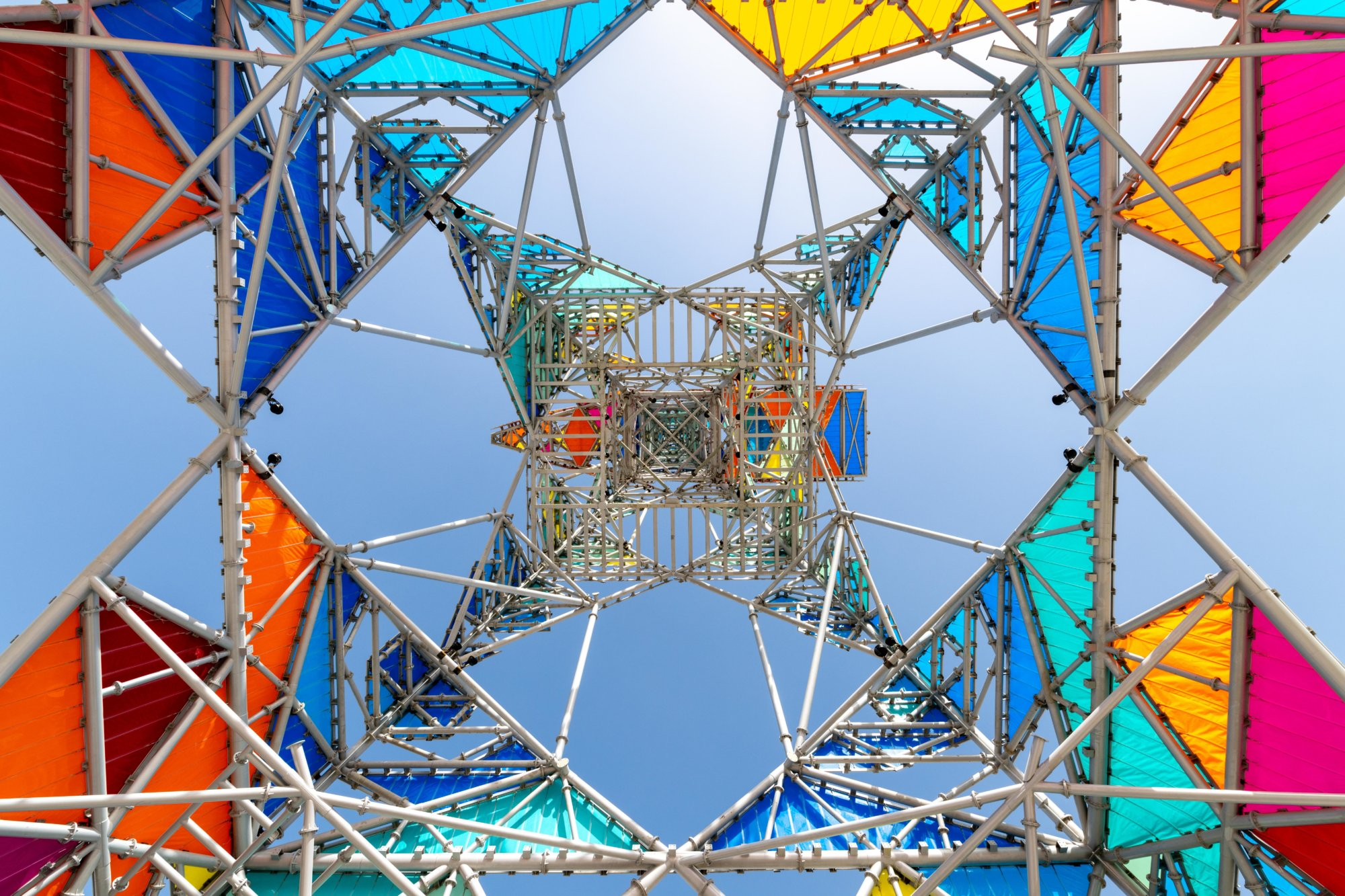
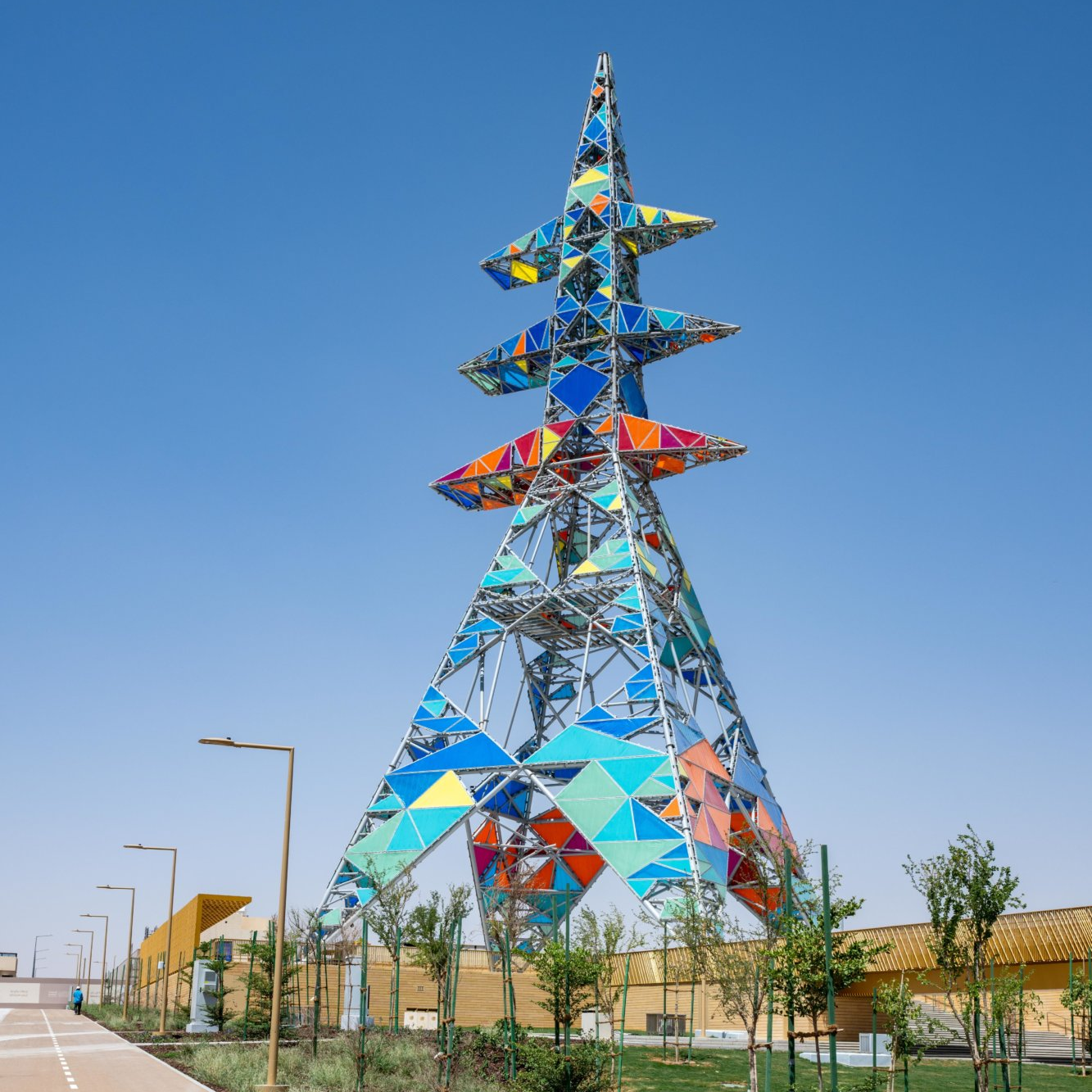
Gharem’s most recent landmark work, The Arts Tower, captures the scale of his ambition today. Installed on Riyadh’s Sports Boulevard, the 83.5 meter structure was created by repurposing a former electricity pylon and reimagining it as a public artwork with ETFE and 691 colored panels.
Gharem describes it as a constantly changing experience of light, shadow, color, and wind, while wider reporting frames it as a symbol of Saudi Arabia’s cultural transformation. It is a fitting extension of his practice: a functional structure once tied to transmission becomes a civic image about imagination, unity, and public life.
“Culture is one of the key factors for our country’s development path. At the end of the day, culture is just as important as energy. It’s worth investing in, and it’s a certificate that the Kingdom is committed to nurturing its cultural scene”.
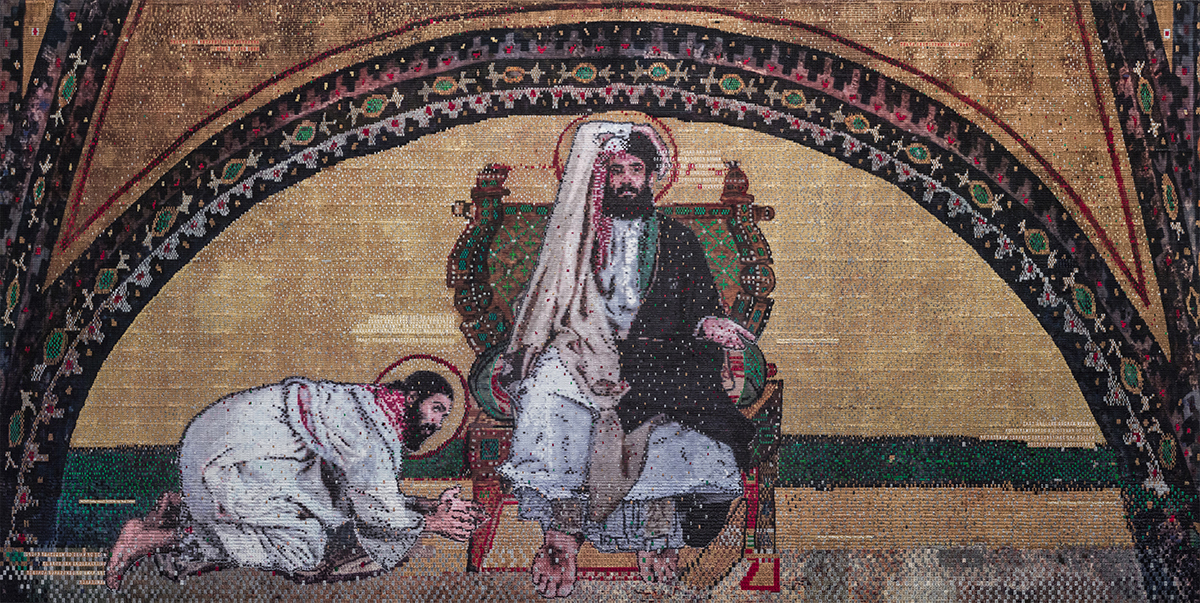
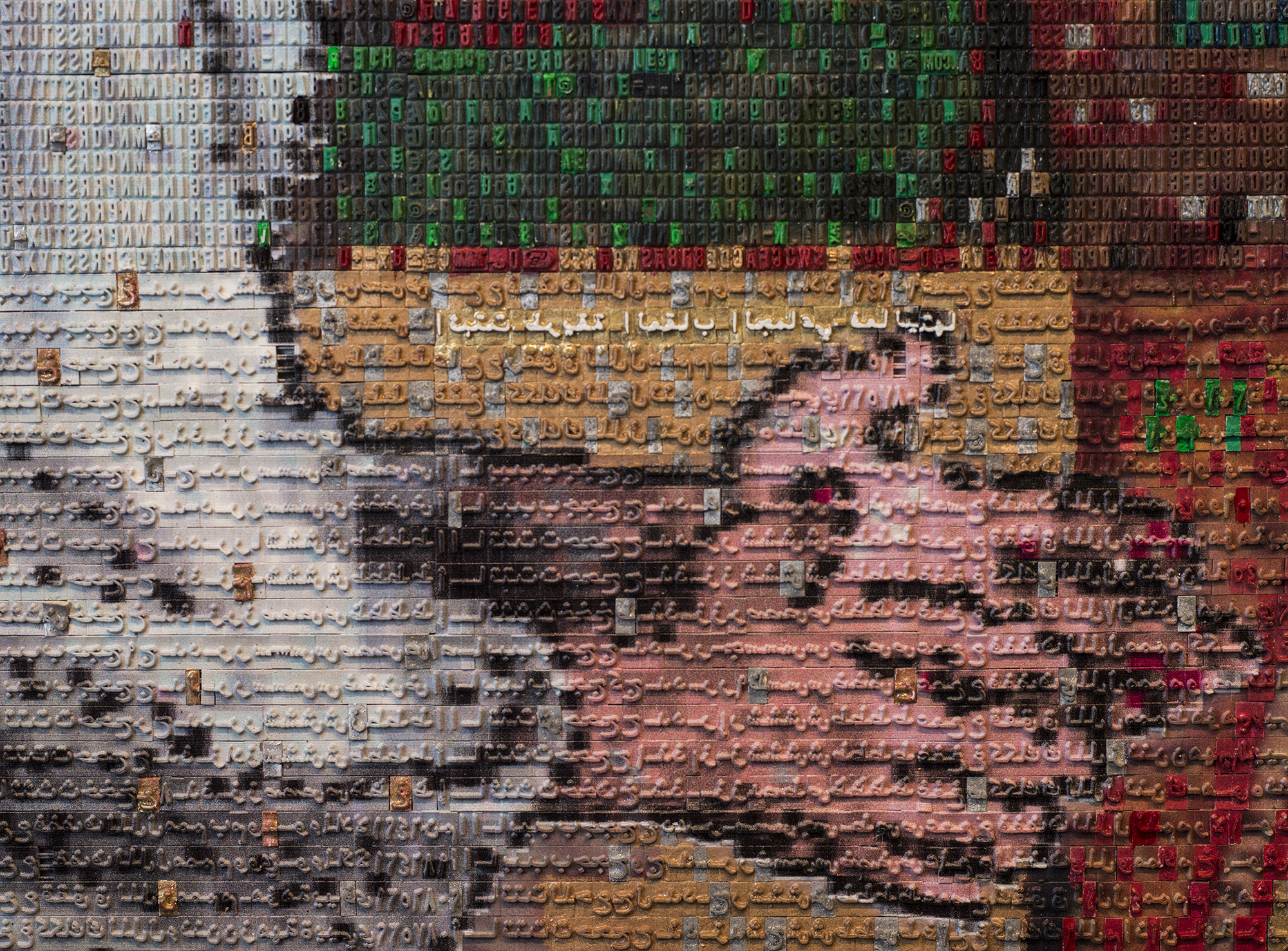
This work reflects Gharem’s signature approach to the “stamp painting,” a form he has made distinctly his own. As in much of his practice, he turns to the systems that often divide people, particularly political and religious structures, not to reinforce separation, but to reflect on unity across difference. Here, pixel-like dots evoke the surface of computer games, suggesting how digital culture and media now shape public opinion as powerfully, and perhaps more powerfully, than education or religion. Gharem’s mirror-reversed messages deepen that tension, embedding meaning within the image itself. At the center of the work is his enduring concern with the human condition, beyond origin, identity, or faith.
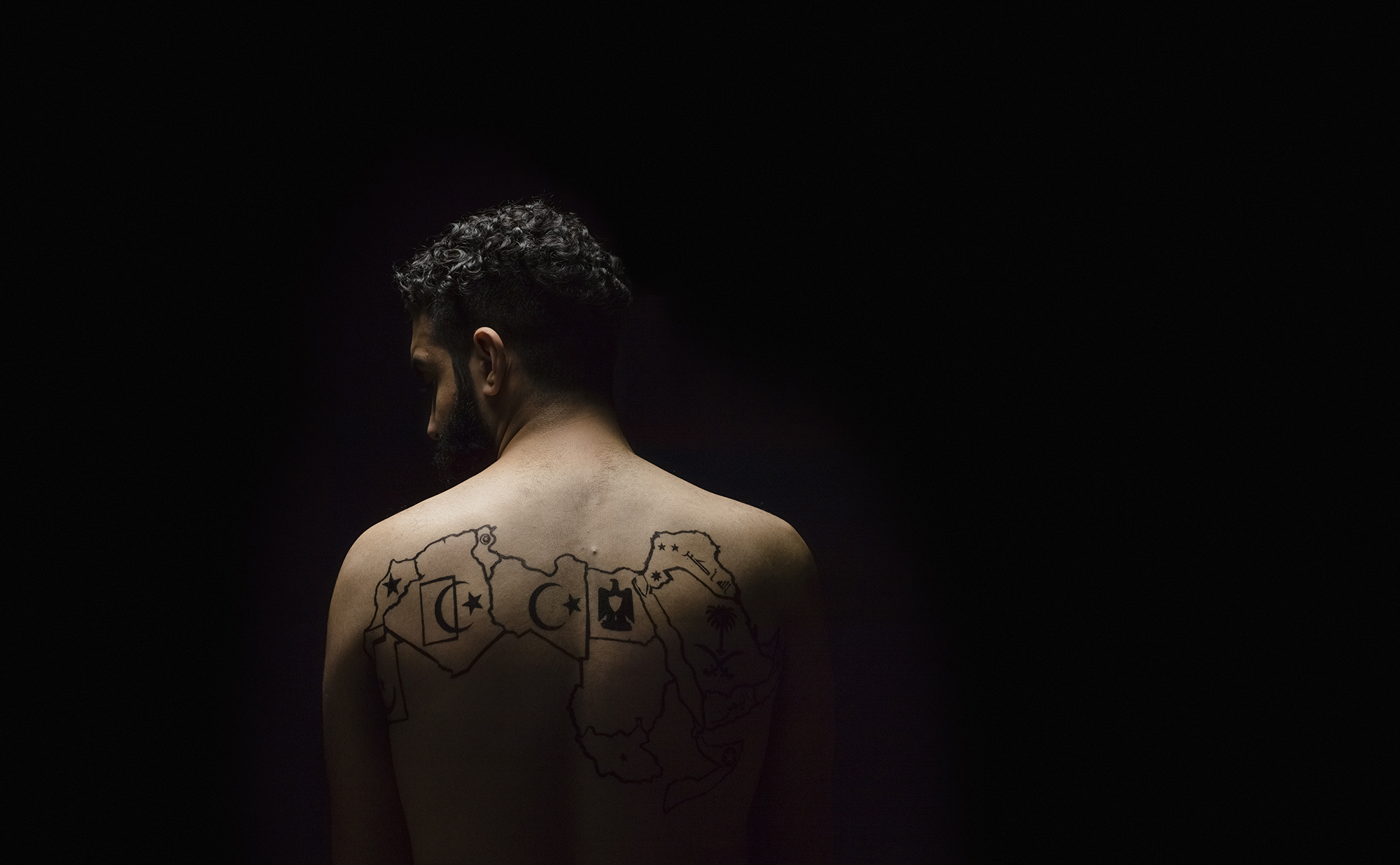
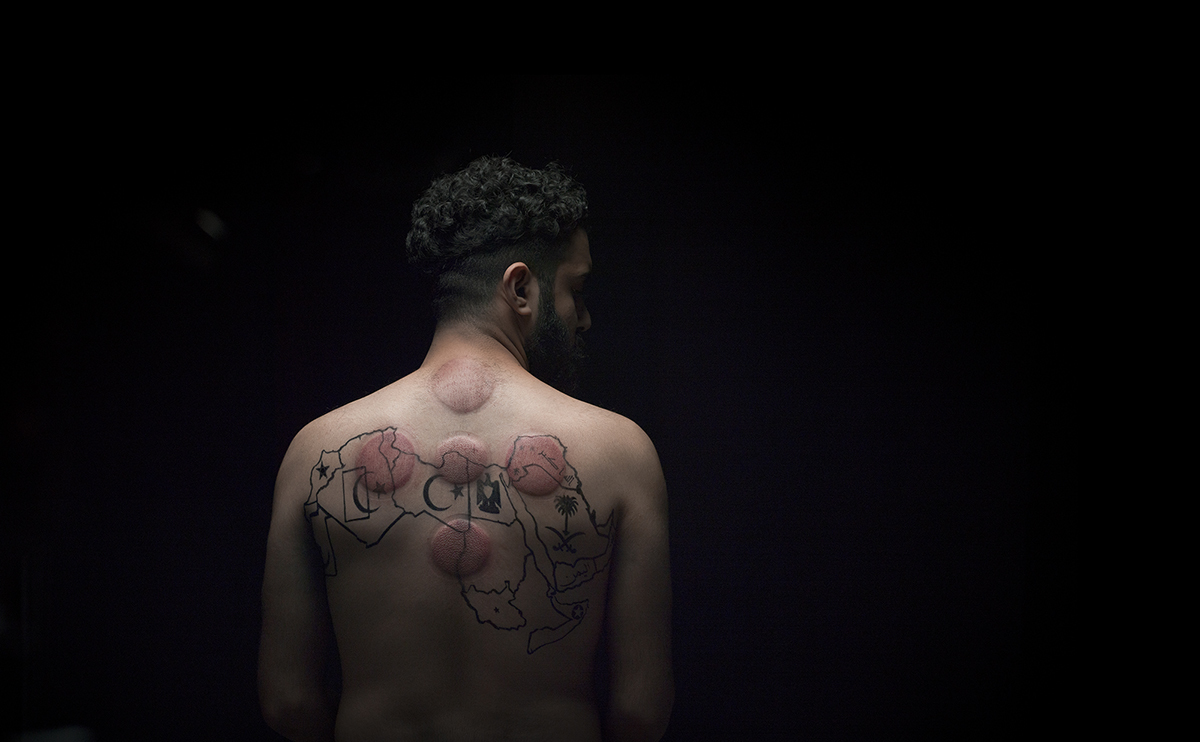
In Hijamah (Traditional Pain Treatment), Gharem turns a traditional Islamic healing ritual into a metaphor for the condition of the Arab world. Presented as a 4K color video, the work draws on hijama, a form of physiological cleansing associated with the removal of “bad blood,” and asks what place inherited forms of treatment might still hold in the face of contemporary pain. As with much of Gharem’s work, the gesture is both literal and symbolic, using ritual not as nostalgia, but as a way of thinking through collective injury, recovery, and the limits of cure.
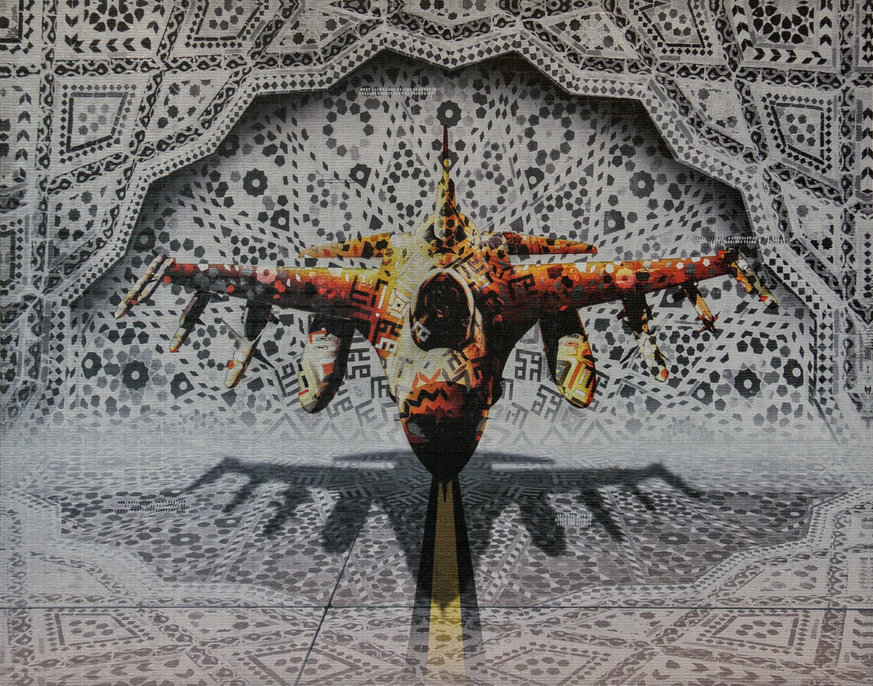
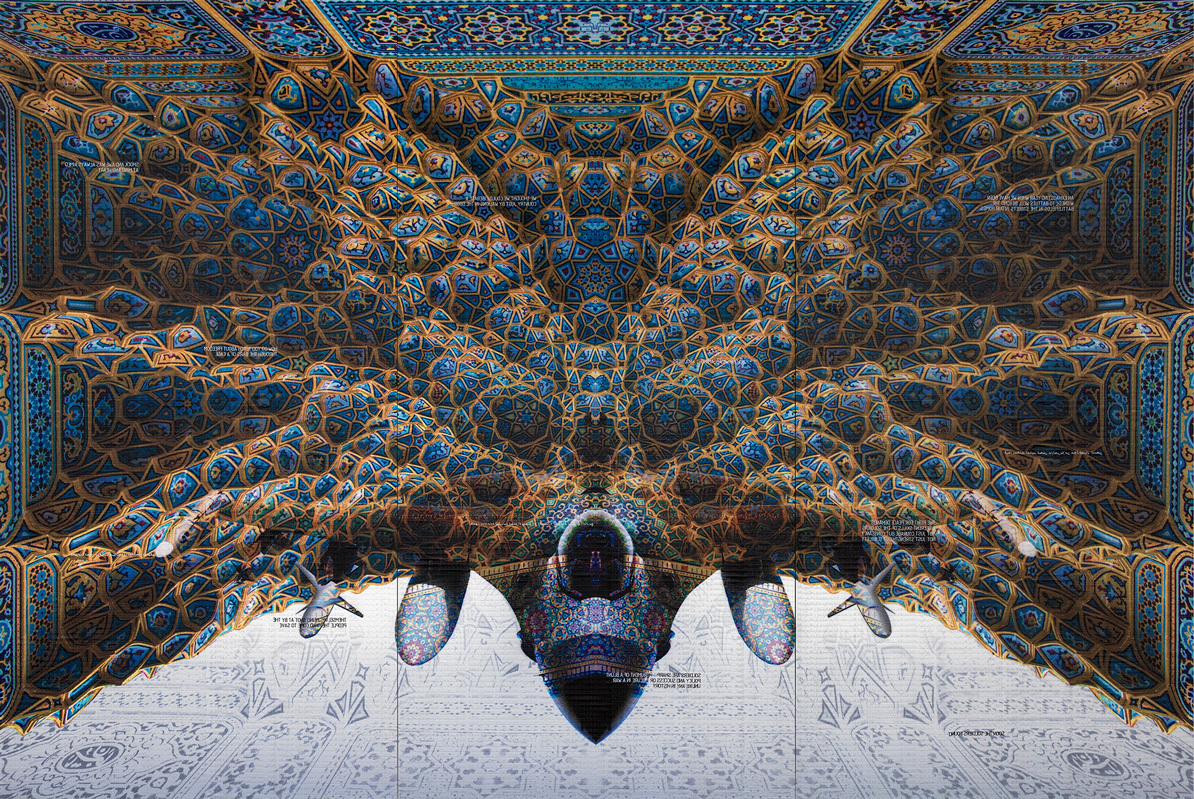
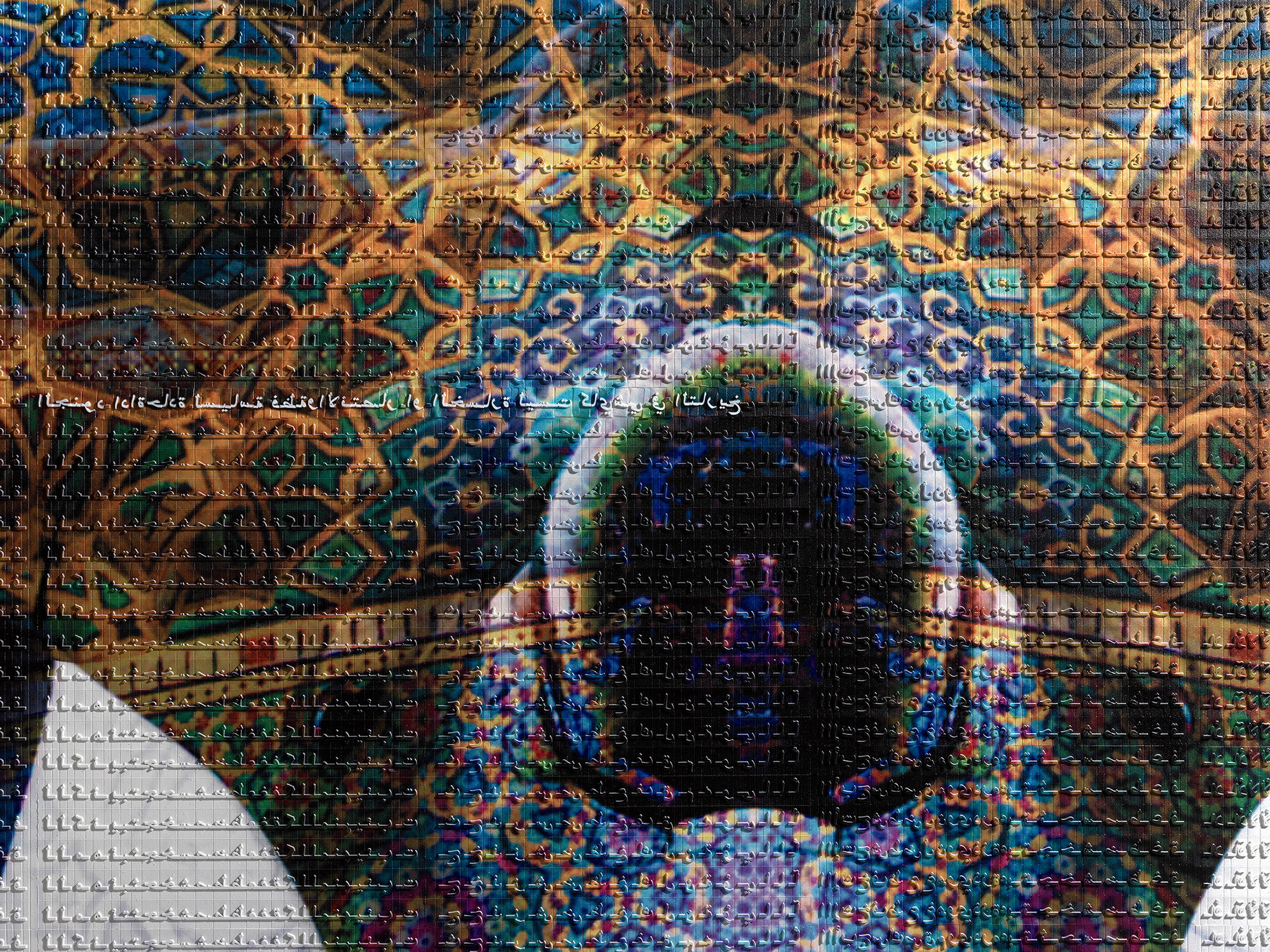
In Ricochet, Gharem combines the image of an approaching fighter jet with layered mosaic stamps and Islamic geometric pattern, creating a work that is both powerful and visually intricate. Drawing on his military experience and the visual tradition of Islamic battle imagery, he balances intensity with beauty, using ornament and composition to reflect on conflict, perspective, and the pressures shaping the region. At the same time, the work carries a larger sense of hope, suggesting that military insurgence and conflict, as seen throughout Islamic history, are ultimately short lived, while peace and unity endure.
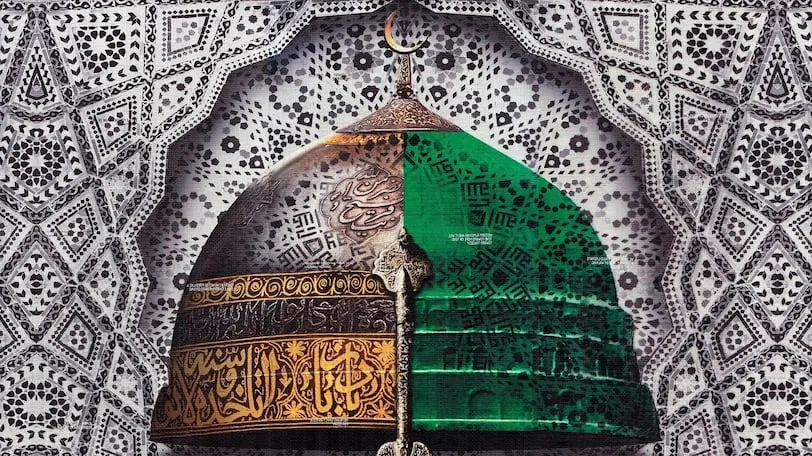
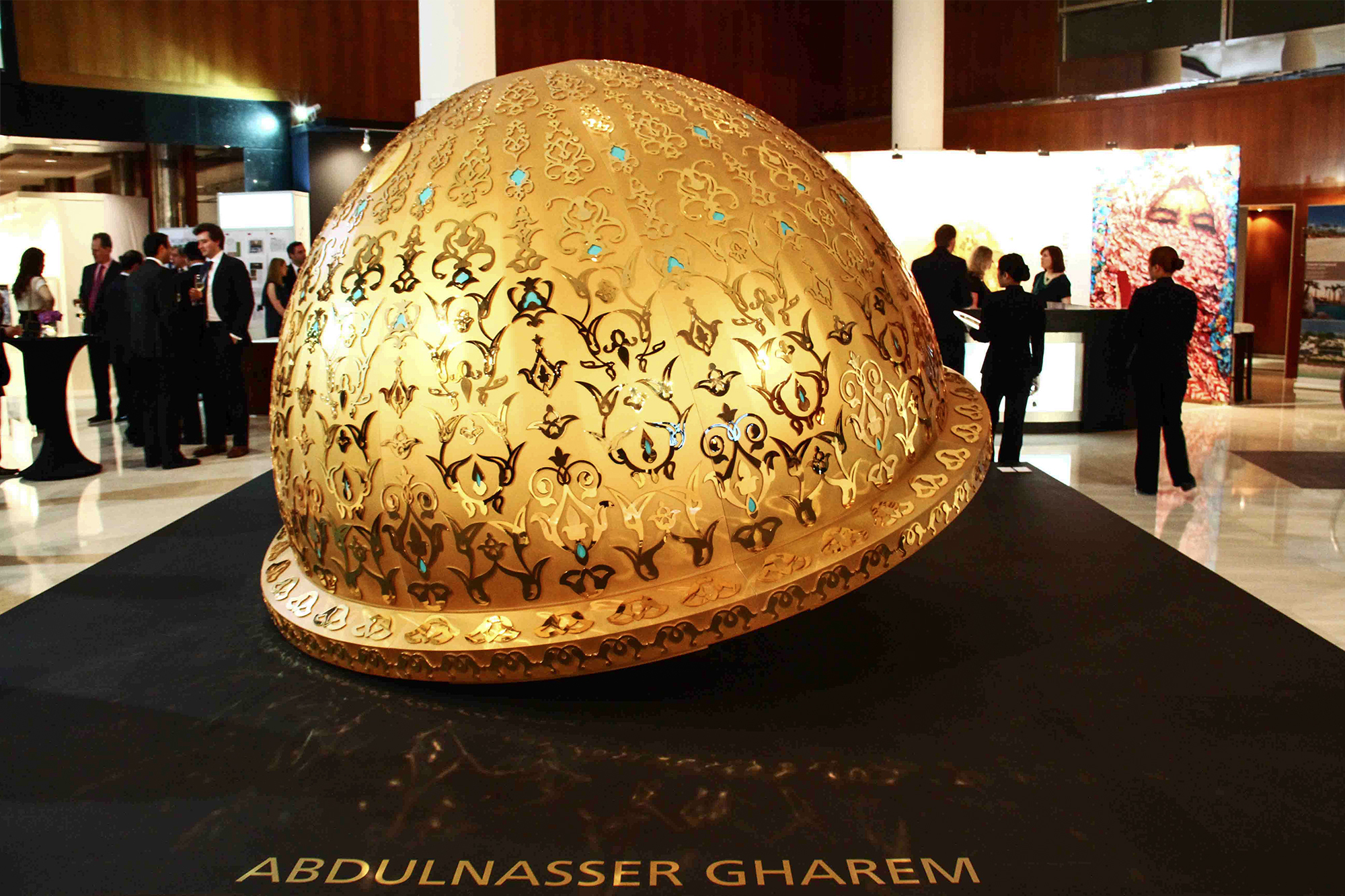
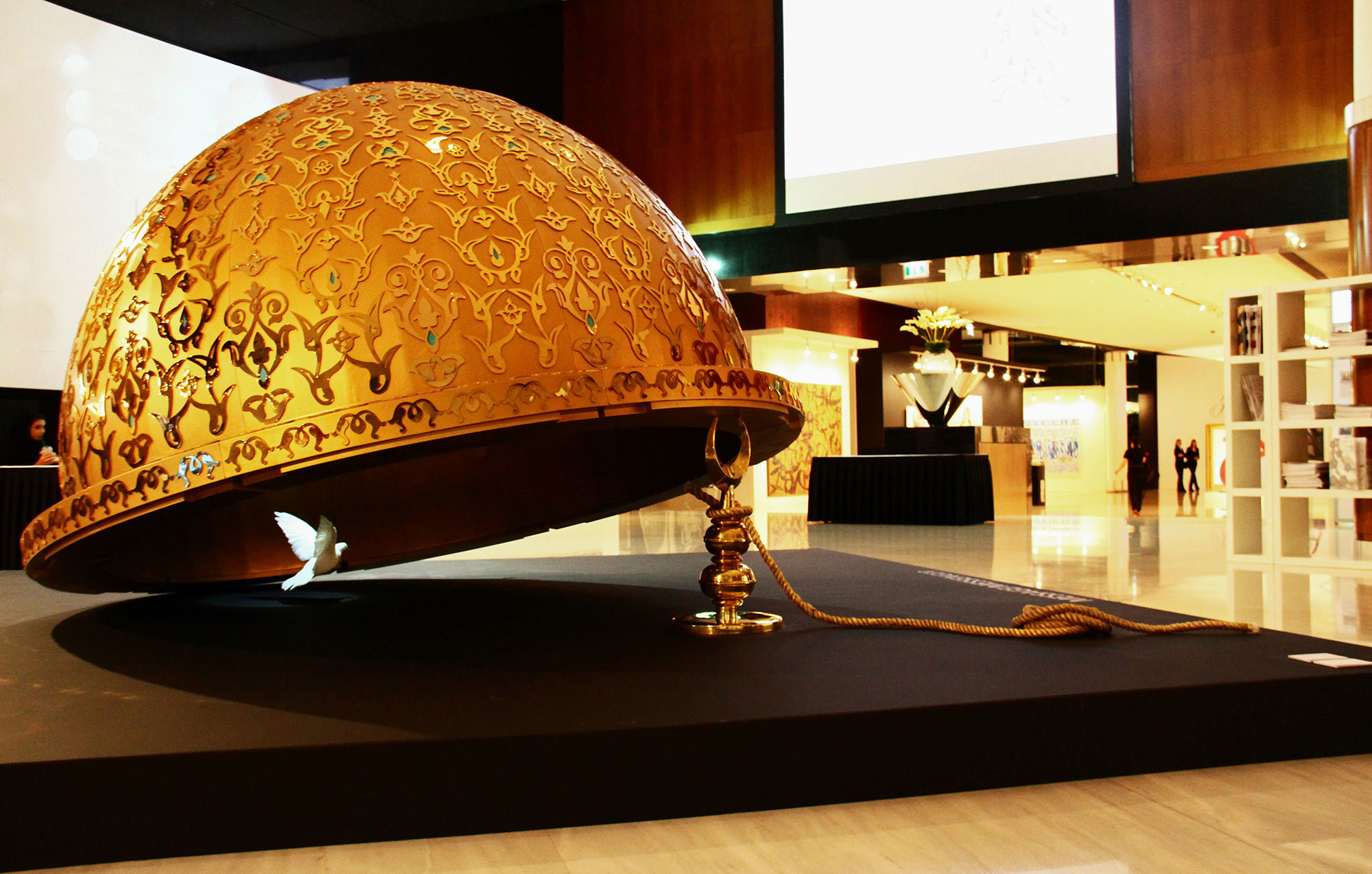
In Message/Messenger, Gharem transforms sacred architecture into something at once radiant and deeply unsettling. The work centers on a three metre wide wooden dome, veneered in burnished copper and inscribed with arabesques and the Quranic phrase “guide us to the Straight Path.” Echoing the proportions and glow of the Dome of the Rock in Jerusalem, the structure is raised on a crescent form that makes it resemble a trap. Beneath it sits a white dove, hidden and vulnerable. The effect is both seductive and disquieting, drawing the viewer toward the promise of peace and spiritual elevation while suggesting how easily that promise can be shadowed by the immense force of organized religion.
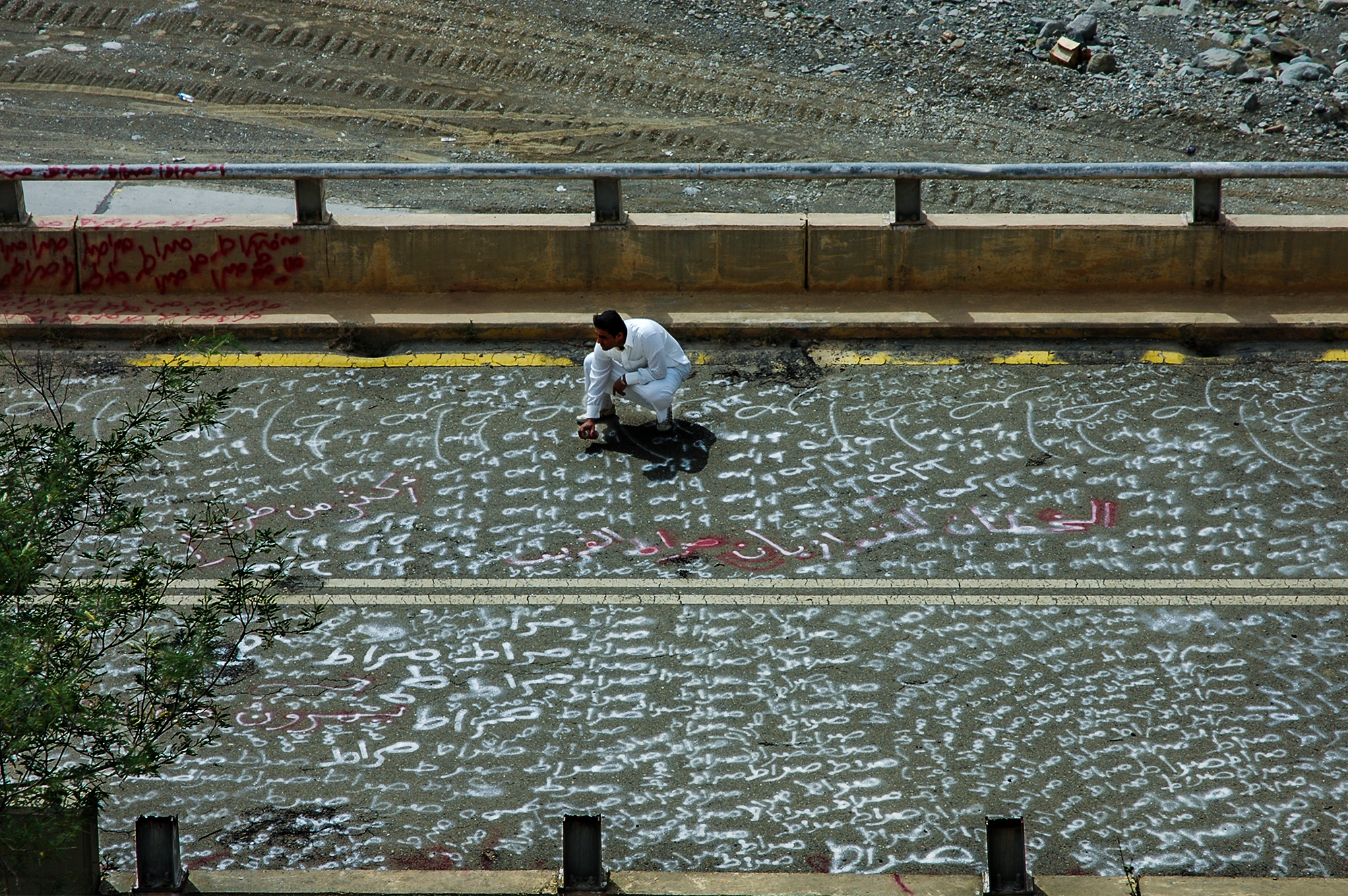
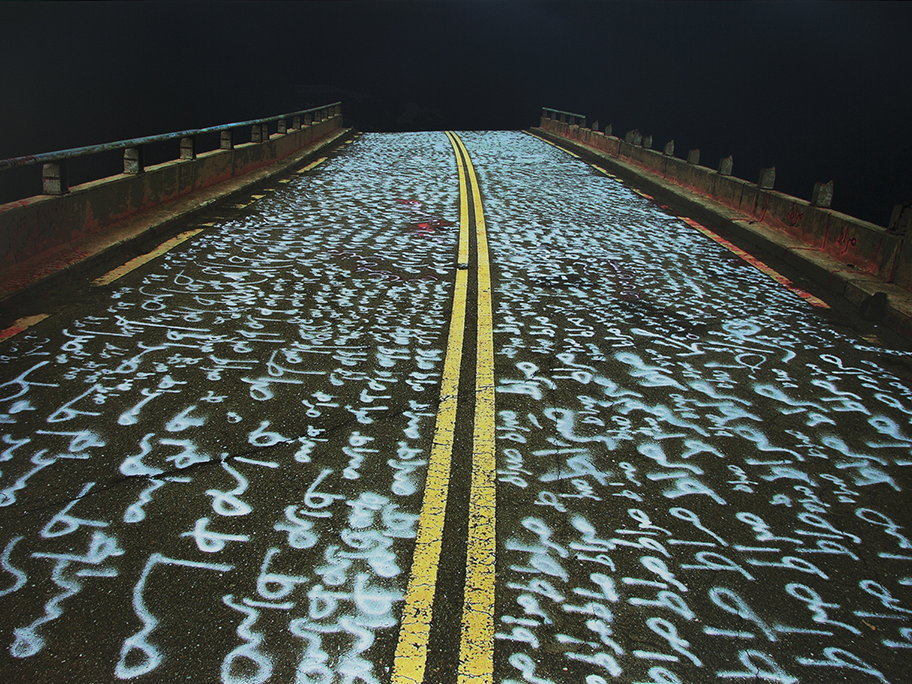
The Path, or Siraat, commemorates a tragic event that occurred in 1982, when a group of villagers took shelter from an approaching flood on a concrete bridge spanning a river in southwest Saudi Arabia, where heavy rains are often commonplace. Everyone was swept away and most were killed by the deluge. A new road was built nearby but the old one on either side of the washed away bridge remained. On the section of road leading up to the bridge, Gharem and a crew of assistants spray-painted over and over again the word siraat, which means both a literal path and also a spiritual one (e.g., the straight path that leads to Paradise).
The repetition of this single word on the roadway becomes a visual chant, a reminder of how we choose our own paths, and a remembrance of the flood victims, who, having chosen the apparent safety of higher ground, lost their lives. This notion of individual choice when it comes to life’s pathways is endemic in Gharem’s work.
What makes Abdulnasser Gharem endure is his ability to turn the language of everyday power into something reflective, human, and visually arresting. He does not simply depict Saudi Arabia’s transformation. He gives form to the tensions within it, between faith and institution, beauty and control, memory and change. In doing so, he has created more than a body of work. He has helped shape a wider cultural conversation, one that continues to influence how contemporary art is seen, questioned, and lived in the Kingdom today.
Discover more artist stories at KSAArt.com.