Ayman Daydban: Transforming Everyday Objects Into Stories of Belonging
Explore how Saudi-Palestinian artist Ayman Yossri Daydban uses everyday objects, cultural symbols, and memories to examine identity and belonging.


Explore how Saudi-Palestinian artist Ayman Yossri Daydban uses everyday objects, cultural symbols, and memories to examine identity and belonging.
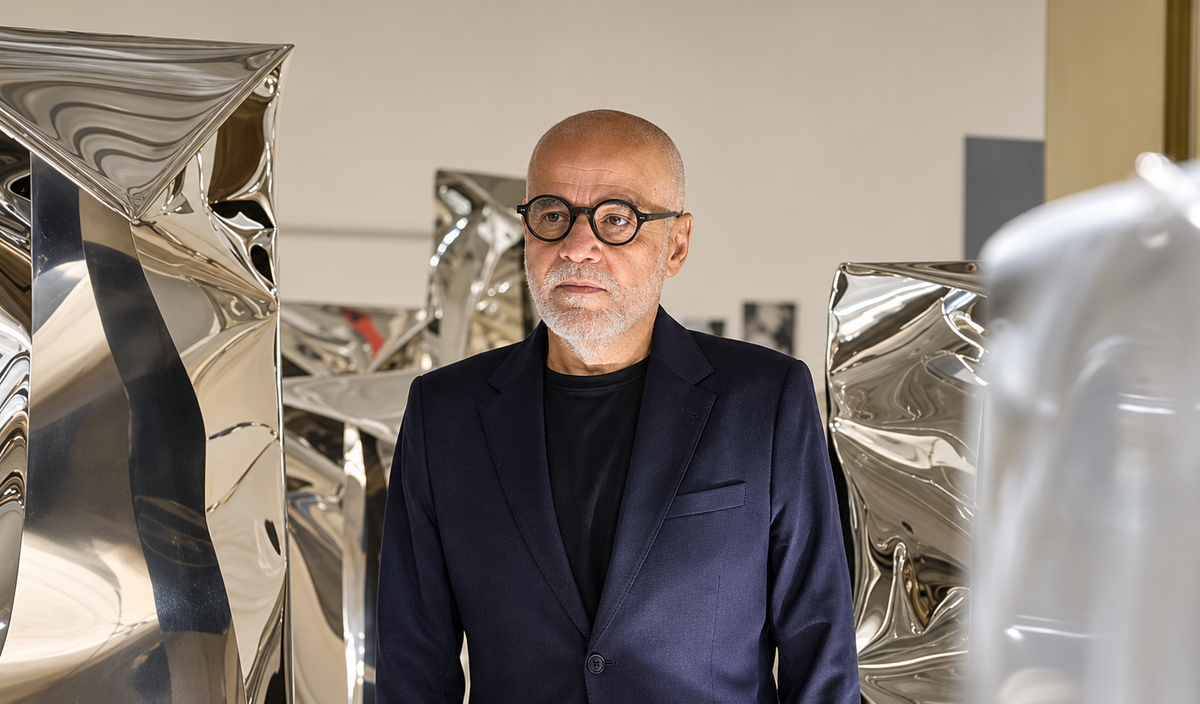
“For me art has always been a way of thinking and reconsidering our relationship with objects and the world.”
For Saudi-Palestinian contemporary artist Ayman Yossri Daydban, even the most familiar objects can reveal unexpected stories. From the white garments worn during pilgrimage to Arabic cinema posters and large-scale installations, his work transforms everyday materials into reflections on identity, cultural memory, and belonging. Each piece encourages viewers to look beyond what they recognize and consider the personal and cultural meanings held within.
Born in Ramallah, Palestine, in 1966 and raised in Saudi Arabia, Ayman Daydban has developed an artistic career spanning more than three decades. Based in Jeddah, his multidisciplinary practice includes painting, photography, video, printmaking, performance, and installation. His work has been presented at international exhibitions, including the Venice Biennale and Art Basel, and is held in major collections such as the British Museum and Centre Pompidou. His artistic journey reflects a continuing interest in how people understand themselves through the objects, traditions, and places that shape their lives.
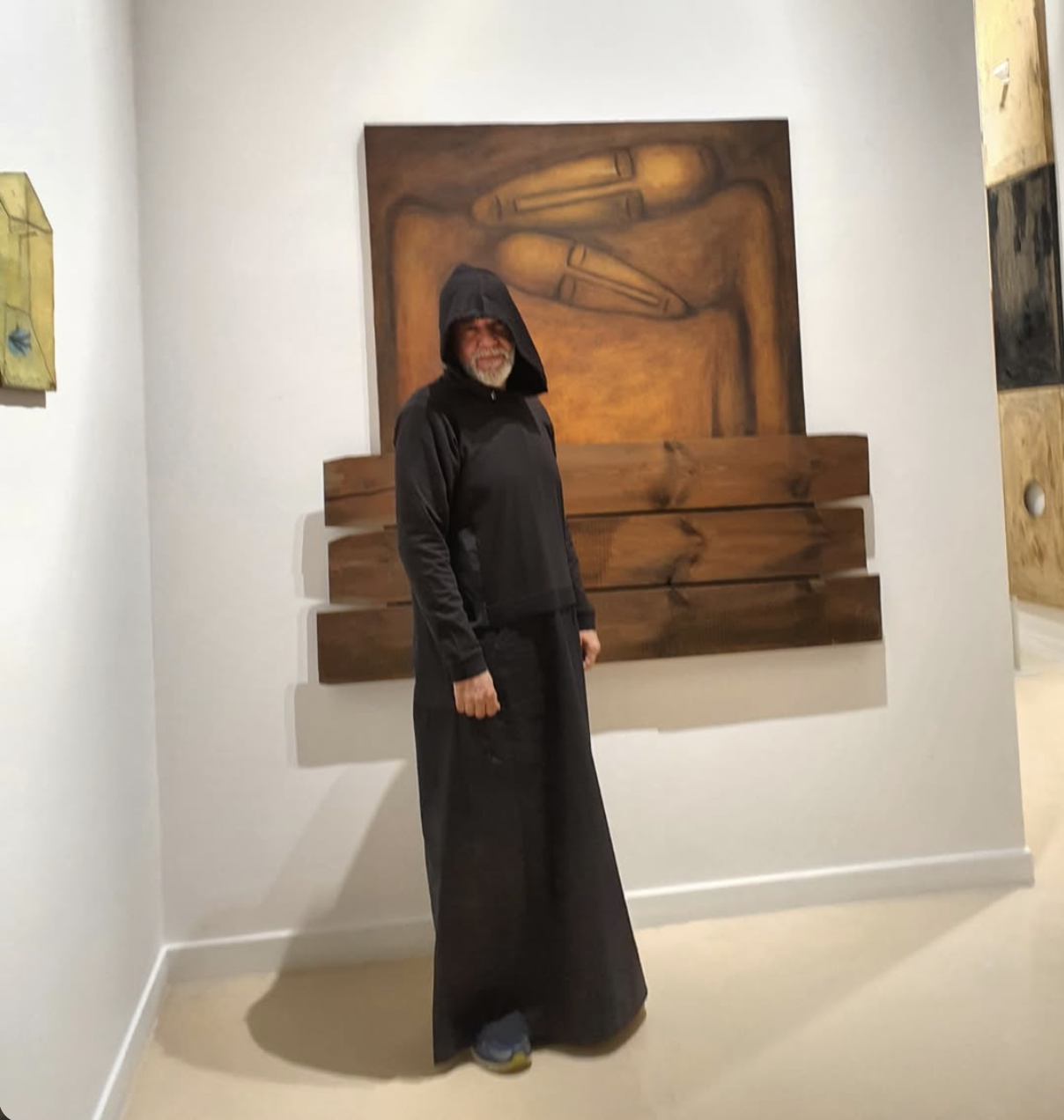
Ayman Daydban's paintings and drawings from 1994 to 2015 reveal an important stage in his artistic development. His surname translates to "guard" or "watchman," a recurring figure in his work that reflects his perspective as an observer of society and culture. These mixed-media artworks often feature elongated human figures with expressive faces, appearing alone, in pairs, or in groups. Some are separated by wooden barriers, suggesting isolation and emotional distance, while others lean toward one another. Through these compositions, Daydban explores identity, human relationships, and the search for belonging, offering insight into his artistic evolution and the development of contemporary art in Saudi Arabia.
Ayman Daydban's upbringing in Saudi Arabia played an important role in shaping his cultural and artistic identity. Growing up with different cultural influences, he developed an interest in how people experience belonging and how language, traditions, and shared histories influence their understanding of the world. Before establishing his artistic career, he studied biology at King Abdulaziz University in Jeddah. His artistic practice began in the early 1990s, gradually expanding from painting into photography, installation, performance, and video.
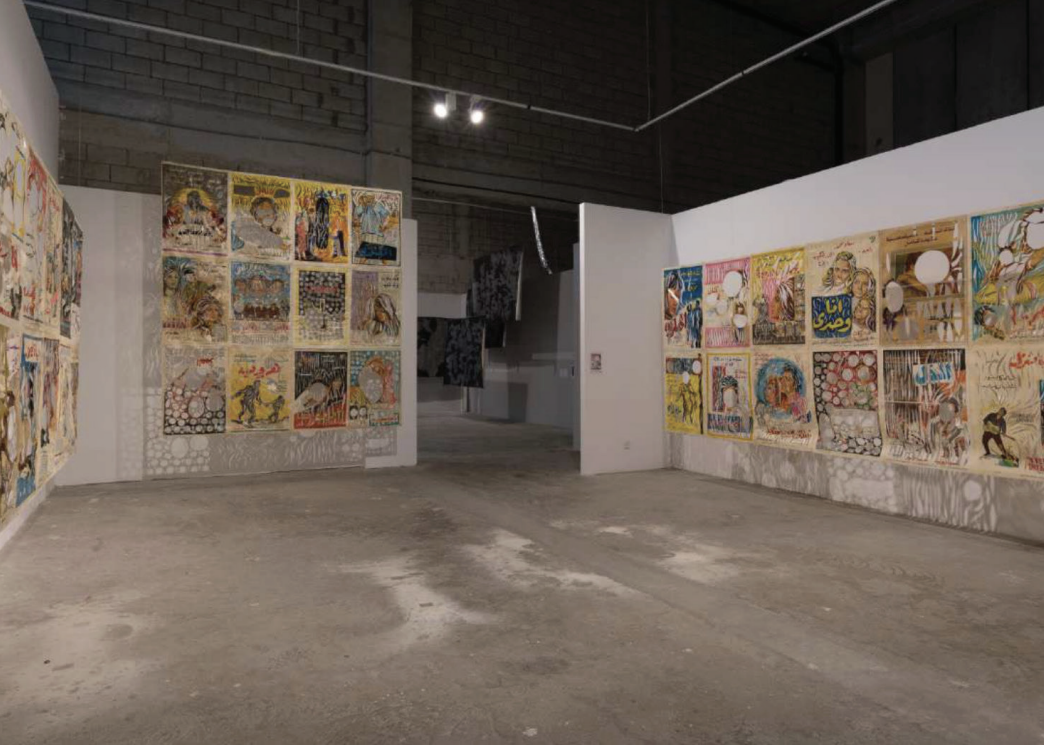
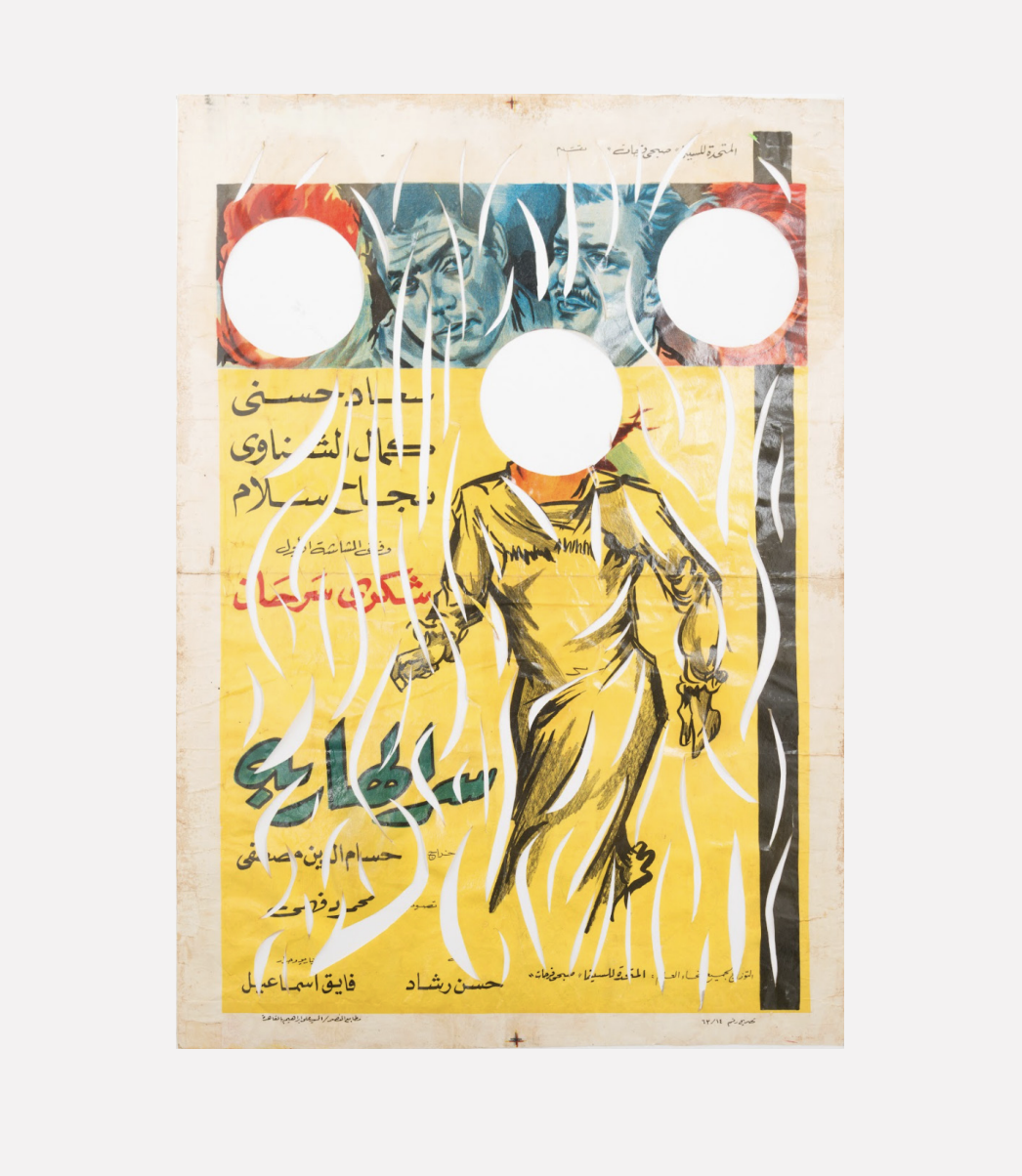
Poster Series 2016, artworks by Ayman Yossri Daydban exploring Arabic cinema imagery, Jeddah, Saudi Arabia.
His early solo exhibitions included Daydban at Jeddah Atelier in 1998, Body Memory in 1999, Darkness in 2004, and Hopes in 2007. These exhibitions marked the beginning of a career that would eventually take his work to galleries and museums across the Middle East, Europe, and beyond. Rather than limiting himself to one medium, Daydban developed an artistic language built around recognizable objects and images. Arabic film posters, national flags, textiles, and architectural forms appear throughout his work, often transformed in ways that encourage audiences to reconsider their familiar meanings.
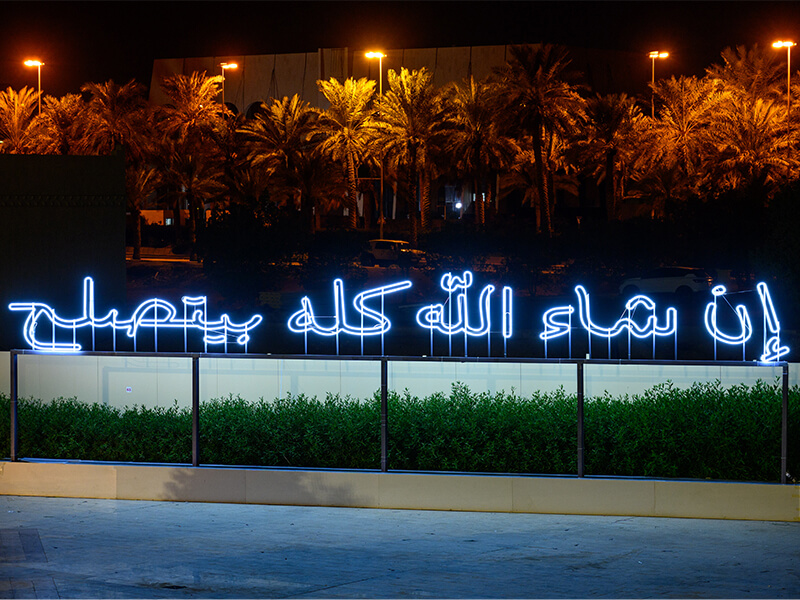
Text is another important part of his practice. By combining words with images, he explores how language can change the meaning of a visual story and how cultural references may be understood differently from one society to another. This interest in cultural interpretation has remained central to his work, connecting his earliest experiments with the installations and exhibitions he continues to develop today.
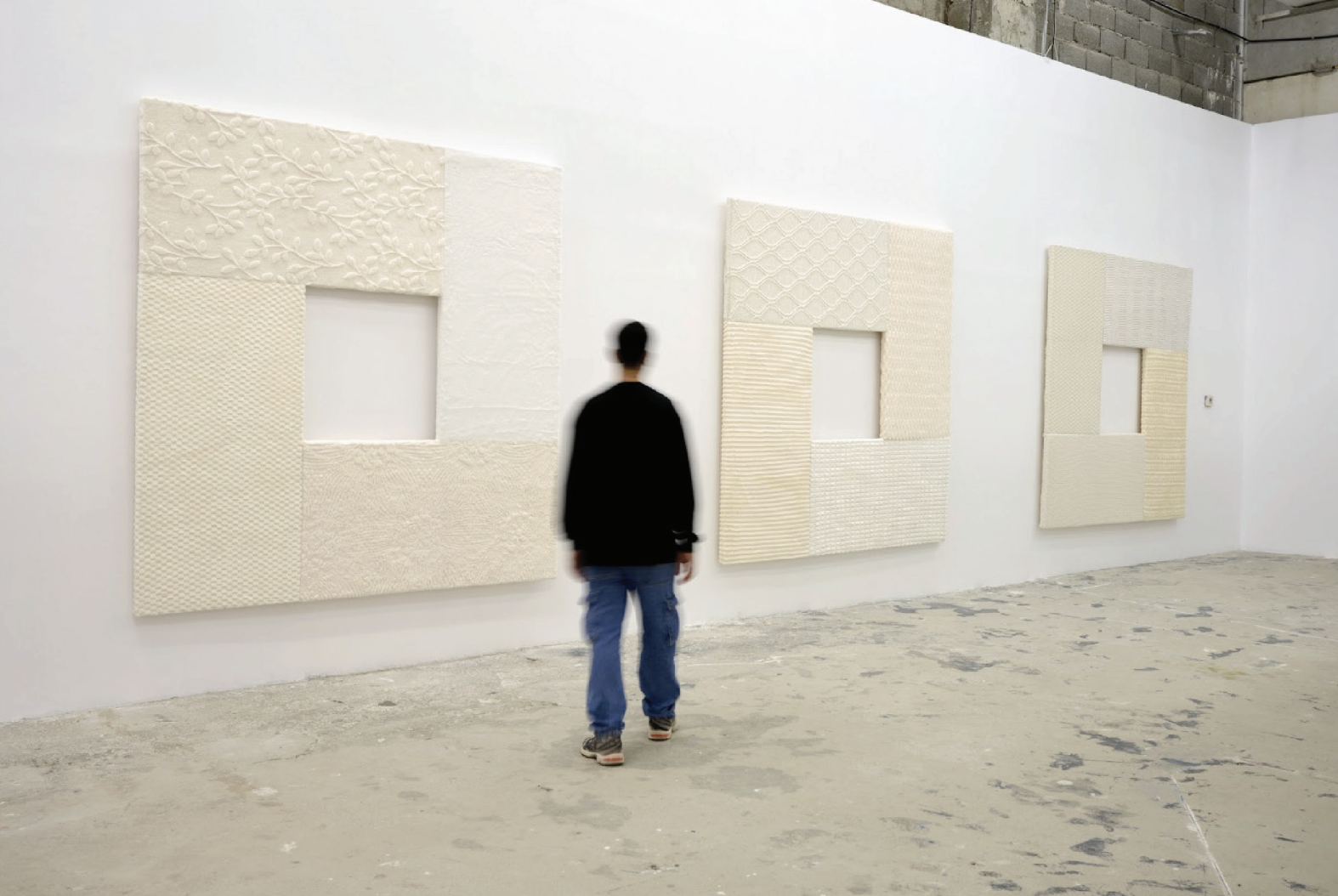
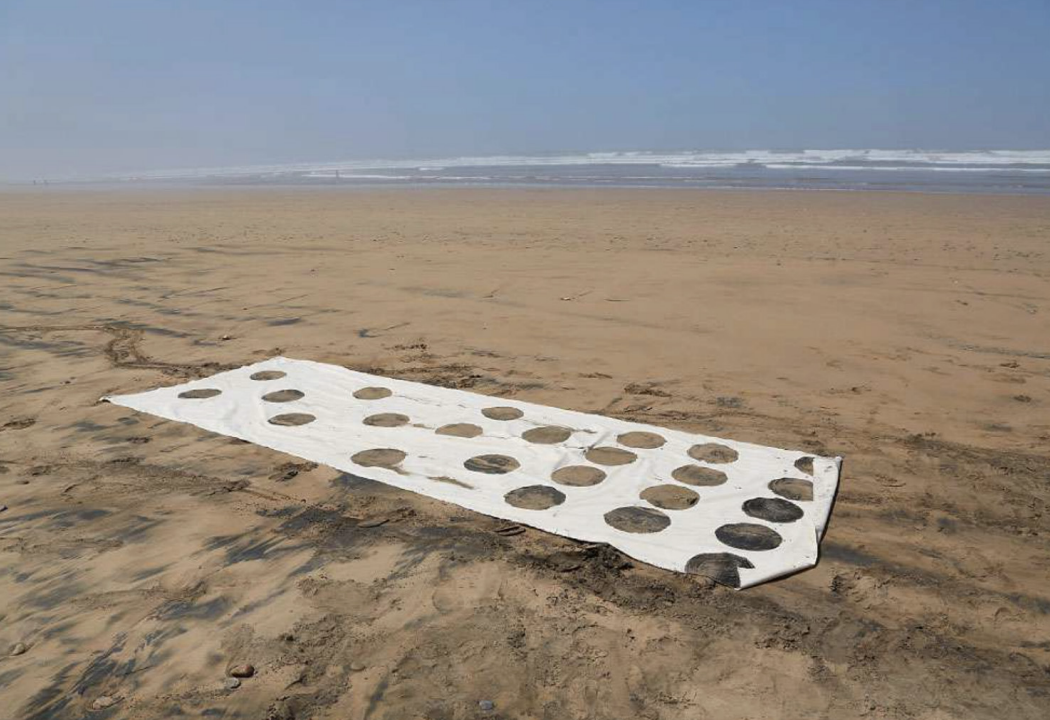
In January 2025, Ayman Daydban opened Winter at ATHR Gallery in Jeddah, expanding on his earlier Ihramat series from 2012. The exhibition explored the white cloth worn by Muslim pilgrims during Hajj and Umrah, examining its religious significance alongside questions of climate, cultural identity, and global trade.
The artworks featured textiles stretched over rectangular wooden frames, creating geometric compositions that could resemble human bodies, abstract paintings, or architectural forms. Some fabrics were thicker and more closely resembled blankets, changing the material's familiar appearance and purpose.
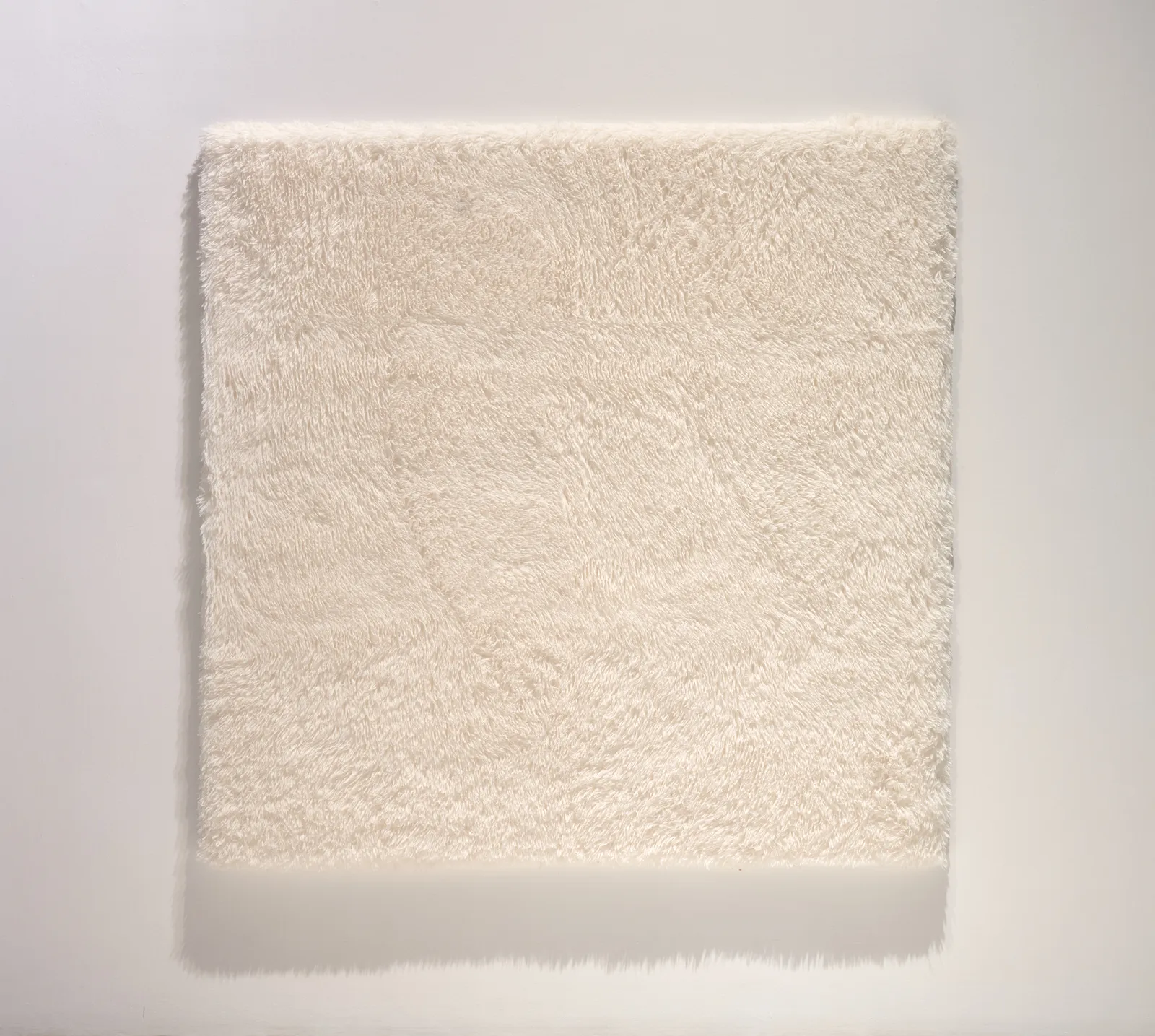
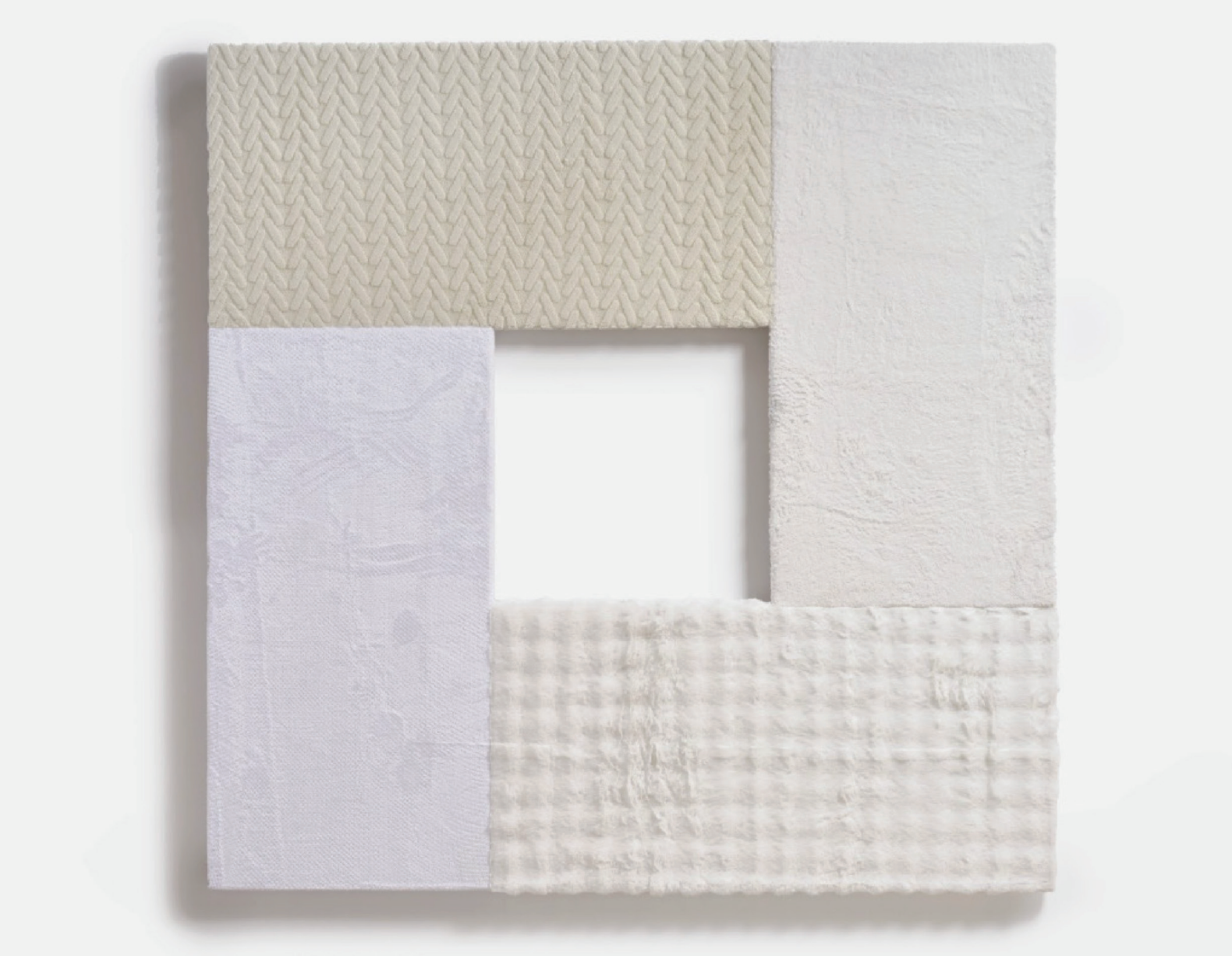
The title Winter introduced an environmental perspective. Daydban considered how changing climatic conditions could affect the experience of pilgrimage in the future. The white ihram, traditionally associated with lightweight clothing suitable for warm weather, became a way to reflect on the relationship between religious practices and the natural environment.
The exhibition also examined how culturally meaningful materials circulate through international markets. Some blankets used in the works were sourced from China, allowing Daydban to consider the difference between an object's original cultural significance and its commercial use. Through Winter, he encouraged viewers to think about how traditional materials can acquire new meanings when placed in unfamiliar contexts. The exhibition ran at ATHR Gallery until May 26, 2025.
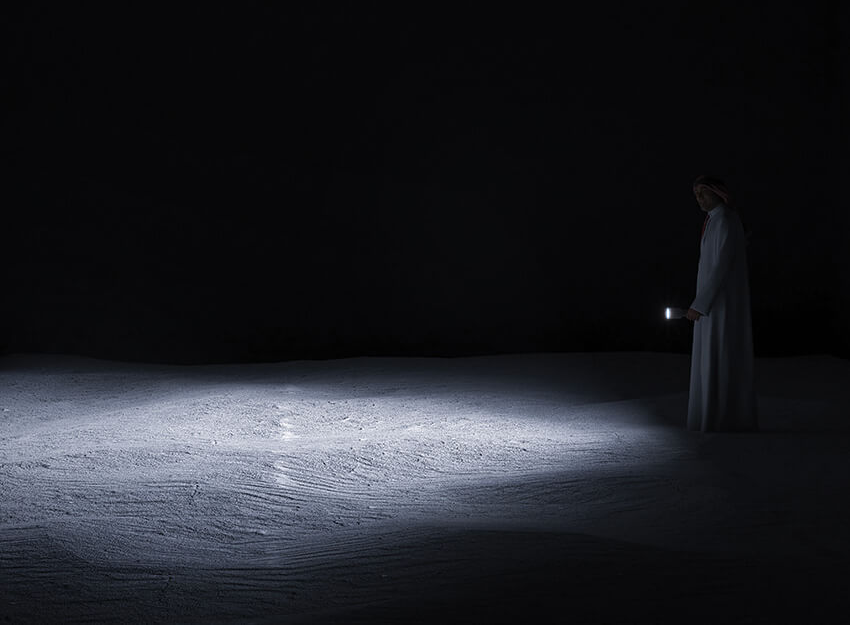
For Desert X AlUla 2024, Ayman Daydban created an installation that transformed a section of AlUla's volcanic landscape into the outline of a full-sized football field. Using white stones to mark the familiar shape, the artwork introduced a recognizable symbol of sport and collective activity into an unexpected natural setting. The installation explored how shared experiences can create a sense of community and belonging. A football field is not simply a place for competition. It is also a space where people gather, cooperate, form memories, and develop connections with one another.
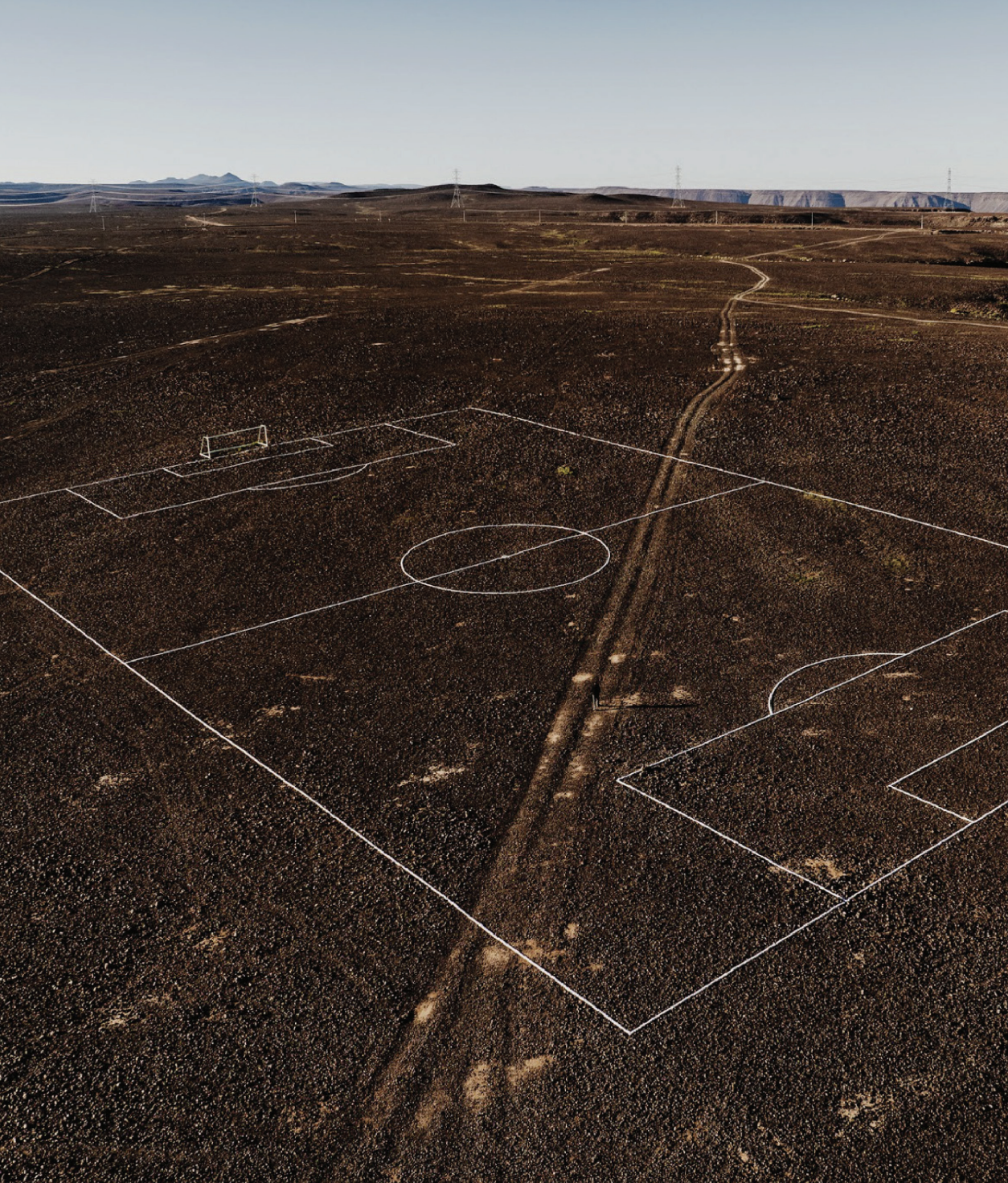
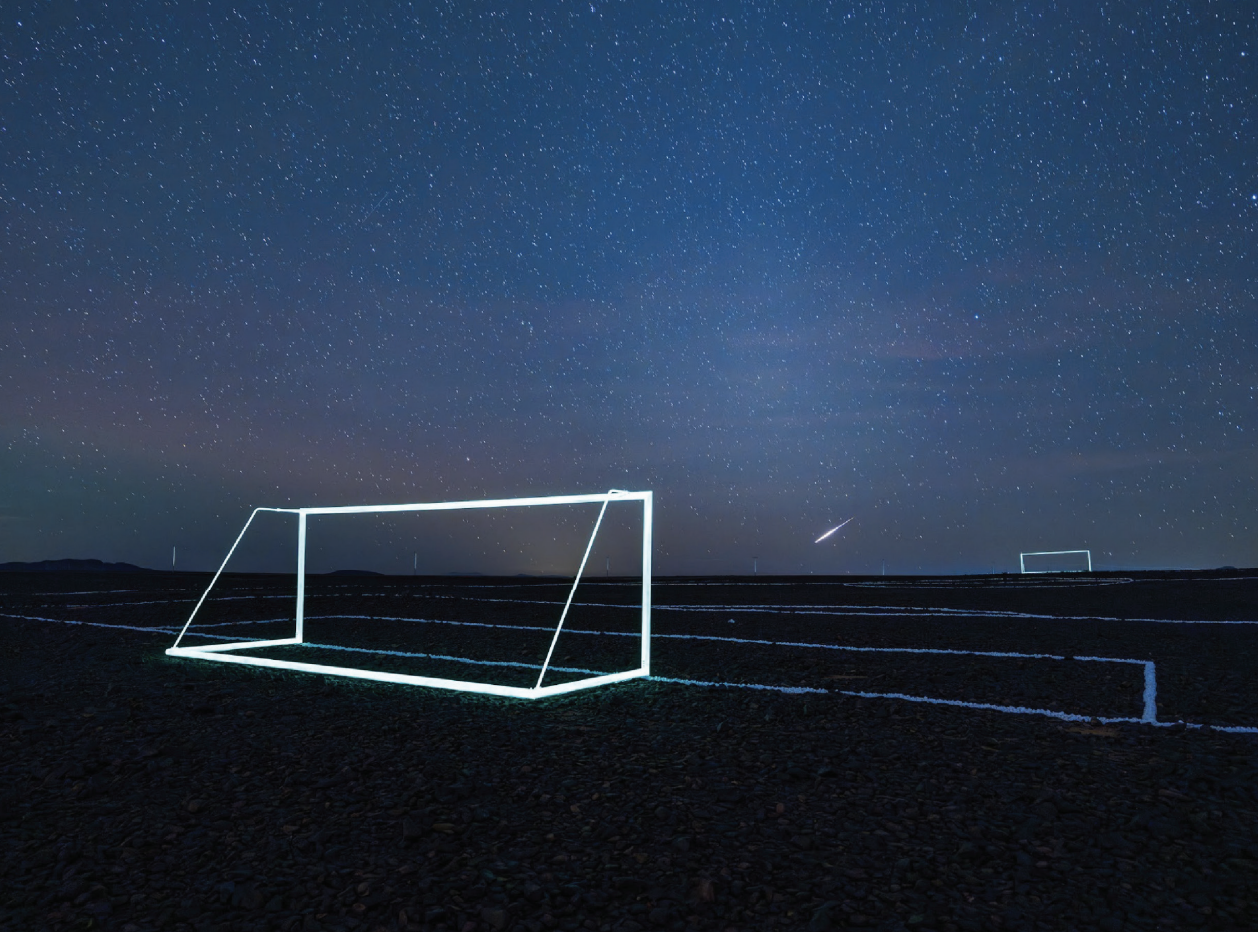
A Rock Garden (2024), installation by Ayman Yossri Daydban at Desert X AlUla, Saudi Arabia.
By placing this familiar structure in the desert, Daydban encouraged visitors to consider how collective memories can exist within a landscape, even when their physical traces are no longer visible. The artwork also reflected his interest in the relationship between people and their environment. Drawing on the geology, archaeology, and cultural history of AlUla, he connected ideas of community and shared heritage with questions about sustainability and the future. Presented from February 9 to March 23, 2024, the installation demonstrated how Daydban could transform a simple, familiar shape into a larger reflection on human connection.
Also in AlUla, Daydban presented his solo exhibition The Line at ATHR Gallery, curated by Solafa Rawas. The exhibition brought together new artworks, earlier memories, and different visual narratives to examine identity, imagination, and belonging. Through geometric compositions and abstract forms, Daydban created works that encouraged viewers to consider how personal experiences influence their understanding of the world.
Presented at ATHR's space in AlJadidah during the AlUla Arts Festival period, The Line developed as a conversation between the artist and curator, bringing different interpretations of memory and identity into one exhibition. The project continued Daydban's exploration of how visual art can communicate personal experiences without relying on direct or conventional storytelling.
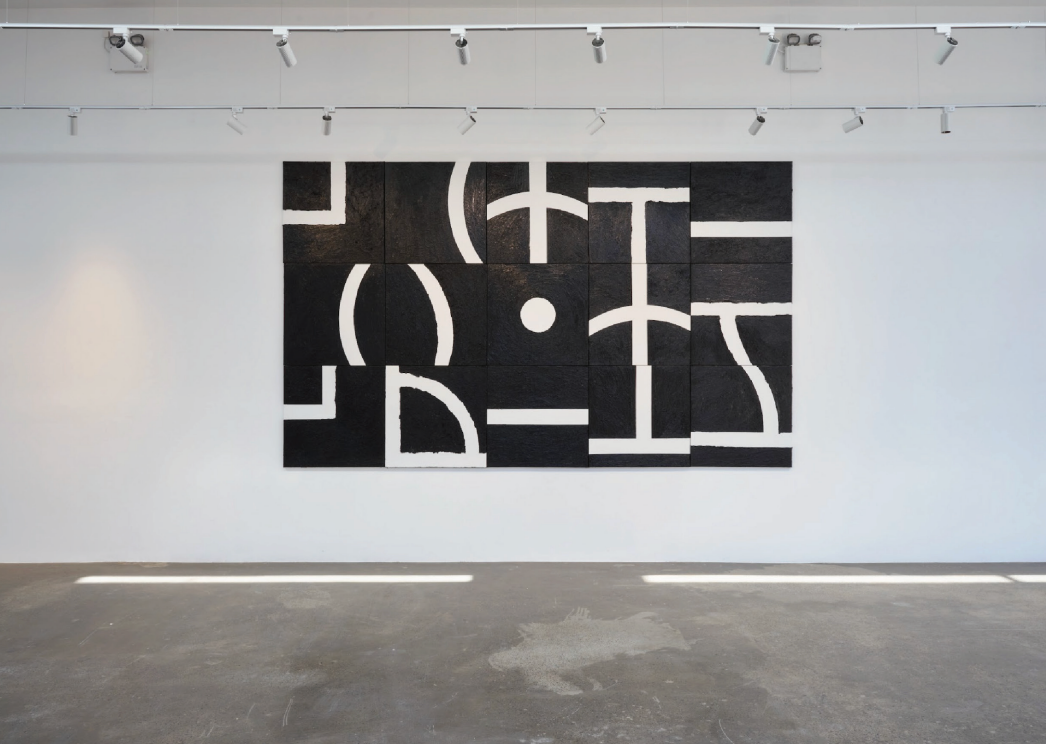
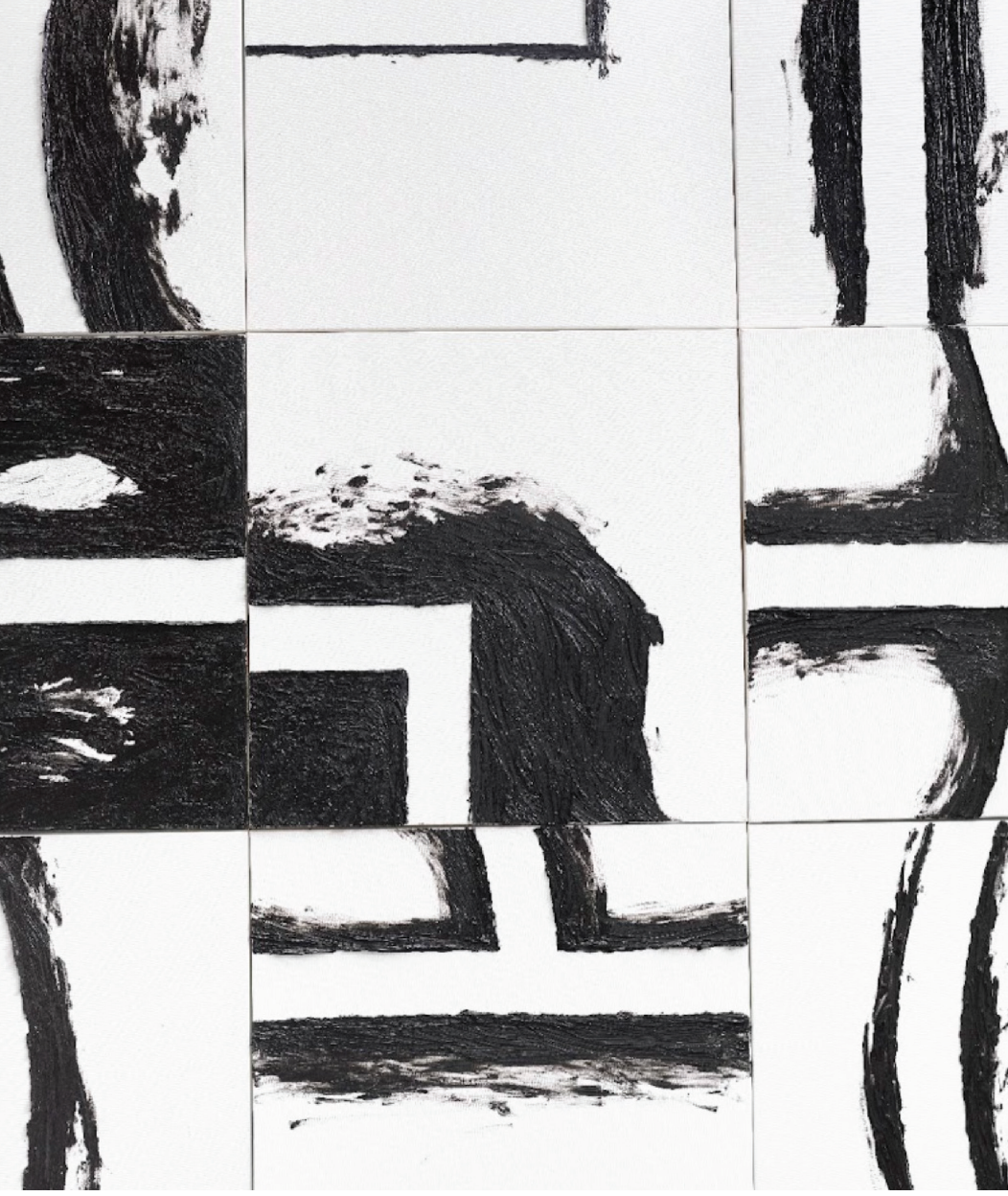
The Line (2024), solo exhibition by Ayman Yossri Daydban at ATHR Gallery, AlUla, Saudi Arabia.
At Noor Riyadh 2023, Ayman Daydban presented Treehouse, a large-scale installation commissioned by Riyadh Art. Constructed using laser-cut wooden panels, the installation explored the relationship between personal identity, community, and the spaces people associate with home.
The project drew partly on Daydban's experience during an artist residency in Detroit, where he encountered communities connected through music and shared cultural interests.
Rather than treating home as a fixed geographical location, Treehouse considered how people can develop a sense of belonging through their relationships, experiences, and communities.
Its architectural form encouraged viewers to reflect on the difference between physical shelter and the emotional meaning of home, ideas that would continue to develop in his later work.
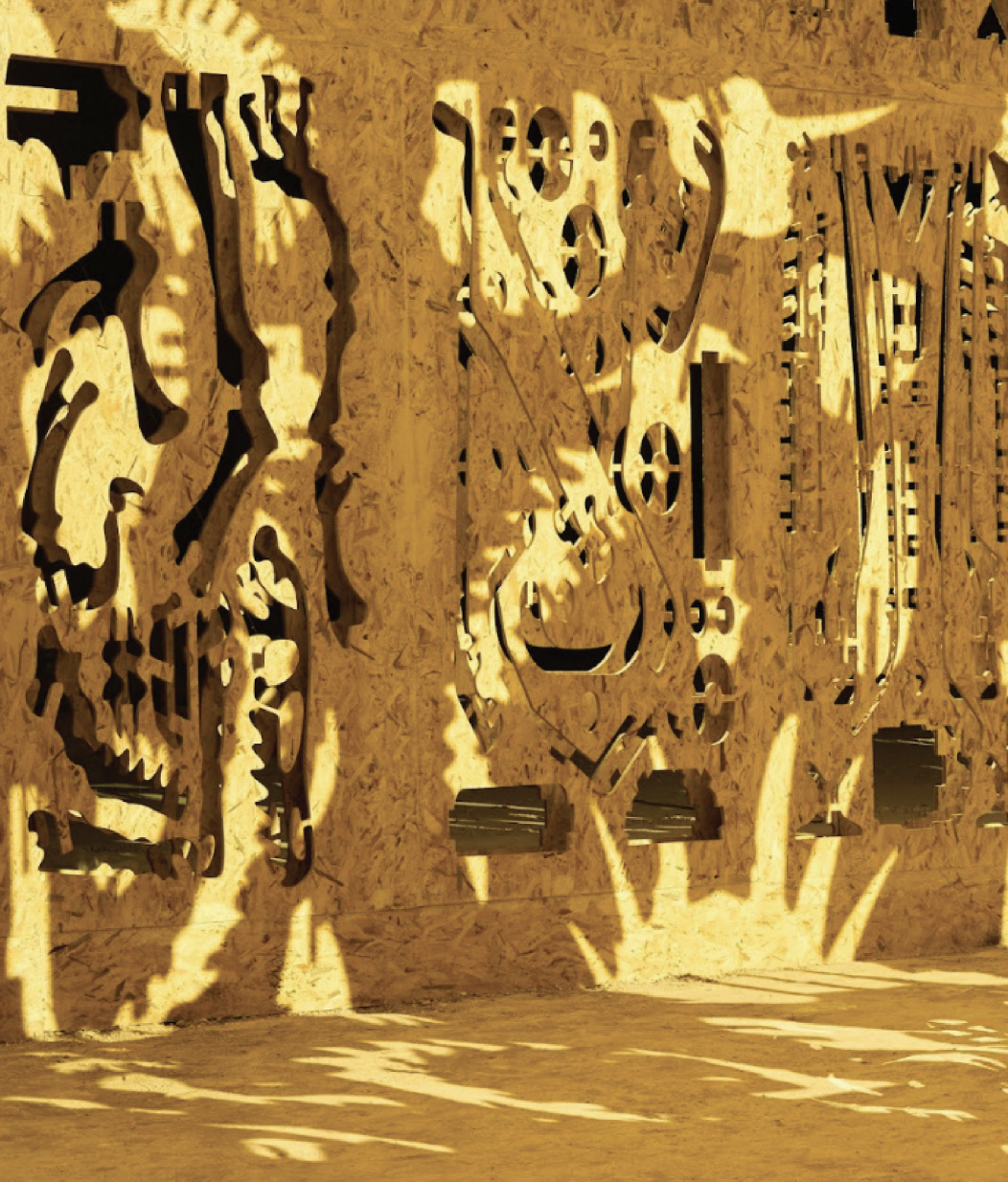
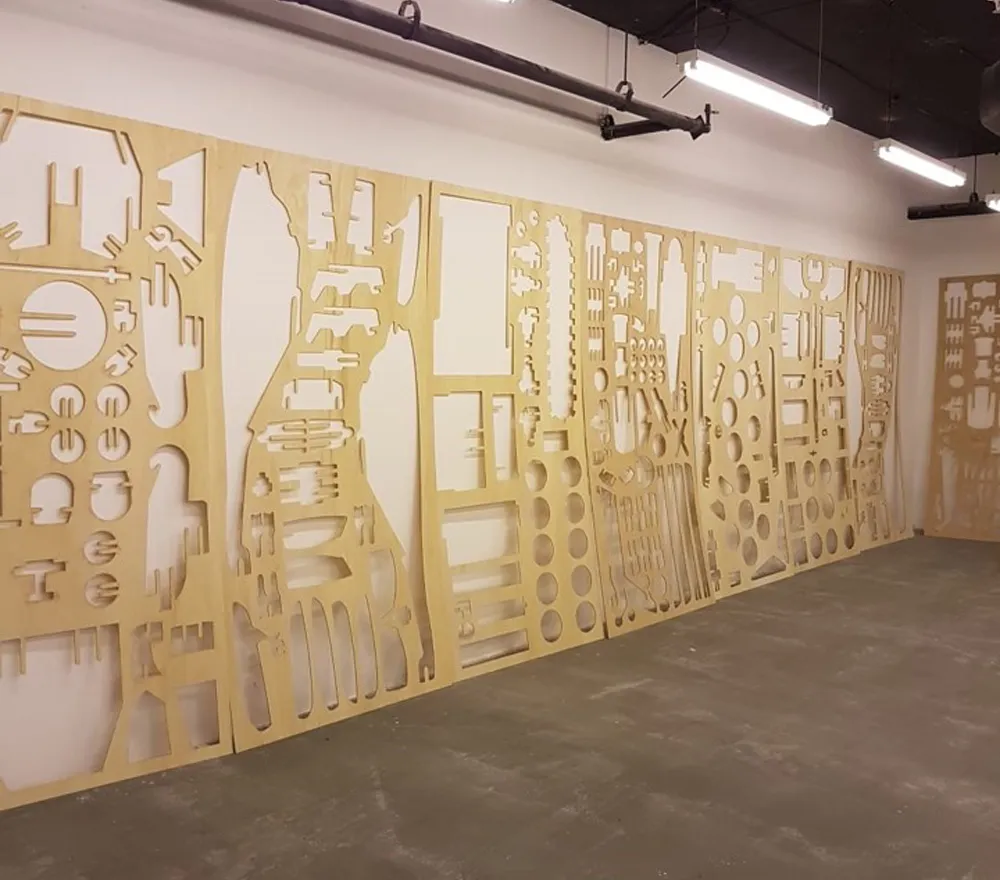
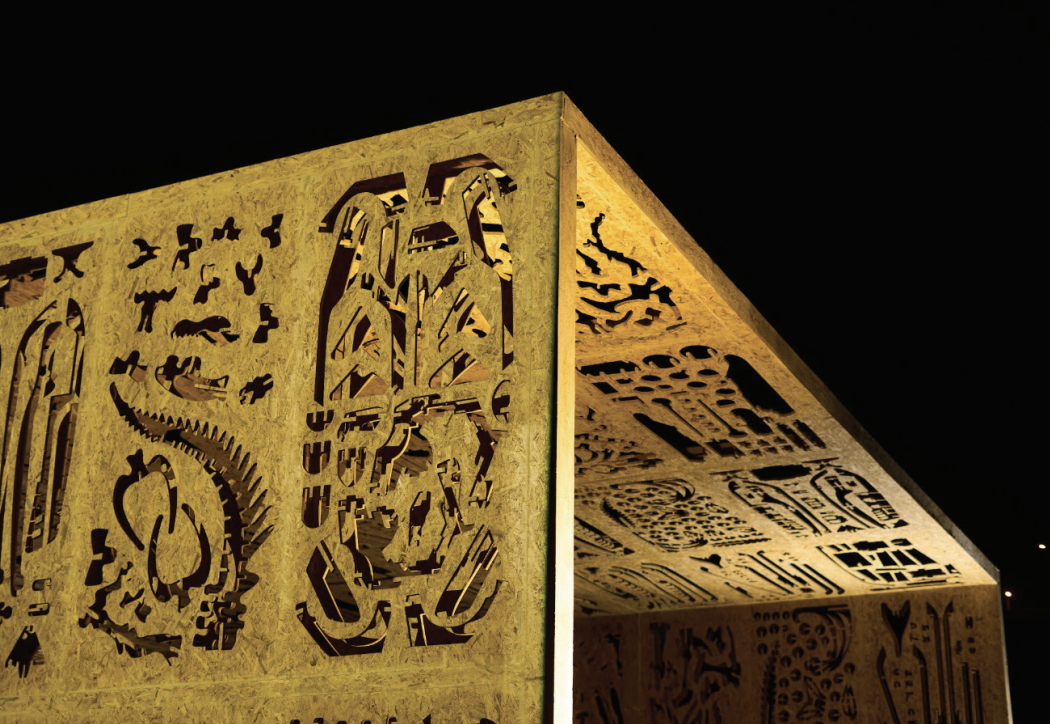
Tree House (2023), installation by Ayman Yossri Daydban at Noor Riyadh, Saudi Arabia.
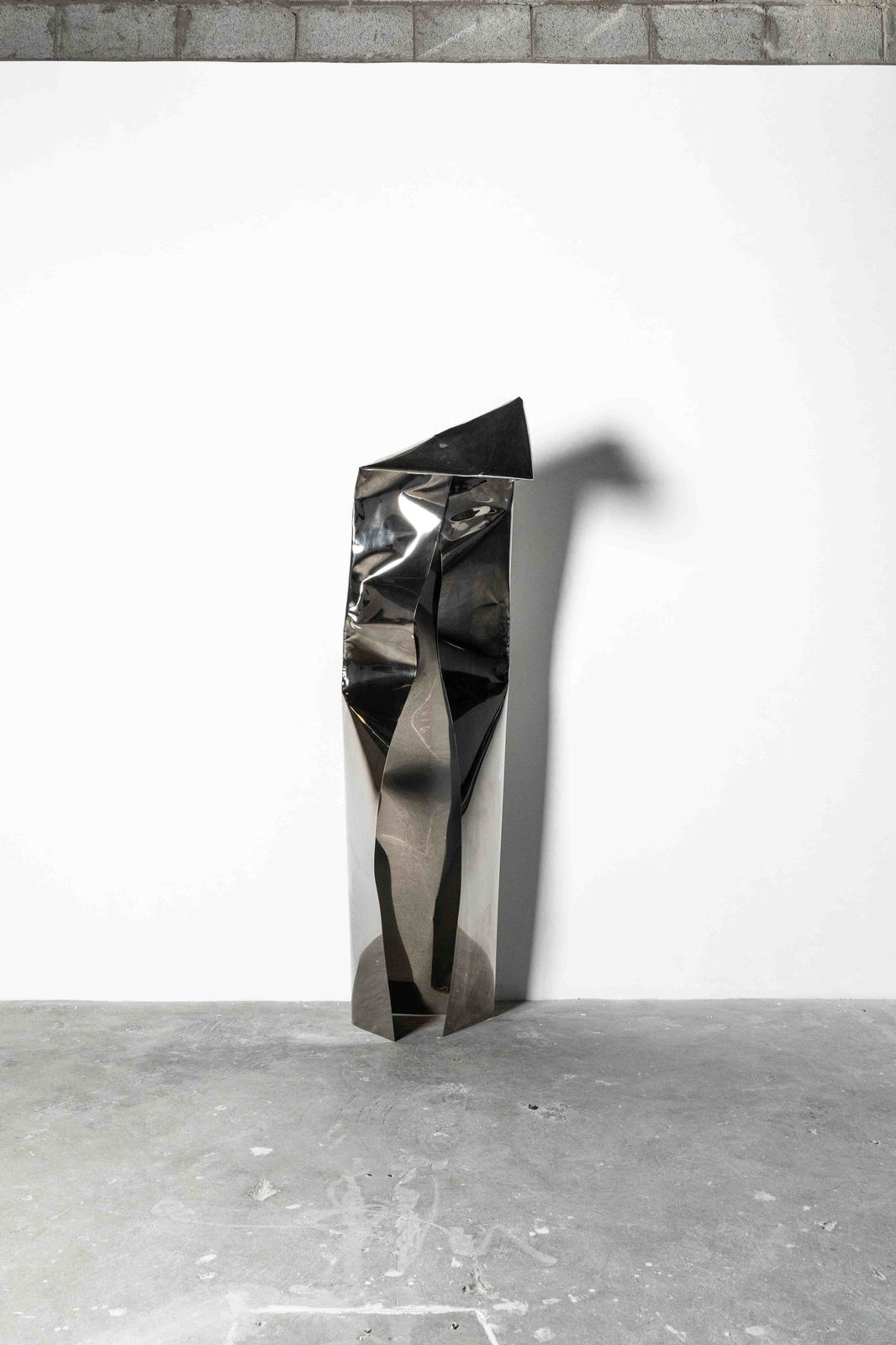
In his Distortion series, Daydban transformed the familiar shapes of national flags into stainless-steel sculptures. Instead of reproducing their recognizable colours and fabric, he presented folded metal surfaces that retained elements of the flags' original forms. The reflective material introduced another dimension to the works. As viewers approached the sculptures, their own distorted reflections appeared on the surface, bringing the individual into direct contact with the national symbol.
By changing the material and appearance of the flags, Daydban examined how identity can be influenced by political, cultural, and geographical circumstances. The series demonstrated his ability to use simple visual changes to raise larger questions about representation, belonging, and the meanings people attach to national imagery.
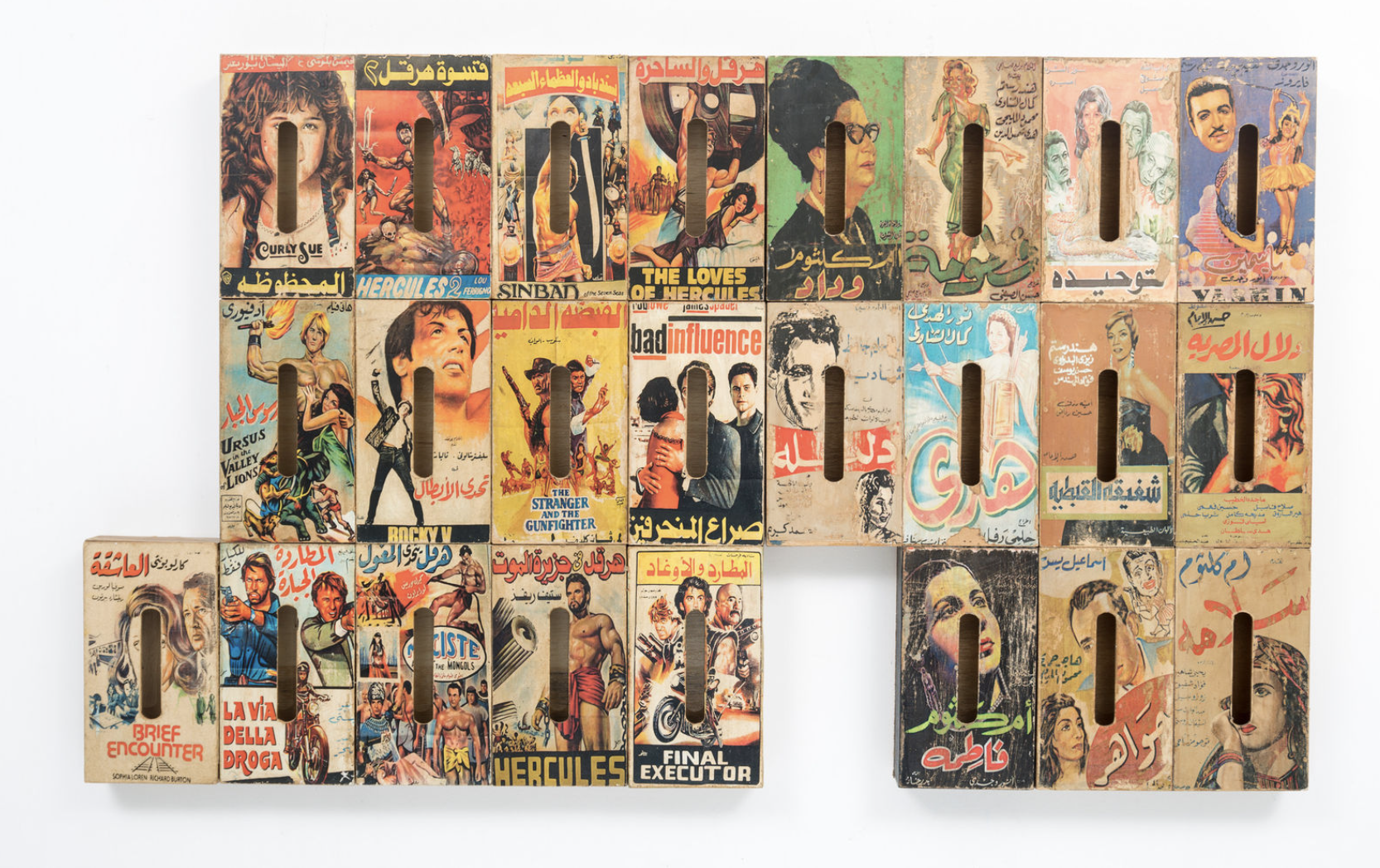
Among Ayman Daydban's earlier works, Maharem brought together everyday objects and the familiar imagery of classic Arabic cinema. The installation used wooden tissue boxes featuring posters from Arabic films, connecting popular culture with personal and collective memory. The Arabic title carries associations with tissues and close family relationships, introducing multiple meanings through a single familiar word.
By placing cinematic imagery on an everyday household object, Daydban explored how ordinary items can hold emotional connections to family, entertainment, and shared cultural experiences. The work was presented through the Edge of Arabia exhibition in London in 2008, reflecting an early example of his interest in using recognizable images and objects to explore deeper cultural meanings.
In June 2026, Daydban made his Art Basel debut through ATHR Gallery, presenting The Nest as part of his ongoing Treehouse series. Developed from a larger project that began in 2019, the installation explored the relationship between personal identity, shelter, and the idea of home. Inspired by the structure and purpose of a bird's nest, the work considered shelter as something that responds to changing circumstances rather than representing permanent stability.
Constructed using semi-transparent acrylic panels, the installation allowed light to pass through its surfaces, creating changing relationships between the artwork, its surroundings, and the viewer. Unlike earlier parts of the Treehouse series that examined collective identity and community, The Nest focused more closely on the individual. It explored how people create spaces of comfort and protection while negotiating the relationship between their public appearance and private experiences. Its presentation at Art Basel also introduced Daydban's evolving exploration of home and belonging to a wider international audience.
Ayman Daydban's work has reached audiences across Saudi Arabia and internationally through solo exhibitions, biennales, and public art projects. His solo exhibitions have included Identity at Selma Feriani Gallery in London (2011), I Am Anything, I Am Everything at ATHR Gallery in Jeddah (2012), Common Grounds at Sabrina Amrani Gallery in Madrid (2013), and Give Me the Light at ATHR Gallery in Jeddah (2016).
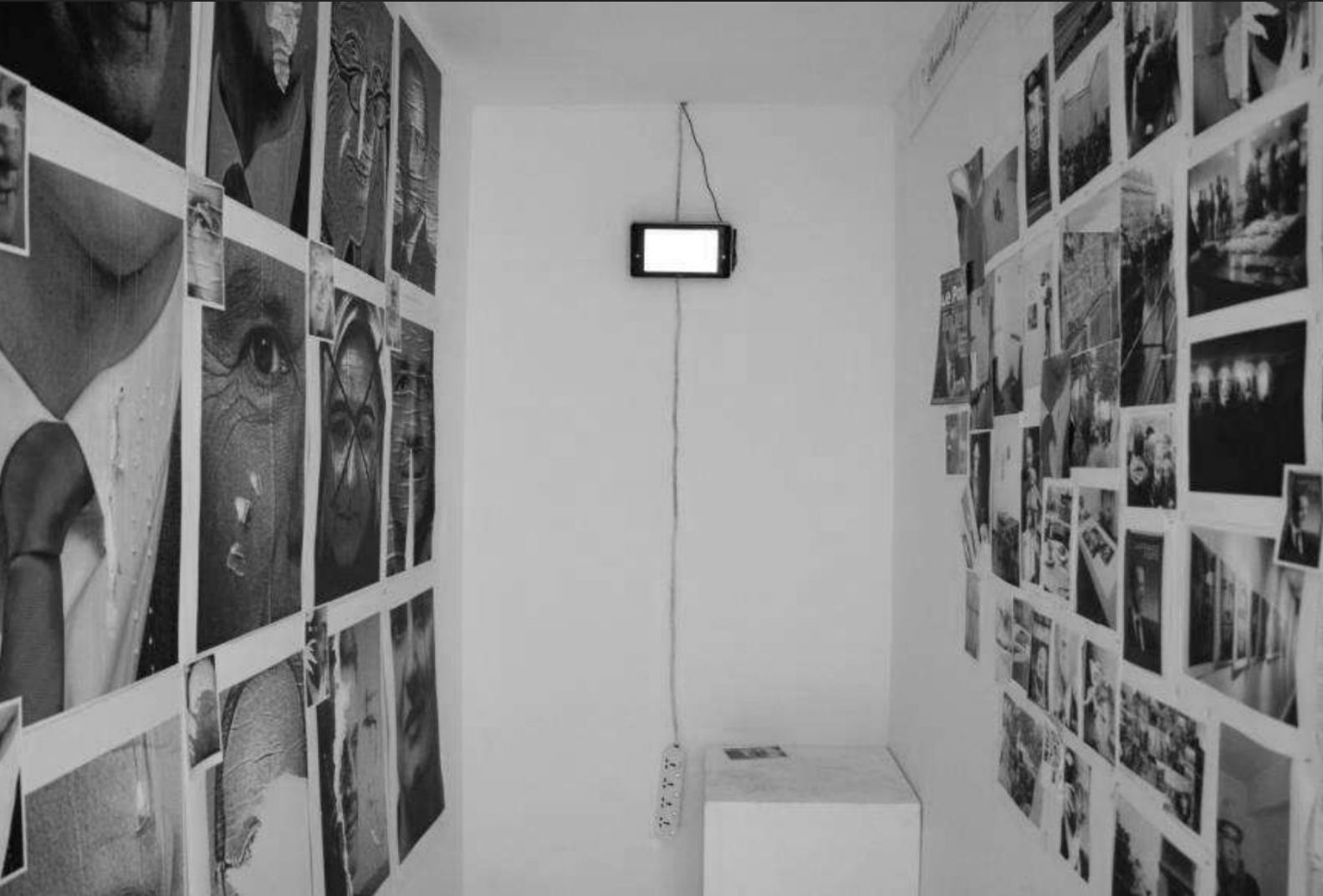
In 2013, he launched Change, his first public art project, displayed on billboards across Dubai and Sharjah during Art Dubai. The project brought his artistic practice into everyday urban spaces, extending its reach beyond the traditional gallery environment. His international presence also developed through exhibitions organized by Edge of Arabia, including Transition in Istanbul (2010), The Future of a Promise at the 54th Venice Biennale (2011), We Need to Talk in Jeddah (2012), and #COMETOGETHER in London (2012).
Other notable exhibitions included Hajj: Journey to the Heart of Islam at the British Museum in 2012, EpicenterX: Contemporary Saudi Art at the Arab American National Museum in Detroit in 2017, and the Cairo Biennale in 2019. Within Saudi Arabia, his work has appeared at the inaugural Diriyah Contemporary Art Biennale in 2021, Noor Riyadh, the Islamic Arts Biennale in Jeddah in 2023, and Desert X AlUla in 2024. These exhibitions have allowed Ayman Daydban to introduce his distinctive artistic perspective to audiences from different cultural backgrounds while continuing to explore the ideas that have shaped his career.
Daydban's recent projects have continued to build on his interest in cultural memory, personal identity, and the changing meanings of familiar objects. In 2025, alongside his solo exhibition Winter, he participated in All Beautiful Things Are Fragile at ATHR Gallery in Riyadh and Echoes of the Familiar at Ithra in Dhahran. His work was also featured at the Saudi Pavilion at Expo 2025 Osaka and in the international travelling exhibition Art of the Kingdom. His international activities continued in 2026, including his participation in In Interludes and Transitions, the third Diriyah Contemporary Art Biennale.
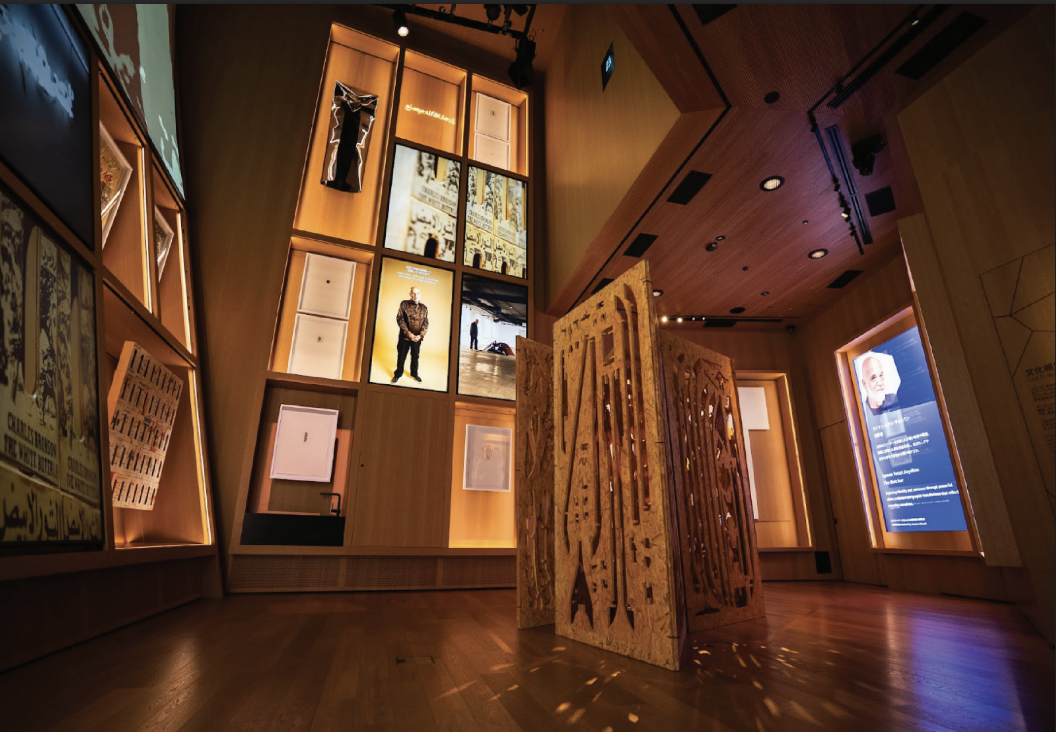
There, he presented works from his Poster Series (2015–2018), revisiting historical Arabic cinema posters through cutting, marking, and other visual interventions. By transforming images once associated with popular entertainment, Daydban examined how social attitudes and cultural meanings change over time. He also participated in I Am Not What I Am, I Become at ATHR Gallery in Jeddah and What's Between, Between? at the Media Majlis Museum at Northwestern University in Qatar. His work has entered major permanent collections, including the Guggenheim, Centre Pompidou, British Museum, Al-Mansouria Foundation, BASMOCA, Salsali Private Museum, and Greenbox Museum in Amsterdam.
Beyond his exhibitions, Ayman Daydban has participated in international artist residencies, including a 2015 residency in New York through Edge of Arabia and Art Jameel. He was also involved in MAAN, an artist-to-artist relief fund established in response to the COVID-19 pandemic.
Throughout his career, Ayman Yossri Daydban has continued to explore how familiar materials, cultural symbols, and personal memories can reveal new ways of understanding identity. Whether working with pilgrimage textiles, cinematic imagery, national flags, or architectural installations, he encourages viewers to reconsider the stories behind what they see.
His work represents an important contribution to contemporary art from Saudi Arabia, bringing personal experiences and cultural heritage into conversations with audiences around the world. Through his evolving practice, Daydban demonstrates how art can connect different perspectives while creating space for new interpretations of home, memory, and belonging.
Discover more artist stories at KSAArt.