Ahmed Mater: The Art of Exploration & Transformation
Discover Ahmed Mater, the pioneering Saudi artist whose work explores faith, memory, and the transformation of the Kingdom.
Discover Ahmed Mater, the pioneering Saudi artist whose work explores faith, memory, and the transformation of the Kingdom.
“Art is the power of imagination and the imagination is the power of change.”
Ahmed Mater’s work does not simply mirror Saudi Arabia’s transformation. It studies it from within. Across photography, installation, film, text, and land art, he has built one of the most compelling visual records of a society moving between memory and modernity, faith and power, local inheritance and global ambition. Born in Tabuk in 1979 and raised in the Asir region, Mater belongs to the generation that witnessed seismic social change not as theory, but as atmosphere. In his hands, art becomes both witness and diagnosis.
Although born in Tabuk, Mater’s artistic consciousness was formed in Abha, in the southern province of Asir. He grew up amid dramatic shifts in Saudi social and ideological life. The tension between tradition and change, community and development, religion and power would later become central to his work. But before it became subject matter, it was simply the landscape of his youth.
His earliest visual education began at home. Mater has spoken of the influence of his mother’s traditional al Qatt al Asiri wall paintings, a regional art form shaped by geometry, rhythm, and domestic memory. Later, as a medical student in Abha, he encountered Al Muftaha Arts Village, the cultural space that helped ignite some of Saudi Arabia’s earliest contemporary art movements. It was there that he began participating in a new creative language for the Kingdom, one that would eventually connect local experimentation to international audiences.
Ahmed Mater’s medical training is not an incidental detail in his biography. It is fundamental to how his work thinks. His practice often feels diagnostic, attentive to detail, structure, rupture, and unseen systems. He does not merely depict transformation. He examines its symptoms.
This is what gives his work its particular force. He is drawn to fault lines, whether spiritual, social, urban, or psychological. He studies how history accumulates in places, how ideology reshapes landscapes, and how the body itself can become a metaphor for political and cultural realities. That clinical discipline, fused with a deeply poetic instinct, gives Mater a singular voice in contemporary Saudi art.
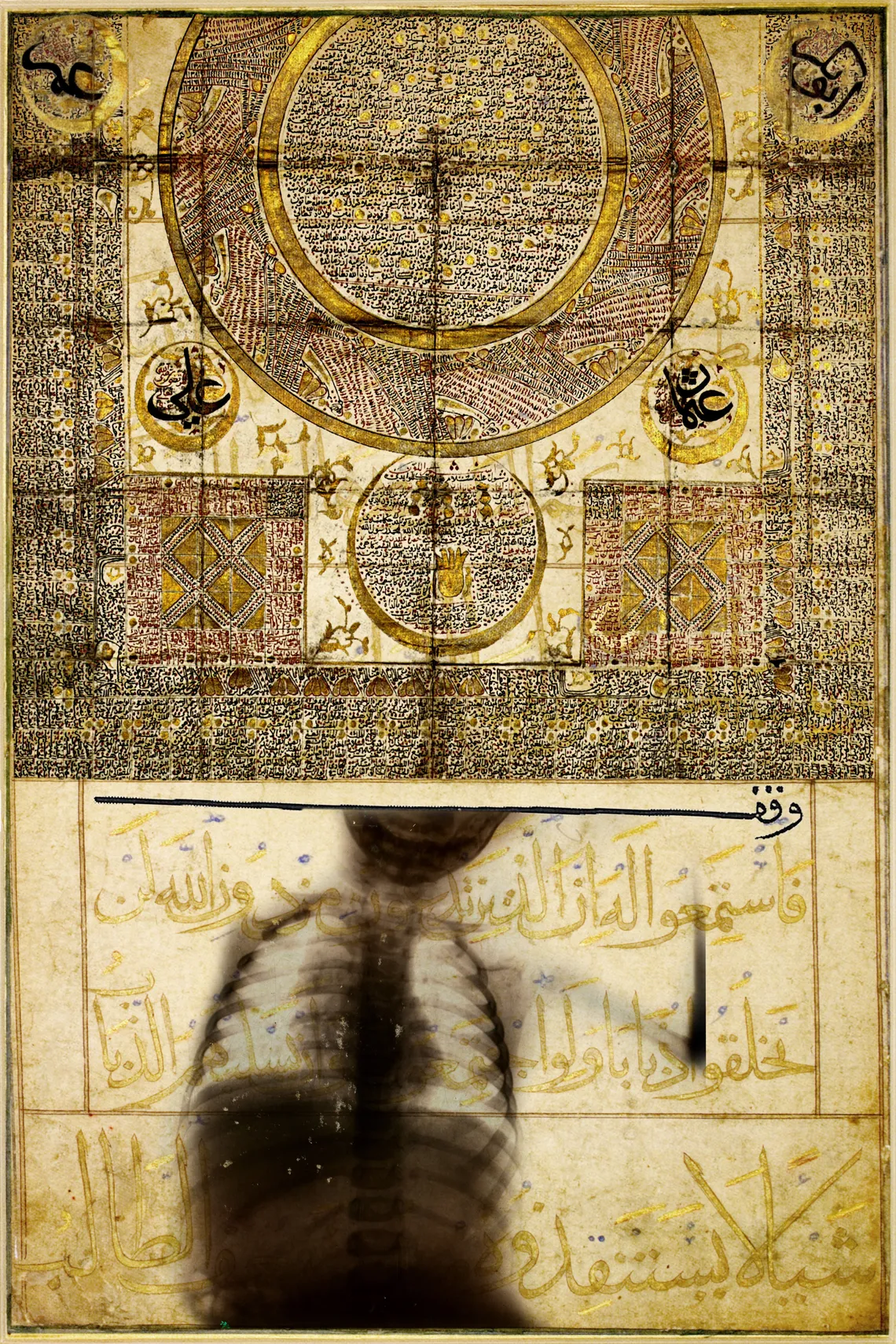
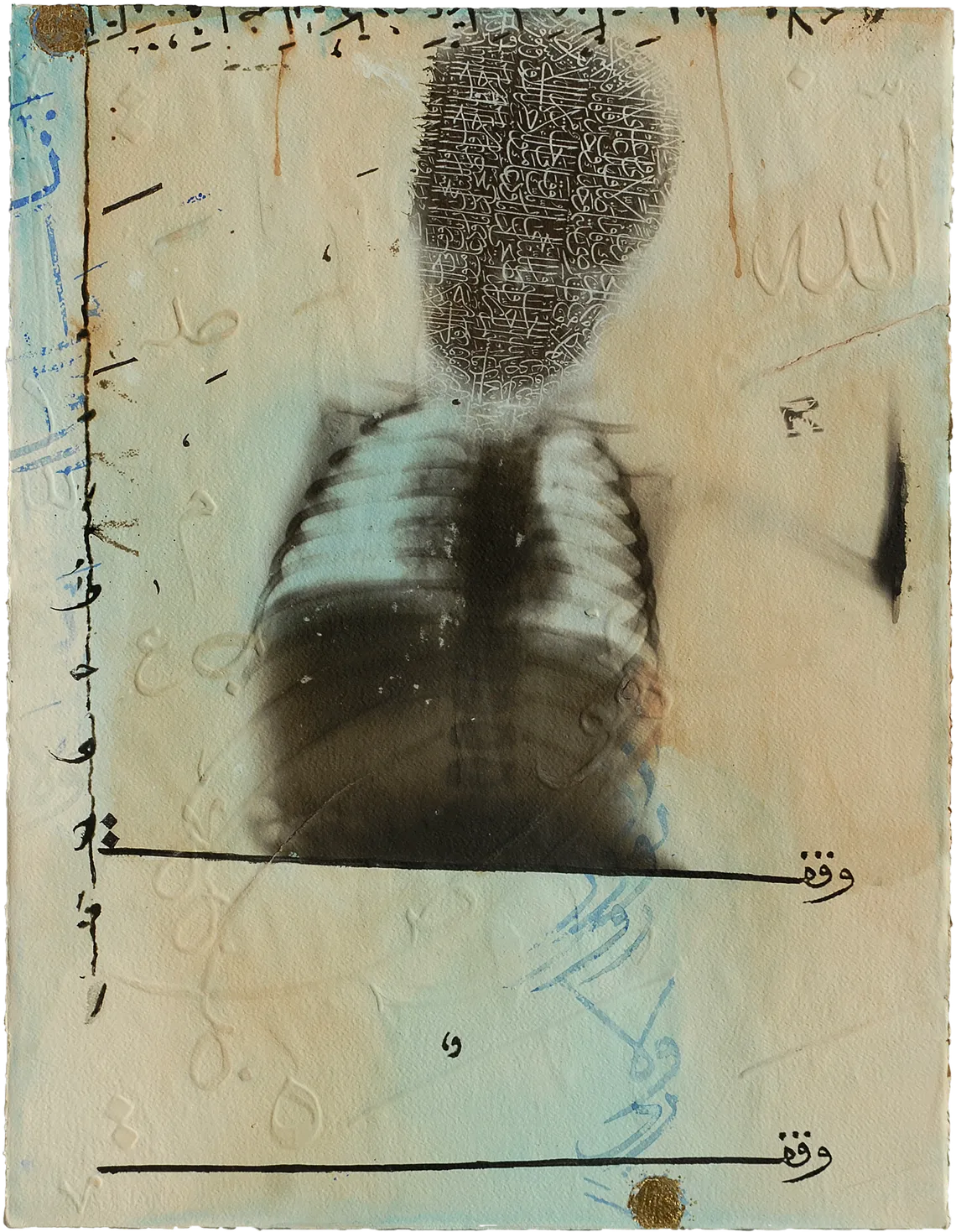
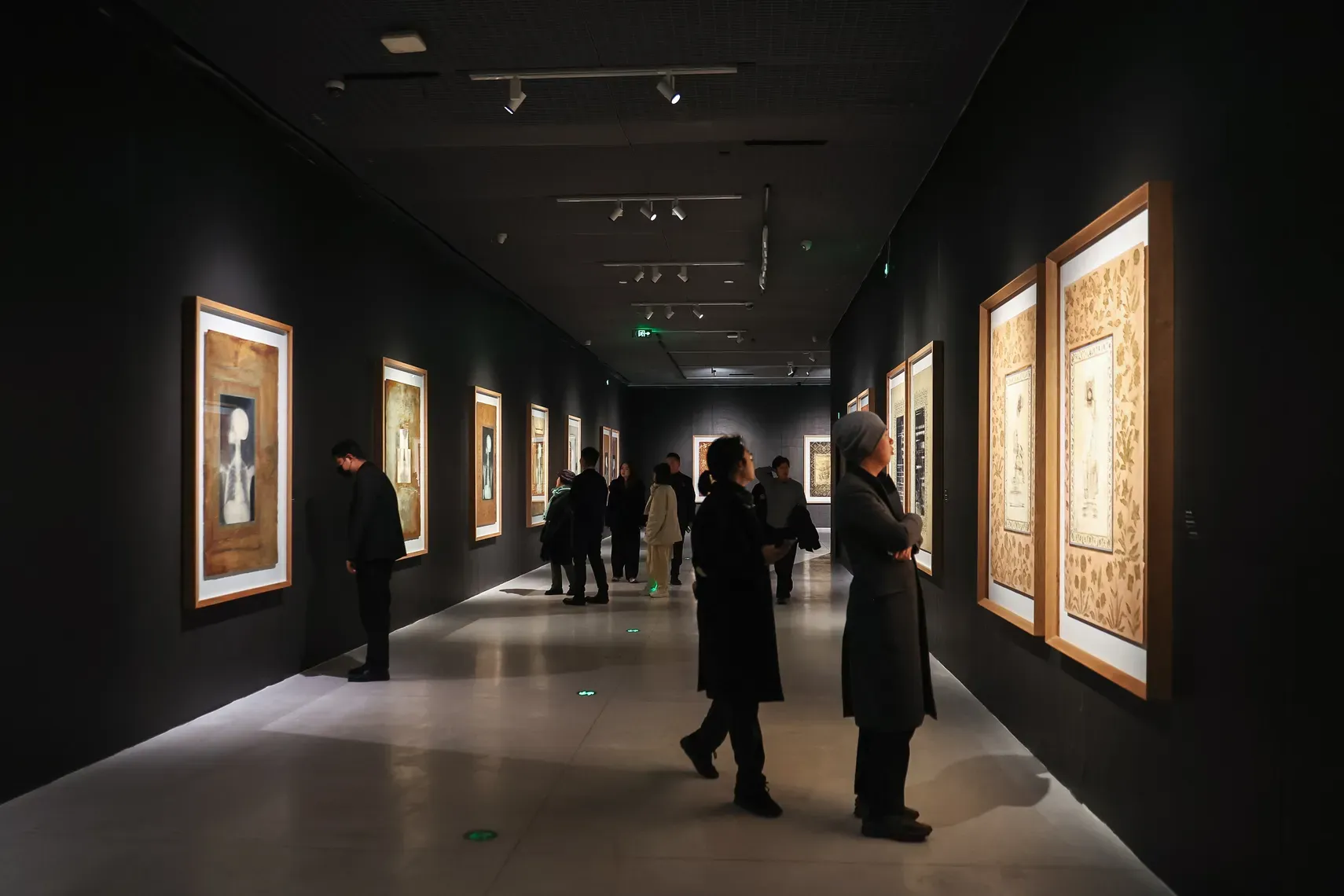
One of Mater’s defining early bodies of work, Illuminations, announced the terms of his visual language with unusual clarity. Using X ray imagery alongside Islamic forms and calligraphic references, he brought science and spirituality into direct conversation. Bones, organs, and inner structures became sites of reflection rather than medical fact. The body was no longer merely anatomical. It became symbolic, sacred, and open to interpretation.
What makes Illuminations so important is not only its imagery, but its worldview. In these works, Mater suggests that faith and reason need not stand apart. The visible and invisible, the material and the metaphysical, coexist. This early synthesis would become one of the great strengths of his career, allowing him to move across religion, medicine, urban change, and cultural memory without losing coherence.
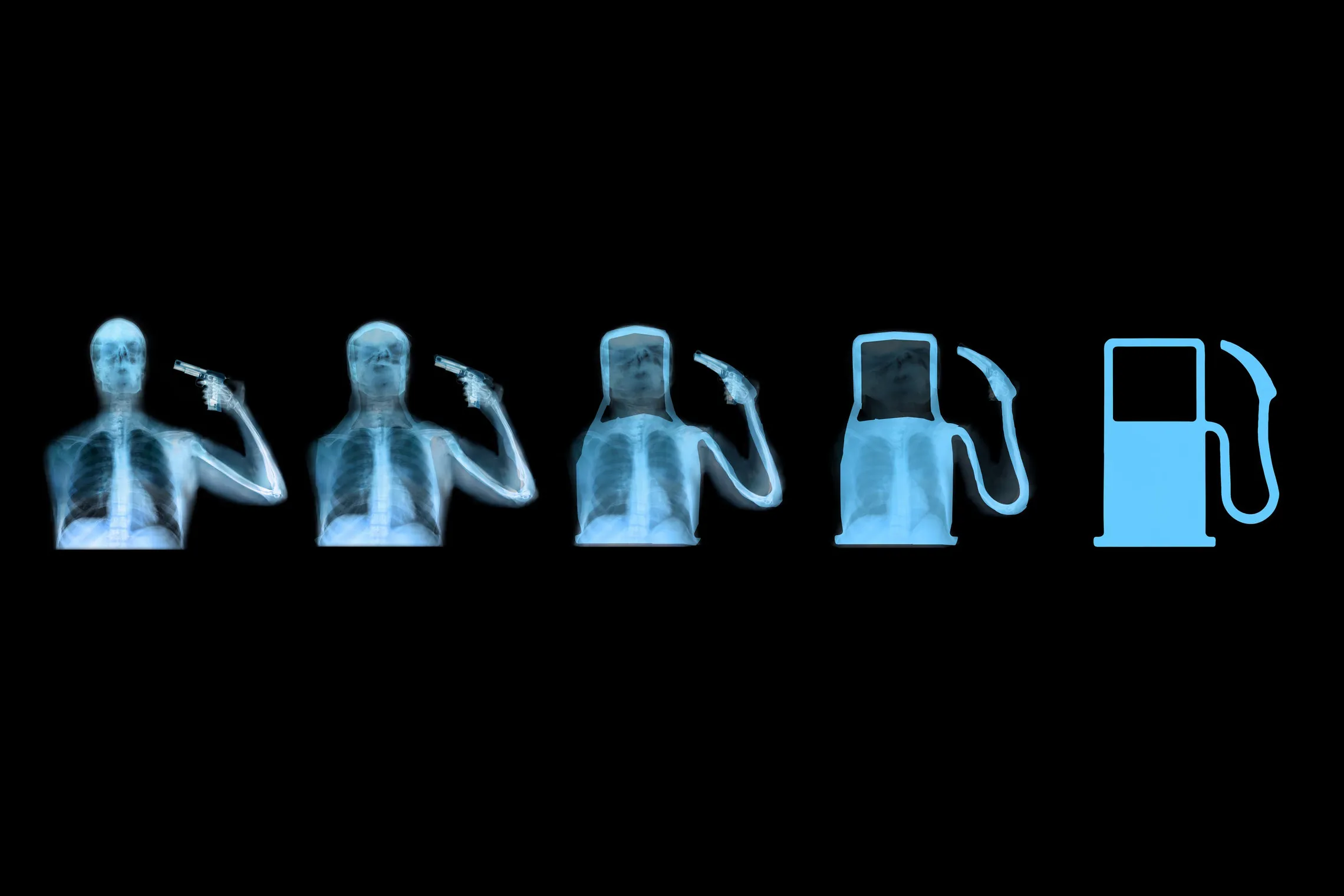
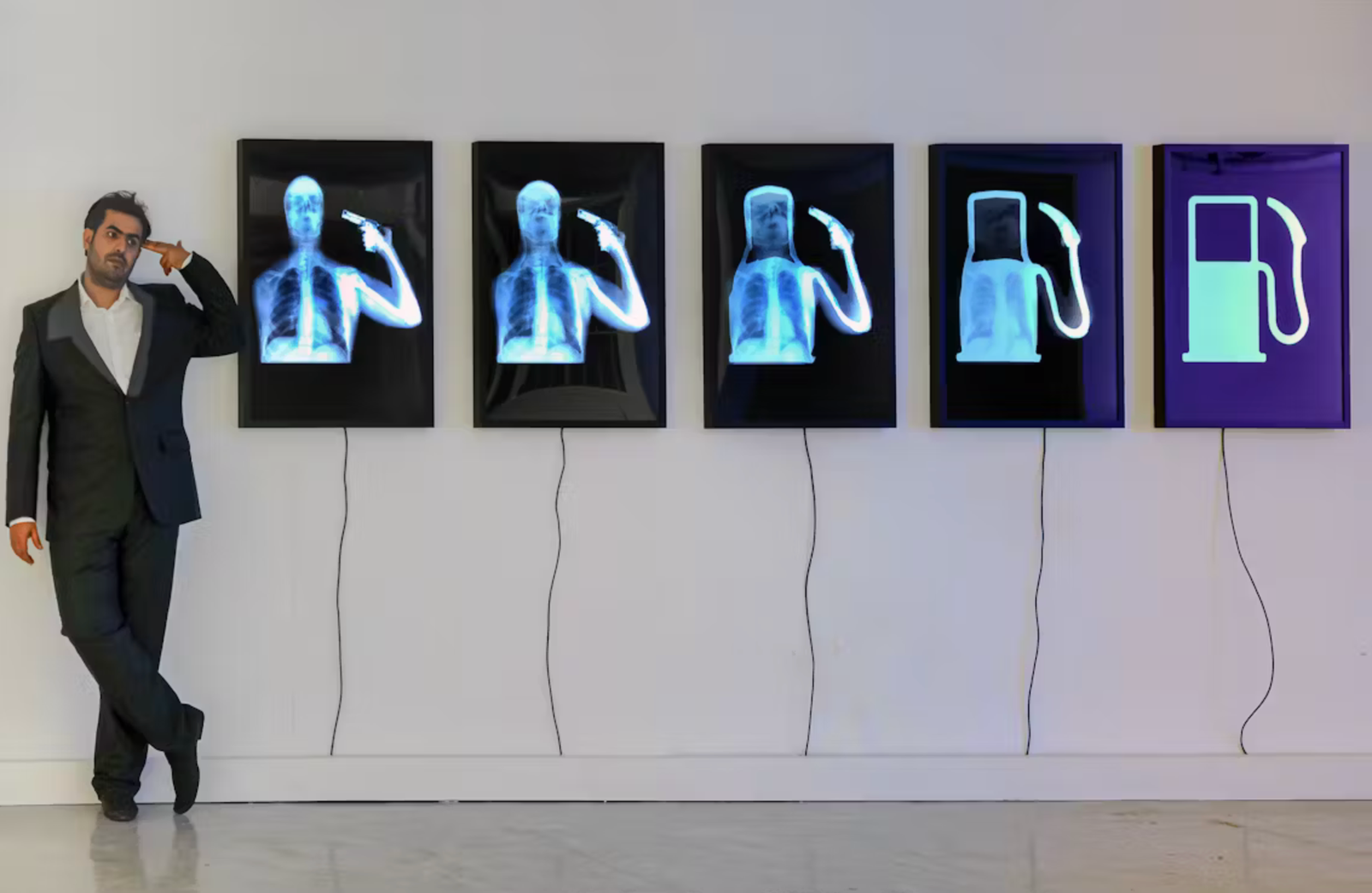
If Illuminations introduced Mater’s fusion of medicine and meaning, Evolution of Man sharpened that language into political critique. The work, showing a human X ray image morphing into a petrol pump, is among his most iconic statements. It is direct, unsettling, and unforgettable. In a single visual gesture, Mater connects the body to oil, industry to mortality, and modern progress to existential cost.
The work reveals Ahmed Mater’s gift for compression. He takes a vast and complex subject, the human price of petro modernity, and distills it into an image that feels at once clinical and tragic. It is not only a criticism of dependence or violence. It is a meditation on what forms of modern life ask the body to carry.
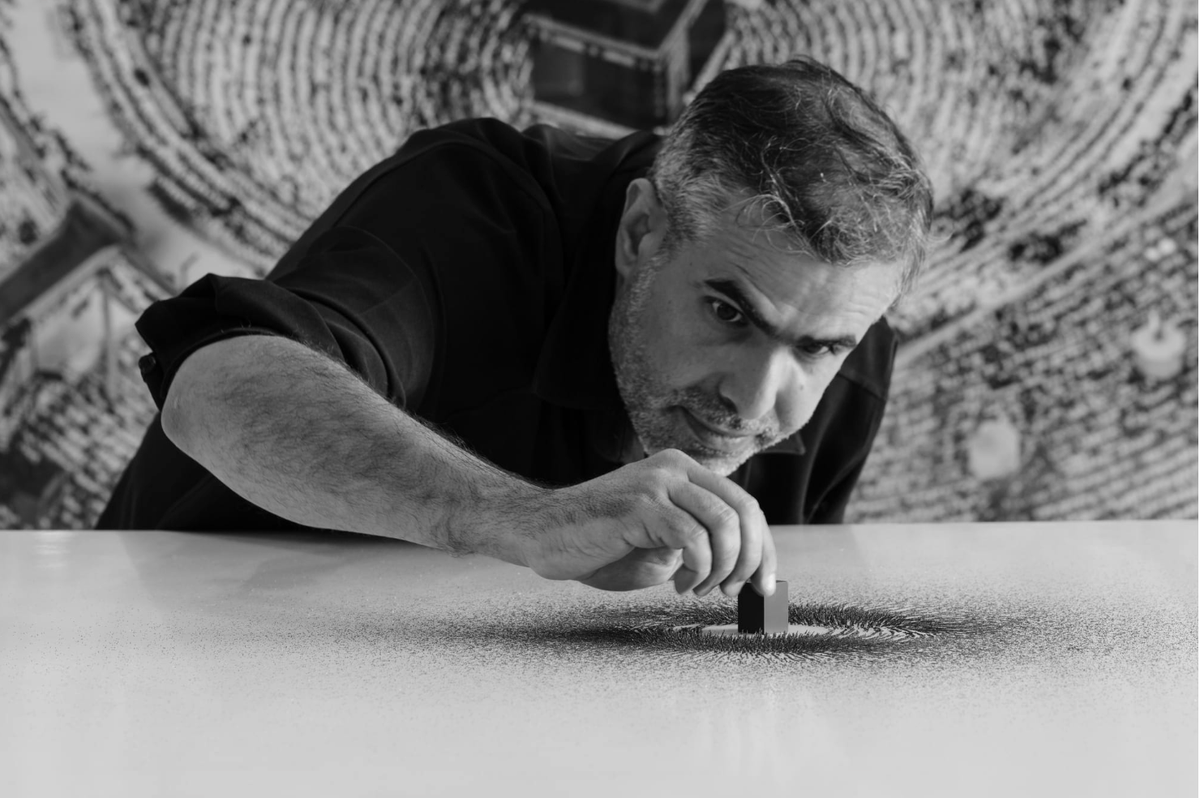
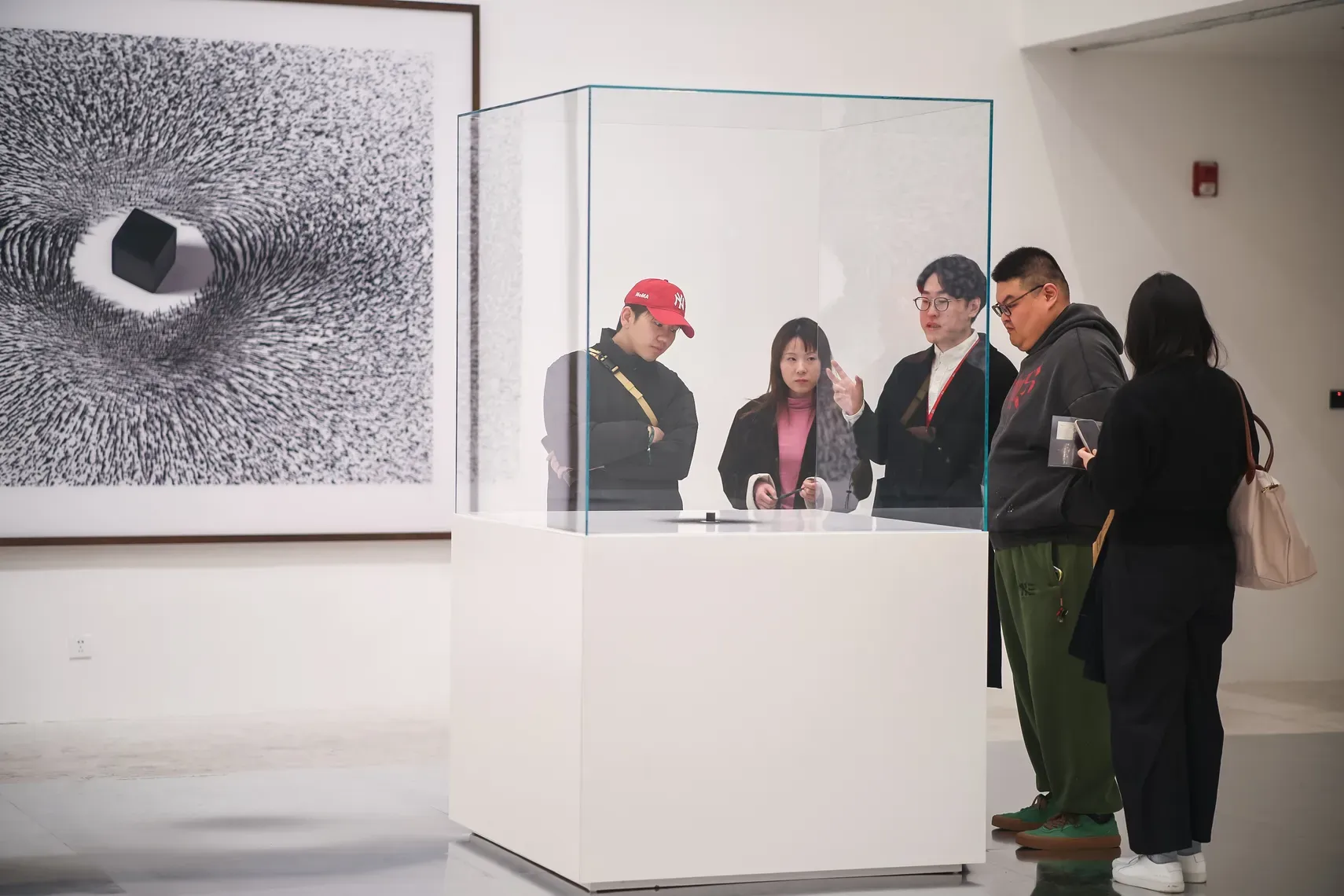
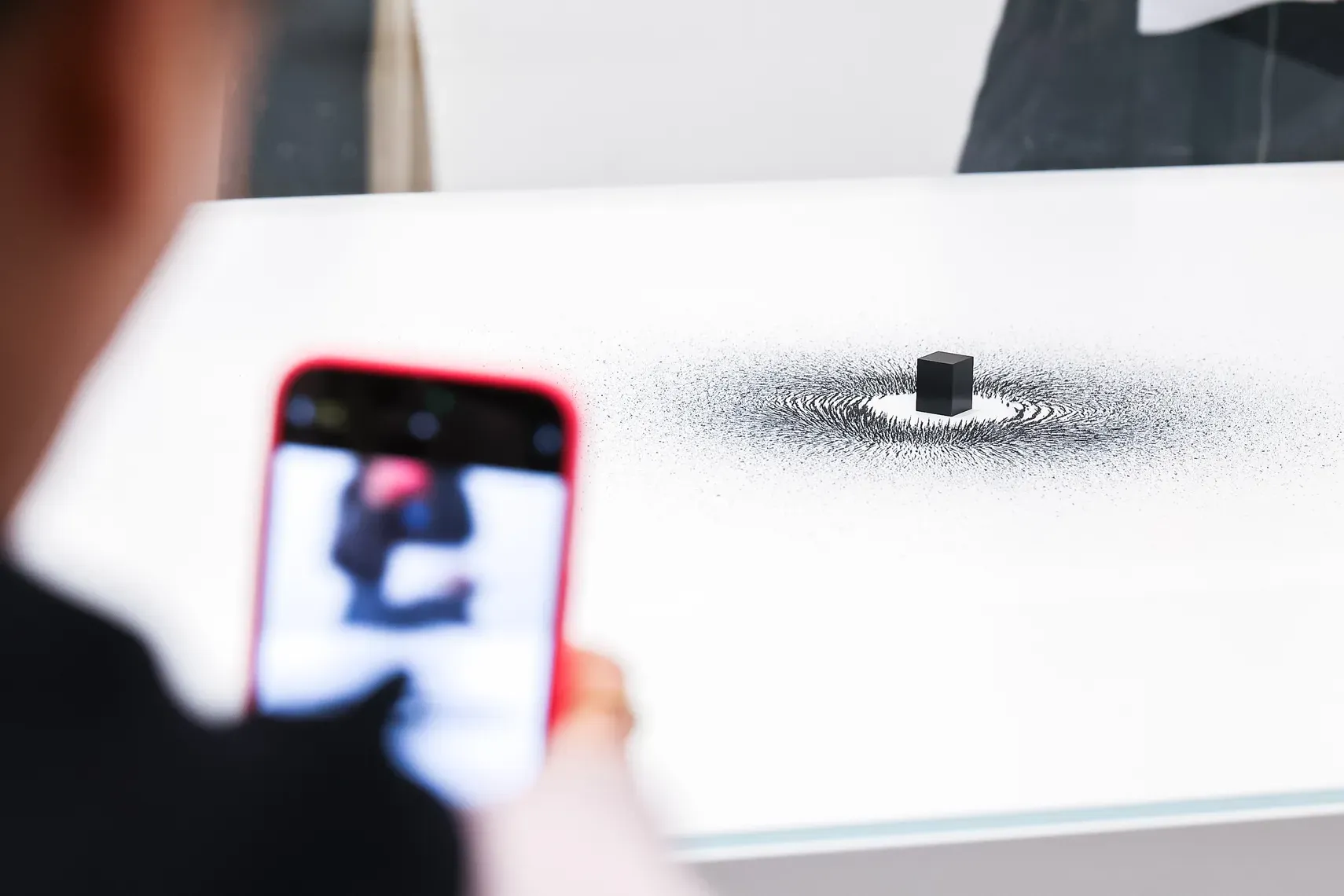
Among Mater’s most celebrated works, Magnetism remains one of the clearest examples of his conceptual elegance. A black cube placed at the center of a field of iron filings immediately recalls the Kaaba and the movement of pilgrims around it. Yet the work avoids literal illustration. Instead, it evokes attraction, orbit, devotion, and spiritual force through pure visual economy.
This is where Mater’s art becomes especially powerful. He does not explain faith. He creates conditions in which it can be felt. Magnetism translates the invisible into form. It captures not only religious ritual, but the emotional and metaphysical pull at the heart of sacred space. In doing so, it opens a broader question that returns throughout his work: what are the centers around which people, cities, and histories are drawn?
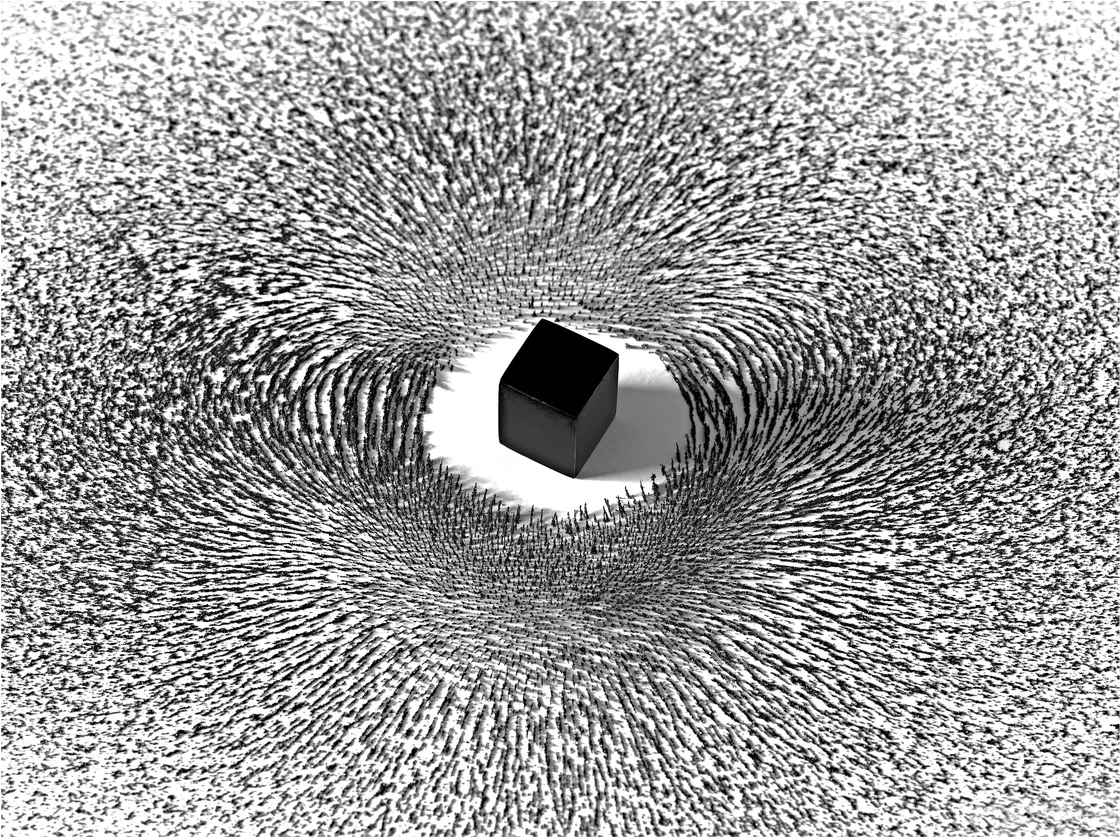
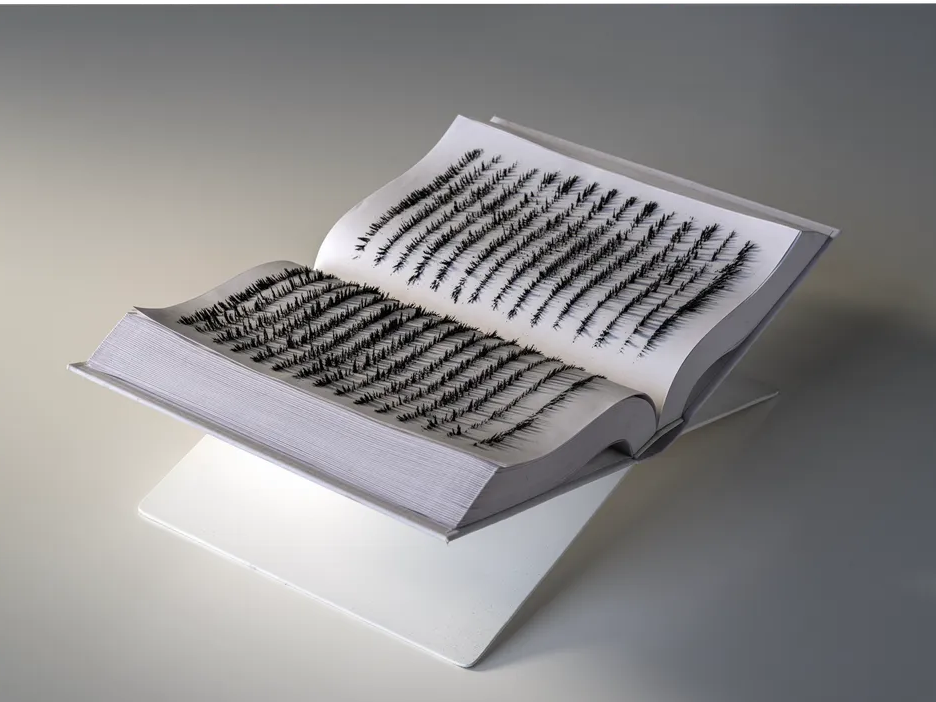
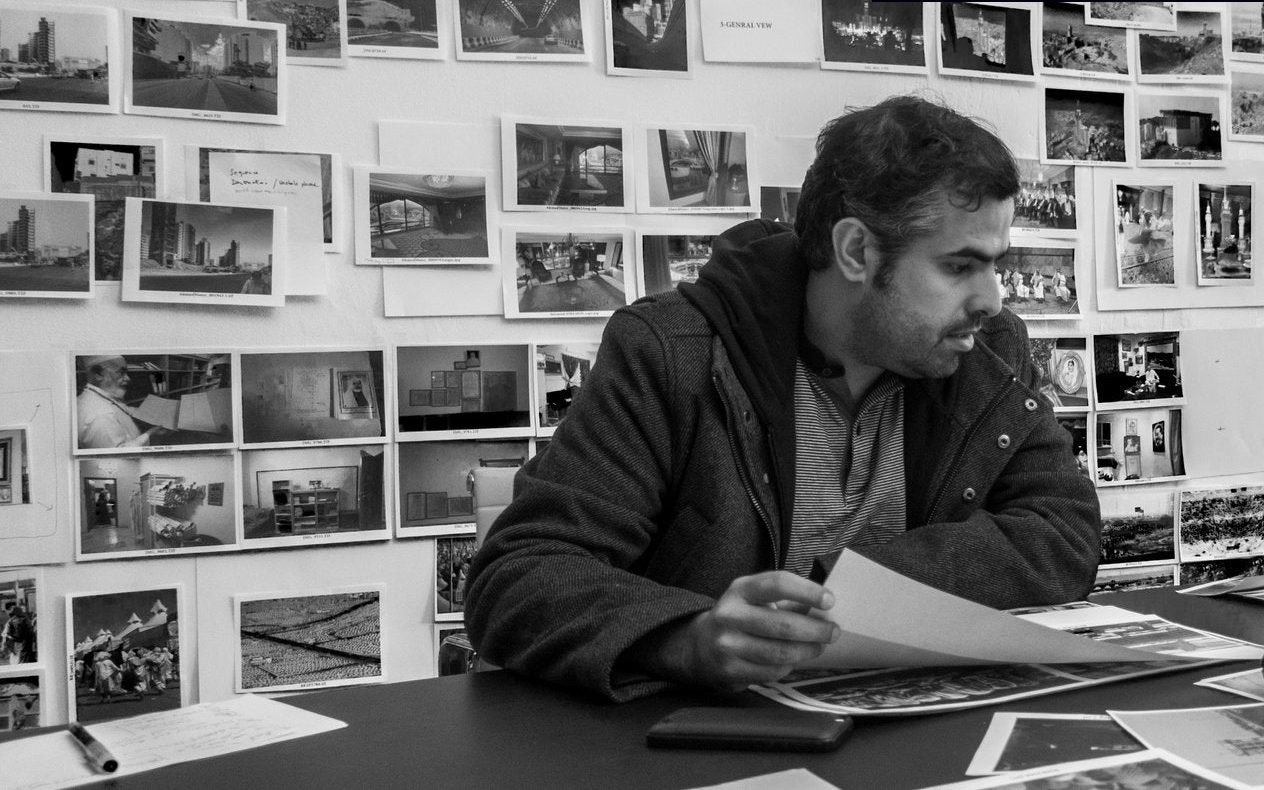
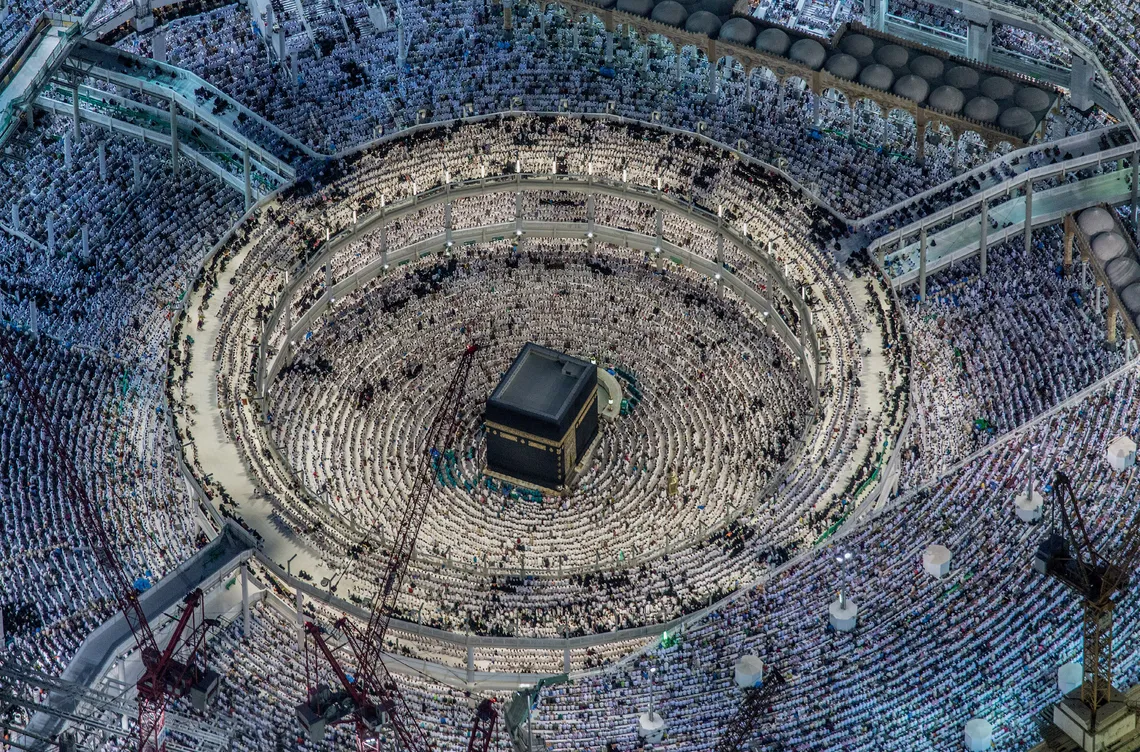
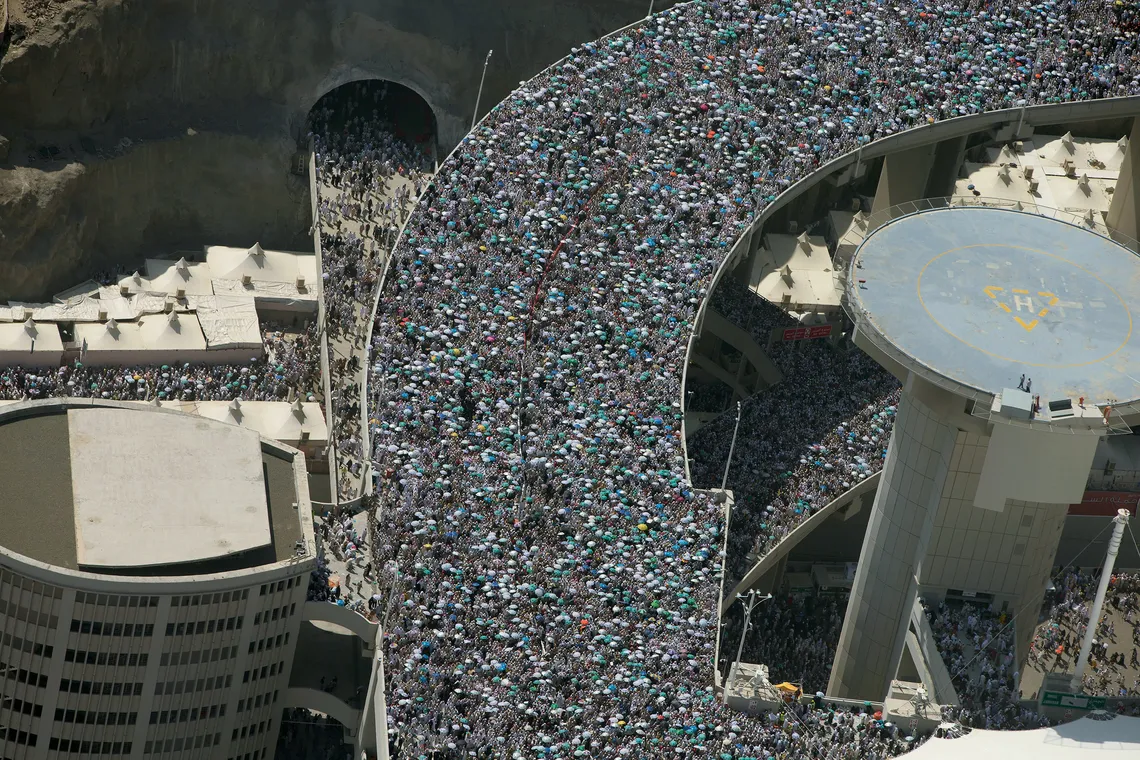
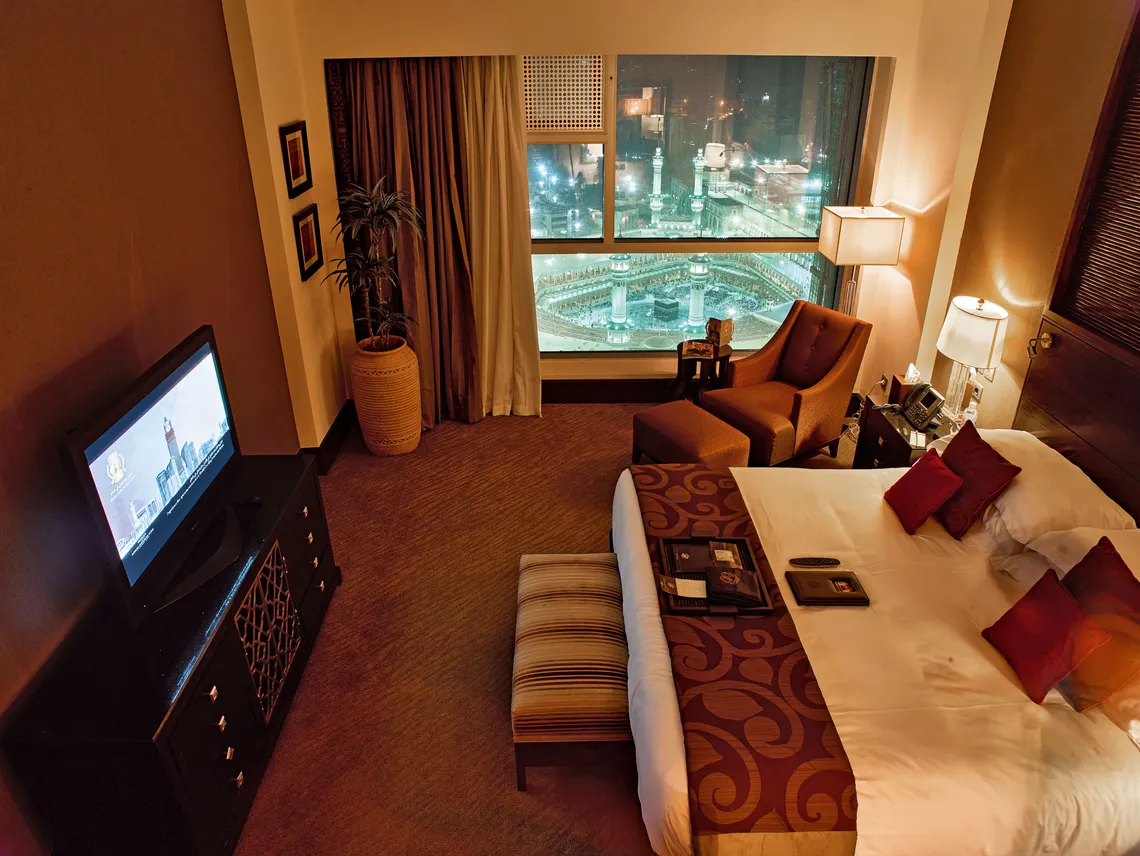
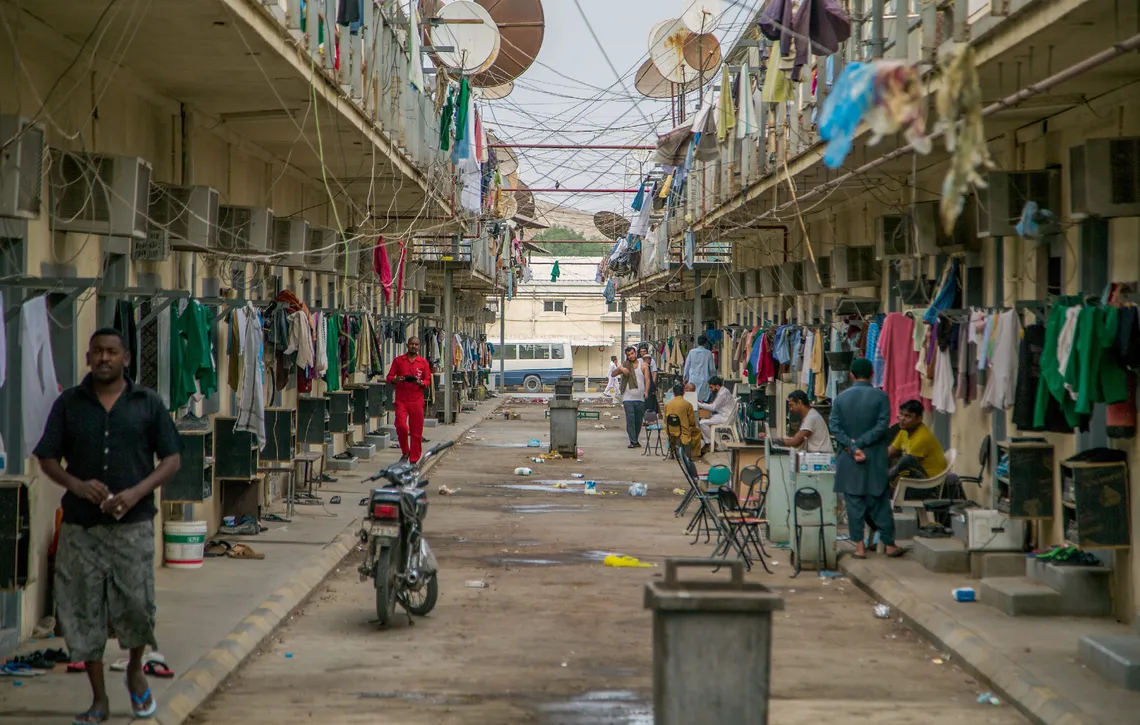
If Magnetism expresses the sacred force of Makkah, Desert of Pharan confronts the city’s transformation on the ground. This long term photographic project documents the remaking of Makkah through demolition, construction, spectacle, and expansion. The images are not simply architectural. They are emotional records of a place under immense pressure, where spiritual centrality collides with real estate, infrastructure, and historical erasure.
What distinguishes Desert of Pharan is its complexity. Ahmed Mater is neither outsider nor propagandist. He is an insider witness, recording a sacred geography in flux. Workers, cranes, luxury towers, mountain cuts, and vanishing neighborhoods all enter the frame. The result is one of the most important visual archives of modern Makkah, and one of the clearest examples of Mater’s role as an artist of cultural memory.
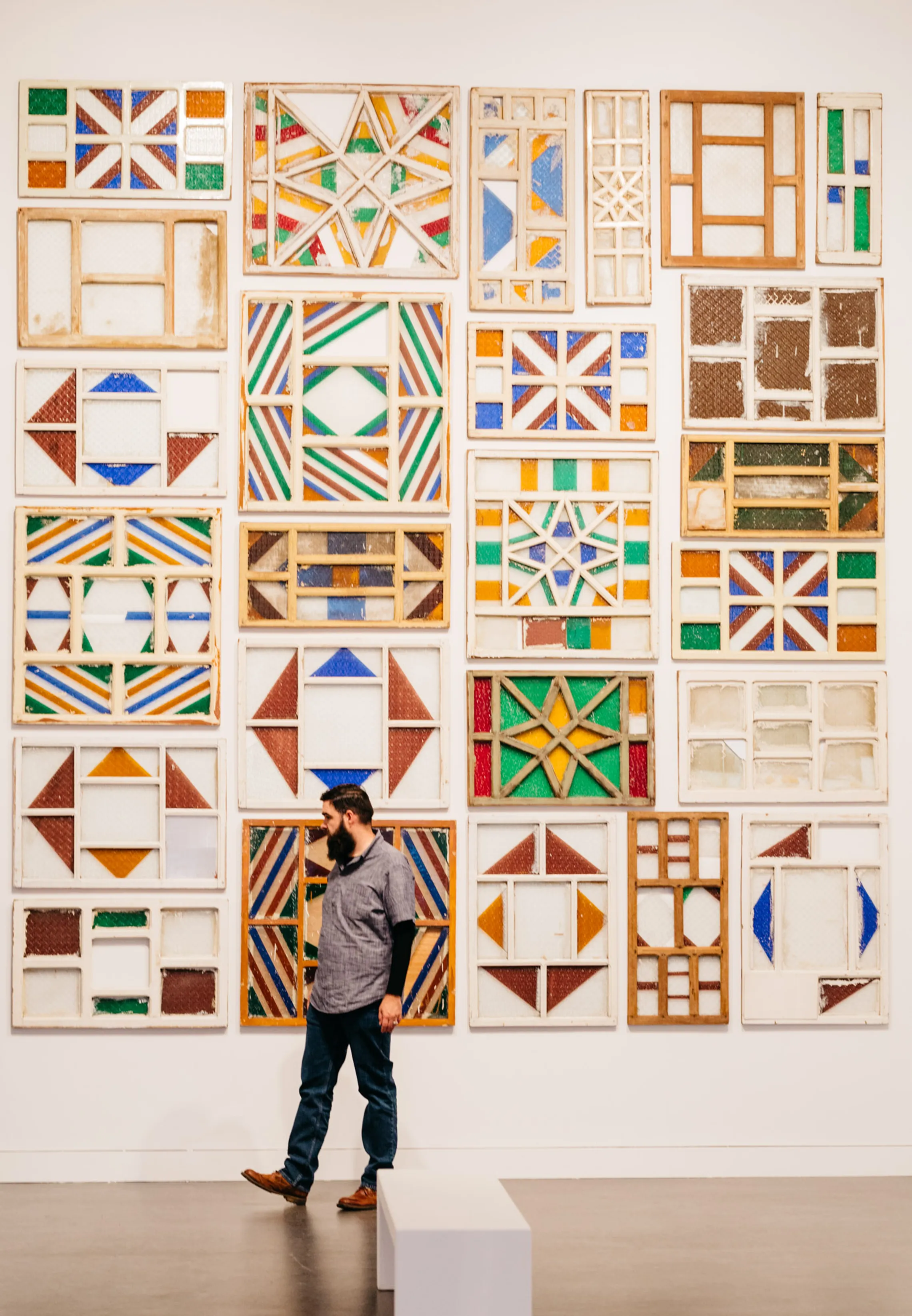
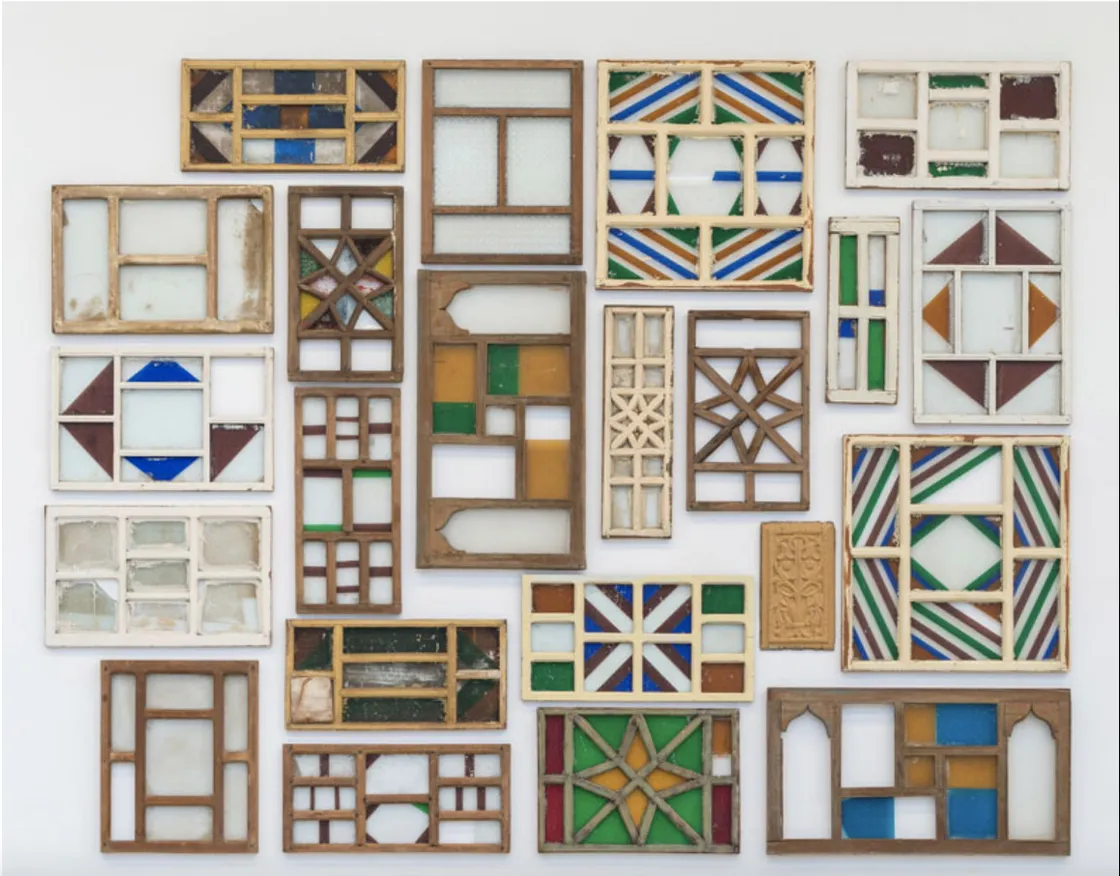
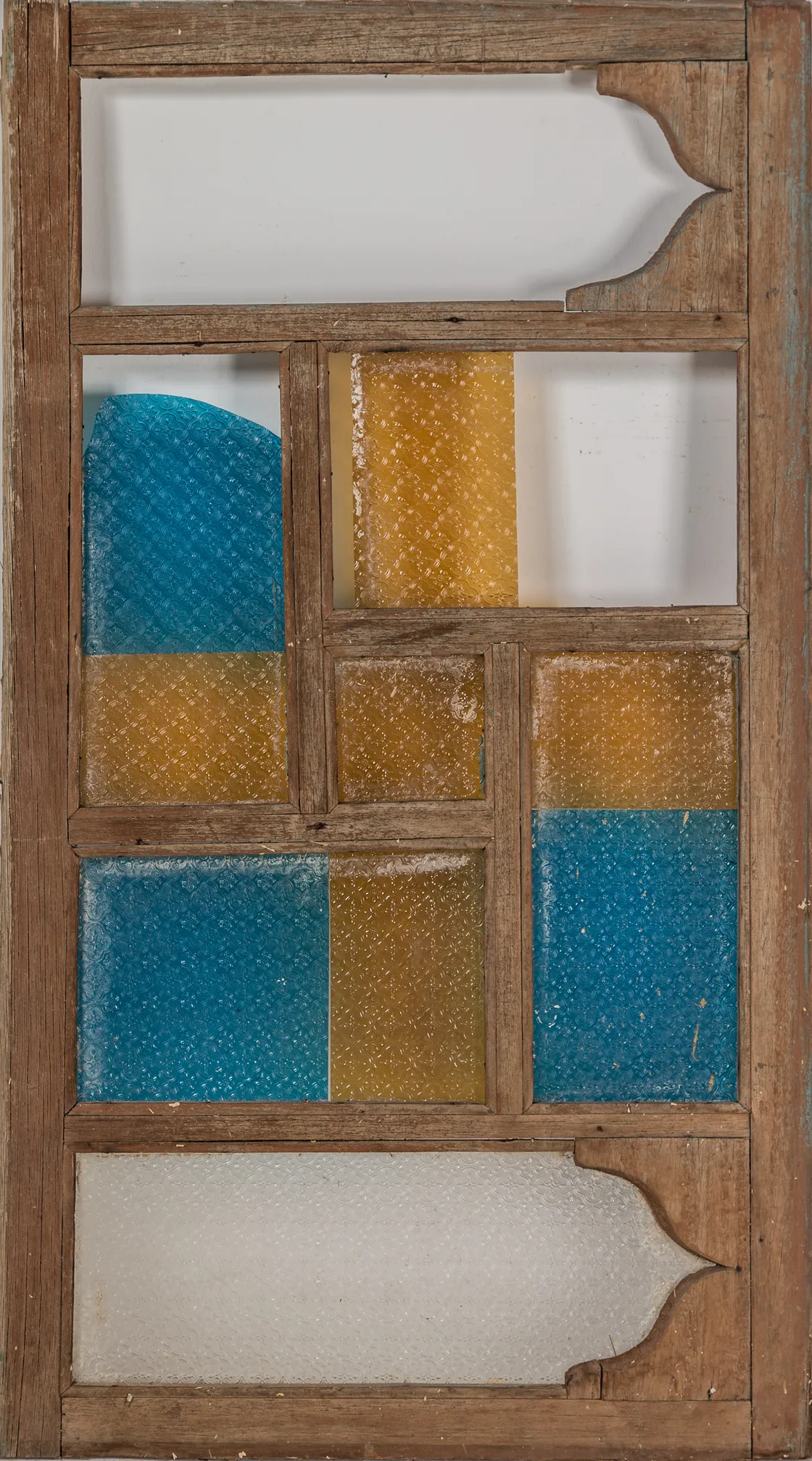
Collected from demolished buildings in Mecca, these colorful panes of glass carry the memory of a city disappearing in plain sight. Harvested from structures erased by redevelopment, they preserve fragments of an older urban fabric and a more intimate way of life. In Mater’s hands, they become more than found objects. They become witnesses. Each pane holds the trace of homes, neighborhoods, and everyday histories that once stood behind the monumental image of the holy city.
What makes Mecca Windows so moving is its quietness. Rather than showing demolition directly, the work gathers what remains after the fact. These panes offer a literal window onto the past, but also a meditation on loss, preservation, and the fragile afterlife of place. In the context of Mater’s wider Mecca works, they remind us that transformation is not only measured in towers and expansion, but in the vanishing textures of ordinary life.
Mater’s return to Makkah during the Covid period added an unexpected chapter to this body of work. In a moment when the city was unusually empty, he encountered it in a rare state of stillness. That return sharpened his long standing interest in absence, monumentality, and atmosphere. In The Empty Land, emptiness becomes more than visual condition. It becomes a way of thinking about vulnerability, interruption, and the fragility of human movement around sacred sites.
This matters because Mater’s work has always been interested in what large systems do to intimate experience. Here, for once, the machinery of scale falls quiet. What remains is a suspended image of sacred geography stripped of its usual density, asking viewers to reconsider what presence means.
Ahmed Mater’s importance extends beyond his own artworks. He has also helped shape the institutional and collaborative life of Saudi contemporary art. His involvement with Al Muftaha, Shatta, Edge of Arabia, and later Pharan Studio positioned him not just as an artist, but as a builder of platforms. He belongs to the generation that did not wait for a complete art infrastructure to appear. It helped create one.
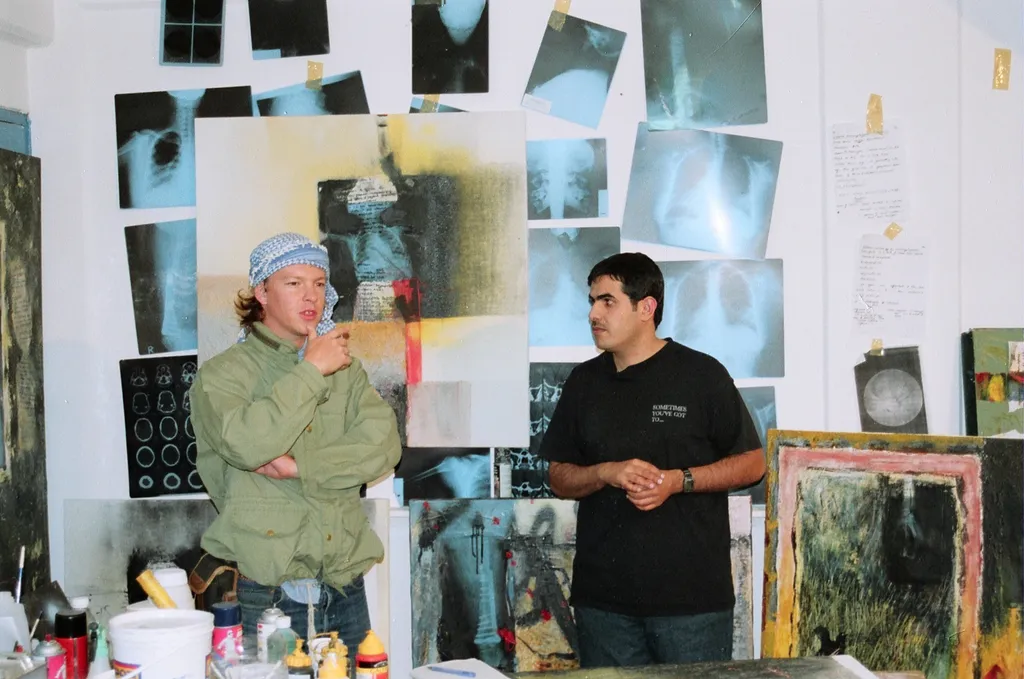
From 2017 to 2018, during its inaugural year, Ahmed Mater also served as the Founder Director of MiSK Art Institute in Riyadh. That role matters because it reflects the broader nature of his contribution. He has not only produced major artworks. He has also helped shape the systems through which art circulates, develops, and gains public life in Saudi Arabia. His later studio in Diriyah continues that ethos, founded on open access and education, offering a space where younger artists can test ideas and contribute to a new cultural renaissance in the Kingdom.
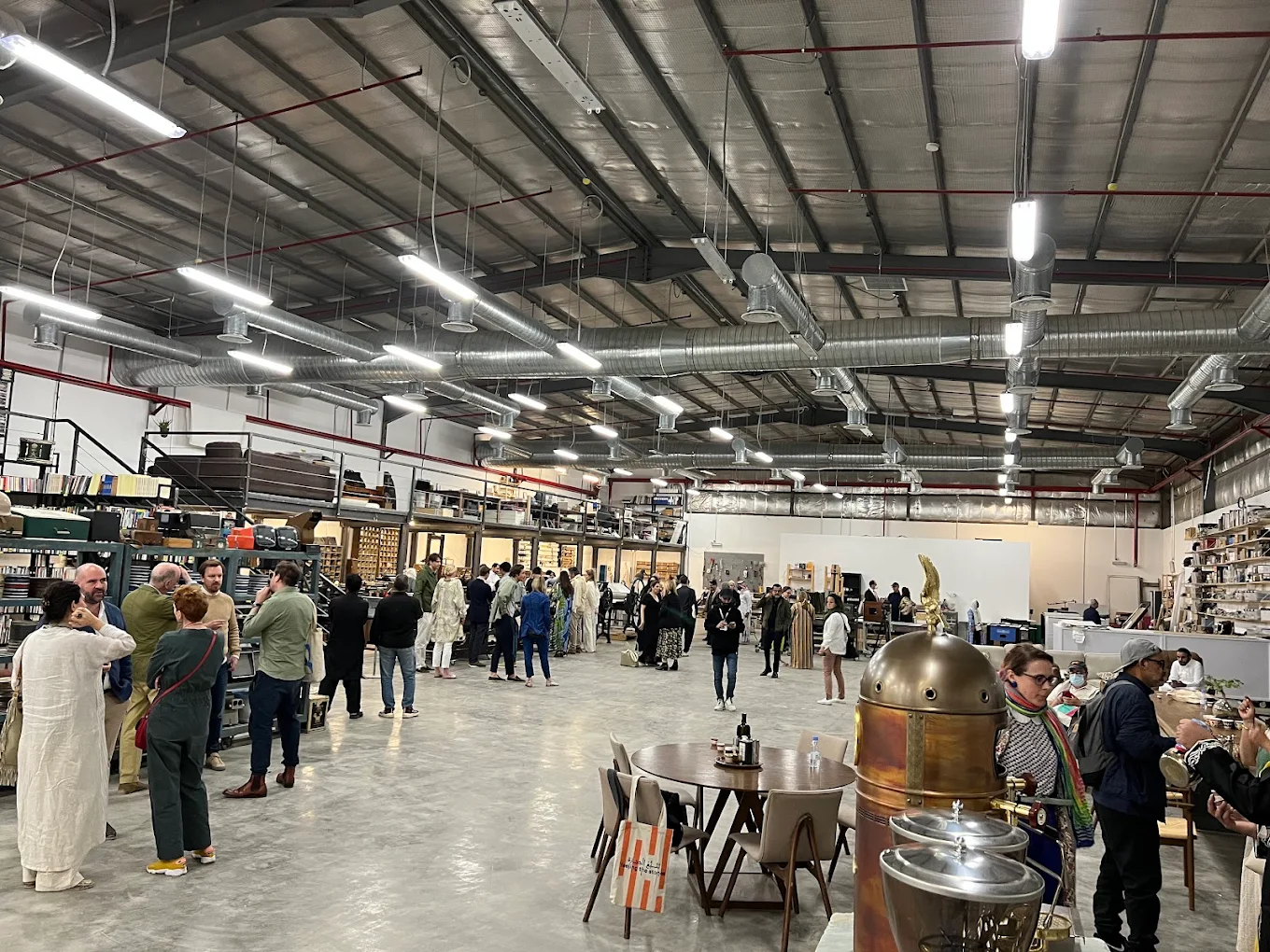
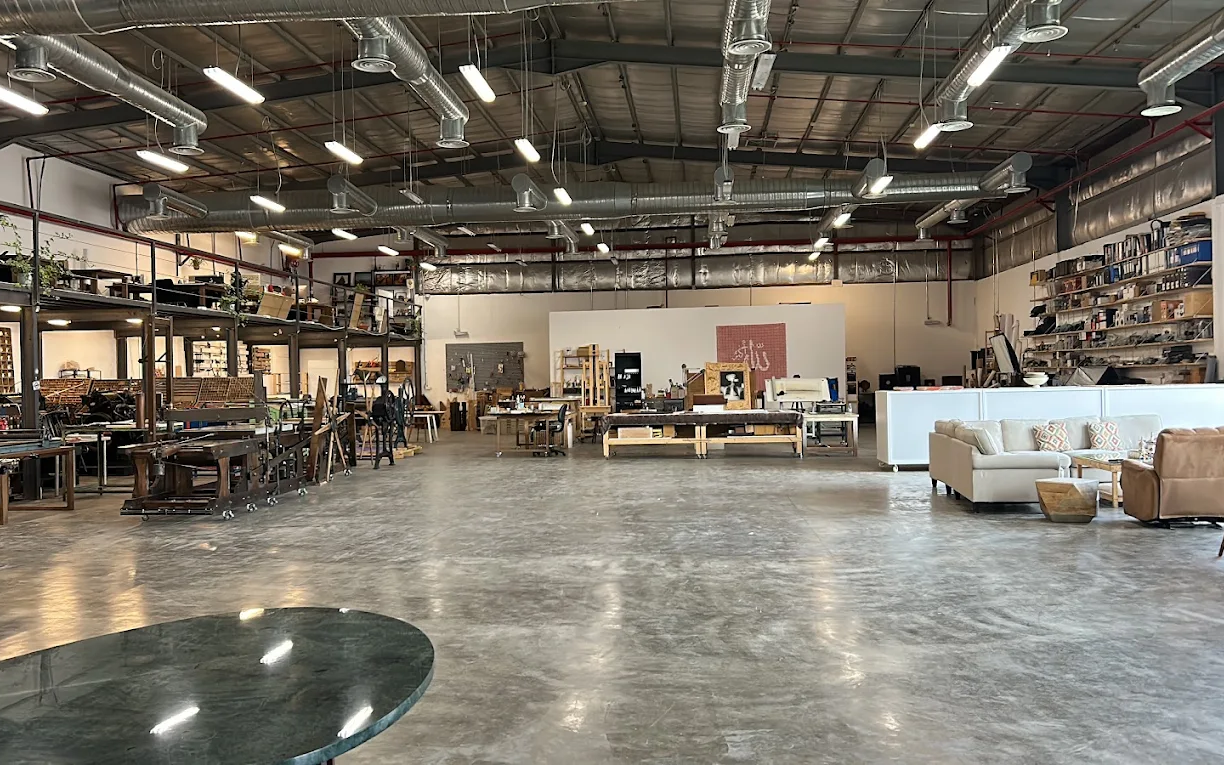
Ahmed Mater’s studio in the JAX District of Diriyah, Riyadh. A creative space where art, science, and cultural inquiry converge.
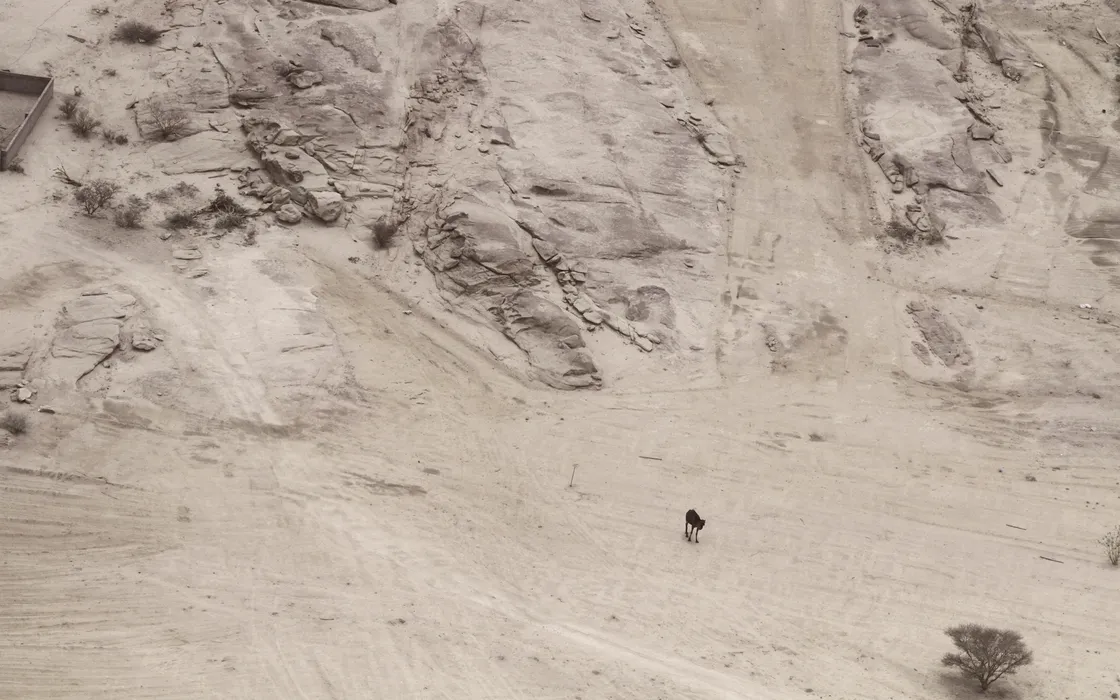
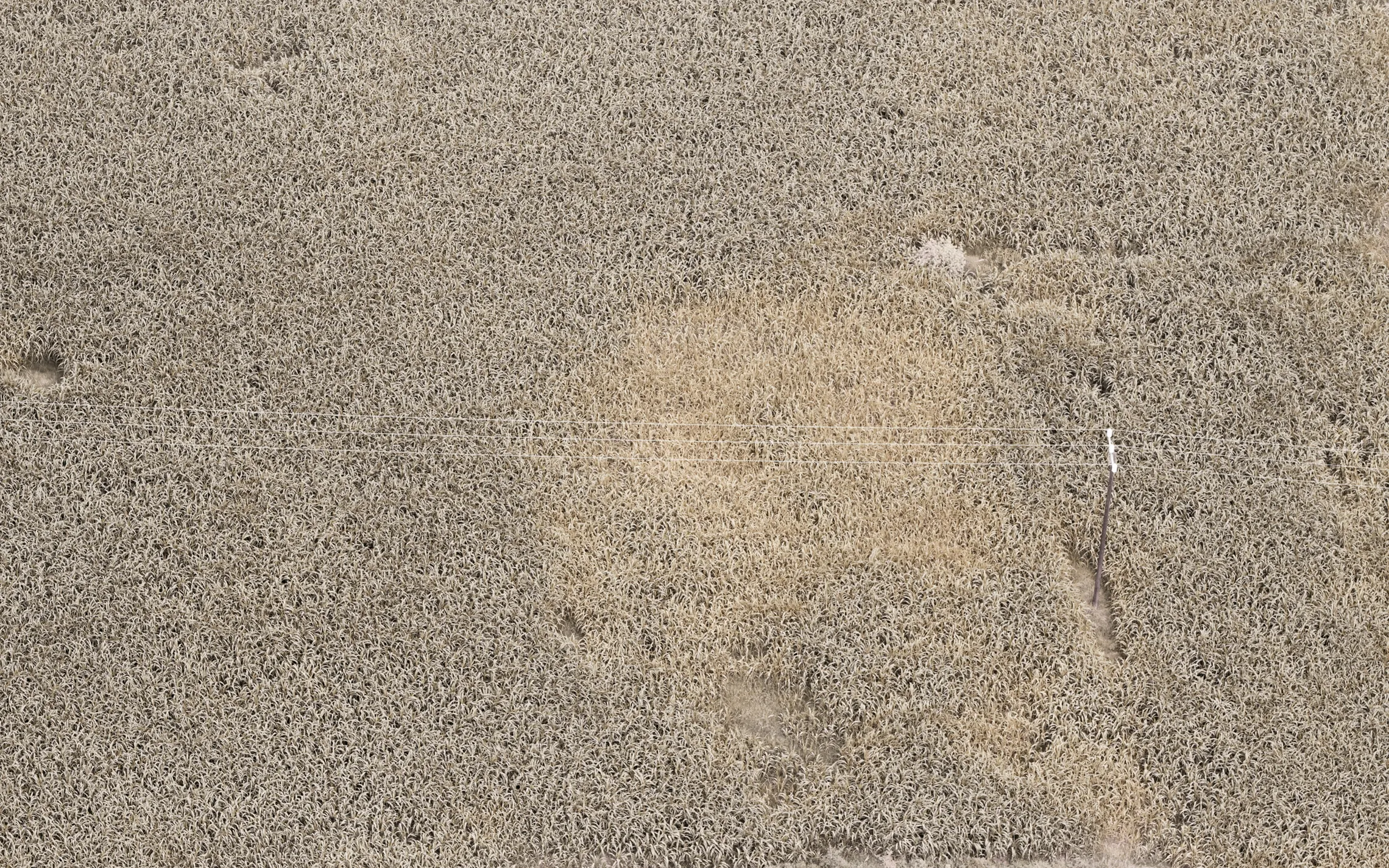
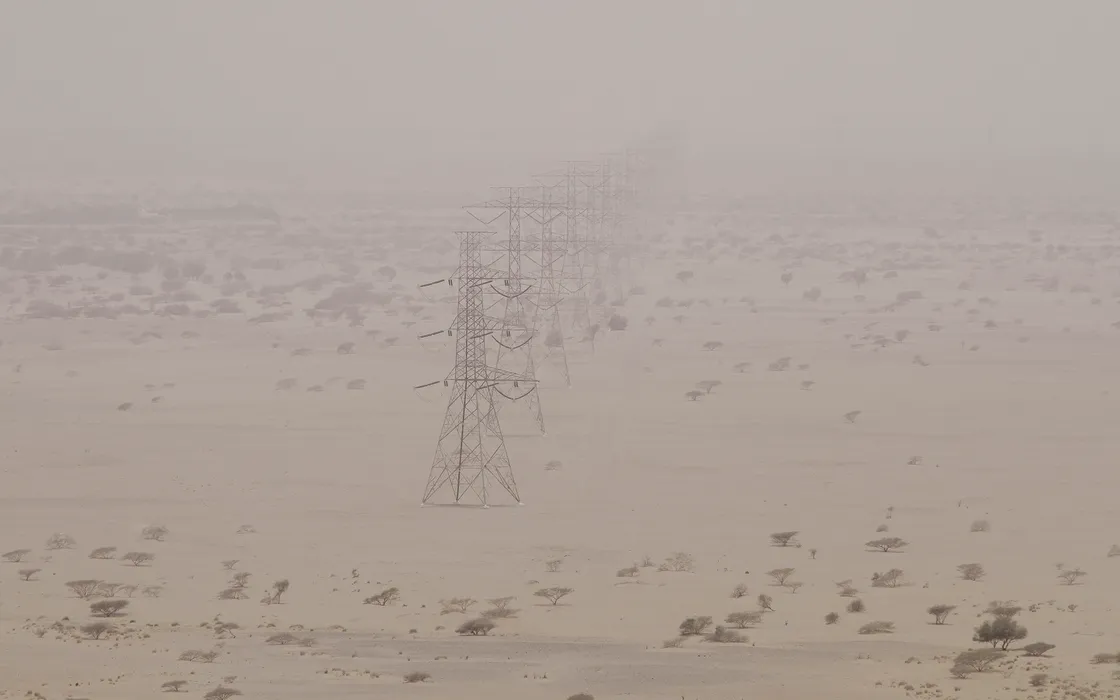
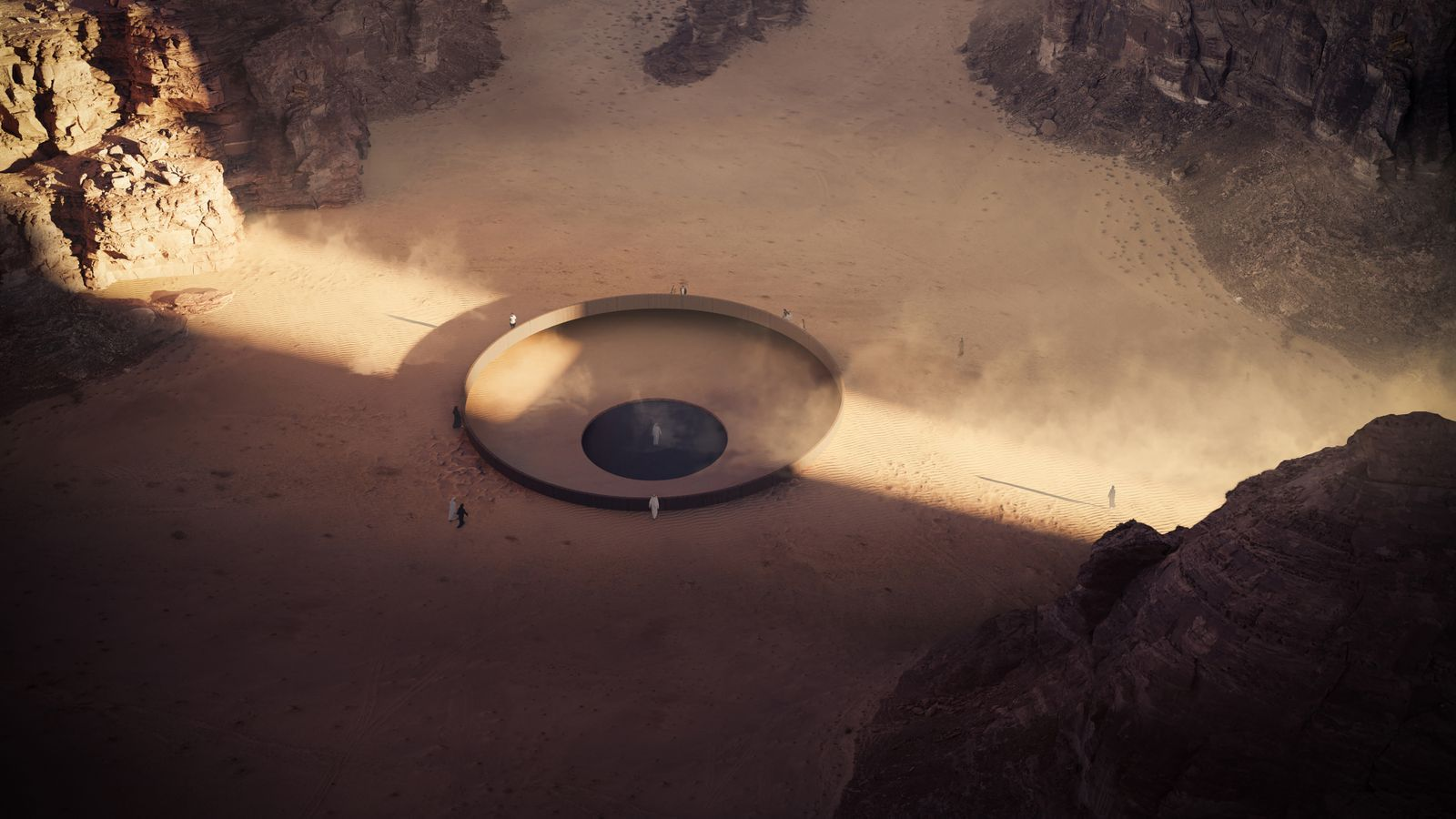
In recent years, Mater’s work has expanded in scale, reaching from image and installation into the landscape itself. Ashab Al-Lal, developed for Wadi AlFann in AlUla, marks a major evolution in his practice. Conceived as a monumental land art project shaped by mirage, perception, and scientific inquiry, it transforms the desert into a site of philosophical encounter.
The work feels like a natural culmination of many of Mater’s long standing concerns. Science returns, but now through optics and environmental scale. The invisible returns, but now through mirage and perception. Saudi landscape returns, not merely as backdrop, but as medium. With Ashab Al-Lal, Mater shows that his art can operate at the level of terrain while still holding onto the intimacy of thought.
Ahmed Mater has played a vital role in shaping the region’s cultural dialogue, both on and off the canvas. He has participated in major international biennales, including Sharjah Biennale, Kochi-Muziris Biennale, Venice Biennale, Jogja Biennale, and Cairo Biennale, and has served on the boards of key cultural institutions such as the Abha Art Prize, Riyadh Book Fair, Al Miftaha Art Centre, Okaz Poetry Prize, One and Only Art Prize, and the Saudi Film Festival.
Beyond curatorial influence, Mater has published six major works on Middle Eastern art and culture and has spoken at leading global institutions including the Louvre Museum, Bates Museum, and MIT, further cementing his voice as a cultural ambassador. These honors highlight his artistic excellence, global influence, and role as a cultural ambassador for Saudi Arabia.
Ahmed Mater’s work reminds us that art can do more than record a moment. It can hold contradiction, preserve memory, and make visible the forces reshaping a society from within. In tracing Saudi Arabia through symbols, landscapes, and lived experience, Mater has created a body of work that feels both deeply rooted and urgently contemporary.
Discover more art stories reshaping Saudi culture at KSAArt.