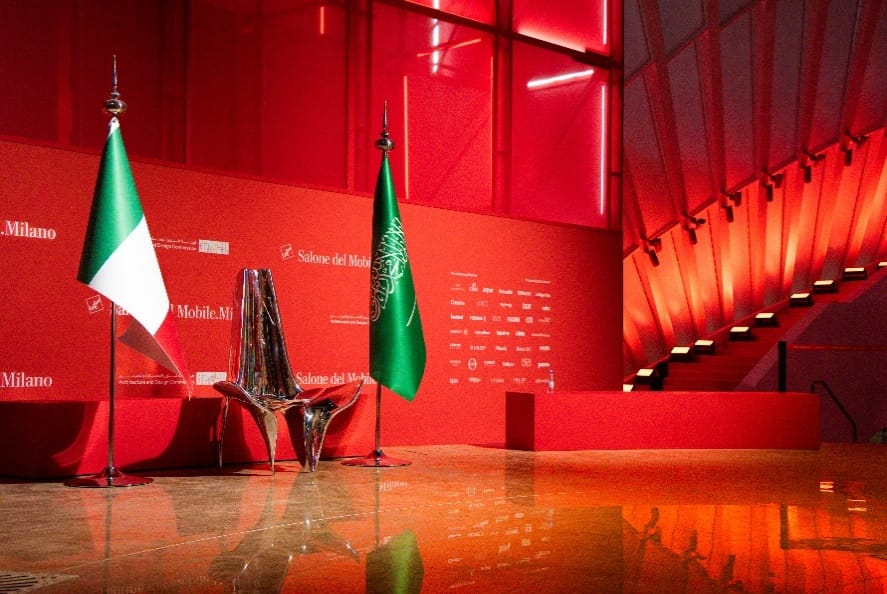
Abdulaziz K. Al Tayyash’s World of Architecture & Luxury Interiors
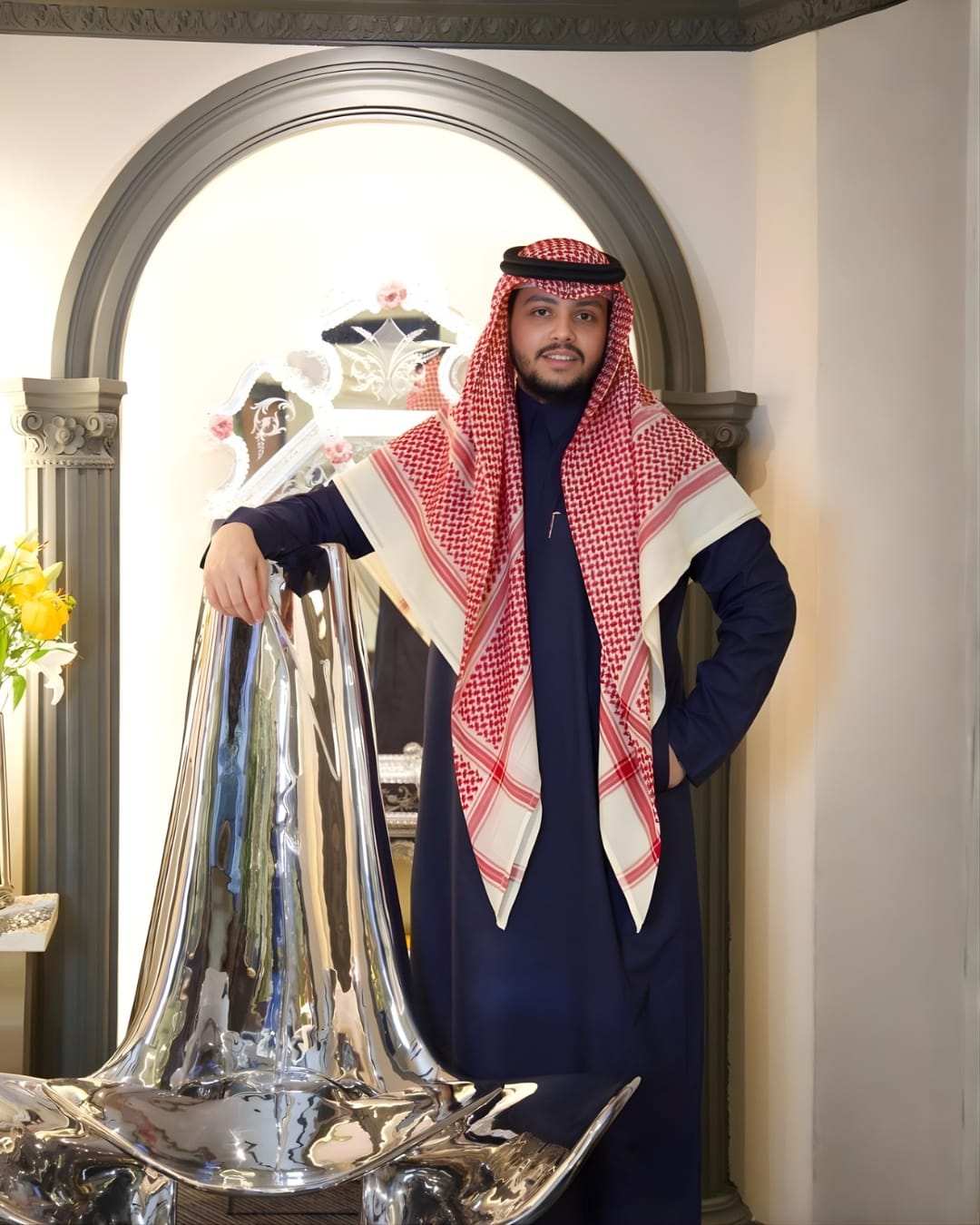
Step into the world of Abdulaziz K. Al Tayyash, architect and founder of A1Architects and ZAZA Maizon, shaping spaces and sculptural collectibles through a language of movement and form.
In Abdulaziz K. Al Tayyash’s world, design is never surface-level. It starts with atmosphere and intention. The quiet drama of light on metal. The rhythm of a familiar gesture. The way tradition moves, not how it looks when frozen.
His work lives between disciplines, but it never feels divided. Whether he’s shaping spaces or creating sculptural objects, the language remains unmistakable: refined, culturally fluent, and driven by the idea that everyday rituals can be elevated into contemporary design statements.
The Foundations of His Practice
Abdulaziz K. Al Tayyash is Riyadh born, and his relationship with architecture began long before the profession claimed him. He grew up close to architectural philosophy through his father, Prof. Khaled Abdulaziz Al Tayyash, which meant space was never just background. It was something to read, question, and shape with intention.
That early sensibility became structure through his studies at King Saud University (2015–2020), then widened through a Master’s in Urban Design (2023–2026), where the focus shifts from buildings to the life that flows between them. Add early exposure shaped across different environments, including time in Rome and within Saudi’s building ecosystem, and you start to see the foundation of his voice: controlled, culturally fluent, and quietly ambitious, designed to last beyond the moment.
A1Architects and the Discipline of Space
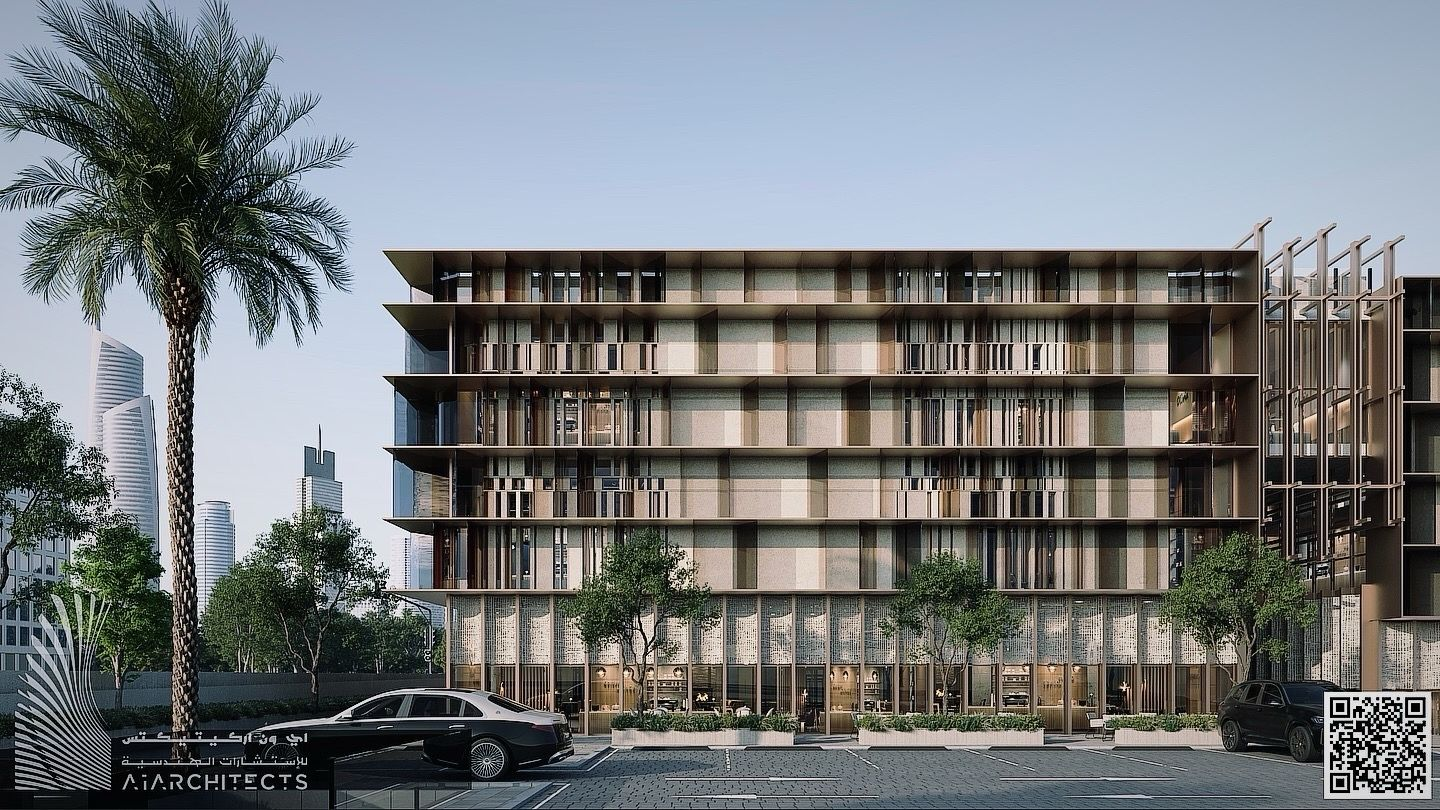
A1Architects is where Abdulaziz K. Al Tayyash’s ideas meet the real world and learn how to hold their shape. This is the practice side of his voice: architecture and interiors built around what life actually demands of a space. How people enter. Where they pause. What they see first. What they touch every day. The decisions here aren’t about spectacle. They’re about calibration. The studio works across scales, from towers and private homes to workspaces and studios, guided by the same belief that a place should carry meaning, not only function.
Its edge is the way it treats architecture, interior design, and art direction as one continuous act, held together by technical rigor without losing emotional depth. That same discipline doesn’t stop at walls and floorplans. It extends into a more collectible, design-forward expression under the same umbrella, where space becomes object, and function becomes presence.
ZAZA Maizon and the Art of Collectible Presence
If A1Architects is the structured voice, ZAZA Maizon Interiors is the emotional one. ZAZA Maizon lives in the world of collectible design, where an object is allowed to be more than functional. Here, the work becomes sculptural, tactile, and story-driven. The pieces are not designed to disappear into a room. They are designed to become the room’s center of gravity.
There’s also a confidence in this direction. It suggests that Al Tayyash sees Saudi design not as a category that needs to explain itself, but as a creative language capable of shaping the global conversation, Saudi design with Italian making behind it. ZAZA’s pieces do not borrow identity. They originate from it. And within this universe, three pieces sketch his language in full:
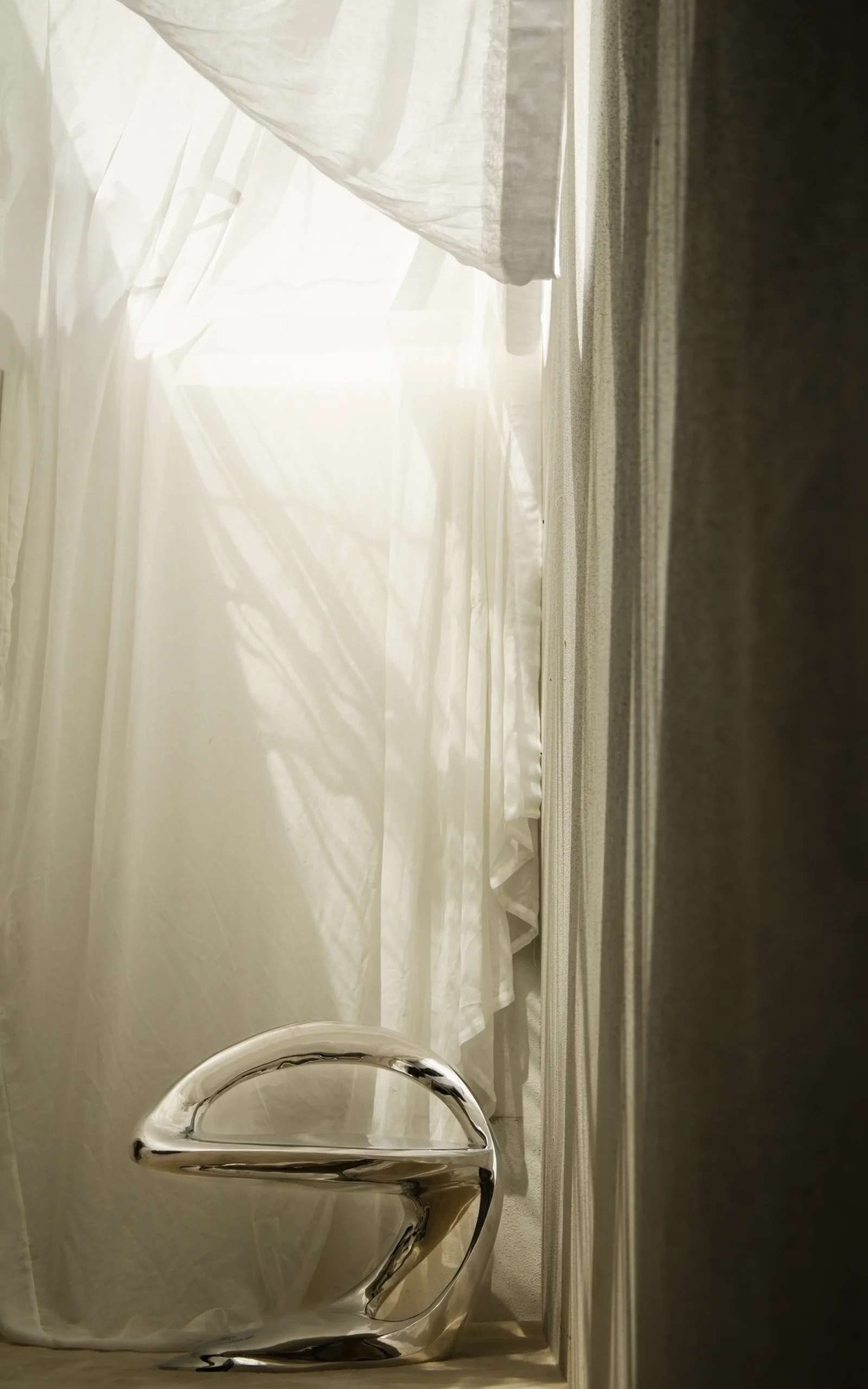
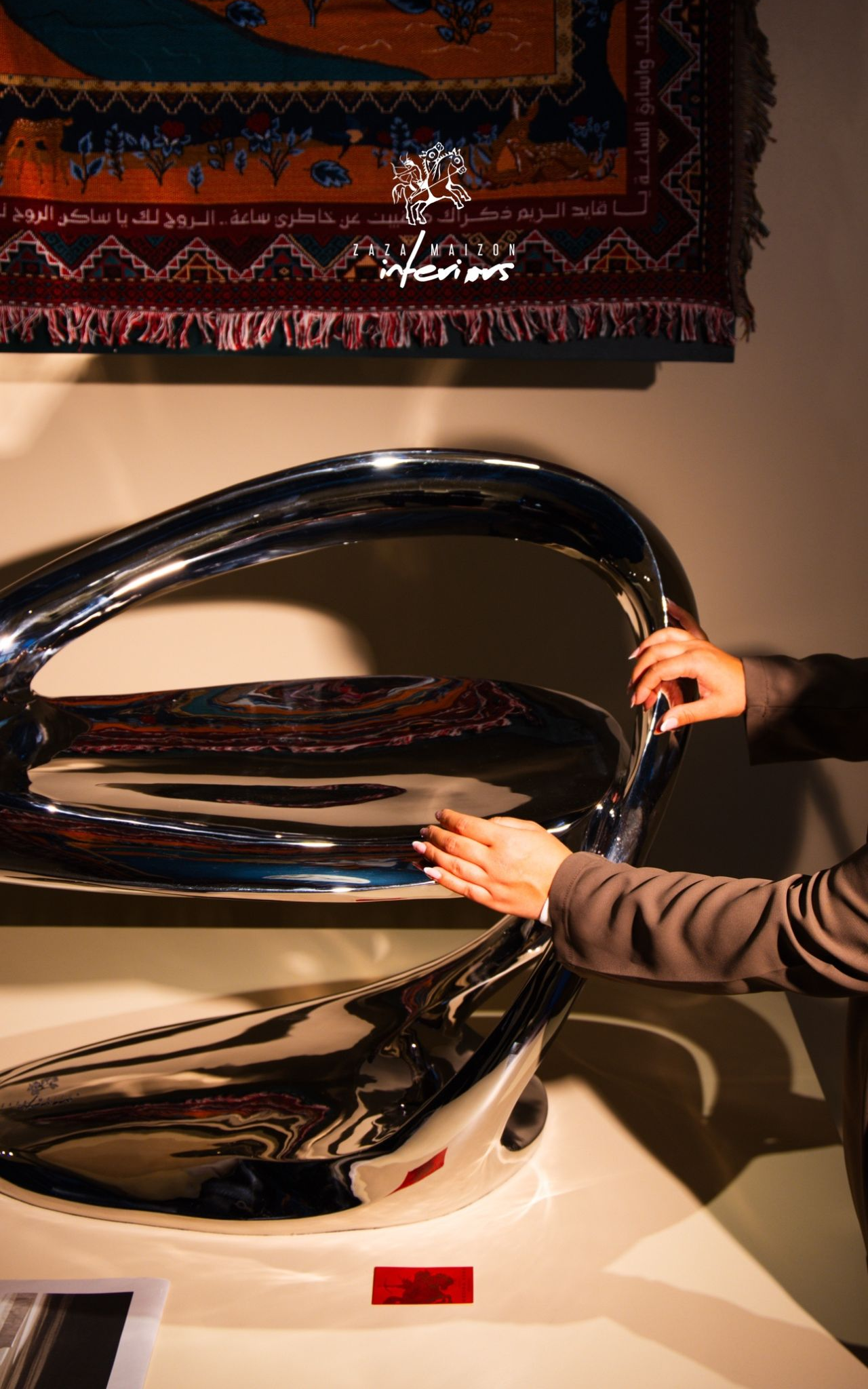
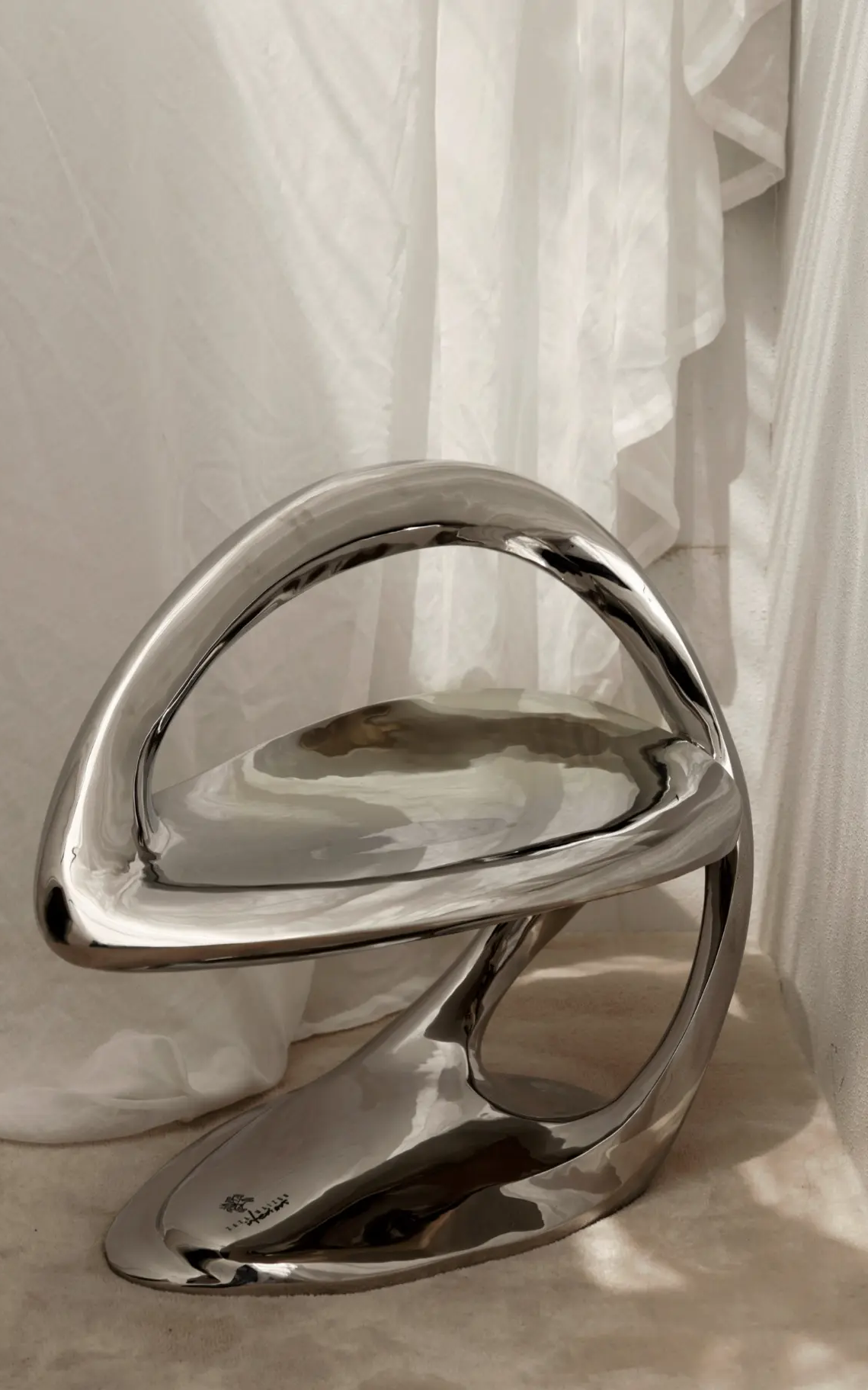
1) The Vitturi Chair
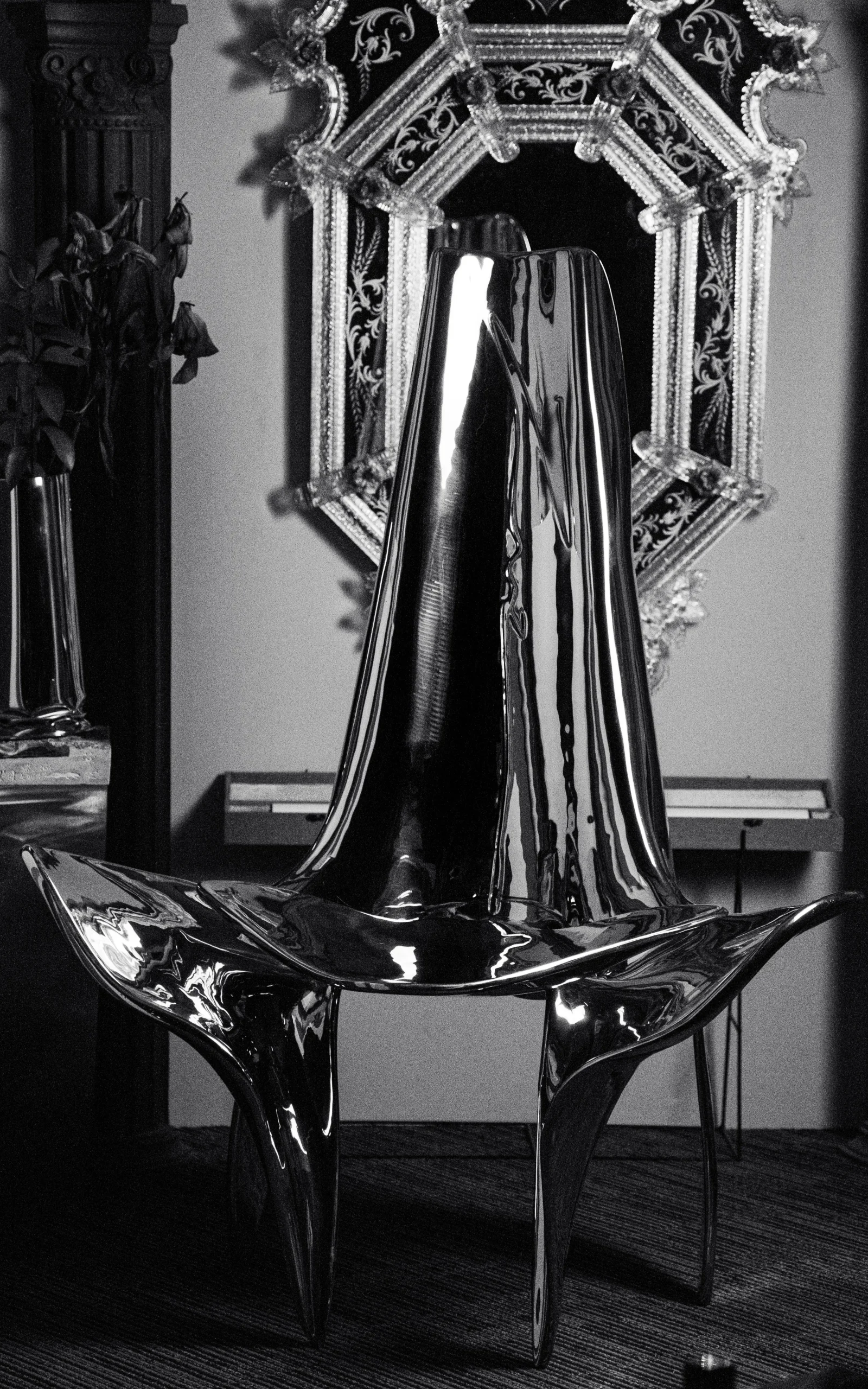
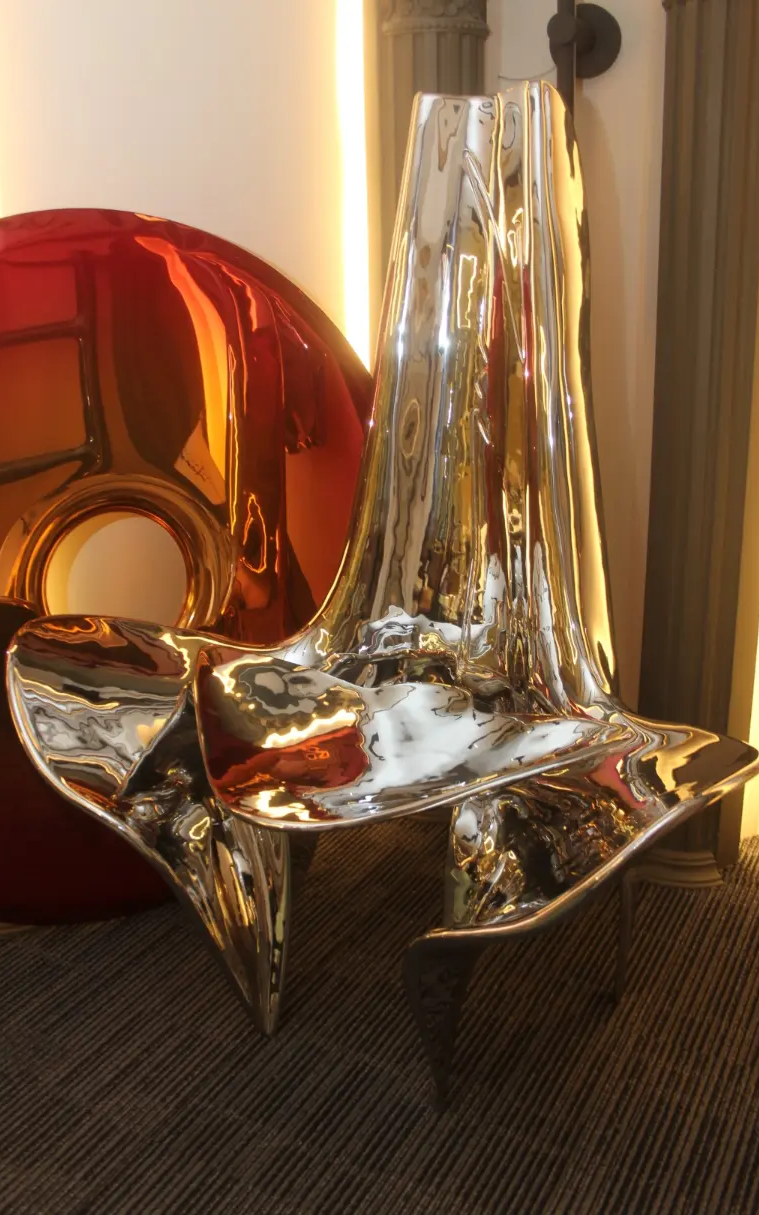
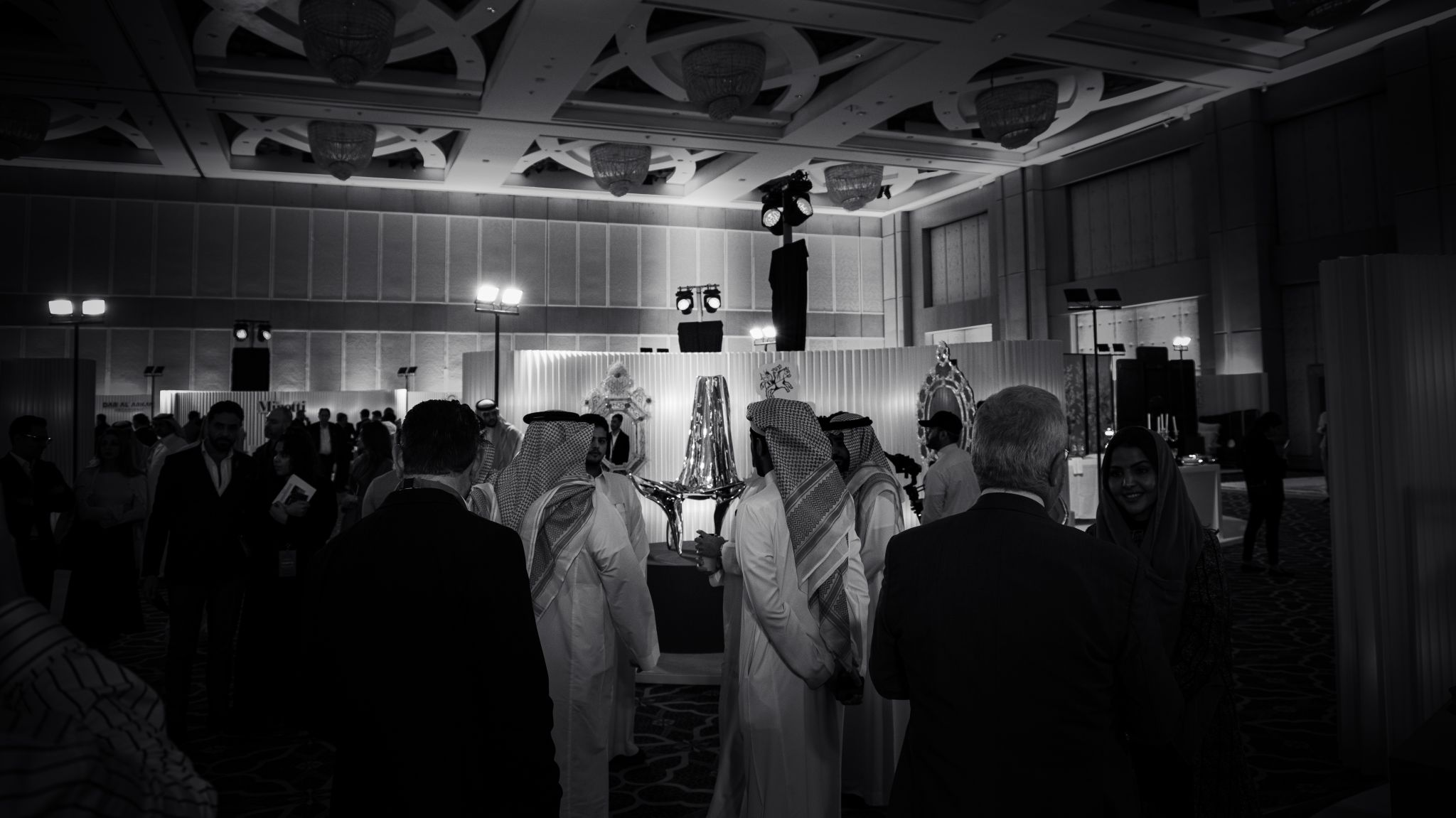
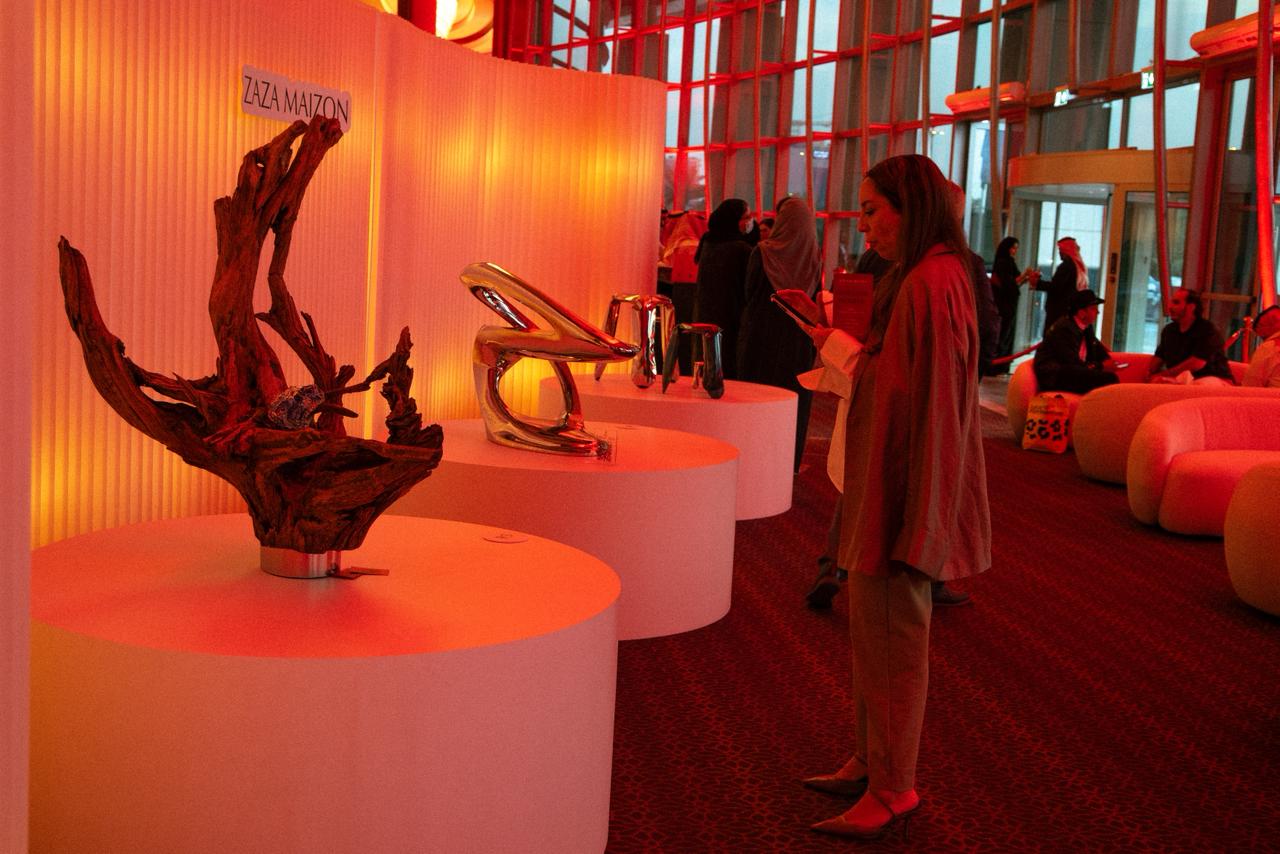
A mirrored steel gesture inspired by the Saudi shemagh in motion. Its curves don’t just reflect a room, they recompose it, shifting with light and movement until the chair feels almost alive. Bold in mass yet refined at the edge, Vitturi sits somewhere between sculpture and seat, an object with cultural rhythm built into its silhouette.
2) The Drip Chair
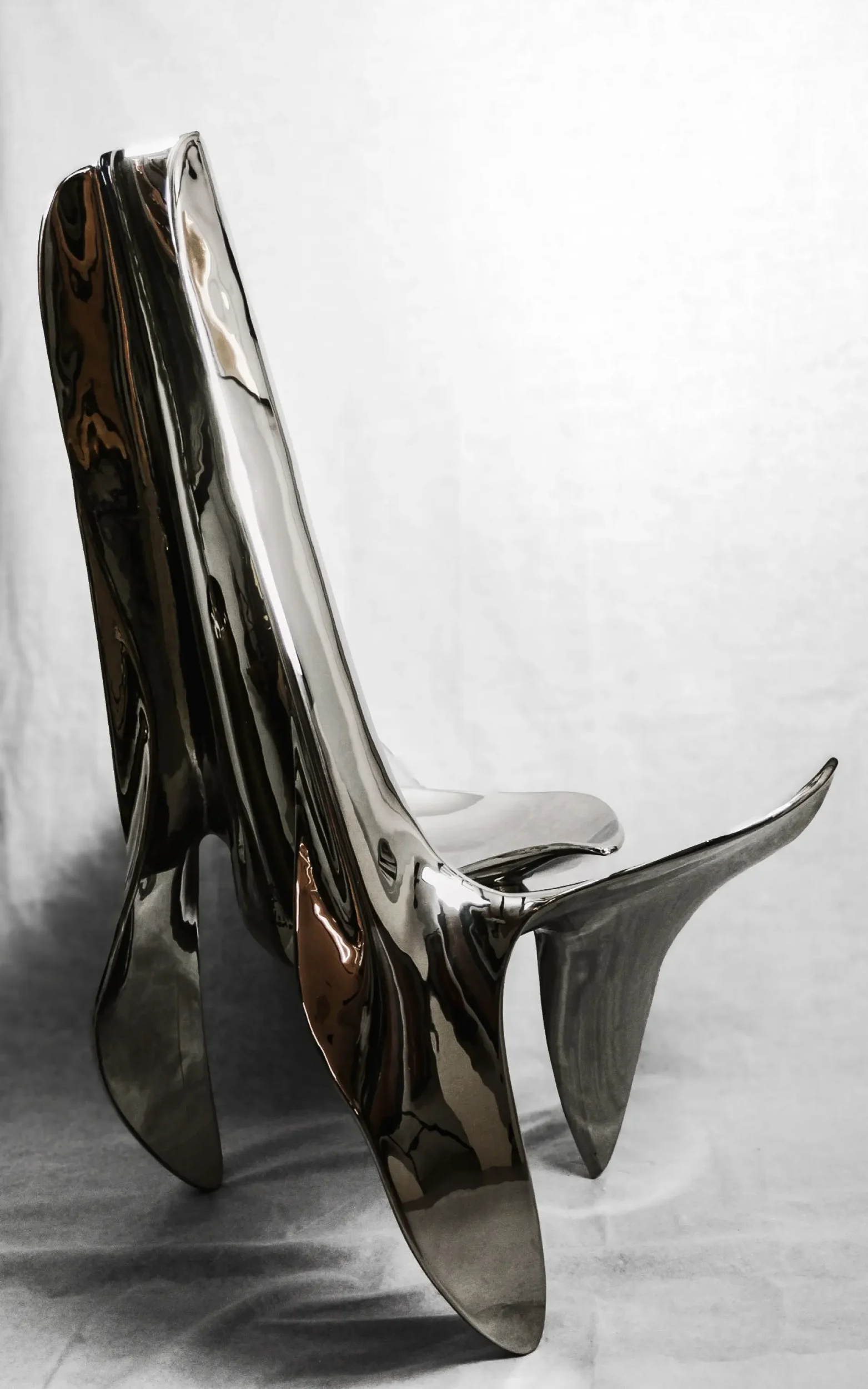
A quiet ode to gravity and time, shaped by the soft descent of dripping sand. Though formed in stainless steel, it reads like something poured, caught mid-flow, and held there. The polished surface lets highlights slide across its contours like liquid, creating that perfect tension between heaviness and delicacy.
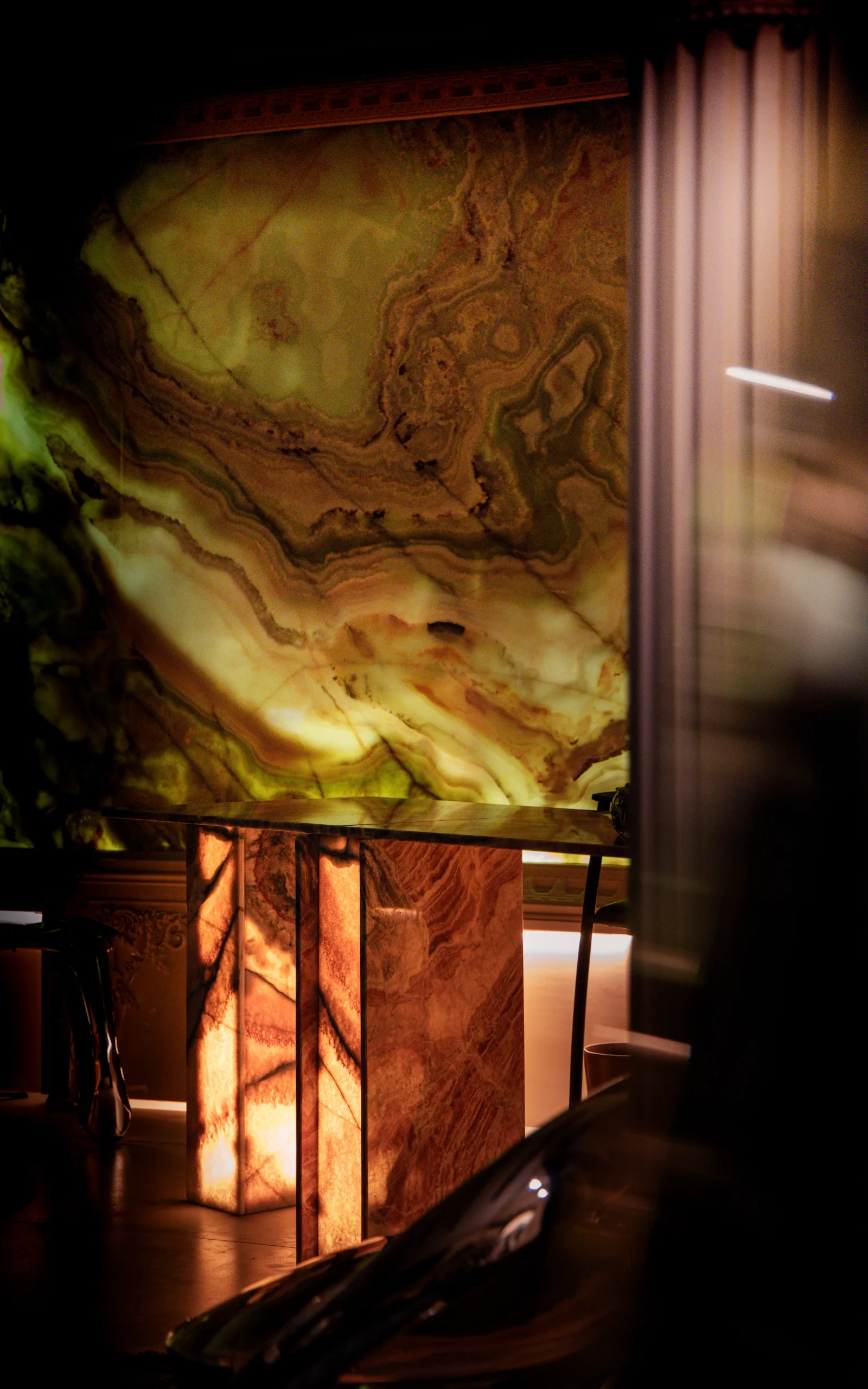
3) The Lava Roza Table
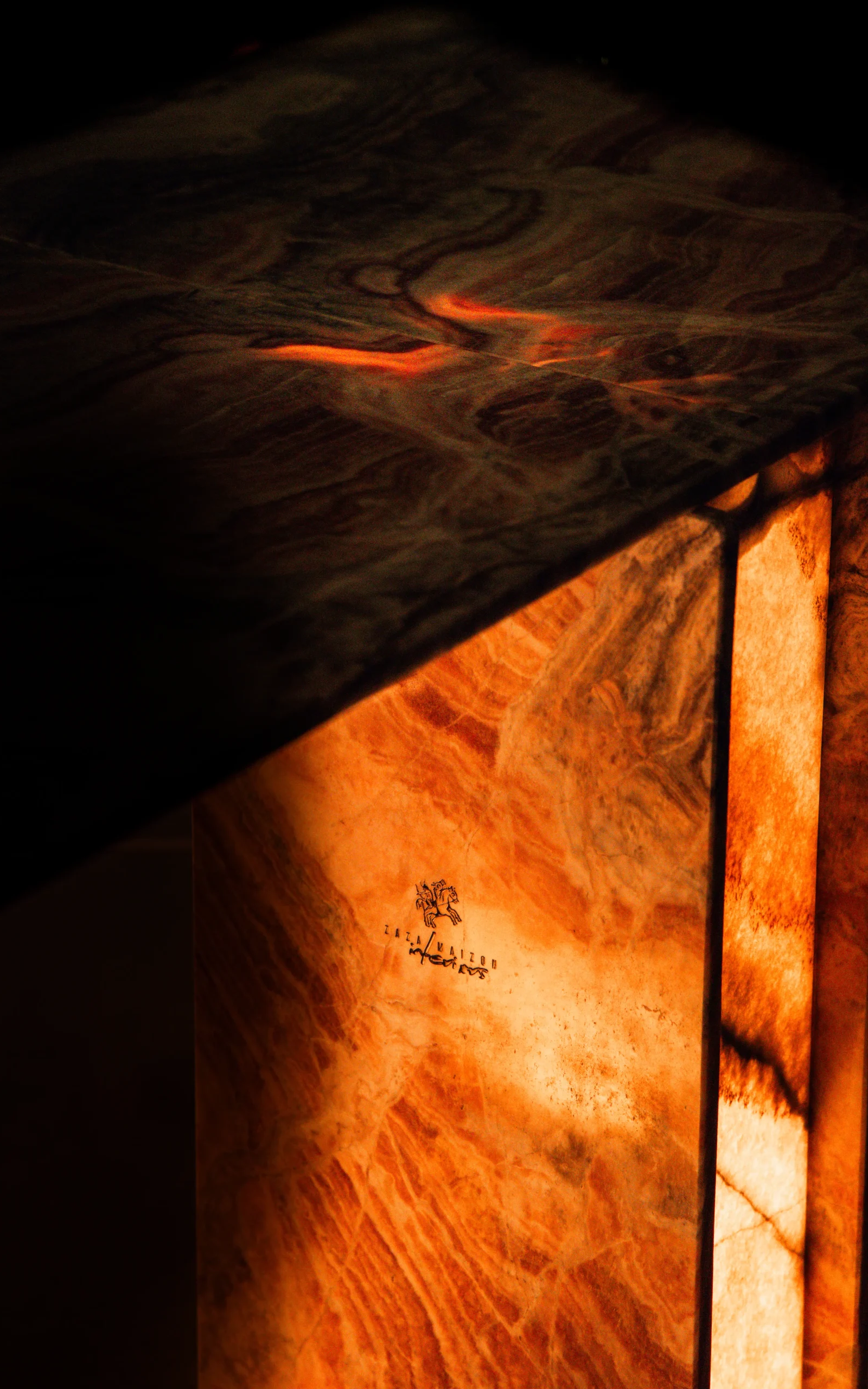
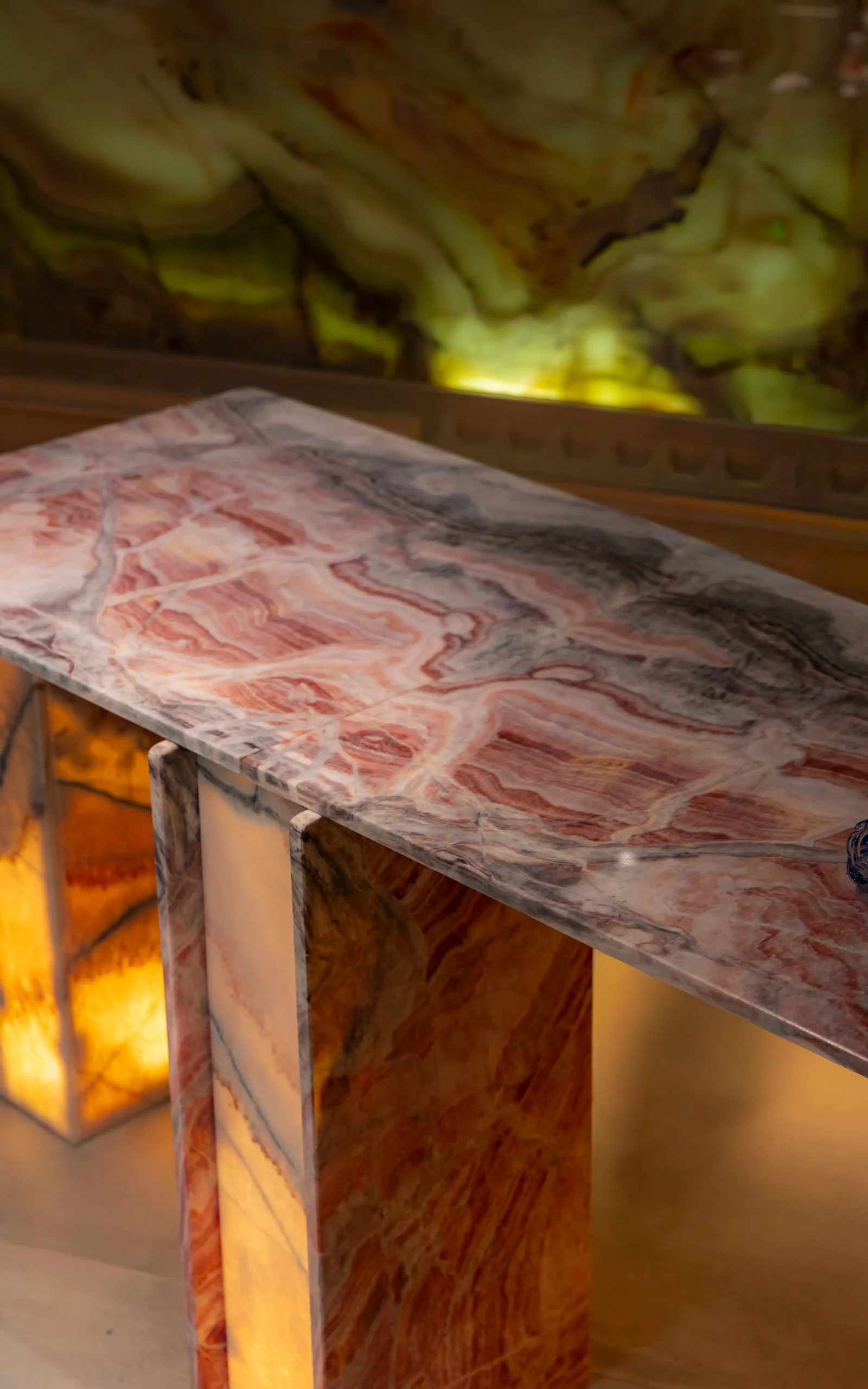
Italian marble, treated like a landscape. “Lava Roza” evokes molten glow through natural veining and integrated dim lighting that illuminates the surface from within, turning the table into an atmospheric object as much as a functional desk. Warm, volcanic, and composed with restraint, it brings light, material, and mood into a single presence.
Design Philosophy of Movement and Mastery
Al Tayyash’s work seems to be built on three instincts, and they explain why it feels consistent across both space and object. First, he designs from movement, not motifs: a gesture, a flick, a flow becomes the blueprint, so the form feels like it’s in motion even when it’s still. Second, he’s driven by craft. Every curve looks resolved, every edge feels intentional, as if the piece has been engineered rather than simply shaped. And finally, he leans into contrast: fluid silhouettes made from heavy materials, softness suggested through stainless steel, delicacy pressed against bold mass. Together, those choices create a signature that’s unmistakable and quietly powerful.
A Practice With Two Modes and One Signature
It’s tempting to frame A1Architects and ZAZA Maizon as two separate paths. In reality, they feel like two modes of the same signature. Where A1Architects brings restraint and lived functionality, ZAZA Maizon brings intimacy, symbolism, and collectible power. It’s where ideas can become concentrated, distilled into form and finish.
Together, they show the full spectrum of Al Tayyash’s thinking: from spatial systems to sculptural statements. From the city to the object. From the long-term logic of architecture to the immediate impact of a design piece that stops you mid-step.
Closing Reflection
There is a certain kind of design that you admire from a distance, and a certain kind that follows you after you leave the room. Abdulaziz K. Al Tayyash belongs to the second category. Because when he designs, he captures a moment of lived culture and gives it permanence. He turns motion into structure. He turns ritual into object. And in that translation, something powerful happens. The familiar becomes iconic.
Inspired by Abdulaziz K. Al Tayyash?
Discover more artist and design stories at KSAArt.
Share this article
The link has been copied!
Your link has expired. Please request a new one.
Your link has expired. Please request a new one.
Your link has expired. Please request a new one.
Great! You've successfully signed up.
Great! You've successfully signed up.
Welcome back! You've successfully signed in.
Success! You now have access to additional content.